Ancient Indian History: Indus Valley to the Guptas
The Indus Valley Civilisation, the Vedic Age, the rise of Magadh, Jainism and Buddhism, the Mauryan and Gupta empires and the southern dynasties — the ancient-history facts the exam repeats, with maps, photos and real past questions.
Punjab PolicePSSSBSSCPatwari18 MIN READ
Ancient Indian history runs from the Indus Valley Civilisation (around 2500 BCE) through the Vedic Age, the rise of Magadh, the new religions Jainism and Buddhism, and the two great empires — the Mauryas and the Guptas — plus the southern dynasties. The exam keeps to a fixed set of facts: key sites, founders, capitals, important kings and the travellers and books tied to them. Learn them in that order and the whole period becomes a short list.
c. 2500 BCE
Indus Valley Civilisation
Bronze Age; discovered 1921
261 BCE
Kalinga War
Ashoka turned to Buddhism
4th–6th c.
Gupta golden age
Science, art and maths
The Indus Valley (Harappan) Civilisation
India's first cities: planned, with drains and a Great Bath.
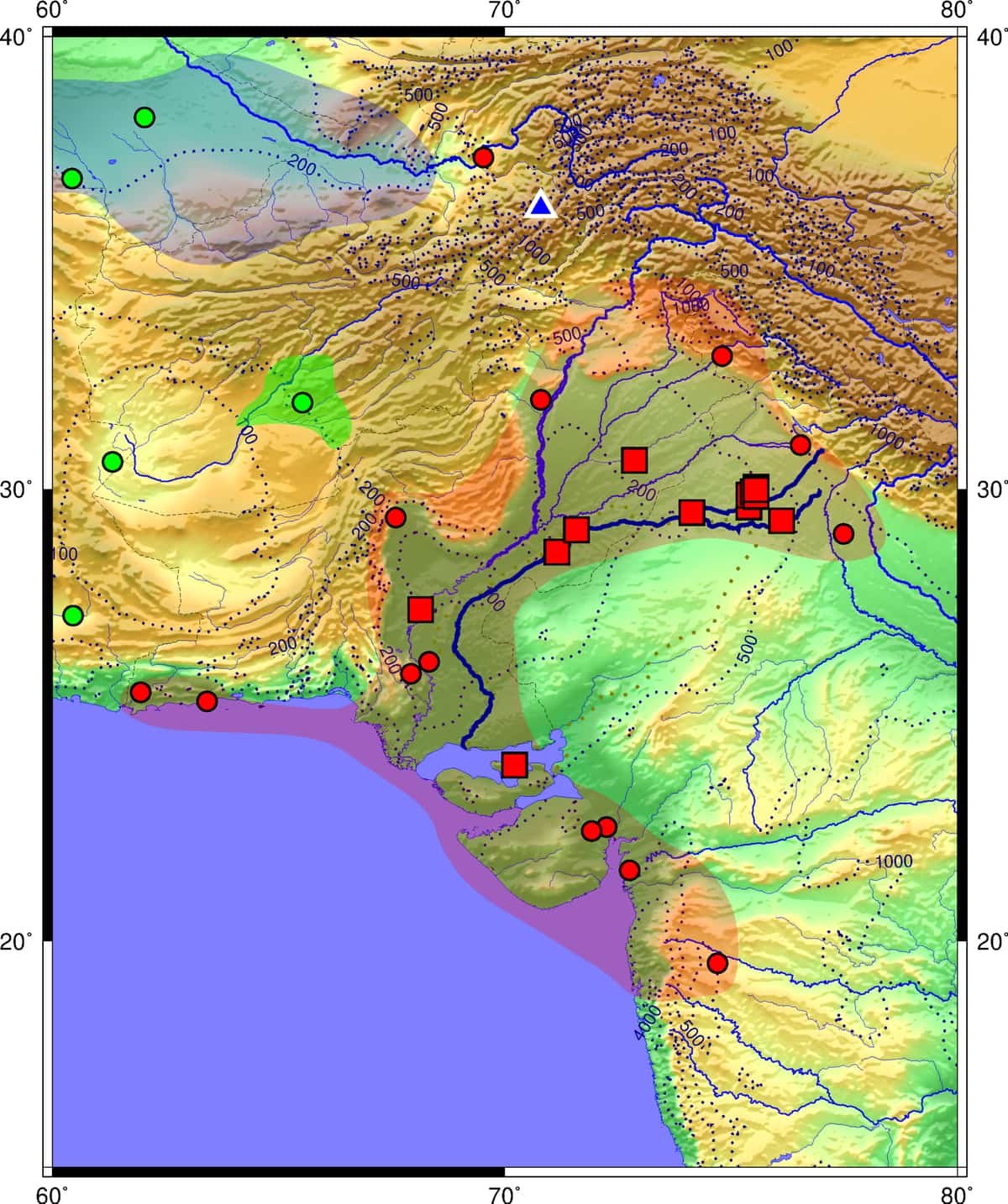
The civilisation spread across today's Pakistan and north-west India. Red squares are major cities (Harappa, Mohenjo-daro, Dholavira, Rakhigarhi). Image: Merikanto · CC BY-SA 4.0
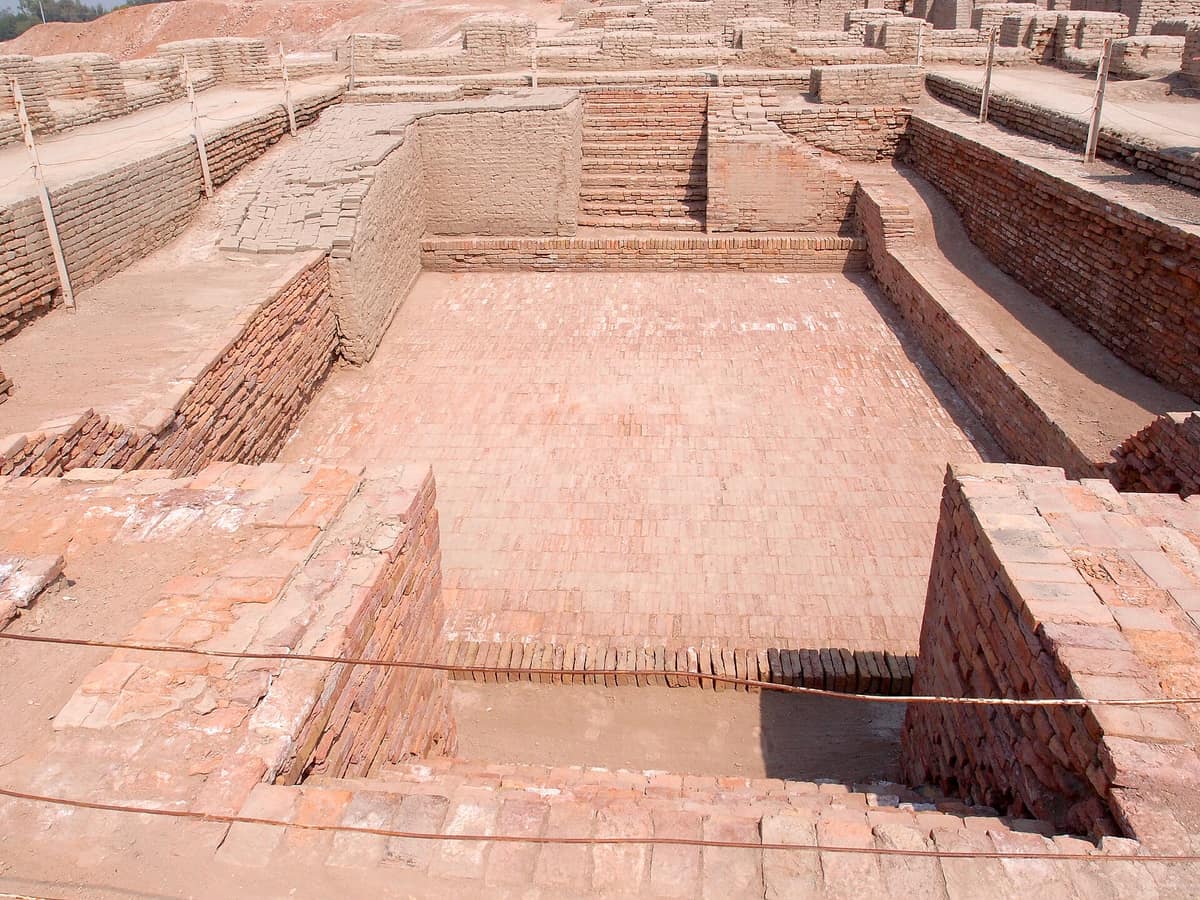
Indus Valley remains
The Great Bath of Mohenjo-daro — a large watertight tank, showing advanced engineering.
The Rigveda's rivers are the five rivers of Punjab — Parushni = Ravi is a common question.
QUICK CHECK
TCS Question Bank — The Vedas, Upanishads, Puranas and Dharmasutras are written in which language?
Tap an option to answer
Answer: D — Sanskrit
These texts are all in Sanskrit; Pali and Prakrit are linked with early Buddhism and Jainism.
QUICK CHECK
TCS Question Bank — What is the Rigvedic name of the river Ravi?
Tap an option to answer
Answer: D — Parushni
Parushni is the Rigvedic name of the Ravi (Vitasta = Jhelum, Shutudri = Sutlej).
Jainism, Buddhism and the rise of Magadh
Two new religions, and the empire that grew strongest.
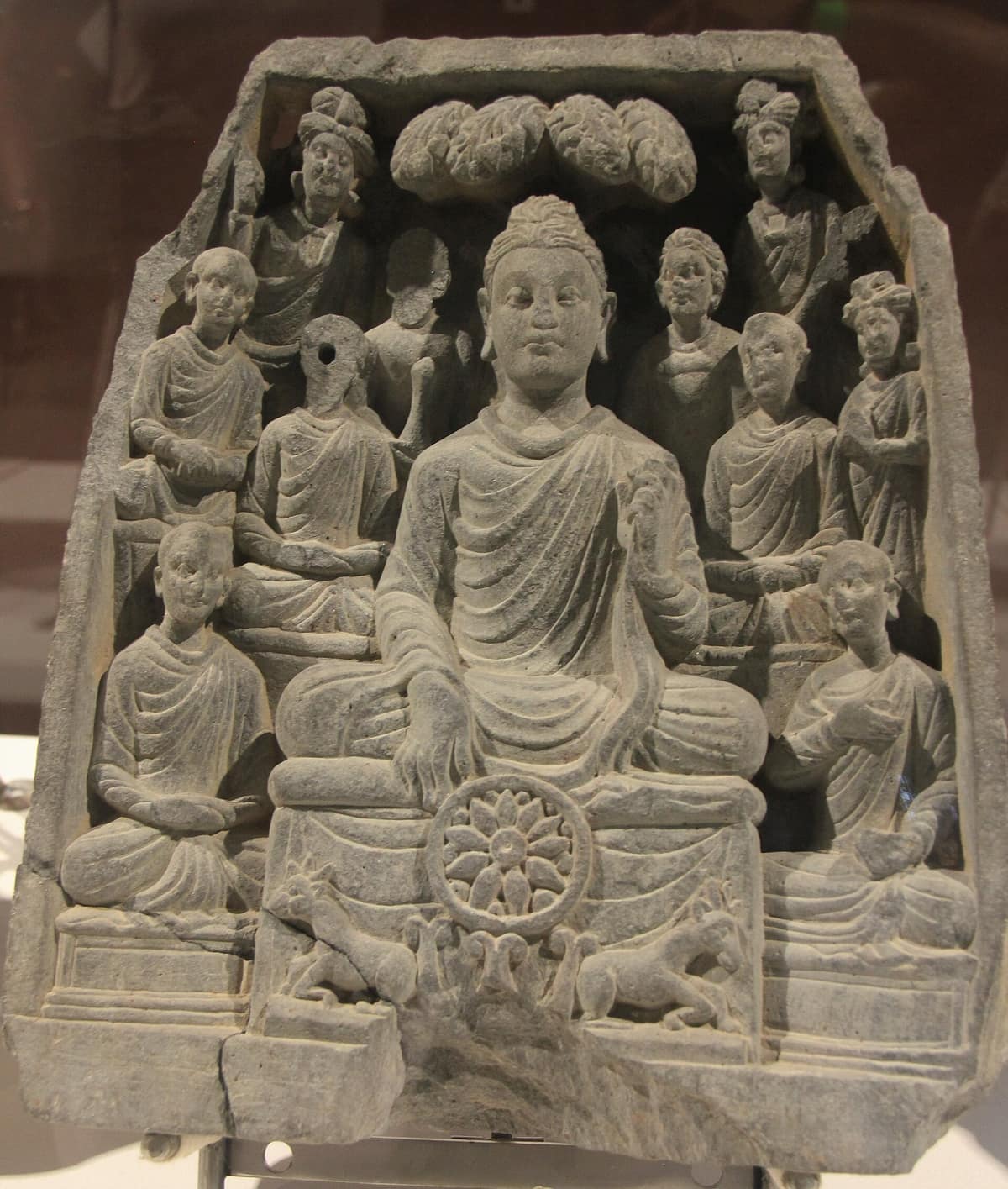
Gautama Buddha gave his first sermon at Sarnath near Varanasi; Jainism's first Tirthankara was Rishabhadeva and the 24th was Mahavira. Image: AKS.9955 · CC BY-SA 4.0
BUDDHISM VS JAINISM
Buddhism
Jainism
Founder / great teacher
Gautama Buddha
Mahavira (24th Tirthankara)
Born / enlightened at
Lumbini / Bodh Gaya
Kundagrama / Jrimbhikagrama
First sermon / key place
Sarnath
Dilwara, Palitana temples
Early language
Pali
Prakrit
Buddha = Sarnath first sermon; Jain 1st Tirthankara = Rishabhadeva, 24th = Mahavira.
QUICK CHECK
TCS Question Bank — Who was the first Tirthankara of Jainism?
Tap an option to answer
Answer: C — Rishabhadeva
Rishabhadeva (Adinath) was the first of the 24 Tirthankaras; Mahavira was the 24th.
QUICK CHECK
TCS Question Bank — The Dilwara temples of Mount Abu are a sacred pilgrimage place for the:
Tap an option to answer
Answer: B — Jains
The marble Dilwara temples at Mount Abu are famous Jain temples.
QUICK CHECK
TCS Question Bank — Which ancient empire was the first to use elephants in war on a large scale?
Tap an option to answer
Answer: D — Magadha
Magadha, the strongest of the Mahajanapadas, first used war elephants on a large scale.
The Mauryan Empire (321–185 BCE)
Chandragupta, Chanakya and Ashoka.
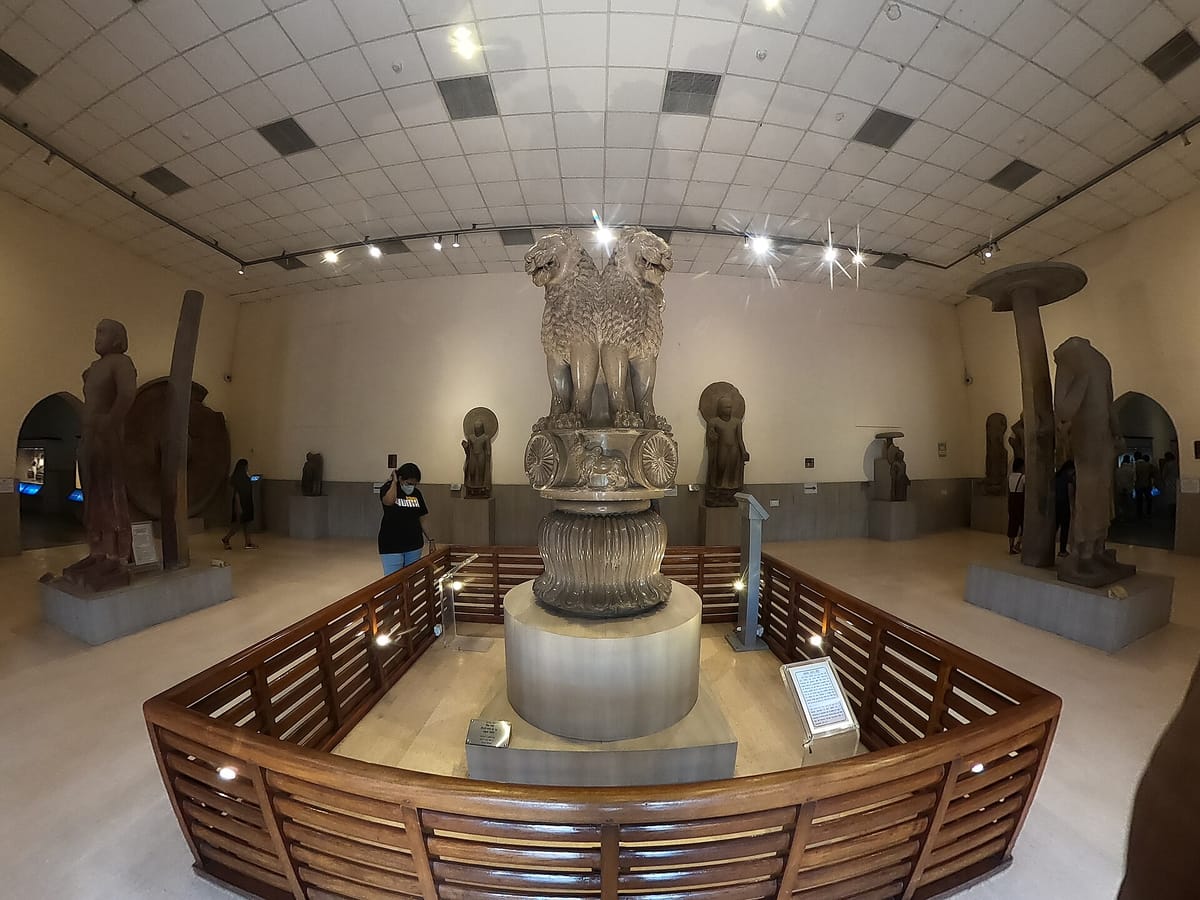
Ashoka's Lion Capital at Sarnath is India's State Emblem; the wheel below it became the Ashoka Chakra on the flag. Image: Apurv013 · CC0
MAURYAN TIMELINE
321 BCE
Chandragupta Maurya founds the empire
Guided by Chanakya (Kautilya), author of the Arthashastra
c. 302 BCE
Megasthenes visits the court
Greek envoy; wrote 'Indica'
261 BCE
Ashoka's Kalinga War
After the bloodshed he embraced Buddhism
QUICK CHECK
TCS Question Bank — Megasthenes, the Greek historian, visited India during the reign of:
Tap an option to answer
Answer: C — Chandragupta Maurya
Megasthenes was the Greek ambassador at Chandragupta Maurya's court and wrote 'Indica'.
QUICK CHECK
TCS Question Bank — Ashoka converted to which religion after the Kalinga war?
Tap an option to answer
Answer: B — Buddhism
Shaken by the Kalinga bloodshed (261 BCE), Ashoka embraced Buddhism and spread it widely.
QUICK CHECK
TCS Question Bank — Who built the Buddhist monuments (stupa) at Sanchi?
Tap an option to answer
Answer: B — Maurya Dynasty
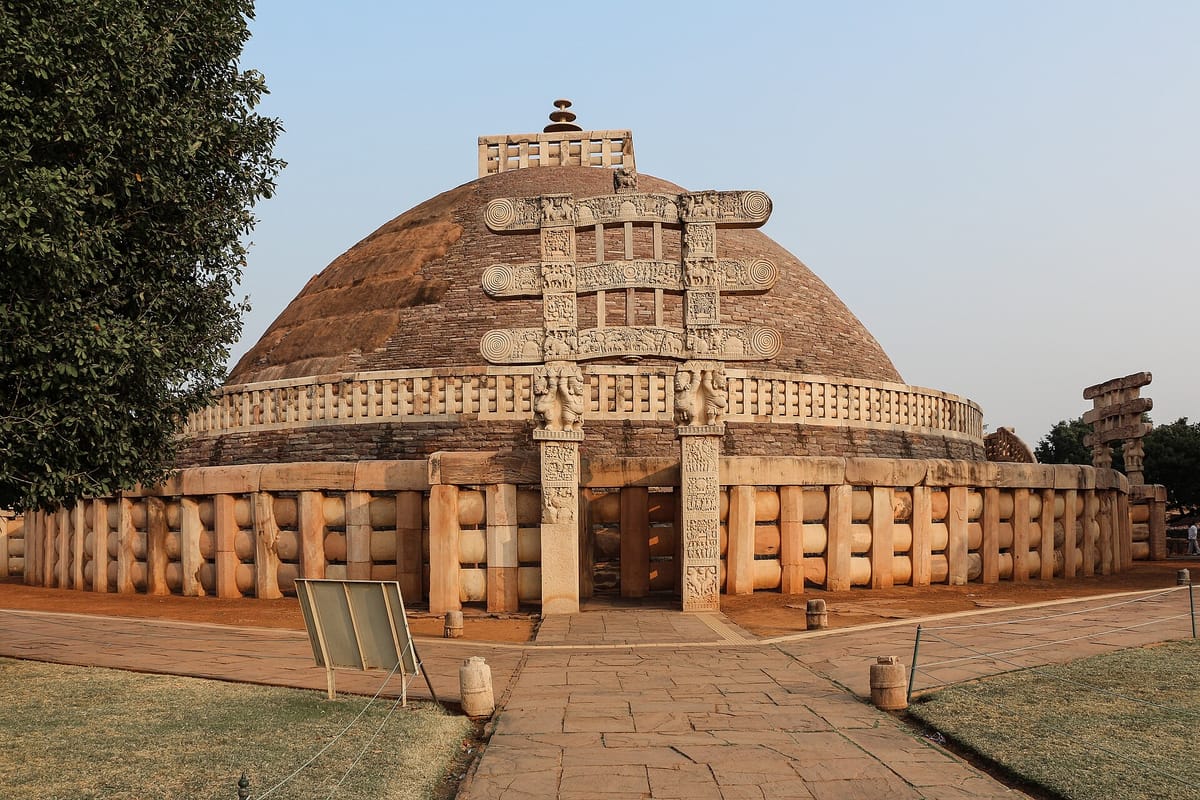
The Great Stupa at Sanchi was begun by Ashoka of the Maurya dynasty.
The Guptas and the southern dynasties
The 'golden age', and the great kingdoms of the south.
Gupta-era art
The Great Stupa at Sanchi, begun under Ashoka — a landmark of Buddhist art.