Temple styles (Nagara, Dravida, Vesara), Buddhist stupas and rock-cut caves, the great Vijayanagara and Chola temples, and the forts and Mughal monuments — who built what and where, with photos and real past questions.
Punjab PolicePSSSBSSCPatwari14 MIN READ
India's monuments come up in the exam as who built what, in which style, and where. This page covers the three temple styles (Nagara, Dravida, Vesara) and their parts, Buddhist stupas and rock-cut caves, the great temples of Hampi and the south, and the Indo-Islamic and Mughal monuments and forts. Keep the builder, place and style together for each famous structure — that is exactly how the questions are framed.
3
Temple styles
Nagara, Dravida, Vesara
₹200
Sanchi Stupa note
Its motif is on the ₹200 note
40+
UNESCO sites in India
World Heritage Sites
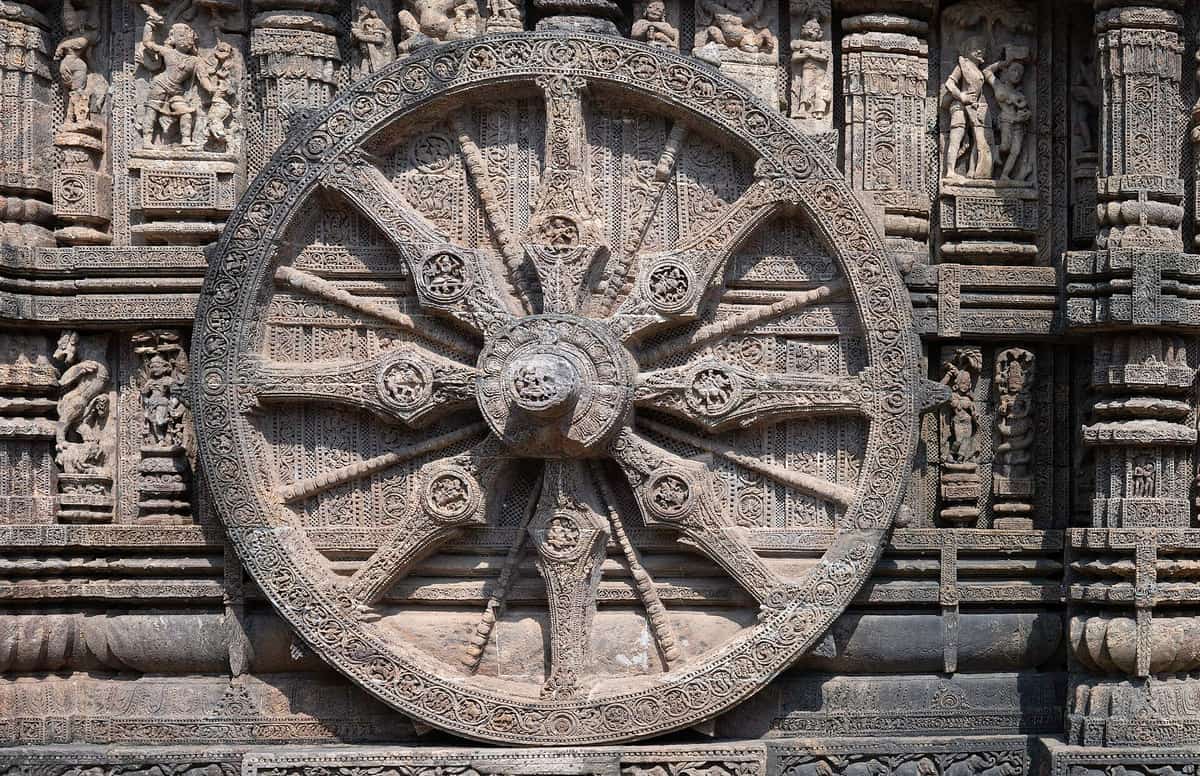
Temple architecture styles
Nagara, Dravida and Vesara — and the words for each part.
South and east Indian temples
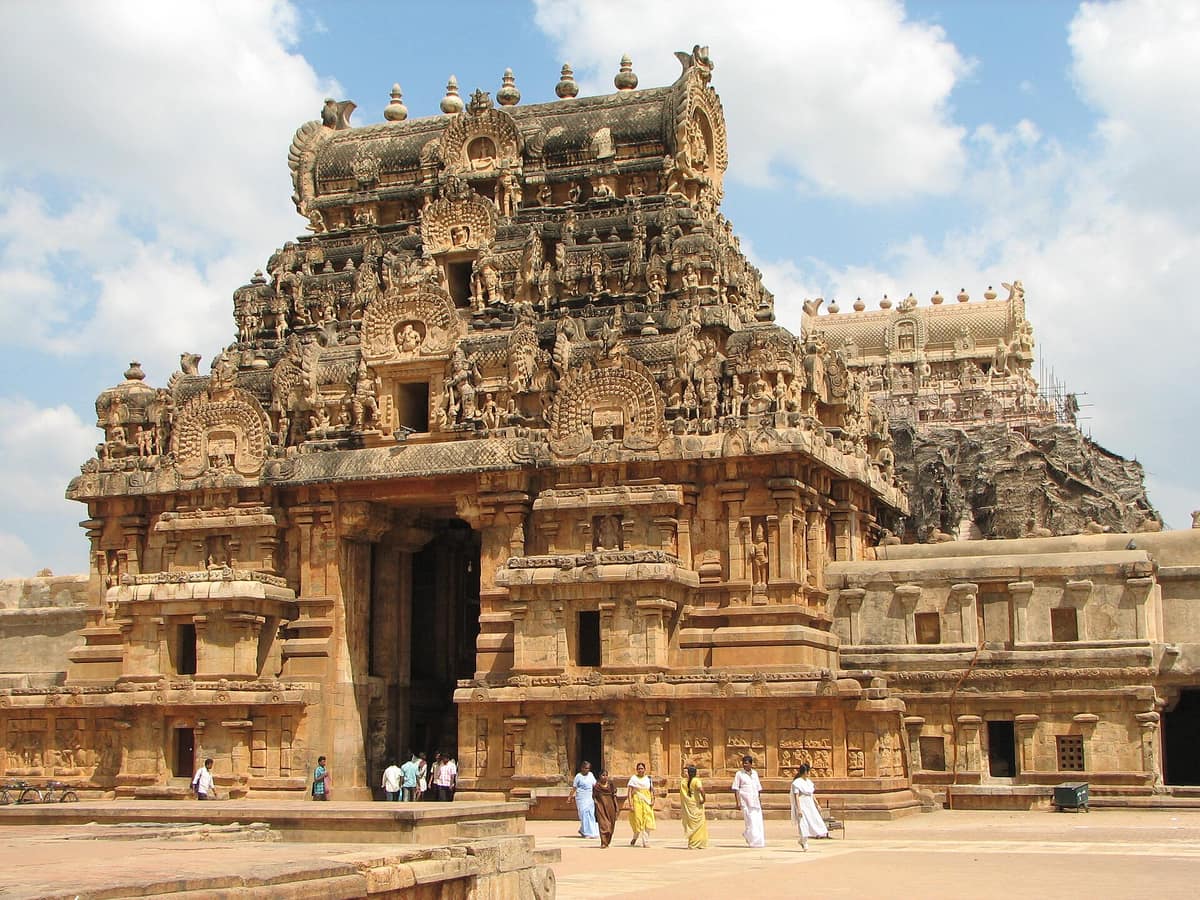
Brihadeeswarar Temple, Thanjavur — a Chola temple in the Dravida style, with its towering vimana. A UNESCO World Heritage Site.
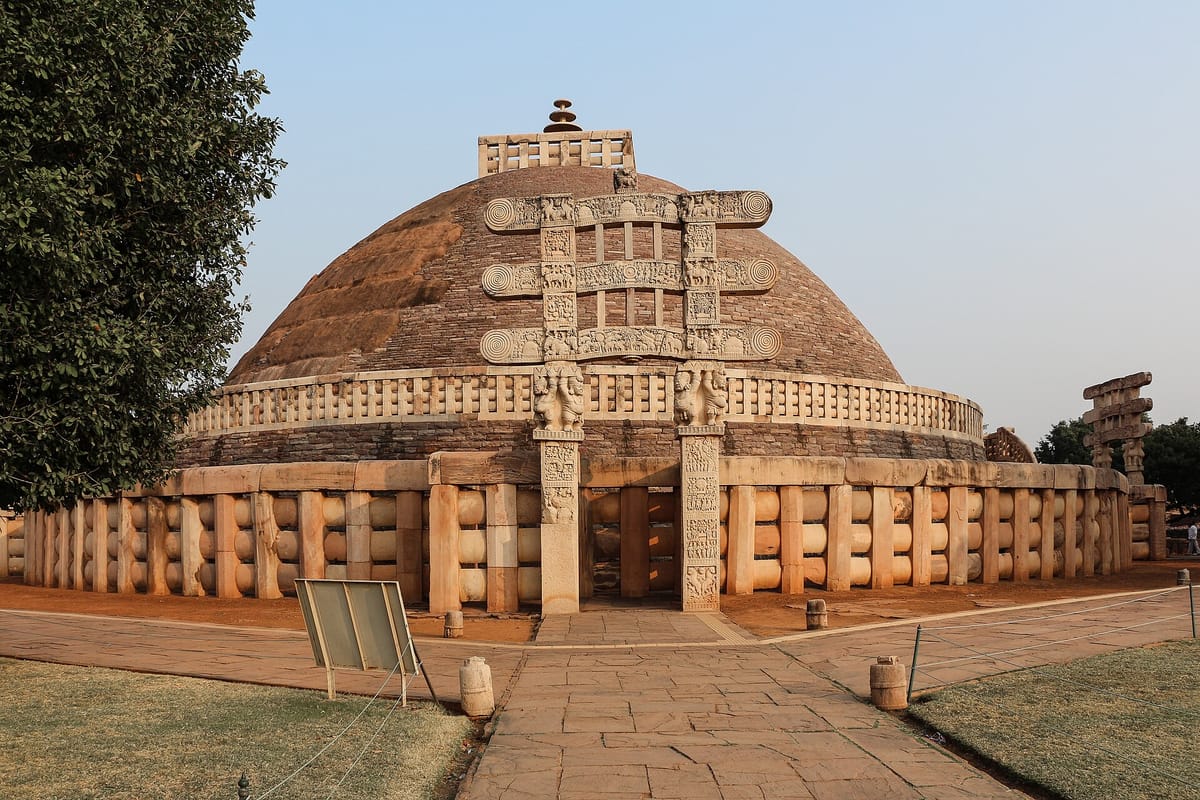
Anda (dome), Harmika (top railing), Chhatra (umbrella), Torana (gateway)
Sanchi Stupa
Madhya Pradesh; Mauryan/Ashoka; on ₹200 note
Rock-cut caves
Barabar (oldest, Maurya), Ajanta (paintings), Ellora (Kailasa temple)
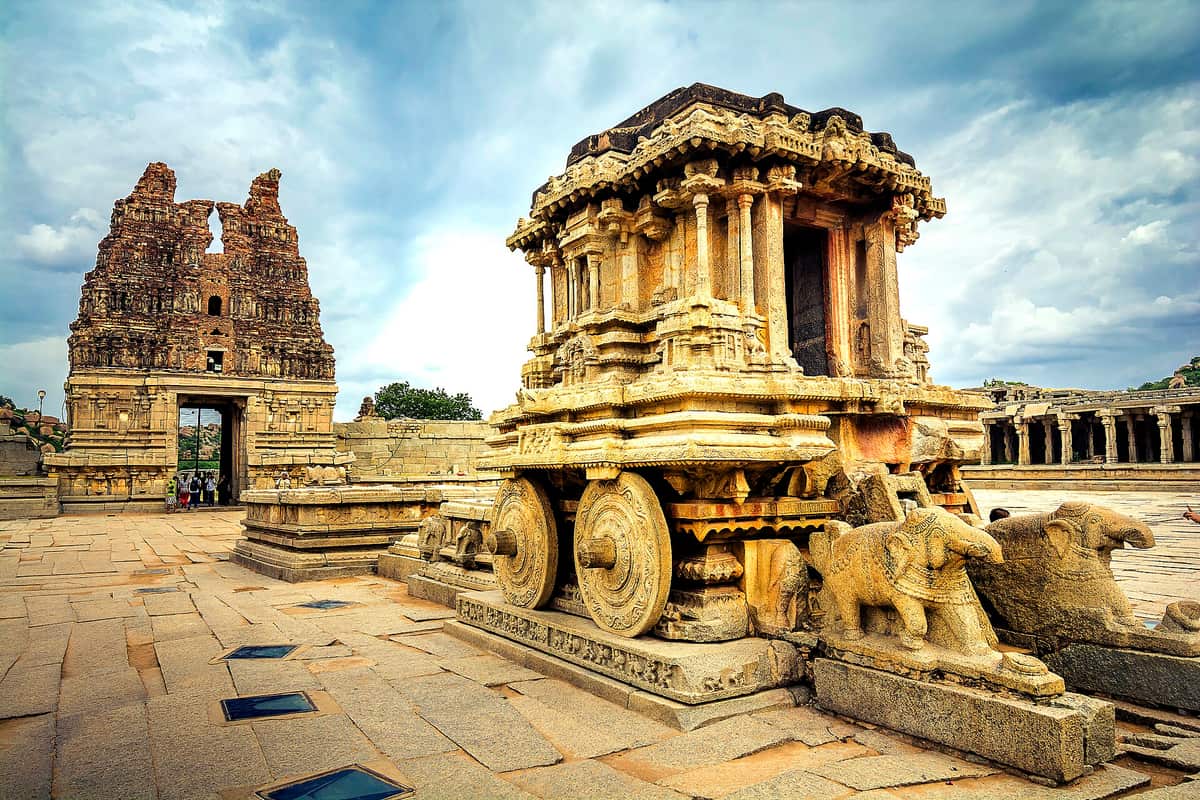
Hampi
Vijayanagara capital, Karnataka; a Hindu centre; UNESCO site
Sanchi = Mauryan stupa, on the ₹200 note; Barabar = oldest rock-cut caves (Maurya).
QUICK CHECK
TCS Question Bank — Which of the following terms is associated with the architecture of a Buddhist stupa?
Tap an option to answer
Answer: D — Harmika
The harmika is the square railing on top of a stupa's dome. (The others are temple terms.)
QUICK CHECK
TCS Question Bank — The motif of the Sanchi Stupa is present on which of the following currency notes?
Tap an option to answer
Answer: D — ₹200 note
The ₹200 note, introduced in 2017, carries the motif of the Sanchi Stupa.
QUICK CHECK
TCS Question Bank — The Barabar Caves, India's oldest surviving rock-cut caves, mostly belong to which period?
Tap an option to answer
Answer: C — Maurya Empire
The Barabar Caves in Bihar are India's oldest rock-cut caves, mostly from the Maurya period.
QUICK CHECK
TCS Question Bank — The Group of Monuments at Hampi is an important centre of which religion?
Tap an option to answer
Answer: B — Hindu
Hampi is mainly a Hindu centre, built by the Vijayanagara rulers.
Indo-Islamic, Mughal monuments and forts
Who built the Taj, the Qutub Minar, the great tombs and forts.
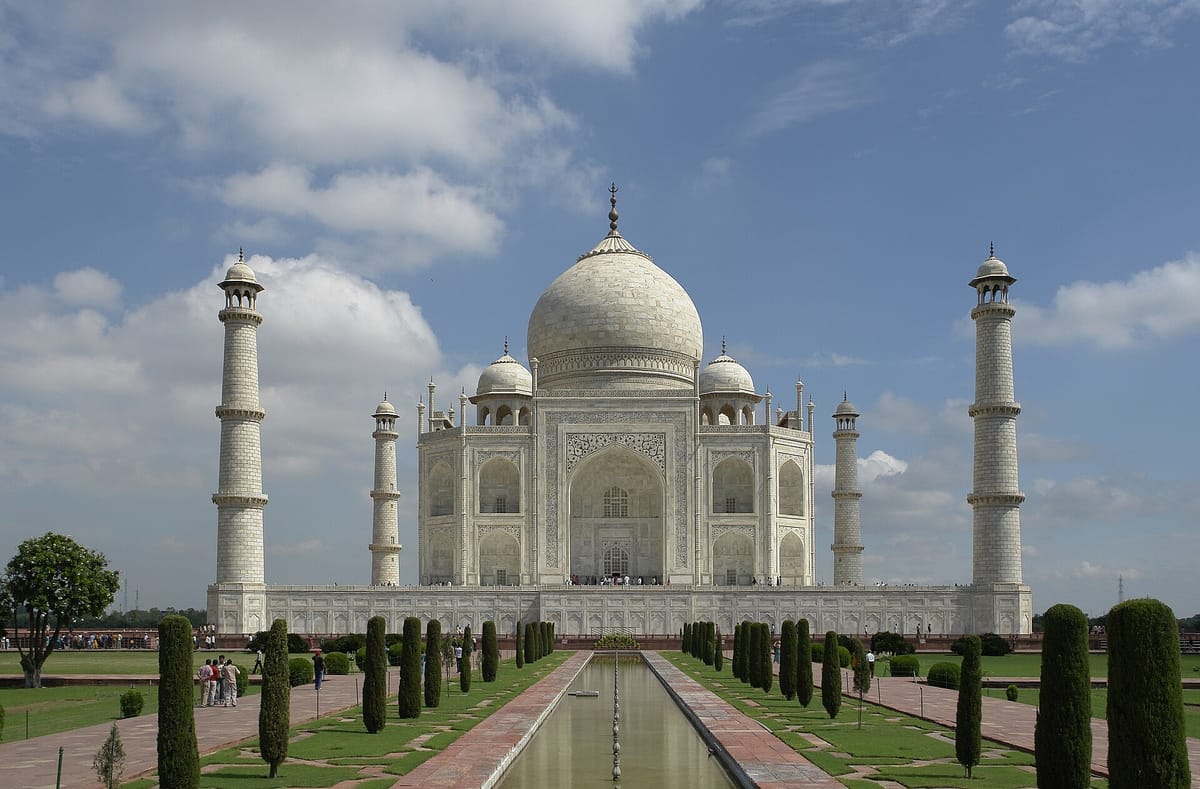
The Taj Mahal at Agra — a white-marble mausoleum built by Mughal emperor Shah Jahan for his wife Mumtaz Mahal, and one of the New Seven Wonders of the World. Image: Yann · CC BY-SA 4.0
Monument
Place
Builder / note
Taj Mahal
Agra
Shah Jahan (for Mumtaz Mahal)
Qutub Minar
Delhi
Started by Qutb-ud-din Aibak; finished by Iltutmish
Gol Gumbaz
Bijapur (Karnataka)
Tomb of Muhammad Adil Shah
Red Fort & Jama Masjid
Delhi
Shah Jahan
Hawa Mahal
Jaipur
Sawai Pratap Singh, 1799
Kumbhalgarh Fort
Rajasthan
Rana Kumbha; 2nd longest wall in the world
Taj & Red Fort = Shah Jahan; Qutub Minar started by Aibak; Hawa Mahal = Jaipur (1799).
QUICK CHECK
TCS Question Bank — Who among the following started the construction of the Qutub Minar?
Tap an option to answer
Answer: D — Qutb-ud-din Aibak
Qutb-ud-din Aibak began the Qutub Minar around 1199 (completing the first storey); Iltutmish added more.
QUICK CHECK
TCS Question Bank — The Gol Gumbaz, the mausoleum of Muhammad Adil Shah, is located in:
Tap an option to answer
Answer: B — Bijapur
The Gol Gumbaz is in Bijapur (Vijayapura), Karnataka — famous for its huge dome and whispering gallery.
QUICK CHECK
TCS Question Bank — The Ibadat Khana, a meeting house for religious debate, was built by which Mughal emperor?
Tap an option to answer
Answer: C — Akbar
Akbar built the Ibadat Khana at Fatehpur Sikri in 1575 for discussions between different faiths.
QUICK CHECK
TCS Question Bank — The longest continuous wall in India (the second longest in the world) is at which fort?
Tap an option to answer
Answer: A — Kumbhalgarh
Kumbhalgarh Fort in Rajasthan, built by Rana Kumbha, has a wall second in length only to the Great Wall of China.
QUICK CHECK
TCS Question Bank — The Hawa Mahal was built in 1799 by Maharaja Sawai Pratap Singh — which monument is it?
Tap an option to answer
Answer: A — Hawa Mahal
The Hawa Mahal ('Palace of Winds') in Jaipur was built in 1799 by Sawai Pratap Singh.
QUICK CHECK
TCS Question Bank — Which Indian city is declared a 'City of Music' by UNESCO?
Tap an option to answer
Answer: B — Varanasi
Varanasi was named a UNESCO City of Music in 2015 under the Creative Cities Network.
COMMON TRAPS
Temple styles: Nagara (north, shikhara), Dravida (south, vimana+gopuram), Vesara (Deccan, mix). Gothic is NOT Indian.