Indian Languages, Literature, Festivals and Religions
The 8th Schedule languages and which state speaks what, the big festivals and the states they belong to, India's religions, and famous books and their authors — the culture facts the exam loves, with photos and real past questions.
Punjab PolicePSSSBSSCPatwari14 MIN READ
India's culture shows up in the exam as fixed matches: a language and its state, a festival and where it is celebrated, a book and its author. This page sorts them out — the 8th Schedule of the Constitution and official languages, the major festivals state by state, the main religions, and a list of famous books and authors. Learn the pairings and these become quick, certain marks.
22
Scheduled languages
In the 8th Schedule
343
Article for Hindi
Official language of the Union
4
Religions born in India
Hindu, Buddhist, Jain, Sikh
Languages and the Constitution
The 8th Schedule, and which state speaks what officially.
Point
Remember
8th Schedule
Lists the 22 scheduled languages of India
Article 343
Hindi in Devanagari = official language of the Union
First classical language
Tamil (given the status in 2004)
Punjabi
Official language of Punjab; in the 8th Schedule
Konkani / Bengali / Malayalam
Official in Goa / Tripura & W. Bengal / Kerala
22 scheduled languages; Article 343 = Hindi; Tamil was the first classical language.
QUICK CHECK
TCS Question Bank — Under which Article of the Constitution is Hindi declared the official language?
Tap an option to answer
Answer: B — Article 343
Article 343(1) makes Hindi in Devanagari script the official language of the Union.
QUICK CHECK
TCS Question Bank — Konkani is the official language of which state?
Tap an option to answer
Answer: D — Goa
Konkani (in Devanagari script) is the official language of Goa.
QUICK CHECK
TCS Question Bank — Bengali is the official language of which state (besides West Bengal)?
Tap an option to answer
Answer: B — Tripura
Bengali is an official language of Tripura (along with Kokborok and English).
Festivals of India
Each festival belongs to a state — learn the pairs.
Festivals across India
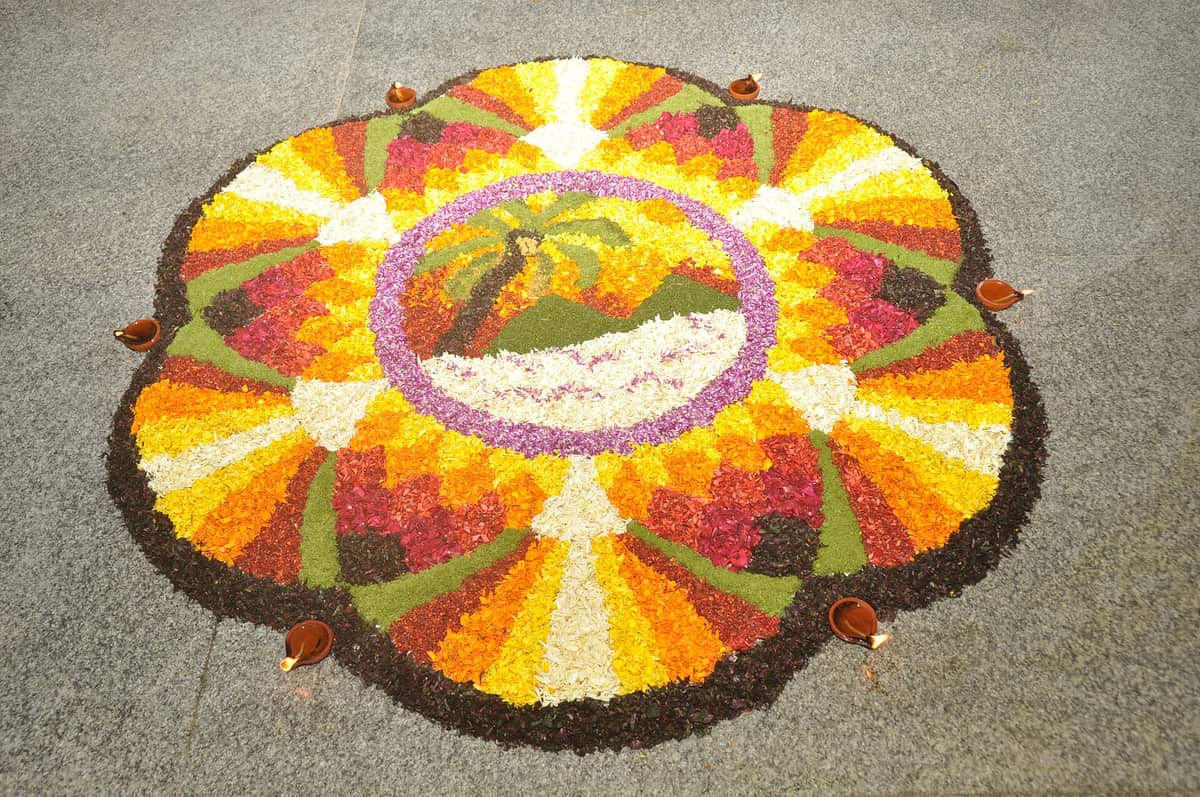
A Pookalam — the flower rangoli of Onam, Kerala's harvest festival. Onam honours the legendary King Mahabali.
TCS Question Bank — Which of the following is a harvest festival of India?
Tap an option to answer
Answer: B — Lohri
Lohri, celebrated on 13 January mainly in Punjab, marks the end of winter and the sugarcane harvest.
QUICK CHECK
TCS Question Bank — The 'Chapchar Kut' festival is celebrated in March every year in which state?
Tap an option to answer
Answer: B — Mizoram
Chapchar Kut is Mizoram's main spring festival, held in March after the jungle is cleared for farming.
QUICK CHECK
TCS Question Bank — Losar, celebrated on the first day of the eleventh month of the Tibetan calendar, is a festival of:
Tap an option to answer
Answer: D — Losar (Ladakh)
Losar is the Ladakhi (and Tibetan Buddhist) New Year.
QUICK CHECK
TCS Question Bank — The two-day Hemis religious festival is from which part of India?
Tap an option to answer
Answer: B — Ladakh
The Hemis Festival is held at Hemis Monastery near Leh in Ladakh.
QUICK CHECK
TCS Question Bank — Makaravilakku, held on Makar Sankranti at the Sabarimala temple, is a festival of which state?
Tap an option to answer
Answer: D — Kerala
Makaravilakku is held at the Sabarimala Ayyappa Temple in Kerala.
Religions, and books and authors
India's faiths, and the book–author pairs the exam asks.
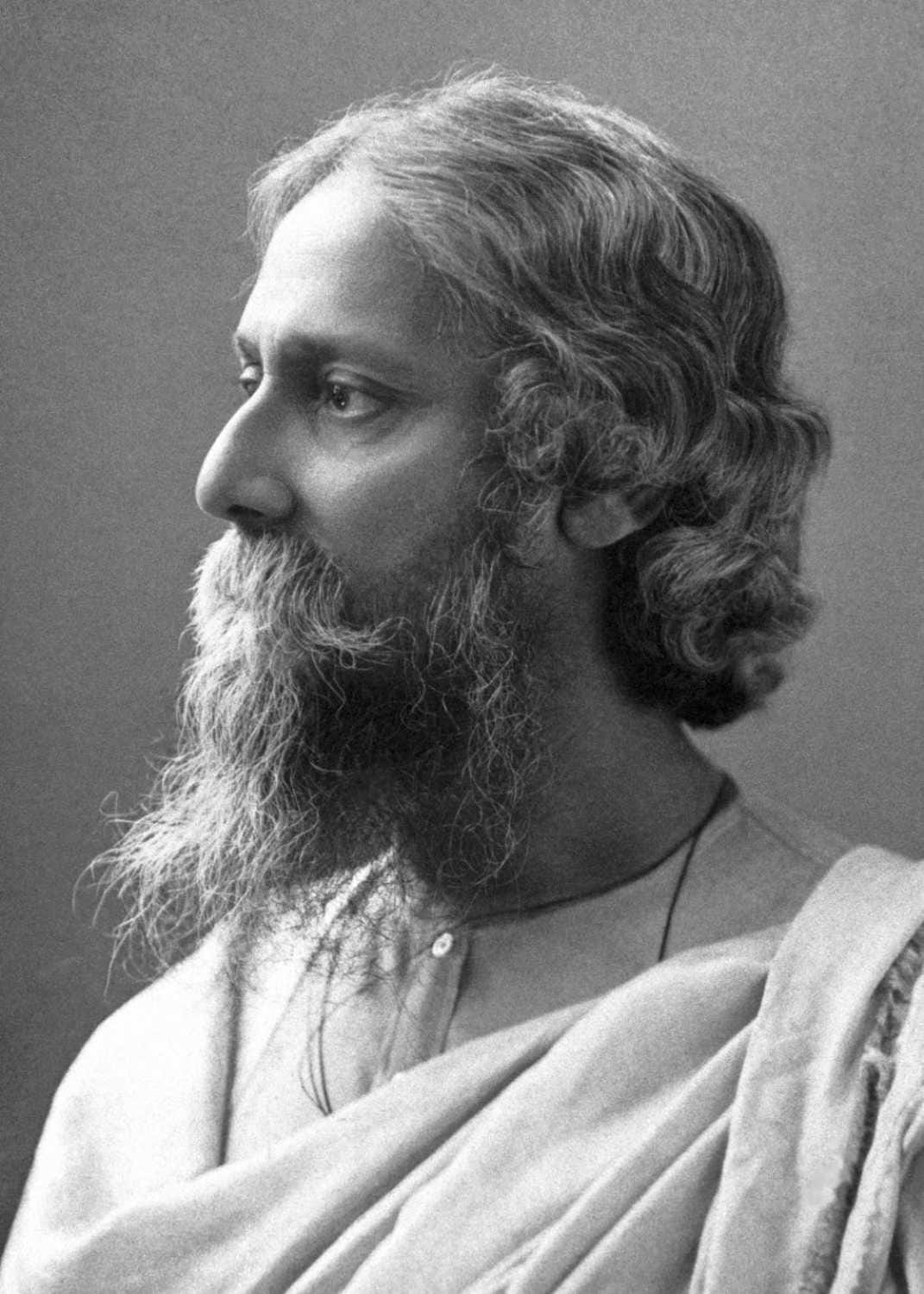
Rabindranath Tagore wrote 'Gitanjali', won the Nobel Prize for Literature in 1913 (first Indian/Asian to do so), and composed India's national anthem. Image: Generalstabens litografiska anstalt · Public domain
Book
Author
Gitanjali
Rabindranath Tagore
The White Tiger
Aravind Adiga
The God of Small Things
Arundhati Roy
My Experiments with Truth
M. K. Gandhi
The Discovery of India
Jawaharlal Nehru
Wings of Fire
A. P. J. Abdul Kalam
Four religions were born in India: Hinduism, Buddhism, Jainism and Sikhism.
QUICK CHECK
TCS Question Bank — Who is the author of the book 'The White Tiger'?
Tap an option to answer
Answer: B — Aravind Adiga
Aravind Adiga wrote 'The White Tiger', which won the Booker Prize in 2008.
QUICK CHECK
TCS Question Bank — Who is the author of 'The Namesake'?
Tap an option to answer
Answer: B — Jhumpa Lahiri
'The Namesake' (2003) is a novel by Jhumpa Lahiri.
QUICK CHECK
TCS Question Bank — Who wrote the autobiography 'My Experiments with Truth'?
Tap an option to answer
Answer: D — M. K. Gandhi
'The Story of My Experiments with Truth' is Mahatma Gandhi's autobiography, written in Gujarati.
QUICK CHECK
TCS Question Bank — Which book was written by Netaji Subhas Chandra Bose?
Tap an option to answer
Answer: C — The Indian Struggle
Subhas Chandra Bose wrote 'The Indian Struggle', covering the national movement from 1920 to 1942.
QUICK CHECK
TCS Question Bank — 'Ashtadhyayi', written by the Sanskrit scholar Panini, is a book on:
Tap an option to answer
Answer: D — grammar
Panini's Ashtadhyayi ('eight chapters') is a classic treatise on Sanskrit grammar.
COMMON TRAPS
8th Schedule = 22 languages; Article 343 = Hindi; Tamil = first classical language.