Plants, animals and their surroundings — air, water, soil and sunlight — work together as an ecosystem. Energy flows through it in food chains. Pollution, tree cutting and waste upset this balance. Exams ask about gases, pollution, forests, wildlife, and the laws and world agreements that protect them.
On this page you will learn:
- Food chains, the 10 percent law, and what the environment does for us
- The ozone layer, UV rays and greenhouse gases
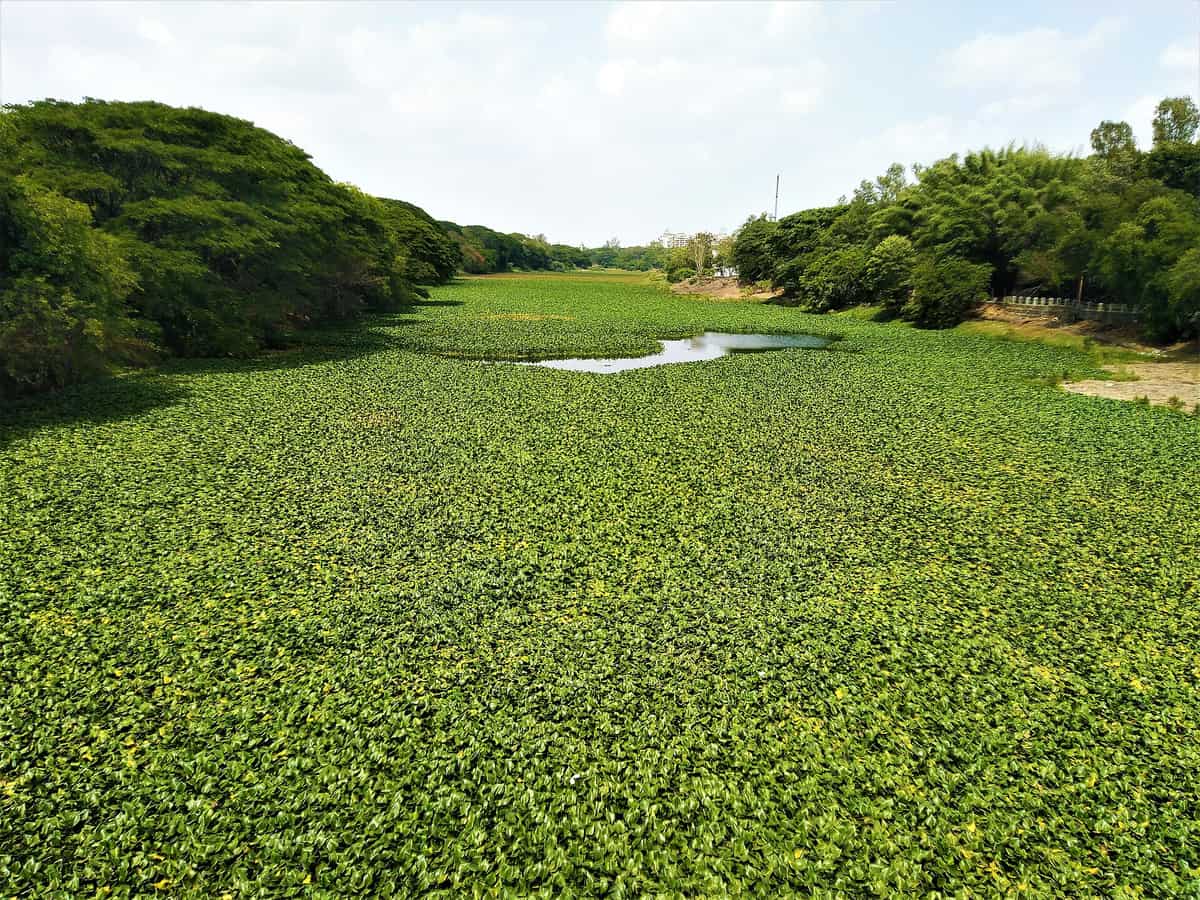
- Air and water pollution: stubble smoke, BOD, algal bloom, water hyacinth
- Waste and the 3Rs
- Forests, national parks, Chipko and sacred groves
- Indian laws, world agreements and World Environment Day
Ecosystems and food chains
Rule in one line: energy enters through green plants and flows one way up the chain.
| Component | Role | Examples |
|---|---|---|
| Producers | Make food by photosynthesis | Grass, trees, algae |
| Herbivores | Eat plants (primary consumers) | Deer, goat, grasshopper |
| Carnivores | Eat other animals | Lion, frog, snake, hawk |
| Omnivores | Eat both plants and animals | Humans, crow, bear |
| Decomposers | Break dead matter into simple substances | Bacteria, fungi |
- 1GrassProducer
- 2GrasshopperHerbivore
- 3FrogSmall carnivore
- 4SnakeLarger carnivore
- 5EagleTop carnivore
Only about 10 percent of the energy at one level reaches the next. The rest is used for living or lost as heat. So food chains are short, and there are far fewer lions than deer. Energy flows one way; it never comes back to the plants.
Some chemicals, such as the pesticide DDT, do not break down in the body. They build up at each step of the food chain. So the top consumers carry the most. Humans are often at the top, so we are at risk too.
Renewable ones such as forests and water; non-renewable ones such as coal and minerals.
This power is called its absorptive capacity. Too much waste breaks it.
By keeping genetic and biological diversity.
Scenery and other aesthetic services.
The four functions of the environment. An exam option that lists all four is correct.
Ozone layer and greenhouse gases
Rule in one line: ozone high up shields us from UV rays; greenhouse gases trap heat near the ground.
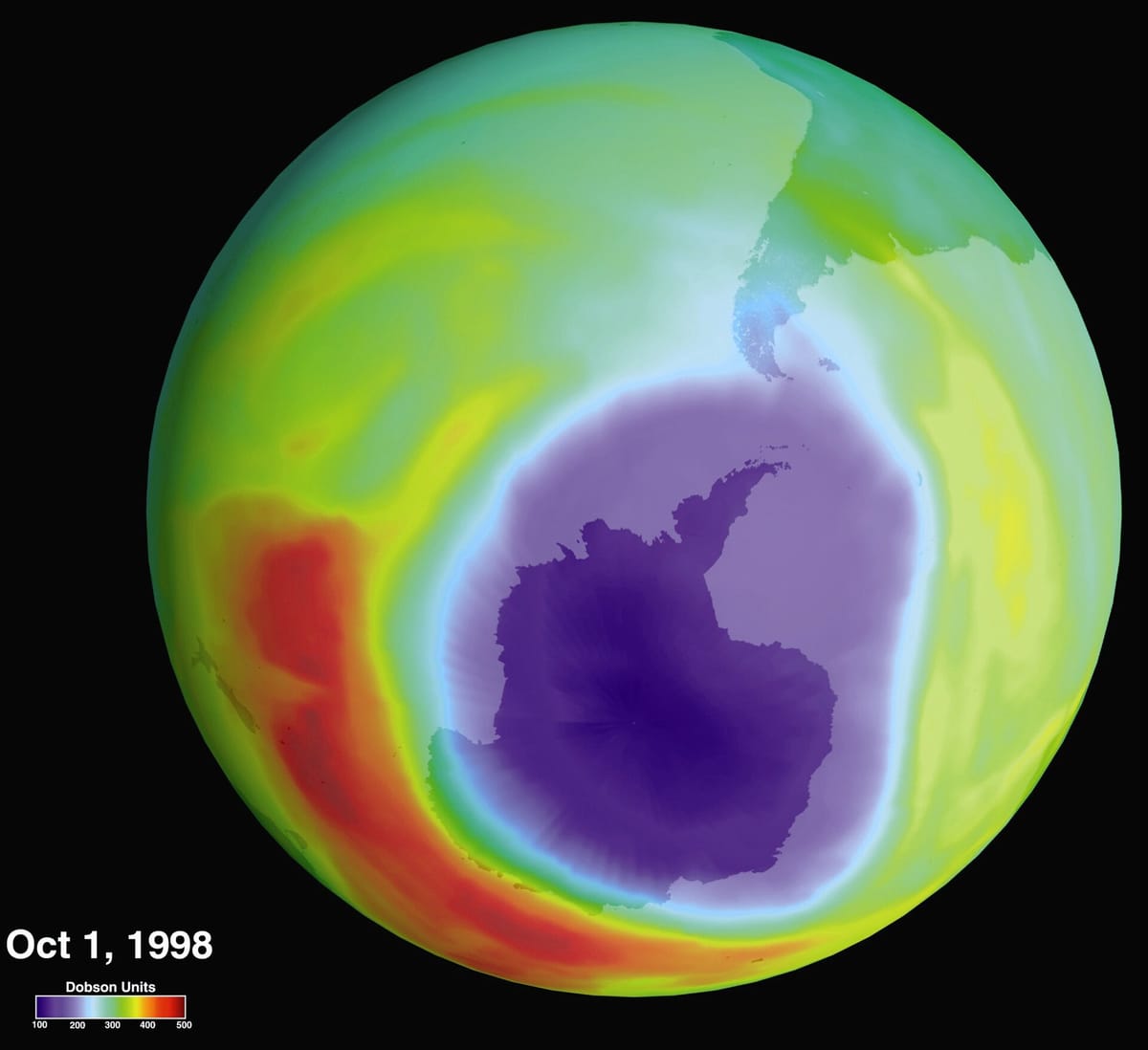
These gases let sunlight in but trap the heat going out. The six counted under the Kyoto Protocol are carbon dioxide, methane, nitrous oxide, HFCs, PFCs and sulphur hexafluoride. Water vapour and CFCs (and HCFCs) also trap heat. CO2 is the main cause of today's warming. Oxygen, nitrogen and propane are not counted.
Human activity has warmed the Earth by about 1.1 °C (IPCC average for 2011–2020; recent years are warmer still, about 1.3 °C) since pre-industrial times — not 3 °C, as one SI 2023 option claimed. Climate change is the long-term shift in weather patterns; global warming is one part of it.
Air and water pollution
Rule in one line: a pollutant is any substance that harms air, water or soil.
| Pollutant | Source | Harm |
|---|---|---|
| Carbon monoxide (CO) | Incomplete burning of fuel, vehicles | Binds haemoglobin, cutting oxygen supply |
| SO2 and NO2 | Burning coal and petrol; factories | Acid rain; breathing problems |
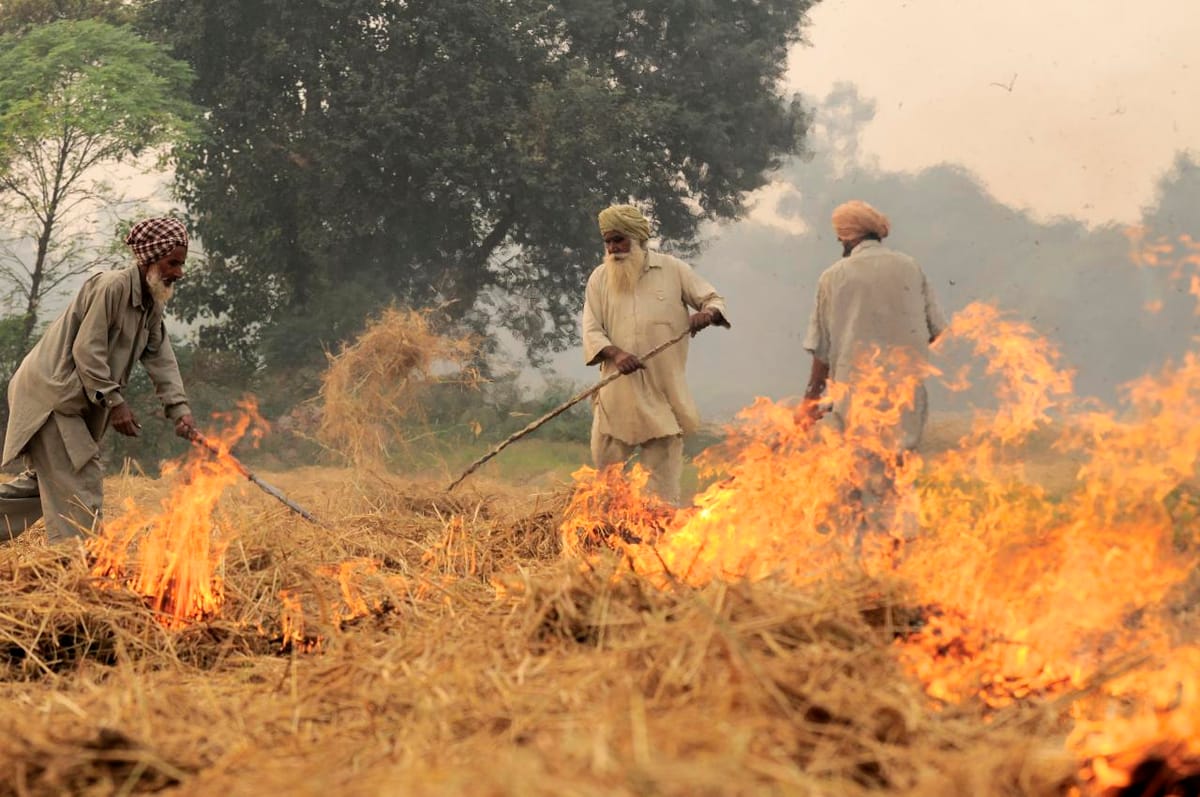
| Particulate matter (PM2.5) | Smoke, dust, crop-stubble burning | Smog, lung disease |
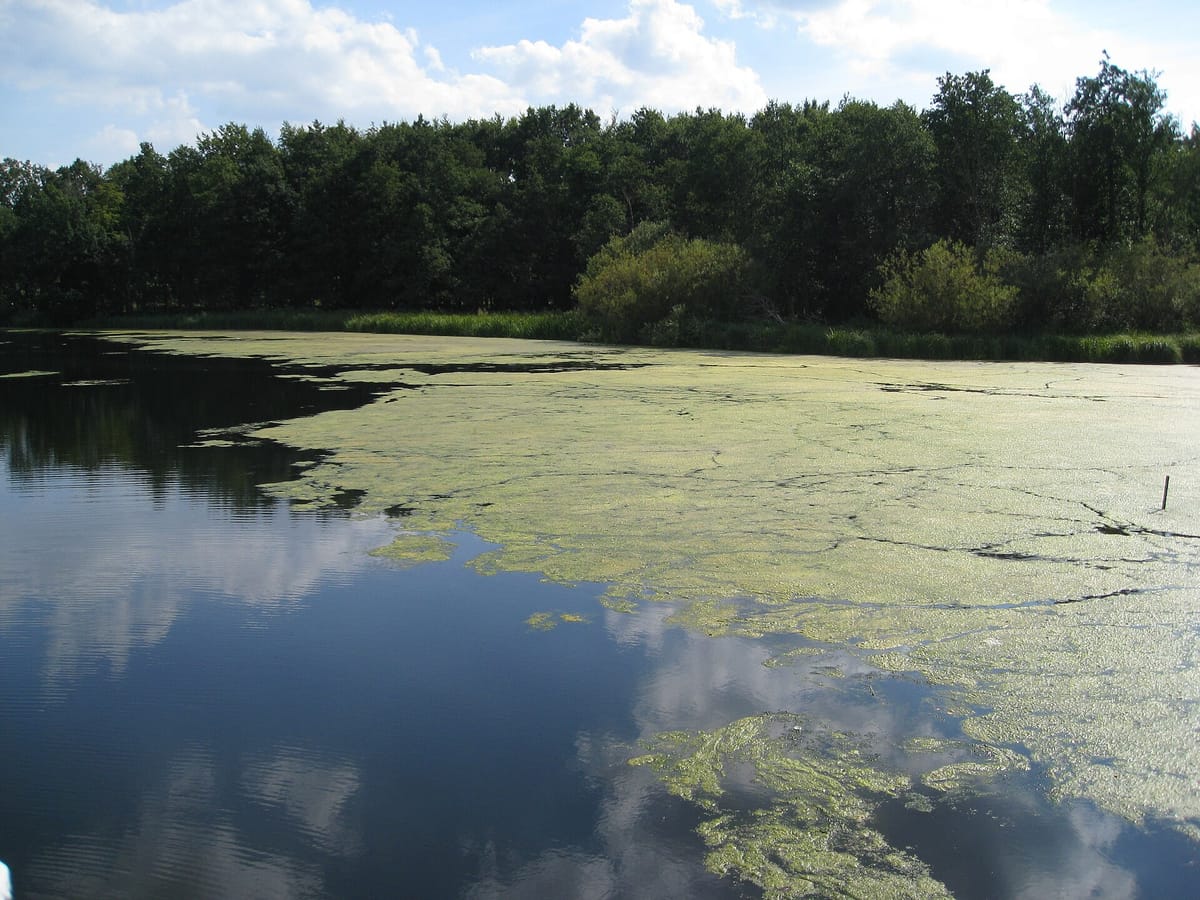
| Sewage and fertilisers | Homes, fields | Algal bloom kills fish (eutrophication) |
| Industrial waste | Factories | Poisonous metals in rivers |
Germs in water use oxygen to break down biodegradable organic matter, such as sewage. BOD is the oxygen they need. High BOD = dirty water: little oxygen is left for fish. Clean river water has a low BOD.
- 1Sewage and fertiliser reach a lakeThey carry nitrogen and phosphorus
- 2Algae grow very fastAn algal bloom covers the water
- 3Algae die and rotBacteria use up the oxygen; BOD rises
- 4Fish die; the lake ages fastThis is cultural eutrophication
Waste and the 3Rs
Rule in one line: if microbes can eat it, it is biodegradable.
Forests, wildlife and people who saved them
Rule in one line: protect the habitat, and the plants and animals in it survive.
| Protected area | What it protects |
|---|---|
| Wildlife sanctuary | Animals; some human activity such as grazing may be allowed |
| National park | Whole ecosystem; stricter rules |
| Biosphere reserve | Large area: wildlife, plants and traditional ways of local people |
| Ramsar wetland | Wetlands of world importance, such as Harike in Punjab |
| National park | State | Remember it for |
|---|---|---|
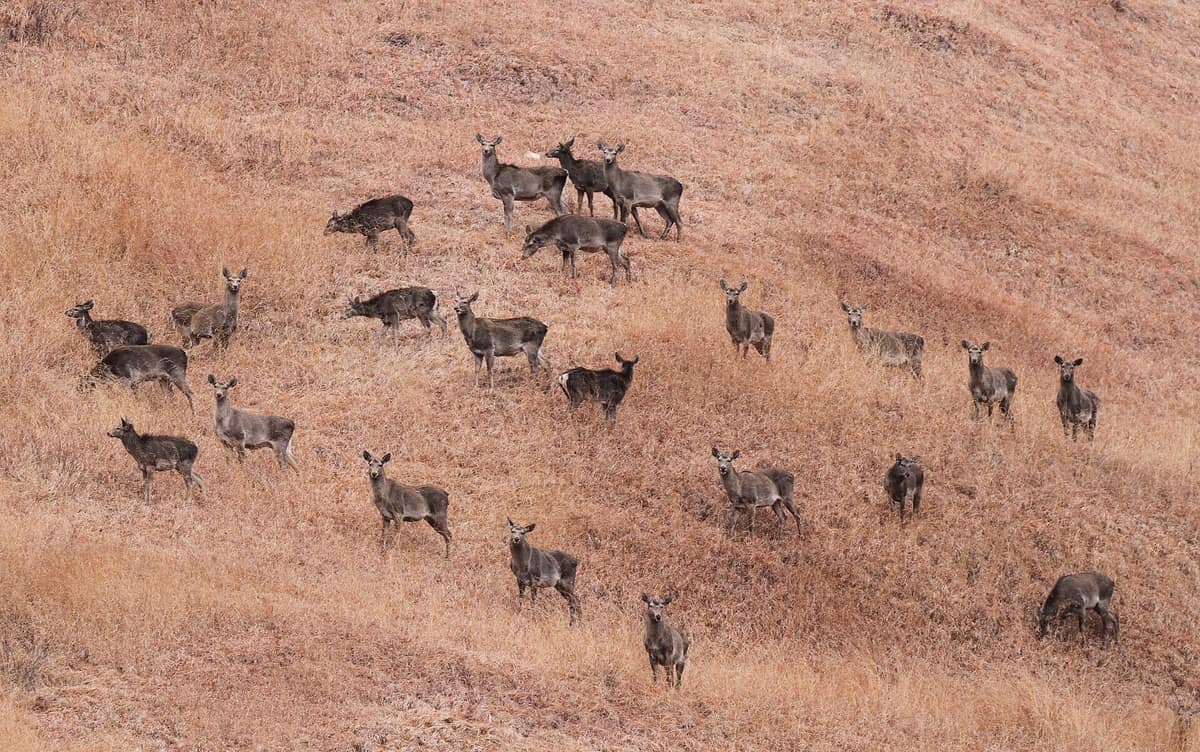
| Dachigam | Jammu & Kashmir | Hangul (Kashmir stag) |
| Kanha | Madhya Pradesh | Barasingha (swamp deer), tigers |
| Bandipur | Karnataka | Tigers and elephants |
| Kalesar | Haryana | Sal forest in the Shivalik foothills |
| Jim Corbett | Uttarakhand | India's first national park (1936) |
- 1730Amrita Devi Bishnoi
At Khejarli, Rajasthan, she and over 360 Bishnois gave their lives to save khejri trees.
- 1952National Forest Policy
Goal: one-third (33%) of India's land under forest.
- 1973Chipko movement
Began at Mandal village, Chamoli, in the Garhwal Himalaya. Villagers hugged trees to stop their felling.
- 1973Project Tiger
Launched to protect tigers in their habitats.
- 1992Project Elephant
Launched by the Ministry of Environment and Forests to protect elephants and their corridors.
Organised the first Chipko protest at Mandal (1973).
Led the women of Reni village who saved their forest (1974).
Spread Chipko's message; later opposed the Tehri dam.
Tribal farmer of Koraput who saved over 100 local seed varieties; Padma Shri 2019.
People to know. SI 2023 asked Kamala Pujari's state: Odisha.
Laws, world agreements and green days
Rule in one line: learn the year with the name — papers ask both ways.
- 1972Wildlife (Protection) Act
Protects wild animals and plants; provides for sanctuaries and national parks.
- 1974Water (Prevention and Control of Pollution) Act
Set up the pollution control boards.
- 1980Forest (Conservation) Act
Forest land cannot be used for other work without the Centre's approval.
- 1981Air (Prevention and Control of Pollution) Act
Asked in Constable 2024.
- 1986Environment (Protection) Act
The umbrella law, passed after the Bhopal gas tragedy of 1984.
- 2019National Clean Air Programme (NCAP)
Launched by the Environment Ministry (MoEFCC) on 10 January 2019.
Laws in order: 72 wildlife, 74 water, 80 forest, 81 air, 86 everything.
- 1972Stockholm Conference
First UN meeting on the environment. Its opening day, 5 June, became World Environment Day.
- 1987Montreal Protocol
To phase out ozone-damaging CFCs.
- 1992Rio Earth Summit
At Rio de Janeiro, Brazil. Gave Agenda 21 (the action plan for sustainable development), the climate treaty (UNFCCC) and the biodiversity treaty (CBD).
- 1997Kyoto Protocol
Set binding targets for industrialised countries to cut greenhouse gases. In force from 2005.
- 2015Paris Agreement
Every country sets its own climate targets.
More facts that are asked onceTap to open
- The 1952 Forest Policy put forests in four groups: protected, national, village forests and tree lands. 'Classified forests' is not one of them.
- Madhya Pradesh has the largest forest cover by area (Forest Survey of India report).
- Teak is the main tree of tropical deciduous (monsoon) forests. Deodar, fir and cedar grow in the mountains.
- Gobar gas, wind and solar energy are renewable; diesel is not. That makes diesel the odd one out.
- The Polluter Pays principle — whoever pollutes pays for the damage — was recognised by the Supreme Court of India.
- The term environmental refugee became popular after the African drought of the 1970s and 1980s.
- In 1995 Kisan Mehta of the NGO Prakruti suggested that cotton could be grown organically.
- India's first Frozen Zoo (2024) is at the Padmaja Naidu Himalayan Zoological Park, Darjeeling. It stores cells and DNA of animals such as the red panda and snow leopard.
- On 31 October 2024 India released its updated biodiversity plan (NBSAP) at COP16 of the biodiversity treaty, held in Cali, Colombia.
- Rainwater harvesting refills groundwater, which has fallen sharply in much of Punjab.
Traps and practice
Last revision — where the options try to fool you.
- UV rays cause skin cancer; ozone protects us from them. Do not pick 'ozone gas' as the cause.
- Montreal (1987) is about ozone; Kyoto (1997) and Paris (2015) are about climate.
- BOD measures biodegradable organic matter — not inorganic, not non-biodegradable.
- Lake ageing by sewage = cultural eutrophication. Biomagnification is about poisons like DDT in food chains.
- Kanha is in Madhya Pradesh; Dachigam (hangul) is in J&K.
- Project Tiger 1973, Project Elephant 1992. Chipko also began in 1973.
- Energy flows one way; materials such as carbon go round in cycles.
Why does a lake that receives sewage lose its fish?
Show answer
Sewage adds nutrients, so algae grow fast. When the algae die, bacteria break them down and use up the oxygen (high BOD). With too little oxygen, the fish die.
- World Environment Day
- 5 June
- Environment (Protection) Act
- 1986
- Air Act
- 1981
- Treaty that phased out CFCs
- Montreal Protocol, 1987
- Emission targets for rich countries
- Kyoto Protocol, 1997
- Action plan of the Rio summit (1992)
- Agenda 21
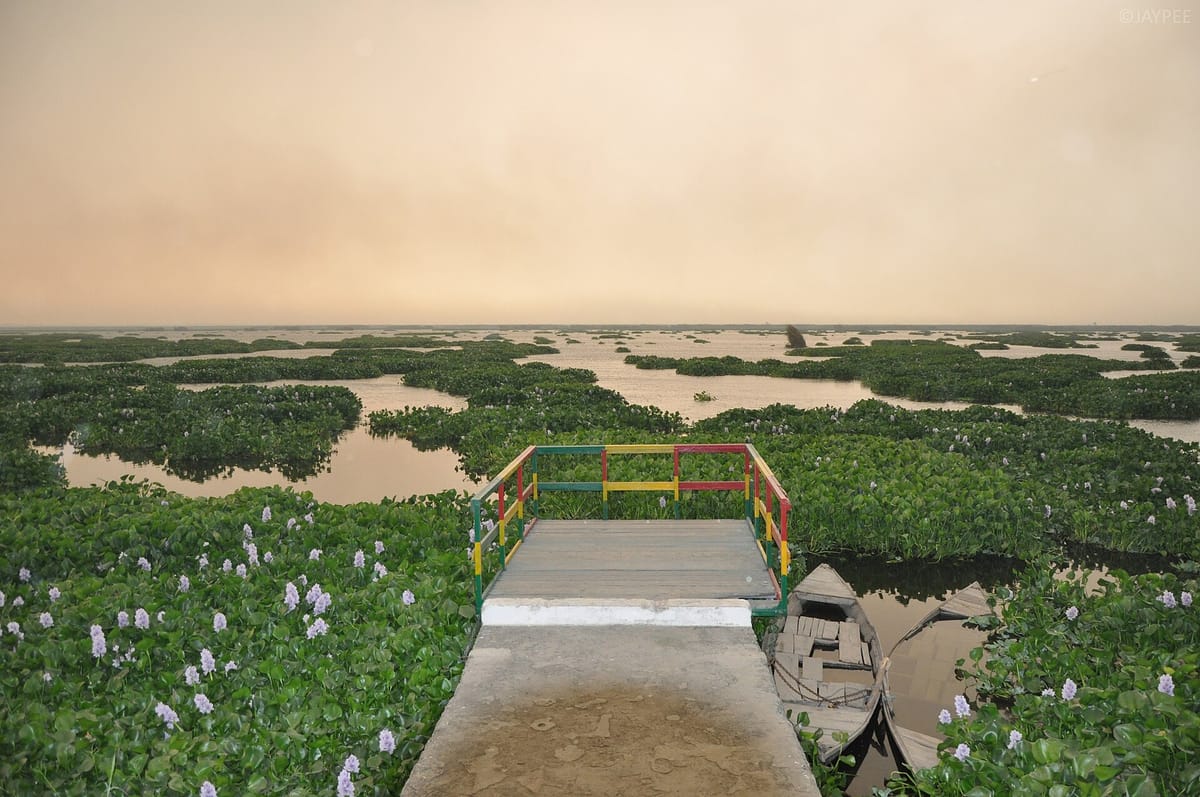
- World's worst water weed
- Water hyacinth (Eichhornia)
- Home of the hangul
- Dachigam National Park
- Ramsar wetland in Punjab
- Harike
- Forest goal, 1952 policy
- 33%
- Producers → herbivores → carnivores; decomposers recycle
- 10% energy passes to the next level; DDT builds up at the top
- Ozone shields from UV; CFCs thin it
- CO2 is the main greenhouse gas; propane is not one
- High BOD = dirty water; sewage → cultural eutrophication
- Chipko 1973, Garhwal; Project Elephant 1992
- Acts: 1972, 1974, 1980, 1981, 1986; NCAP 2019
- Stockholm 1972 (5 June), Montreal 1987, Rio 1992, Kyoto 1997, Paris 2015