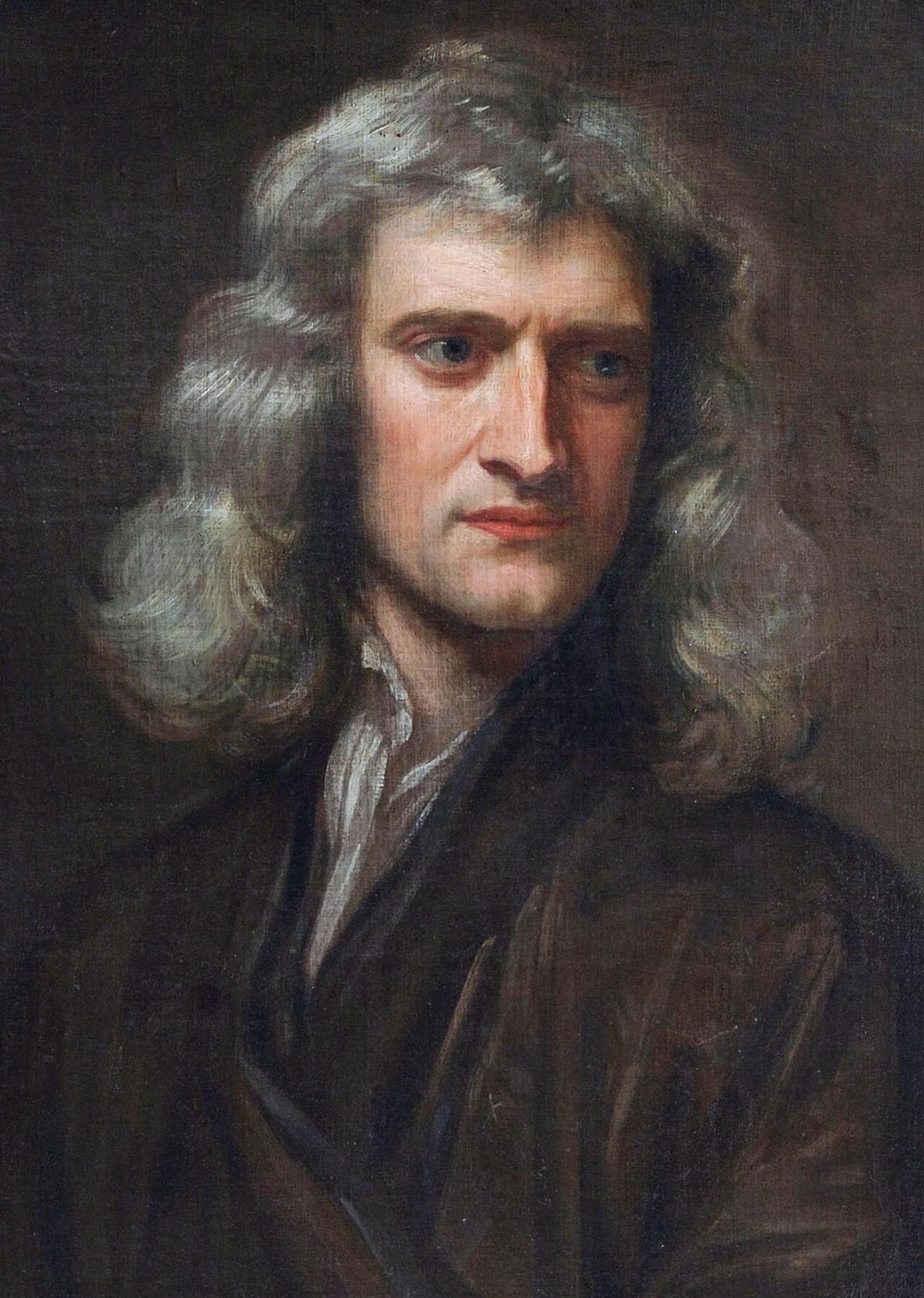
Why do bus passengers fall forward when the driver brakes? How does a rocket rise? Why does a ball thrown up always come down? Three laws of motion and one law of gravitation answer all of these. This page starts from distance and speed, then builds up Newton's laws, momentum, free fall and weight.
On this page you will learn:
- Distance and displacement; speed, velocity and acceleration
- Force, inertia and Newton's three laws
- Momentum, recoil of a gun and how a rocket works
- Gravitation, free fall, g, and mass versus weight
Describing motion
Rule in one line: distance is the path covered; displacement is the straight line from start to finish.
| Quantity | Meaning | SI unit |
|---|---|---|
| Speed | Distance ÷ time | m/s |
| Velocity | Displacement ÷ time (speed with direction) | m/s |
| Acceleration | Change in velocity ÷ time | m/s² |
| Retardation | Negative acceleration: the body slows down | m/s² |
| Equation | Links |
|---|---|
| v = u + at | Velocity and time |
| s = ut + ½at² | Distance and time |
| v² − u² = 2as | Distance and velocity |
A body moving in a circle at constant speed keeps changing direction. So its velocity changes, and the motion is accelerated. The force that keeps it on the circle points to the centre. It is called the centripetal force. The Moon going round the Earth is an example.
On a distance–time graph, the slope gives the speed. On a velocity–time graph, the slope gives the acceleration and the area under the line gives the distance. A vehicle's odometer records distance; its speedometer shows speed.
Force and Newton's three laws
Rule in one line: first law inertia, second law F = ma, third law action and reaction.
A force is a push or a pull. It can start or stop motion, change speed or direction, or change shape. Its SI unit is the newton (N). 1 N gives a mass of 1 kg an acceleration of 1 m/s². Only an unbalanced force changes motion. In a tug of war where nobody moves, the forces are balanced.
- Muscular force: lifting a bucket
- Friction: a rolling ball slowly stops
- Magnetic force: a magnet pulls iron pins
- Electrostatic force: a rubbed comb pulls paper bits
- Gravity: fruit falls from a tree
| Law | What it says | Everyday examples |
|---|---|---|
| First law (law of inertia) | A body stays at rest, or keeps moving in a straight line, until an unbalanced force acts on it | Passengers fall forward when a bus stops suddenly; dust leaves a beaten carpet |
| Second law | Force = rate of change of momentum, so F = ma | A fielder pulls the hands back while catching; high jumpers land on soft mats |
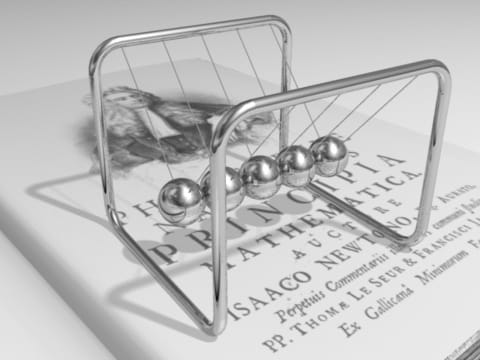
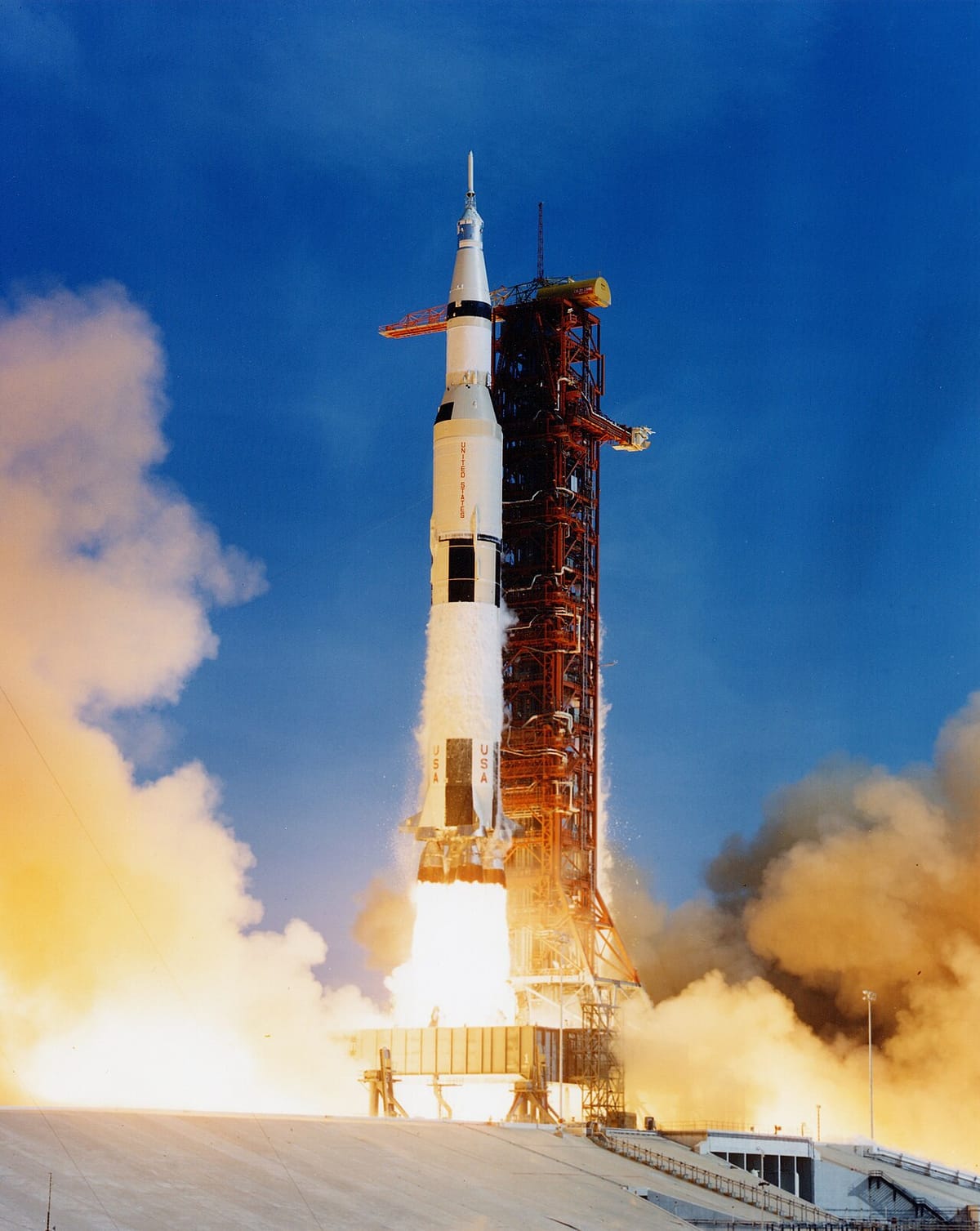
| Third law | Every action has an equal and opposite reaction, acting on a different body | Recoil of a gun; a rocket rising; a swimmer pushing water back |
Inertia is a body's tendency to resist any change in its rest or motion. Mass is the measure of inertia: a loaded truck is harder to start or stop than a bicycle. When a bus starts suddenly, standing passengers fall backward (inertia of rest). When it stops suddenly, they fall forward (inertia of motion).
Momentum (p) = mass × velocity. Its unit is kg m/s. If no outside force acts, the total momentum stays the same: the law of conservation of momentum. When a gun fires, the bullet goes forward and the gun moves back with equal and opposite momentum. This backward kick is the recoil.
Gravitation, free fall and weight
Rule in one line: a falling body gains speed, but its acceleration g stays the same.
Every two objects in the universe pull each other. The force grows with their masses and falls with the square of the distance between them: F = G m₁m₂ / d². Double the distance, and the force becomes one-fourth. G is the universal gravitational constant, 6.67 × 10⁻¹¹ N m²/kg², the same everywhere.
- It makes objects fall and holds us to the Earth
- It keeps the Moon going round the Earth, and the planets round the Sun
- The Moon's pull causes tides in the sea
- 10 s: droppedSpeed 0 m/s
- 2After 1 sSpeed about 9.8 m/s
- 3After 2 sSpeed about 19.6 m/s
- 4After 3 sSpeed about 29.4 m/s
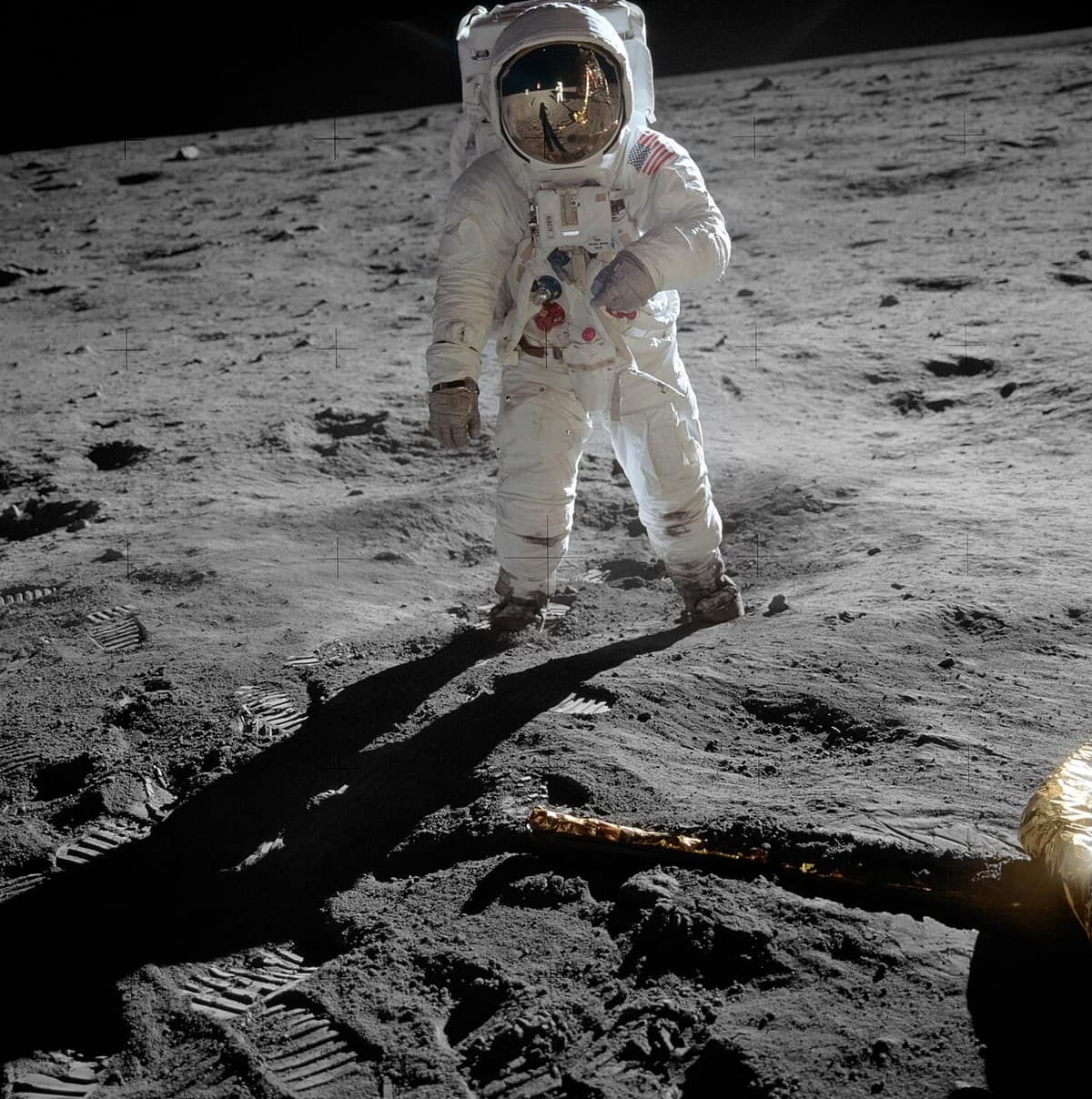
Near the Earth's surface every freely falling body speeds up at about 9.8 m/s², whatever its mass. In a vacuum a feather and a coin fall together. g is a little more at the poles than at the equator. It falls as we go up, and also as we go down into the Earth. At the centre of the Earth, g is zero.
More facts asked once in a whileTap to open
- Escape velocity from the Earth is about 11.2 km/s: the least speed a body needs to leave the Earth's pull without more push.
- Galileo showed that, without air, heavy and light bodies fall at the same rate.
- Kepler's laws describe how planets move round the Sun in elliptical orbits. Newton's law of gravitation explains them.
- Action and reaction act on different bodies, so they never cancel each other.
Traps and practice
Last revision — where the options try to fool you.
- Free fall: acceleration is constant; velocity and speed are not.
- g (9.8 m/s², changes from place to place) is not G (6.67 × 10⁻¹¹ N m²/kg², same everywhere).
- Least weight: the centre of the Earth (zero). On the surface: the equator.
- Rocket and gun recoil: Newton's third law — not Kepler, not Einstein.
- Bus starts: fall backward (inertia of rest). Bus stops: fall forward (inertia of motion).
- Uniform circular motion is accelerated motion, though the speed is constant.
A car starts from rest and reaches 20 m/s in 5 s. What is its acceleration?
Show answer
a = (v − u) / t = (20 − 0) / 5 = 4 m/s².
A person has a mass of 60 kg. What is the weight on Earth (g = 10 m/s²) and on the Moon?
Show answer
On Earth W = 60 × 10 = 600 N. On the Moon it is about one-sixth: 100 N. The mass stays 60 kg in both places.
- SI unit of force
- Newton (N)
- Measure of inertia
- Mass
- Momentum
- Mass × velocity
- How a rocket works
- Newton's third law
- Constant in free fall
- Acceleration (g)
- g on Earth
- 9.8 m/s²
- Least weight
- Centre of the Earth
- 36 km/h in m/s
- 10 m/s
- Distance scalar; displacement vector
- km/h × 5/18 = m/s
- v = u + at; s = ut + ½at²; v² − u² = 2as
- First law inertia; second F = ma; third action–reaction
- p = mv; momentum is conserved; rocket and recoil
- g = 9.8 m/s²; more at poles; zero at Earth's centre
- Weight = mg, in newtons; Moon weight about 1/6