Every living thing is made of cells, the smallest units that can carry out life. A bacterium is a single cell; the human body has trillions. Similar cells form tissues, tissues form organs, and organs work together in organ systems. Exams ask organelle-and-job pairs, discovery names, tissues and bones, and which group an animal belongs to.
On this page you will learn:
- Discovery of the cell and the cell theory
- Cell organelles and their jobs
- Plant cell vs animal cell; diffusion and osmosis
- Cell division: mitosis and meiosis
- Plant and animal tissues; bones of the body
- Five kingdoms and the main animal groups
Discovery of the cell
Rule in one line: Hooke named it, Leeuwenhoek saw living cells, Schleiden and Schwann gave the cell theory.
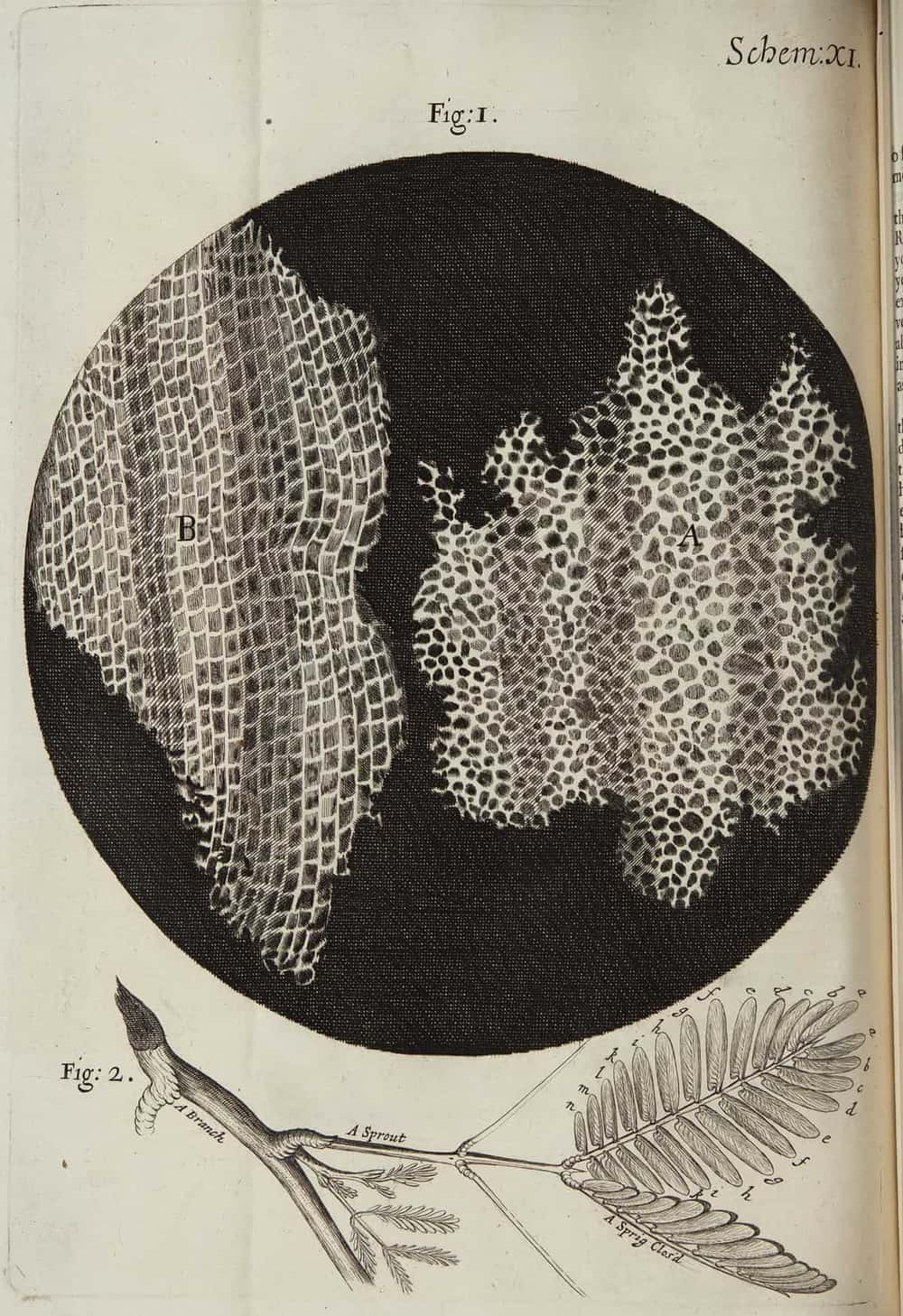
- 1665Robert Hooke
Saw box-like compartments in cork and called them cells.
- 1674Antonie van Leeuwenhoek
First to see free-living cells in pond water with an improved microscope.
- 1831Robert Brown
Discovered the nucleus in the cell.
- 1838–1839Schleiden and Schwann
Cell theory: all plants and animals are made of cells.
- 1855Rudolf Virchow
Added that all cells arise from pre-existing cells.
Cell organelles
Rule in one line: each organelle is a tiny organ with one main job inside the cell.
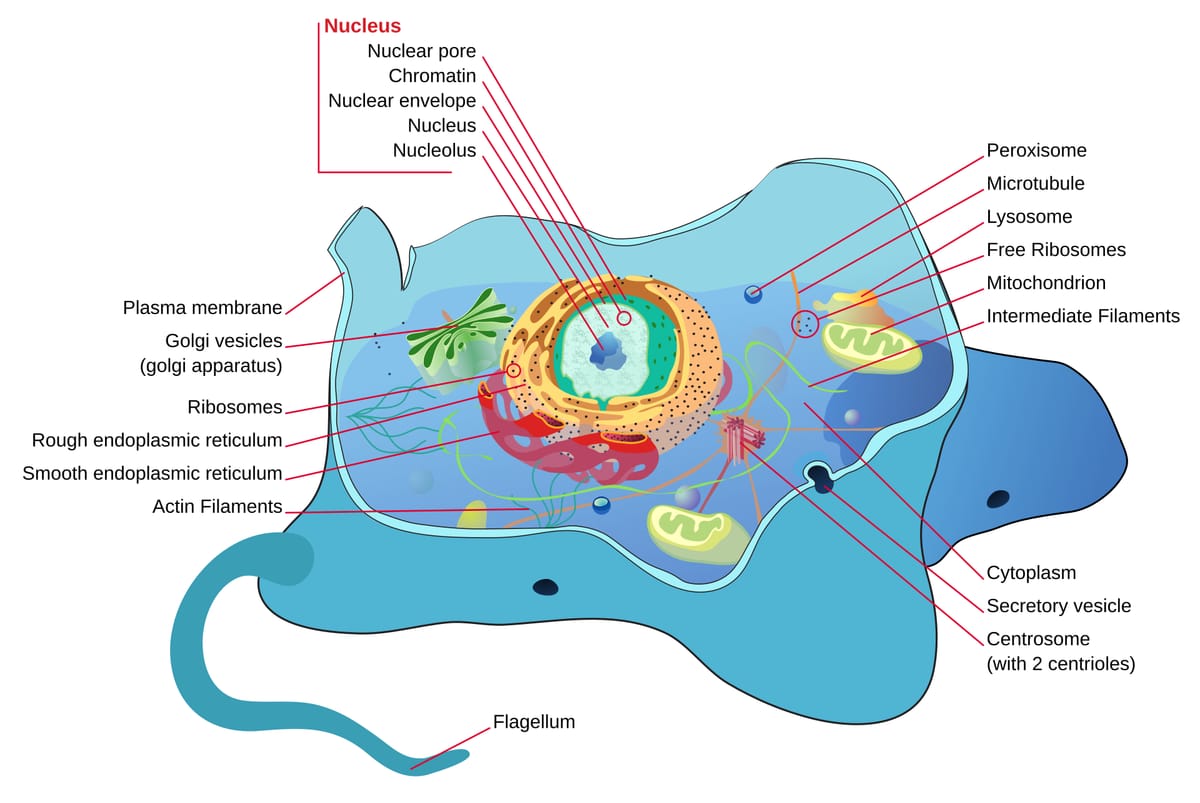
| Organelle | Main job | Nickname / note |
|---|---|---|
| Cell membrane | Lets only some substances in and out | Selectively permeable |
| Cell wall | Gives shape and strength | Made of cellulose; in plants |
| Nucleus | Controls the cell; holds DNA in chromosomes | Control centre |
| Mitochondria | Release energy as ATP by respiration | Powerhouse of the cell |
| Plastids | Chloroplasts make food; others store or colour | In plant cells |
| Ribosomes | Make proteins | Protein factories |
| Endoplasmic reticulum | Network that moves materials; rough ER has ribosomes | Smooth ER makes fats |
| Golgi apparatus | Packs and sends out materials | Named after Camillo Golgi |
| Lysosomes | Digest worn-out parts and germs | Suicide bags |
| Vacuoles | Store water, food and wastes | One large vacuole in plant cells |
- Powerhouse of the cell
- Mitochondria
- Protein factories
- Ribosomes
- Suicide bags
- Lysosomes
- Control centre of the cell
- Nucleus
- Kitchen of the plant cell
- Chloroplast
Plant and animal cells
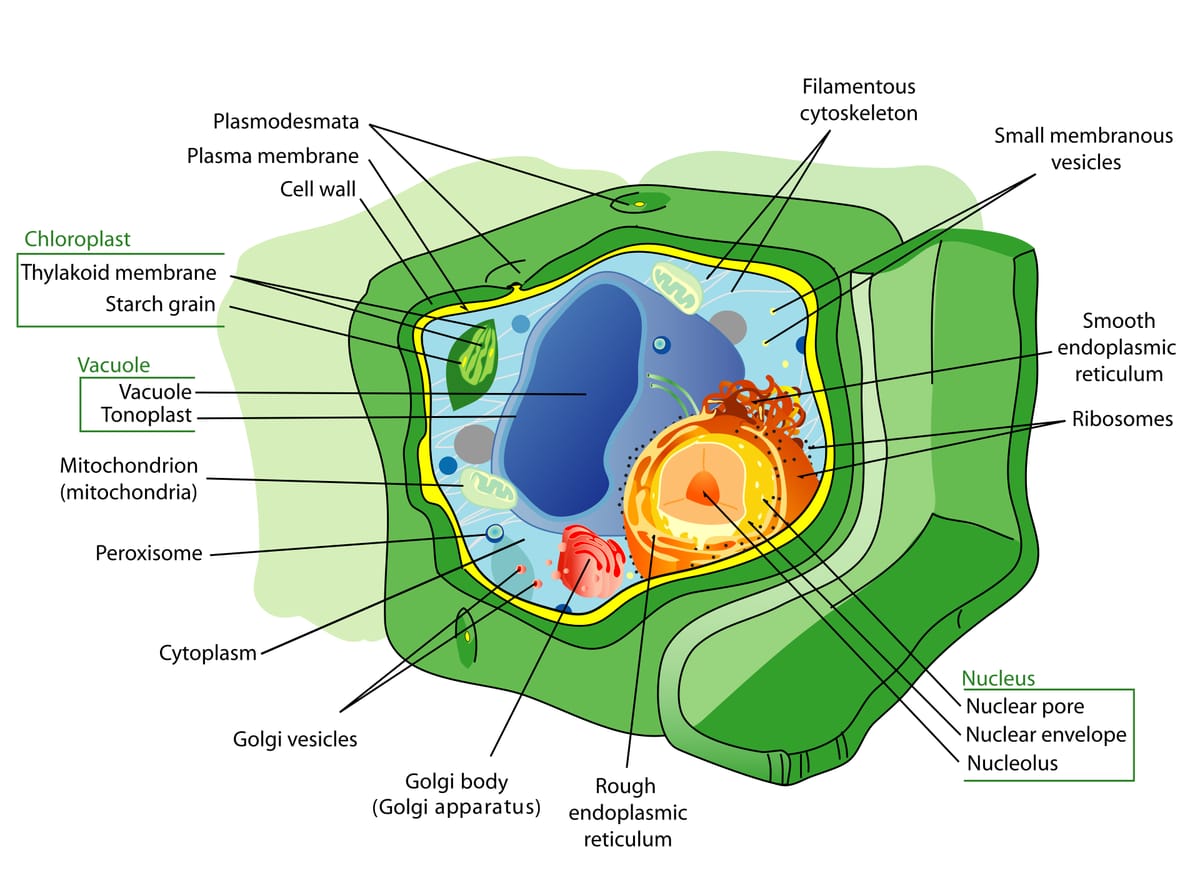
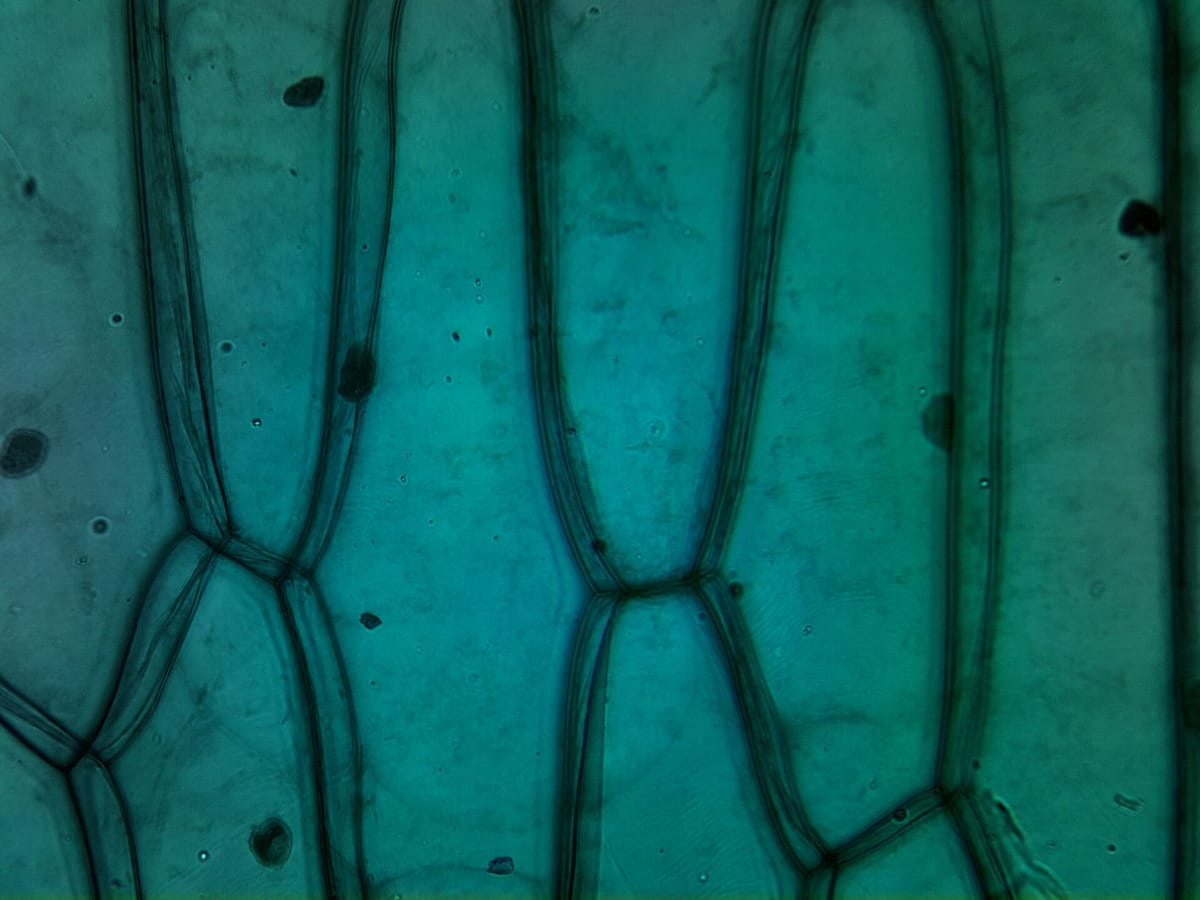
Rule in one line: only plant cells have a cell wall, plastids and one large vacuole.
Cell division
Rule in one line: mitosis copies cells for growth; meiosis halves chromosomes to make gametes.
Tissues and bones
Rule in one line: a tissue is a group of similar cells that do one job together.
| Plant tissue | Where / what it does |
|---|---|
| Meristematic | At root and shoot tips; cells keep dividing, so the plant grows |
| Parenchyma | Soft cells that store food |
| Collenchyma | Gives bending strength to young stems and leaf stalks |
| Sclerenchyma | Dead, thick-walled cells; husk of coconut |
| Xylem | Carries water and minerals up from the roots |
| Phloem | Carries food made in the leaves to all parts |
| Animal tissue | Job | Examples |
|---|---|---|
| Epithelial | Covers and lines the body and organs | Skin, lining of mouth and gut |
| Connective | Joins and supports other tissues | Bone, cartilage, blood, tendon, ligament, fat |
| Muscular | Contracts to cause movement | Arm muscles (voluntary), stomach wall (involuntary), heart (cardiac) |
| Nervous | Carries messages quickly | Brain, spinal cord, nerves (neurons) |
Bone is a hard connective tissue. Its hard matrix is made mainly of calcium phosphate, with some calcium carbonate. Teeth are also mostly calcium phosphate. An adult has 206 bones. The longest is the femur (thigh bone). The smallest is the stapes in the middle ear. Each middle ear has 3 tiny bones, so both ears together have 6.
Five kingdoms and animal groups
Rule in one line: group by body plan — cell type first, then features such as jointed legs or a backbone.
| Kingdom | Key feature | Examples |
|---|---|---|
| Monera | Single prokaryotic cell; no true nucleus | Bacteria, blue-green algae |
| Protista | Single eukaryotic cell | Amoeba, Paramecium, Euglena |
| Fungi | No chlorophyll; feed on dead matter; cell wall of chitin | Yeast, mushroom, bread mould |
| Plantae | Many cells; make their own food; cellulose wall | Moss, fern, pine, mango |
| Animalia | Many cells; no cell wall; eat other organisms | Sponge, insects, fish, humans |
| Animal group (phylum) | Body feature | Examples |
|---|---|---|
| Porifera | Body full of pores; fixed in water | Sponges |
| Coelenterata | Hollow body; tentacles | Hydra, jellyfish |
| Platyhelminthes | Flat worms | Tapeworm, liver fluke |
| Nematoda | Round worms | Ascaris, filarial worm |
| Annelida | Body in ring-like segments; no jointed legs | Earthworm, leech |
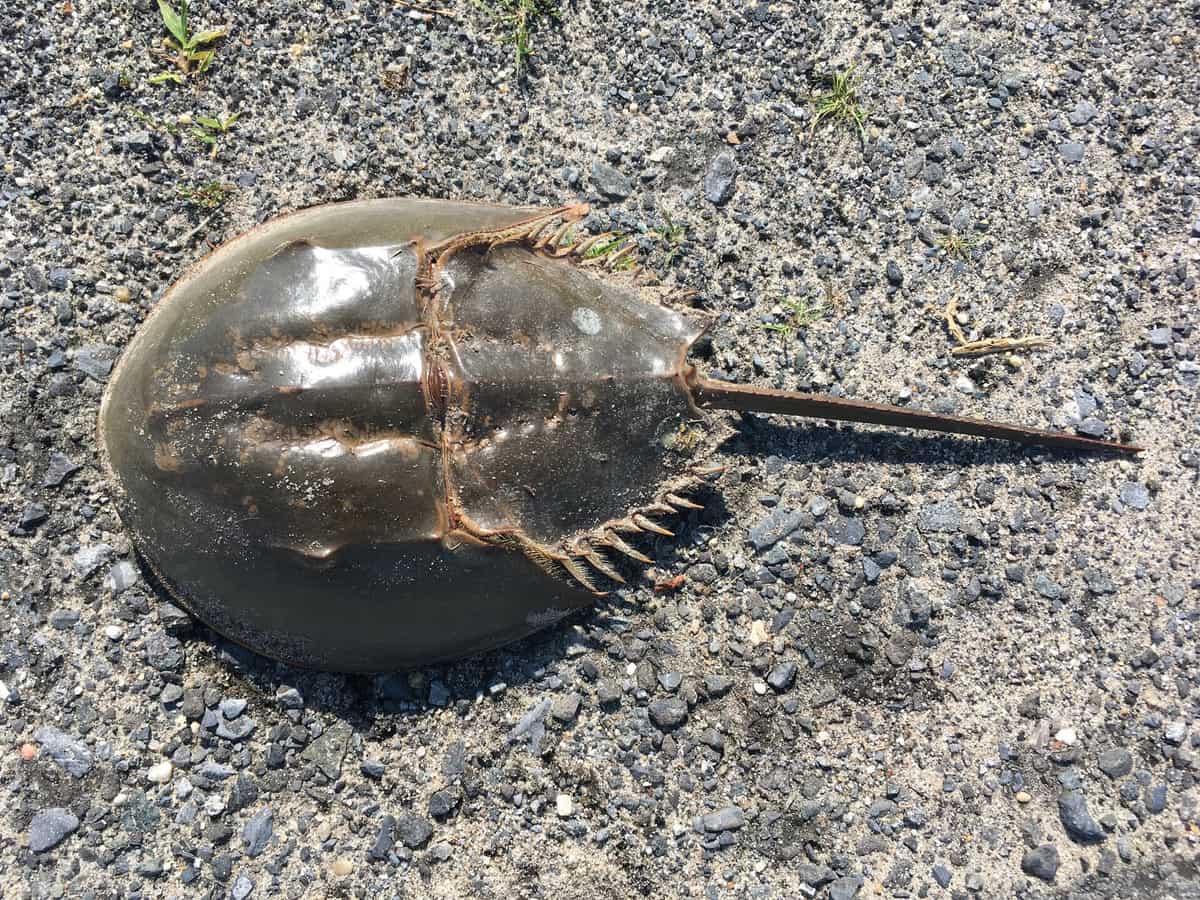
| Arthropoda | Jointed legs; hard outer skeleton | Insects (silkworm, honey bee), crabs, spiders, prawns |
| Mollusca | Soft body, often in a shell | Snail, octopus |
| Echinodermata | Spiny skin; only in the sea | Starfish, sea urchin |
| Chordata | Backbone (in vertebrates) | Fish, frog, snake, birds, mammals |
The earthworm's body is made of rings (segments), but it has no jointed legs and no hard outer skeleton. It moves with tiny bristles called setae. So it is an annelid, like the leech.
Vertebrate classes and naming rulesTap to open
- Fish (Pisces): live in water, breathe by gills, have scales and fins.
- Amphibians: live on land and in water; moist skin, no scales. Example: frog.
- Reptiles: dry scaly skin; lay eggs on land. Examples: snake, lizard, crocodile.
- Birds (Aves): feathers, beak, hollow bones; warm-blooded.
- Mammals: hair and milk glands. The bat flies and the whale lives in the sea, but both are mammals. The platypus and echidna are mammals that lay eggs.
- Binomial names (Carolus Linnaeus): genus first with a capital letter, then species in small letters, e.g. Homo sapiens for humans.
Traps and practice
Last revision — where the options try to fool you.
- The earthworm has segments but no jointed legs: it is an annelid, not an arthropod. Silkworm, honey bee and king crab are arthropods.
- Bones are mainly calcium phosphate, not calcium carbonate.
- Ear bones: 3 in each ear, 6 in all. Read whether the question asks one ear or 'total'.
- Tendon joins muscle to bone; ligament joins bone to bone.
- Hooke (1665) saw dead cork cells; Leeuwenhoek first saw living cells.
- Ribosomes make proteins; mitochondria release energy. Do not swap them.
- Blood is a connective tissue, even though it is a liquid.
Why is the earthworm not put in Arthropoda, though its body has segments?
Show answer
Arthropods must have jointed legs and a hard outer skeleton. The earthworm has neither; it moves with bristles. Ring-like segments without jointed legs make it an annelid.
- Who named the cell, and when?
- Robert Hooke, 1665
- Main mineral of bones
- Calcium phosphate
- Ear bones in all
- 6 (3 in each ear)
- Smallest bone
- Stapes, in the middle ear
- Longest bone
- Femur (thigh bone)
- Joins muscle to bone
- Tendon
- Largest animal group
- Arthropoda
- Five-kingdom system
- R. H. Whittaker, 1969
- Cell → tissue → organ → organ system → organism
- Hooke 1665 named the cell; Brown 1831 found the nucleus
- Mitochondria = powerhouse; ribosomes = proteins; lysosomes = suicide bags
- Only plant cells: cell wall, plastids, one big vacuole
- Mitosis: 2 identical cells; meiosis: 4 cells with half the chromosomes
- 206 bones; 6 ear bones; bones mainly calcium phosphate
- Arthropods have jointed legs; the earthworm is an annelid