Biodiversity means the variety of life: every plant, animal and microbe, the genes inside them, and the ecosystems they form. India is one of the world's 17 megadiverse countries. It has about 2.4% of the world's land but about 7–8% of its recorded species. This page covers the levels of biodiversity, hotspots, the IUCN Red List, India's threatened animals, the main threats, and how India protects them.
What biodiversity means
Three levels, and why a country can be megadiverse.
The word biodiversity was made popular by the American biologist E. O. Wilson in the late 1980s. Scientists study it at three levels. A country is called megadiverse when it holds a very large share of the world's species, many of them found nowhere else.
| Level | What it means | Example |
|---|---|---|
| Genetic | Variety of genes within one species | Thousands of rice and mango varieties in India |
| Species | Variety of different species in an area | Tigers, deer, frogs and trees in one forest |
| Ecosystem | Variety of habitats and communities | Deserts, mangroves, wetlands, coral reefs, alpine meadows |
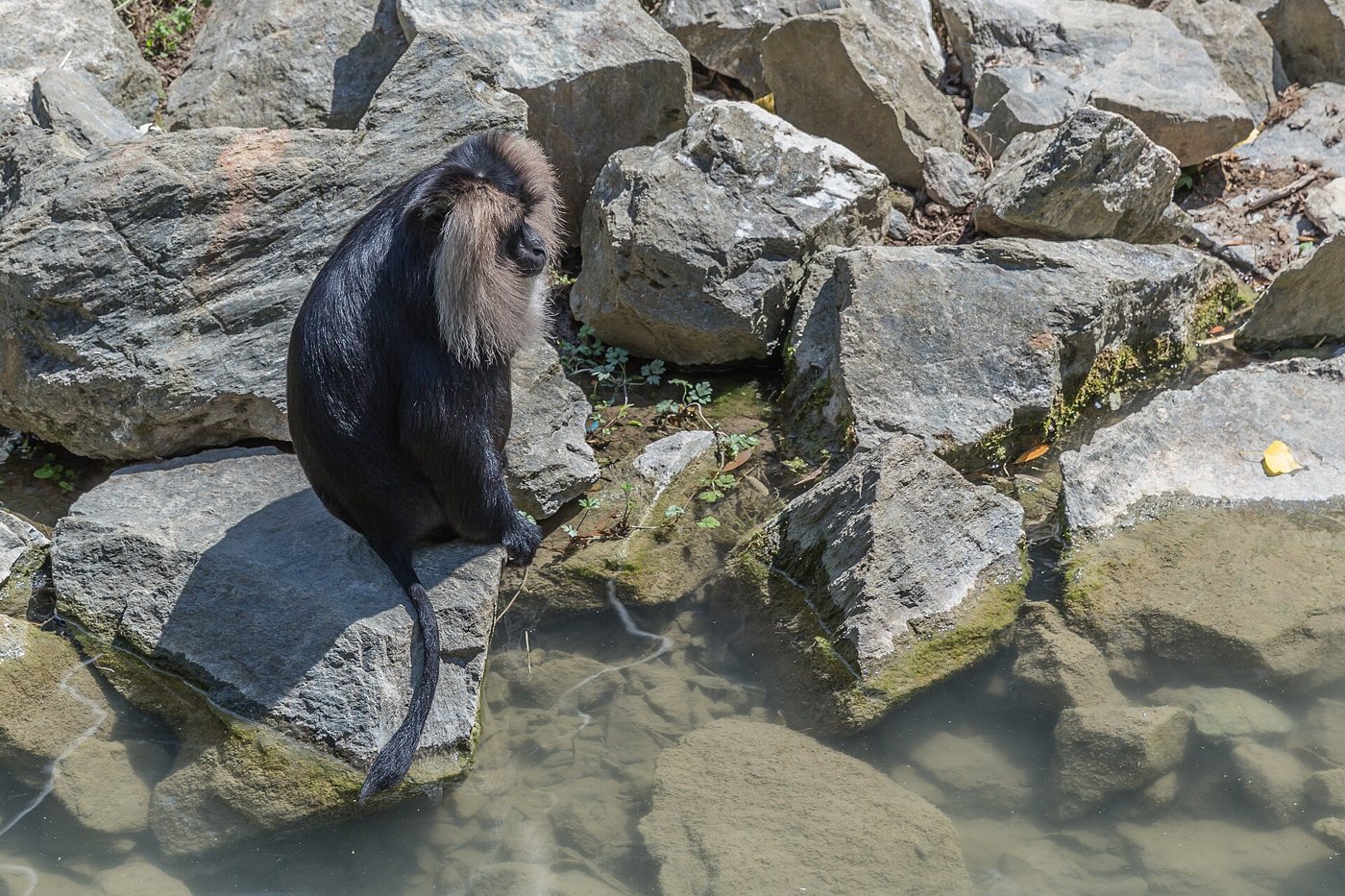
A species found naturally in only one region and nowhere else in the wild. The lion-tailed macaque and the Nilgiri tahr are endemic to the Western Ghats. Endemic species are at special risk, because if their one home is lost, they are lost.
Biodiversity hotspots
Rich in endemic plants, and already badly damaged.
The idea of a hotspot came from the British ecologist Norman Myers in 1988. Today Conservation International uses two tests. A region is a hotspot if it has at least 1,500 species of endemic vascular plants, and it has already lost at least 70% of its original natural vegetation. There are 36 hotspots in the world.
Whole Indian Himalaya, from Ladakh to Arunachal.
North-east India, Myanmar and beyond.
Hill forests along the west coast.
Includes the Nicobar Islands.
The four hotspots that include parts of India.
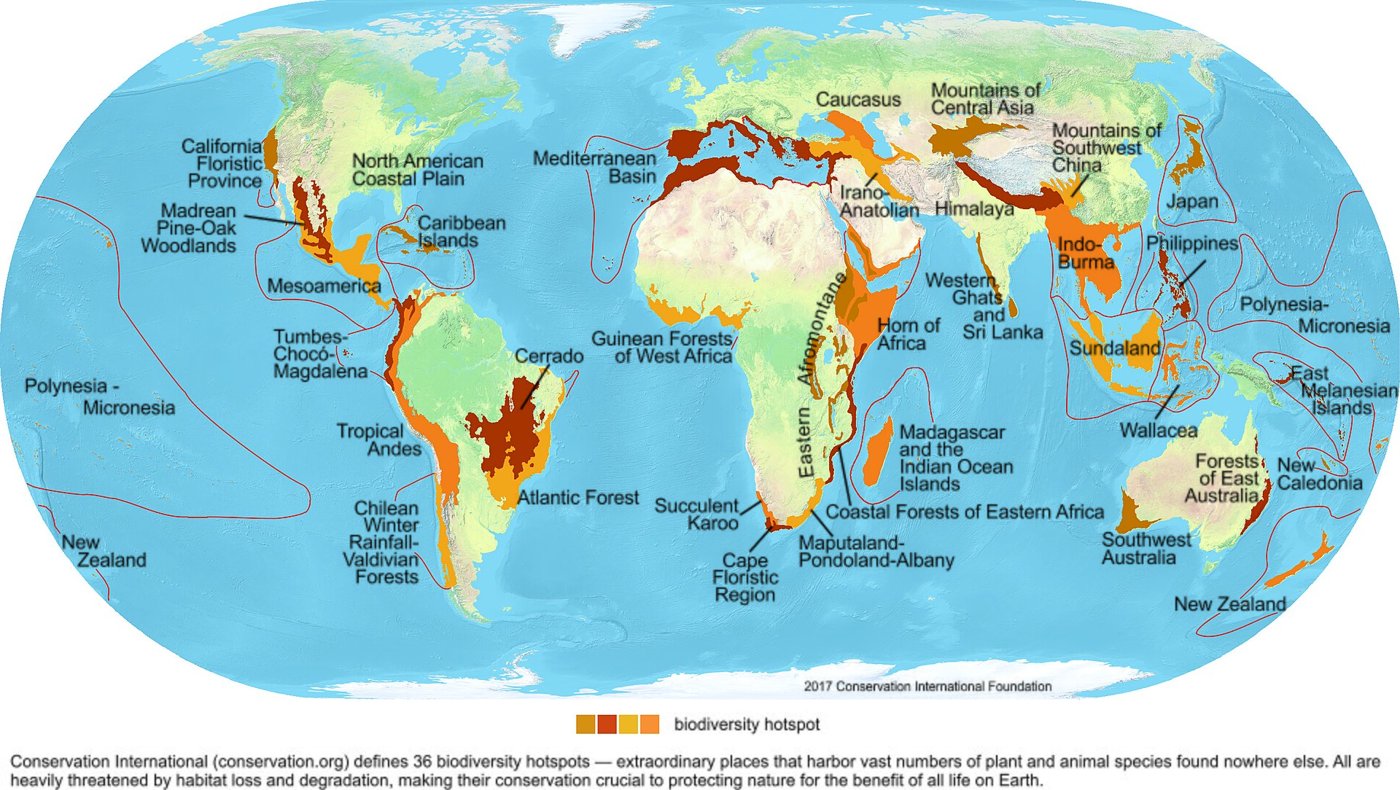
H-I-W-S: Himalaya, Indo-Burma, Western Ghats, Sundaland. Think "His Island Was Small".
The IUCN Red List
How the world grades the risk of extinction.
The International Union for Conservation of Nature (IUCN) was set up in 1948. Its headquarters is at Gland, Switzerland. Its Red List of Threatened Species, begun in 1964, puts each species in one category. Three of them, Critically Endangered, Endangered and Vulnerable, together are called threatened.
| Code | Category | Meaning |
|---|---|---|
| EX | Extinct | No individual left anywhere |
| EW | Extinct in the Wild | Survives only in captivity |
| CR | Critically Endangered | Extremely high risk of extinction in the wild |
| EN | Endangered | Very high risk |
| VU | Vulnerable | High risk |
| NT | Near Threatened | Close to qualifying as threatened |
| LC | Least Concern | Widespread; low risk |
| DD / NE | Data Deficient / Not Evaluated | Not enough data / not yet assessed |
Red Data Book is the older name for the printed list of threatened species. Pink pages in it were for critically endangered species; green pages for species once threatened but now recovered.
India's threatened animals
Names, status and where they live.
| Animal | IUCN status | Where / note |
|---|---|---|
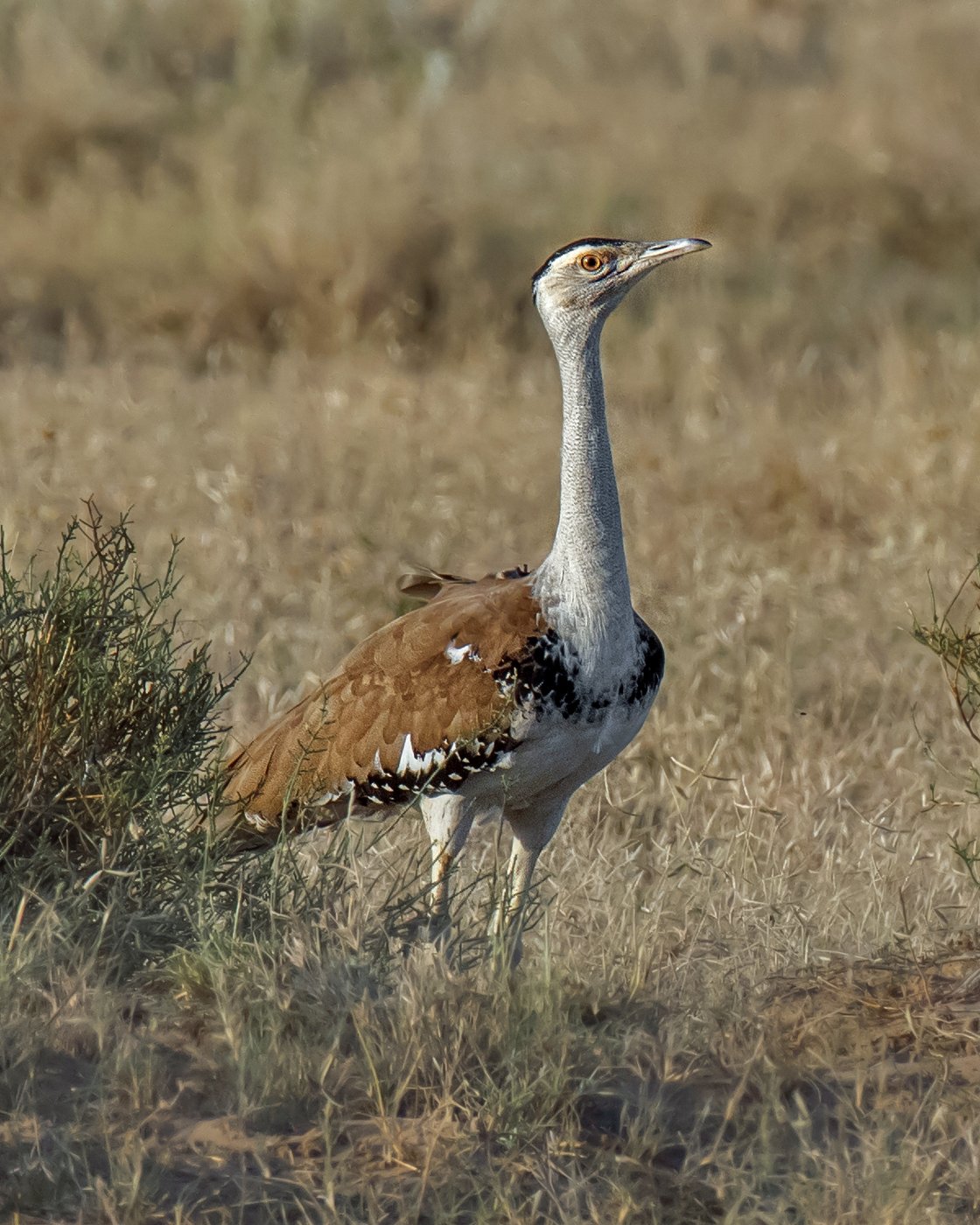
| Great Indian Bustard | Critically Endangered | Grasslands of Rajasthan (Desert National Park); state bird of Rajasthan |
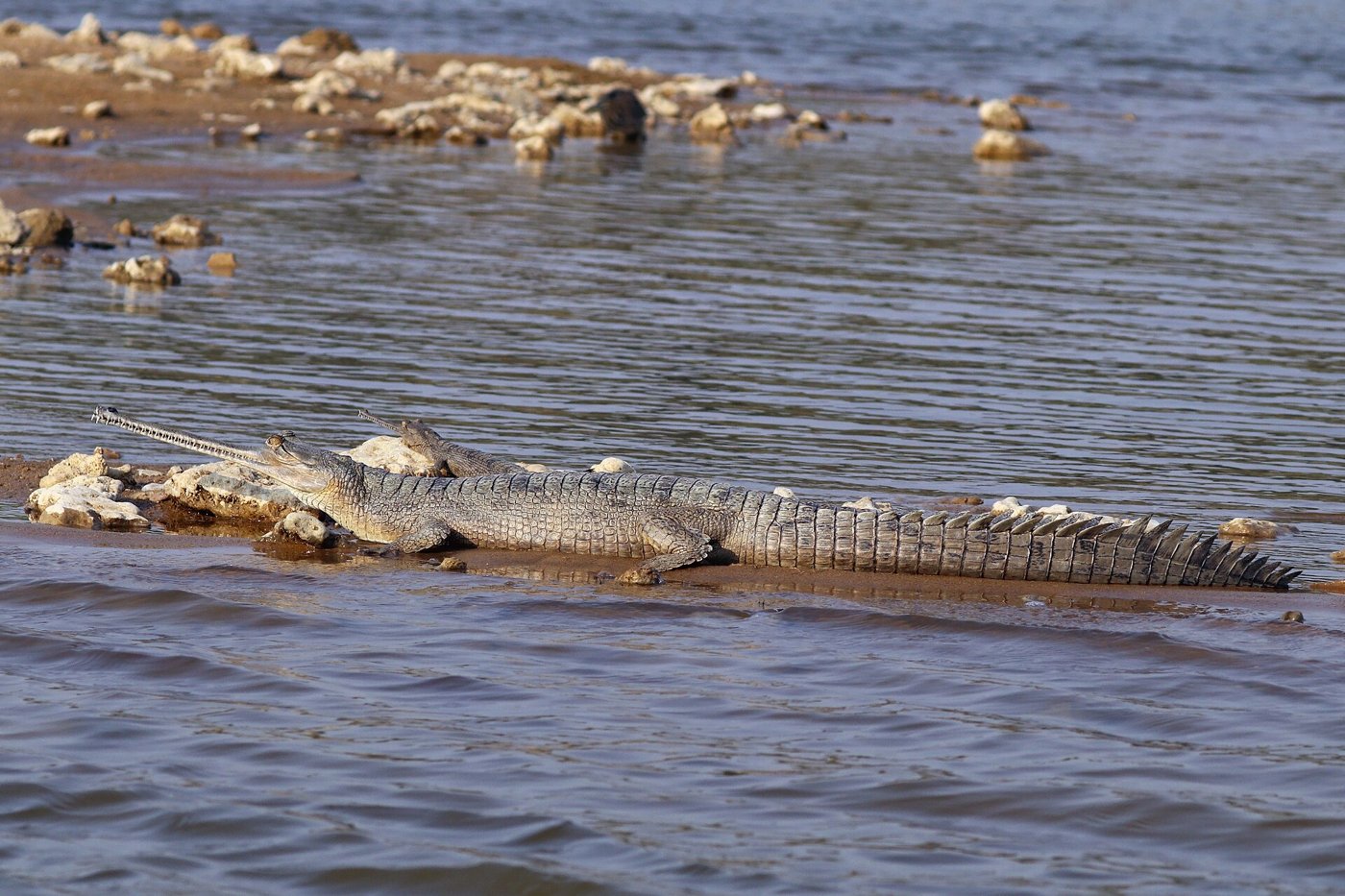
| Gharial | Critically Endangered | Best seen in the National Chambal Sanctuary; fish-eating crocodile with a thin snout |
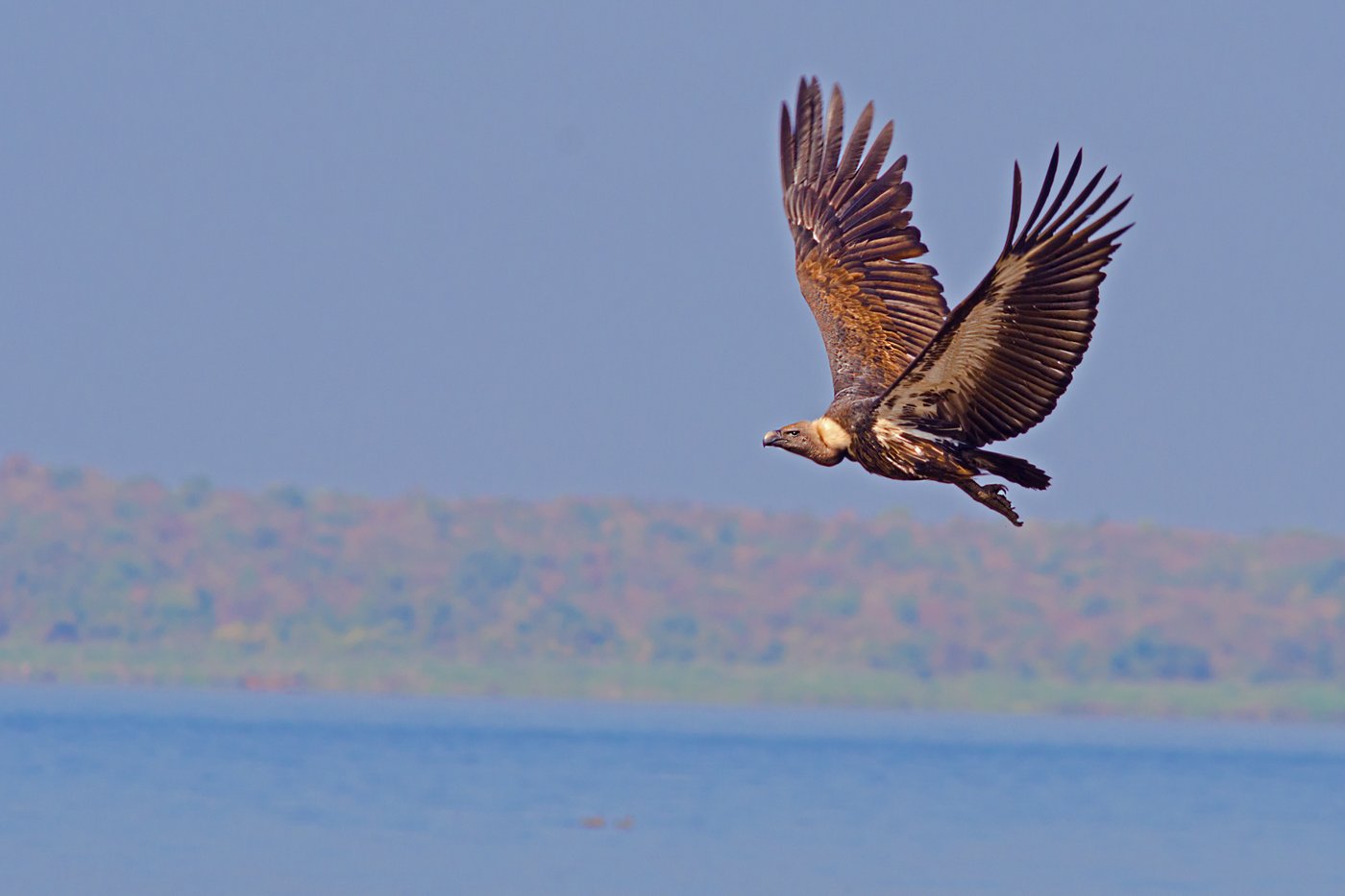
| White-rumped vulture | Critically Endangered | Crashed after eating cattle treated with diclofenac |
| Bengal tiger | Endangered (tiger) | India has most of the world's wild tigers |
| Asian elephant | Endangered | India's National Heritage Animal (2010) |
| Ganges river dolphin | Endangered | India's National Aquatic Animal; nearly blind |
| Indus river dolphin | Endangered | A small group lives in the Beas in Punjab; Punjab's state aquatic animal |
| Red panda | Endangered | Eastern Himalaya: Sikkim, Arunachal, Darjeeling |
| Snow leopard | Vulnerable | High Himalaya: Ladakh, Himachal, Uttarakhand |
| One-horned rhinoceros | Vulnerable | Kaziranga (Assam) holds the largest number |
Punjab's state symbols: state animal blackbuck, state bird Baaz (northern goshawk), and, since 2019, state aquatic animal the Indus river dolphin. A small dolphin population lives in the Beas river, which is protected as the Beas Conservation Reserve.
Why species are lost
HIPPO: five big threats.
| Letter | Threat | Indian example |
|---|---|---|
| H | Habitat loss and fragmentation | Grasslands ploughed or built over; forests split by roads |
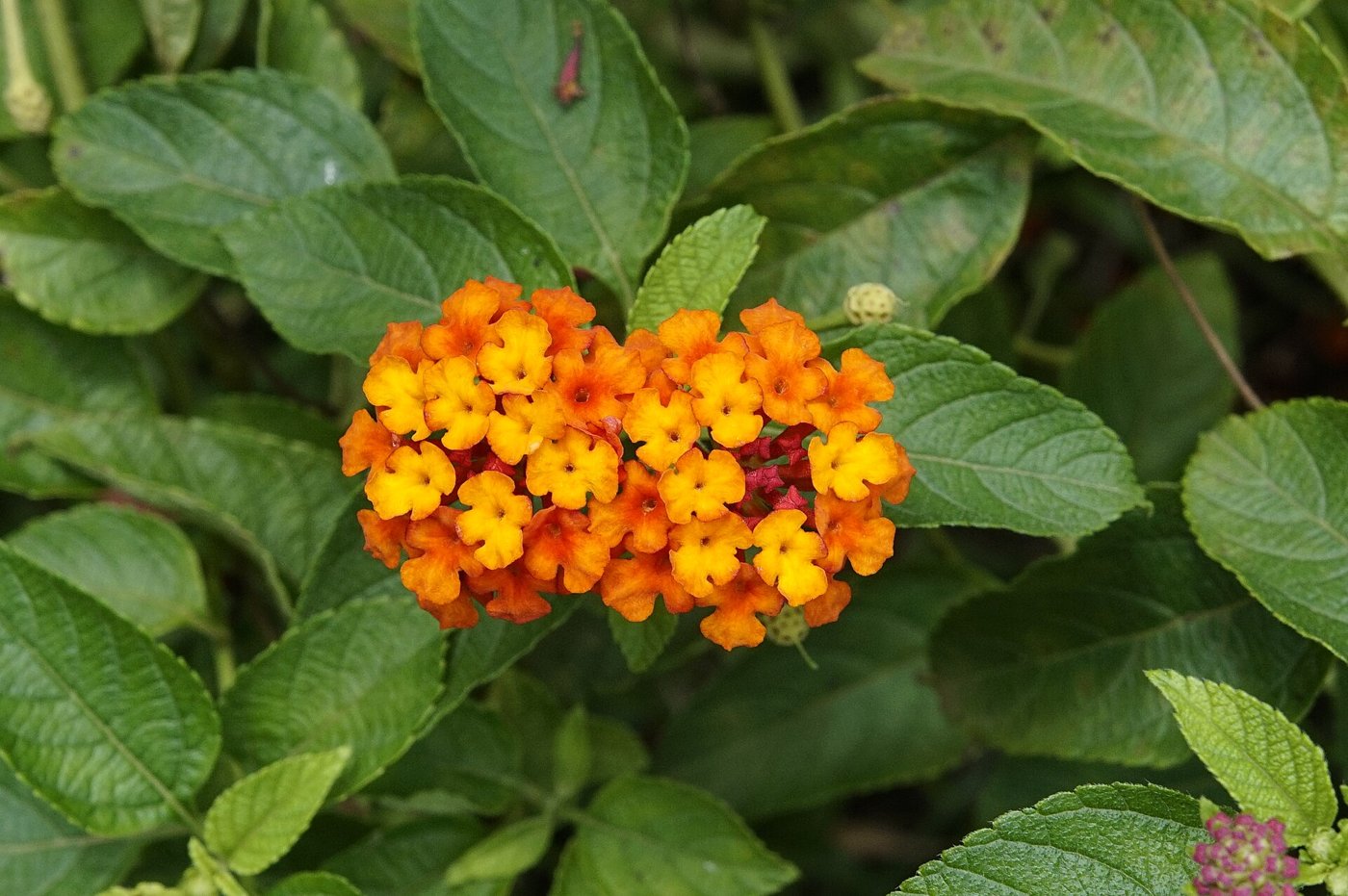
| I | Invasive species | Lantana, Prosopis juliflora, water hyacinth, Parthenium |
| P | Pollution | Pesticides and sewage in rivers harm dolphins and gharials |
| P | Human population growth | More land taken for farms, towns and roads |
| O | Over-harvesting | Poaching of tigers, rhinos and pangolins; over-fishing |
A plant or animal brought from another region that spreads fast and pushes out native species, because its natural enemies did not come with it. Lantana camara came from tropical America and now covers large forest areas in India. Prosopis juliflora is often in the news because it reduces biodiversity where it grows.
How biodiversity is protected
In situ, ex situ, laws and projects.
- 1972Wildlife (Protection) Act
Protects listed species; after the 2022 amendment it has four schedules.
- 1 Apr 1973Project Tiger
Launched at Jim Corbett National Park.
- 1975Crocodile conservation project
Began to save the gharial and other crocodiles.
- 1992Project Elephant
For elephants, their habitats and corridors.
- 2002Biological Diversity Act
Set up the National Biodiversity Authority (2003, Chennai).
- 2009Project Snow Leopard
For the high-altitude Himalaya.
- 17 Sep 2022Project Cheetah
Cheetahs from Namibia released in Kuno National Park, Madhya Pradesh.
The Biological Diversity Act, 2002 works at three levels. The National Biodiversity Authority (Chennai) at the top, State Biodiversity Boards in each state, and Biodiversity Management Committees (BMCs) in local bodies. Each BMC keeps a People's Biodiversity Register of local plants, animals and traditional knowledge. The Act was amended in 2023.
| Agreement | Year | About |
|---|---|---|
| CITES | Signed 1973 (Washington), in force 1975 | Controls international trade in wild animals and plants |
| Convention on Biological Diversity (CBD) | Opened at the Rio Earth Summit, 1992; in force 1993 | Three aims: conservation, sustainable use, fair sharing of benefits |
| Cartagena Protocol | Adopted 2000 | Biosafety: safe movement of living modified organisms (GMOs) |
| Nagoya Protocol | Adopted 2010 | Access and benefit-sharing from genetic resources |
| Kunming-Montreal Framework | Adopted 2022 | "30 by 30": protect 30% of land and sea by 2030 |
Everything on one look
Traps, quick facts and a practice question.
- Cartagena = biosafety (GMOs). Nagoya = access and benefit-sharing. Exams swap them.
- A hotspot needs both tests: 1,500 endemic plants and 70% habitat already lost.
- Ganges river dolphin = national aquatic animal. Indus river dolphin = Punjab's state aquatic animal.
- Zoos, seed banks and cryopreservation are ex situ; biosphere reserves are in situ.
- Vultures died from diclofenac, a veterinary drug, not from a disease.
- The National Biodiversity Authority is in Chennai, not Delhi.
- CR
- Critically Endangered
- Endemic
- Found naturally in one region only
- Norman Myers
- Gave the hotspot idea, 1988
- IUCN HQ
- Gland, Switzerland
- CITES
- Trade in wild species, 1973
- NBA
- National Biodiversity Authority, Chennai
- Kuno
- Project Cheetah, 2022
- 22 May
- International Day for Biological Diversity
- Megadiverse countries: 17; India is one
- World hotspots: 36; India's: Himalaya, Indo-Burma, Western Ghats, Sundaland
- IUCN: 1948, Gland; Red List from 1964
- Threatened = CR + EN + VU
- Great Indian Bustard, gharial, white-rumped vulture: Critically Endangered
- National aquatic animal: Ganges river dolphin
- National heritage animal: elephant (2010)
- Punjab state aquatic animal: Indus river dolphin (2019)
- Biological Diversity Act: 2002; NBA in Chennai
- CBD: Rio 1992; Cartagena 2000; Nagoya 2010
- Project Tiger 1973; Elephant 1992; Cheetah 2022 (Kuno)
Which two tests must a region pass to be called a biodiversity hotspot?
Show answer
It must have at least 1,500 species of endemic vascular plants, and it must have lost at least 70% of its original natural vegetation. The idea came from Norman Myers (1988).