Pollution is anything added to air, water, soil or our surroundings that harms living things. This page covers air pollutants and the AQI, acid rain and smog, water pollution and BOD, toxic metals, noise, and India's waste rules, from solid waste to plastics and e-waste. It also covers stubble burning, a Punjab question that comes up every year.
Air pollution
What we breathe, and how it is measured.
| Pollutant | Main sources | Harm |
|---|---|---|
| PM2.5 and PM10 | Vehicles, dust, construction, crop burning, industry | Fine particles reach deep into the lungs; PM2.5 even enters the blood |
| Sulphur dioxide (SO₂) | Coal power plants, furnace oil, smelters | Breathing trouble; causes acid rain |
| Nitrogen oxides (NOx) | Vehicle engines, power plants, farm soils | Acid rain; forms smog and ground-level ozone |
| Carbon monoxide (CO) | Incomplete burning; vehicles, stoves | Takes the place of oxygen in haemoglobin |
| Ground-level ozone (O₃) | Not released directly; formed from NOx in sunlight | Harms lungs and crops |
| Lead (Pb) | Once from leaded petrol; batteries, smelters | Damages the brain and nerves, especially in children |
India's National AQI, launched in 2014, turns readings of eight pollutants (PM10, PM2.5, NO₂, SO₂, CO, O₃, NH₃ and lead) into one number from 0 to 500, with six colour bands: Good, Satisfactory, Moderately polluted, Poor, Very poor, Severe. The National Clean Air Programme (NCAP), launched in 2019, sets city plans to cut particulate pollution.
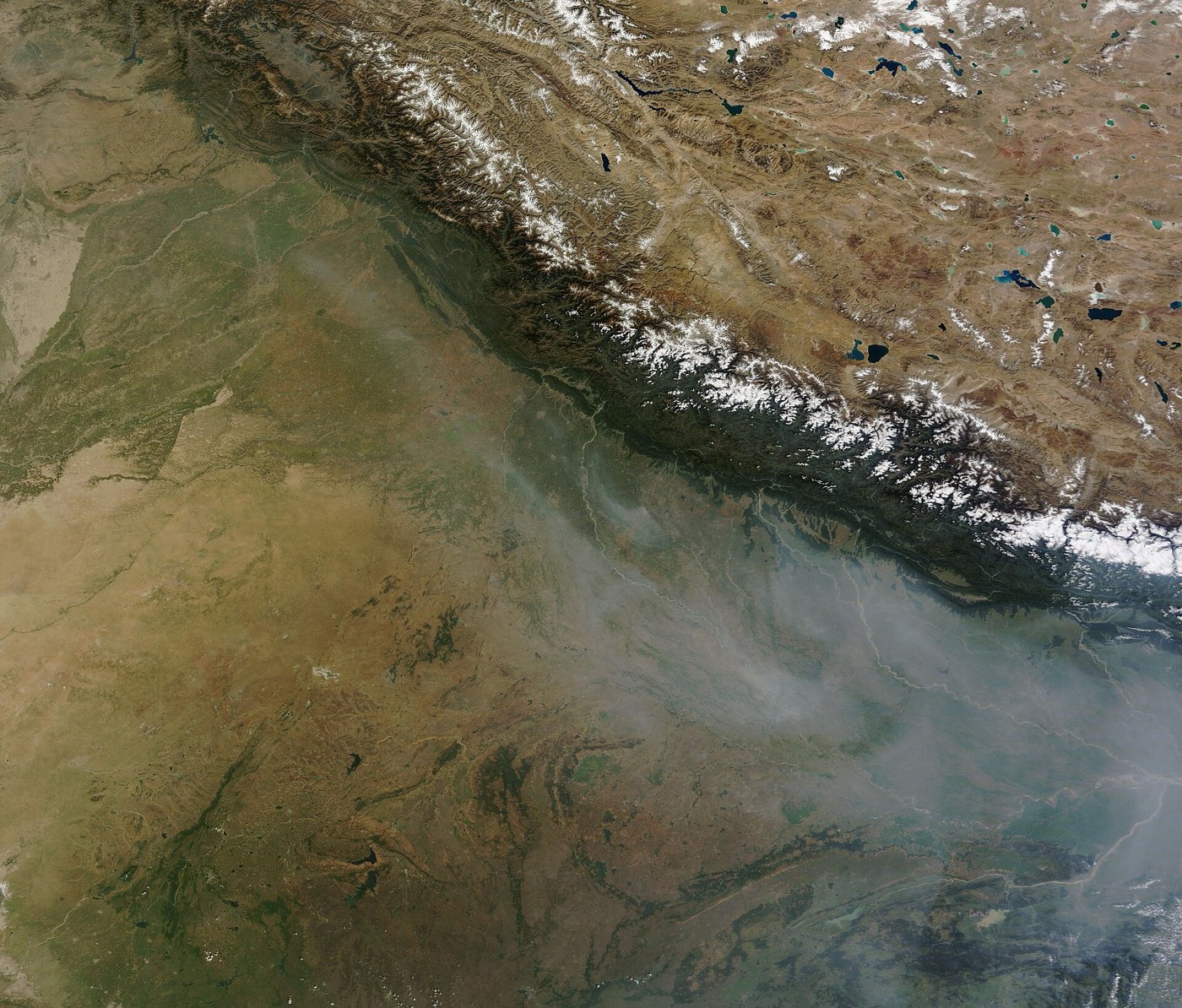
After the paddy harvest in October–November, farmers have only a short gap before sowing wheat, so many burn the leftover straw. The smoke adds to winter smog across north India and kills useful soil organisms. Alternatives include the Happy Seeder and other crop-residue machines that sow wheat through the straw, and the Pusa decomposer, a microbial spray developed by IARI that rots the stubble in the field.
Water and soil pollution
BOD, nutrients and toxic metals.
The amount of dissolved oxygen that microbes use up while breaking down the organic matter in a water sample. High BOD means more organic pollution, such as sewage, so less oxygen is left for fish. BOD is the standard test for organic pollution in water.
Eutrophication happens when nitrates and phosphates from fertilisers and sewage reach a lake. Algae grow fast into an algal bloom; when they die and rot, oxygen falls and fish die. Too much nitrogen fertiliser also leaks nitrate into groundwater and releases nitrous oxide from the soil.
| Substance | Disease or harm | Remember |
|---|---|---|
| Mercury | Minamata disease | Japan, 1950s; also released by small-scale gold mining and coal burning |
| Cadmium | Itai-itai disease | Japan; painful bones |
| Arsenic | Skin lesions, cancer | Groundwater in parts of the Ganga–Brahmaputra plains |
| Fluoride (excess) | Fluorosis | Mottled teeth, stiff bones |
| Nitrate (excess) | Blue baby syndrome | Infants' blood cannot carry enough oxygen |
| Lead | Brain and nerve damage | Batteries, old paints |

| Term | What it is |
|---|---|
| Microbeads | Tiny plastic beads in scrubs and toothpastes; they pass through sewage plants and harm marine life |
| Bisphenol A (BPA) | A building block of polycarbonate plastic; may disturb hormones |
| Triclosan | An antibacterial chemical in toiletries such as soaps and toothpastes |
| Fly ash | Ash from coal power plants; contains arsenic, lead and mercury, but can be used in bricks, cement and road building |
| Bioremediation | Using microbes to clean polluted soil or water, e.g. oil-eating bacteria |
| Phytoremediation | Using plants to absorb or break down pollutants |
Noise pollution
Decibels and silence zones.
Sound is measured in decibels (dB). Long exposure to loud noise causes hearing loss, stress and sleep trouble. India's Noise Pollution (Regulation and Control) Rules, 2000 set day and night limits for industrial, commercial, residential and silence zones. A silence zone covers at least 100 metres around hospitals, schools and courts.
Waste and the rules
Segregate, recycle, and make producers pay.
The maker or brand owner stays responsible for a product after it is thrown away: collecting it back and getting it recycled. In India EPR first came in the e-Waste (Management and Handling) Rules, 2011. It now also covers plastic packaging, batteries and tyres.
| Rules | Key point |
|---|---|
| Solid Waste Management Rules, 2016 | Every household must segregate at source into wet, dry and domestic hazardous waste |
| Plastic Waste Management Rules, 2016 | Identified single-use plastic items banned from 1 July 2022; EPR for plastic packaging |
| E-Waste Management Rules, 2022 | Producers must meet recycling targets; old computers and phones release lead, mercury, cadmium and brominated flame retardants if dumped |
| Bio-Medical Waste Management Rules, 2016 | Hospital waste sorted into colour-coded bags: yellow, red, white (sharps) and blue (glass) |
- 1974Water Act
Set up the Central and State Pollution Control Boards.
- 1981Air Act
Gave the boards power over air pollution too.
- 1984Bhopal gas tragedy
Methyl isocyanate (MIC) leaked from the Union Carbide plant on 2–3 December.
- 1986Environment (Protection) Act
An umbrella law giving the Centre wide powers; passed after Bhopal.
- 2010National Green Tribunal
A special court for environment cases; must try to decide within six months.
Everything on one look
Traps, quick facts and a practice question.
- High BOD = dirty water. Low BOD means cleaner water.
- Acid rain comes from SO₂ and NOx, not from carbon dioxide or carbon monoxide.
- Ground-level ozone is a secondary pollutant; it is not released directly.
- EPR was first introduced in the e-waste rules (2011), not the plastic rules.
- Minamata = mercury; Itai-itai = cadmium; blue baby = nitrate.
- The Water Act (1974), not the Environment Act, set up the pollution control boards.
- BOD
- Organic pollution in water
- PAN
- Part of photochemical smog
- Minamata
- Mercury poisoning
- EPR
- Producer takes back waste
- 1 July 2022
- Single-use plastic ban
- Pusa decomposer
- IARI spray that rots stubble
- NGT
- 2010 green court
- MIC
- Bhopal gas, 1984
- National AQI: 2014; 8 pollutants; 0–500; six bands
- NCAP: 2019
- Acid rain: SO₂ + NOx
- Photochemical smog: NOx + hydrocarbons + sunlight → ozone, PAN
- BOD: test for organic pollution; high BOD = polluted
- Eutrophication: nitrates + phosphates → algal bloom
- Mercury → Minamata; cadmium → Itai-itai; nitrate → blue baby
- Silence zone: 100 m around hospitals, schools, courts
- SWM Rules 2016: segregate wet, dry, hazardous
- Single-use plastic ban: 1 July 2022
- Water Act 1974; Air Act 1981; EPA 1986; NGT 2010
Why does a high BOD value show that a river is polluted?
Show answer
BOD measures the oxygen used by microbes to break down organic matter. Sewage and other organic waste feed more microbes, so they use up more oxygen. A high BOD therefore means more organic pollution and less oxygen left for fish.