India protects its wild places in several ways. The Wildlife (Protection) Act, 1972 creates national parks, wildlife sanctuaries, conservation reserves and community reserves. Tigers get tiger reserves. UNESCO's programme gives biosphere reserves, and the Ramsar Convention lists wetlands of international importance. Exams ask which is which, where famous parks are, and Punjab's own wetlands.
Four kinds of protected area
What the 1972 Act allows in each.
| Type | Who declares | People and use |
|---|---|---|
| National Park | State government (or Centre) | Strictest. No grazing, hunting or private rights inside. |
| Wildlife Sanctuary | State government (or Centre) | Some activities like grazing may be allowed by the Chief Wildlife Warden. |
| Conservation Reserve | State, after talking to local people | Usually government land next to parks; links protected areas. Added in 2002. |
| Community Reserve | State, on community or private land | Villagers volunteer their land; managed with a community committee. Added in 2002. |
A buffer belt around a protected area where harmful activities like mining or polluting industry are controlled. Government guidelines of 2011 suggest it can extend up to 10 km from the park boundary. ESZs are notified by the Ministry of Environment under the Environment (Protection) Act, 1986, not the Wildlife Act.
National parks exams love
One fact each.
| Park | State / UT | Remember it for |
|---|---|---|
| Jim Corbett | Uttarakhand | India's first national park (1936, as Hailey National Park); Project Tiger began here |
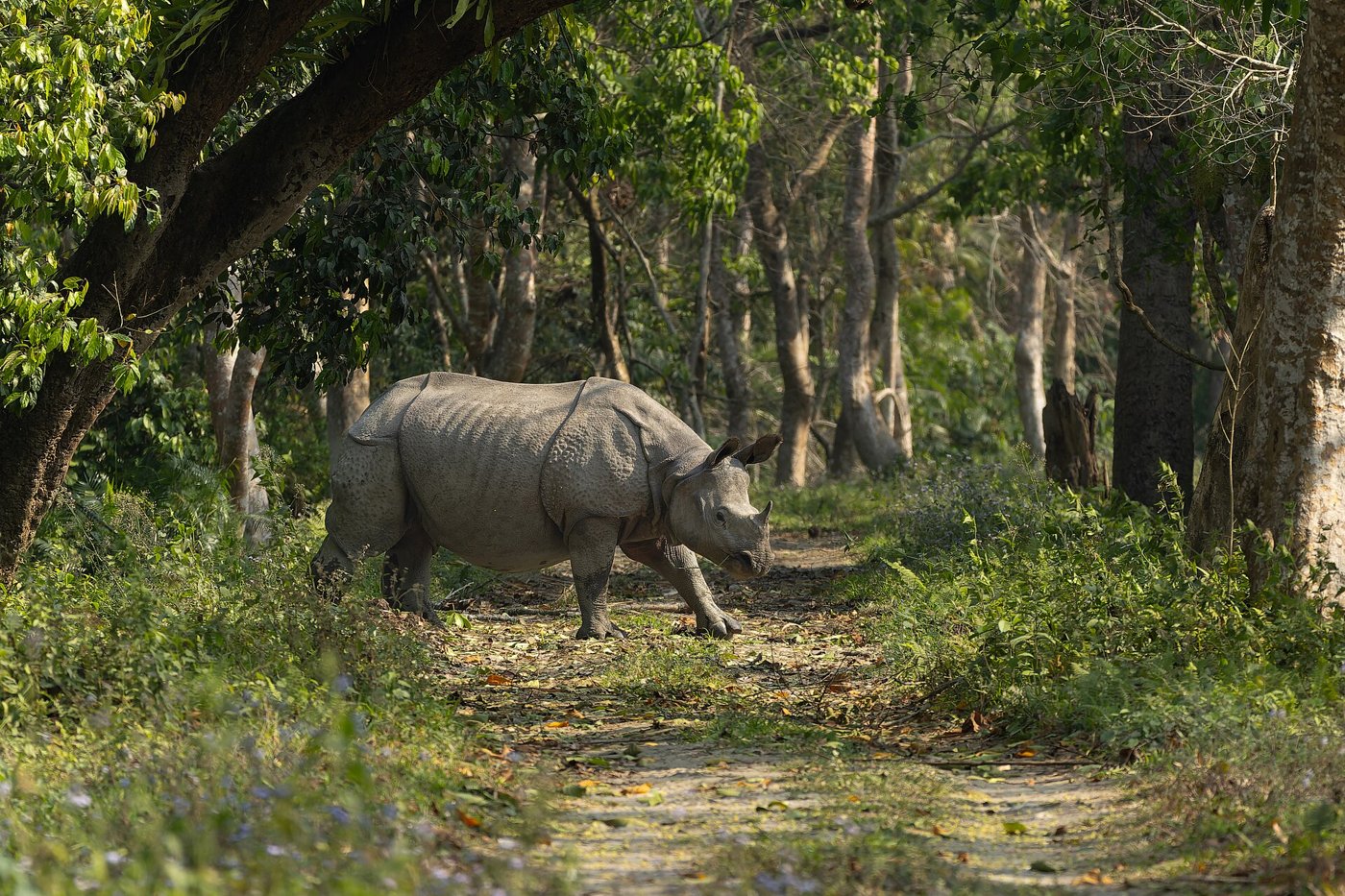
| Kaziranga | Assam | One-horned rhinoceros; UNESCO World Heritage Site |
| Gir | Gujarat | Only wild home of the Asiatic lion |
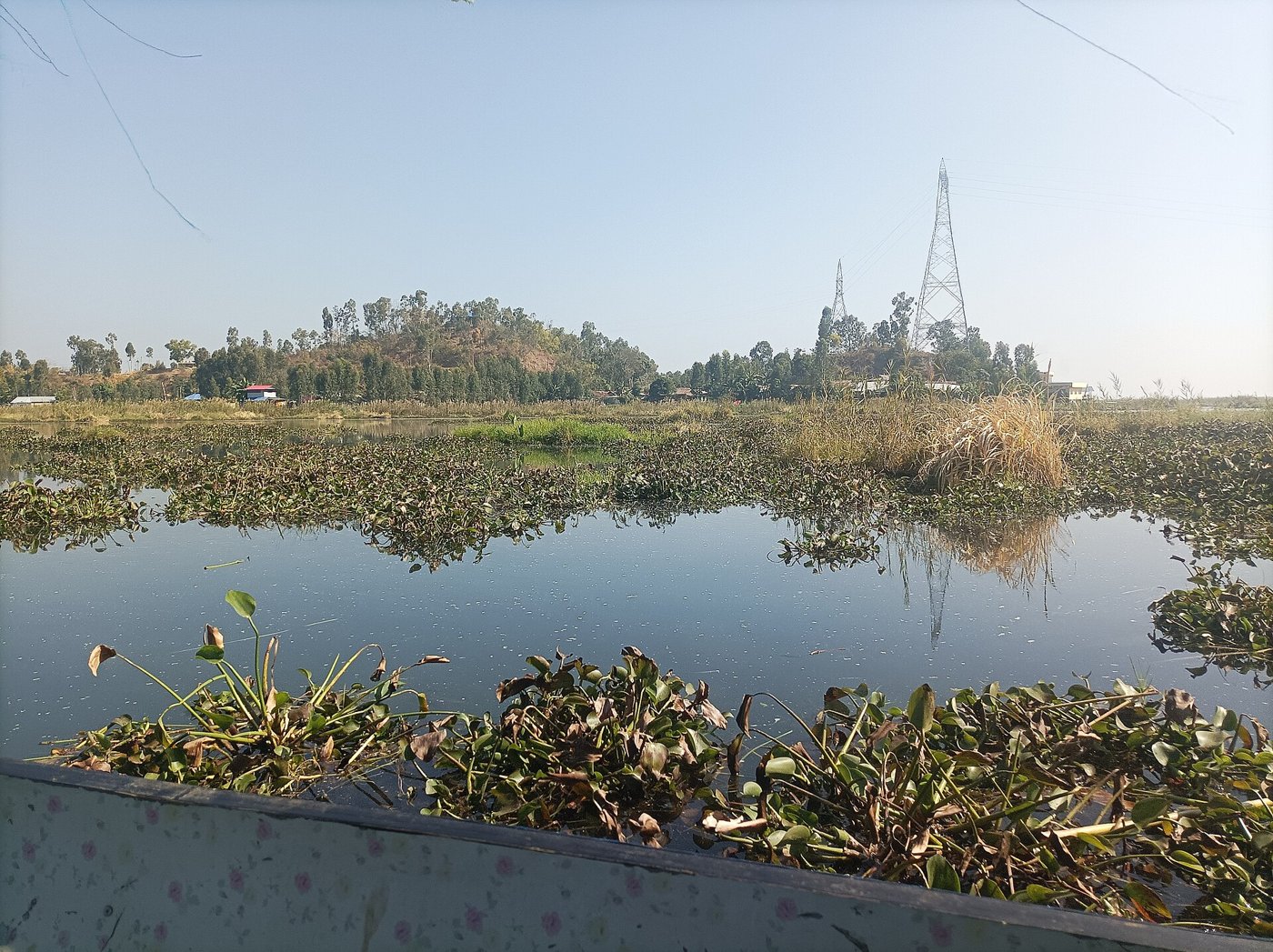
| Keibul Lamjao | Manipur | World's only floating national park, on phumdis in Loktak Lake; home of the sangai deer |
| Hemis | Ladakh | India's largest national park; snow leopard |
| Valley of Flowers | Uttarakhand | Lies in the temperate alpine zone; UNESCO site with Nanda Devi |
| Namdapha | Arunachal Pradesh | Climate from tropical to arctic; four big cats |
| Sundarbans | West Bengal | Mangrove forest; Royal Bengal tiger that swims |
| Kanha | Madhya Pradesh | Saved the hard-ground barasingha (swamp deer) |
| Desert National Park | Rajasthan | Great Indian Bustard; near Jaisalmer and Barmer |
| Kuno | Madhya Pradesh | Project Cheetah (2022) |
Tiger reserves
Core, buffer and the NTCA.
Project Tiger began on 1 April 1973 with 9 reserves. By 2026 India had 58 tiger reserves. The National Tiger Conservation Authority (NTCA) was set up in 2006 under an amendment to the Wildlife Act. A tiger reserve has a core (the critical tiger habitat, kept free of disturbance) and a buffer around it where people can live and work. M-STRIPES is the mobile app forest guards use to record patrols and wildlife signs.
The tiger reserve with the largest critical tiger habitat is Nagarjunsagar-Srisailam (Andhra Pradesh and Telangana). The Sathyamangalam reserve in Tamil Nadu is an important link between the Western and Eastern Ghats.
Biosphere reserves
Three zones, people included.
Biosphere reserves come from UNESCO's Man and the Biosphere (MAB) programme, begun in 1971. They aim to protect nature together with the people who live there, which is why exams call them the best way to combine conservation with traditional human life. India's first was the Nilgiri Biosphere Reserve (1986). India has 18 biosphere reserves; 13 are in UNESCO's world network. The 13th was the Cold Desert reserve in Himachal Pradesh, added in 2025.
| Zone | What happens there |
|---|---|
| Core | Strictly protected; only research and monitoring |
| Buffer | Around the core; research, education, eco-tourism and limited use |
| Transition | Outer zone; villages, farms and sustainable economic activity |
C-B-T, inside to outside: Core, Buffer, Transition — "Come Back Tomorrow".
Wetlands and the Ramsar Convention
From Iran, 1971, to Punjab.
The Ramsar Convention on Wetlands was signed at Ramsar, Iran, on 2 February 1971, so 2 February is World Wetlands Day. India joined in 1982. Its first Ramsar sites were Chilika Lake (Odisha) and Keoladeo National Park (Rajasthan), both listed in 1981. The number grows every year; by October 2026 India had 103 Ramsar sites. The Sundarbans is India's largest.
A list of Ramsar sites where the ecological character has changed, is changing or is likely to change because of human activity, so they need priority attention. From India, Keoladeo National Park and Loktak Lake are on it. Chilika was put on it and later removed (2002) after it recovered.
| Punjab Ramsar site | Year listed | Remember |
|---|---|---|
| Harike Wetland | 1990 | Where the Beas and Sutlej meet; Punjab's first and largest |
| Kanjli Wetland | 2002 | On the Kali Bein, near Kapurthala |
| Ropar Wetland | 2002 | On the Sutlej, made by the Ropar headworks |
| Keshopur-Miani Community Reserve | 2019 | Gurdaspur; declared in 2007 as India's first community reserve |
| Beas Conservation Reserve | 2019 | A stretch of the Beas; home of the Indus river dolphin |
| Nangal Wildlife Sanctuary | 2019 | On the Sutlej below Bhakra, in Rupnagar district |
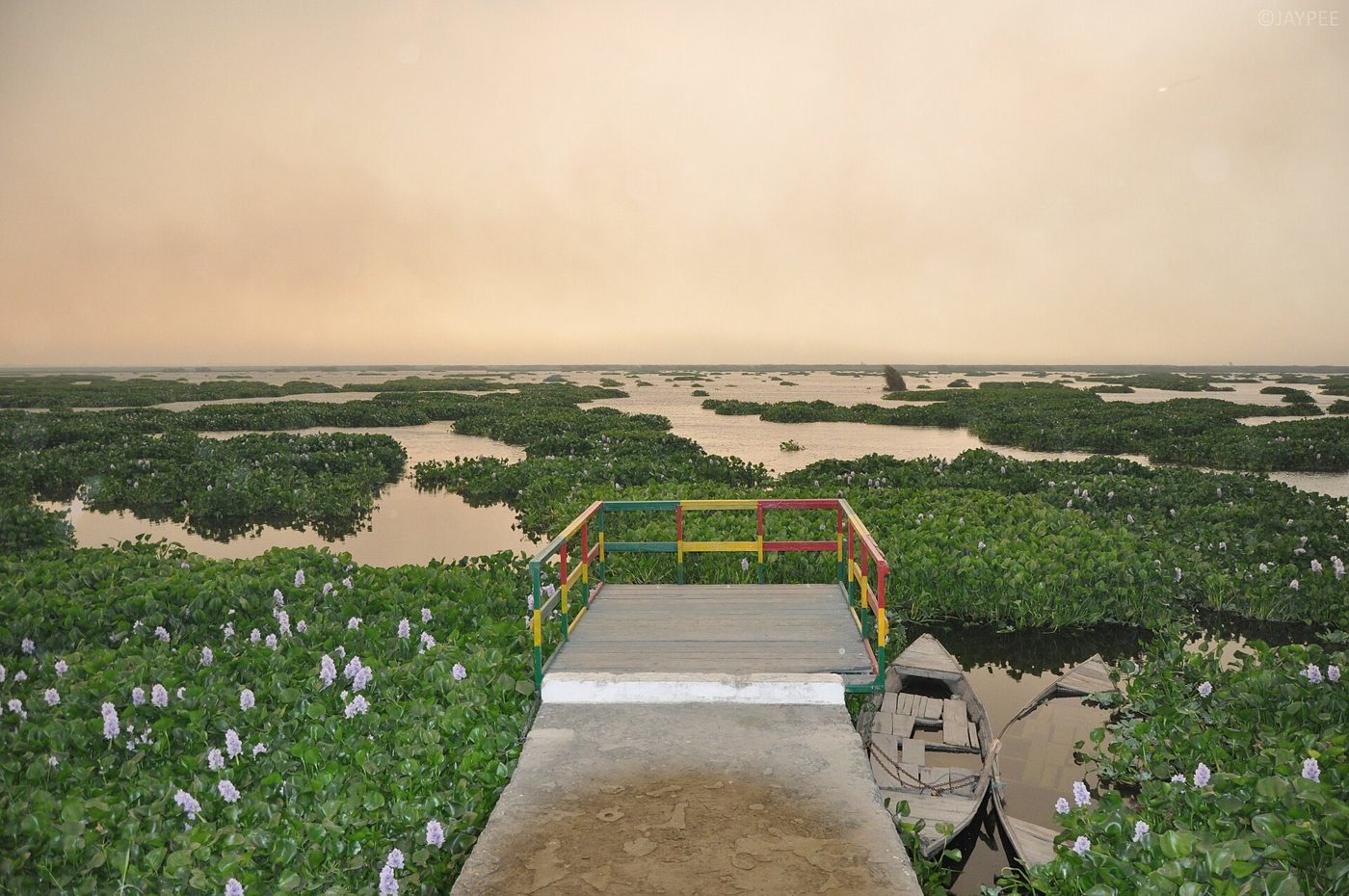
Harike is at the confluence of the Beas and the Sutlej. Do not confuse it with Hokera, a wetland in Jammu and Kashmir, or Renuka, a wetland in Himachal Pradesh.
Everything on one look
Traps, quick facts and a practice question.
- Conservation and community reserves were added in 2002; they are not in the original 1972 Act.
- ESZs come under the Environment (Protection) Act, 1986, not the Wildlife Act.
- Biosphere reserves are a UNESCO MAB idea; Ramsar sites come from a separate 1971 treaty.
- India's first Ramsar sites (1981) were Chilika and Keoladeo, not Harike (1990).
- Keibul Lamjao floats on Loktak Lake, Manipur; it is not in Assam.
- Hemis (Ladakh) is the largest national park; Jim Corbett is the oldest.
- Harike
- Beas–Sutlej confluence; Ramsar 1990
- Keibul Lamjao
- Floating park; sangai deer
- Gir
- Asiatic lion
- Kaziranga
- One-horned rhino
- Nilgiri
- India's first biosphere reserve, 1986
- Cold Desert
- 13th UNESCO biosphere reserve, 2025
- Montreux Record
- Ramsar sites under threat
- 2 February
- World Wetlands Day
- Wildlife (Protection) Act: 1972; conservation + community reserves added 2002
- First national park: Hailey (now Jim Corbett), 1936
- Largest national park: Hemis, Ladakh
- Project Tiger: 1 April 1973; NTCA: 2006; 58 tiger reserves (2026)
- Biosphere reserves: 18; in UNESCO network: 13; first: Nilgiri 1986
- Ramsar Convention: Ramsar, Iran, 1971; India joined 1982
- India's first Ramsar sites: Chilika and Keoladeo, 1981
- India's Ramsar sites: 103 (October 2026); largest: Sundarbans
- Punjab Ramsar sites: Harike, Kanjli, Ropar, Keshopur-Miani, Beas, Nangal
- Montreux Record (India): Keoladeo, Loktak
What is the main difference between a national park and a wildlife sanctuary?
Show answer
In a national park no grazing or private rights are allowed, and its boundary can be changed only by a resolution of the state legislature. In a wildlife sanctuary some activities, such as regulated grazing, may be permitted.