Part of the Punjab Police ASI 2026 course.Take a mock test →
GENERAL AWARENESS · GEOGRAPHY

India: Climate, Soils, Agriculture and Resources

How the monsoon works, the four seasons and local winds, rainfall, the six main soils, forest types, kharif, rabi and zaid crops, and minerals, coal, oil and nuclear power.

Punjab PolicePSSSBPPSC20 MIN READ
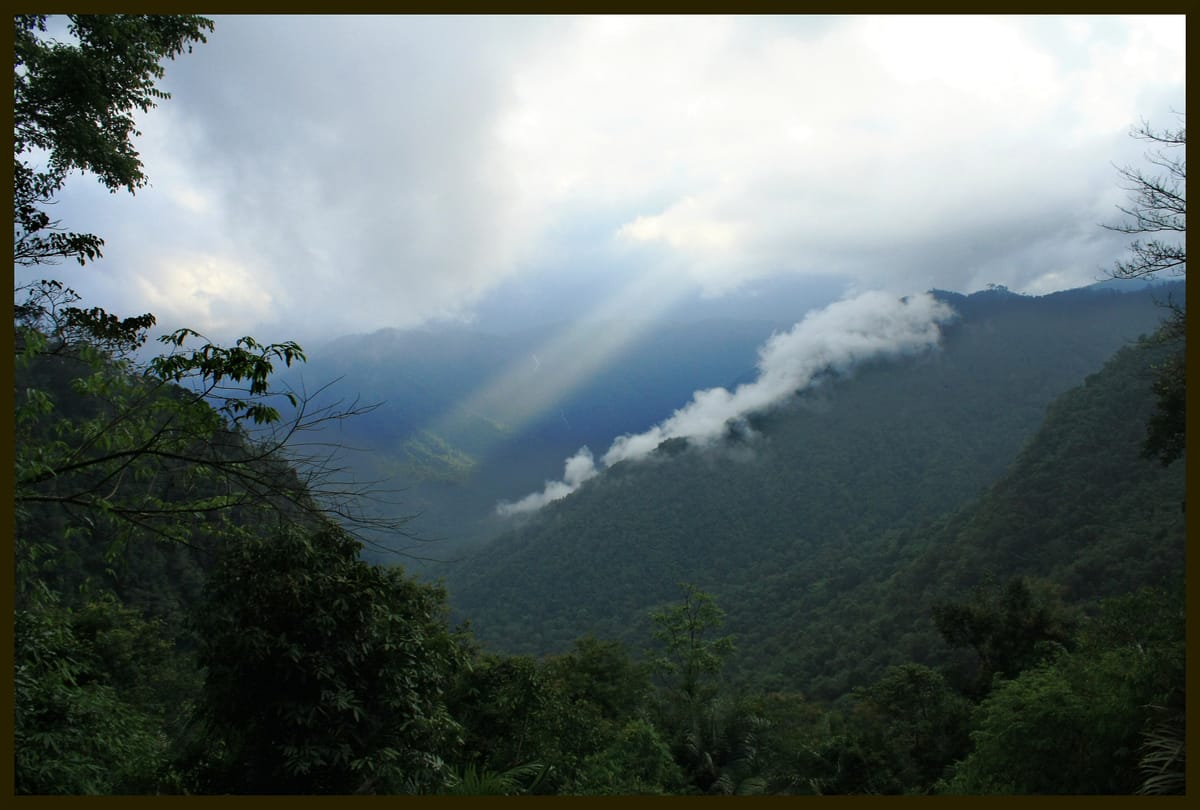
Dark rain clouds and a band of white mist over steep green forested hills, with a beam of sunlight breaking through
Monsoon clouds over the Western Ghats near Meenmutty falls, Kerala. The south-west monsoon reaches Kerala first, around 1 June, and the Ghats force the moist winds to rise and pour heavy rain. Image: Nagesh Jayaraman, Wikimedia Commons · CC BY 2.0

India has a monsoon climate: winds change direction with the seasons and bring most of the year's rain in June to September. That rain decides which crops grow where, together with the soil. Under the land lie coal, iron ore, oil and other minerals. Exams ask about local winds, soil types, forest trees, crop seasons and where each mineral is found.

On this page you will learn:

  • What controls India's climate, and how the monsoon works
  • The four seasons, local winds and where rain falls
  • The six main soils of India
  • Forest types and their trees
  • Kharif, rabi and zaid crops
  • Minerals, coal, oil and nuclear power
1 June
Monsoon reaches Kerala
Normal onset date
Mawsynram
Wettest place
Khasi hills, Meghalaya
3
Crop seasons
Kharif, rabi, zaid

What controls the climate, and how the monsoon works

Rule in one line: land heats faster than sea, so in summer the wind blows from the sea onto India.

Six things shape the climate of a place: latitude, altitude (height), pressure and winds, distance from the sea, ocean currents and relief. Air gets colder with height — about 6.5 °C for every 1,000 m. So Kashmir is colder than Delhi: it is much higher, and also further north.

HOW THE SOUTH-WEST MONSOON WORKS
  1. 1
    Land heats up
    In April–May north-west India becomes very hot; a low-pressure area forms. The sea stays cooler, with higher pressure.
  2. 2
    Winds cross the equator
    South-east trade winds of the southern half are pulled north. The Earth's spin turns them right; they become south-west winds.
  3. 3
    Moist winds hit Kerala
    They pick up water over the ocean and reach the Kerala coast and the Western Ghats around 1 June.
  4. 4
    Two branches spread
    The Arabian Sea branch and the Bay of Bengal branch cover the country by early to mid-July.
  5. 5
    Monsoon retreats
    In October–November the land cools, pressure reverses and the winds withdraw.
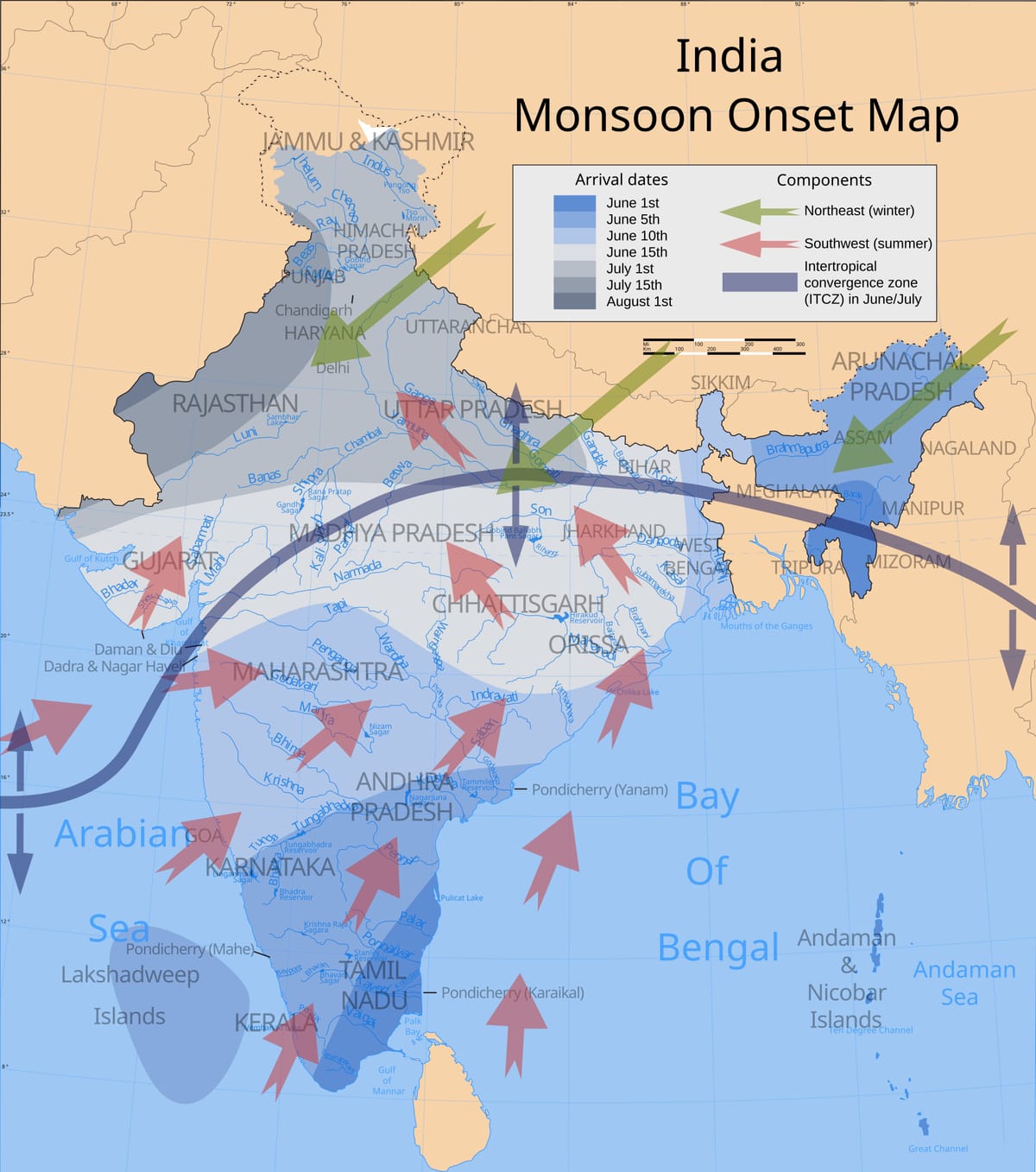
Other factors: the shift of the ITCZ (a low-pressure belt) over the Ganga plain, the heating of the Tibetan plateau, jet streams, and El Niño in the Pacific, which often weakens the monsoon.
Map of India shaded in blues and greys by the date the monsoon arrives, with red arrows from the south-west, green arrows from the north-east and a dark curved band for the ITCZ
Average arrival dates of the south-west monsoon (red arrows). It reaches Kerala about 1 June and west Rajasthan last. Green arrows show the north-east winds of winter. This is an older map: the dates are the old normals and the state names are from before 2014 (no Telangana, Ladakh or the 2020 merger of Dadra–Nagar Haveli with Daman–Diu). IMD's revised normal, from 2020, has the monsoon covering all of India by about 8 July. Image: Saravask (based on Planemad and Nichalp), Wikimedia Commons · CC BY-SA 3.0
KEY TERM
Relative humidity

Humidity is the water vapour in the air. When it is given as a percentage of the most vapour the air could hold at that temperature, it is called relative humidity. 100% means the air is full and rain or dew can form.

QUICK CHECK
PYQ · Punjab Police Constable 2021 — Assertion (A): Kashmir is colder than Delhi. Reason (R): Kashmir is at a higher altitude as compared to Delhi. Mark your answer as per the codes in options.
Tap an option to answer
QUICK CHECK
PYQ · PSSSB Clerk 2021 — Which region gets the first monsoon in summer?
Tap an option to answer
QUICK CHECK
PYQ · Punjab Police SI 2023 — Which of the following statements about the Indian monsoon is/are correct? 1. Monsoon is that axis around which revolves the entire agricultural cycle of India. 2. Regional variations in monsoon are beneficial to grow various types of crop. 3. Winter rainfall in north India is beneficial for rabi crops.
Tap an option to answer

Seasons, local winds and rainfall

Rule in one line: summer rain comes from the south-west monsoon; north India's winter rain comes from the Mediterranean.

SeasonMonthsWhat happens
Cold weatherMid-November to FebruaryClear skies; western disturbances bring rain and snow to the north-west
Hot weatherMarch to MayHot dry loo in the north; pre-monsoon storms in the east and south
Advancing monsoon (rainy)June to SeptemberMost of India's yearly rain falls
Retreating monsoonOctober to November'October heat' (hot, humid days) comes in this period of the retreating south west monsoons; the Tamil Nadu coast gets its main rain now from north-east winds
The four seasons with the month ranges NCERT uses. The India Meteorological Department (IMD) uses slightly different months: Jan–Feb (winter), Mar–May (pre-monsoon), Jun–Sep (south-west monsoon) and Oct–Dec (post-monsoon).
Winter, north-west
Western disturbances

Low-pressure systems from the Mediterranean region. Rain in Punjab, Haryana and nearby; good for wheat.

Summer, north
Loo

Hot, dry, dusty afternoon winds of May–June over the northern plains.

Summer, south
Mango showers

Pre-monsoon rain in Kerala and Karnataka that helps mangoes ripen. 'Blossom showers' make coffee flower.

Summer, east
Nor'westers (Kalbaisakhi)

Violent evening storms with wind, heavy rain and sometimes hail in West Bengal and Assam; good for tea, jute and rice.

Local winds and rains that papers ask by name.

Where the rain falls: over 400 cm a year on the west coast and in the north-east; Mawsynram in the Khasi hills of Meghalaya gets the highest average rainfall in the world. Below 60 cm falls in western Rajasthan and nearby parts of Gujarat, Haryana and Punjab, and in Ladakh. The eastern (leeward) side of the Western Ghats is a rain-shadow area, so the interior Deccan is drier.

QUICK CHECK
PYQ · Punjab Police SI 2016 — The westerly disturbances causing winter rains in northern India originate in
Tap an option to answer
QUICK CHECK
PYQ · Punjab Police SI 2023 — The localised downpours, accompanied by severe winds, torrential precipitation, rarely carried by the hail storm that occur in West Bengal is known as:
Tap an option to answer

Soils of India

Rule in one line: rivers make alluvial soil, lava makes black soil, heavy rain makes laterite.

SoilWhereFeaturesCrops
AlluvialMostly the Indo-Gangetic plains; also the Brahmaputra plain and east-coast deltasMost widespread; very fertile; potash, phosphoric acid and limeWheat, rice, sugarcane
Black (regur)Deccan lava area: Maharashtra, Gujarat, Madhya PradeshHolds moisture; deep cracks when dry; rich in lime, potash, magnesiumCotton — so 'black cotton soil'
Red and yellowEastern and southern Deccan: Tamil Nadu, Odisha, Chota Nagpur, ChhattisgarhRed from iron; yellow when wet (hydrated)Millets, pulses, groundnut
LateriteHeavy-rain hills: Kerala, Karnataka, Tamil Nadu, hilly Odisha and the north-eastRain washes out nutrients (leaching); poor in humusTea, coffee, cashew (with manure)
Arid (desert)Western RajasthanSandy and salty; kankar lower downBajra; more crops with irrigation
Forest (mountain)Himalaya and other hillsThin; humus-rich in valleysHill crops such as tea and fruit
Alluvial soil has two kinds: Khadar (new, on flood plains, more fertile) and Bhangar (old, on higher ground, with kankar, less fertile).
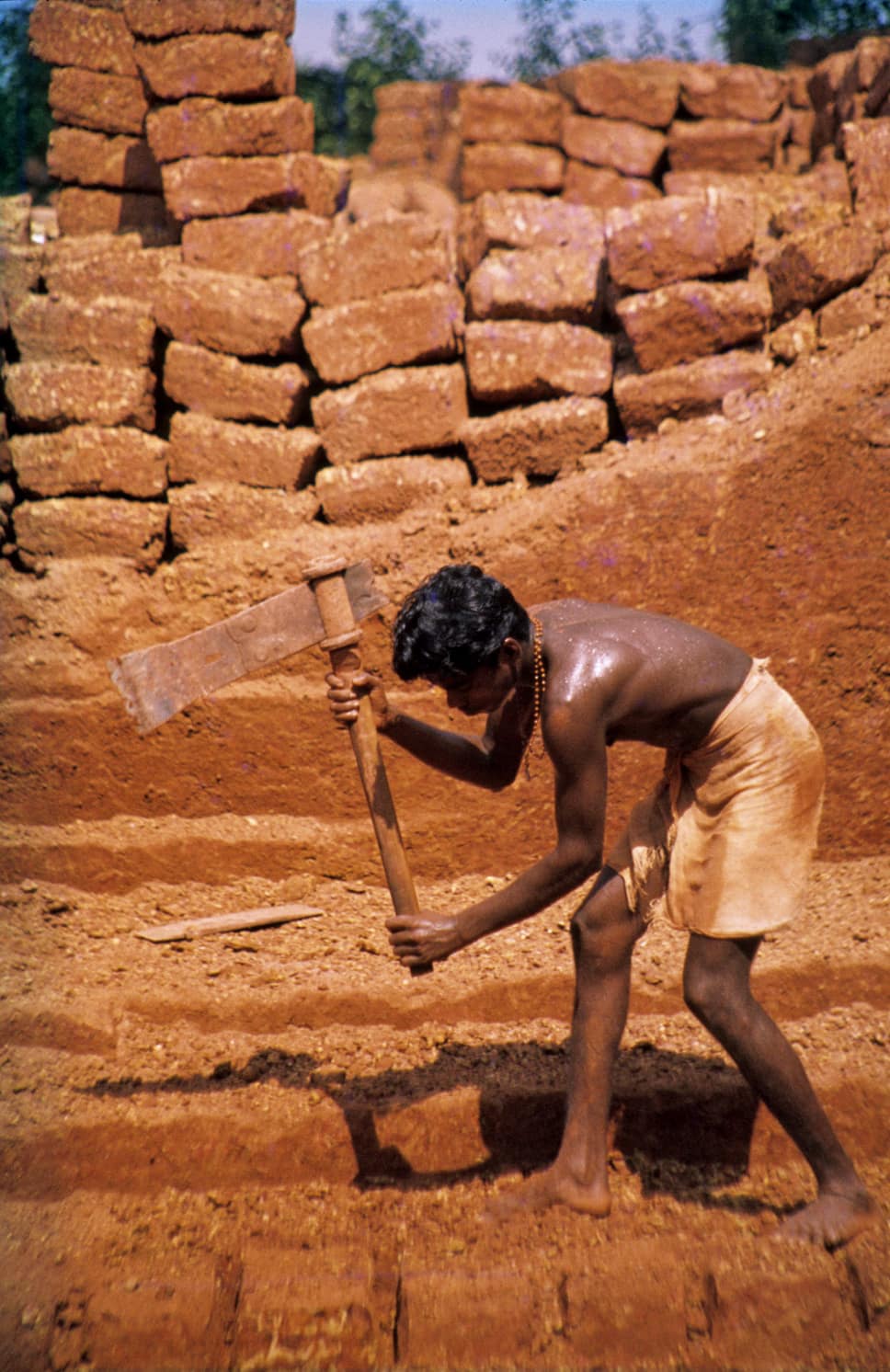
A worker swinging a heavy pick to cut blocks from red earth, with a wall of stacked red stone blocks behind him
Cutting laterite blocks at Angadipuram, Kerala. Laterite is soft when dug and hardens in air, so it is used as building brick — the name comes from the Latin later, 'brick'. Image: Werner Schellmann, Wikimedia Commons · CC BY-SA 2.5
BLACK VS LATERITE SOIL
Black soil
Laterite soil
Made from
Deccan lava (basalt)
Leaching by heavy rain
Water
Holds it well
Drains away
Main crop
Cotton
Tea, coffee, cashew
QUICK CHECK
PYQ · PPSC DDSWO 2023 — Match List I (major soils of India: A. Alluvial soils, B. Black soils, C. Red soils, D. Laterite soils) with List II (main states/areas: 1. Tamil Nadu, Chota Nagpur Plateau, Orissa, Manipur, Mizoram; 2. Indo-Gangetic and Brahmaputra plains; 3. Tamil Nadu, Meghalaya, western Karnataka, eastern Orissa; 4. Maharashtra, M.P., Gujarat).
Tap an option to answer
QUICK CHECK
PYQ · PPSC ICS 2016 — The term 'Regur' refers to
Tap an option to answer
QUICK CHECK
PYQ · PSSSB Excise Inspector 2026 — The 'Khadar' and 'Bhangar' soils are subtypes of alluvial soil. Which of the following statements is pedologically accurate?
Tap an option to answer

Natural vegetation: forest types

Rule in one line: more rain, thicker and greener forest; height adds the mountain forests.

Forest typeRain / placeTypical trees
Tropical evergreenOver 200 cm; Western Ghats, north-east, Andaman and NicobarEbony, mahogany, rosewood, rubber, cinchona
Tropical deciduous (monsoon)70–200 cm; most widespread in IndiaTeak, sal, bamboo, shisham, sandalwood, khair
Thorn and scrubUnder 70 cm; Rajasthan, Gujarat, dry DeccanAcacia, palms, euphorbia, cactus
Montane (mountain)Himalaya, by heightOak, chestnut; then pine, deodar, silver fir, spruce; high up juniper, birch
Mangrove (tidal)River deltas of the east coastSundari tree; roots stand in salty water
Mangroves grow on the sea face of the deltas of the Ganga, Mahanadi, Godavari, Krishna and Kaveri. They are evergreen trees, so papers also call the delta forests of the east coast 'evergreen'. In the south, shola forests and grasslands grow as patches on the hill slopes of the Western Ghats and the Anaimalai ranges (Nilgiri, Anaimalai and Palani hills).
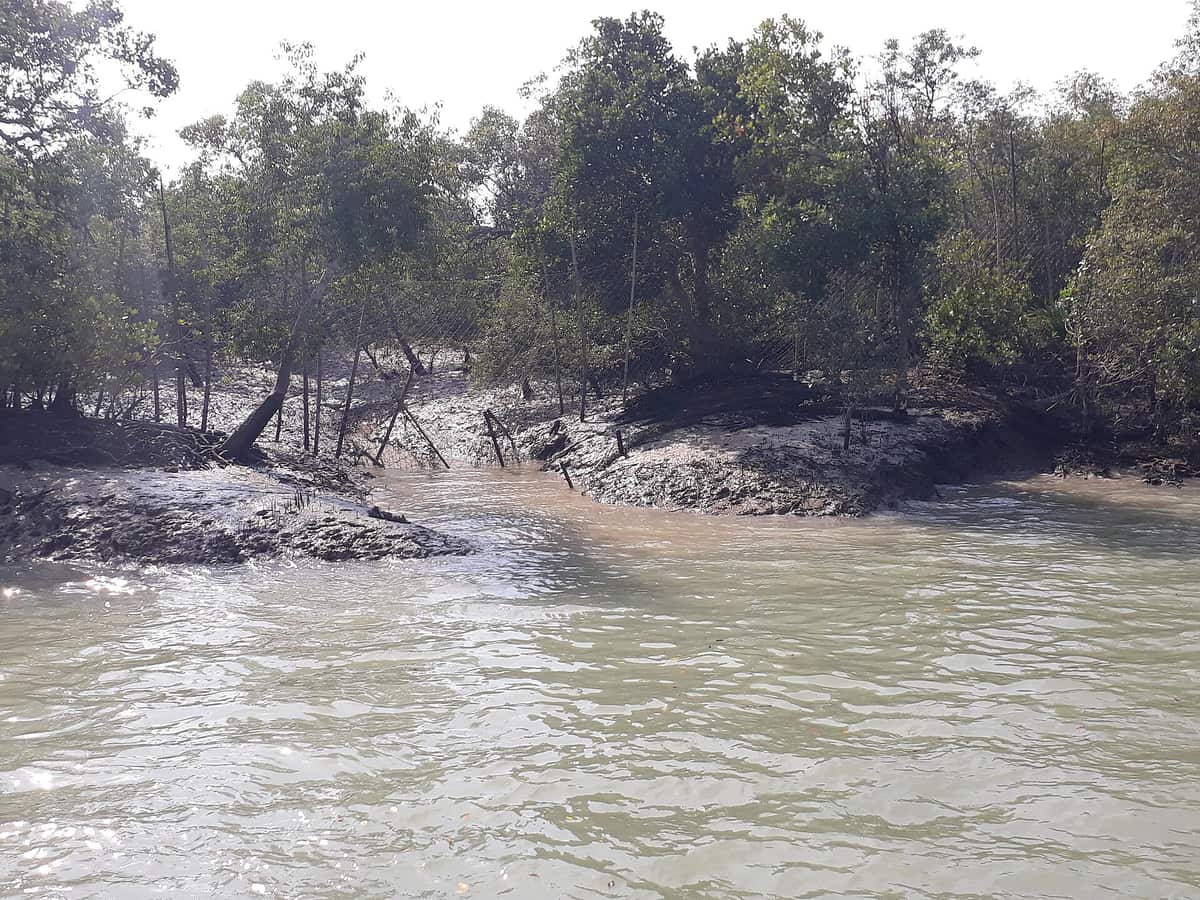
A muddy tidal creek with grey mud banks and a dense line of mangrove trees behind, under a hazy sky
Mangrove forest of the Sundarbans, West Bengal, on the Ganga–Brahmaputra delta. Twice a day the tide floods the mud; small breathing roots poke up from it. The Sundari tree gives the forest its name. Image: Pinakpani, Wikimedia Commons · CC BY-SA 4.0
QUICK CHECK
PYQ · Punjab Police SI 2023 — Identify the INCORRECT pair of forest type and its related trees from the following options.
Tap an option to answer
QUICK CHECK
PYQ · Punjab Police SI 2023 — Mangrove forests are mainly found along the sea face of deltas created by which of the following rivers?
Tap an option to answer

Agriculture: crop seasons and crops

Rule in one line: kharif comes with the monsoon, rabi with winter, zaid in the short summer between.

INDIA'S THREE CROP SEASONS
Kharif (sauni)
Rabi (hari)
Zaid
Sown
Onset of monsoon (June–July)
Winter (Oct–Dec)
Summer, between the two
Harvested
Sept–Oct
April–June
Before kharif
Crops
Rice, maize, millets, cotton, jute
Wheat, barley, gram, mustard
Melons, cucumber, fodder
Rice is the staple food of most Indians; Wheat is the second most important cereal and the main food of the north and north-west.
KEY TERM
Subsistence and cash crops

Crops that the farmer's own family uses, or sells only in the local market, are subsistence crops — for example the grain of a small farm. Crops grown mainly for sale, such as cotton, sugarcane or tea, are cash crops.
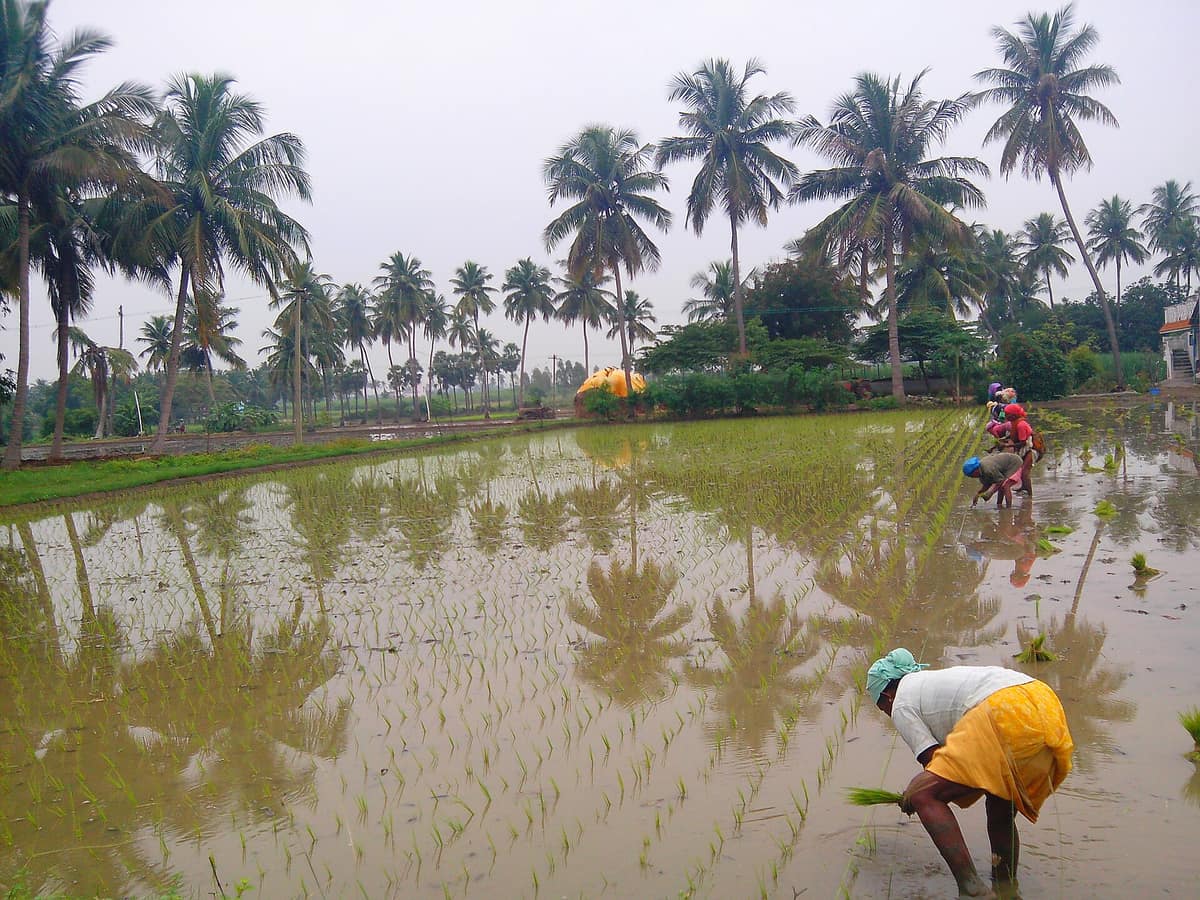
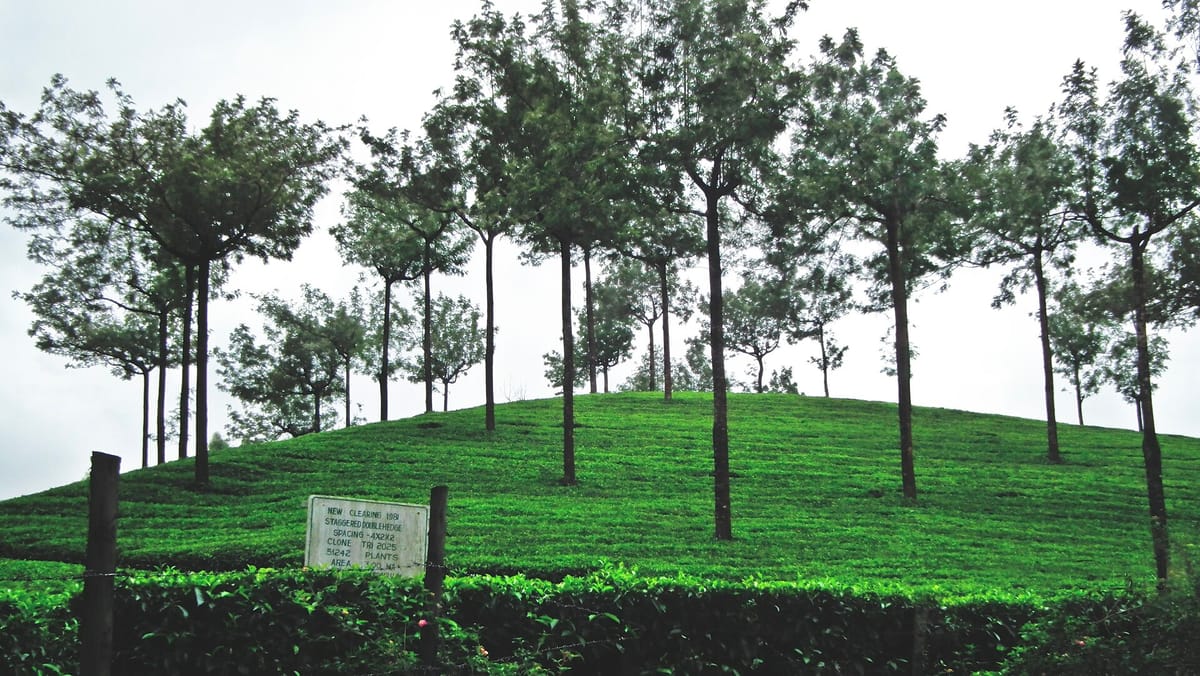
A food crop and a plantation crop
Image
QUICK CHECK
PYQ · Punjab Police SI 2021 — The Kharif crop is grown with the onset of which of the following seasons?
Tap an option to answer
QUICK CHECK
PYQ · PPSC ICS 2016 — Which of the following is a Rabi crop?
Tap an option to answer

Minerals and energy resources

Rule in one line: the old plateau holds the metals; the young rocks of the coasts and Assam hold the oil.

KEY TERM
Iron ores

Magnetite is the finest iron ore, with up to 70% iron. Haematite is the most used, with 50–60% iron. Limonite is another iron ore. Bauxite is different: it is the ore of aluminium.

Magnetite→Haematite→Limonite→all give iron
MineralWhereNote
Iron oreOdisha–Jharkhand belt; Bailadila (Chhattisgarh); Kudremukh (Karnataka)Feeds the steel plants
CoalDamodar valley: Jharia, Raniganj, BokaroMostly Gondwana coal, about 200 million years old
LigniteNeyveli, Tamil NaduLow-grade brown coal
MicaKoderma–Gaya–Hazaribagh belt, JharkhandUsed in electrical goods
BauxiteAmarkantak plateau; Panchpatmali (Koraput, Odisha)Ore of aluminium
UraniumJaduguda, JharkhandNuclear fuel; Kerala's monazite sands give thorium
The Chota Nagpur Plateau (Jharkhand and nearby) is so rich in coal, iron and mica that it is called the 'Ruhr of India', after Germany's mining region.
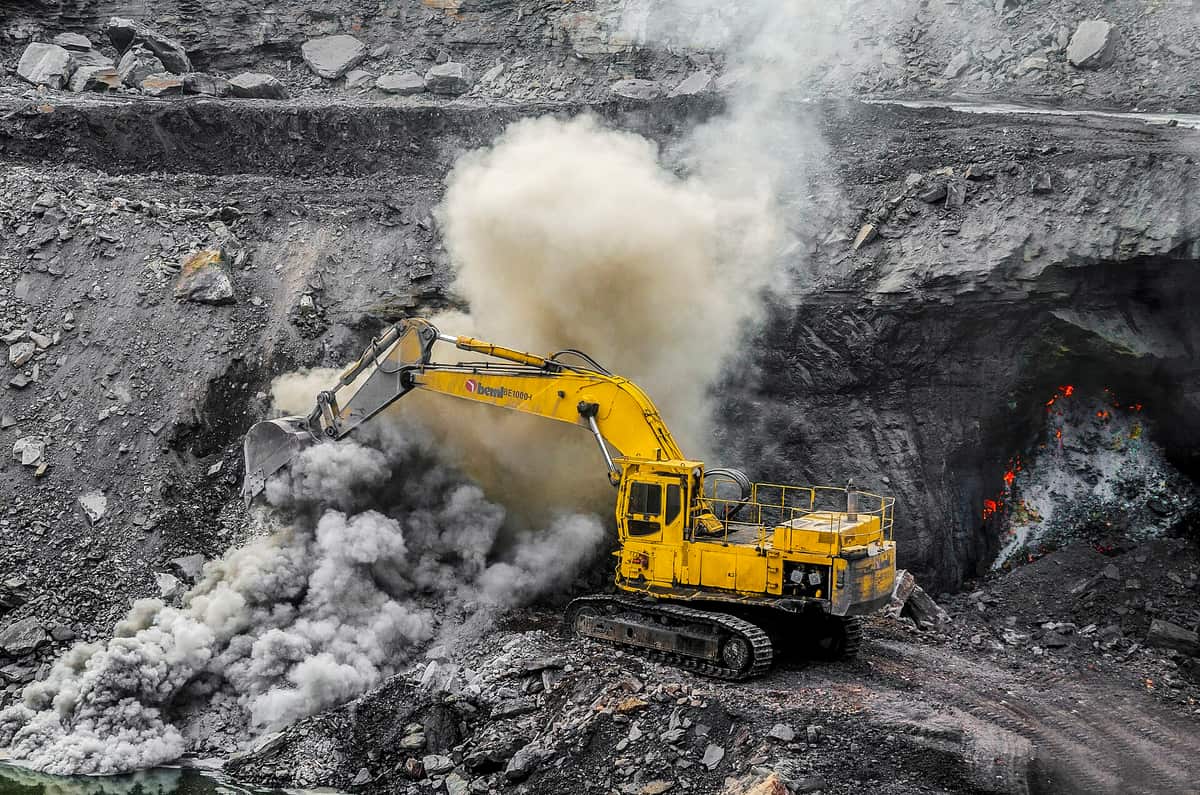
A large yellow excavator digging in a grey open-pit mine, with clouds of dust and a patch of glowing red fire in the rock wall
An open-cast mine in the Jharia coalfield, Dhanbad, Jharkhand — India's most important coking-coal field. The red glow on the right is one of Jharia's underground coal fires, which have burned for decades. Image: TripodStories-AB, Wikimedia Commons · CC BY-SA 4.0
Energy sourceKey places
Oil — Assam (oldest oil state)Digboi, Naharkatiya, Moran–Hugrijan, Galeki
Oil — elsewhereMumbai High (offshore); Ankleshwar (Gujarat); Kharsang (Arunachal Pradesh)
Oldest refineryDigboi, Assam (1901)
Nuclear powerTarapur (Maharashtra, the first), Rawatbhata (Rajasthan), Kalpakkam and Kudankulam (Tamil Nadu), Narora (Uttar Pradesh), Kakrapar (Gujarat), Kaiga (Karnataka)
Coal-based thermal power still gives most of India's electricity; solar and wind are growing fast.
QUICK CHECK
PYQ · Punjab Police SI 2016 — Which of the following is different from the remaining three?
Tap an option to answer
QUICK CHECK
PYQ · Punjab Police SI 2023 — Which coalfield of Jharkhand is the largest and most important coal producing mine?
Tap an option to answer
QUICK CHECK
PYQ · Punjab Police SI 2023 — The following oil fields are located in Assam, EXCEPT:
Tap an option to answer
QUICK CHECK
PYQ · PPSC JE 2021 — Match the following: List I (Nuclear Power Project): (A) Narora (B) Kakrapar (C) Kudankulam (D) Kaiga; List II (State): 1. Uttar Pradesh 2. Karnataka 3. Gujarat 4. Tamil Nadu. Codes: A B C D
Tap an option to answer

Traps and practice

Last revision — where the options try to fool you.

COMMON TRAPS
  • Western disturbances come from the Mediterranean, not the Arabian Sea or the Himalaya.
  • Nor'westers = Bengal and Assam; mango showers = Kerala and Karnataka; loo = northern plains.
  • Khadar is new and more fertile; Bhangar is old, with kankar.
  • Regur = black soil (cotton). Laterite = heavy-rain soil (tea, coffee, cashew, bricks).
  • Juniper and silver fir are mountain trees; the mangrove tree is the Sundari.
  • Bauxite gives aluminium, not iron.
  • Kharsang oil field is in Arunachal Pradesh, not Assam.
CHECK YOURSELF

Why does Punjab get some rain in winter when the monsoon has gone?

Show answer

Western disturbances — low-pressure systems from the Mediterranean — travel east with the westerly winds and bring winter rain to north-west India. This rain helps the rabi wheat crop.

FLASHCARDS
Climate and resources flashcards
Monsoon reaches Kerala
About 1 June
Wettest place in the world
Mawsynram, Meghalaya
Kalbaisakhi
Nor'westers of Bengal
Regur
Black cotton soil
Sundari tree
Mangrove, Sundarbans
Kharif is sown with
The monsoon
Main rabi crop
Wheat
Largest coalfield
Jharia, Jharkhand
'Ruhr of India'
Chota Nagpur Plateau
Oldest oil refinery
Digboi, Assam
QUICK BYTES
  • Land heats faster than sea → low pressure → south-west monsoon
  • Kerala about 1 June; Western Ghats get it first
  • Winter rain in the north-west: western disturbances (Mediterranean)
  • Alluvial most widespread; black = regur = cotton; laterite = leaching
  • Evergreen over 200 cm; deciduous 70–200 cm; thorn under 70 cm
  • Kharif = monsoon; rabi = winter (wheat); zaid = short summer
  • Iron ores: magnetite, haematite, limonite; bauxite = aluminium
  • Jharia coal; Digboi oil; Kharsang in Arunachal

Frequently Asked Questions

How does the south-west monsoon form?

In summer the land heats faster than the sea, so low pressure forms over north-west India. Moist winds from the ocean blow towards it from the south-west and bring rain from June to September.

Which part of India gets the monsoon first?

The Kerala coast and the Western Ghats, around 1 June.

What are western disturbances?

Low-pressure systems that start over the Mediterranean Sea and move east. They bring winter rain and snow to north-west India, which helps the wheat crop.

What are nor'westers?

Violent evening thunderstorms of April–May in West Bengal and Assam, with strong winds, heavy rain and sometimes hail. In Bengal they are called Kalbaisakhi.

Which is the most widespread soil in India?

Alluvial soil, laid by rivers over the Northern Plains and the east-coast deltas. It is very fertile.

Why is black soil called black cotton soil?

Because it holds moisture well and suits cotton. It formed from the lava rocks of the Deccan and is also called regur.

Where are mangrove forests found in India?

On the tidal sea face of the deltas of the Ganga, Mahanadi, Godavari, Krishna and Kaveri. The Sundarbans of the Ganga–Brahmaputra delta are the largest.

What is the difference between kharif and rabi crops?

Kharif crops such as rice, maize and cotton are sown with the monsoon and cut in autumn. Rabi crops such as wheat, gram and mustard are sown in winter and cut in spring.

Which are the main iron ores?

Magnetite (finest, up to 70% iron), haematite (most used) and limonite. Bauxite is not an iron ore; it gives aluminium.

Which is the oldest oil-producing area of India?

Assam. Digboi has India's oldest refinery (1901); Naharkatiya and Moran–Hugrijan are other Assam fields. Kharsang is in Arunachal Pradesh.

More in Geography

← All Geography notes