Punjab Census 2011: Population, Literacy, Sex Ratio and District Facts
All the Census 2011 numbers for Punjab in one place — population, density, sex ratio, literacy, rural–urban split, religion — plus the district records that exams ask again and again.
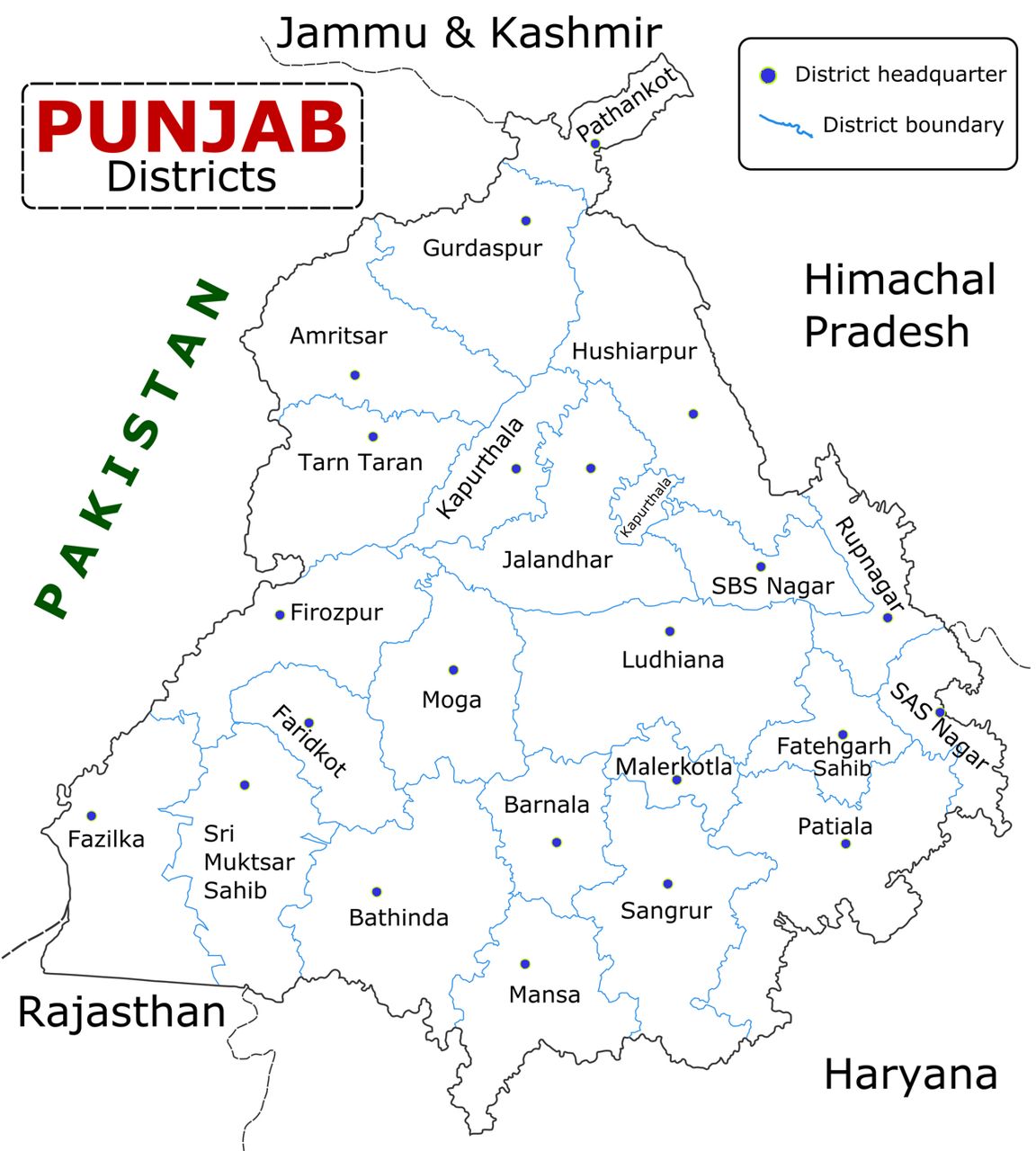
Punjab's 23 districts today. Census 2011 numbers on this page were counted before some of these districts were created. Image: Wikigringo, Wikimedia Commons · CC BY-SA 4.0
A census is a head-count of every person in the country. India counts its people every ten years. The last full count was Census 2011, so exam questions about Punjab's population, literacy and sex ratio all use Census 2011 numbers. On this page you will learn: (1) Punjab's key numbers and what each one means, side by side with India; (2) religion, language and the three regions; (3) the district records — highest and lowest — shown on a map.
2.77 crore
Population
Census 2011
551
Density
persons per sq km
895
Sex ratio
females per 1,000 males
75.84%
Literacy
India: 74.04%
Punjab at a glance
Learn this table first. Almost every census question comes from it.
Indicator
Punjab, Census 2011 — remember
Total population
2,77,43,338 (about 2.77 crore) — 16th among today's states (15th in the 2011 list); about 2.3% of India
Males / Females
1,46,39,465 / 1,31,03,873 — More males than females
Decadal growth (2001–2011)
13.89% — Lower than India's 17.7%
Density
551 persons per sq km — Provisional figure was 550
Sex ratio
895 females per 1,000 males — India: 943
Child sex ratio (age 0–6)
846 — Lower than the overall 895
Literacy (total)
75.84% — Provisional figure was 76.68%
Male literacy
80.44% — Higher than female
Female literacy
70.73% — About 9.7 points below male
Urban population
37.48% — About 3 in every 8 people
Rural population
62.52% — Most people live in villages
Scheduled Castes (SC)
about 31.9% — Highest share of any state
Final Census 2011 figures. Some older papers use provisional (first, early) figures: literacy 76.68% and density 550.
PUNJAB VS INDIA, CENSUS 2011
Punjab
India
Population
2.77 crore
121.09 crore
Growth 2001–11
13.89%
17.7%
Density (per sq km)
551
382
Sex ratio
895
943
Child sex ratio (0–6)
846
919
Literacy
75.84%
74.04%
Male / female literacy
80.44% / 70.73%
82.14% / 65.46%
Urban share
37.48%
about 31%
Punjab is above India on density, literacy, female literacy and urban share, but below India on growth, sex ratio and child sex ratio.
QUICK FACT
In Census 2011, male literacy (80.44%) was higher than female literacy (70.73%) in Punjab. The state's total literacy (75.84%) was a little above the national figure (74.04%).
REMEMBER
Literacy: "80 men, 70 women, 75 together" (80.44 / 70.73 / 75.84). Sex ratio: 895 girls for every 1,000 boys in the whole state, but only 846 among small children (0–6) — the child figure is always the smaller one.
FLASHCARDS
Number → what it means
551
Density — persons per sq km (India 382)
895
Sex ratio — females per 1,000 males (India 943)
846
Child sex ratio, ages 0–6
13.89%
Population growth, 2001–2011
75.84%
Total literacy (India 74.04%)
80.44% / 70.73%
Male / female literacy
62.52% / 37.48%
Rural / urban share
57.69%
Sikh share of the population
31.9%
Scheduled Castes — highest share of any state
4.75%
Multidimensionally poor (NITI Aayog, 2023)
QUICK CHECK
What is the literacy rate of Punjab (in per cent) according to the 2011 Census?
Tap an option to answer
Answer: A — 75.84
Punjab's literacy was 75.84%, a little above India's 74.04%.
QUICK CHECK
According to the Census of India 2011, what is the literacy rate of the male population in Punjab?
Tap an option to answer
Answer: A — 80.44
Male literacy 80.44%; female literacy 70.73%; total 75.84%.
Growth, sex ratio, villages
What the main numbers mean.
KEY TERM
Decadal growth rate
Decadal means "over ten years". The decadal growth rate is how much the population grew between two censuses. Punjab grew by 13.89% from 2001 to 2011, slower than India as a whole (about 17.7%).
Census 2001→+13.89% in 10 years→Census 2011: 2.77 crore
KEY TERM
Sex ratio and child sex ratio
Sex ratio = number of females for every 1,000 males. Punjab's is 895. Child sex ratio counts only children aged 0–6. Punjab's is 846 — even lower, which shows that fewer girls than boys are born (because of sex-selection before birth) and survive.
India: 943→Punjab: 895→Punjab children (0–6): 846
Sex ratio, Census 2011 (females per 1,000 males)
Haryana
879
Jammu & Kashmir
889
Sikkim
890
Punjab
895
India
943
Kerala (highest)
1084
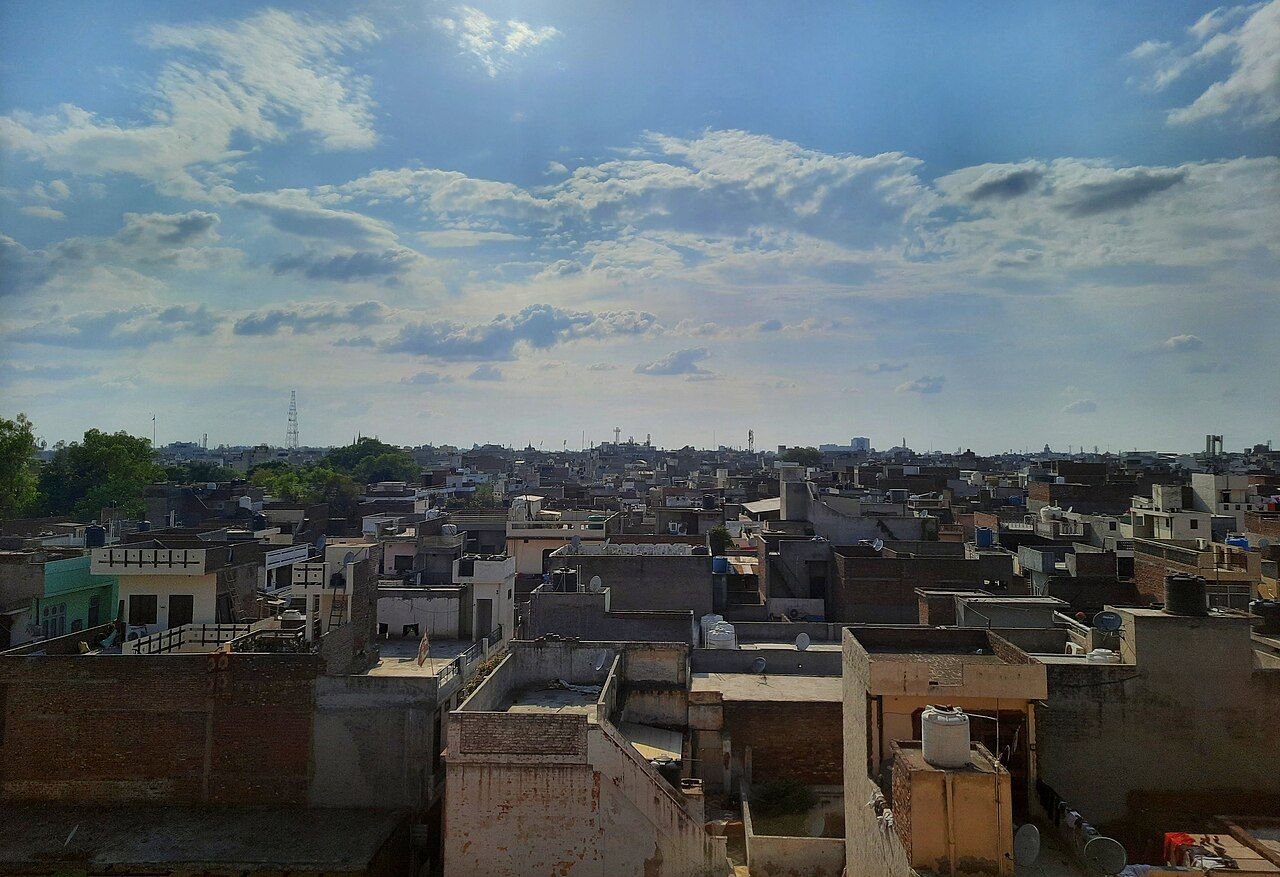
The states with the lowest sex ratio were Haryana (879), then Jammu & Kashmir (889), Sikkim (890) and Punjab (895). The highest was Kerala (1,084); India's figure was 943.Rooftops of Ludhiana, Punjab's largest city. Ludhiana district had the highest density in the state: 975 persons per sq km (Census 2011). Image: Benison P Baby, Wikimedia Commons · CC BY-SA 4.0
RURAL VS URBAN PUNJAB
Rural (62.52%)
Urban (37.48%)
What it means
Most people live in villages
Urban share is higher than India's average
Size
About 12,500 inhabited villages
Ludhiana is the largest city
Example
Khadur Sahib tehsil (Tarn Taran) is wholly rural — it has no town
Big cities: Ludhiana, Amritsar, Jalandhar, Patiala, Bathinda
Remember
Agriculture is the main source of living
Ludhiana district is also the most crowded (densest)
Rural + urban = 100%: 62.52% + 37.48%. If you remember one, you know the other.
Rural Punjab
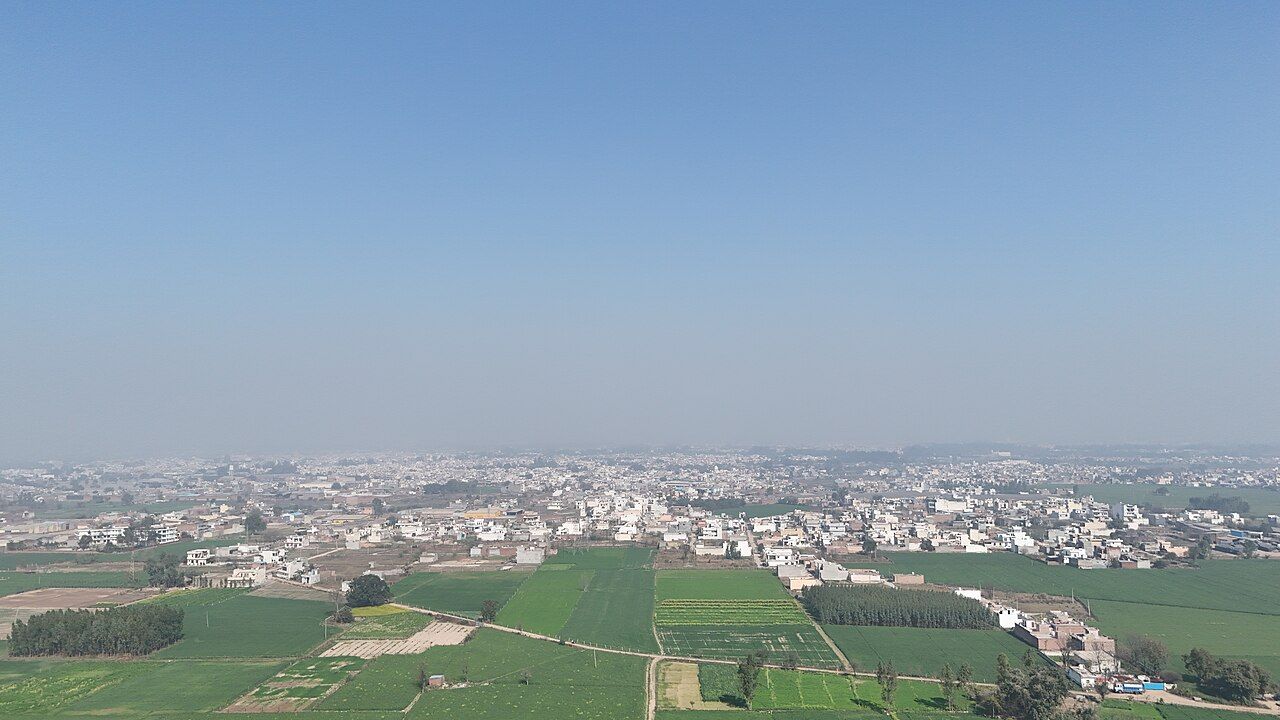
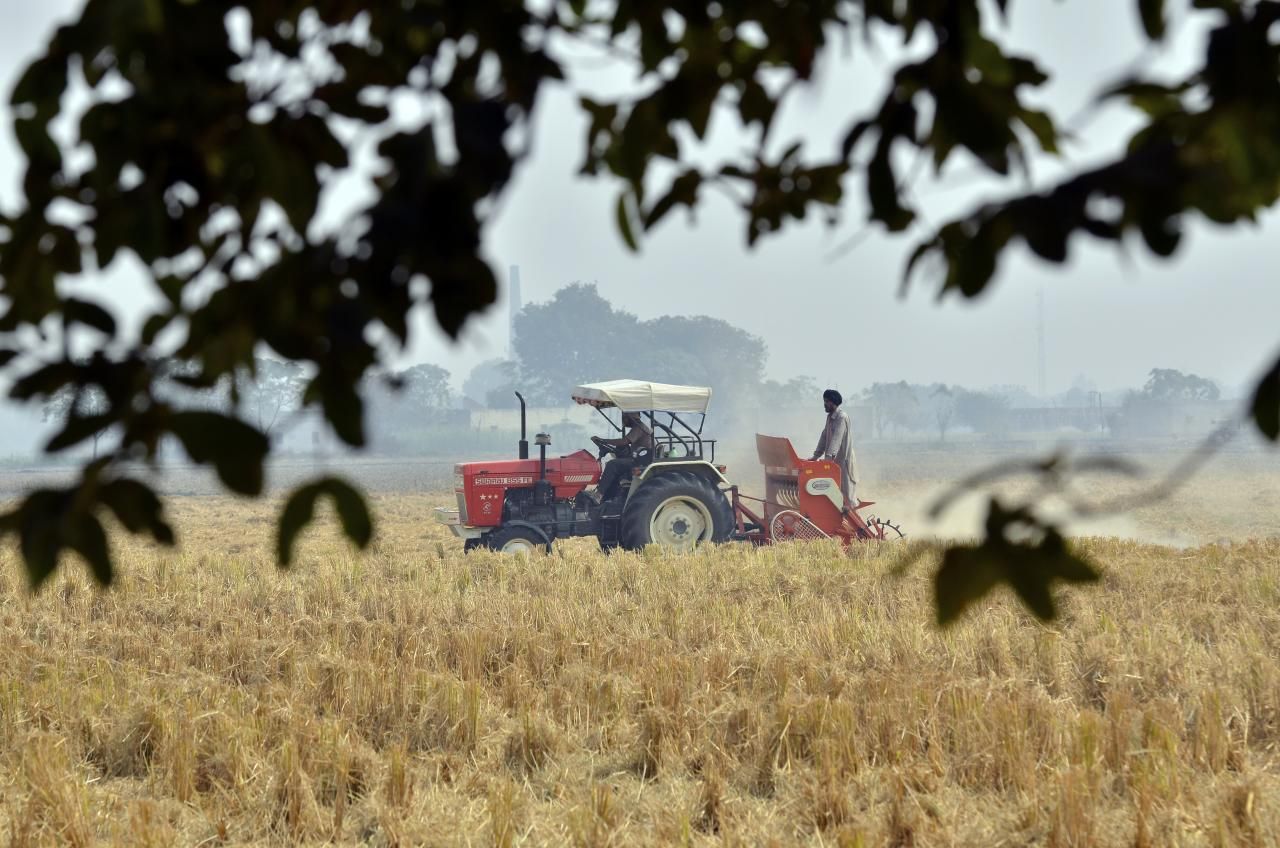
Said Kheri village near Rajpura — Punjab has about 12,500 inhabited villages
According to the 2011 Census, what is the population growth percentage of Punjab (2001–2011)?
Tap an option to answer
Answer: A — 13.89%
Punjab grew by 13.89% in ten years, slower than India's 17.7%.
QUICK CHECK
According to Census 2011, what percentage of Punjab's total population lived in rural areas?
Tap an option to answer
Answer: A — 62.52%
62.52% rural and 37.48% urban — together 100%.
Religion, caste and language
Only what Census 2011 and the law say.
Religion in Punjab, Census 2011
Sikh
57.69 %
Hindu
38.49 %
Muslim
1.93 %
Christian (about 3.48 lakh people)
1.26 %
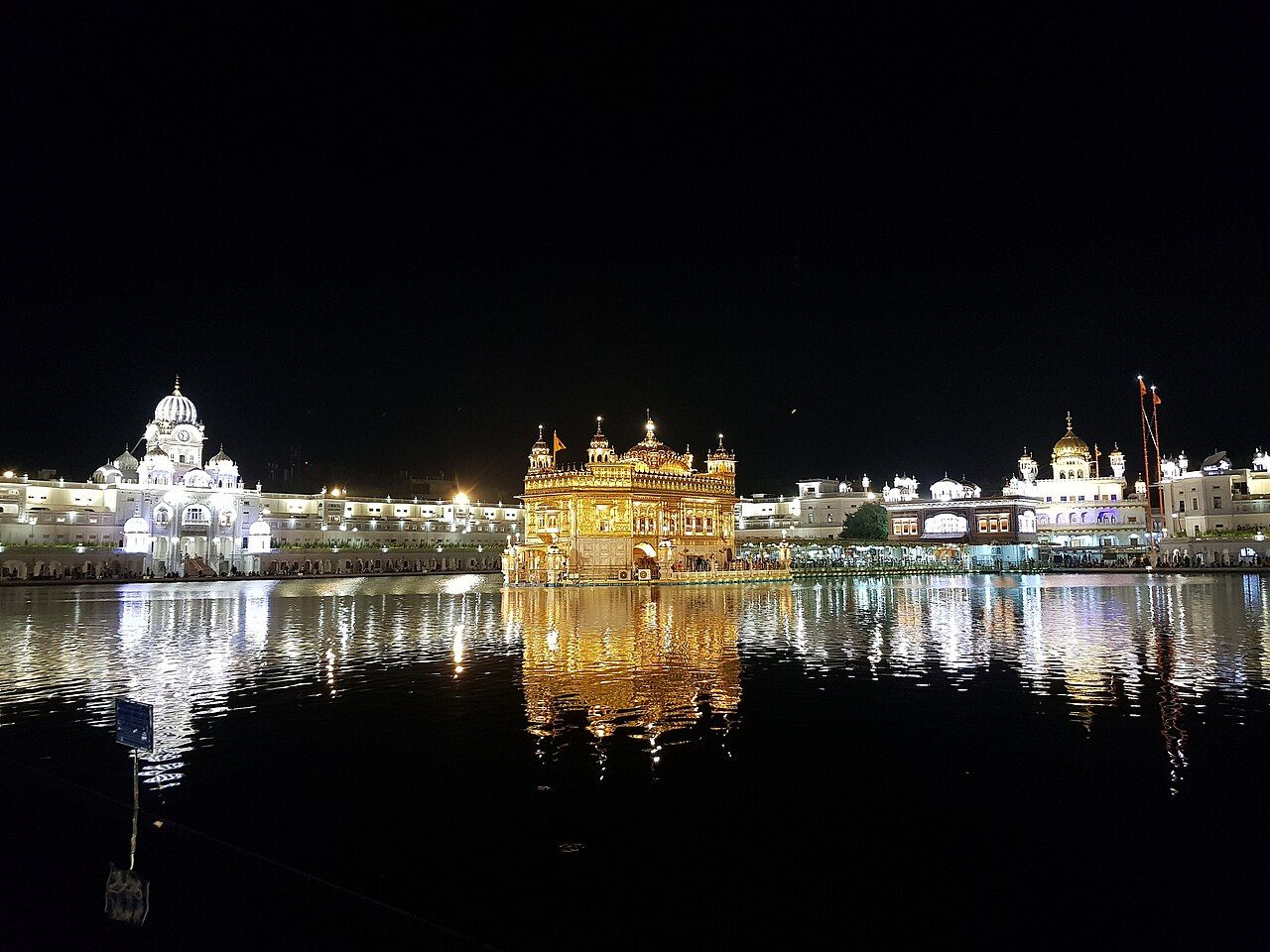
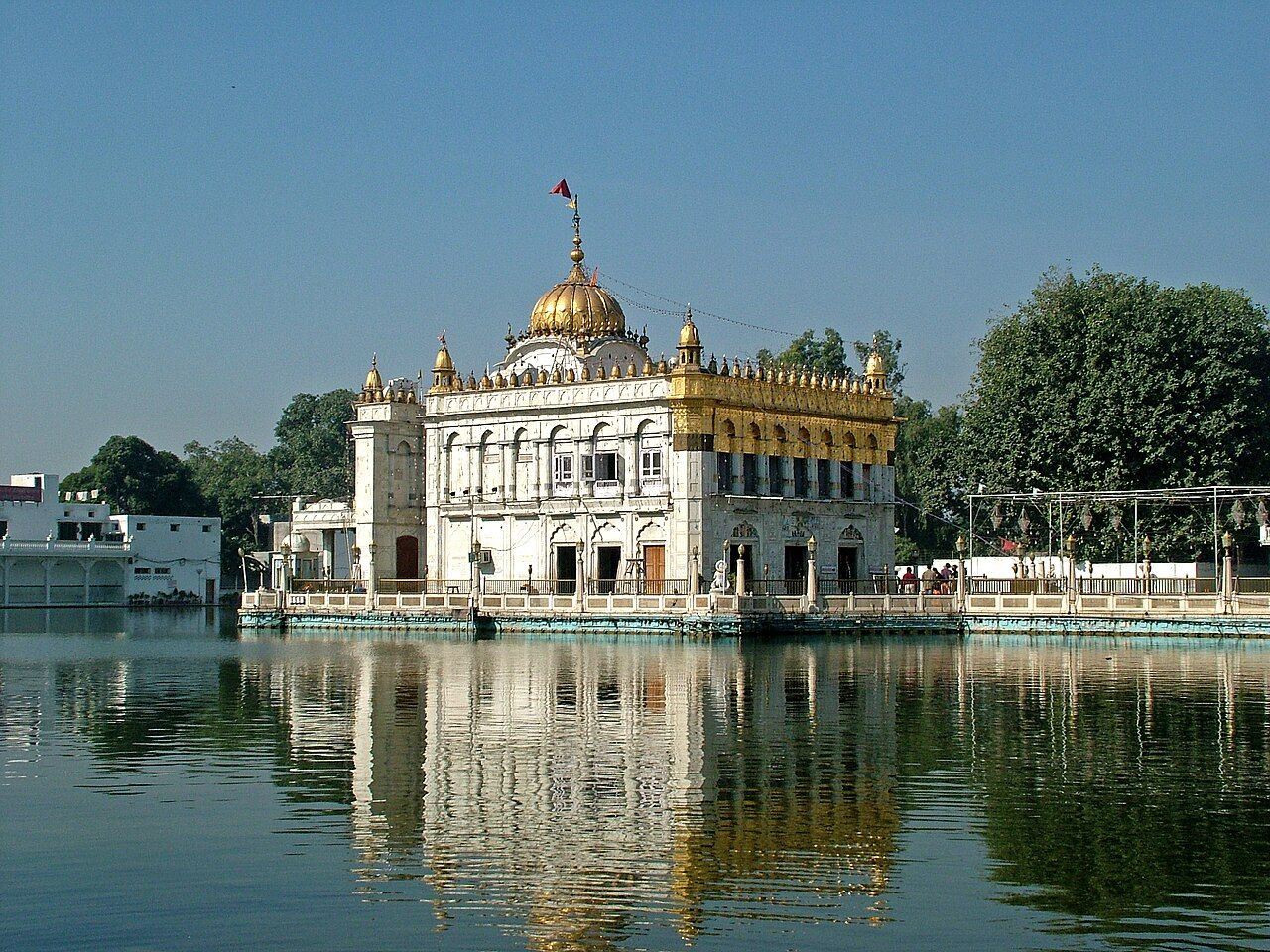
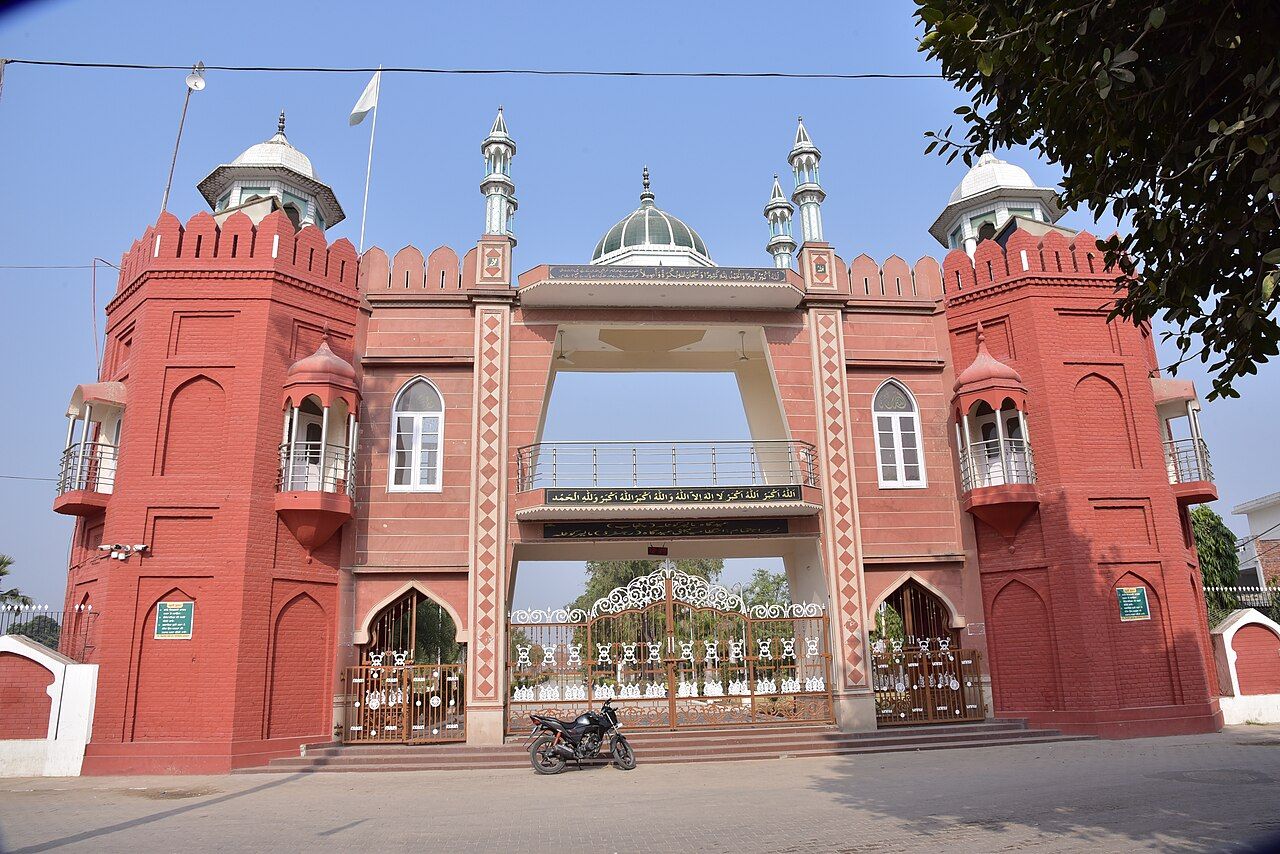
Punjab is the only Sikh-majority state: Sikhs are 57.69%, Hindus 38.49% (the second-largest group), Muslims 1.93% and Christians 1.26%. Muslims live mainly around Malerkotla; Christians (about 3.48 lakh) are the fourth-largest group. Sikhs and Hindus together make up about 96% of the state. Small groups (Buddhist, Jain and others) make up the rest.
Places of worship of the four largest groups
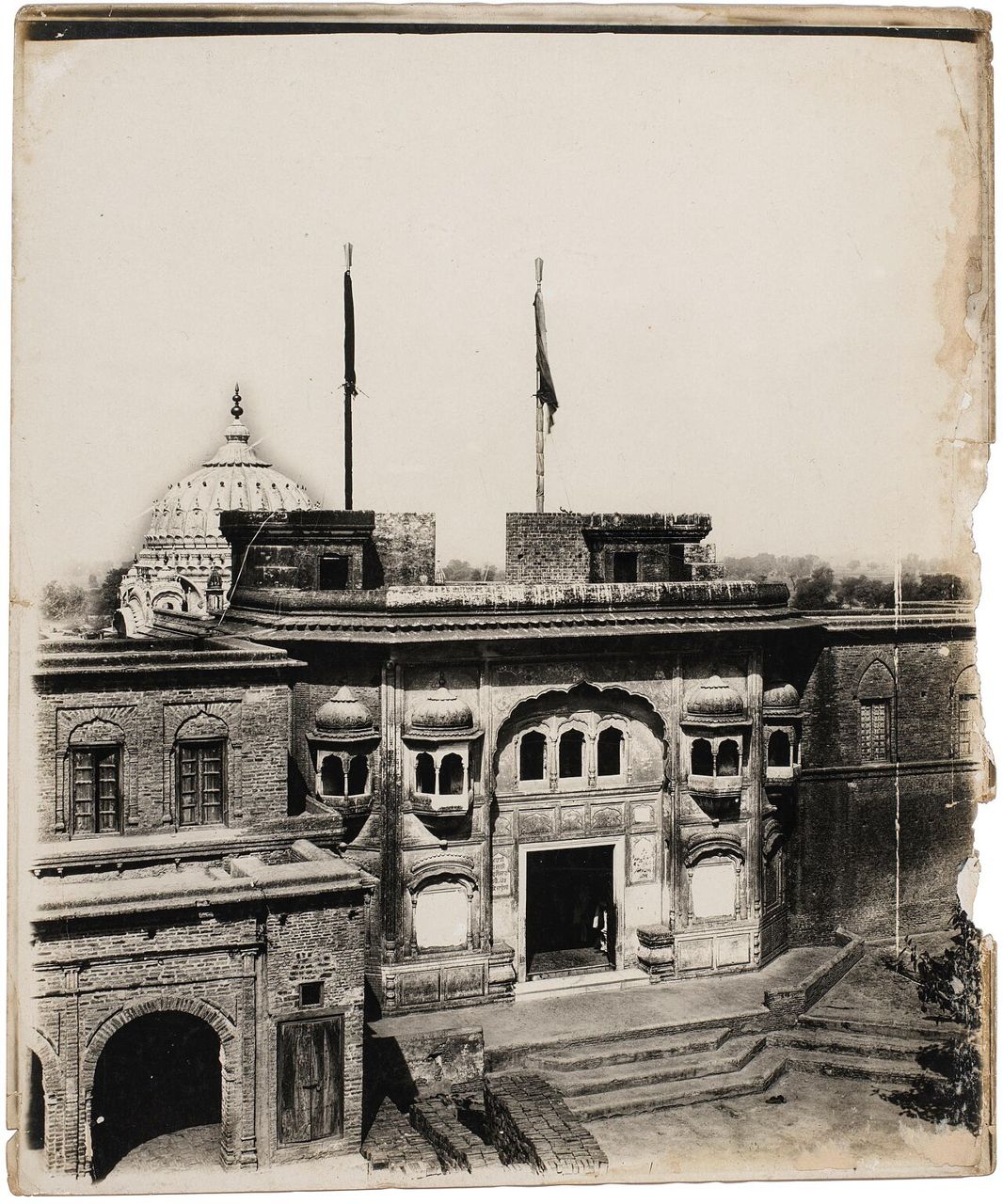
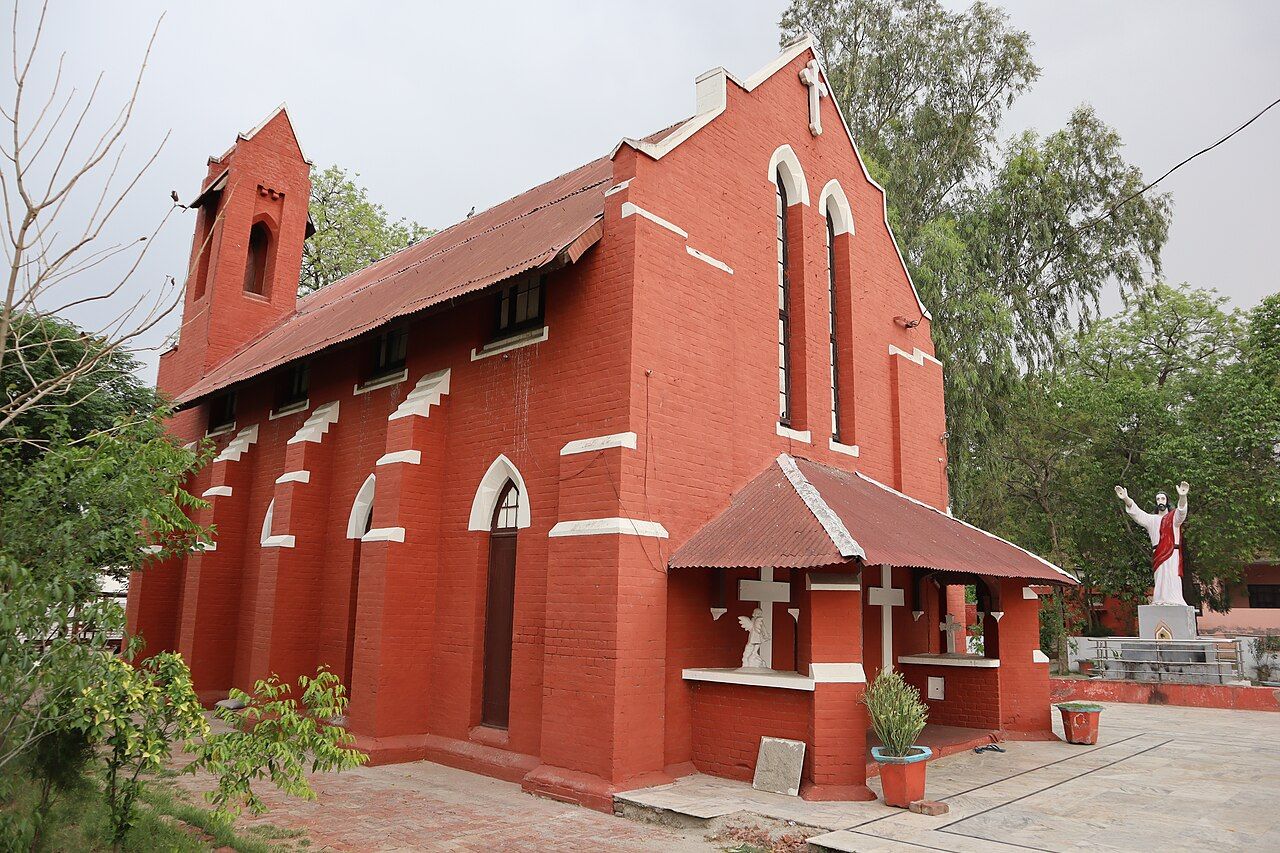
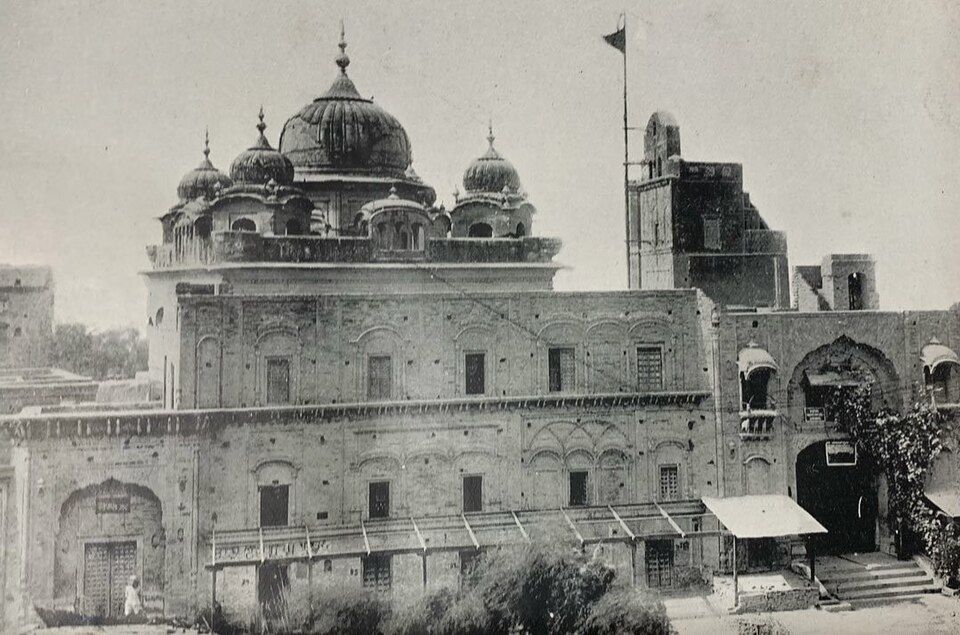
Sri Harmandir Sahib, Amritsar — Sikhs are 57.69% of Punjab
Scheduled Castes form about 31.9% (nearly one-third) of Punjab's population — the highest share of any state in India (Census 2011).
Official language: Punjabi, written in the Gurmukhi script. The Punjab Official Language Act, 1967 made it the state's official language; amendments in 2008 made its use in offices and courts stricter. See Punjab after 1947.
Gurmukhi was given its standard form by Guru Angad Dev. It is not Devanagari, Roman or Shahmukhi.
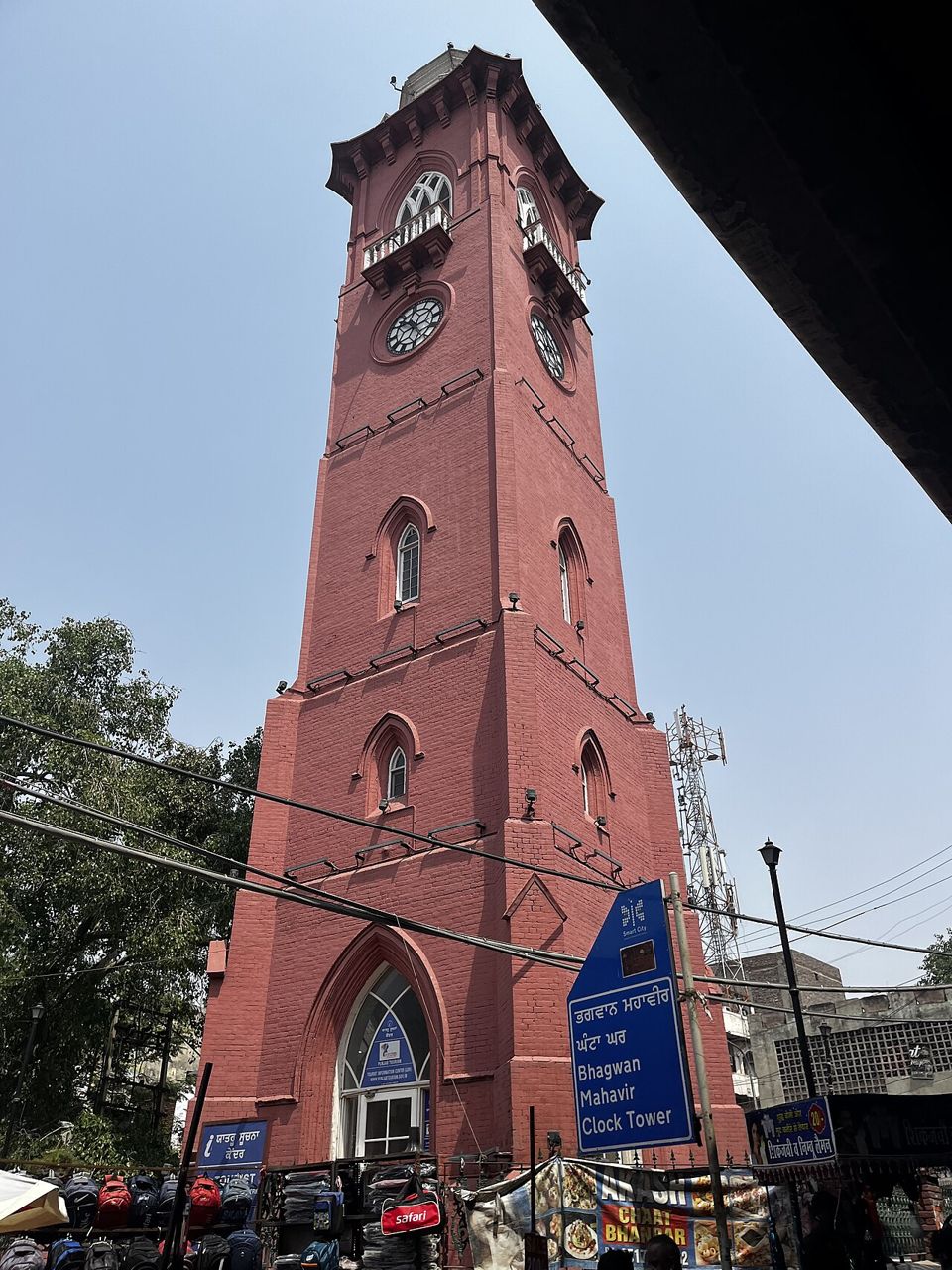
A street sign in Gurmukhi above English at the Ludhiana clock tower (Ghanta Ghar). Punjabi in Gurmukhi became the official language under the Punjab Official Language Act, 1967. Image: Mnv179, Wikimedia Commons · CC BY-SA 4.0Dialects and traditional dressTap to open
Main dialects: Majhi (Majha — the base of standard Punjabi), Doabi (Doaba), Malwai (Malwa) and Puadhi (Puadh).
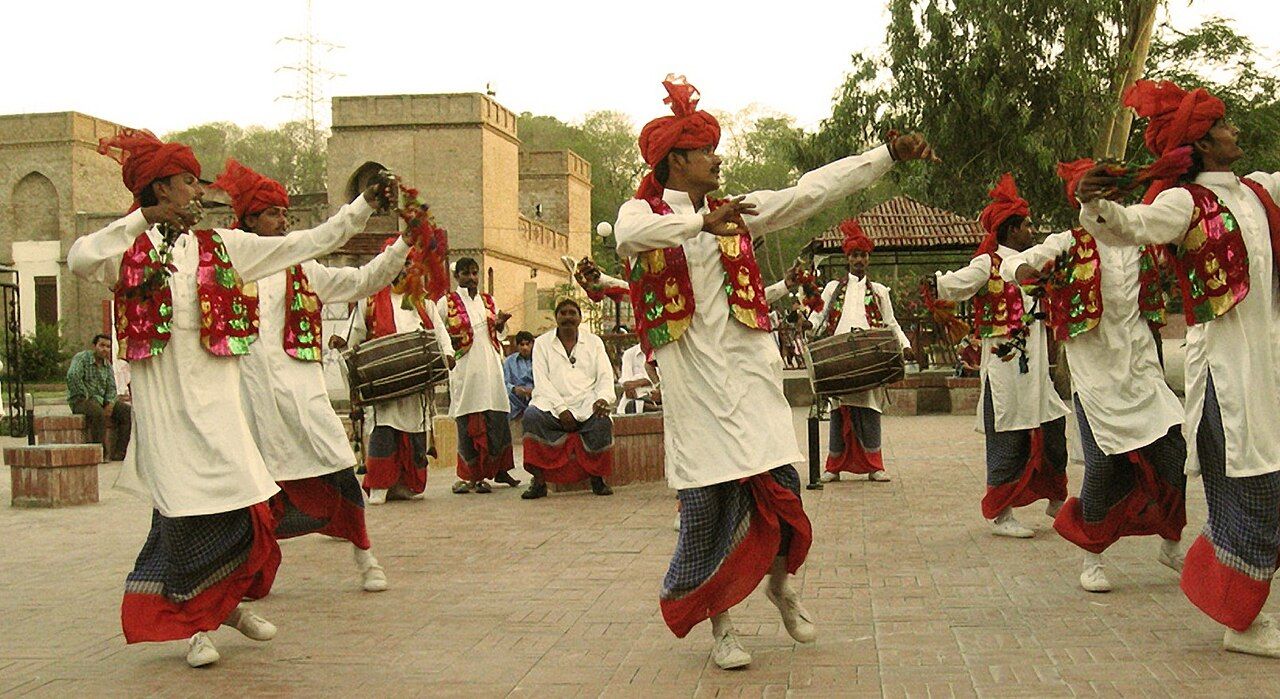
Traditional dress: women wear the Patiala salwar suit (salwar, kameez and dupatta); men wear kurta with chadra and a turban.
Men's traditional dress — kurta, chadra and turban — worn here by Bhangra dancers. Image: Onef9day, Wikimedia Commons · CC BY 3.0
QUICK CHECK
According to the Census of 2011, what percentage of Punjab's population is Sikh?
Tap an option to answer
Answer: C — 57.69%
Sikhs 57.69%, Hindus 38.49%. Punjab is the only Sikh-majority state.
QUICK CHECK
In which script is the Punjabi language officially written in Punjab?
Tap an option to answer
Answer: A — Gurmukhi
The Punjab Official Language Act, 1967 made Punjabi in Gurmukhi the state's official language.
Regions and population
The three big regions — Majha, Doaba and Malwa — are named after the rivers.
MAJHA, DOABA, MALWA
Majha
Doaba
Malwa
Lies between
Ravi and Beas
Beas and Sutlej ("land of two rivers")
South of the Sutlej
Districts
Amritsar, Tarn Taran, Gurdaspur, Pathankot (4)
Jalandhar, Hoshiarpur, Kapurthala, SBS Nagar (4)
Ludhiana, Patiala, Sangrur, Bathinda and 11 more (15)
Census fact
Amritsar is the 2nd most populous district
Highest NRI density; Hoshiarpur tops literacy and sex ratio
Largest region by area and by population
Doaba = "two waters": the land between the Beas and the Sutlej.
The rivers that divide the regions
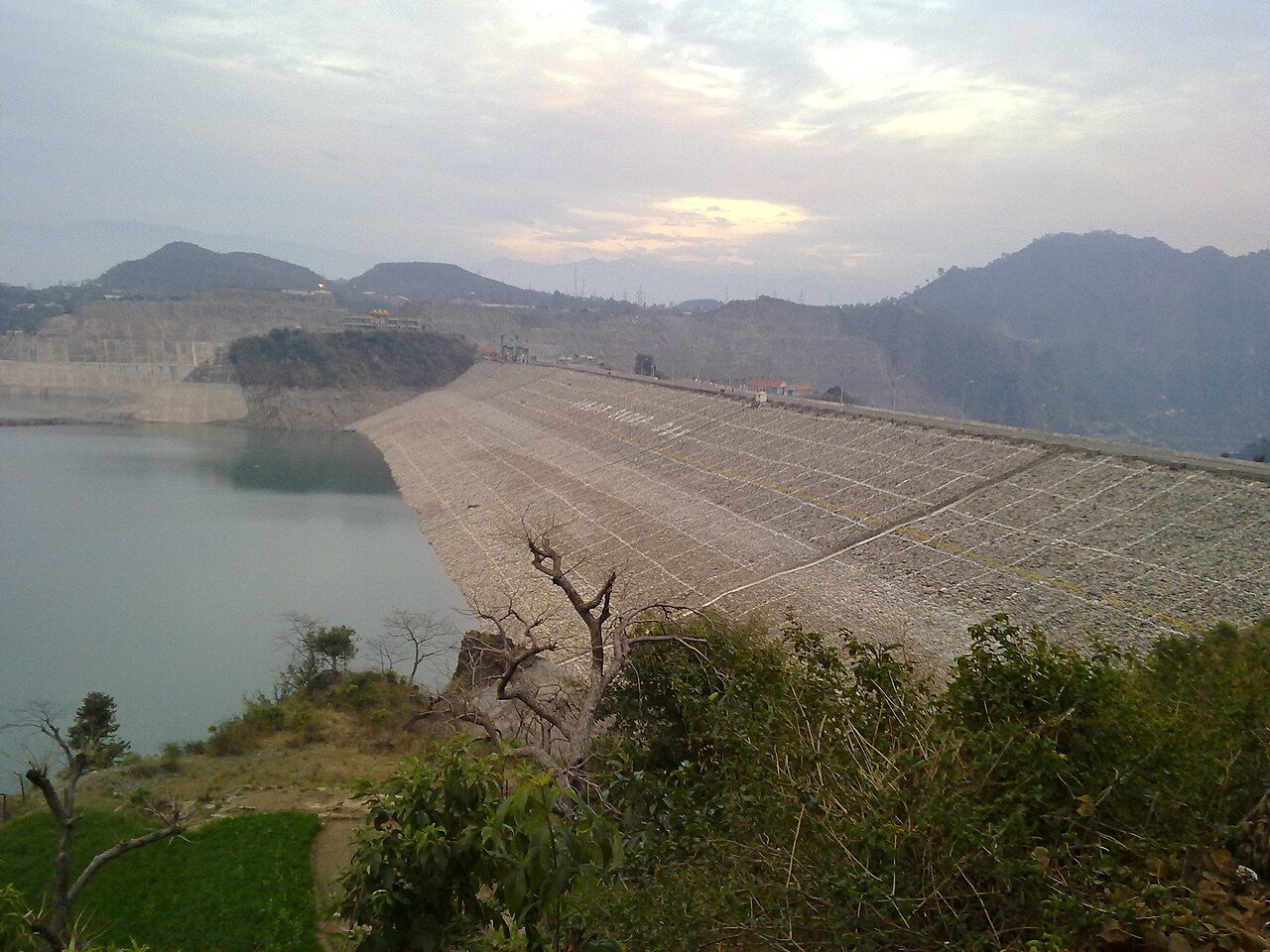
The Ravi at Ranjit Sagar Dam, Pathankot — Majha lies between the Ravi and the Beas
The Doaba region of Punjab lies between which two rivers?
Tap an option to answer
Answer: B — Beas and Sutlej
Majha is between the Ravi and the Beas; Doaba between the Beas and the Sutlej; Malwa south of the Sutlej.
District records
The highest and lowest districts — the most-asked census questions.
MAP
District records, Census 2011
Ludhiana: most people, biggest area, most crowdedAmritsar: 2nd by populationHoshiarpur: highest literacy, best sex ratioMansa: lowest literacyBathinda: lowest sex ratioSri Muktsar Sahib: lowest densityBarnala: fewest people (2011 districts)
Ludhiana (centre) holds three records. The best literacy and sex ratio are in Doaba (Hoshiarpur); the low ones sit in the south-west Malwa cotton belt (Mansa, Bathinda, Sri Muktsar Sahib). Malerkotla (made in 2021) is today the smallest and least populous district; it has no outline of its own on this map, so it is shown as a pin inside Sangrur.
Map: geoBoundaries (ODbL; DataMeet CC BY 2.5 IN), Natural Earth rivers (public domain)
Record (Census 2011)
Highest / largest
Lowest / smallest
Population
Ludhiana (34.9 lakh), then Amritsar
Barnala (5.96 lakh) among 2011 districts; Malerkotla today
Area
Ludhiana (3,767 sq km)
Malerkotla (837 sq km) today; Pathankot (929) next
Density
Ludhiana (975 per sq km), then Amritsar (932)
Sri Muktsar Sahib (348), then Mansa (350)
Literacy
Hoshiarpur (about 85%)
Mansa (about 62%)
Sex ratio
Hoshiarpur (961)
Bathinda (868)
District records are the most-asked census questions.
Record-holding districts
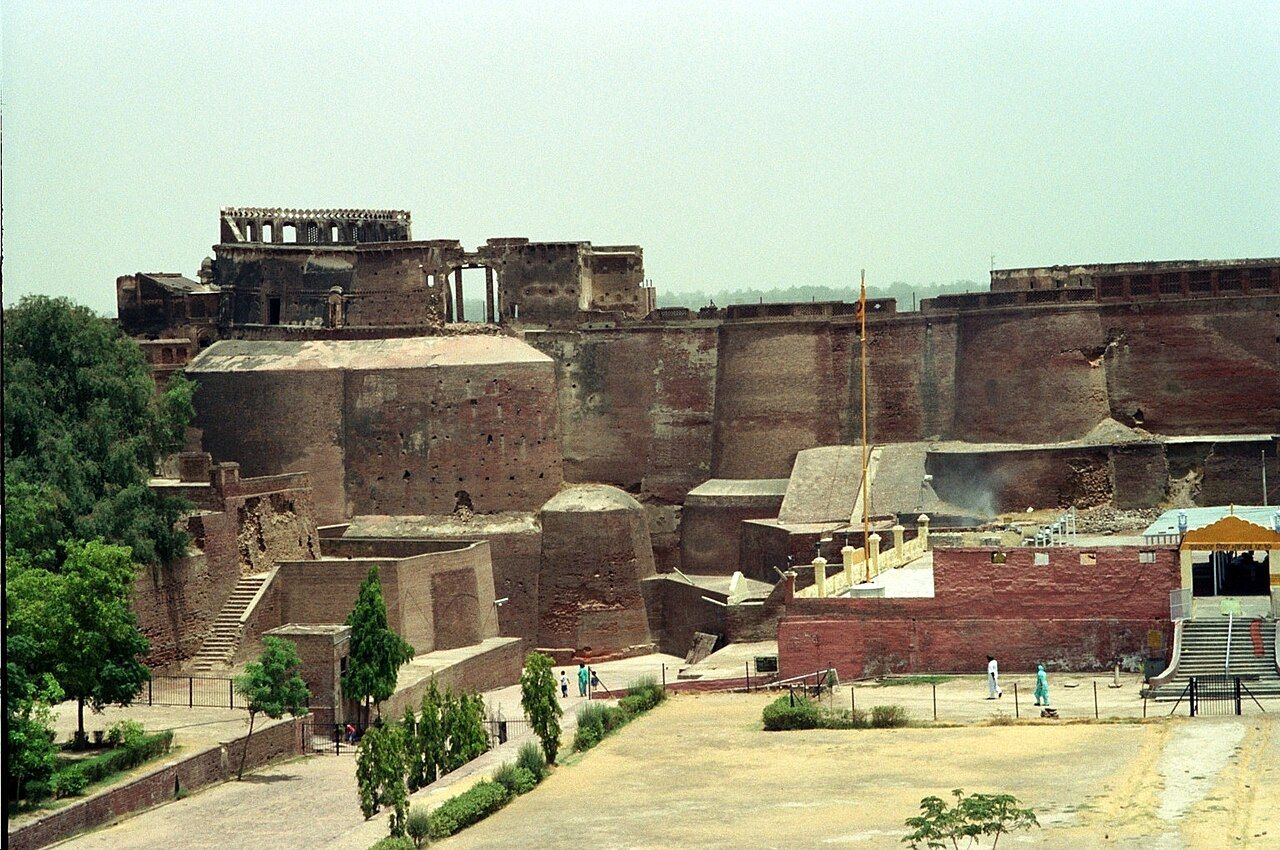
Bajwara Fort, Hoshiarpur — Hoshiarpur had the highest literacy (about 85%) and best sex ratio (961)
"Ludhiana is Large, Loaded and Packed; Hoshiarpur is Smart and Balanced." Large = area, Loaded = population, Packed = density; Smart = literacy, Balanced = sex ratio.
All 23 districts by population, and when new ones were madeTap to open
Most populous districts, Census 2011
Ludhiana
34.88 lakh
Amritsar
24.91 lakh
Gurdaspur (with Pathankot)
22.99 lakh
Jalandhar
21.82 lakh
Patiala
18.92 lakh
Hoshiarpur
15.83 lakh
Ludhiana is first and Amritsar second. Without Pathankot, Gurdaspur would fall below Jalandhar, so Jalandhar is often called third.
District
Area (sq km)
Population 2011
Ludhiana
3,767
34,87,882
Amritsar
2,647
24,90,891
Gurdaspur
2,635
22,99,026 †
Jalandhar
2,632
21,81,753
Patiala
3,218
18,92,282
Hoshiarpur
3,365
15,82,793
Bathinda
3,385
13,88,859
Sangrur
2,848
12,03,153 ‡
Fazilka
3,113
11,80,483
Tarn Taran
2,449
11,20,070
Moga
2,216
9,92,289
SAS Nagar (Mohali)
1,093
9,86,147
Ferozepur
2,190
9,65,337
Sri Muktsar Sahib
2,615
9,02,702
Kapurthala
1,632
8,17,668
Mansa
2,171
7,68,808
Rupnagar (Ropar)
1,369
6,83,349
Pathankot
929
6,76,598
Faridkot
1,469
6,18,008
SBS Nagar (Nawanshahr)
1,267
6,14,362
Fatehgarh Sahib
1,180
5,99,814
Barnala
1,410
5,96,294
Malerkotla
837
about 4,52,016 §
† Gurdaspur's figure is for the undivided district: Pathankot was carved out of it in 2011, after the count. ‡ Sangrur was 16,55,169 including Malerkotla. § Malerkotla (made in 2021 from Sangrur) — figure worked out from Sangrur's. District totals may differ slightly from the final Census tables; the order does not change. See districts and cities.
TIMELINE
1992
Fatehgarh Sahib and Mansa
Fatehgarh Sahib from Patiala; Mansa from Bathinda.
1995
Moga, Muktsar and Nawanshahr
Moga and Muktsar from Faridkot; Nawanshahr renamed SBS Nagar in 2008.
2006
Tarn Taran, SAS Nagar, Barnala
From Amritsar, Rupnagar and Sangrur.
27 July 2011
Pathankot and Fazilka
21st and 22nd districts, from Gurdaspur and Ferozepur.
14 May 2021
Malerkotla
23rd district, from Sangrur. Now the smallest and least populous.
QUICK CHECK
According to the 2011 Census, which is the second most populous district of Punjab after Ludhiana?
According to the 2011 Census, which district of Punjab recorded the highest literacy rate?
Tap an option to answer
Answer: B — Hoshiarpur
Hoshiarpur had about 85%; Mansa had the lowest, about 62%.
QUICK CHECK
According to the 2011 Census, which is the most densely populated district of Punjab?
Tap an option to answer
Answer: D — Ludhiana
Ludhiana has 975 people per sq km. Muktsar (348) and Mansa (350) are the least dense.
Poverty and the economy
Two facts that come with census questions.
Punjab's economy is best known for agriculture. Fertile plains and canal irrigation made it the centre of the Green Revolution. (It is not known for coal mining, tea or deep-sea fishing.) See economy, industry and cooperatives.
NITI Aayog's report "Multidimensional Poverty Index: A Progress Review 2023" found that 4.75% of Punjab's population was multidimensionally poor. Multidimensional means it looks at more than income — health, education and living standards too.
QUICK CHECK
According to NITI Aayog's 'Multidimensional Poverty Index: A Progress Review 2023', what percentage of Punjab's population is multidimensionally poor?
Tap an option to answer
Answer: D — 4.75%
4.75% of Punjab's people are poor when health, education and living standards are counted, not just income.
Common traps
COMMON TRAPS
75.84% is total literacy; 80.44% is male literacy; 70.73% is female literacy. Do not mix them.
895 is the overall sex ratio; 846 is the child (0–6) sex ratio.
37.48% is urban; 62.52% is rural.
13.89% is Punjab's growth from 2001 to 2011 — not its literacy or urban share.
Old papers may show 76.68% literacy and density 550 — these were provisional figures. Final: 75.84% and 551.
Second most populous district is Amritsar, not Jalandhar or Patiala.
Highest literacy is Hoshiarpur, not Ludhiana. Lowest literacy is Mansa.
Lowest sex ratio is Bathinda (868), not Mansa.
Quick revision
Read this the night before the exam.
QUICK BYTES
Population: 2,77,43,338 (2.77 crore)
Rank by population: 16th of today's states (15th in 2011)
Share of India: about 2.3%
Decadal growth 2001–11: 13.89%
Density: 551 per sq km
Sex ratio: 895
Child sex ratio: 846
Literacy: 75.84% (India 74.04%)
Male literacy: 80.44%
Female literacy: 70.73%
Urban: 37.48% · Rural: 62.52%
Scheduled Castes: about 31.9% (highest of any state)
Sikh 57.69% · Hindu 38.49%
Christians: about 3.48 lakh (1.26%)
Most populous district: Ludhiana; second: Amritsar
Largest and densest district: Ludhiana
Highest literacy and sex ratio: Hoshiarpur
Lowest literacy: Mansa · Lowest sex ratio: Bathinda
MPI 2023 (NITI Aayog): 4.75% poor
Official language: Punjabi in Gurmukhi (Act of 1967)
CHECK YOURSELF
As per Census 2011, what were Punjab's total, male and female literacy rates?
Show answer
Total 75.84%, male 80.44%, female 70.73%. Male literacy was higher, and the total was a little above India's 74.04%.
CHECK YOURSELF
Name the most populous and the second most populous districts of Punjab (Census 2011).
Show answer
Ludhiana (about 34.9 lakh) is first and Amritsar (about 24.9 lakh) is second. Ludhiana is also the largest by area and the densest.
CHECK YOURSELF
Which district had the highest literacy in Census 2011, and which had the lowest?
Show answer
Highest: Hoshiarpur (about 85%). Lowest: Mansa (about 62%). Hoshiarpur also had the best sex ratio (961).
❧
Frequently Asked Questions
What is the population of Punjab as per Census 2011?
As per Census 2011, Punjab's population was 2,77,43,338 (about 2.77 crore) — 1,46,39,465 males and 1,31,03,873 females. Punjab is 16th among today's states (15th in the 2011 list) and had about 2.3% of India's people.
What is the literacy rate of Punjab according to Census 2011?
Punjab's literacy rate in Census 2011 was 75.84%. Male literacy was 80.44% and female literacy 70.73%. The national figure was 74.04%.
What is the sex ratio of Punjab?
As per Census 2011, Punjab had 895 females per 1,000 males, against 943 for India. The child (0–6) sex ratio was even lower at 846.
Which is the most populous district of Punjab?
Ludhiana, with about 34.9 lakh people in Census 2011. It is also the largest district by area (3,767 sq km) and the most densely populated (975 per sq km). Amritsar is second by population.
Which district of Punjab has the highest literacy rate?
Hoshiarpur, with about 85% literacy in Census 2011. Mansa had the lowest, about 62%. Hoshiarpur also had the best sex ratio (961).
What percentage of Punjab's population is Sikh?
As per Census 2011, Sikhs were 57.69% of Punjab's population and Hindus 38.49%. Punjab is the only Sikh-majority state in India.
What is the population density of Punjab?
Punjab's population density in Census 2011 was 551 persons per sq km (the provisional figure was 550). Ludhiana was the densest district and Sri Muktsar Sahib the least dense.
Now sit the questions they actually set
Previous-year PPSC questions on this topic, free to read with the worked answer.