Elements are mostly metals (iron, copper, gold) or non-metals (oxygen, sulphur, carbon). Their properties decide their uses — copper for wires and pan bottoms, zinc to protect iron, aluminium for aircraft. Carbon is special: it forms millions of compounds, from diamond to every fuel and food. Exams love the exceptions and the everyday uses.
On this page you will learn:
- Metals vs non-metals, and the exceptions
- The reactivity series and ores
- Rusting and how galvanising stops it
- Alloys, and metals in living things
- Carbon: diamond, graphite and other forms
- Hydrocarbons, alcohols, soaps and detergents
Metals and non-metals
Rule in one line: metals are shiny, malleable, ductile and good conductors; non-metals usually are not.
| Fact | Answer |
|---|---|
| Liquid metal at room temperature | Mercury |
| Liquid non-metal | Bromine |
| Metals soft enough to cut with a knife | Lithium, sodium, potassium |
| Lightest metal | Lithium |
| Metals that melt in the palm | Gallium, caesium |
| Shiny non-metal | Iodine |
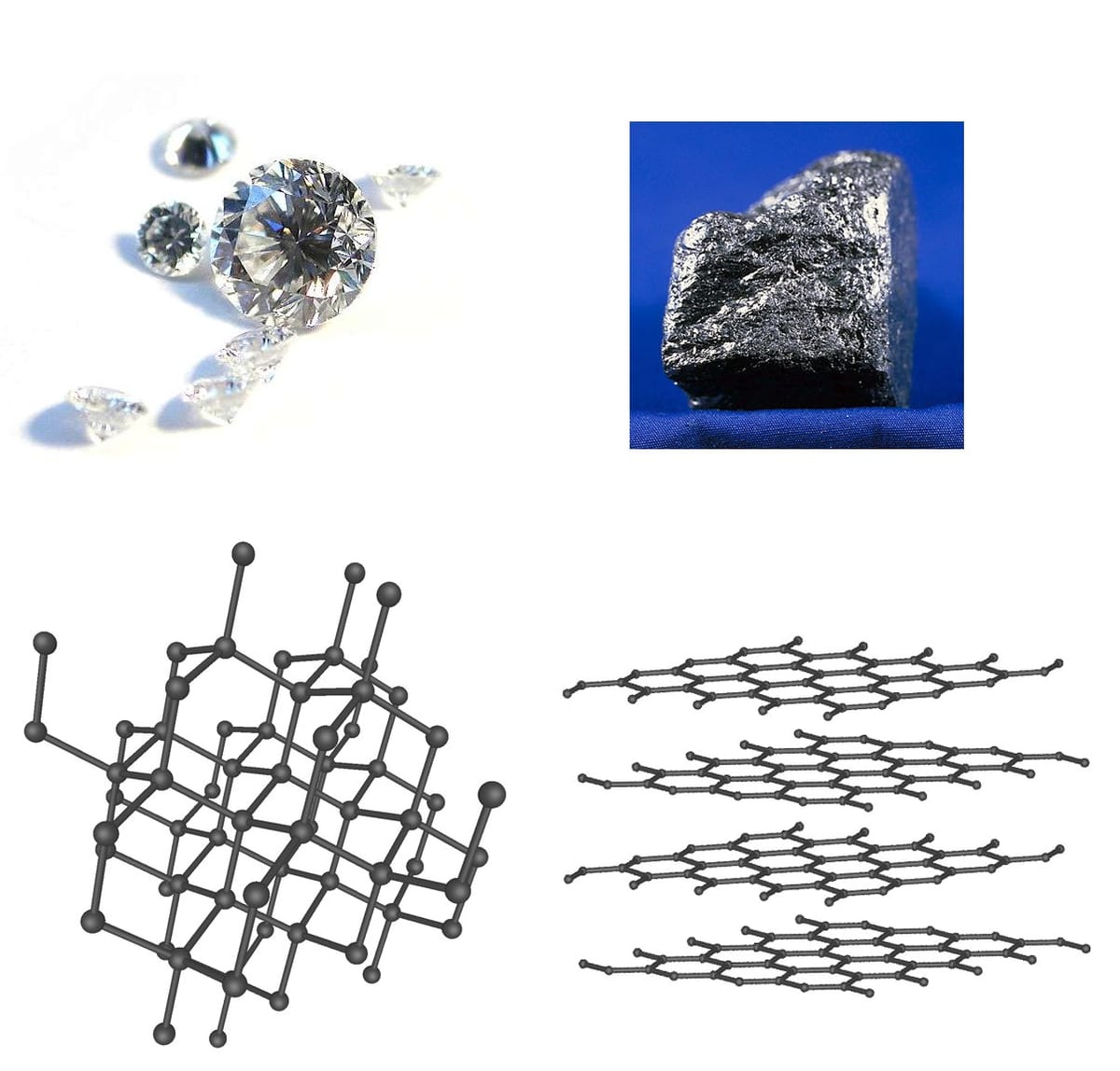
| Non-metal that conducts electricity | Graphite |
| Hardest natural substance | Diamond |
| Best conductor of electricity | Silver, then copper |
| Most malleable and ductile | Gold |
| Highest melting point (bulb filament) | Tungsten |
Reactivity and ores
Rule in one line: a more reactive metal pushes a less reactive one out of its compound.
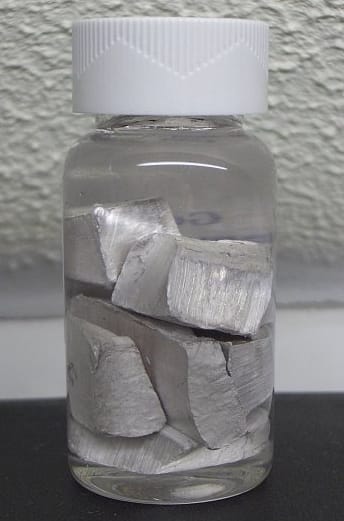
Metals listed from most to least reactive. Potassium and sodium at the top react violently with water. Gold and silver at the bottom hardly react, so they are found free in nature and used for jewellery.
| Metal | Main ore |
|---|---|
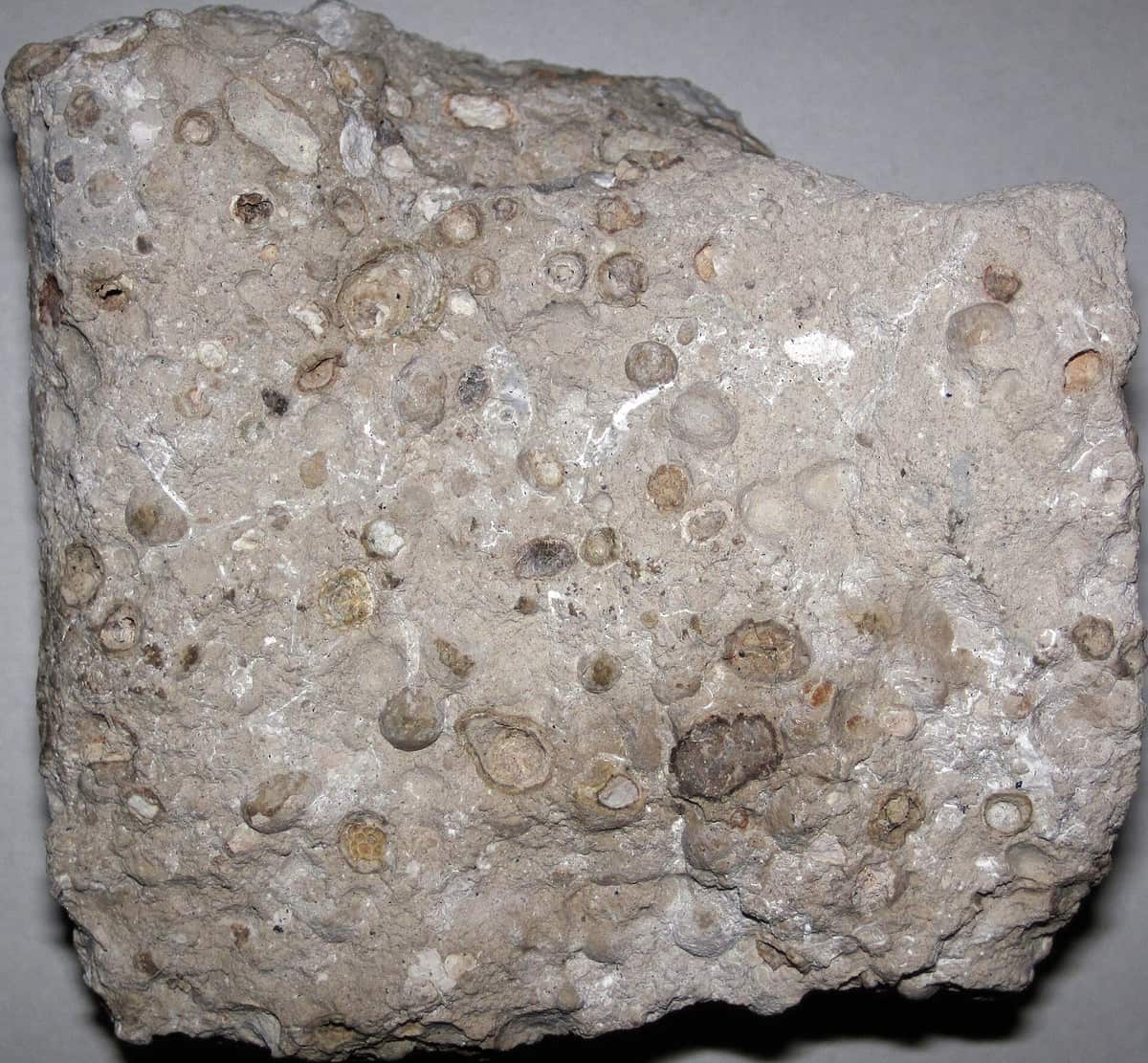
| Aluminium | Bauxite |
| Iron | Haematite |
| Mercury | Cinnabar |
| Lead | Galena |
| Zinc | Zinc blende |
| Copper | Copper pyrites |
Rusting and how to stop it
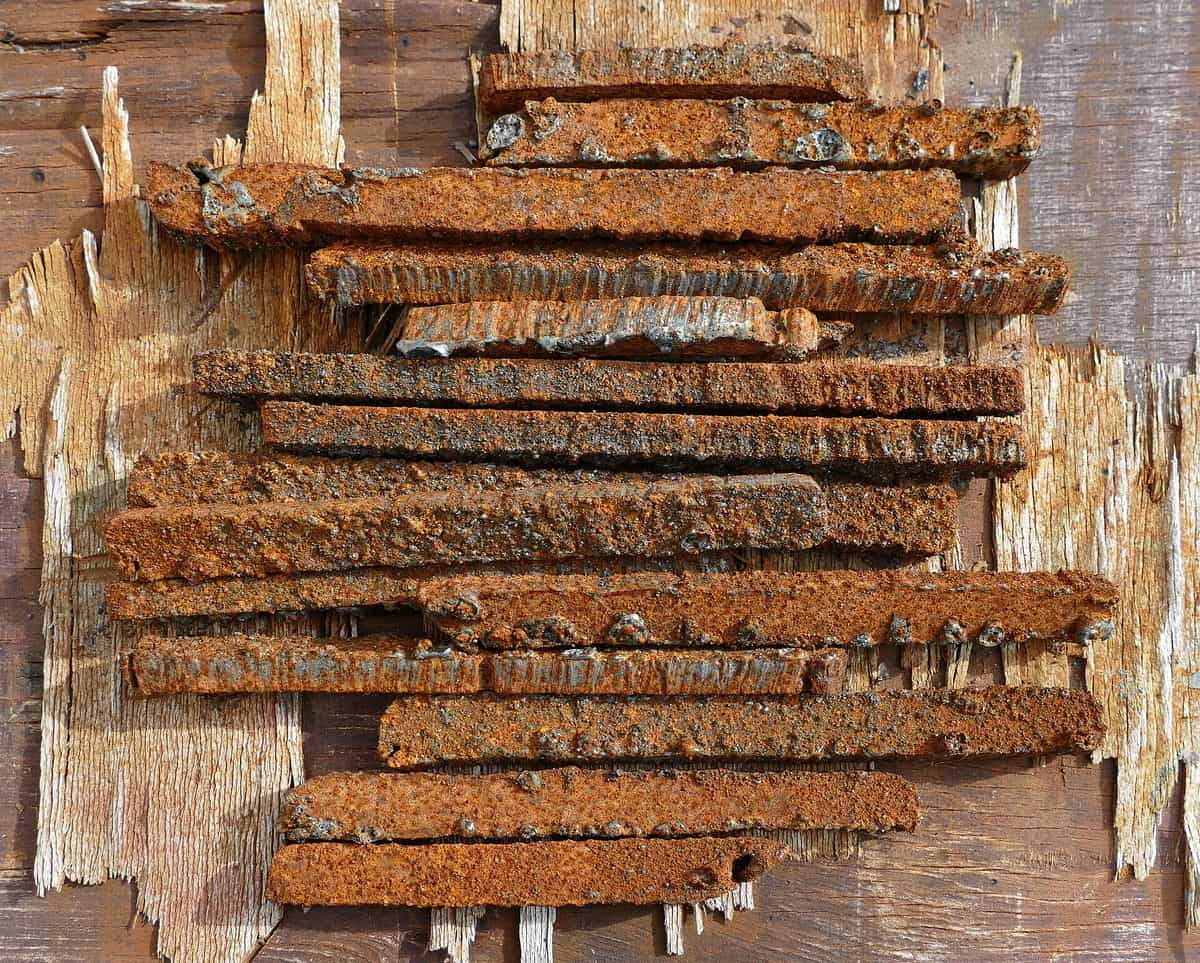
Rule in one line: iron rusts only when both air (oxygen) and water are present.
- 1IronFe
- 2+ oxygen of air
- 3+ water or moisture
- 4RustHydrated iron oxide
| Method | How it works |
|---|---|
| Paint, oil, grease | Keeps air and water away |
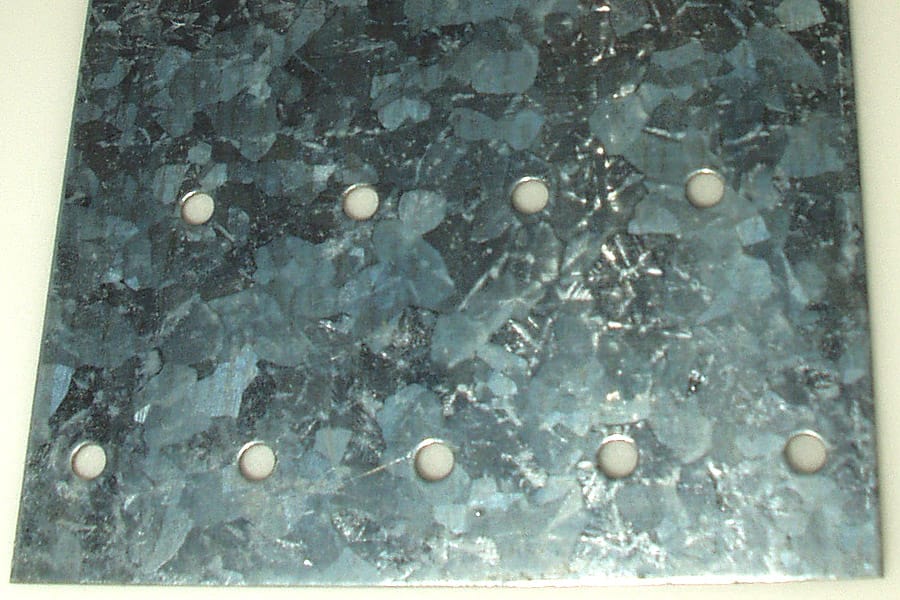
| Galvanisation | A coat of zinc; zinc is more reactive and corrodes first, saving the iron |
| Tin plating | A coat of tin, used on food cans |
| Chromium plating | Shiny coat on taps and bicycle parts |
| Alloying | Stainless steel (with chromium and nickel) does not rust |
Alloys and metals at work
Rule in one line: a metal is chosen for the job its properties suit best.
| Alloy | Made of | Use |
|---|---|---|
| Brass | Copper + zinc | Utensils, fittings |
| Bronze | Copper + tin | Statues, medals |
| Steel | Iron + a little carbon | Buildings, tools |
| Stainless steel | Iron + chromium + nickel + carbon | Utensils; does not rust |
| Solder | Lead + tin | Joining wires (low melting point) |
| Amalgam | Mercury + another metal | Dental fillings (older use) |
Conducts heat far better than steel, so food heats evenly.
The metal at the centre of the green pigment of leaves.
The metal in the red pigment of blood that carries oxygen.
Builds up in fish and people; it causes Minamata disease.
Metals at work in kitchens and in living things
Carbon and its forms
Rule in one line: allotropes are different forms of the same element.
| Allotrope | Structure | Properties and uses |
|---|---|---|
| Diamond | Each carbon joined to 4 others in a rigid 3-D net | Hardest natural substance; does not conduct; cutting tools, jewellery |
| Graphite | Flat layers of hexagons that slide | Soft, slippery, conducts; pencil 'lead', lubricant, electrodes |
| Graphene | A single layer of graphite | Very strong and thin; conducts well |
| Fullerene | C60 molecules shaped like a football | Named after the architect Buckminster Fuller |
Carbon compounds, alcohols and soaps
Rule in one line: carbon shares electrons and links to itself in long chains, so it forms millions of compounds.
Carbon has 4 outer electrons, which it shares to make covalent bonds (valency 4). Carbon atoms also join one another in long chains, branches and rings — this is catenation. Most carbon compounds are poor conductors and have low melting and boiling points.
| Family | Carbon–carbon bond | First member |
|---|---|---|
| Alkanes (saturated) | Single only | Methane, CH4 |
| Alkenes (unsaturated) | At least one double | Ethene, C2H4 |
| Alkynes (unsaturated) | At least one triple | Ethyne (acetylene), C2H2 — welding |
| Name ends in | Family | Example |
|---|---|---|
| -ane | Alkane | Propane (in LPG) |
| -ol | Alcohol (–OH group) | Propanol, ethanol |
| -al | Aldehyde | Methanal (formalin) |
| -oic acid | Carboxylic acid | Ethanoic acid (vinegar) |
Traps and practice
Last revision — where the options try to fool you.
- Brittle describes non-metals, not metals.
- Galvanising = zinc, not tin, lead or chromium.
- Vulcanisation is for rubber (with sulphur), not for iron.
- Rusting is a chemical change; salt water speeds it up.
- Chlorophyll has magnesium; haemoglobin has iron.
- Coal is not an allotrope of carbon; graphene is.
- Allotropes ≠ isotopes. '-ol' = alcohol; '-ane' = alkane.
Why are electric wires made of copper and covered with plastic?
Show answer
Copper is a very good, ductile and cheap conductor; plastic is an insulator that keeps the current from reaching anyone who touches the wire.
- Ore of aluminium
- Bauxite
- Sodium is kept in
- Kerosene
- Zinc coat on iron
- Galvanisation
- Metal in chlorophyll
- Magnesium
- Copper-bottom pans
- Copper conducts heat better
- Brass
- Copper + zinc
- Diamond and graphite
- Allotropes of carbon
- Only single C–C bonds
- Alkane
- Liquid metal: mercury; liquid non-metal: bromine
- Li, Na, K: soft, cut with a knife, kept in kerosene
- Reactivity: K > Na > Ca > Mg > Al > Zn > Fe > Pb > Cu > Ag > Au
- Bauxite: aluminium; haematite: iron; galena: lead
- Rust needs air + water; zinc coat = galvanising
- Diamond hardest; graphite conducts; coal is not an allotrope
- Soap fails in hard water; detergent works