Lifting a bucket, running a fan, lighting a bulb — each one is about work, energy and power. In science, work is done only when a force actually moves an object; energy is the capacity to do work; power tells how fast that work is done. The energy itself comes from sources such as coal, falling water, wind, the Sun and the nucleus of the atom. Exams ask for the formulas and units (joule, watt, kilowatt hour), the cases of zero work, energy conversions in devices, and which sources are renewable.
On this page you will learn:
- Work, the joule, and when work done is zero
- Kinetic and potential energy with their formulas
- The law of conservation of energy and energy conversions
- Power, horsepower and the kilowatt hour
- Conventional sources: fossil fuels, thermal and hydro power, biogas, wind
- Non-conventional sources: solar, sea, geothermal and nuclear energy
Work
Rule in one line: work is done only when a force moves an object along the force; W = F × s.
In daily life, reading and thinking are called work. In science they are not. Work is done when a force acts on an object and the object is displaced. Both conditions must be met: a force must act, and the object must move. When the object moves along the direction of the force, work = force × displacement, or W = F × s. Work has only magnitude and no direction, so it is a scalar quantity.
The SI unit of work, named after James Prescott Joule. 1 joule is the work done when a force of 1 newton moves an object through 1 metre along the line of the force. A larger unit is the kilojoule: 1 kJ = 1000 J.
| Situation | Force and motion | Work done |
|---|---|---|
| Lifting a bag from the floor | Force and motion both upward | Positive |
| Friction on a rolling ball | Force opposite to motion | Negative |
| Pushing a wall that does not move | No displacement | Zero |
| Coolie walking on a level platform with a load on his head | Upward force at right angles to the motion | Zero against gravity |
| Gravity on a satellite in a circular orbit | Force at right angles to the motion | Zero |
To lift a mass m through a height h, the work done is W = m × g × h. A porter who lifts a 15 kg bag onto his head 1.5 m above the ground does 15 × 10 × 1.5 = 225 J of work, taking g = 10 m/s². Carrying it along the level platform afterwards adds no work against gravity.
Energy: kinetic, potential and conserved
Rule in one line: energy is the capacity to do work; it changes form but is never created or destroyed.
An object that can do work has energy. Its SI unit is the same as that of work, the joule. Energy appears in many forms: mechanical (kinetic and potential), heat, light, sound, chemical, electrical and nuclear energy. The sum of kinetic and potential energy of an object is its mechanical energy.
The energy an object has because of its motion: KE = ½mv², where m is mass and v is speed. Because speed is squared, doubling the speed makes the kinetic energy four times, while doubling the mass only doubles it. An object of mass 15 kg moving at 4 m/s has KE = ½ × 15 × 4 × 4 = 120 J.
The energy stored in an object because of its position or shape. An object raised to a height h has gravitational potential energy PE = mgh. It depends only on the height reached, not on the path taken to get there. A 10 kg object kept 6 m above the ground has PE = 10 × 10 × 6 = 600 J, taking g = 10 m/s². A stretched rubber band, a wound spring of a toy car and a bent bow also store potential energy.
Energy can neither be created nor destroyed; it can only be changed from one form to another. The total energy before and after any change remains the same.
- At the topAll potential energy; kinetic energy is zero
- Halfway downHalf potential, half kinetic
- Just before the groundAll kinetic energy; potential energy is zero
| Device or process | Energy taken in | Energy given out |
|---|---|---|
| Electric bulb | Electrical | Light and heat |
| Electric fan or motor | Electrical | Mechanical |
| Generator (dynamo) | Mechanical | Electrical |
| Cell or battery | Chemical | Electrical |
| Solar cell | Light | Electrical |
| Loudspeaker | Electrical | Sound |
| Microphone | Sound | Electrical |
| Electric iron or heater | Electrical | Heat |
| Photosynthesis in a green leaf | Light | Chemical |
| Burning a fuel (combustion) | Chemical | Heat and light |
| Steam engine | Heat | Mechanical |
Power and the commercial unit of energy
Rule in one line: power is the rate of doing work; 1 watt is 1 joule per second.
The rate of doing work, or the rate at which energy is used: P = W / t. Its SI unit is the watt (W), named after James Watt. 1 W = 1 J/s. Two people may do the same work, but the one who finishes it faster has more power. An agent that does 1200 J of work in 60 s has a power of 1200 ÷ 60 = 20 W.
| Unit | Measures | Equal to |
|---|---|---|
| 1 watt (W) | Power | 1 J/s |
| 1 kilowatt (kW) | Power | 1000 W |
| 1 megawatt (MW) | Power | 1000 kW |
| 1 horsepower (hp) | Power | 746 W |
| 1 kilowatt hour (kWh) | Energy | 3.6 × 10⁶ J |
1 kWh is the energy used in 1 hour at a rate of 1000 W, that is 1000 J every second. In 1 hour there are 3600 seconds, so 1 kWh = 1000 × 3600 J = 3.6 × 10⁶ J. One 'unit' of electricity on a household bill means 1 kWh.
Conventional sources of energy
Rule in one line: fossil fuels will run out and pollute; flowing water, wind and biomass can be renewed.
A good source of energy does a large amount of work per unit mass or volume, is easy to get, is easy to store and transport, and is economical. Sources that have long been in wide use — fossil fuels, flowing water and biomass — are called conventional sources.
- Replaced by nature within a short time
- Will not run out with use
- Sun, wind, flowing water, tides, biomass, geothermal heat
- Took millions of years to form
- Will be used up one day
- Coal, petroleum, natural gas, nuclear fuels such as uranium
Coal, petroleum and natural gas formed from the remains of plants and animals buried over millions of years. Burning them releases oxides of carbon, nitrogen and sulphur. The oxides of sulphur and nitrogen are acidic and cause acid rain; carbon dioxide is a greenhouse gas.
- ChemicalFuel burntCoal or oil burns in a furnace
- HeatSteam madeThe heat boils water into steam
- MechanicalTurbine turnsSteam spins the turbine
- ElectricalElectricityThe turbine drives a generator
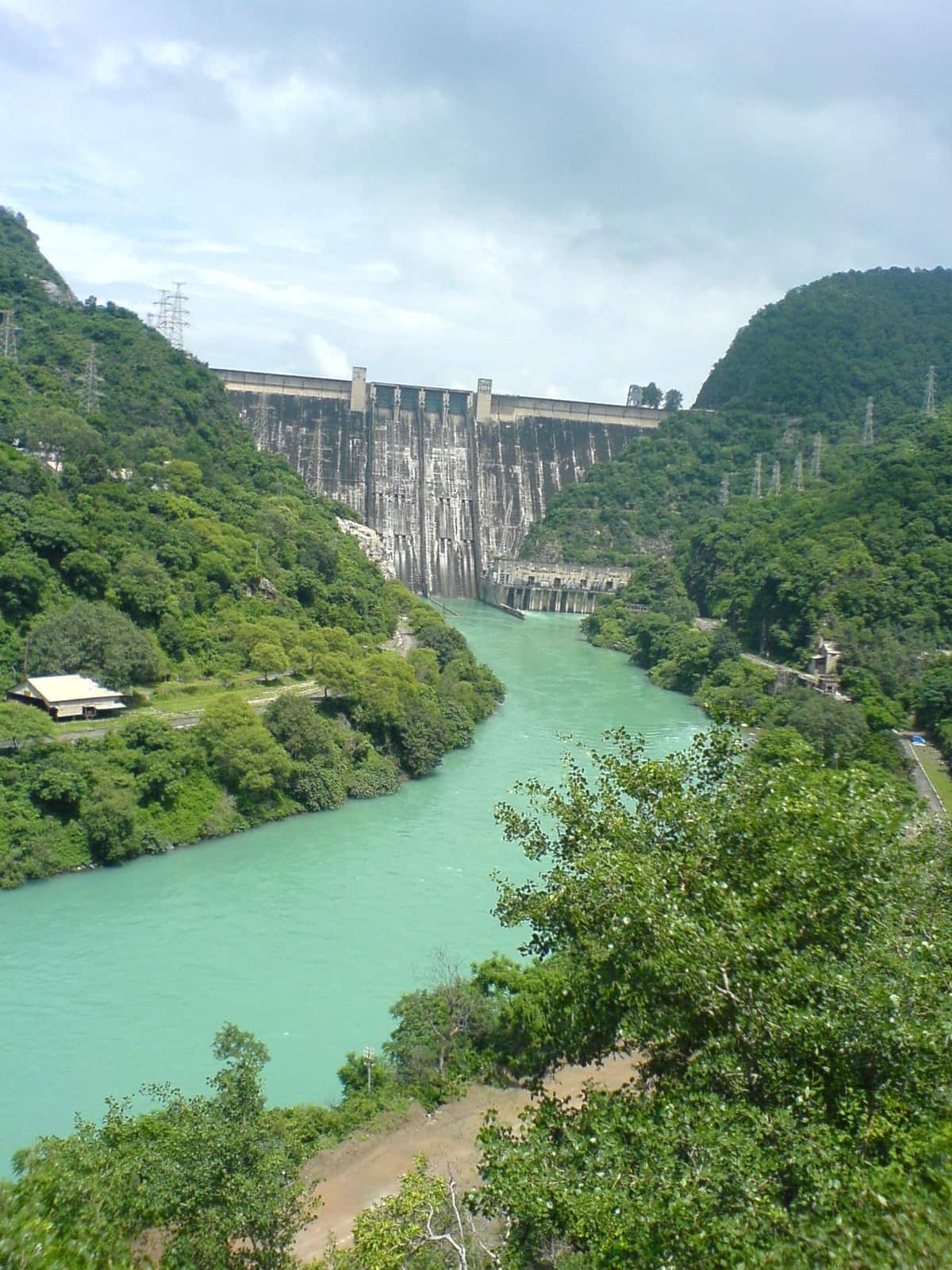
Water stored behind a high dam has potential energy. It is let down through pipes to turbines at the bottom of the dam, and the falling water turns them to make electricity. Hydro power is renewable, because the reservoir is filled again whenever it rains.
Large dams submerge farmland and villages, displace people, and destroy ecosystems. Plants left under the water rot without oxygen and give off methane, a greenhouse gas. The Tehri dam in Uttarakhand and the Sardar Sarovar dam on the Narmada both faced protests over such problems.
Cow dung, plant waste and sewage are mixed with water into a slurry and kept in a sealed digester with no oxygen. Anaerobic micro-organisms break them down and give biogas, which contains up to 75% methane. It burns without smoke, leaves no residue and gives a lot of heat. The slurry left behind is a manure rich in nitrogen and phosphorus. Biogas is also called gobar gas.
When wood is burnt in a limited supply of oxygen, water and volatile matter escape and charcoal is left. Charcoal burns without flames, gives almost no smoke and produces more heat than wood.
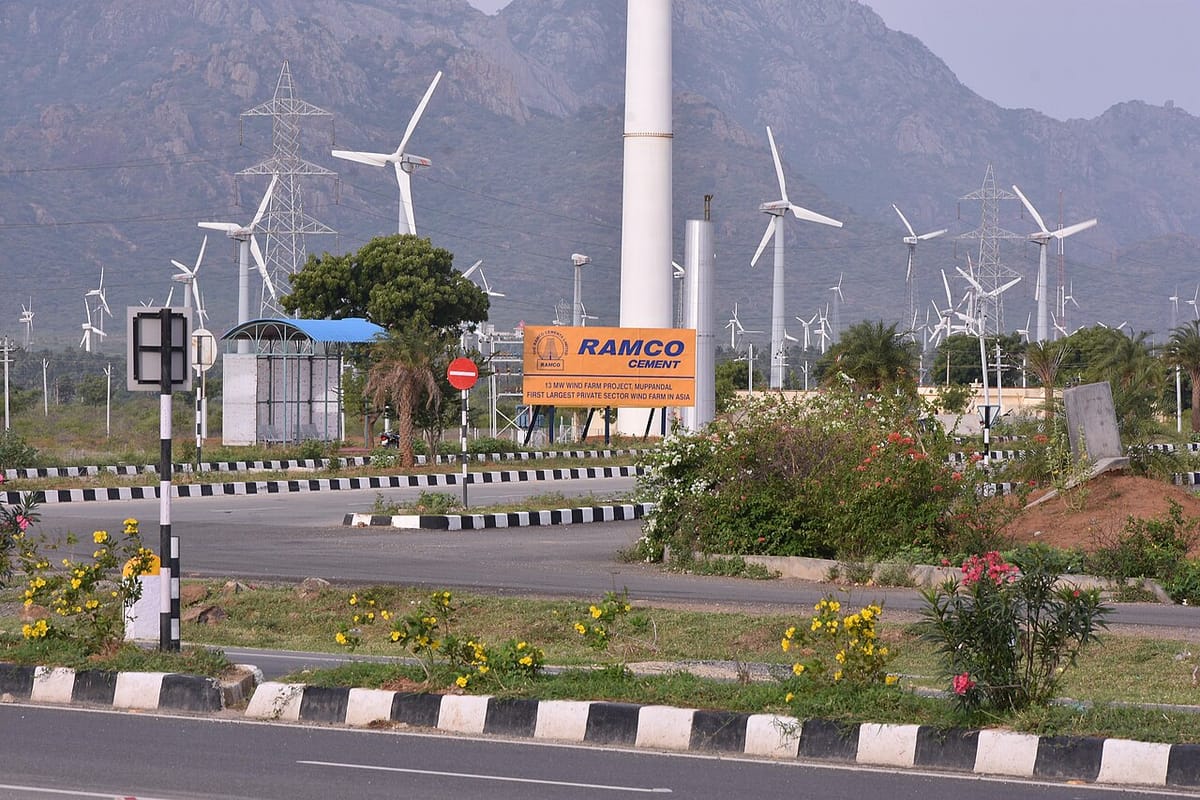
Moving air has kinetic energy. Windmills once used it to lift water and grind grain; today the turning blades of a wind turbine drive a generator. Many turbines in one area form a wind energy farm. The wind should blow for most of the year at a speed above 15 km/h. Drawbacks: it needs a large area of land, the turbines need regular maintenance, and no electricity is made when the wind drops.
Ethanol is a biofuel made by fermenting the sugar of sugarcane juice or molasses. India mixes it with petrol. Wood, gobar gas and coal all come from living things (coal from ancient plants), but nuclear energy does not: it comes from splitting uranium atoms.
Non-conventional sources: Sun, sea, Earth and atom
Rule in one line: solar cells turn sunlight straight into electricity, and the Sun itself shines by nuclear fusion.
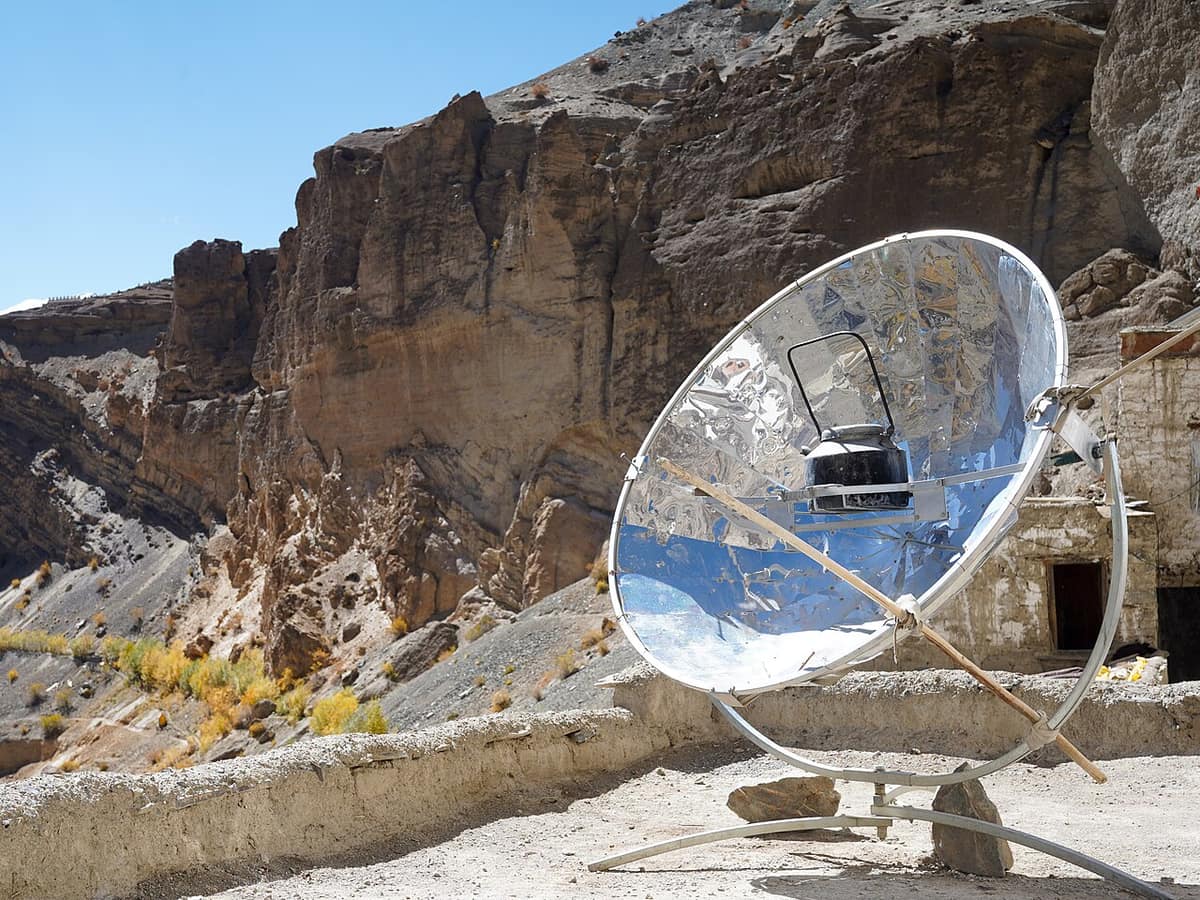
A box painted black inside, because a black surface absorbs more heat than a white or shiny one. A glass sheet on top lets sunlight in but traps the heat, and a mirror reflects extra sunlight into the box. It saves fuel and causes no pollution, but cannot be used at night or on cloudy days and cooks slowly. Solar water heaters work on the same idea.
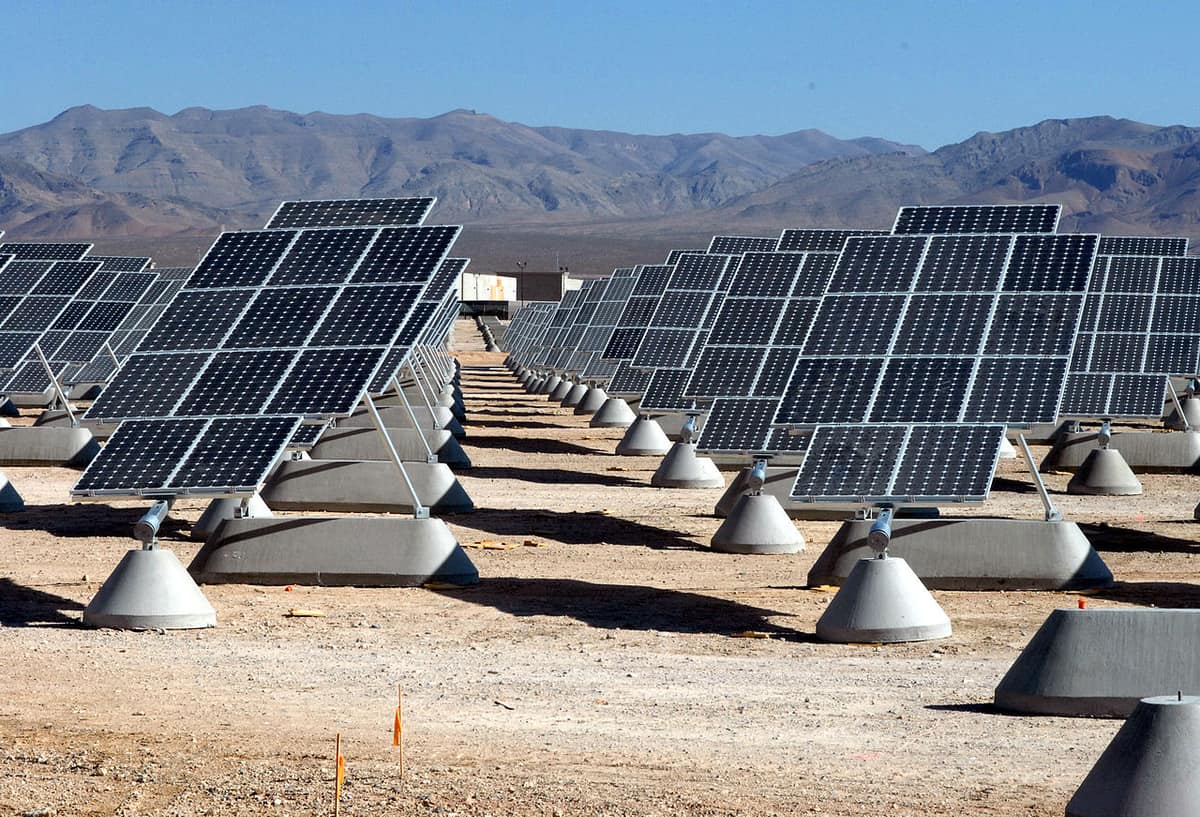
A device that changes sunlight directly into electricity. Solar cells are made mainly of silicon. A typical cell gives a voltage of 0.5–1 V and about 0.7 W of electricity in sunlight, so many cells are joined into a solar panel. They have no moving parts and need little maintenance. The special-grade silicon is limited and costly, and silver used to connect the cells adds to the cost.
Solar panels power artificial satellites and space probes, traffic signals, calculators, and radio and TV relay stations in remote areas.
| Source | How it works | Limitation |
|---|---|---|
| Tidal energy | The Moon's pull makes the sea rise and fall; a dam across a narrow inlet lets the flow turn turbines | Very few suitable sites |
| Wave energy | Devices near the shore trap the kinetic energy of strong waves | Works only where waves are strong |
| Ocean thermal energy | Warm surface water boils a liquid such as ammonia to run a turbine; cold deep water cools the vapour back | Needs a difference of 20 °C or more |
| Geothermal energy | Molten rock heats underground water at hot spots; the steam is piped to a turbine | Few sites are commercially viable |
India's biggest tidal energy potential is in Gujarat: the Gulf of Khambhat (Cambay), then the Gulf of Kutch. The Sundarbans delta in West Bengal has a smaller potential.
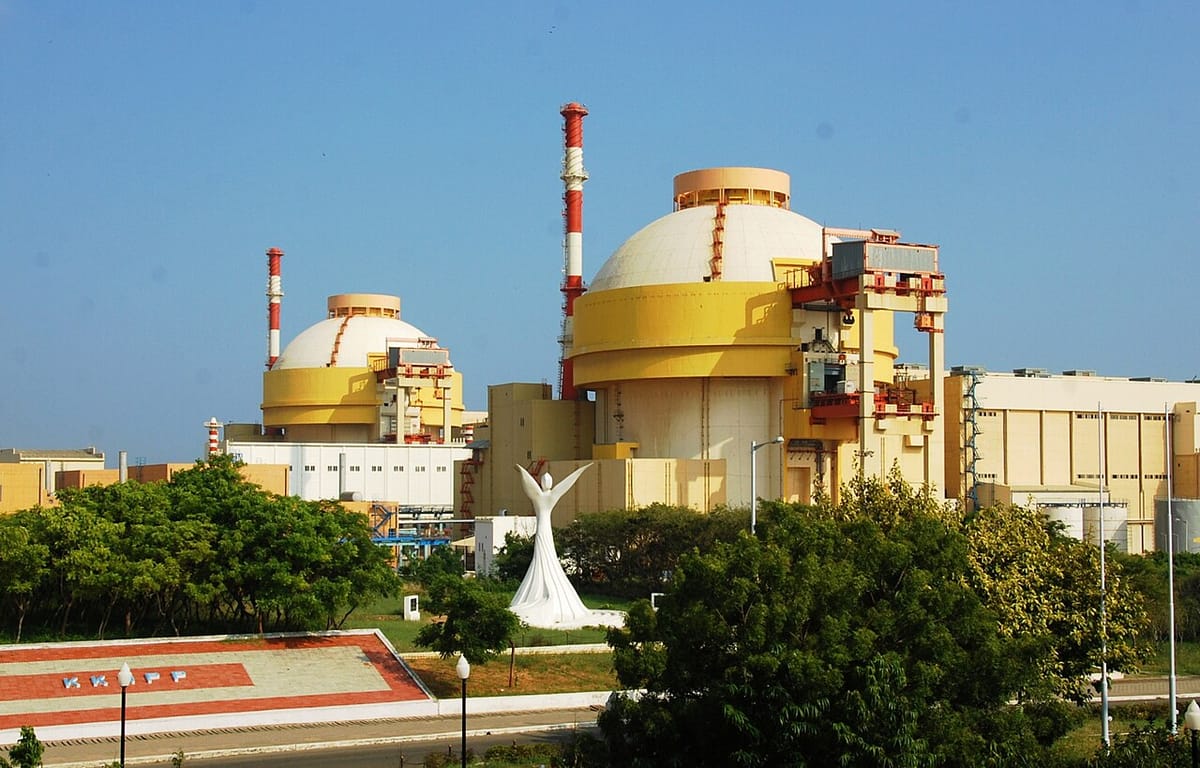
The fission of one uranium atom gives about ten million times the energy released by burning one carbon atom of coal. But used fuel stays radioactive and is hard to store and dispose of safely, leaks of radiation are dangerous, plants are costly to build, and uranium is limited — so nuclear energy is non-renewable.
More facts examiners askTap to open
Work is negative when the force acts opposite to the motion: friction does negative work on a sliding block, and gravity does negative work on a ball thrown upward.
The energy of sunlight reaching each square metre at the outer edge of the Earth's atmosphere, facing the Sun, is about 1.4 kW. This is called the solar constant.
Most of our energy comes from the Sun in the end: plants store sunlight as chemical energy, fossil fuels are the remains of ancient plants and animals, and the Sun's heat drives the winds and the water cycle.
Nuclear energy is non-conventional but non-renewable; hydro power is conventional but renewable. The two ways of grouping sources are separate.
School books group wind and biomass under conventional sources, but many general knowledge books list wind energy and biogas among non-conventional sources. Both agree that they are renewable.
Traps and practice
- Holding a heavy load still, or carrying it on level ground, is zero work against gravity — even though you feel tired.
- Doubling the speed makes kinetic energy four times, not two times.
- The kilowatt hour is a unit of energy, not power. The watt and the horsepower are units of power.
- Nuclear reactors and the atom bomb use fission; the Sun and the hydrogen bomb use fusion.
- A motor turns electrical energy into mechanical energy; a generator does the reverse.
- Biogas is mostly methane; LPG is mostly butane and propane.
A 60 W bulb glows for 6 hours a day. How much electrical energy does it use in a day, and how many units in 30 days?
Show answer
Energy per day = power × time = 60 W × 6 h = 360 Wh = 0.36 kWh. In 30 days: 0.36 × 30 = 10.8 kWh, that is 10.8 units.
A girl of mass 50 kg climbs a staircase 6 m high in 20 s. Find the work she does against gravity and her power. Take g = 10 m/s².
Show answer
Work = mgh = 50 × 10 × 6 = 3000 J. Power = work ÷ time = 3000 ÷ 20 = 150 W.
- SI unit of work and energy
- Joule (J)
- Formula for kinetic energy
- ½mv²
- Formula for potential energy
- mgh
- 1 horsepower
- 746 W
- 1 kilowatt hour
- 3.6 × 10⁶ J
- Main gas in biogas
- Methane
- Material of solar cells
- Silicon
- Source of the Sun's energy
- Nuclear fusion
- W = F × s; unit joule
- Zero work: no displacement, or force at right angles
- KE = ½mv²; PE = mgh
- Energy is neither created nor destroyed
- P = W / t; 1 W = 1 J/s; 1 hp = 746 W
- 1 kWh = 1 unit = 3.6 × 10⁶ J
- Biogas: methane; solar cell: silicon
- Fission in reactors; fusion in the Sun