Every living thing must do four jobs to stay alive. It takes in food (nutrition), releases energy from it (respiration), moves materials around (transport) and throws out wastes (excretion). These are the life processes. Papers mostly ask which organ, juice, vessel or blood cell does which job.
On this page you will learn:
- Modes of nutrition: autotrophic and heterotrophic
- The human digestive system, its juices and enzymes
- Aerobic and anaerobic respiration; the lungs
- Heart, blood vessels, blood cells and blood groups
- Transport in plants: xylem and phloem
- Kidneys, nephrons, urine and dialysis
Modes of nutrition
Rule in one line: green plants make their own food; animals depend on others.
| Heterotrophic type | How food is taken | Examples |
|---|---|---|
| Holozoic | Solid food is eaten, then digested inside | Humans, cow, amoeba |
| Saprophytic | Food is absorbed from dead, decaying matter | Mushroom, bread mould |
| Parasitic | Food is taken from a living host, harming it | Cuscuta (amarbel), lice, tapeworm |
Human digestion
Rule in one line: big food molecules are broken into small ones that the blood can absorb.
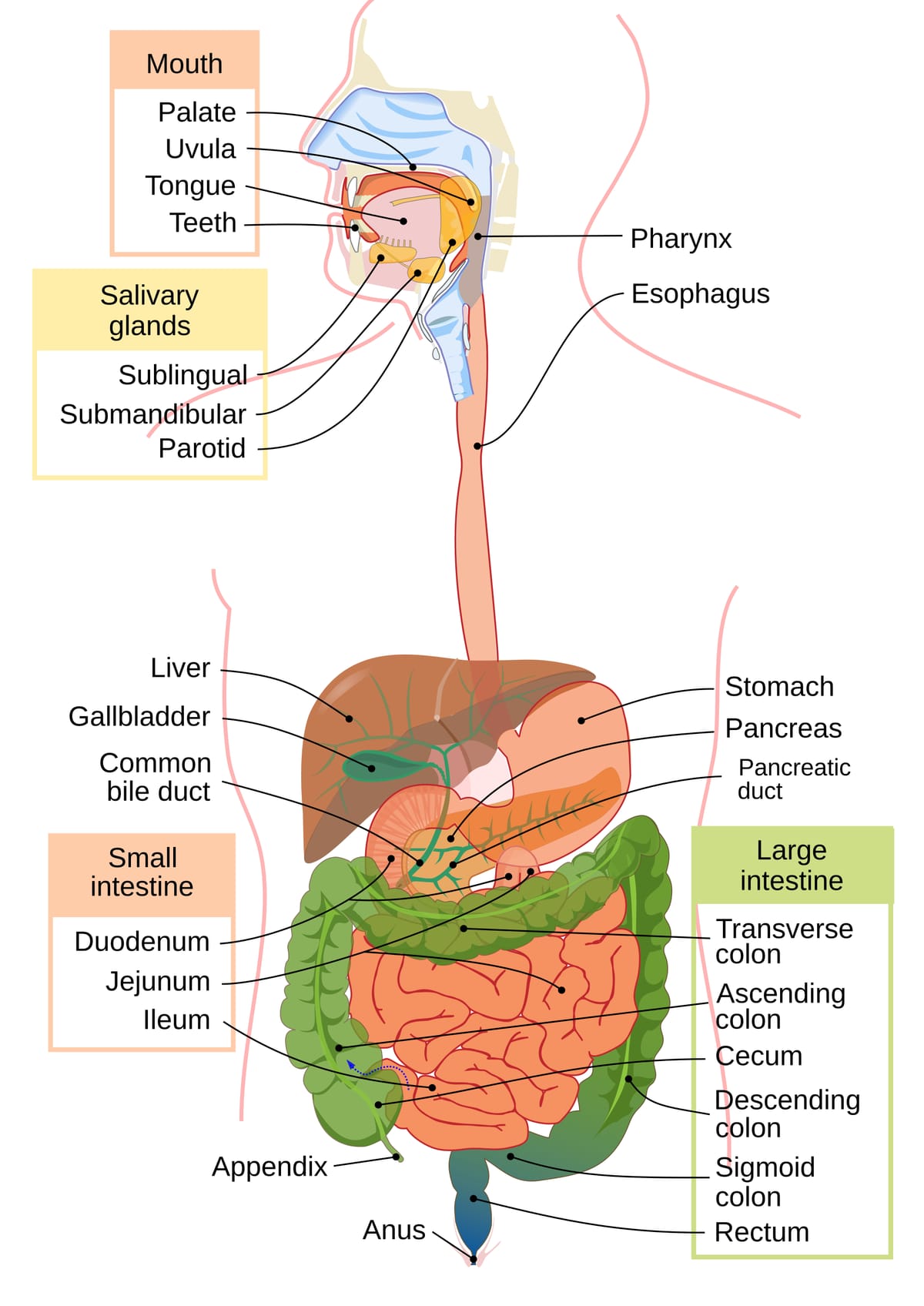
- 1MouthTeeth chew food; saliva starts turning starch into sugar.
- 2Food pipe (oesophagus)Wave-like squeezing called peristalsis pushes food down.
- 3StomachHydrochloric acid kills germs; pepsin starts digesting proteins; mucus protects the wall.
- 4Small intestineBile, pancreatic juice and intestinal juice finish digestion; villi absorb the food.
- 5Large intestineAbsorbs water and salts; undigested waste moves on.
- 6AnusUndigested waste leaves the body as faeces (egestion).
| Juice | Made by | What it does |
|---|---|---|
| Saliva | Salivary glands | Salivary amylase turns starch into sugar |
| Gastric juice | Stomach wall | HCl makes it acidic; pepsin digests protein |
| Bile | Liver; stored in the gall bladder | No enzyme; breaks fat into tiny drops (emulsifies) |
| Pancreatic juice | Pancreas | Trypsin digests protein; lipase digests fat; amylase digests starch |
| Intestinal juice | Small intestine wall | Finishes digestion into glucose, amino acids, fatty acids and glycerol |
The pancreas is both a digestive gland and a hormone gland. It pours pancreatic juice into the small intestine. Small groups of cells in it, the islets of Langerhans, release the hormone insulin into the blood. Insulin lowers blood sugar; too little insulin causes diabetes.
Villi — millions of finger-like folds in the small intestine — give a huge surface for absorbing digested food. An adult has 32 teeth (8 incisors, 4 canines, 8 premolars, 12 molars); a child has 20 milk teeth.
Respiration
Rule in one line: respiration breaks down glucose in cells to release energy.
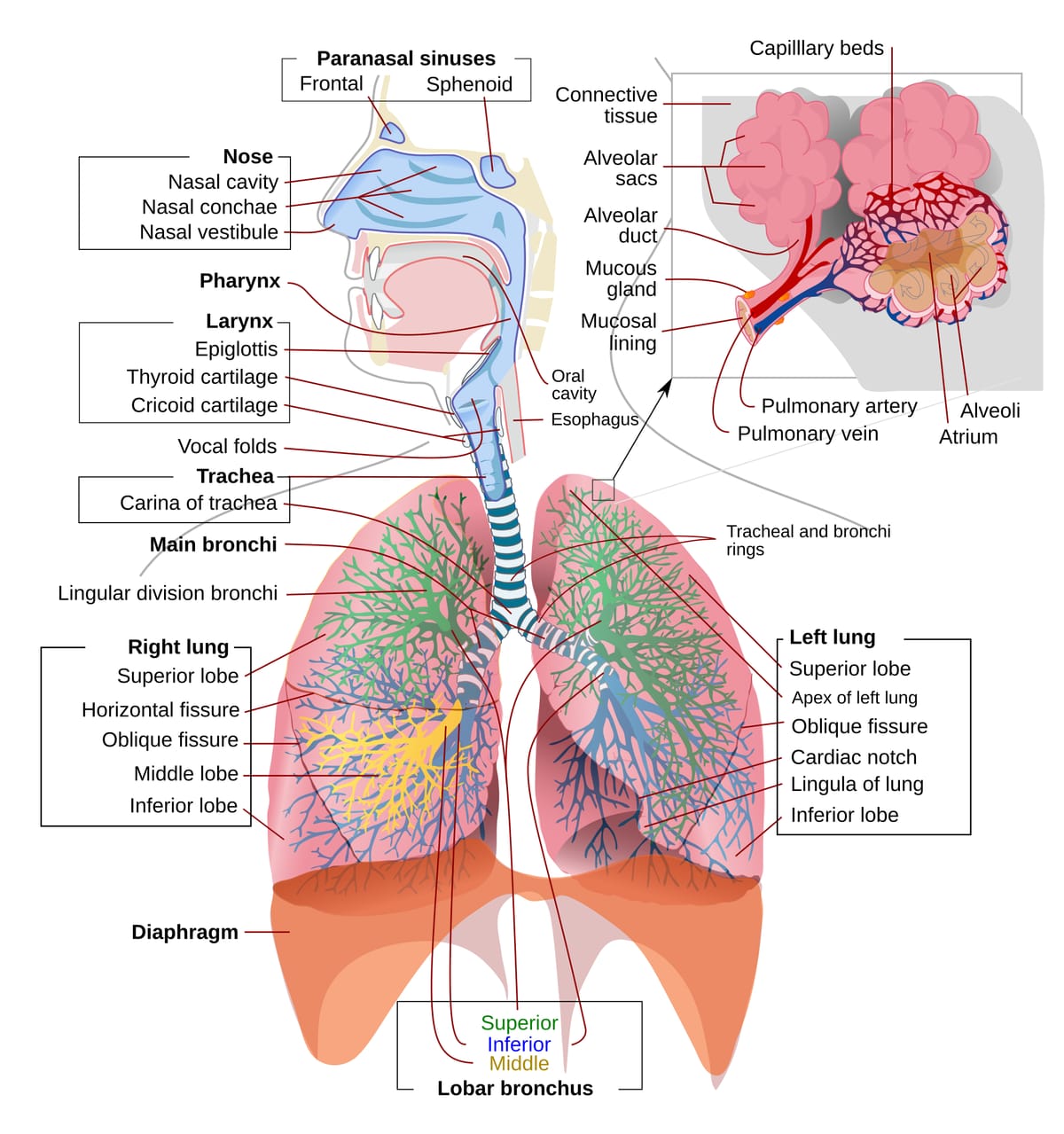
Breathing is the physical act of taking air into the lungs and pushing it out. Respiration is the chemical breakdown of food (glucose) inside cells that releases energy. Breathing supplies the oxygen that respiration uses.
Heart and blood vessels
Rule in one line: arteries carry blood away from the heart; veins bring it back.
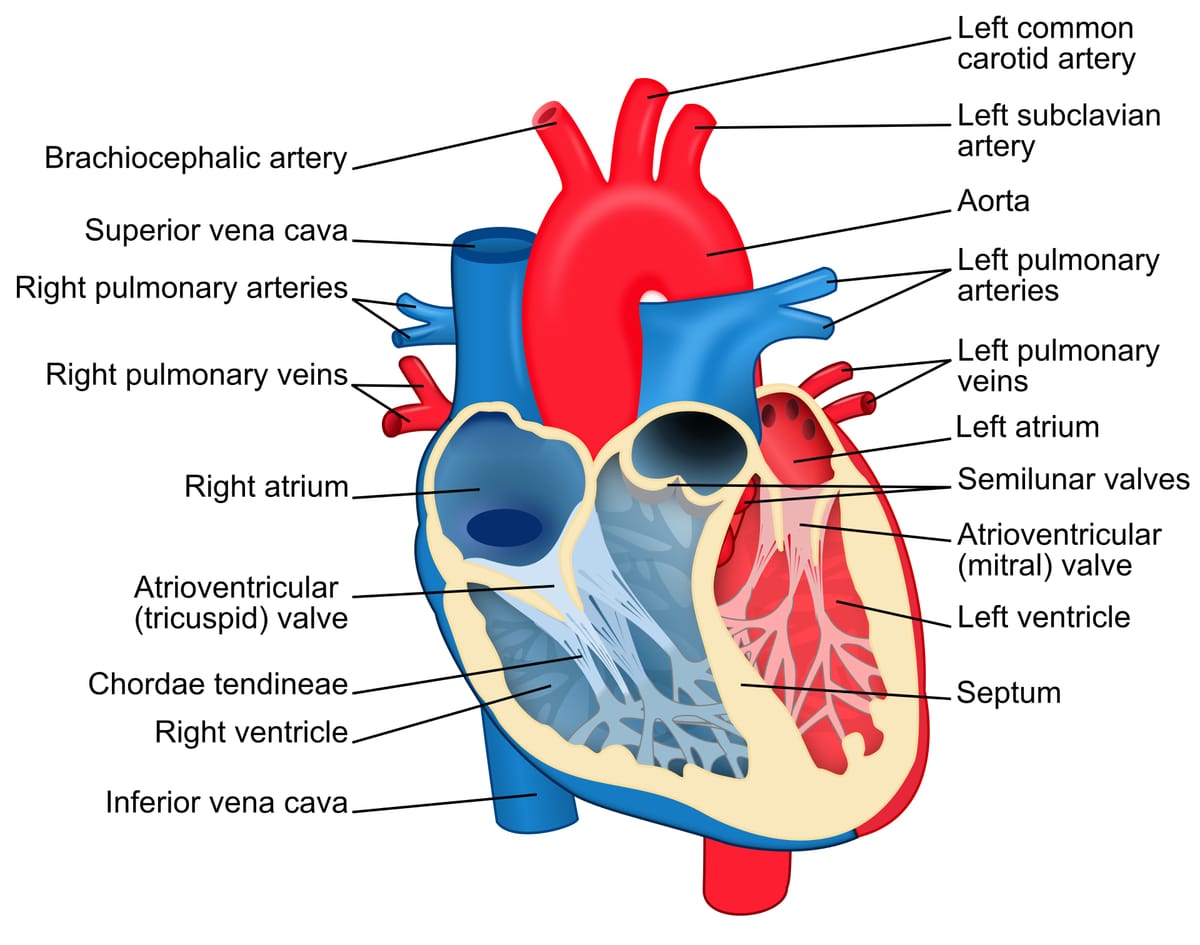
- 1BodyOxygen-poor blood returns by the venae cavae
- 2Right atrium → right ventriclePumped into the pulmonary artery
- 3LungsBlood picks up oxygen, drops CO2
- 4Left atrium → left ventricleBack by the pulmonary veins, then pumped into the aorta
Blood and blood groups
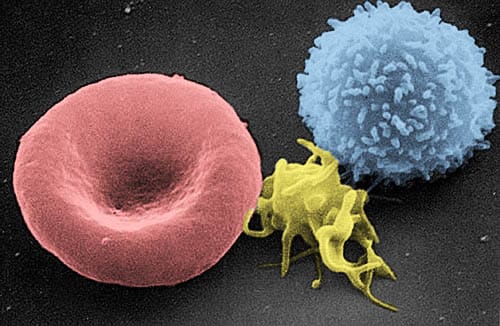
Rule in one line: blood is plasma plus red cells, white cells and platelets.
| Part of blood | Job |
|---|---|
| Plasma | Yellowish liquid that carries food, salts, hormones and wastes |
| Red blood cells | Carry oxygen using haemoglobin; no nucleus; live about 120 days |
| White blood cells | Fight germs and make antibodies |
| Platelets | Help blood to clot at a wound |
| Blood group | Marker (antigen) on red cells | Antibody in plasma |
|---|---|---|
| A | A | Anti-B |
| B | B | Anti-A |
| AB | A and B | None — universal recipient |
| O | None | Anti-A and anti-B — universal donor |
Group AB has no anti-A or anti-B antibody, so it can receive red cells of any ABO group. Group O cells carry no marker, so they can be given to anyone. Normal adult blood pressure is about 120/80 mm Hg, measured with a sphygmomanometer.
Transport in plants
Rule in one line: xylem carries water up; phloem carries food both ways.
Excretion
Rule in one line: the kidneys filter blood and remove urea as urine.
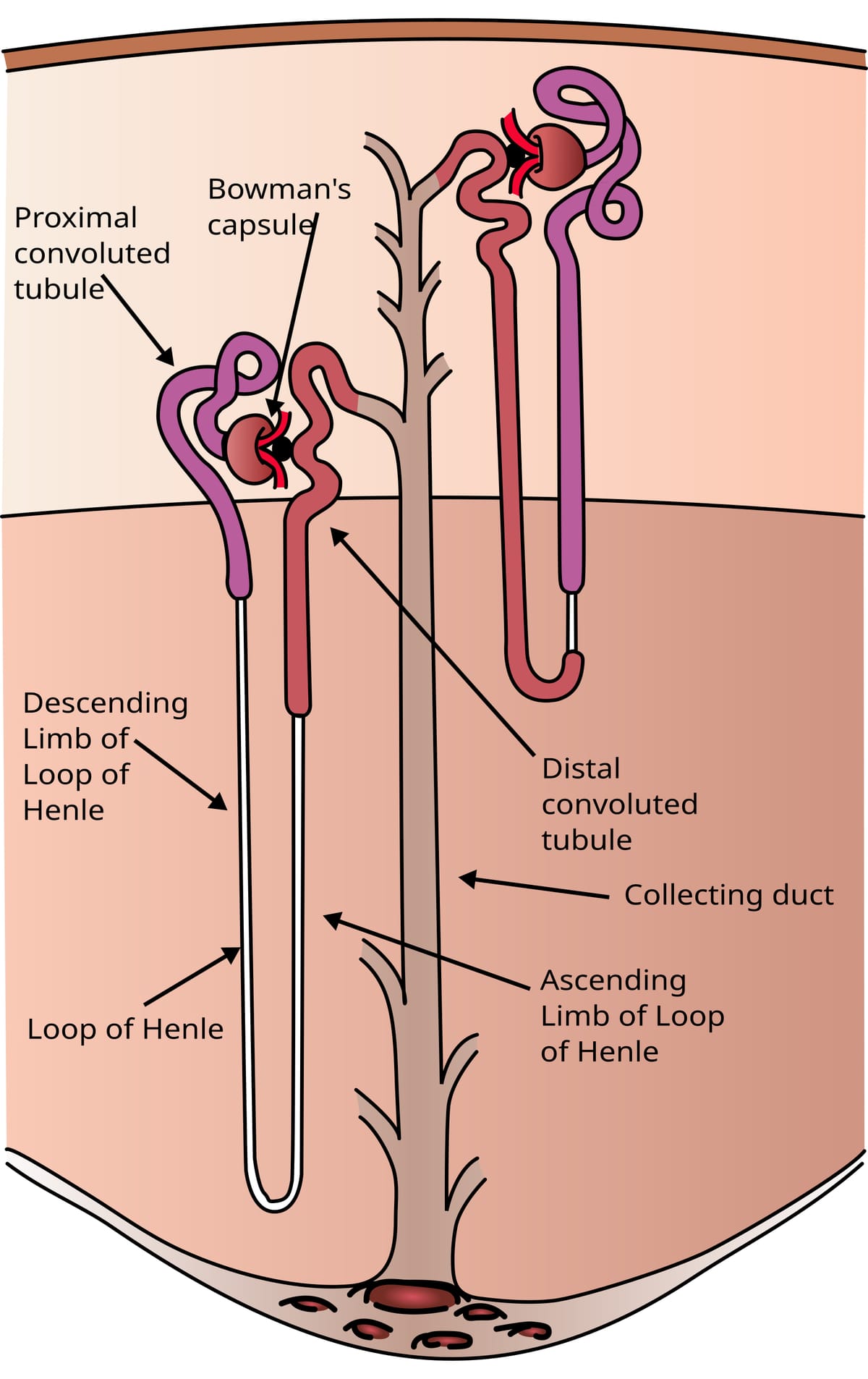
- 1KidneysA pair of bean-shaped organs; each has about a million filtering units called nephrons.
- 2UretersTwo tubes carry urine down.
- 3Urinary bladderStores urine.
- 4UrethraUrine leaves the body.
| Organ | Removes |
|---|---|
| Kidneys | Urea, extra salts and water as urine |
| Lungs | Carbon dioxide and water vapour |
| Skin | Sweat: water, salts and a little urea |
| Liver | Turns toxic ammonia into urea |
When both kidneys fail, a dialysis machine cleans the blood. Blood flows past a thin membrane with a clean fluid on the other side. Urea and extra salts move across by diffusion, from where there is more of them to where there is less. Clean blood goes back to the body.
Fresh urine hardly smells. On standing, bacteria turn its urea into ammonia, which gives the sharp smell. Plants have no excretory organs: they lose gases through stomata, shed wastes with old leaves and bark, and store some as gums and resins.
More facts that are asked onceTap to open
- The aorta is the largest artery; it leaves the left ventricle.
- William Harvey described the circulation of blood in 1628.
- The spleen removes old red blood cells; it is called the graveyard of red cells.
- Normal body temperature is about 37 °C (98.6 °F).
- Ruminants such as the cow chew the cud; bacteria in their gut digest cellulose.
- Amoeba takes in food with its false feet (pseudopodia).
Traps and practice
Last revision — where the options try to fool you.
- Bile has no enzyme and comes from the liver; the pancreas gives pancreatic juice and insulin.
- Breathing is physical; respiration is chemical and happens in every cell.
- Not all arteries carry oxygen-rich blood — the pulmonary artery does not.
- O is the universal donor; AB is the universal recipient.
- Dialysis works by diffusion, not osmosis.
- Nephron (kidney) and neuron (nerve) sound alike — do not mix them.
Why is the small intestine lined with villi?
Show answer
Villi greatly increase the surface area for absorbing digested food, and each has a network of blood capillaries to carry it away.
- Largest gland
- Liver
- Gland that makes insulin
- Pancreas
- Protein-digesting enzyme in the stomach
- Pepsin
- Site of gas exchange in lungs
- Alveoli
- Chambers in the human heart
- Four
- Artery with oxygen-poor blood
- Pulmonary artery
- Universal recipient
- Group AB
- Unit of the kidney
- Nephron
- Saliva acts on starch; pepsin on protein; lipase on fat
- Bile: liver, stored in gall bladder, no enzyme
- Aerobic: CO2 + water + energy; yeast makes ethanol
- Heart: 4 chambers, double circulation, about 72 beats a minute
- Blood: plasma, RBC, WBC, platelets — no 'blue' cells
- O donor, AB recipient; histamine is a vasodilator
- Xylem: water up; phloem: food both ways
- Nephron filters blood; dialysis uses diffusion