The body has two control systems. Nerves send fast electrical messages: pulling your hand off a hot tawa takes a fraction of a second. Hormones are slower chemical messengers carried in the blood. They control growth, blood sugar and the changes of puberty. Plants have no nerves, yet they respond to light, gravity and touch using plant hormones.
On this page you will learn:
- The neuron, the synapse and the reflex arc
- Parts of the brain and what each controls
- Endocrine glands, their hormones and disorders
- Plant movements and plant hormones
- Adolescence, puberty, and drugs that act on the brain
The nervous system
Rule in one line: neurons carry messages as electrical impulses; the gap between two neurons is the synapse.
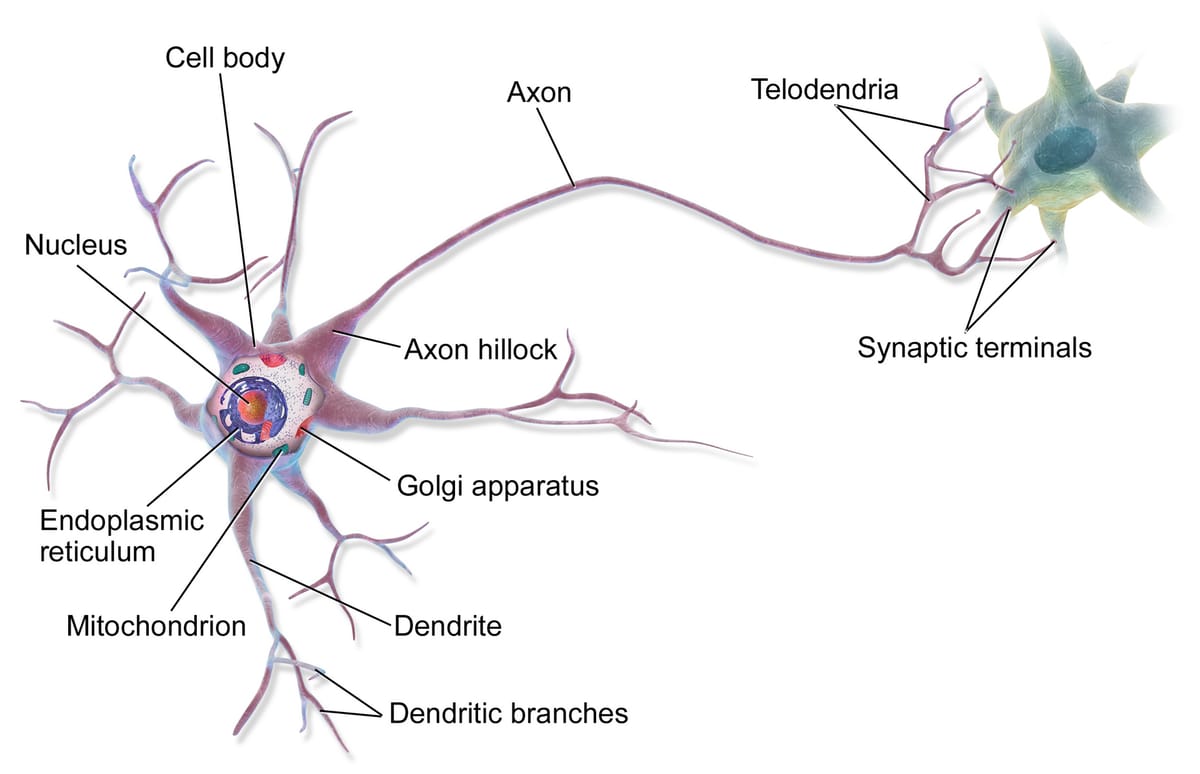
Two neurons do not touch. A tiny gap, the synapse (synaptic cleft), lies between them. The electrical impulse reaching the end of the axon releases a chemical. The chemical crosses the gap and starts a new impulse in the next neuron. So messages move only one way.
- 1ReceptorSkin senses heat.
- 2Sensory neuronCarries the signal to the spinal cord.
- 3Spinal cordA relay neuron passes it on at once, without waiting for the brain.
- 4Motor neuronCarries the order to the muscle.
- 5EffectorThe arm muscle pulls the hand away.
The brain
Rule in one line: cerebrum thinks, cerebellum balances, medulla keeps you alive.
| Part of brain | Controls |
|---|---|
| Cerebrum (forebrain) | Thinking, memory, speech, voluntary actions, senses |
| Hypothalamus (forebrain) | Hunger, thirst, body temperature; controls the pituitary |
| Cerebellum (hindbrain) | Balance, posture and smooth movement |
| Medulla (hindbrain) | Involuntary actions: heartbeat, breathing, blood pressure, vomiting |
| Spinal cord | Reflex actions; links brain and body |
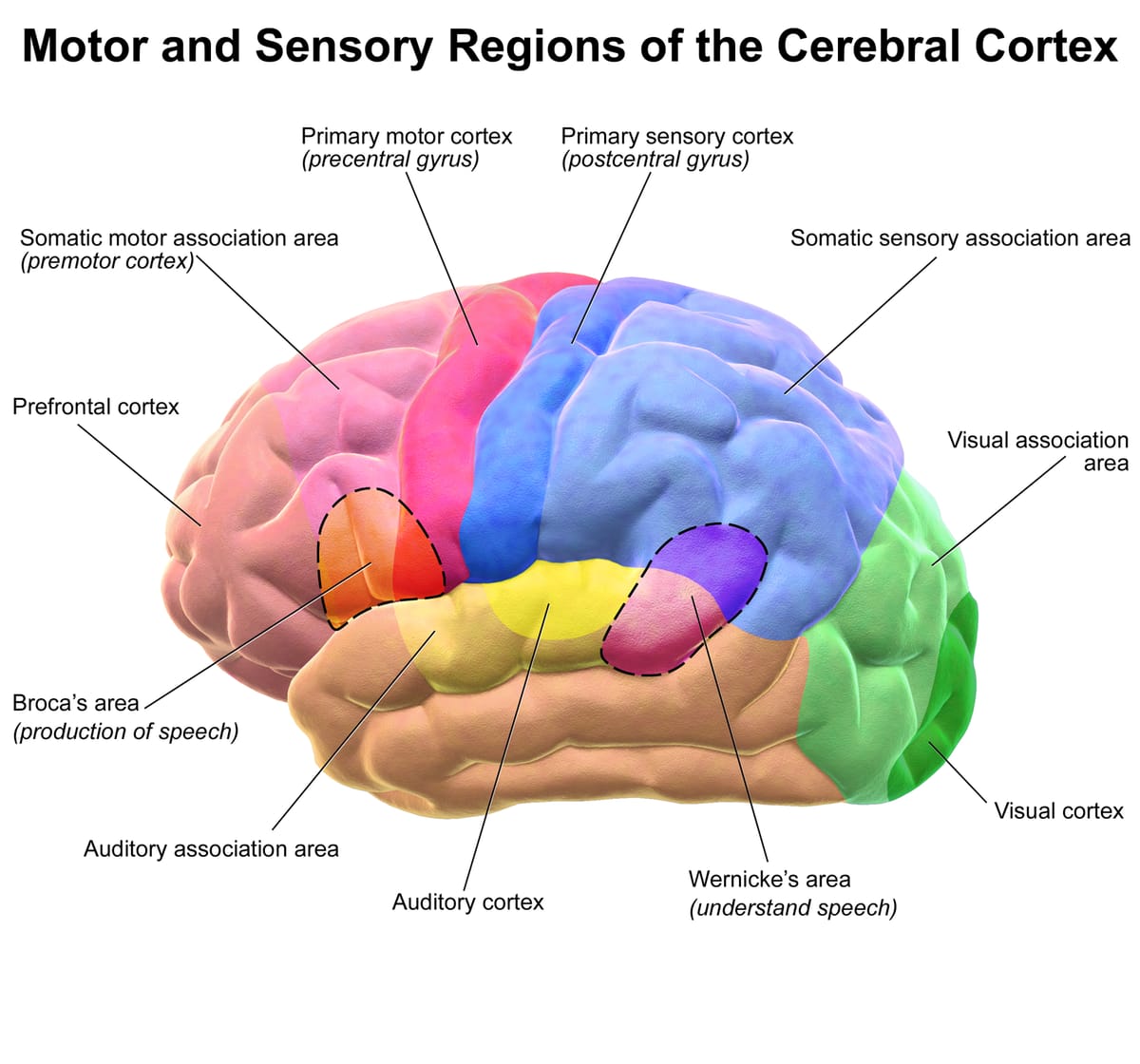
An adult human brain weighs about 1.3–1.4 kg, roughly 3 pounds. It is about 2 percent of body weight but uses about a fifth of the body's energy at rest.
Hormones and endocrine glands
Rule in one line: endocrine glands have no ducts; they pour hormones straight into the blood.
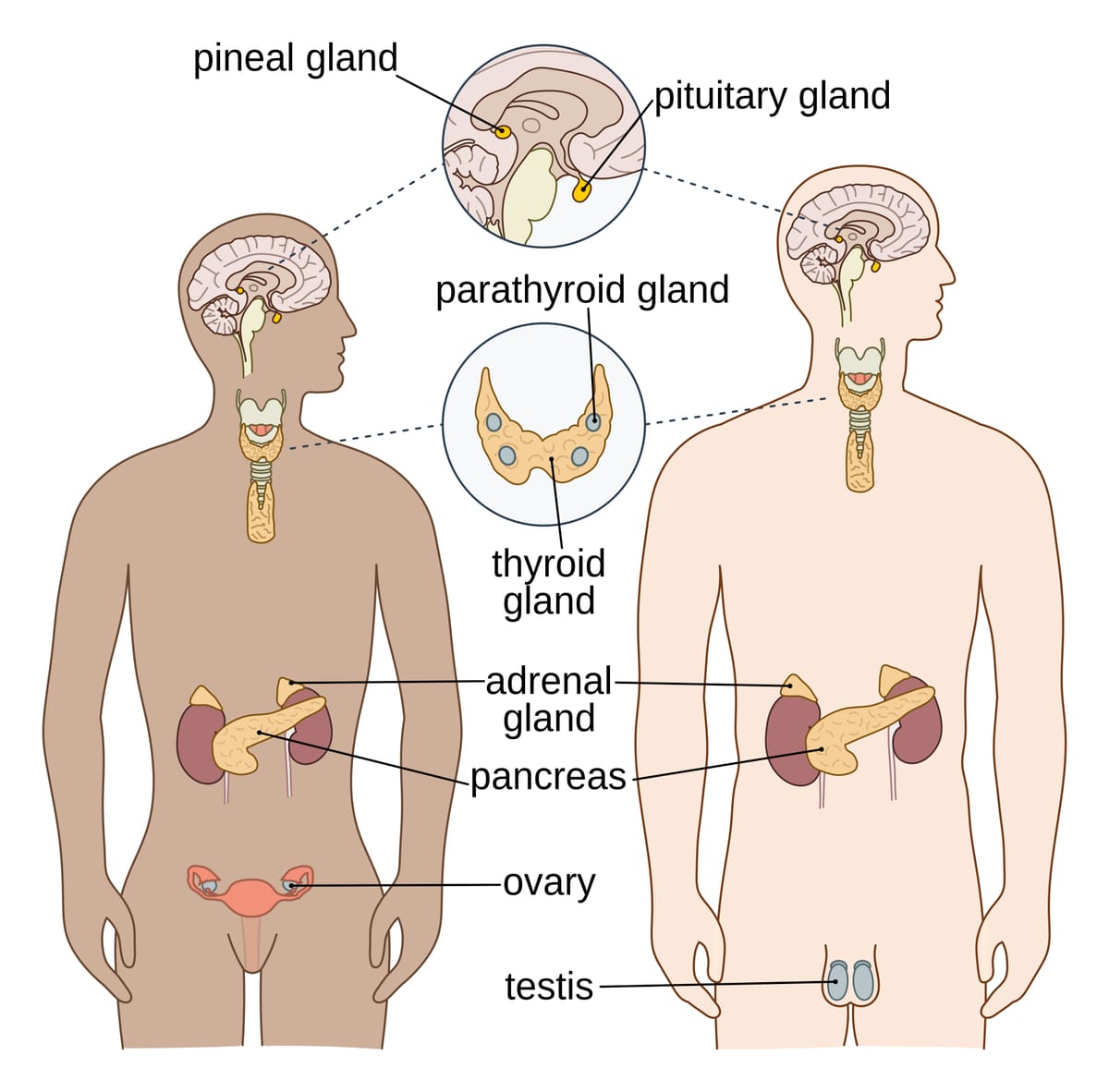
| Gland | Hormone | Job | Disorder |
|---|---|---|---|
| Pituitary | Growth hormone and others | Growth; controls other glands | Too little: dwarfism; too much: gigantism |
| Pineal | Melatonin | Sleep–wake cycle | — |
| Thyroid | Thyroxine (needs iodine) | Rate of body chemistry | Goitre |
| Pancreas | Insulin | Lowers blood sugar | Diabetes |
| Adrenal | Adrenaline | Readies the body for emergency: fight or flight | — |
| Testes | Testosterone | Male changes at puberty | — |
| Ovaries | Oestrogen | Female changes at puberty | — |
People with diabetes may need insulin injections. Today human insulin is made by genetically modified E. coli bacteria. In 1983 the company Eli Lilly made human insulin this way.
Coordination in plants
Rule in one line: shoots grow towards light, roots towards gravity and water; ethylene ripens fruit.
| Movement | Stimulus | Example |
|---|---|---|
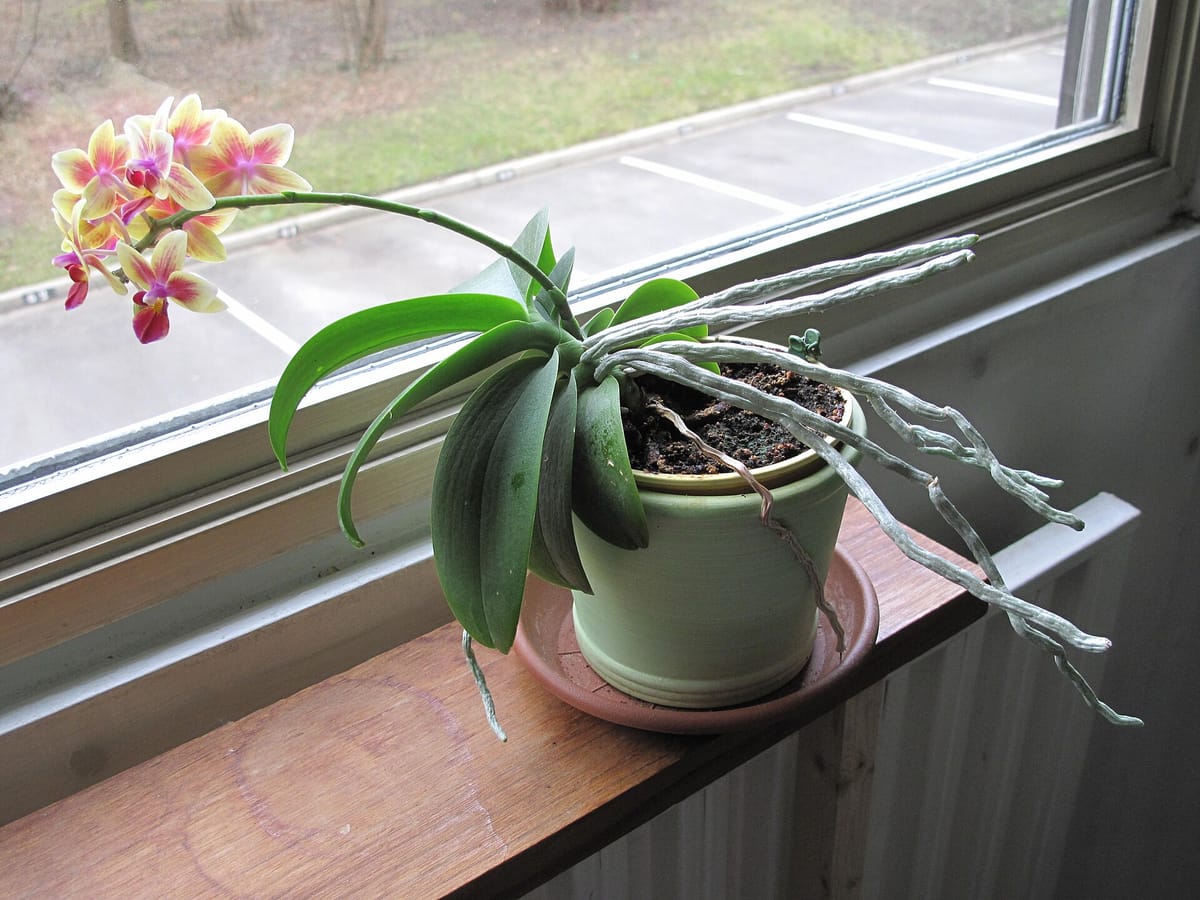
| Phototropism | Light | Shoot bends towards the window |
| Geotropism | Gravity | Roots grow downward |
| Hydrotropism | Water | Roots grow towards moist soil |
| Chemotropism | Chemicals | Pollen tube grows towards the ovule |
| Heliotropism | The moving sun | Leaves or flowers follow the sun |
| Paraheliotropism | Too strong sun | Leaves turn edge-on to avoid the sun |
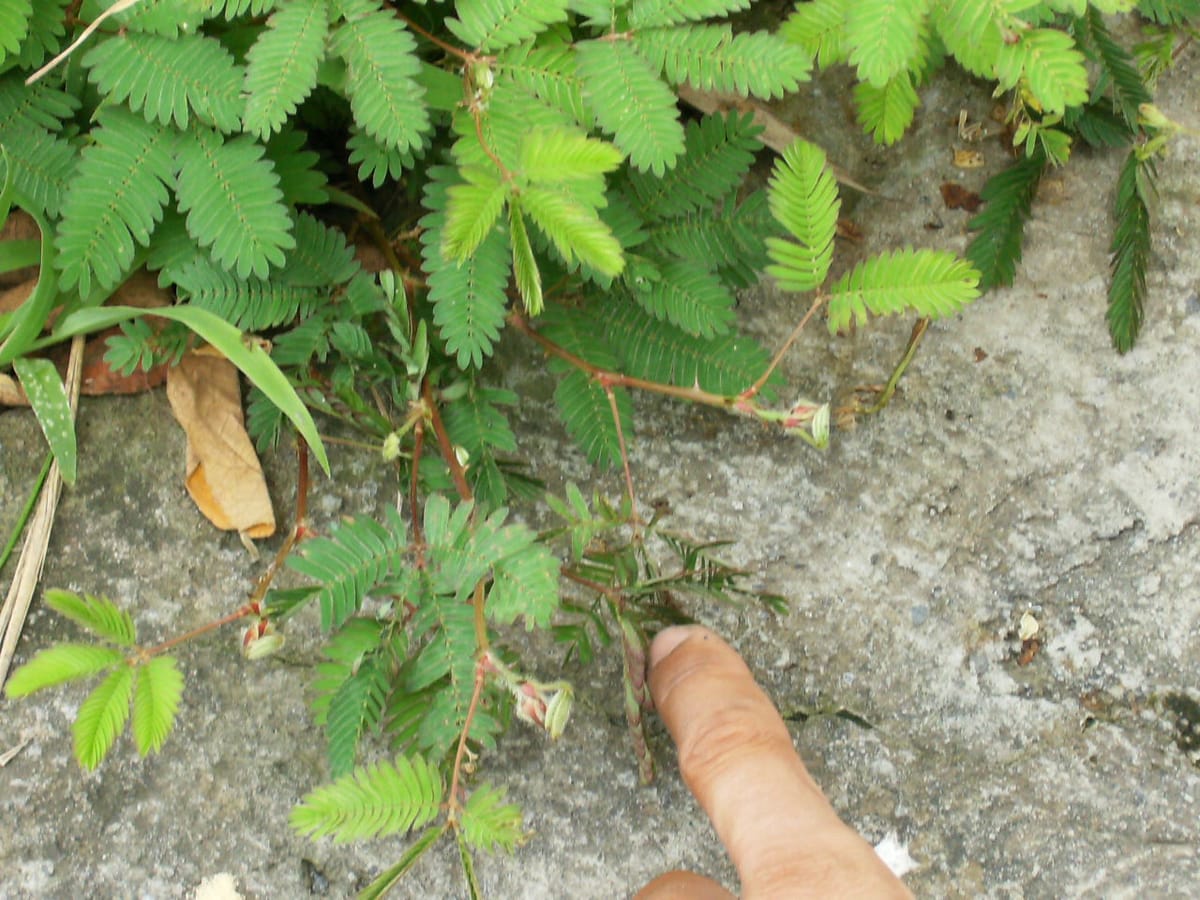
| Touch response | Touch | Leaves of touch-me-not (chhui-mui) fold at once |
| Plant hormone | Effect |
|---|---|
| Auxin | Cell growth at shoot tips; bending towards light |
| Gibberellin (GA3) | Growth of the stem |
| Cytokinin | Cell division; found in fruits and seeds |
| Abscisic acid | Stops growth; wilting of leaves |
| Ethylene | Ripening of fruits (a gas) |
Adolescence, puberty and drugs
Rule in one line: sex hormones make a child an adult; drugs that act on the brain must be used only as a doctor directs.
Adolescence is the time, roughly from 11 to 19 years, when body and mind change from child to adult. Puberty is the part of it when the body becomes able to reproduce. Testosterone in boys and oestrogen in girls bring these changes, under the control of the pituitary.
- Sudden increase in height
- Voice deepens; the voice box (Adam's apple) grows
- Beard and moustache appear
- Shoulders broaden; muscles grow
- Sudden increase in height
- Hips widen; breasts develop
- Menstruation begins (menarche)
- Sweat and oil glands become more active, as in boys
Active oil glands cause acne (pimples) in many teenagers. A balanced diet, exercise and cleanliness keep adolescents healthy. Menstruation stops at about 45–50 years of age; this is menopause.
| Drug | Source plant | Action on the body |
|---|---|---|
| Morphine | Opium poppy (latex of the unripe pod) | Strong painkiller; slows the brain. Used for pain after operations and in cancer |
| Heroin (smack) | Made from morphine | Highly addictive; illegal in India |
| Bhang, ganja, charas | Indian hemp (Cannabis) | Change mood and judgement; harm memory |
Traps and practice
Last revision — where the options try to fool you.
- The gap between neurons is the synapse (synaptic cleft), not the dendrite or axon.
- Reflex actions are run by the spinal cord, not the brain.
- Cerebrum = thinking; cerebellum = balance; medulla = heartbeat and breathing.
- Growth hormone comes from the pituitary; the pineal makes melatonin.
- Sweat, salivary and tear glands are exocrine (they have ducts).
- Insulin lowers blood sugar; it is now made by E. coli, not Rhizobium.
- Para-heliotropism avoids the sun; heliotropism follows it.
- Bhang, ganja and charas come from Indian hemp, not poppy.
Why does your heart beat faster when a dog suddenly chases you?
Show answer
The adrenal glands release adrenaline. It speeds up the heartbeat and breathing and sends more blood to the muscles. The body is ready to fight or run.
- Gap between two neurons
- Synapse (synaptic cleft)
- Balance and posture
- Cerebellum
- Mass of adult brain
- About 3 pounds (1.3–1.4 kg)
- Master gland
- Pituitary
- Hormone that lowers blood sugar
- Insulin (pancreas)
- Emergency hormone
- Adrenaline
- Fruit-ripening hormone
- Ethylene
- Source of bhang, ganja, charas
- Indian hemp (Cannabis)
- Neuron: dendrite → cell body → axon; gap = synapse
- Reflex arc runs through the spinal cord
- 12 pairs cranial, 31 pairs spinal nerves; brain about 3 pounds
- Pituitary: growth hormone; pineal: melatonin; pancreas: insulin
- Sweat gland = exocrine; human insulin from E. coli
- Phototropism: to light; paraheliotropism: away from strong sun
- Ethylene ripens fruit; abscisic acid stops growth
- Morphine: painkiller from poppy; bhang, ganja, charas: Indian hemp