Sources, Chandragupta and Bindusara
c. 321–185 BCE — India's first big empire, and how we know about it.
| Source | Author / type | What it tells us |
|---|---|---|
| Arthashastra | Kautilya (Chanakya) · Sanskrit | how to run a state — king, officials, taxes, spies, law |
| Indica | Megasthenes · Greek | Pataliputra and Indian society; the book is lost and survives only in quotations by later Greek writers |
| Mudrarakshasa | Vishakhadatta · Sanskrit play (Gupta period) | how Chandragupta and Chanakya overthrew the Nandas |
| Edicts of Ashoka | inscriptions on rocks and pillars | Ashoka's own words — Kalinga, Dhamma, his officers |
| Dipavamsa, Mahavamsa | Buddhist chronicles of Sri Lanka | Ashoka and the mission of Mahendra and Sanghamitra |
| Parishishtaparvan | Hemachandra · Jain (12th century) | Chandragupta's link with Bhadrabahu and Jainism |
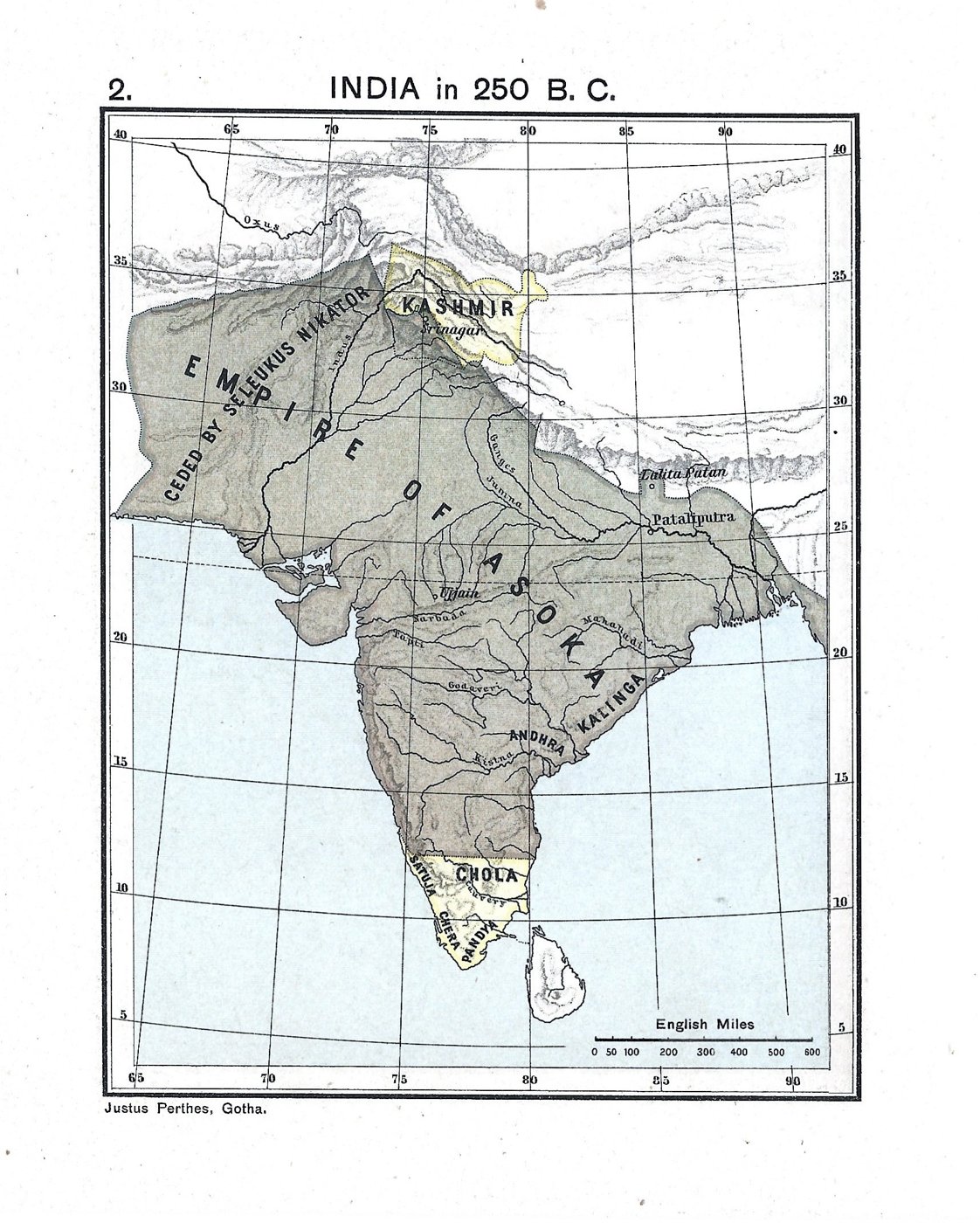
Around 321 BCE Chandragupta Maurya, guided by his teacher Chanakya (also called Kautilya and Vishnugupta), overthrew Dhana Nanda, the last king of the Nanda dynasty of Magadha, and founded the Mauryan Empire with its capital at Pataliputra (today's Patna). Greek writers call him Sandrocottus (Sandrokottos). Around 305 BCE he fought Seleucus Nicator, one of Alexander's generals, who ruled the lands west of the Indus. Under the peace treaty (c. 303 BCE) the Mauryas gained territory in today's Afghanistan and Baluchistan, Seleucus received 500 war elephants, and the two sides made a marriage alliance. Seleucus then sent Megasthenes as his envoy to Pataliputra.
A reservoir near Girnar (Junagadh, Gujarat) first built in Chandragupta's time by his governor Pushyagupta. It was improved under Ashoka, repaired by the Shaka ruler Rudradaman (his Junagadh inscription, 150 CE, tells the story) and again under the Gupta king Skandagupta.
By Jain tradition, late in life Chandragupta gave up the throne, went south with the Jain monk Bhadrabahu and spent his last years at Shravanabelagola in Karnataka. His son Bindusara (c. 297–273 BCE) ruled next. Greek writers called him Amitrochates (from Sanskrit Amitraghata, 'slayer of enemies'). The Seleucid king Antiochus I sent the envoy Deimachus to his court. Bindusara favoured the Ajivika sect, and his son Ashoka is said to have put down a revolt at Taxila for him.
Ashoka, Kalinga and Dhamma
c. 268–232 BCE — from conqueror to the king of Dhamma.
| Point | Fact |
|---|---|
| Reign | c. 268–232 BCE |
| Before becoming king | governor (viceroy) at Taxila and Ujjain |
| Kalinga war | 261 BCE, eight years after his coronation |
| Title in the edicts | Devanampiya Piyadasi — 'beloved of the gods, of kindly look' |
| Name 'Ashoka' in an inscription | first found in the Maski edict (Karnataka); also at Gujarra (Madhya Pradesh) |
| Religion | became a Buddhist after Kalinga |
| Third Buddhist Council | c. 250 BCE at Pataliputra, under Moggaliputta Tissa |
| Mission to Sri Lanka | son Mahendra and daughter Sanghamitra |
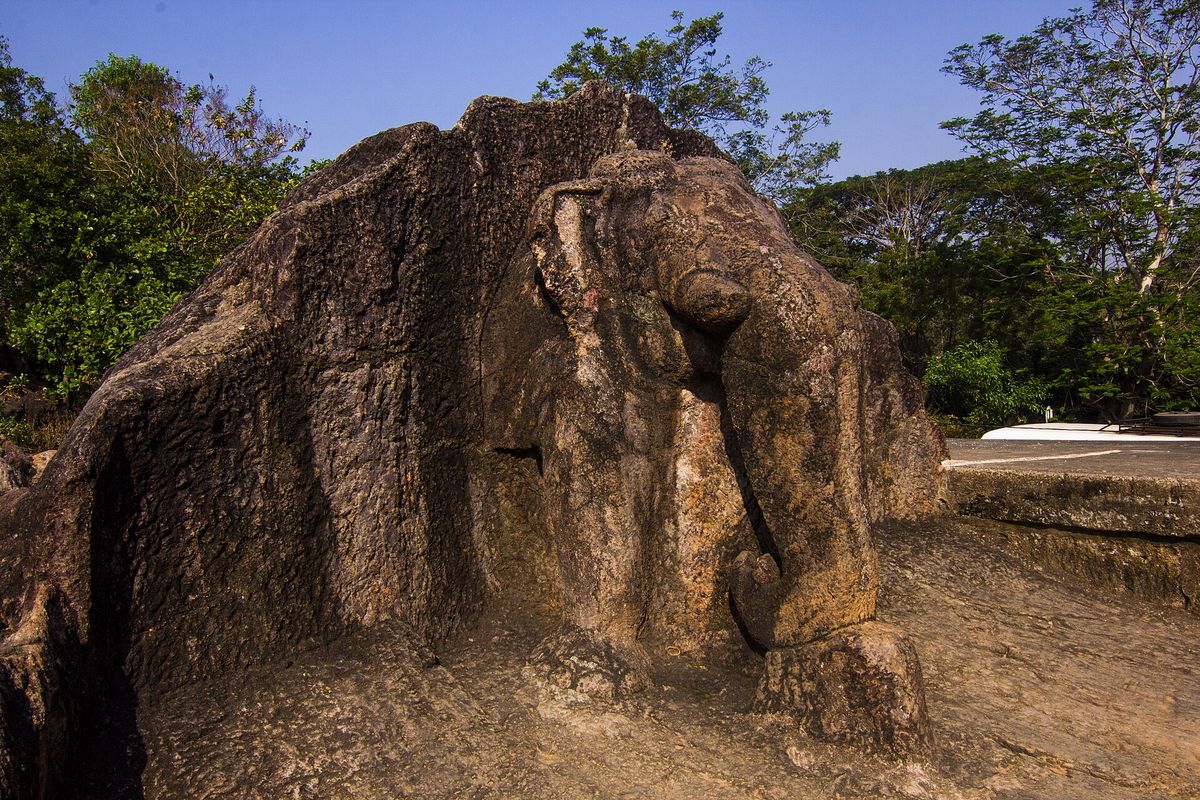
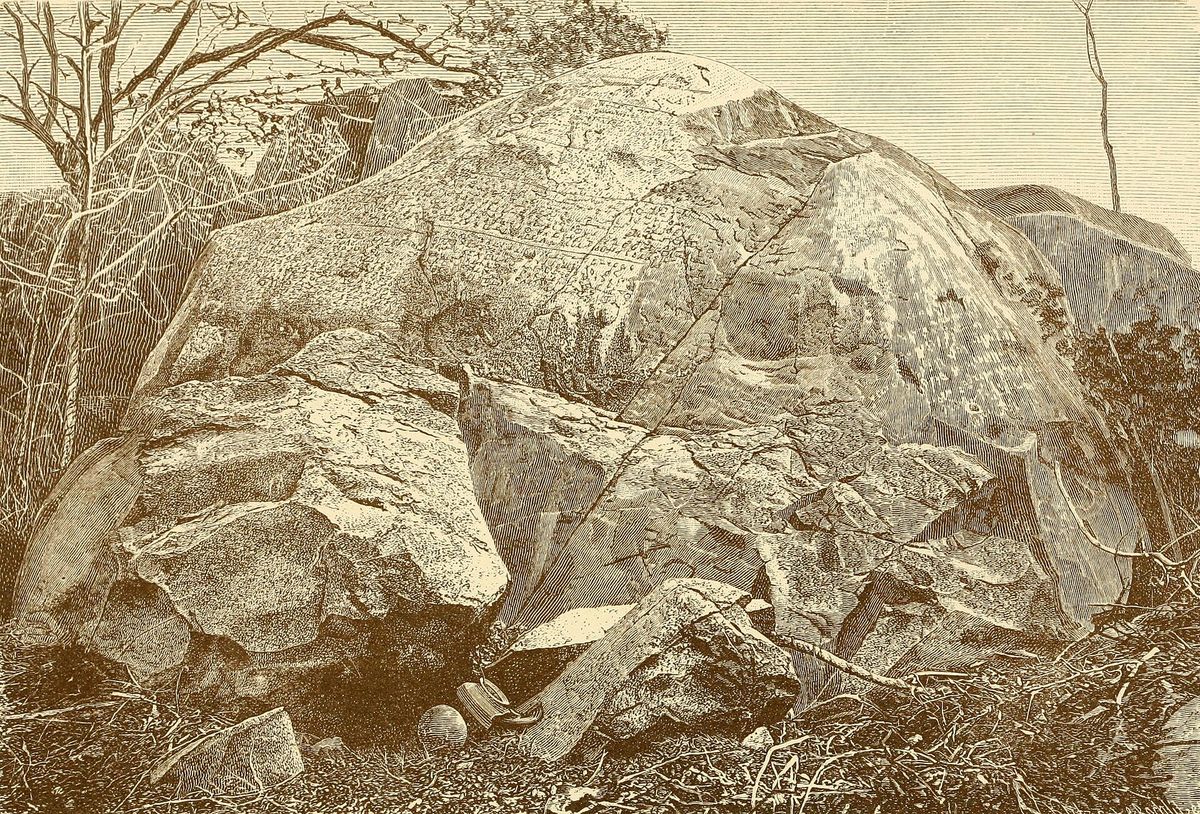
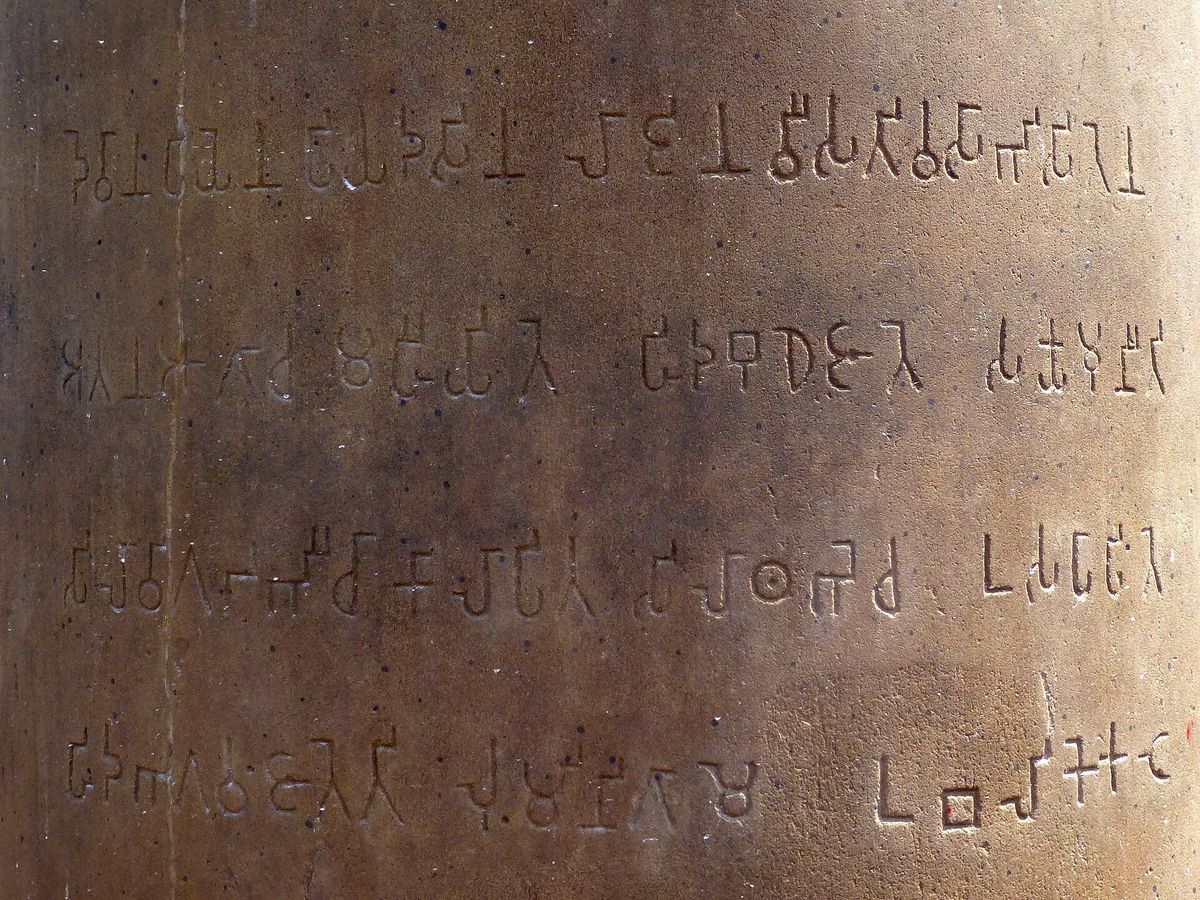
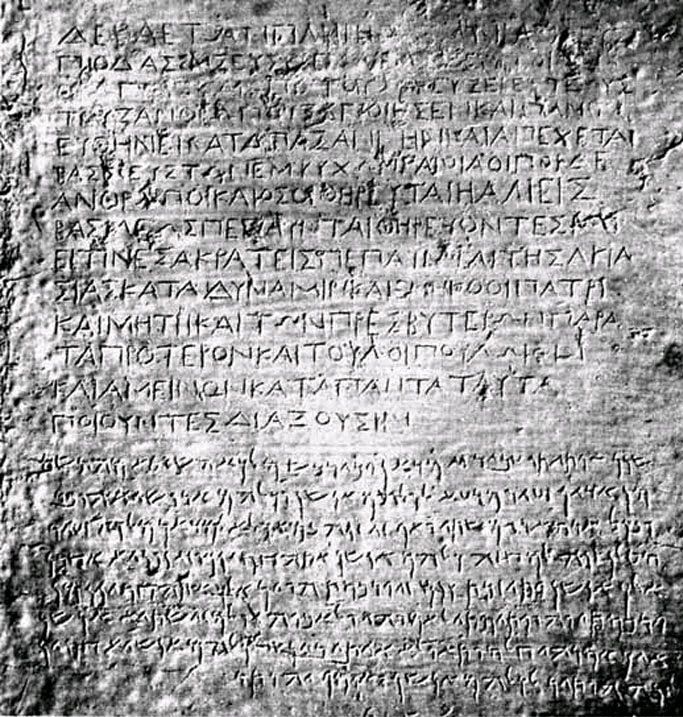
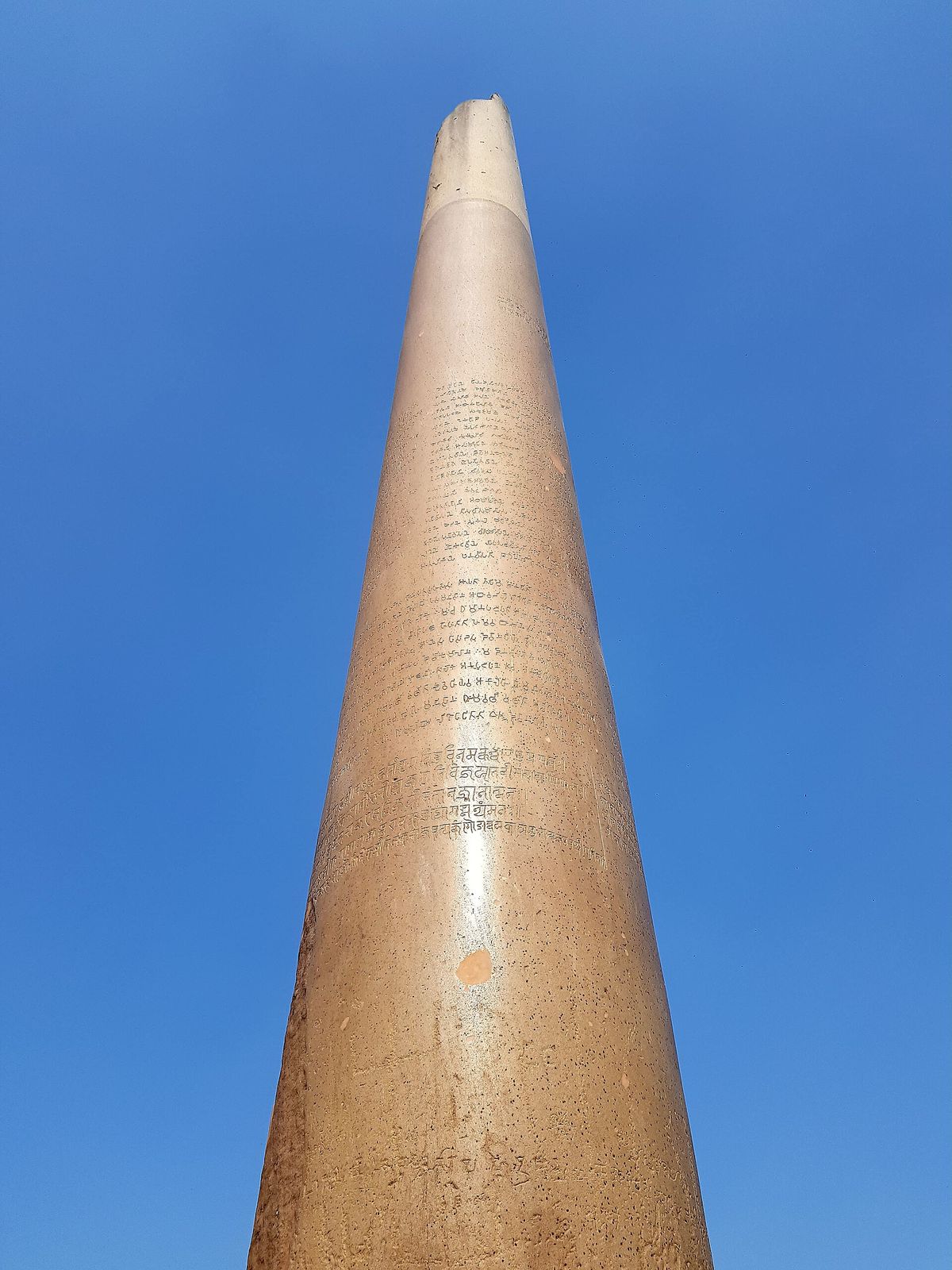
Why did Ashoka change? In 261 BCE he conquered Kalinga (coastal Odisha). His own edict says that a huge number of people were killed or carried away. The suffering filled him with regret, so he gave up war, became a follower of Buddhism, and began to rule by Dhamma — a simple moral code: be non-violent, respect parents and teachers, be kind to servants and animals, and respect every religion. To spread Dhamma he had messages carved on rocks and stone pillars across India — the edicts of Ashoka. They are mostly in the Prakrit language and written in the Brahmi script (Kharosthi in the north-west); in them he calls himself 'Devanampiya Piyadasi' — 'beloved of the gods, who looks on others with kindness'. The British scholar James Prinsep first read the Brahmi script in the 1830s (usually given as 1837).
| Ashoka's Dhamma | In practice |
|---|---|
| Non-violence to living beings | fewer animals killed in the royal kitchen; ban on some animal sacrifices |
| Respect for parents, elders and teachers | |
| Kindness to servants and slaves | |
| Respect for all sects — Brahmanas, Shramanas, Ajivikas | tolerance is a theme of the 12th Major Rock Edict |
| Bheri-ghosha → Dhamma-ghosha | the sound of war drums replaced by the sound of Dhamma (4th Major Rock Edict) |
| Dhamma-yatras | tours to spread Dhamma instead of royal hunting trips (8th Major Rock Edict) |
| Dhamma Mahamatras | new officers to spread Dhamma, appointed in his 13th regnal year (5th Major Rock Edict) |
| Public welfare | wells, shade trees, rest-houses, medical care for people and animals (2nd Major Rock Edict) |
The edicts of Ashoka
Types of edicts, key sites, languages and scripts.
| Type | Key sites | Remember |
|---|---|---|
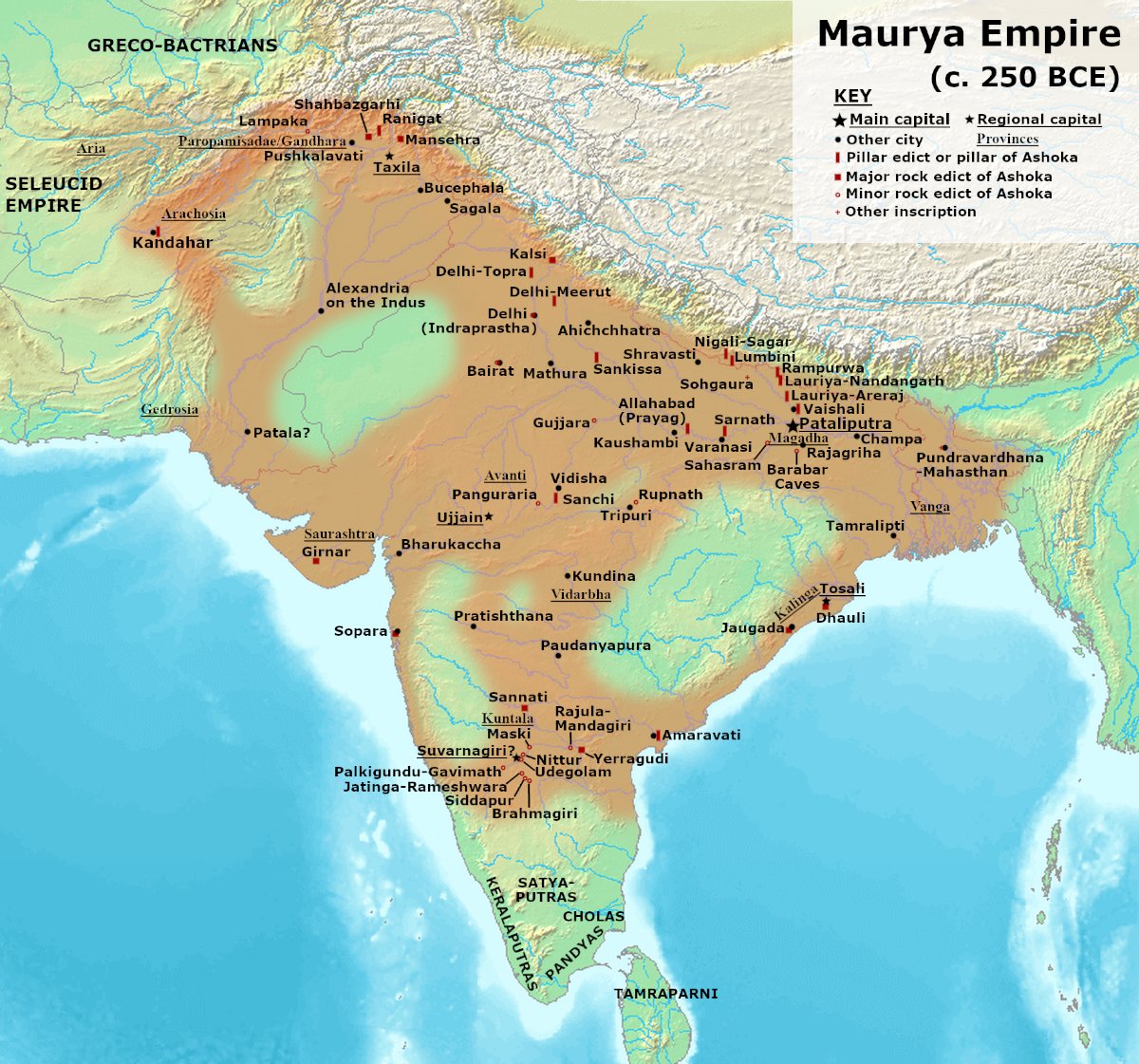
| 14 Major Rock Edicts | Girnar, Kalsi, Dhauli, Jaugada, Shahbazgarhi, Mansehra, Sopara, Yerragudi | 13th = Kalinga war; Girnar has all 14 on one boulder |
| Kalinga edicts | Dhauli, Jaugada (Odisha) | in Kalinga itself they replace Major Rock Edicts 11–13 |
| Minor Rock Edicts | Maski, Brahmagiri, Rupnath, Bairat, Gujarra | Maski and Gujarra use the name Ashoka; the Bairat (Bhabru) edict names the Buddha, Dhamma and Sangha |
| 7 Pillar Edicts | Delhi–Topra, Delhi–Meerut, Allahabad, Lauriya Araraj, Lauriya Nandangarh, Rampurva | only the Delhi–Topra pillar has all seven |
| Minor Pillar Edicts | Rummindei (Lumbini), Nigali Sagar, Sarnath, Sanchi | Rummindei: Lumbini's tax cut to one-eighth |
| Where | Language | Script |
|---|---|---|
| Most of India | Prakrit | Brahmi |
| North-west (Shahbazgarhi, Mansehra — Pakistan) | Prakrit | Kharosthi (written right to left) |
| Kandahar (Afghanistan) | Greek and Aramaic | Greek and Aramaic |
Pillars, caves and art
Polished sandstone pillars, animal capitals, the first rock-cut caves.
| Work | Where | Remember |
|---|---|---|
| Pillars | across north India | each shaft one piece of Chunar sandstone, with a glass-like Mauryan polish |
| Lion Capital (4 lions) | Sarnath (UP) | India's National Emblem |
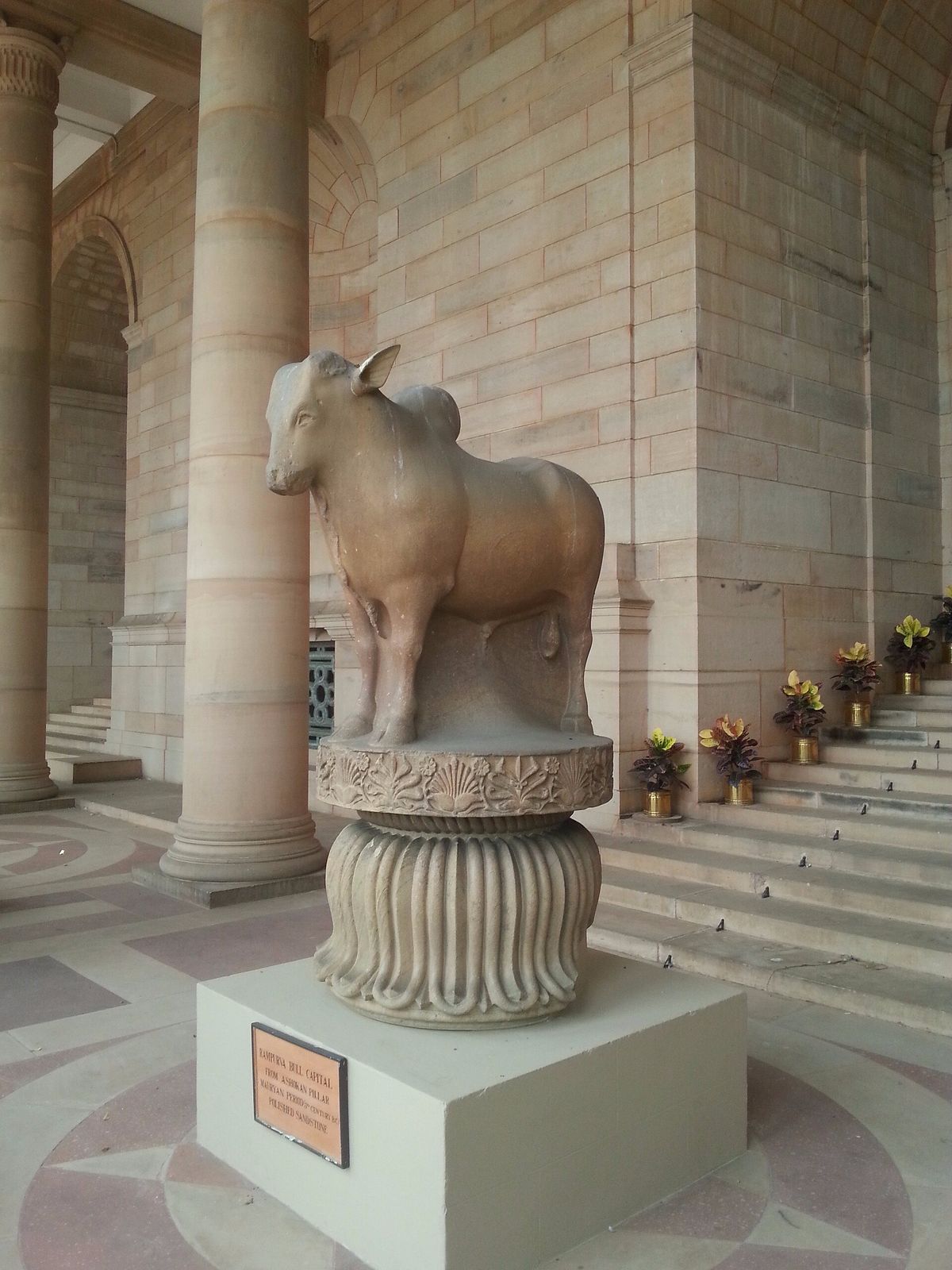
| Bull capital | Rampurva (Bihar) | now in Rashtrapati Bhavan, New Delhi |
| Single-lion capital | Lauriya Nandangarh (Bihar) | pillar still standing with its capital |
| Elephant capital | Sankissa (UP) | |
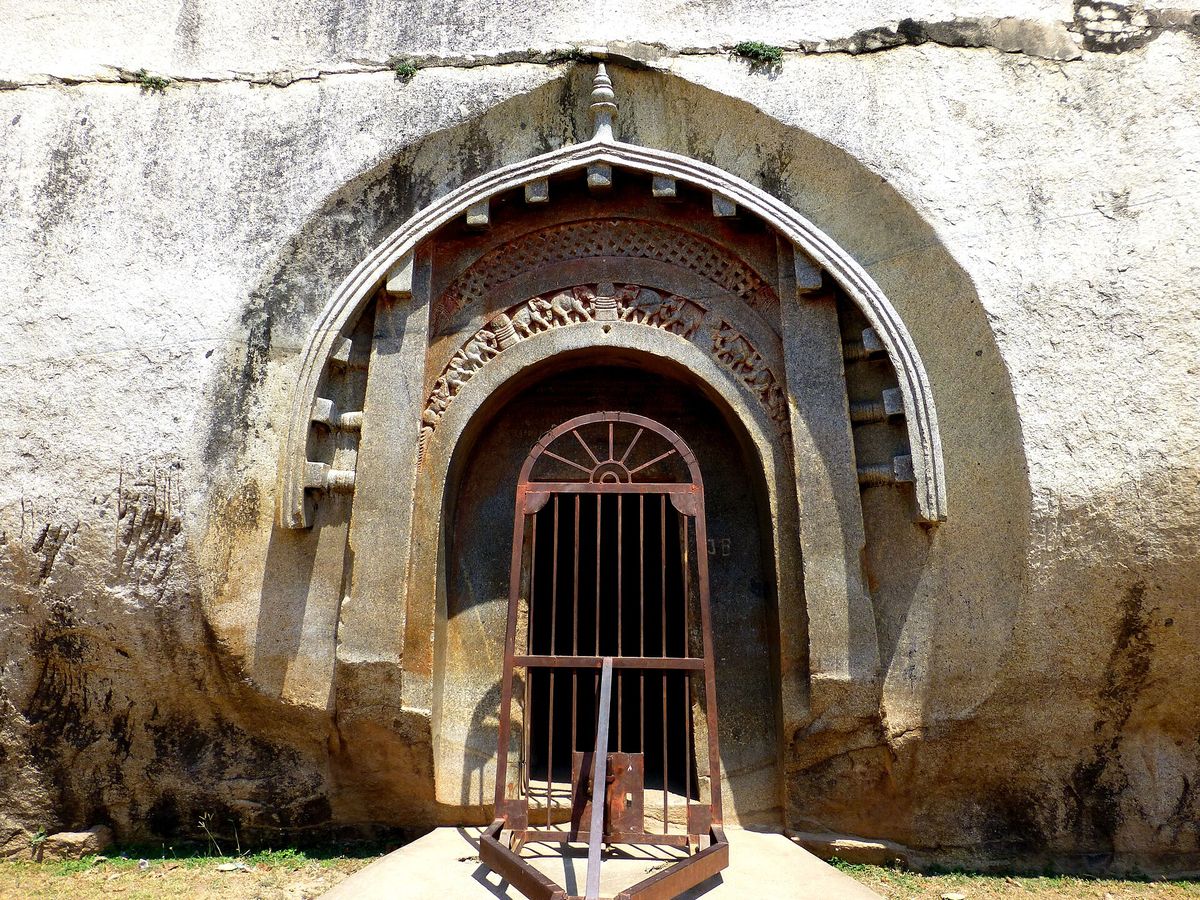
| Barabar caves | Bihar | gifted to Ajivika monks by Ashoka; the earliest rock-cut caves; Lomas Rishi doorway copies a wooden hut |
| Nagarjuni caves | Bihar | gifted by Ashoka's grandson Dasharatha |
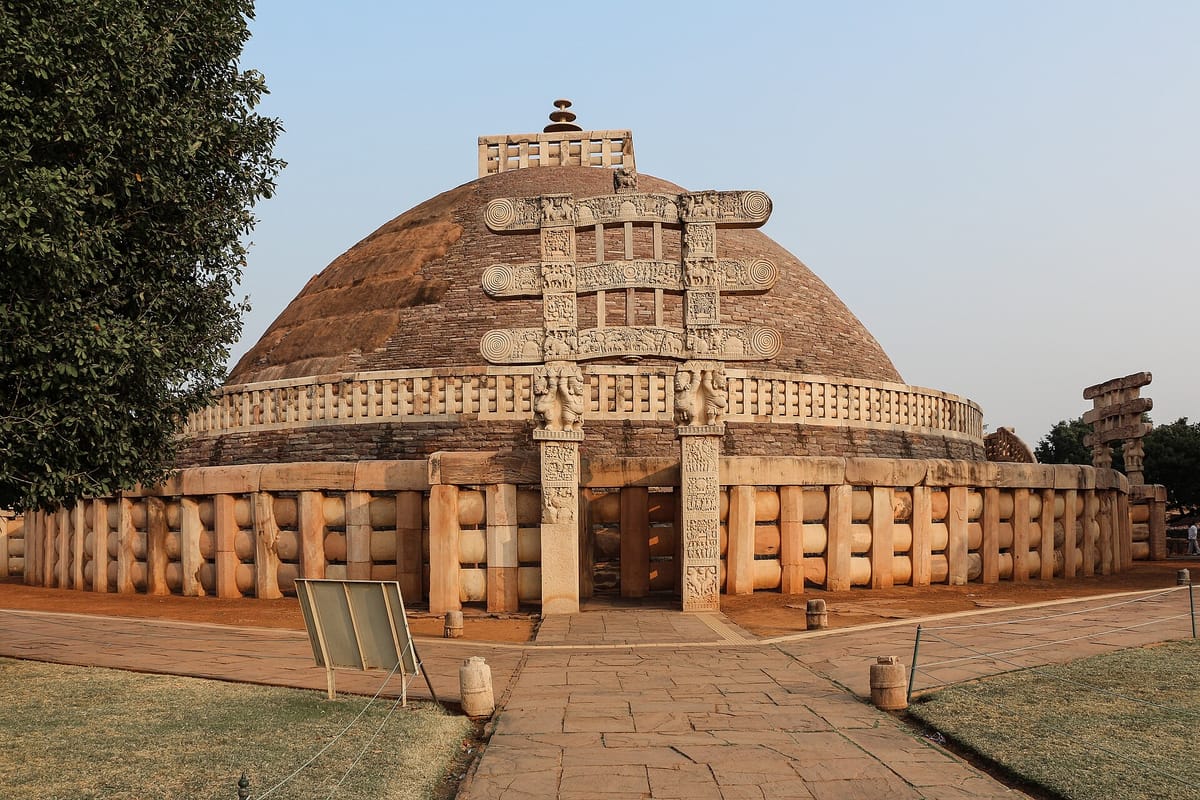
| Stupas | Sanchi and others | brick stupas over the Buddha's relics |
| Pillared hall | Kumhrar, Patna | remains of the Mauryan palace hall at Pataliputra |
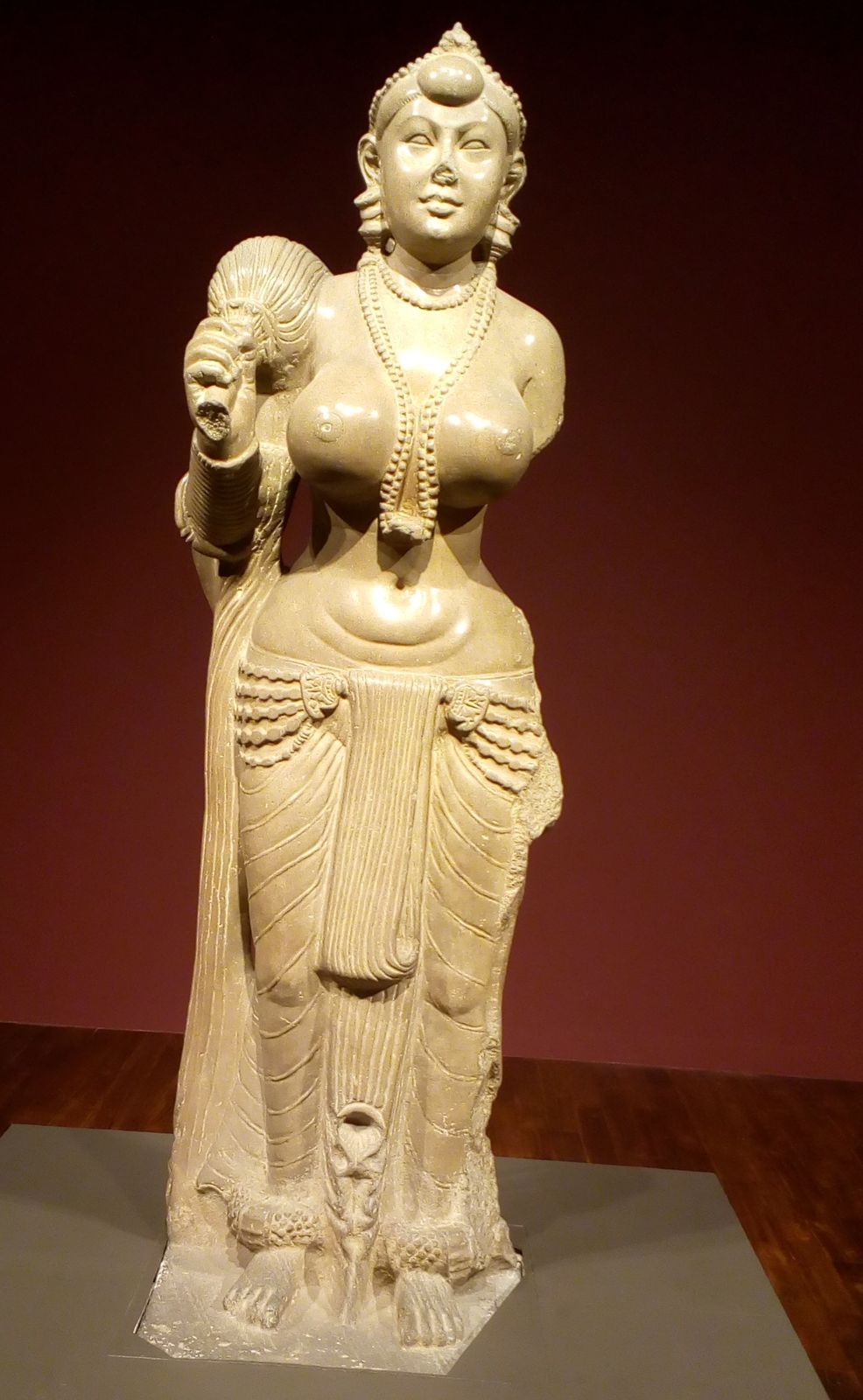
| Didarganj Yakshi | found near Patna | polished sandstone figure; its date is debated (often given as Mauryan) |
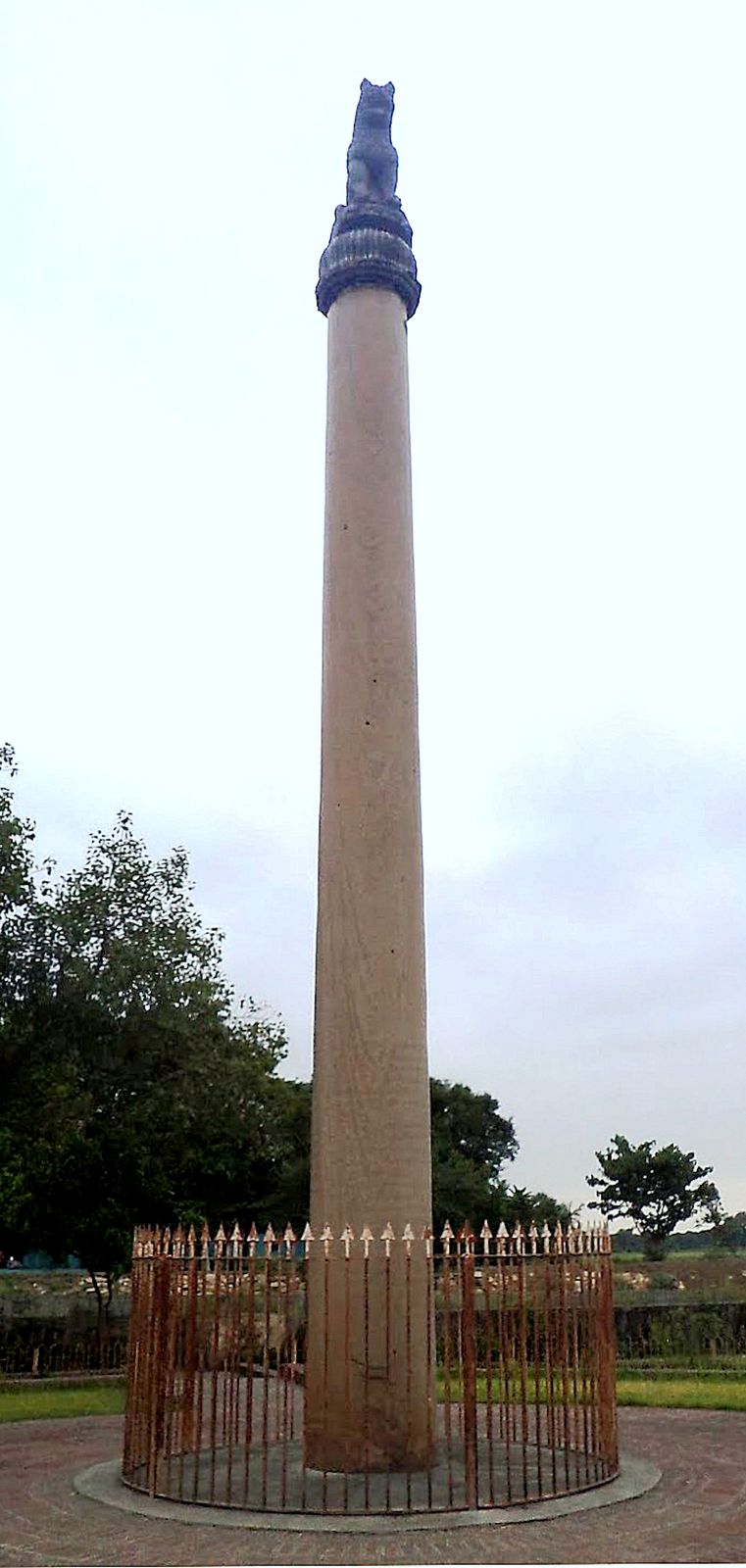
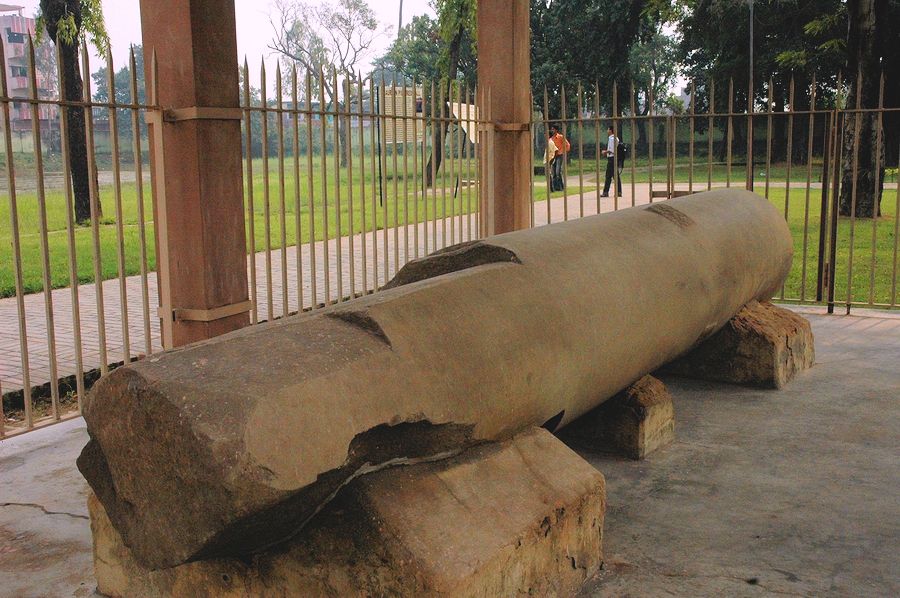
Ashoka also built stupas (dome-shaped mounds over relics of the Buddha) and tall polished pillars. Two of his works are on every exam: the Lion Capital that once topped his pillar at Sarnath, and the Great Stupa at Sanchi in Madhya Pradesh.
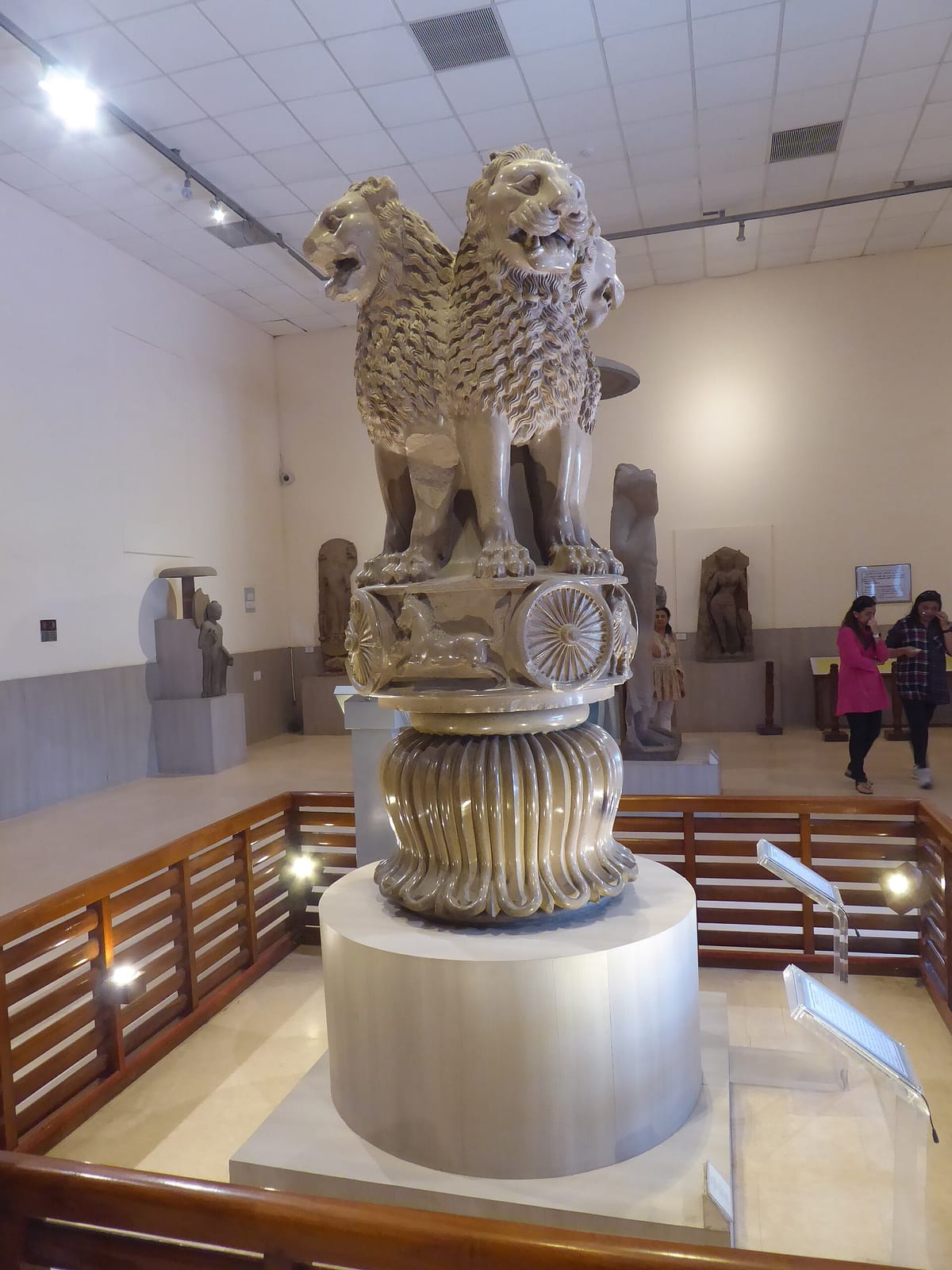
Adopted on 26 January 1950 from Ashoka's Sarnath Lion Capital. Only three of the four lions are seen. On the abacus below, a 24-spoked wheel sits between a bull (right) and a horse (left). The motto 'Satyameva Jayate' ('truth alone triumphs') comes from the Mundaka Upanishad and is written in Devanagari. The bell-shaped lotus of the original is left out.
Administration, economy and decline
A centralised state, its officers and taxes — and how it ended.
| Level | Head / officer | Remember |
|---|---|---|
| Centre | King, advised by the Mantriparishad (council of ministers) | a centralised state |
| Revenue | Samaharta | collector-general of revenue |
| Treasury | Sannidhata | keeper of the treasury and stores |
| Departments | Adhyakshas (superintendents) | the Arthashastra lists many — trade, mines, agriculture and more |
| Provinces | princes as governors | Taxila (north-west), Ujjain (west), Tosali (Kalinga), Suvarnagiri (south); Pataliputra ruled the centre |
| Districts (Ashoka's edicts) | Rajukas, Pradeshikas, Yuktas | Rajukas handled land and justice in the countryside |
| Village | Gramika | village head |
| Intelligence | spies (gudhapurushas) | described in the Arthashastra |
| Board (5 members each) | Looked after |
|---|---|
| 1 | industries and crafts |
| 2 | foreigners |
| 3 | registration of births and deaths |
| 4 | trade, weights and measures |
| 5 | sale of manufactured goods |
| 6 | collection of tax on sales |
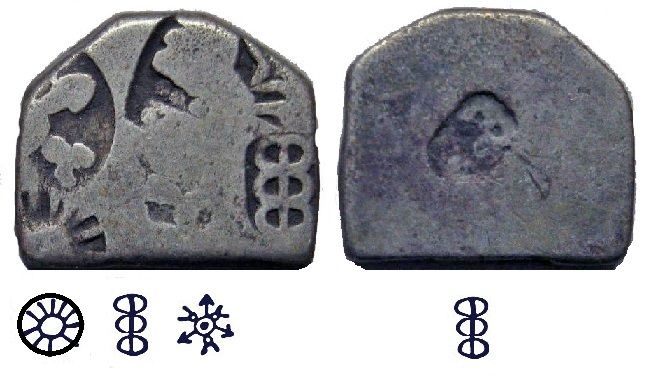
Economy. Farming was the base. The main land tax, bhaga, was usually one-sixth of the produce; land owned directly by the state was called sita. The state controlled mines, forests and salt, and ran workshops. Trade used silver punch-marked coins (pana or karshapana), stamped with symbols rather than a king's face.
Decline. After Ashoka the empire weakened quickly. It was divided among weak successors; his grandson Dasharatha is known from the Nagarjuni caves. Around 185 BCE the last Mauryan king, Brihadratha, was killed by his own general Pushyamitra Shunga, who founded the Shunga dynasty. Historians give several reasons: weak rulers and division of the empire; the cost of a huge army and officialdom; neglect of the north-west frontier, which opened the way to Indo-Greek invasions; and two older theories — a Brahmanical reaction against Ashoka's policies (H. P. Shastri) and Ashoka's pacifism weakening the army (H. C. Raychaudhuri) — both of which many historians question.
- c. 321 BCEChandragupta Maurya founds the empire
defeats Dhana Nanda with Chanakya's help
- c. 305–303 BCEWar and treaty with Seleucus Nicator
500 elephants; Megasthenes sent as envoy
- c. 297 BCEBindusara becomes king
Greek name Amitrochates
- c. 268 BCEAshoka becomes king
- 261 BCEKalinga war
13th Major Rock Edict
- c. 250 BCEThird Buddhist Council at Pataliputra
- c. 232 BCEDeath of Ashoka
- c. 185 BCEBrihadratha killed by Pushyamitra Shunga
end of the Mauryas; Shunga dynasty begins
- Megasthenes came to Chandragupta Maurya's court — not Ashoka's or Bindusara's.
- Kalinga war = 261 BCE, described in the 13th Major Rock Edict (missing at Dhauli and Jaugada).
- Edicts: language mostly Prakrit, script mostly Brahmi — Sanskrit is neither.
- Kharosthi in the north-west; Greek and Aramaic at Kandahar.
- Brahmi deciphered by James Prinsep, 1837 — not William Jones.
- Name 'Ashoka' appears at Maski (and Gujarra); elsewhere he is 'Devanampiya Piyadasi'.
- Arthashastra = Kautilya; Indica = Megasthenes; Mudrarakshasa = Vishakhadatta (a later play).
- Rampurva capital = bull; Sarnath = four lions; Lauriya Nandangarh = one lion.
- Barabar caves → Ajivikas, not Buddhists or Jains.
- Last Maurya Brihadratha was killed by Pushyamitra Shunga (c. 185 BCE).