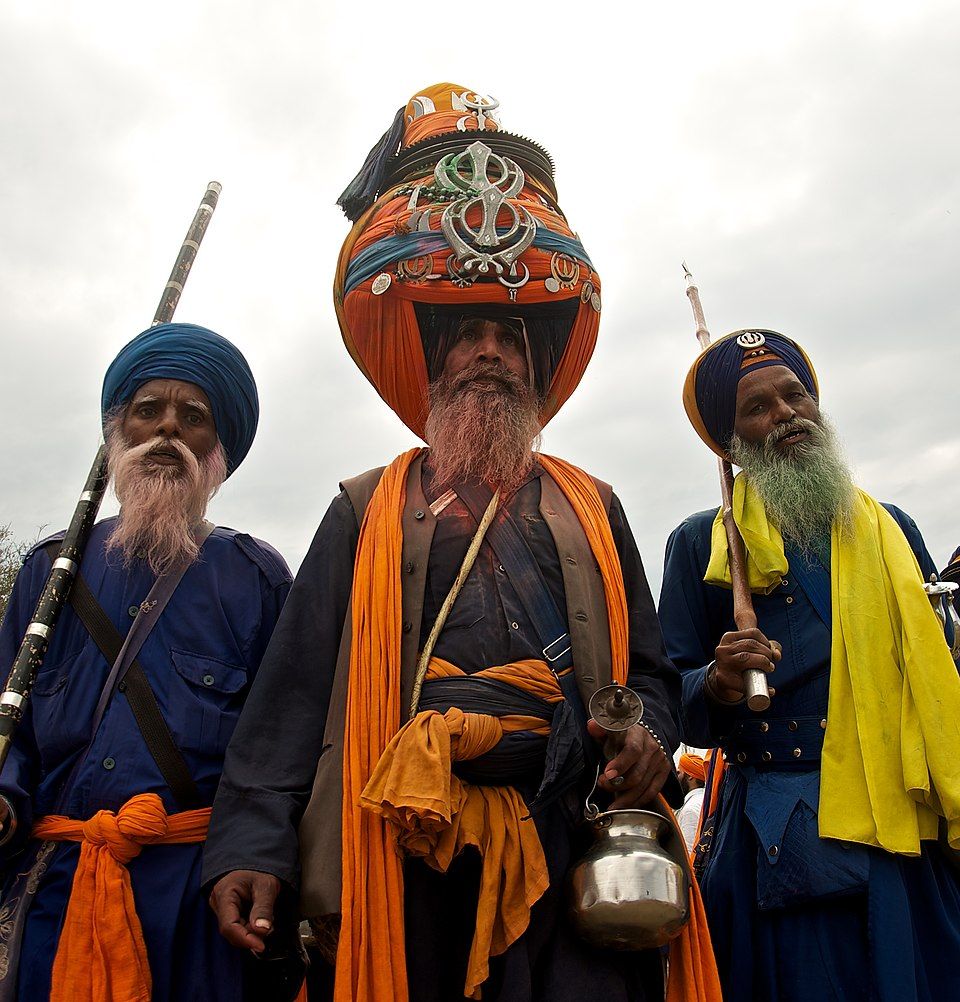
Punjab is a land of melas (fairs) and tyohars (festivals). Most of them follow the desi (Bikrami) calendar, so exams ask two things: in which month is a festival held, and at which place is a fair held? Some fairs honour Gurus and martyrs, some honour pirs (Sufi saints) and folk gods, and some are about the harvest and the seasons.
- The desi months — which festival falls in which month (the most-asked question).
- Fairs (melas) — where each big fair is held, shown on a map of Punjab.
- Customs, dress and crafts — wedding and death rites, ornaments, food and Phulkari.
The desi months
Learn this first. Almost every festival question is really a month question.
- Hola Mohalla (day after Holi)
- Jarag da Mela
- Baisakhi (1 Vaisakh, 13/14 April)
- Hot summer month — no big exam festival
- Start of the rains
- Teeyan
- Rakhri (Sawan puranmashi)
- Gugga Naumi
- Chhapar Mela
- Baba Sodal Mela
- Shraddhs
- Navratre and Dussehra
- Karva Chauth
- Ahoi
- Diwali / Bandi Chhor Divas
- Tikka
- Guru Nanak Gurpurab
- Winter sowing time
- Shaheedi Jor Mela (Fatehgarh Sahib)
- Lohri (last night of Poh)
- Maghi (1 Magh, Muktsar)
- Basant Panchami
- Roshni Mela (Jagraon)
- Shivratri
- Holi
"Lohri closes Poh, Maghi opens Magh" — they are on back-to-back days. Months in order: Chet-Vaisakh-Jeth-Harh (spring and summer) → Sawan-Bhadon-Assu (rains) → Kattak-Maghar-Poh (autumn and winter) → Magh-Phagun (end of winter).
Festivals of Punjab
Festival, date and what people do.
| Festival | Desi month / date | What it is about |
|---|---|---|
| Basant Panchami | Magh (5th day of the bright half) | Arrival of spring; yellow clothes and kite-flying (Patiala, Chheharta) |
| Shivratri | Phagun vadi 14 — the dark night just before Phagun masya | Worship of Lord Shiva |
| Hola Mohalla | Chet, day after Holi | Sikh martial festival at Anandpur Sahib, 3 days |
| Baisakhi | 1 Vaisakh (13/14 April) | Wheat harvest; Khalsa created in 1699; big fairs at Talwandi Sabo and Anandpur Sahib |
| Gugga Naumi | Bhadon | Worship of Gugga Pir, the snake god, for safety from snakebite |
| Shraddhs → Navratre | Assu | Offerings for ancestors, then nine nights of the Goddess |
| Karva Chauth | Kattak vadi 4 (4th day of the dark half) | Married women fast for their husbands' long life |
| Ahoi | Kattak vadi 8 (4 days after Karva Chauth) | Mothers fast for their sons and draw Ahoi Mata on the wall. Exam keys link Ahoi with Kali Mata (the Goddess). |
| Diwali / Bandi Chhor Divas | Kattak masya (new moon) | Festival of lamps; Guru Hargobind's return from Gwalior Fort |
| Guru Nanak Gurpurab (Prakash Purab) | Kattak puranmashi (full moon) | Birth anniversary of Guru Nanak Dev |
- dark halfVadi 4Karva Chauth
- dark halfVadi 8Ahoi
- new moonMasyaDiwali
- bright halfSudi 2Tikka (two days after Diwali)
- full moonPuranmashiGuru Nanak Dev's Prakash Purab
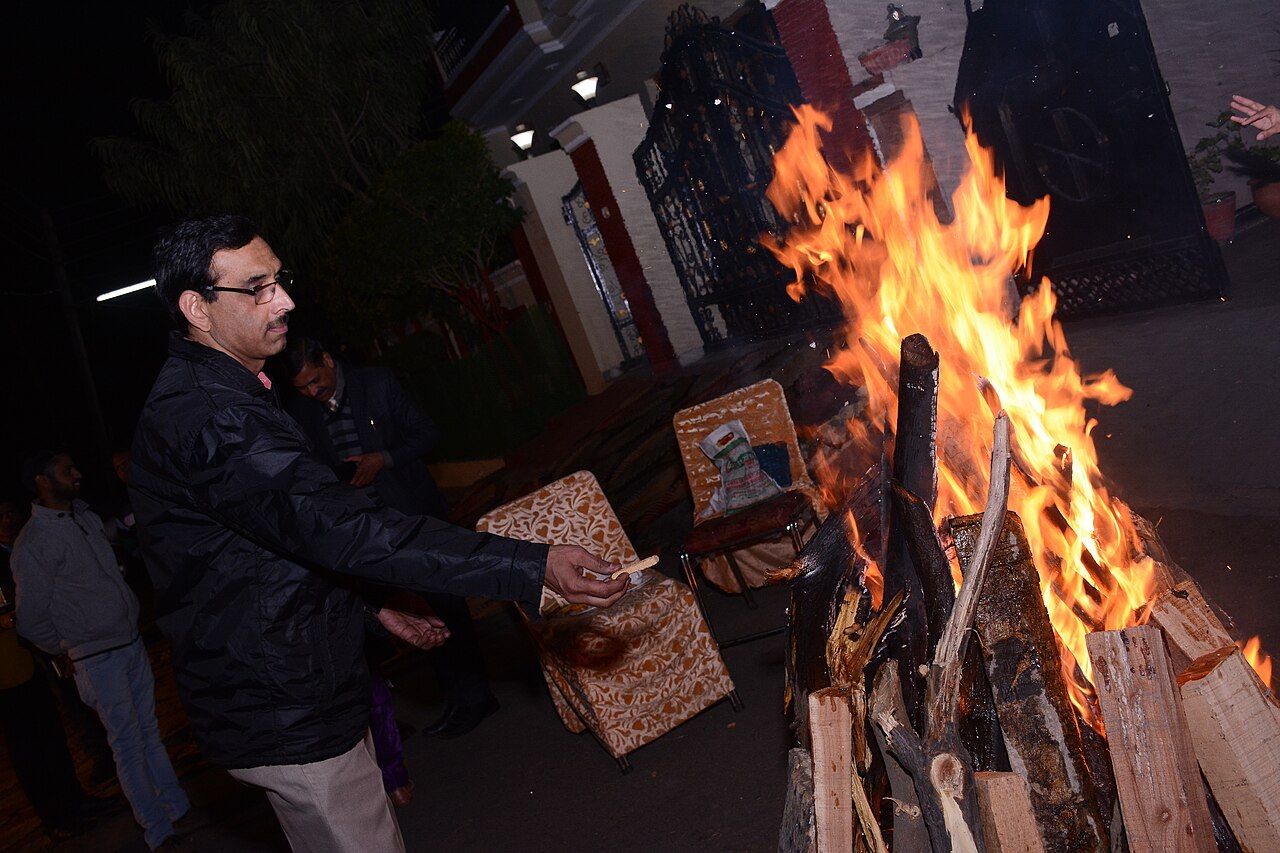
- Lohri is Punjab's bonfire festival. People throw til (sesame), rewri, peanuts and popcorn into the fire.
- Children go from house to house singing Lohri songs about Dulla Bhatti, like "Sundar mundriye".
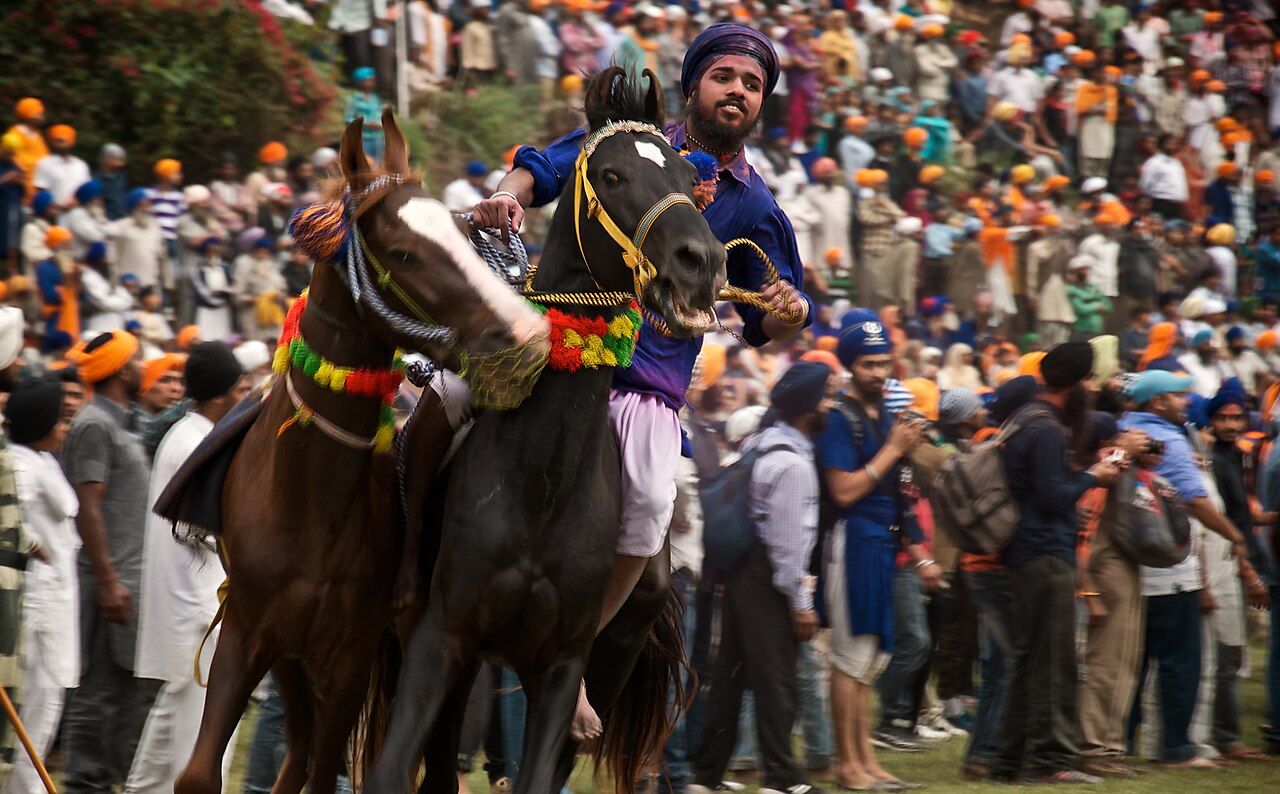
A Sikh festival started by Guru Gobind Singh at Anandpur Sahib in 1701, on the day after Holi. Instead of throwing colours, Sikhs show martial skills: gatka, horse-riding, tent-pegging and mock battles by Nihang Singhs. It is celebrated for three days. (Some books give the start year as 1700.)
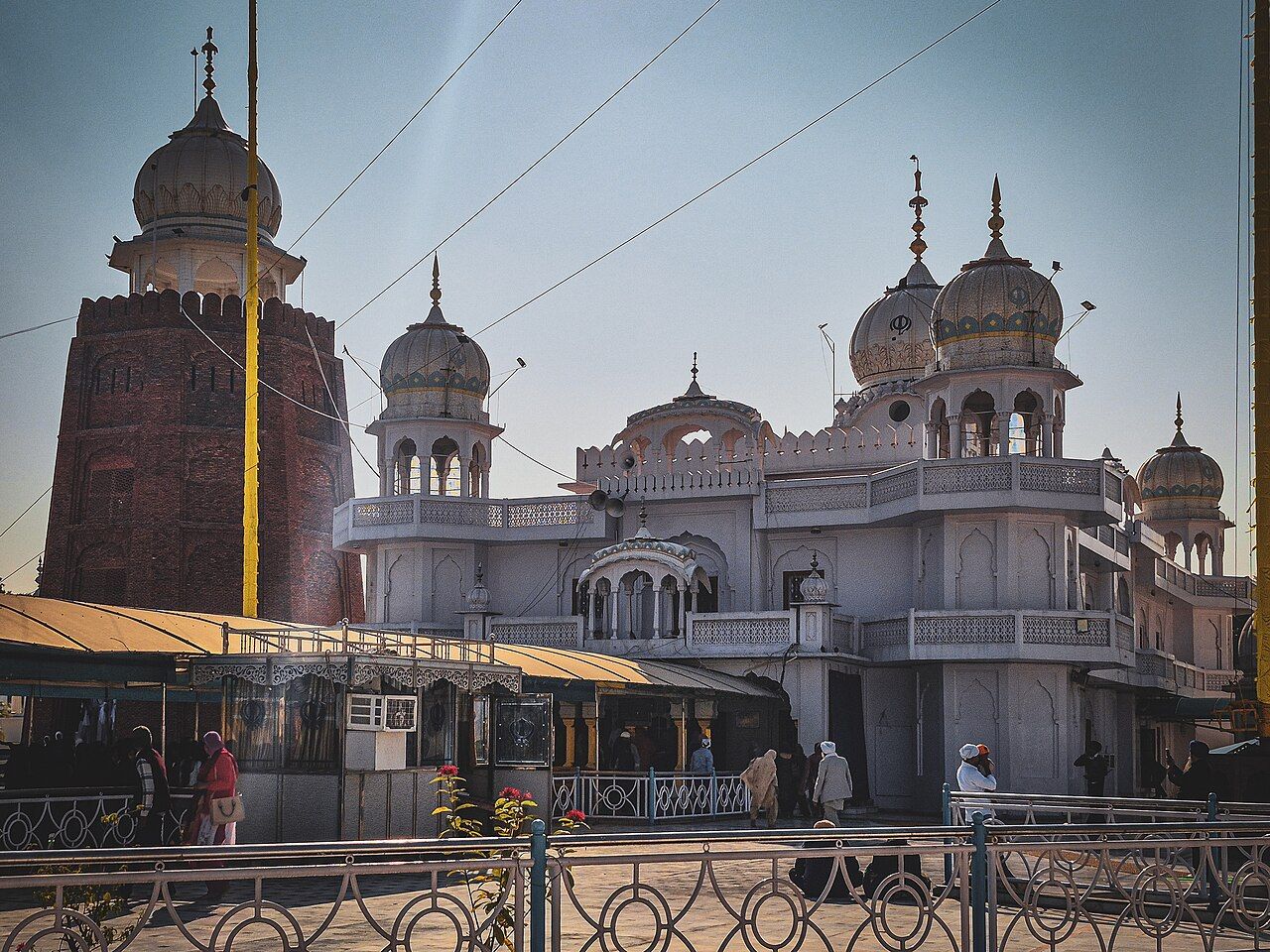
- Baisakhi falls on 1 Vaisakh (13 or 14 April). It is the festival of the wheat harvest; farmers dance bhangra.
- On Baisakhi 1699, Guru Gobind Singh created the Khalsa at Anandpur Sahib.
- The biggest Baisakhi fairs are at Talwandi Sabo (Damdama Sahib) and Anandpur Sahib.
- Baisakhi is a Punjab festival. Kal Baisakhi is something else — the name for violent April–May storms in West Bengal.
Famous fairs (melas)
Fair, place, month and why it is held.
| Fair | Place (district) | When | Linked to / known for |
|---|---|---|---|
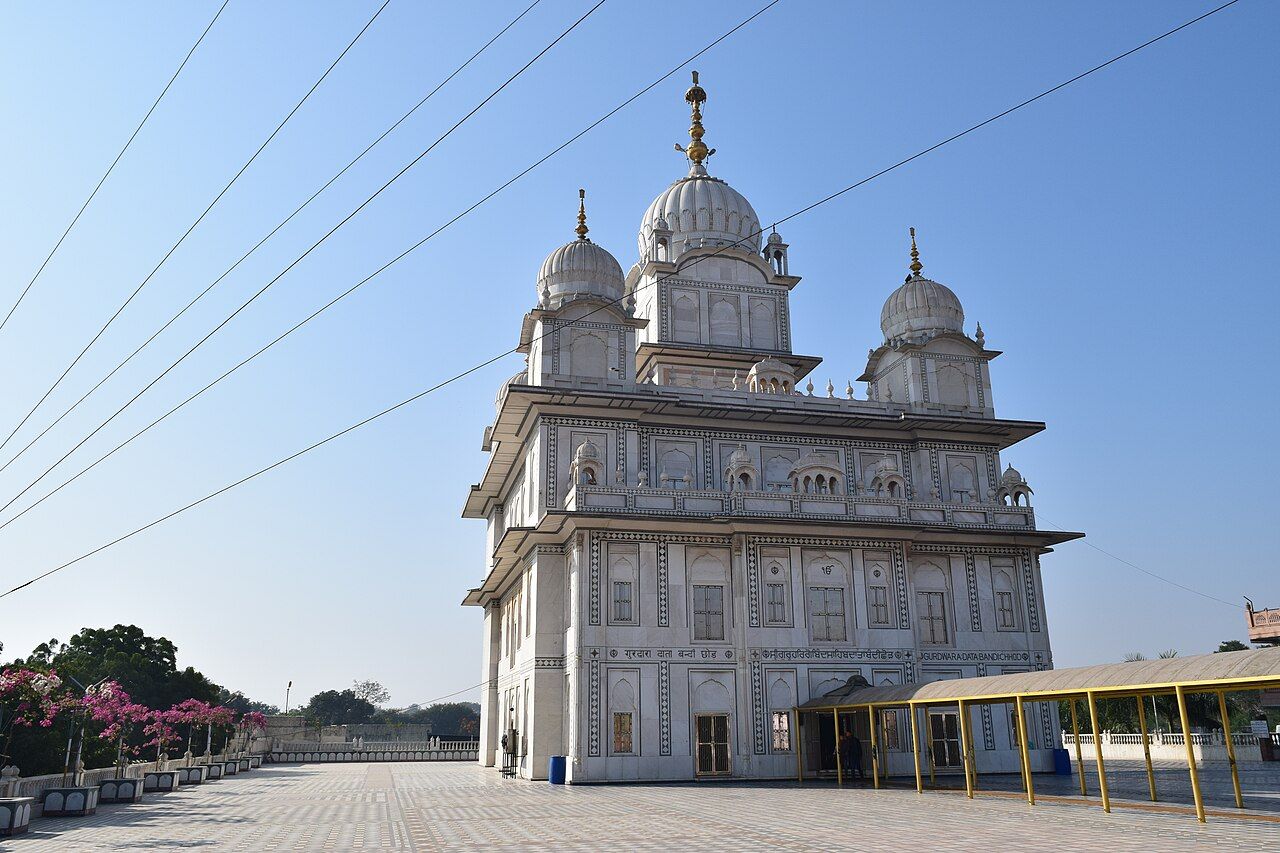
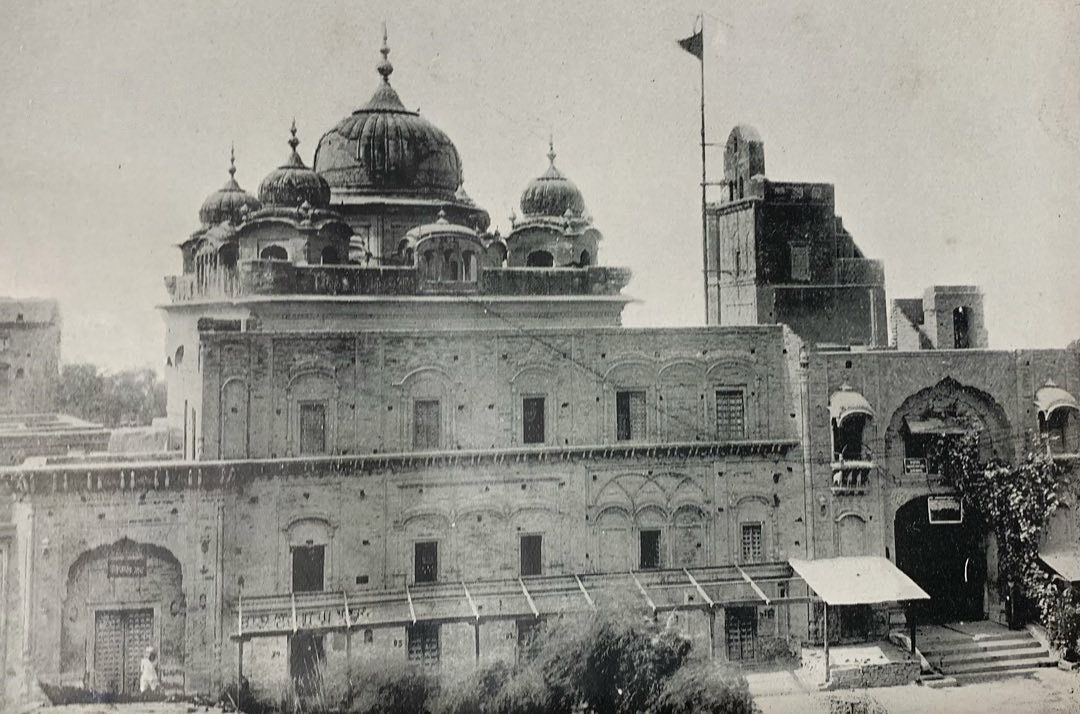
| Mela Maghi | Sri Muktsar Sahib | 1 Magh (January) | Chali Mukte — 40 Sikhs who died at Khidrana, 1705 |
| Hola Mohalla | Anandpur Sahib (Rupnagar); also Kiratpur | Chet, day after Holi | Nihang martial displays; 3 days |
| Baisakhi Mela | Talwandi Sabo (Bathinda), Anandpur Sahib | 13/14 April | Harvest; Khalsa 1699 |
| Baba Sodal Mela | Jalandhar | Bhadon, Anant Chaudas (September) | Samadhi and pond of the child-saint Baba Sodal |
| Shaheedi Jor Mela | Fatehgarh Sahib | December (about 25–27), in Poh | Martyrdom of the younger Sahibzadas at Sirhind |
Asked "at whose dargah is the Roshni Mela held?", answer keys mark Abdul Qadir Jilani, the Sufi saint of Baghdad (founder of the Qadiri order). The shrine at Jagraon is of Baba Mohkam Din, whose spiritual line goes back to Jilani.
23 March is Shaheed Diwas. On this day in 1931, Bhagat Singh, Rajguru and Sukhdev were hanged in Lahore jail. A big Shaheedi Mela (Martyrs' Fair) is held at their memorial at Hussainiwala (Firozpur), and martyrs' fairs are held across Punjab. See Punjab in the freedom struggle.
Music fairs and shrines
- Harballabh (Harivallabh) Sangeet Sammelan is held every December at Devi Talab Mandir, Jalandhar. It began in 1875 and is the oldest festival of Hindustani classical music.
- Punjab has two famous schools (gharanas) of classical music: the Patiala gharana (Ali Baksh and Fateh Ali; Ustad Bade Ghulam Ali Khan) and the Sham Chaurasi gharana (Hoshiarpur).
- Kapurthala Heritage Festival is dedicated to Baba Jassa Singh Ahluwalia, whose family later ruled Kapurthala.
- Baba Sheikh Farid Aagman Purb is held at Faridkot every September. Baba Farid's shrine itself is at Pakpattan (Pakistan).
- Read more about Sufi poets in Punjabi literature, poets and writers.
More fairs, temples and shrines (also asked)Tap to open
| Fair | Place (district) | When | Linked to / known for |
|---|---|---|---|
| Urs at Rauza Sharif | Sirhind (Fatehgarh Sahib) | Yearly | Sheikh Ahmad Sirhindi (Mujaddid Alf Sani) |
| Baba Sheikh Farid Aagman Purb | Faridkot | September | Arrival of Baba Farid, after whom Faridkot is named |
| Kapurthala Heritage Festival | Kapurthala (Jagatjit Palace) | — | Dedicated to Baba Jassa Singh Ahluwalia |
| Harballabh Sangeet Sammelan | Devi Talab Mandir, Jalandhar | December; since 1875 | Oldest festival of Hindustani classical music |
| Kila Raipur Sports Festival | Kila Raipur (Ludhiana) | February; since 1933 | "Rural Olympics" — bullock-cart races |
| Prof. Mohan Singh Mela | Ludhiana (Punjab Agricultural University) | — | International cultural fair in the poet's memory |
| Langur Mela | Bada Hanuman Mandir, Amritsar | Assu (Navratre) | Boys dressed as langurs, as an offering to Hanuman |
| Temple / shrine | City |
|---|---|
| Ram Tirath | Amritsar |
| Bada Hanuman Mandir (Langur Mela); Durgiana Mandir | Amritsar |
| Sodal Mandir (Baba Sodal) | Jalandhar |
| Devi Talab Mandir (Harballabh) | Jalandhar |
| Panch Mandir | Kapurthala |
| Rauza Sharif | Sirhind |
Rural sports and folk games
Sport is a big part of Punjab's melas.
- The Kila Raipur Sports Festival (Ludhiana), held every February since 1933, is called the "Rural Olympics". It is famous for bullock-cart races.
- Kabaddi is Punjab's oldest folk game. Punjabi circle-style kabaddi is played on a round ground of 22 metres diameter, with 8 players a side.
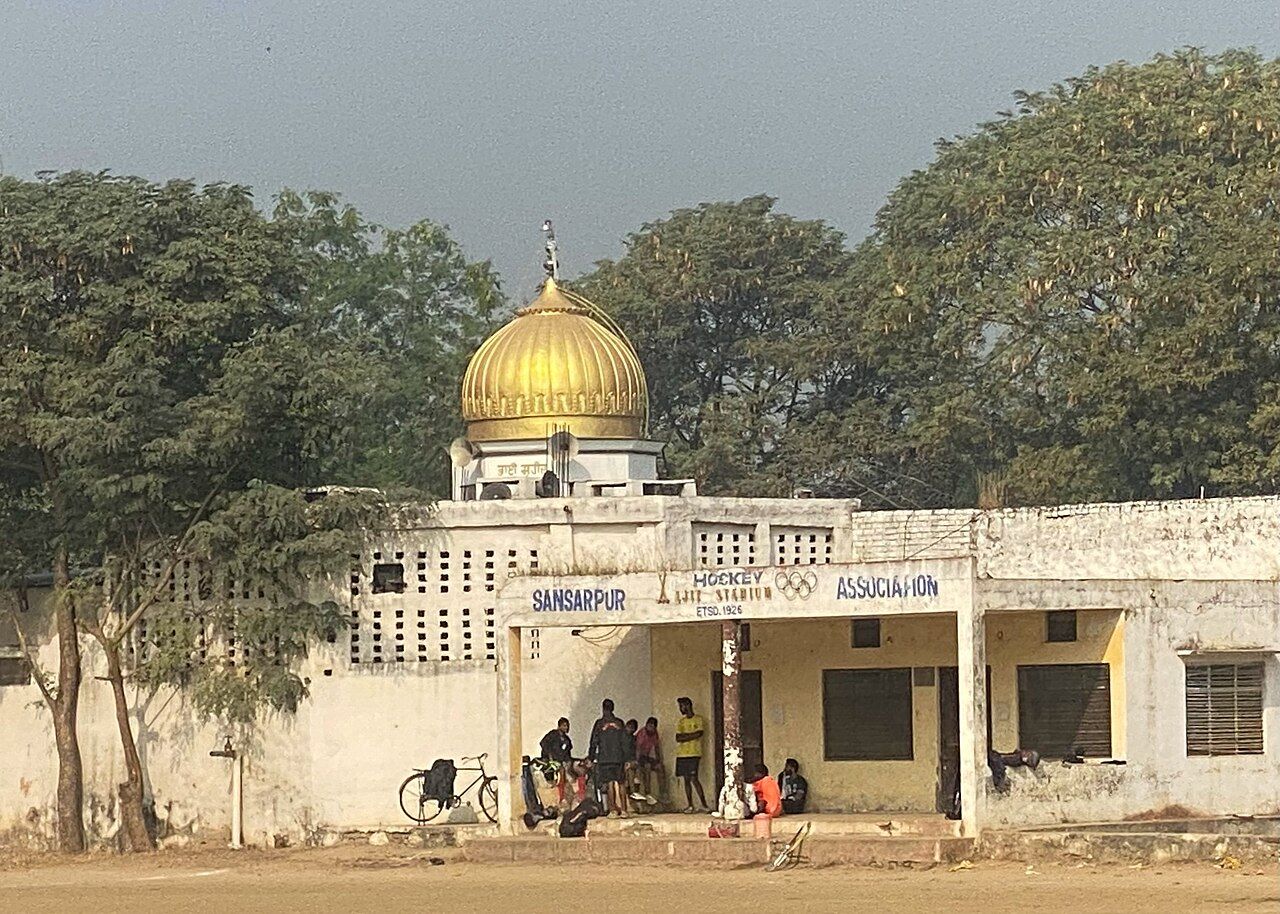
- Sansarpur village (Jalandhar) is called the "Mecca of Indian hockey" because it has produced many Olympic hockey players.
- Gatka (Sikh martial art) and kushti (wrestling) are seen at Hola Mohalla and many village fairs.
Folk games of girls and boysTap to open
| Folk game | Played by | How it is played |
|---|---|---|
| Thaal | Girls | Bouncing a cloth ball while singing a rhyme — "thaal thaal thaal…" |
| Kikli | Girls | Two girls hold crossed hands and whirl round, singing |
| Stapoo | Girls | Hopscotch — hopping on one leg in squares drawn on the ground |
| Kotla Chhapaki | Boys and girls | Players sit in a circle; one drops a twisted cloth (kotla) behind someone |
| Jand-Kharand; Bil Bachian di Maan | Children | Old village children's games — both are real Punjabi folk games in exam keys |
| Gulli Danda | Boys | Hitting a small wooden gulli with a stick (danda) |
| Khiddo Khundi | Boys | Rag ball and bent stick — the old form of hockey |
| Kabaddi | Young men | Circle style; raider (dhavi) and stopper (jaafi) |
Customs of birth and life
Rasmaan (rites) from birth to death.
| Rite (rasam) | Stage of life | What it means |
|---|---|---|
| Jathere puja | Pregnancy / lineage (garbh sanskar) | Worship of the family's ancestor-shrine (jathere) |
| Chhati | Birth — 6th day | Celebration on the sixth day after birth |
| Bahar vadhauna | After birth | Mother and new-born are taken out of the house for the first time |
| First Lohri | First winter after birth | Lohri distributed for a new-born son |
| Surma pauai | Wedding | Bhabhi puts surma (kohl) in the groom's eyes |
| Dastarbandi / Rasam Pagri | Death | After the father's death, the eldest son is tied a turban — he is now head of the family |
Wedding customs
From roka to mukalawa.
- Weeks beforeRoka, Shagan and Sahe-chitthi
The match is fixed (roka); shagan / kurmai (engagement) with chhuhare; the bride's side sends the letter with the wedding date (sahe-chitthi).
- Days beforeMaiyan and Vatna
Turmeric and gram-flour paste (vatna) is rubbed on bride and groom; the gana (sacred thread) is tied on their wrists (gana bannhna).
- Days beforeNanka Mel and Nanki Chhak
The mother's family (nanke) arrives with clothes and jewellery.
- Night beforeJaggo (also spelled Jaago)
Women carry a decorated brass pot (gagar) lit with lamps through the village, singing and dancing.
- Wedding morningGharoli (Ghara Gharoli)
The bhabhi fetches water in a decorated pitcher (gharoli) for the ritual bath.
- Wedding dayChura, Kalire, Sehra and Ghori
The bride's maternal uncle (mama) gives the chura and kalire. Before the baraat leaves, the sehra and kalgi are tied on the groom (sehrabandi), and the bhabhi puts surma in his eyes and gets a gift (surma pauai). Sisters braid the reins (vaag gundhna) and take vaag-pharai, and the groom mounts the mare (ghori charhna) while Ghorian are sung.
- Wedding dayJanj, Milni and Lavan
The baraat (janj) arrives; at the milni, relatives of equal status from both sides meet and embrace; Anand Karaj with four Lavan (or phere).
- After the lavanChhand and Jutti chupai
The groom recites chhand when the saliyan (sisters-in-law) ask; they also hide his shoes (jutti chupai).
- After the weddingDoli, Pani varna, Mukalawa
At the doli the bride throws rice back over her head. At the in-laws' door the mother-in-law circles water over her head and drinks it (pani varna). Then playful games of the couple (chhatian khedna, got kunala). Later comes the mukalawa — the bride's final send-off to her husband's home.
S-G-S-A: Suhag = bride's house, Ghorian = groom's house, Sithnian = teasing (S for "sting"), Alahunian = after death.
Death customs
- Women sit together and mourn (siyapa), singing alahunian, vain and keerne.
- In traditional Hindu rites, the Acharaj (Charaj) Brahmin, also called the Mahabrahmin, takes away the clothes, bedding and belongings of the dead after the funeral rites.
- After a father's death, the eldest son is given a turban — Dastarbandi or Rasam Pagri. He becomes the new head of the family.
- Among Sikhs, the rites end with the bhog and antim ardas (final prayer).
Dress, ornaments and food
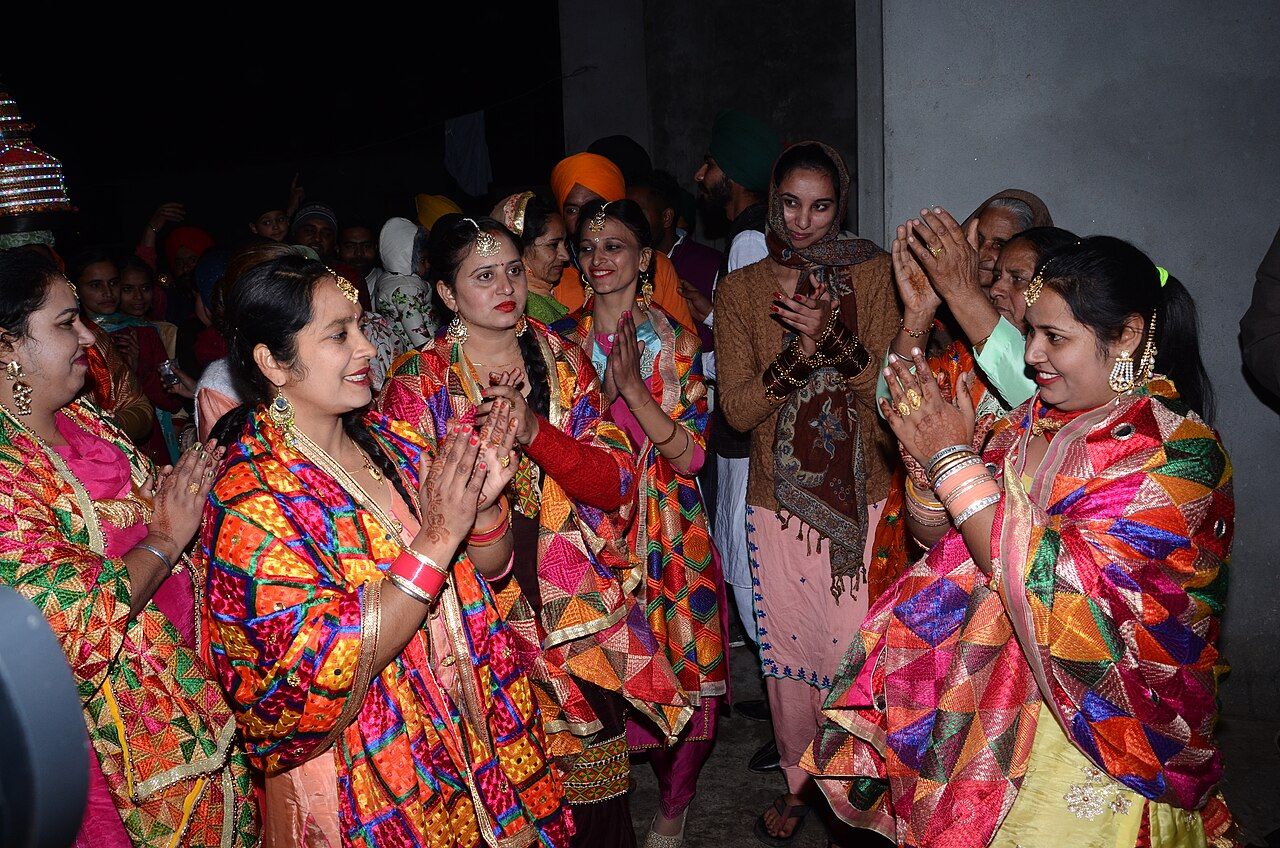
- Kurta with chadra or tehmat (tamba) — a cloth wrapped round the waist
- Pagg (turban), often with a turla; parna
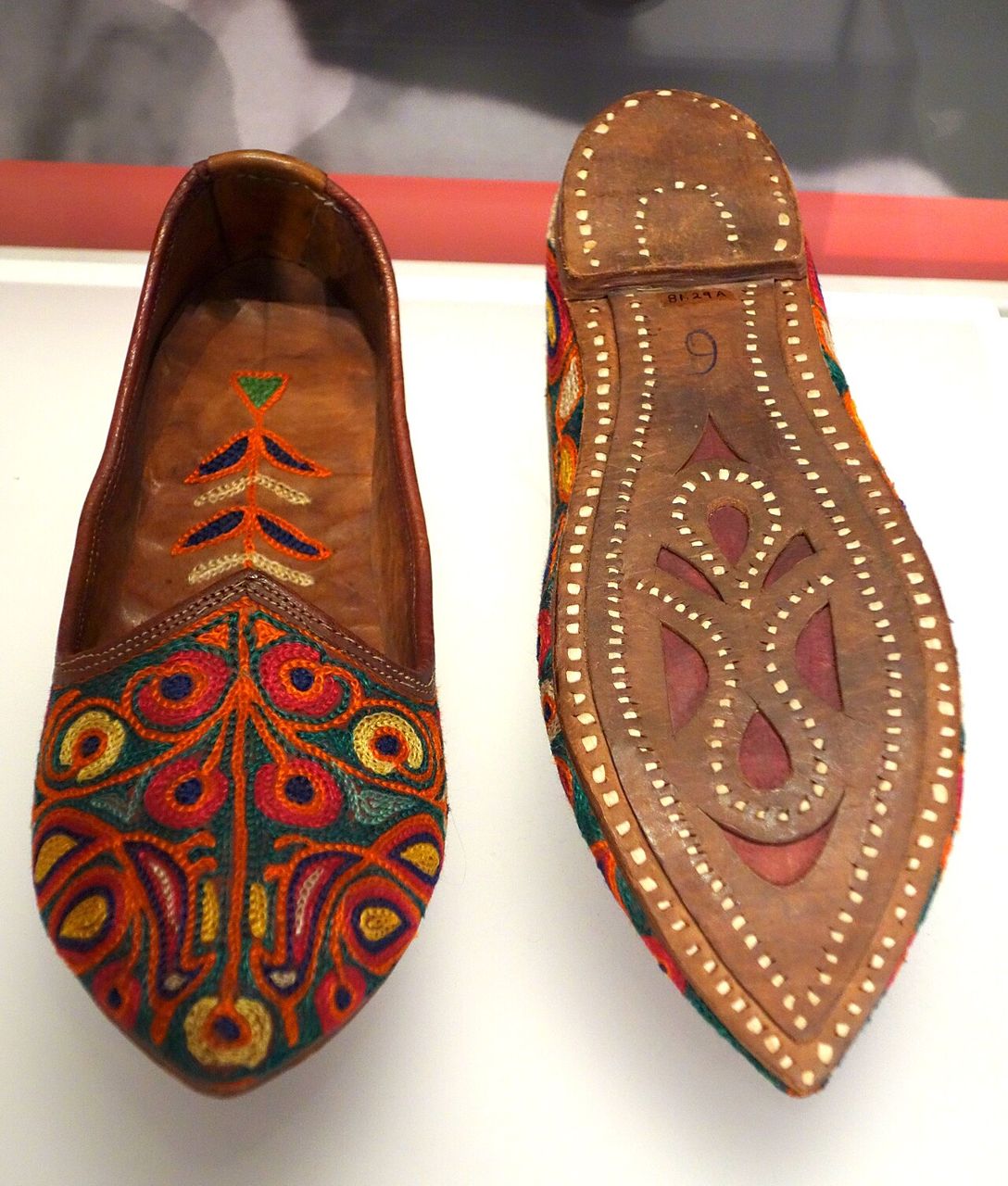
- Khussa or tille-wali jutti
- Loi or khes (shawl) in winter
- Kainthha — a neck ornament worn by men
- Salwar kameez — the Punjabi salwar suit
- Patiala salwar — heavily pleated, named after Patiala
- Chunni / dupatta, often a Phulkari
- Ghaggra (lehenga) in olden times
- Parandi — a tasselled braid for the hair
- Aarsi
- Thumb (hand) — a ring with a small mirror
- Hass (hansli)
- Neck — a stiff collar necklace
- Pauchi
- Wrist — an ornament, not a game
- Nath, laung, phuli
- Nose
- Dauni (dumni), barwata, kaska
- Forehead
- Sagi phul
- Head — at the hair parting
- Tagri
- Waist
- Mauli / Phumni
- Not ornaments of the forehead or nose: mauli is a sacred thread, phumni a tassel
All ornaments, head to feetTap to open
| Part of the body | Ornaments of Punjabi women |
|---|---|
| Head | Sagi phul (at the hair parting), tikka, chaunk, shingar patti |
| Forehead | Dauni / dumni, barwata, kaska |
| Ear | Bunde, waliyan, dandiyan, pipal pattiyan |
| Nose | Nath (ring), laung (clove-shaped stud), phuli (small stud), koka, machhli |
| Neck | Hass (hansli) — a stiff collar necklace; hamel, rani-haar, taveet, jugni |
| Arm and wrist | Chura, kangan, gajre, bazuband, pauchi (wrist) |
| Hand / fingers | Aarsi — thumb ring with a small mirror; chhaap (rings) |
| Waist | Tagri |
| Feet | Jhanjhran, panjeban, bichhuye |
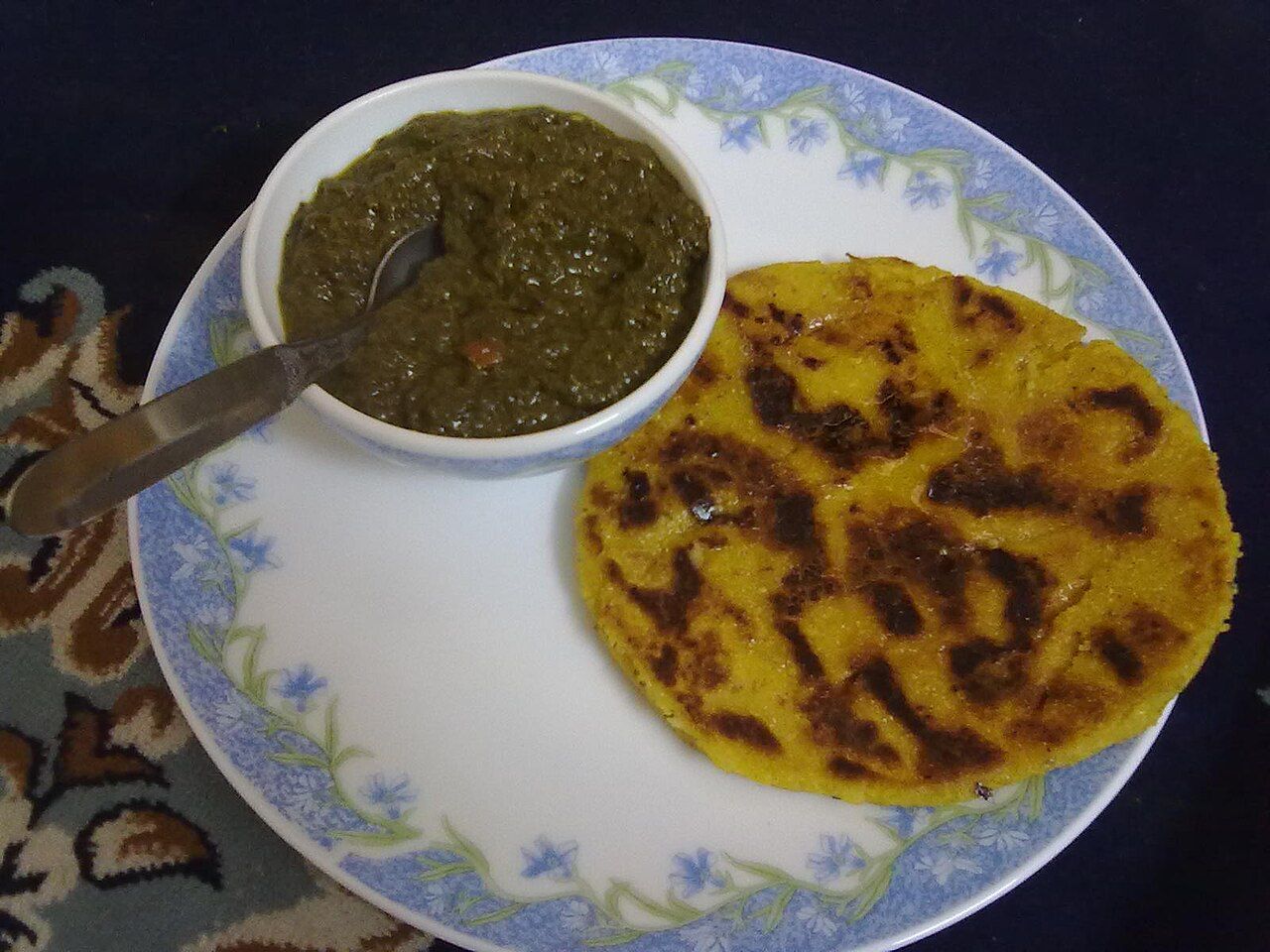
- Sarson da saag with makki di roti (mustard greens with maize bread) is the signature winter food of Punjab.
- Lassi, butter (makkhan), ghee and milk are part of everyday village food.
- Lohri brings til, rewri, gachak, peanuts and popcorn; Jarag brings gulgule and food cooked the day before.
- Amritsar is known for papad-warian.
Crafts of Punjab
Phulkari, juttis, durries and the craft towns.
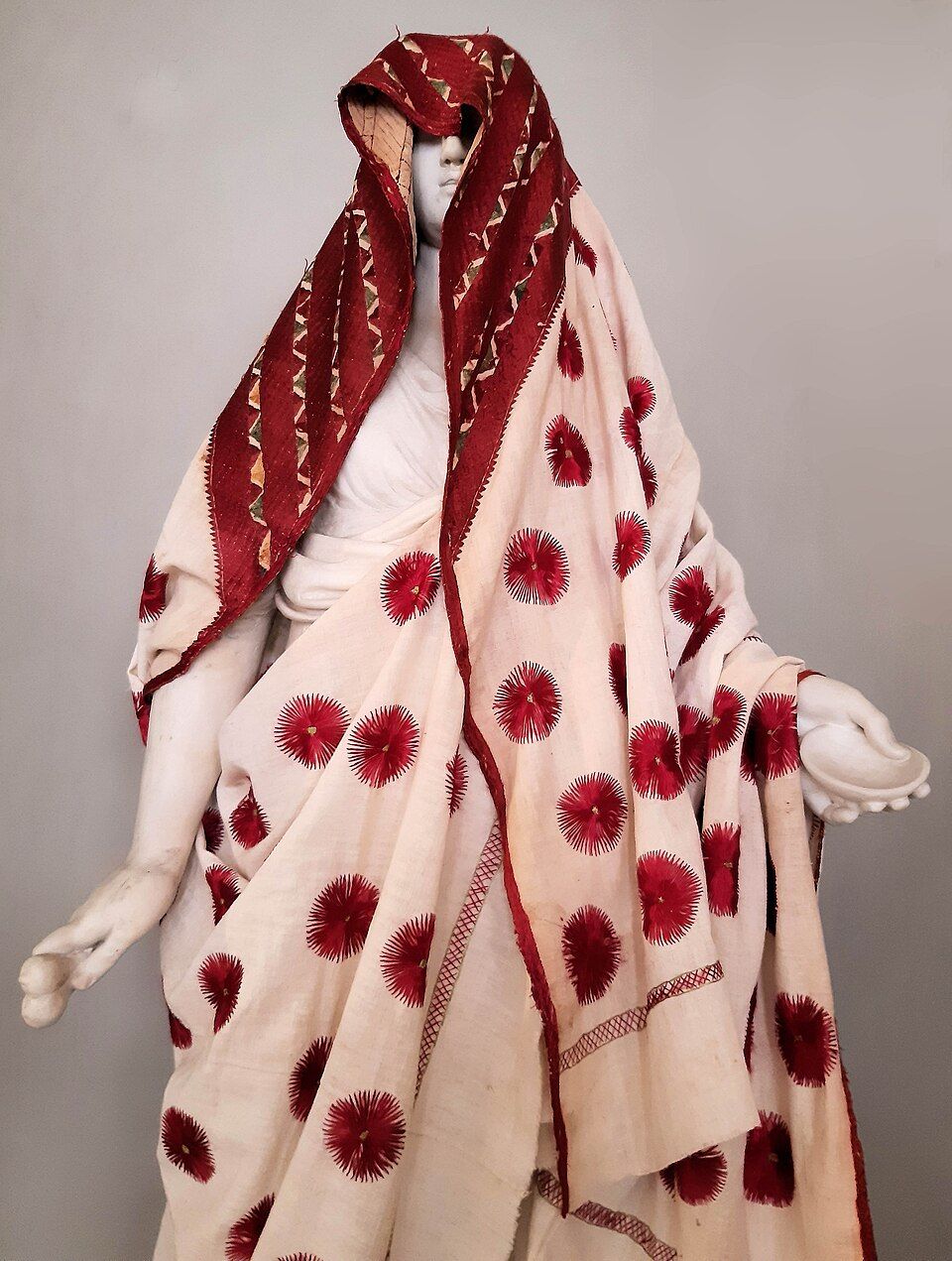
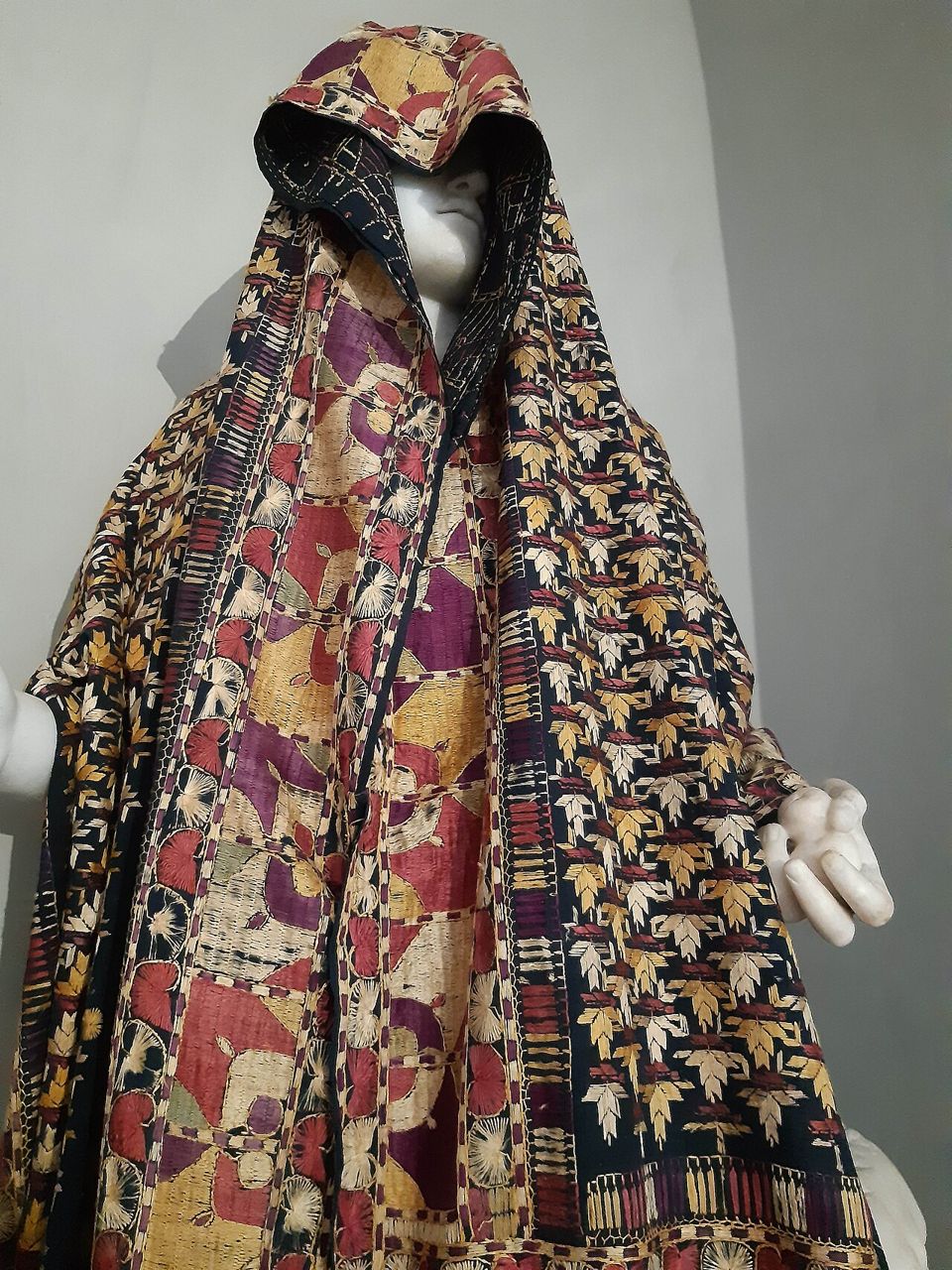
Phulkari ("flower work") is the folk embroidery of Punjab. Women stitch with untwisted silk floss (pat) on hand-spun khaddar, using the darn stitch from the back of the cloth. A piece covered fully with embroidery, so the cloth hardly shows, is called a Bagh (garden). Other types are Chope, Subar and Sainchi. Phulkari got a GI tag in 2011 (Punjab, Haryana, Rajasthan). A GI (Geographical Indication) tag is a legal label that ties a product to its home region.
Other crafts: states, craft towns, potteryTap to open
| Art / craft | State | Type |
|---|---|---|
| Phulkari | Punjab | Folk embroidery |
| Madhubani | Bihar | Folk painting |
| Basohli | Jammu and Kashmir | Miniature painting school |
| Pochampally | Telangana | Ikat (tie-dye) silk sarees |
| Kantha | West Bengal | Embroidery |
| Chikankari | Uttar Pradesh (Lucknow) | Embroidery |
| Craft / industry | Place in Punjab |
|---|---|
| Punjabi jutti, parandi, nala | Patiala; juttis also of Muktsar and Fazilka |
| Embroidery | Malerkotla |
| Wood inlay work (ivory or plastic on shisham wood) | Hoshiarpur |
| Furniture | Kartarpur (Jalandhar) |
| Sports goods; leather | Jalandhar |
| Hosiery and woollens; bicycles | Ludhiana |
| Foundry; farm implements | Batala |
| Shawls; brass and copper ware | Amritsar |
| Durries (hand-woven cotton rugs) | Village homes; Nakodar a weaving centre |
Gurcharan Singh, founder of Delhi Blue Pottery, is called the father of studio pottery in India. Do not confuse him with the painters S.G. Thakur Singh, Kirpal Singh and Manjit Bawa.
Common traps
- Basant Panchami = Magh, not Phagun or Chet. Teeyan = Sawan, not Vaisakh. Gugga Naumi = Bhadon, not Sawan. Lohri = Poh.
- Jarag (Chet, donkeys, Sheetla Mata) vs Chhapar (Bhadon, Gugga Pir) vs Roshni (Phagun, Jagraon) — all three are in Ludhiana district.
- Harballabh is in Jalandhar, not Pathankot or Ludhiana. Baba Sodal is also Jalandhar.
- Hola Mohalla is 3 days, at Anandpur Sahib, the day after Holi.
- Tikka = brother and sister (Kattak sudi 2, two days after Diwali). Karva Chauth = husband and wife. Shivratri = Phagun vadi 14, the night before masya.
- Ahoi — exam keys link it with Kali Mata; Sheetla Mata belongs to the Jarag fair.
- Kal Baisakhi is a storm in West Bengal — not a Punjab festival.
- Ornament traps: Mauli is a thread, Phumni is a tassel, Pauchi is a wrist ornament (not a game), Hass is for the neck, Aarsi is for the hand.
Quick revision
Read this the night before the exam.
- Desi year: Chet → Phagun
- Lohri: last night of Poh, bonfire
- Maghi: 1 Magh, Sri Muktsar Sahib
- Basant Panchami: Magh
- Hola Mohalla: Anandpur Sahib, 3 days, from 1701
- Baisakhi: 13/14 April; Khalsa 1699
- Teeyan: Sawan; Rakhri: Sawan puranmashi
- Gugga Naumi and Chhapar Mela: Bhadon
- Jarag Mela: Chet (March–April), donkeys
- Roshni Mela: Jagraon (Ludhiana)
- Baba Sodal Mela: Jalandhar
- Harballabh: Jalandhar, since 1875
- Kila Raipur: "Rural Olympics"
- Shaheedi Mela: 23 March, Hussainiwala
- Farid Aagman Purb: Faridkot
- Kapurthala Heritage Festival: Baba Jassa Singh
- Gharoli: wedding morning; Jaggo: night before
- Sithnian: teasing songs; Alahunian: death
- Charaj Brahmin: takes belongings of the dead
- Phulkari: folk embroidery; Bagh: full cover
Match: Diwali, Karva Chauth, Guru Nanak's Prakash Purab, Shivratri — with their tithis.
Show answer
Diwali – Kattak masya; Karva Chauth – Kattak vadi 4 (4th day of the dark half); Guru Nanak Prakash Purab – Kattak puranmashi; Shivratri – Phagun vadi 14, the night before masya (answer keys write "Phagun masya").
Which fair is famous for decorated donkeys, and where and when is it held?
Show answer
Jarag da Mela, at Jarag village in Ludhiana district, in Chet (March–April). It honours Sheetla Mata, whose vehicle is the donkey.
Which wedding ceremony is held on the morning of the wedding day?
Show answer
Gharoli — the bhabhi fetches water in a decorated pitcher for the ritual bath. Jaggo is the night before, and Ghori is when the groom mounts the mare.