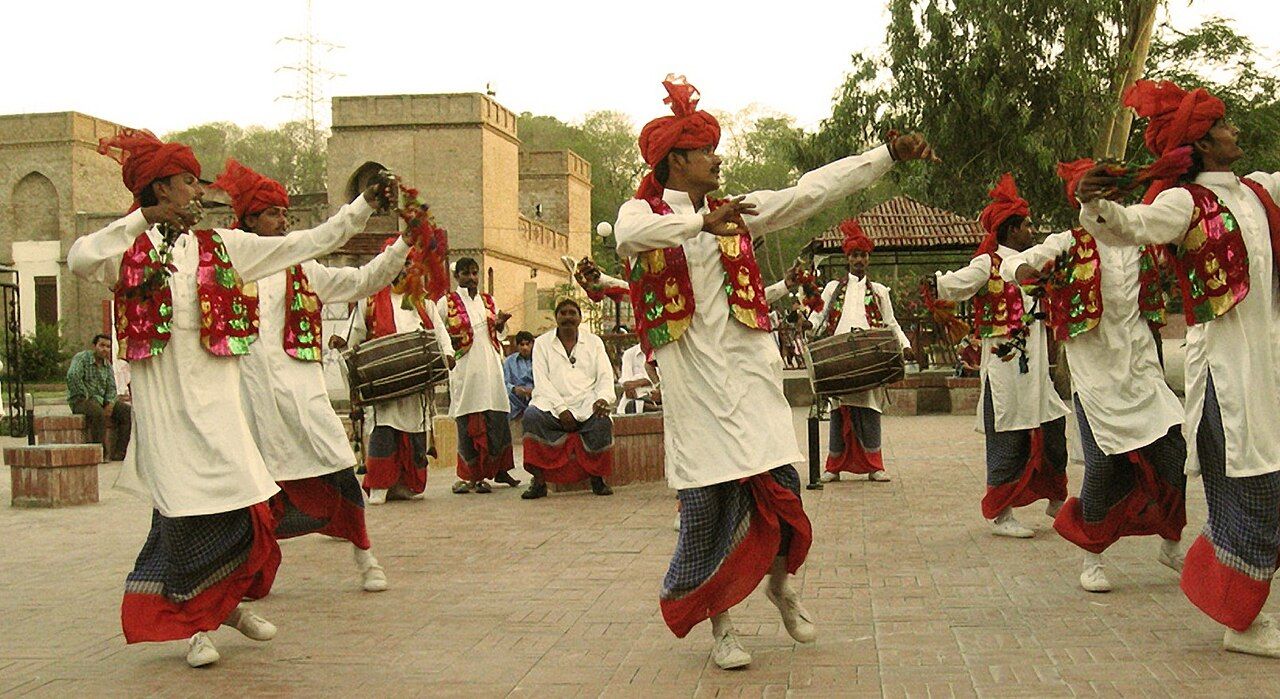
Punjab's folk dances follow simple rules. Men dance Bhangra, Jhumar, Luddi, Dhamal and Malwai Giddha. Women and girls dance Giddha, Sammi, Kikli and Jaago. Each dance has its own region and its own occasion — harvest, victory, a wedding or the rainy season. The same is true of folk songs: Suhag belongs to the bride's home, Ghodian to the groom's. This page teaches the dances, the instruments, the folk songs, the gharanas (schools of classical music) and the famous singers of Punjab.
Folk dances at a glance
Learn this table first. Most questions ask who performs a dance, where it comes from, or when it is danced.
| Dance (who dances it) | Region / occasion | Remember for |
|---|---|---|
| Bhangra (men) | Majha (began around Sialkot); harvest, Baisakhi | Most popular men's dance; dhol and boliyan |
| Jhumar (men) | Sandal Bar (Lyallpur–Jhang, now Pakistan) | Slow and graceful, in a circle round the dhol |
| Luddi (men) | Western Punjab; after any victory | Victory dance; swaying head, one hand behind the back |
| Malwai Giddha / Babeyan da Giddha (older men) | Malwa (Bathinda–Faridkot belt) | Boliyan with chimta, bugdu, sapp, kato |
| Dhamal (men) | Malwa; at shrines of Sufi pirs | Fast dhol, dance of joy |
| Julli (men — Sufi dervishes) | Khanqah (Sufi lodge) | Danced sitting down |
| Dankara (men) | Weddings | Celebration dance with sticks |
| Giddha (women) | All Punjab; Teeyan, weddings | Best-known women's dance; boliyan, clapping |
| Sammi (women) | Sandal Bar tribes | Women's dance of the Bar; named after the folk heroine Sammi |
| Kikli (girls) | All Punjab | Two girls cross arms, hold hands and whirl |
| Jaago (women) | Night before a wedding | Decorated pot (gagar) with lamps on the head |
Women's dances are G-S-K-J — "Girls Sing Kikli at Jaago": Giddha, Sammi, Kikli, Jaago. Every other folk dance in the table is a men's dance.
Bhangra: the men's harvest dance
The most popular folk dance of Punjabi men.
- Bhangra is the most popular dance of Punjabi men. It is full of energy, with jumps, raised arms and shoulder movements.
- It began in the Majha area, around Sialkot and Gujranwala (now in Pakistan).
- It is a harvest dance. It is danced when the wheat is cut, above all at Baisakhi (13/14 April).
- The main beat comes from the dhol. The chimta, bugdu (bugchu) and kato add rhythm. Dancers sing short couplets called boliyan.
- Dress: a kurta, a lungi (tehmat or chadra) tied round the waist, a sleeveless waistcoat called a jugi, and a turban with a turla (raised fan of cloth).
- Its women's counterpart is Giddha. Garba (Gujarat) and Kathak (a classical dance) are not Punjabi folk dances.
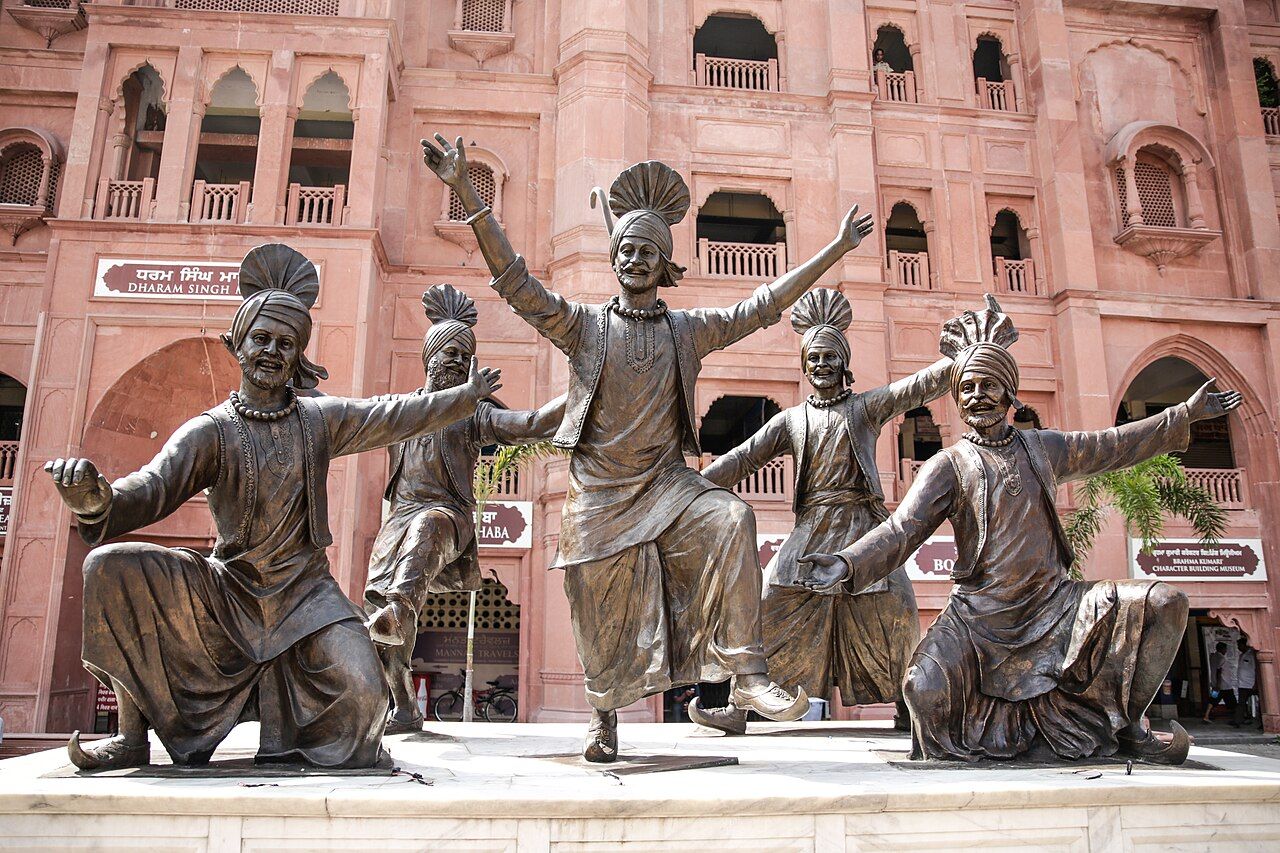
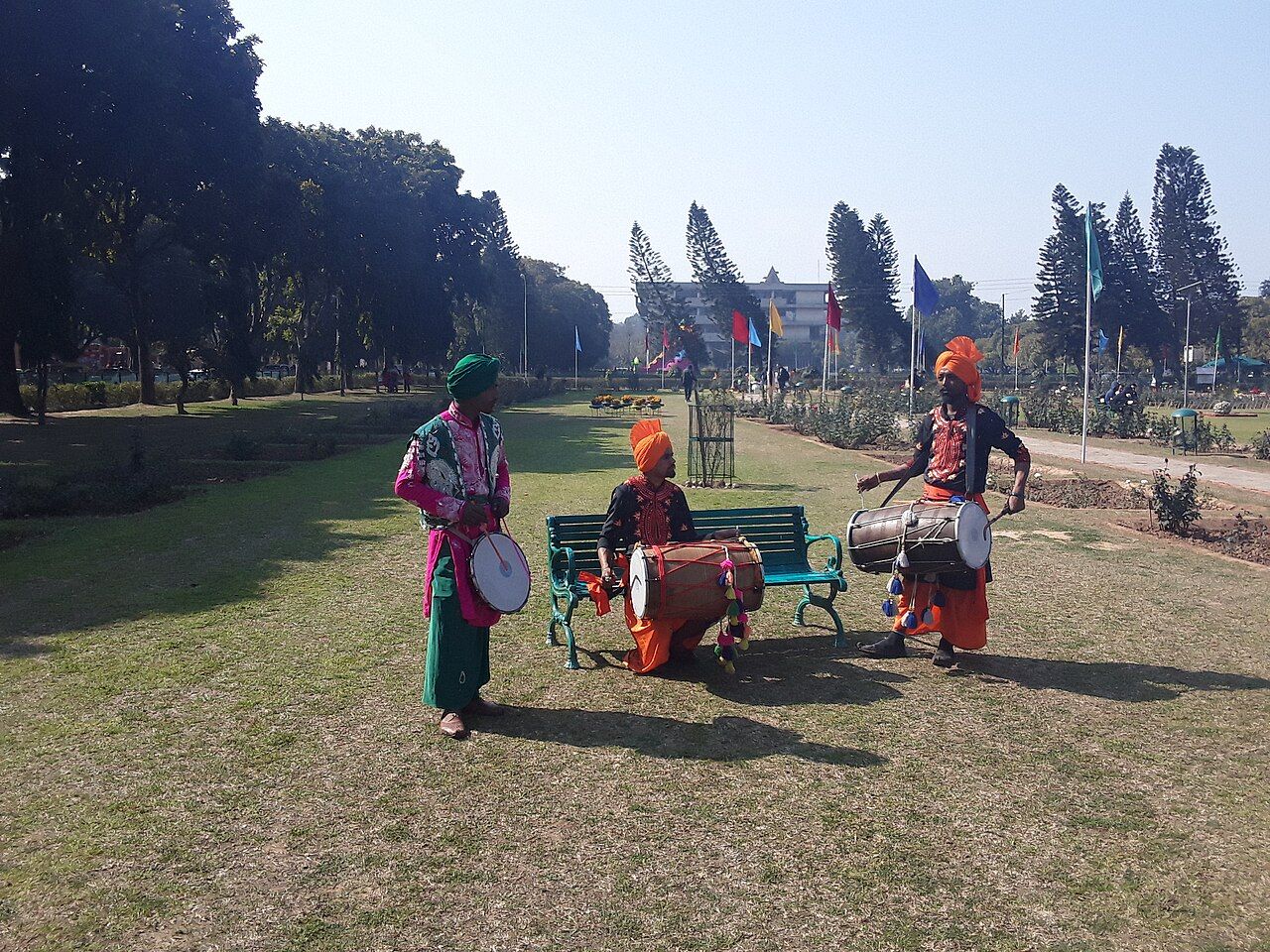
The men's Bhangra outfit = lungi + jugi. Kurta and lehenga, or lungi and T-shirt, are wrong options.
Giddha and women's dances
Giddha, Sammi, Kikli and Jaago.
- Giddha is the best-known folk dance of Punjabi women and girls. Women stand in a circle, clap in rhythm and sing boliyan. One or two step into the middle to act out the boli.
- Giddha is danced at weddings and above all at Teeyan. The beat comes from the dholki (small drum) and clapping.
- Sammi is the dance of the women of the Sandal Bar tribes. It is linked to the folk story of a beloved named Sammi.
- Kikli is danced by girls. Two girls cross their arms, hold hands and whirl round singing "Kikli kaleer di, pagg mere veer di". It is both a game and a dance.
- Jaago is danced on the night before a wedding. Women of the mother's family (nanka mel) carry a decorated brass pot (gagar) lit with lamps through the village, singing.
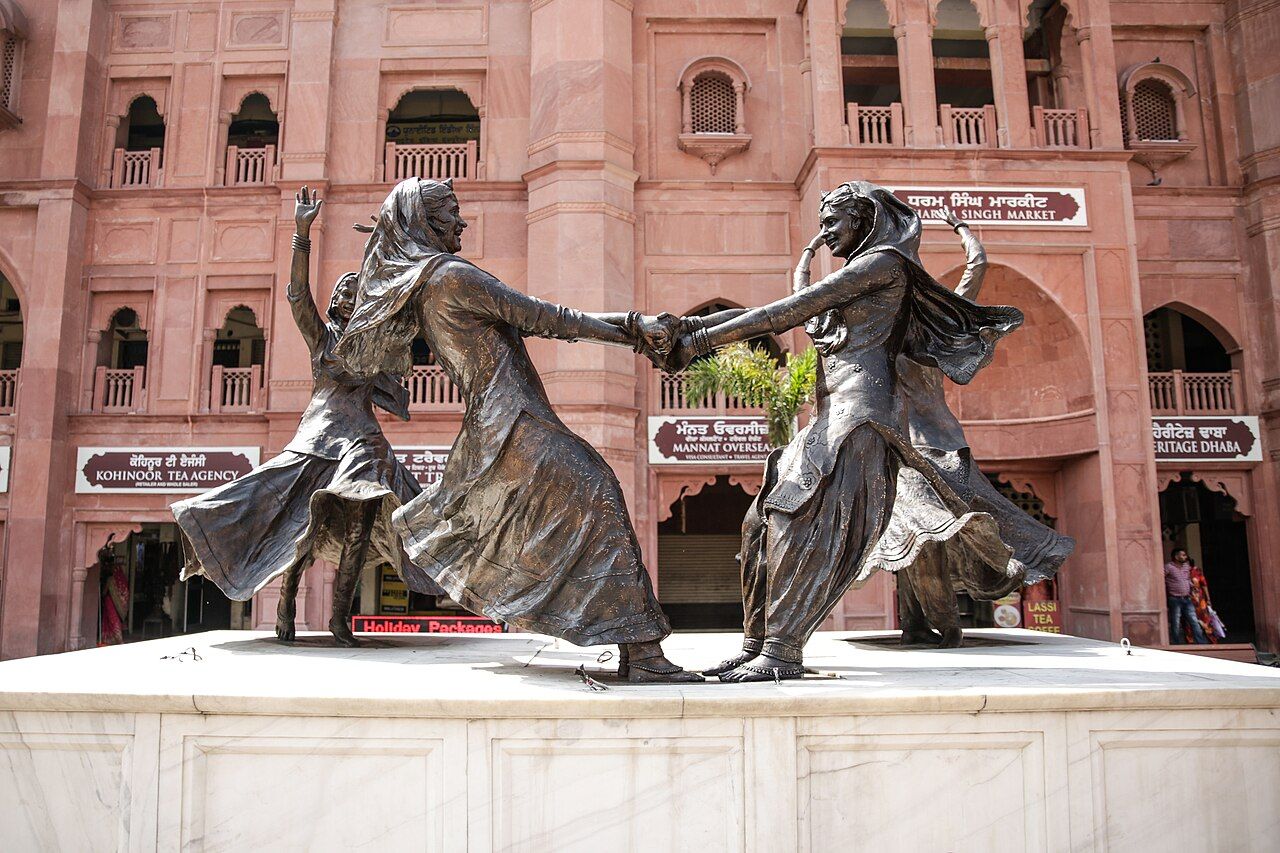
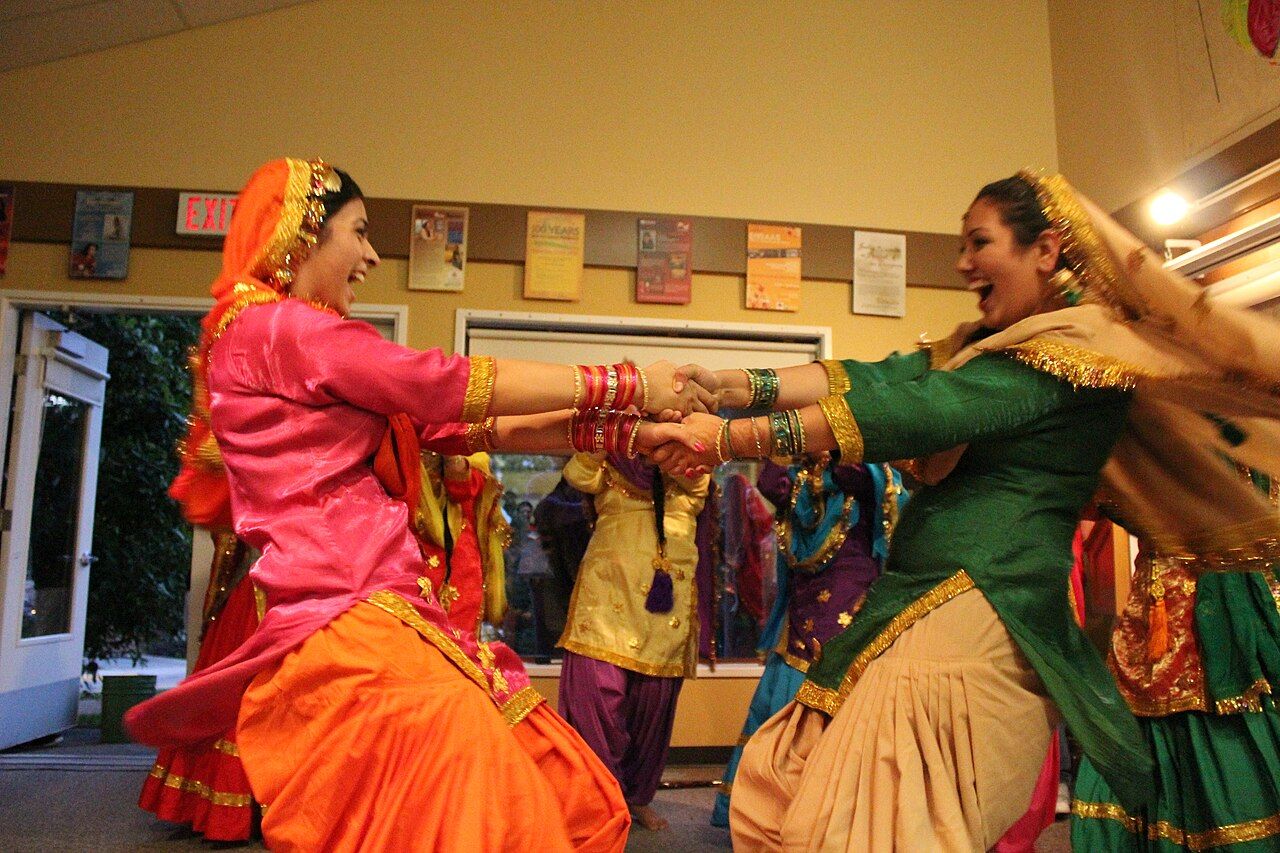
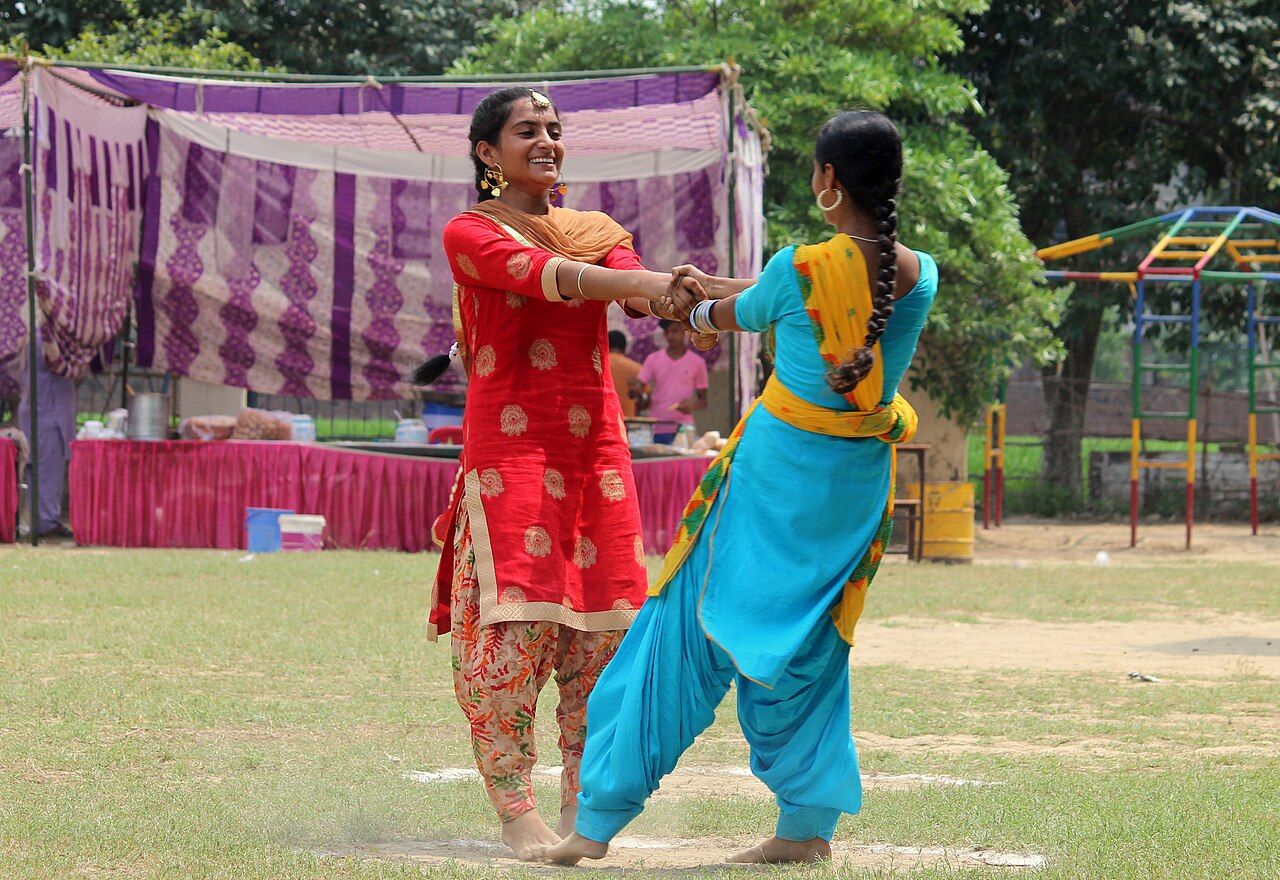
Teeyan (Teej) is the women's festival of the rainy season. It falls in the month of Sawan (July–August) and begins on the third day of the bright half of Sawan. Married daughters come back to their parents' homes, swing on peenghan (swings) and dance Giddha. More on festivals: fairs and festivals of Punjab.
Jhumar of Sandal Bar
A slow, graceful dance of men.
- Jhumar is a men's dance. It is slow and graceful, danced in a circle around the dhol.
- Its home is the Sandal Bar — the area around Lyallpur (Faisalabad) and Jhang, now in Pakistan.
- People who moved from there after 1947 brought Jhumar to Indian Punjab. It is still linked with Sandal Bar — not with Malwa, Majha, Doaba or Rajasthan.
- Jhumar has several styles, named after the river tracts where they grew.
| Style of Jhumar | Named after |
|---|---|
| Sutlej Jhumar | The Sutlej river tract |
| Beas Jhumar | The Beas river tract |
| Ravi Jhumar | The Ravi river tract; linked with Baba Pokhar |
| Chenab Jhumar | The Chenab river tract (western Punjab) |
| Sindhu Jhumar | The Indus (Sindhu) tract (western Punjab) |
| Multani Jhumar | The Multan area (western Punjab) |
A bar is a wide, dry, once-uncultivated tract between two rivers. The Sandal Bar lies between the Ravi and the Chenab, around Lyallpur and Jhang. It gave Punjab two dances: Jhumar (men) and Sammi (women).
Other men's dances
Luddi, Malwai Giddha, Dhamal, Julli and Dankara.
- Luddi is the victory dance of Punjab. Men dance it to celebrate a win — in wrestling, a contest or a battle, or any Punjabi's success in any field. Its mark is the swaying, snake-like movement of the head, with one hand behind the back and the other in front of the face.
- Malwai Giddha is also called Babeyan da Giddha (the old men's Giddha). It belongs to the Malwa region. Men sing boliyan and play the chimta, bugdu, sapp, kato and dhad.
- Dhamal is a men's dance of Malwa, danced at the shrines of Sufi pirs to a fast dhol beat.
- Julli is danced by Sufi dervishes (holy men), often sitting down, in a khanqah (Sufi lodge).
- Dankara is a men's celebration dance at weddings, danced with sticks.
- Luddi is a men's dance — never a song and never a women's dance.
- Malwai Giddha is danced by men of Malwa; plain Giddha is danced by women.
- Jhumar is a men's dance of Sandal Bar — not a women's dance, not a farming method and not an ornament.
- Kikli is for girls, not boys, married couples or professional dancers.
- None of these is a Punjabi folk dance: Garba (Gujarat), Bihu (Assam), Kathak (a classical dance), Gangaur (a festival of Rajasthan).
- Bhangra
- Men · harvest, Baisakhi (Majha)
- Giddha
- Women · Teeyan and weddings
- Jhumar
- Men · Sandal Bar, slow circle
- Sammi
- Women · Sandal Bar
- Luddi
- Men · after a victory; swaying head
- Malwai Giddha
- Older men · Malwa
- Kikli
- Girls · whirl in pairs
- Jaago
- Women · night before a wedding
- Julli
- Sufi dervishes · seated, in a khanqah
- Dhamal
- Men · Sufi shrines of Malwa
Words that are not dances
These words are often mixed up with dances in options.
| Word | What it really is |
|---|---|
| Stapoo (ਸਟਾਪੂ) | A children's game (hopscotch): boxes are drawn on the ground and a player hops on one leg, pushing a flat stone (theekri) |
| Sagi phul (ਸੱਗੀ ਫੁੱਲ) | A women's head ornament worn at the parting of the hair — not a flower |
| Jindua (ਜਿੰਦੂਆ) | A loving word for a dear one ("my life"), common in folk songs |
| Vain (ਵੈਣ) | Women's wailing at a death — not a dance |
Two more words that are not dancesTap to open
| Word | What it really is |
|---|---|
| Thaal (ਥਾਲ) | A girls' game of bouncing a ball while singing a rhyme |
| Pauchi (ਪੌਂਚੀ) | A wrist ornament |
Folk instruments of Punjab
Drums and rhythm makers, wind instruments and string instruments.
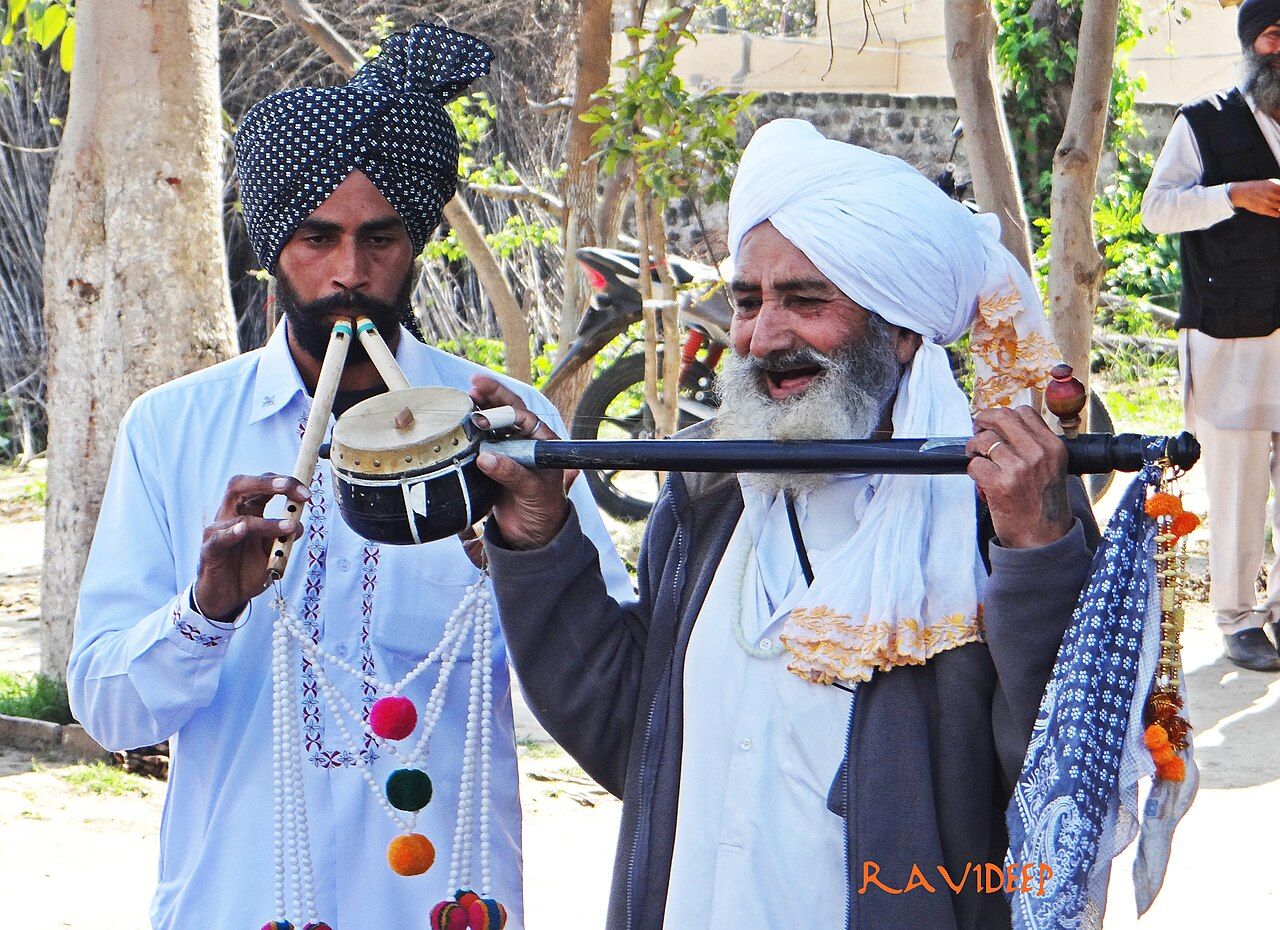
| Instrument | Type | What it is / where used |
|---|---|---|
| Dhol | Drum | Big two-sided drum; main beat of Bhangra, Jhumar, Luddi and fairs |
| Dholki | Drum | Small drum; Giddha and wedding songs |
| Dhad | Drum | Small hourglass-shaped hand drum (like a damru); played by Dhadi singers |
| Bugdu (Bugchu) | Rhythm | Hand-held drum sounded by pulling a string; Bhangra and Malwai Giddha |
| Chimta | Rhythm | Long iron tongs with jingles; Bhangra, Malwai Giddha |
| Algoza | Wind | A pair of wooden flutes played together |
| Tumbi | String | One-string instrument made famous by Lal Chand Yamla Jatt |
| Sarangi | String (bowed) | Played with a bow; goes with the dhad in Dhadi groups |
| Rabab | String (plucked) | Played by Bhai Mardana for Guru Nanak |
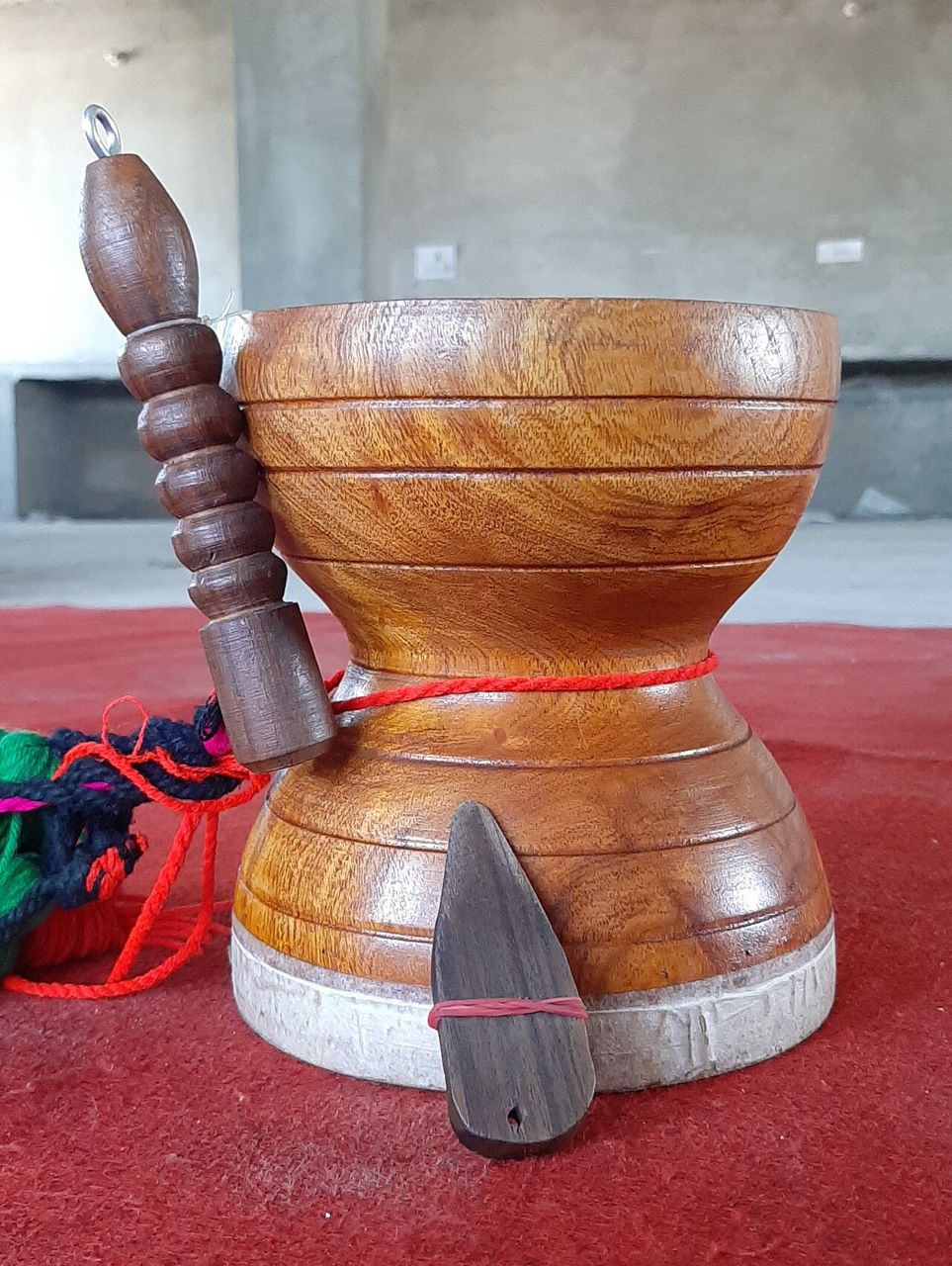
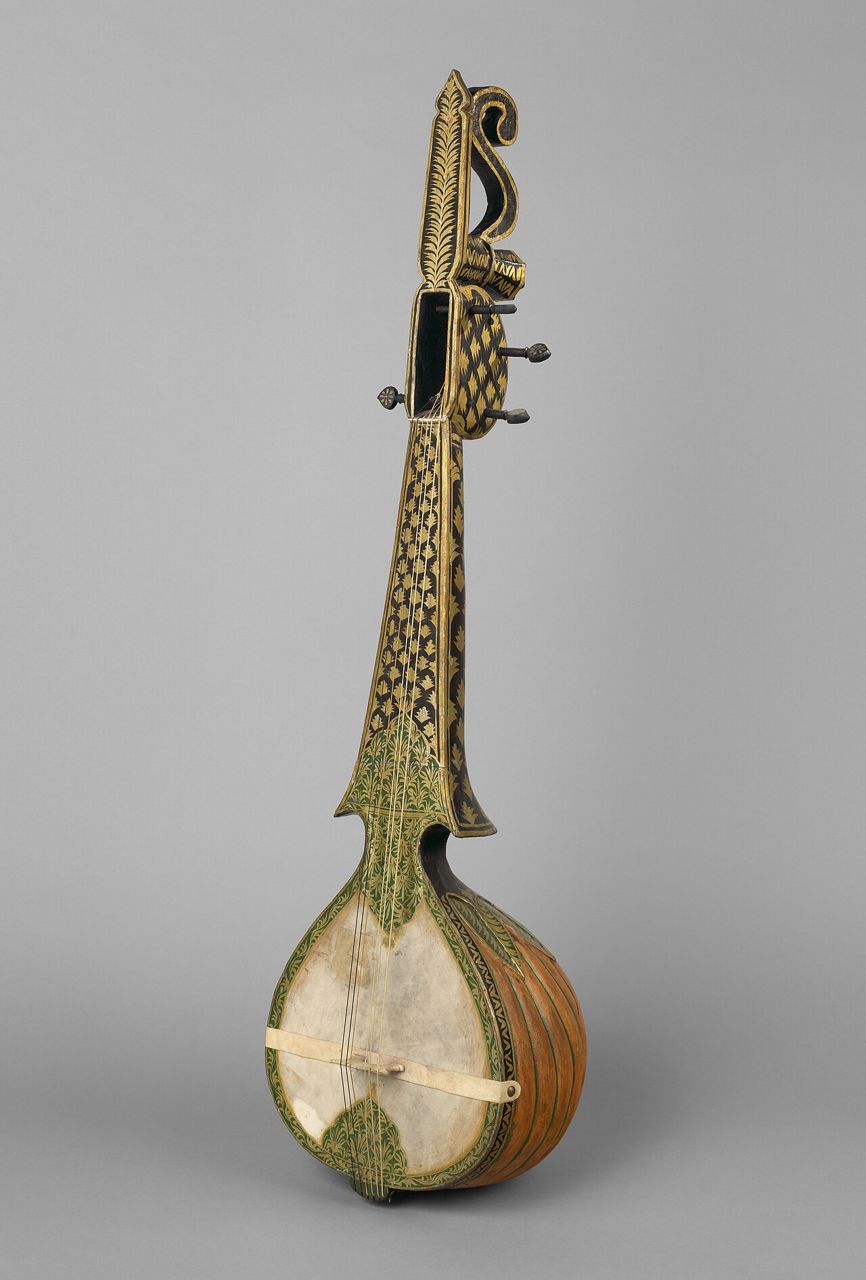
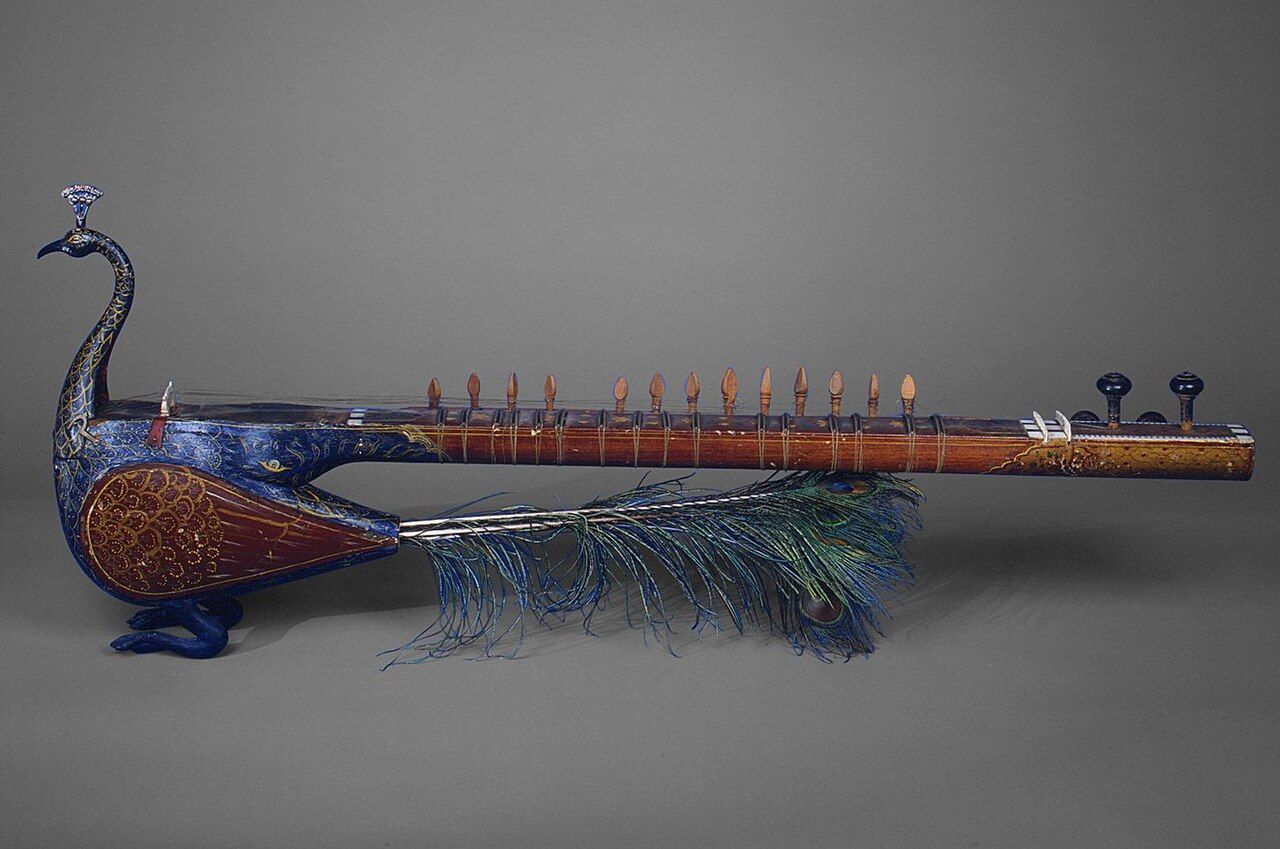
More instruments: Kato, Sapp, Been, Taus, Dilruba …Tap to open
| Instrument | Type | What it is / where used |
|---|---|---|
| Kato | Rhythm | Wooden squirrel (kato) on a stick that clacks; Bhangra |
| Sapp | Rhythm | Wooden folding lattice that opens and shuts with a clack |
| Gharha, Khartal | Rhythm | Earthen pot played by hand; wooden clappers |
| Bansuri / Vanjhli | Wind | Flute of shepherds — Ranjha's vanjhli |
| Been | Wind | Snake charmer's pipe |
| Iktara (Ektara) | String | One-string instrument of sadhus and jogis |
| Taus | String (bowed) | Peacock-shaped; designed by Guru Hargobind |
| Dilruba | String (bowed) | Lighter form of the taus, linked with Guru Gobind Singh |
Made the one-string tumbi famous in folk singing.
Played the rabab for Guru Nanak's hymns.
Designed this peacock-shaped string instrument.
A lighter form of the taus is linked with him.
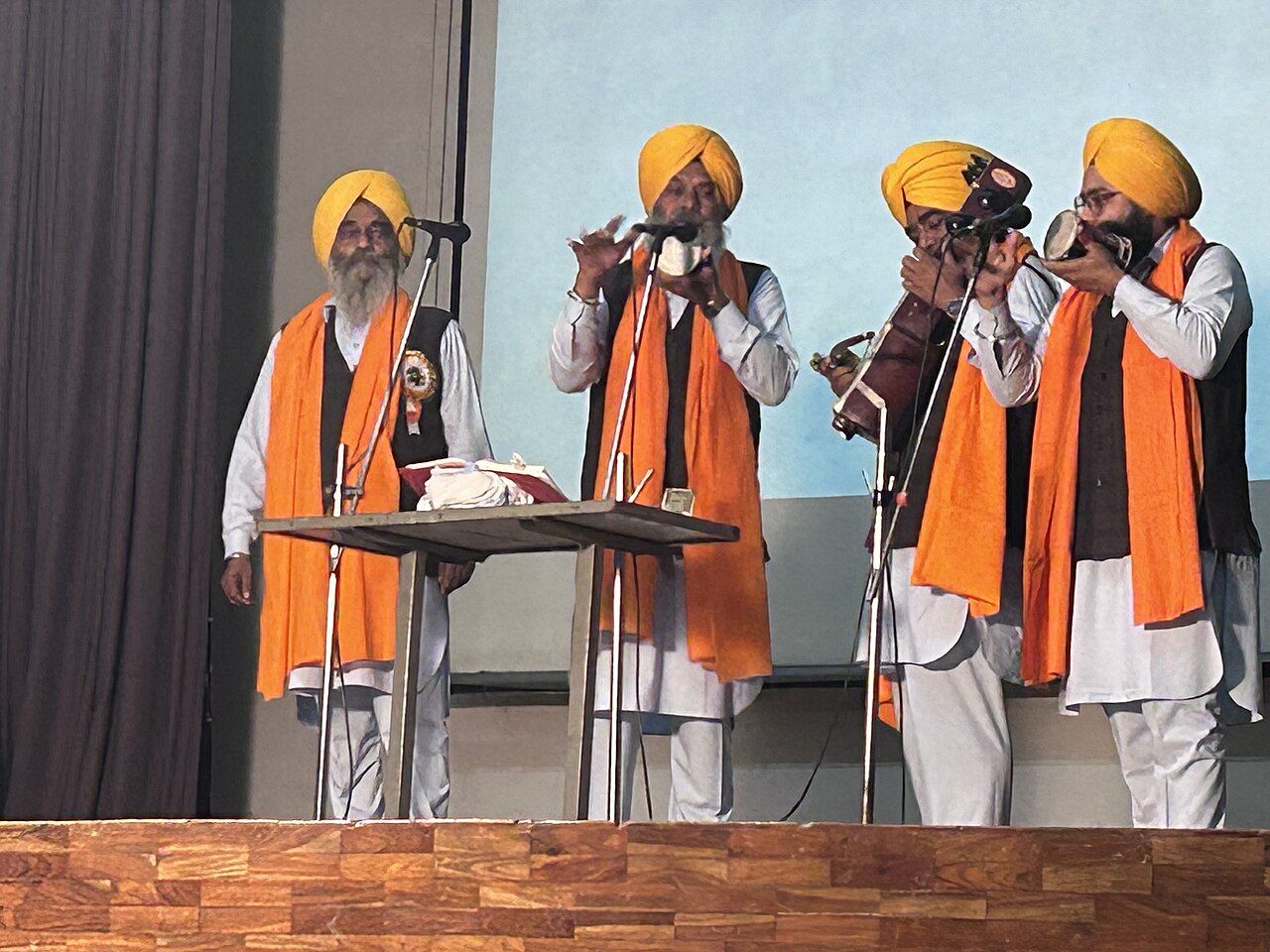
Sing vaars of Sikh heroes with these two.
The rabab is the national musical instrument of Afghanistan. In Punjab it is remembered as the instrument of Bhai Mardana, the Muslim companion of Guru Nanak Dev. His descendants, the rababis, sang Gurbani kirtan for generations.
AL-GO-za: "ALways GO in pairs" — the algoza is two flutes played together. Dhad → Dhadi: the drum gives the singers their name.
- Dhol
- Drum · main beat of Bhangra
- Dhad
- Drum (hourglass) · Dhadi singers
- Algoza
- Wind · a pair of wooden flutes
- Tumbi
- String (one string) · Lal Chand Yamla Jatt
- Rabab
- String (plucked) · Bhai Mardana; national instrument of Afghanistan
- Sarangi
- String (bowed) · goes with the dhad
- Chimta
- Rhythm · iron tongs with jingles
- Bugdu (Bugchu)
- Rhythm · sounded by pulling a string
- Taus
- String (bowed) · peacock shape; Guru Hargobind
- Dilruba
- String (bowed) · Guru Gobind Singh
Folk songs and occasions
Every ceremony has its own song. Questions ask whose side sings it, and when.
| Song (lok geet) | Sung by / when | Remember |
|---|---|---|
| Suhag (ਸੁਹਾਗ) | Women of the bride's home before her wedding and at her farewell | Requests to her father (babul) about her new home |
| Ghodian (ਘੋੜੀਆਂ) | Women of the groom's home | Praise the groom, his mare (ghodi) and his family |
| Sithniyan (ਸਿੱਠਣੀਆਂ) | Women of the bride's side, to the groom's party (baraat) | Teasing, joking songs, often at the wedding meal |
| Chhand (ਛੰਦ) | Recited by the groom, when his sisters-in-law ask | Short rhymed verses |
| Alahniyan (ਅਲਾਹੁਣੀਆਂ) | Women, after a death | Mourning songs; Guru Nanak's Alahniyan are in Raag Wadhans |
| Boliyan (ਬੋਲੀਆਂ) | Dancers in Giddha and Bhangra | Short couplets; one-line or long boliyan |
| Tappe (ਟੱਪੇ) | Majha and Pothohar | Very short song of two or three lines |
| Mahiya (ਮਾਹੀਆ) | Lovers' song | Three lines, the first one short |
More folk songs: Lori, Dhola, Jugni, Sadd, Vaar, Kafi …Tap to open
| Song (lok geet) | Sung by / when | Remember |
|---|---|---|
| Lori (ਲੋਰੀ) | Mother or grandmother | Lullaby to put a child to sleep |
| Dhola (ਢੋਲਾ) | Sandal Bar, Multan–Jhang area | Long song of love and separation |
| Jugni (ਜੁਗਨੀ) | Folk singers | Song with a spiritual colour |
| Sadd (ਸੱਦ) | In fields and open land | Sung loudly with a long note (hek) |
| Trinjhan songs | Girls spinning at the charkha together | Long songs of the spinning circle |
| Vaar (ਵਾਰ) | Dhadi singers | Ballad of brave warriors and heroes |
| Kafi (ਕਾਫ਼ੀ) | Sufi singers | Sufi lyric; started by Shah Hussain, made famous by Bulleh Shah |
Lohri falls on the last night of Poh (13 January). Children go from house to house singing "Sundar mundriye ho, tera kaun vichara, Dulla Bhatti wala". Dulla Bhatti was a Punjabi rebel of Akbar's time. Folk stories say he saved poor girls from being sold and arranged their marriages. So Dulla Bhatti is found in Lohri songs — not in Baisakhi, Bhangra or wedding songs.
A vaar is a ballad that praises brave warriors and heroes, many drawn from Sikh history. A Dhadi jatha (group of Dhadi singers) sings vaars to the dhad (small hourglass drum) and the sarangi.
Music festivals and gharanas
A gharana is a family school of classical music.
| Music festival / mela | Place | Key facts |
|---|---|---|
| Harivallabh Sangeet Sammelan | Devi Talab, Jalandhar | Held since 1875, in December; oldest festival of Hindustani classical music |
| Prof. Mohan Singh Memorial International Cultural Mela | Ludhiana (mostly at Punjab Agricultural University) | Honours the poet Prof. Mohan Singh; folk music, dance and literature; Jagdev Singh Jassowal was closely linked with it |
Gharanas and Gurbani musicTap to open
| Gharana | Base | Known for |
|---|---|---|
| Patiala gharana | Patiala | Khayal singing; founded by Ali Baksh and Fateh Ali ("Aliya-Fattu"); Bade Ghulam Ali Khan |
| Sham Chaurasi gharana | Sham Chaurasi, Hoshiarpur | Duet singing; Salamat Ali and Nazakat Ali |
| Talwandi gharana | Talwandi | Dhrupad singing |
Gurmat sangeet (the music of Gurbani) uses the 31 raags of the Guru Granth Sahib. The kirtan tradition of the rababis goes back to Bhai Mardana.
Famous singers of Punjab
Match the singer with the title or the instrument.
| Singer | Remember for |
|---|---|
| Lal Chand Yamla Jatt | Folk singer with the tumbi |
| Surinder Kaur | "Nightingale / Koel of Punjab"; Padma Shri 2006 |
| Prakash Kaur | Folk singer; Surinder Kaur's elder sister |
| Asa Singh Mastana | Folk singer; Padma Shri 1985 |
| Kuldeep Manak | "Kalian da Badshah" (king of kalis) |
| Gurmeet Bawa | Famous for her very long hek (held note); Padma Bhushan 2022 (after death) |
| Wadali Brothers — Puranchand and Pyarelal | Sufi singers from Guru Ki Wadali, Amritsar; Puranchand: Padma Shri 2005; Pyarelal died 2018 |
| Mohammed Rafi | Film singer, born at Kotla Sultan Singh (Amritsar) |
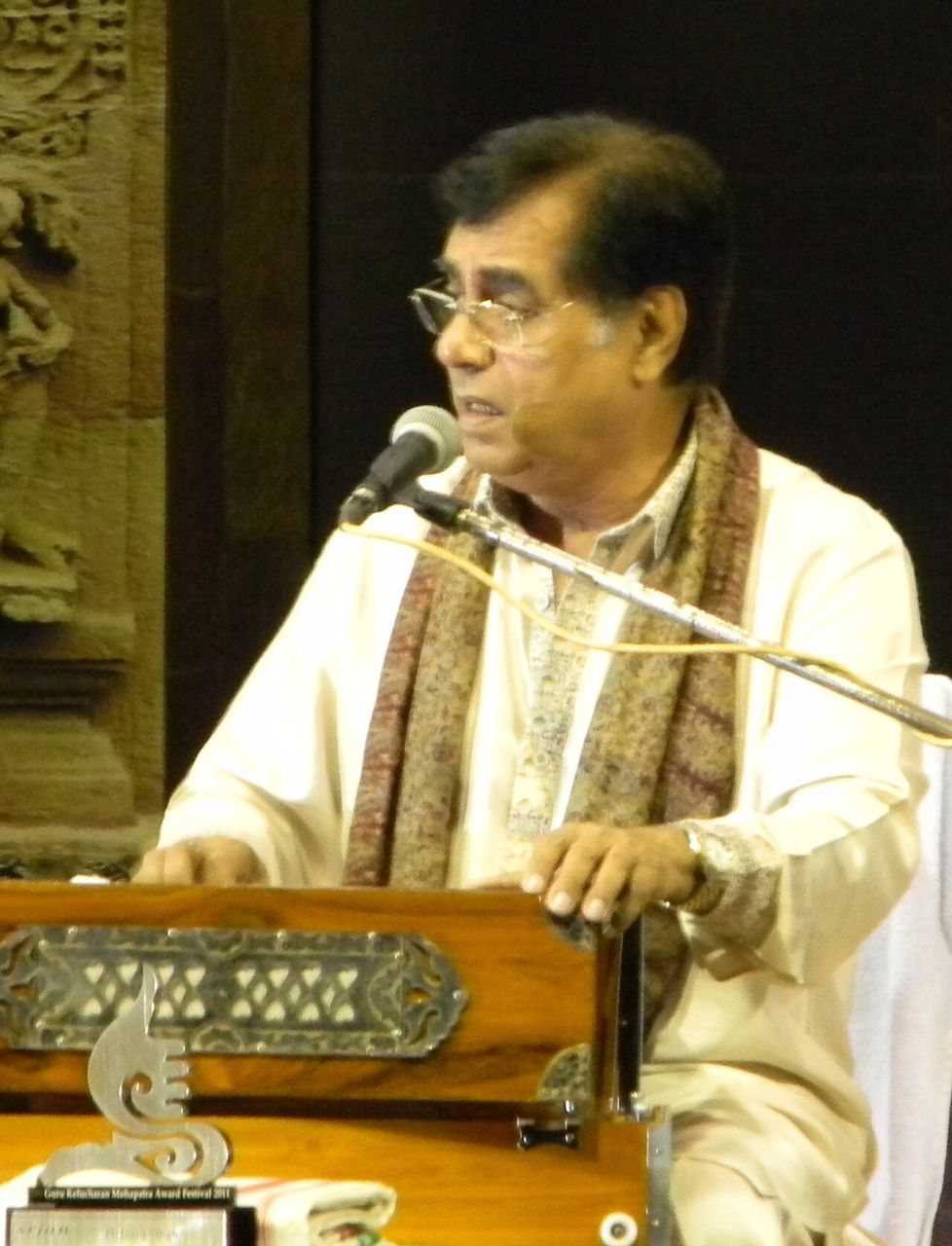
| Jagjit Singh | Ghazal singer |
| Gurdas Maan, Hans Raj Hans, Sardool Sikander, Amar Singh Chamkila | Popular Punjabi singers |
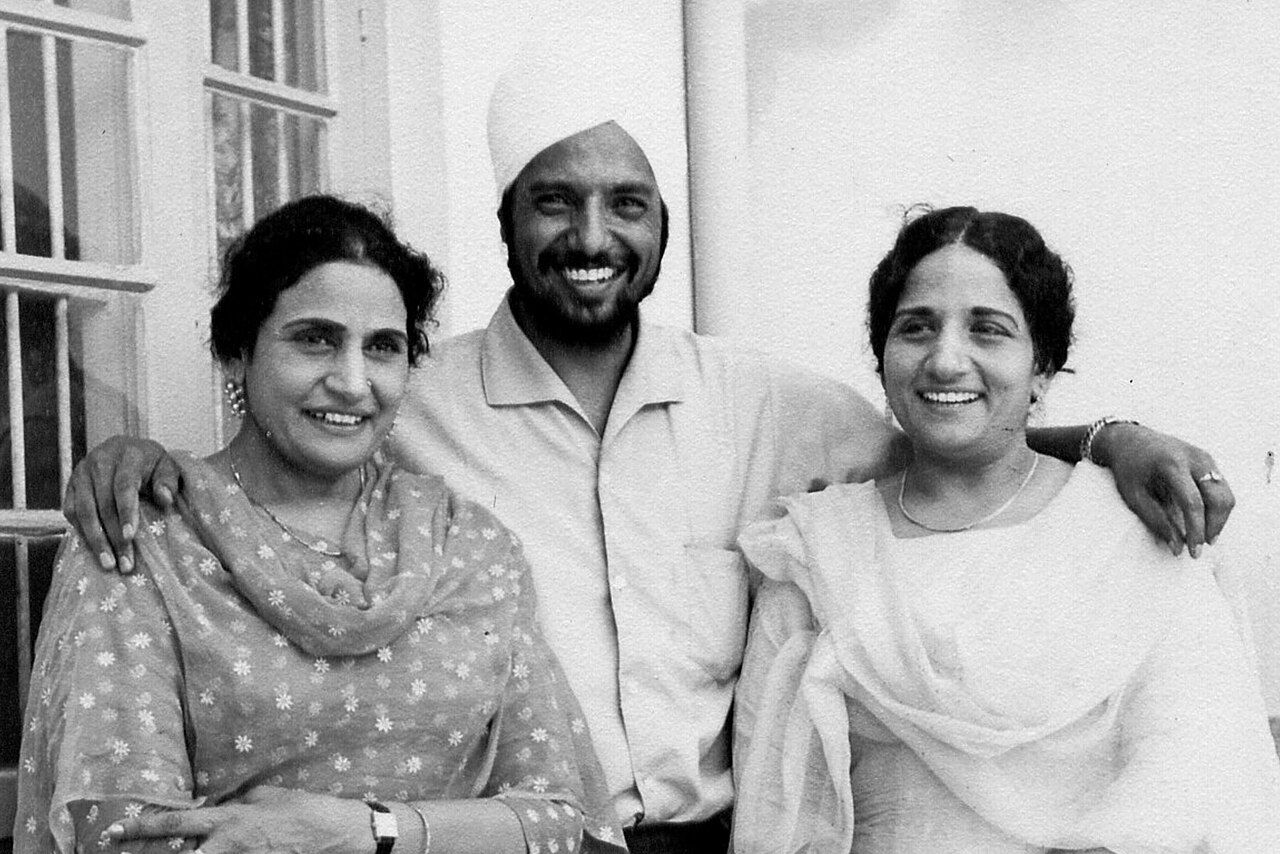
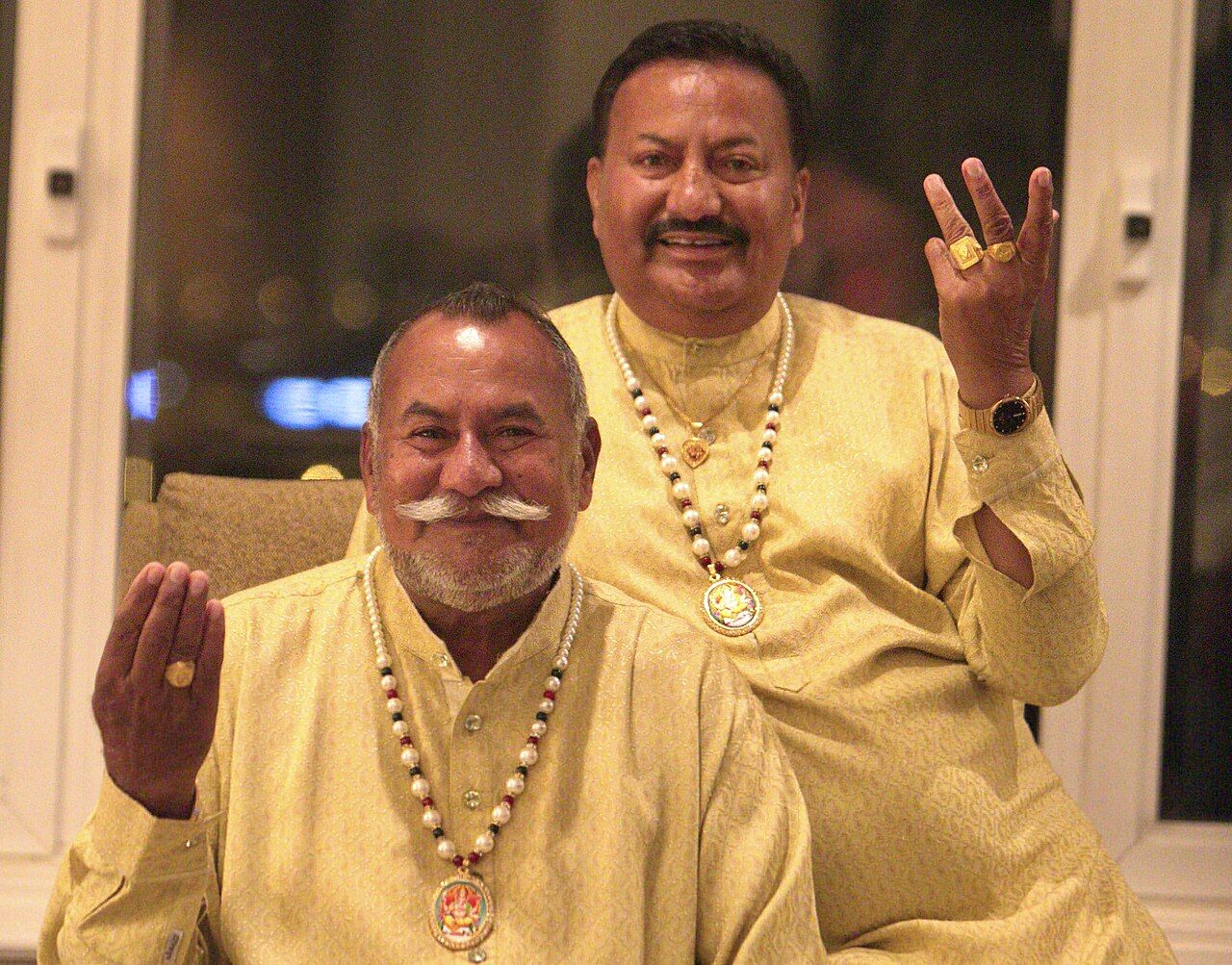
Puranchand Wadali belongs to the field of music. With his younger brother Pyarelal he sang Sufi kafis, shabads and bhajans, including the verses of Bulleh Shah. More Punjabi achievers: famous personalities of Punjab.
Common traps
- Jhumar → Sandal Bar, not Malwa or Majha. Malwai Giddha (Babeyan da Giddha) → Malwa.
- Ravi Jhumar is linked with Baba Pokhar. Sutlej, Beas, Chenab, Sindhu and Multani are other Jhumar styles; "Malwai Jhumar" is not one.
- Luddi = victory of any Punjabi in any field — not the end of winter, the monsoon or a wedding.
- Suhag = bride's side; Ghodian = groom's side; Sithniyan = bride's women tease the baraat; Alahniyan = mourning.
- Algoza is the pair of wooden flutes — not the sarangi, bugdu or rabab.
- Dhadis use the dhad (with the sarangi) — not the algoza, kato or bugdu.
- Patiala gharana = khayal; Sham Chaurasi = Hoshiarpur, duet singing.
- Harivallabh is at Jalandhar; the Prof. Mohan Singh Mela is at Ludhiana.
- Dulla Bhatti → Lohri songs. Teeyan → Sawan, the rainy season.
Quick revision
Read this the night before the exam.
- Most popular men's dance: Bhangra
- Bhangra dress: kurta, lungi (tehmat), jugi
- Best-known women's dance: Giddha
- Girls' pair dance: Kikli
- Jhumar and Sammi: Sandal Bar
- Jhumar is danced by: men
- Ravi Jhumar: Baba Pokhar
- Victory dance, swaying head: Luddi
- Babeyan da Giddha: Malwa (men)
- Julli: Sufi dervishes, seated
- Vain: mourning wail, not a dance
- Stapoo: children's game
- Sagi phul: head ornament
- Algoza: pair of wooden flutes
- Dhad: Dhadi singers
- Tumbi: Lal Chand Yamla Jatt
- Rabab: Bhai Mardana; national instrument of Afghanistan
- Sithniyan: bride's side teases the baraat
- Dulla Bhatti: Lohri songs
- Wadali Brothers: Sufi music, Guru Ki Wadali
Which Punjabi dance is danced by men to celebrate a victory, and how can you recognise it?
Show answer
Luddi. It celebrates the success of any Punjabi in any field. Its mark is a swaying, snake-like movement of the head, with one hand behind the back.
Which folk songs are sung by the bride's side, and which by the groom's side?
Show answer
Bride's side: Suhag, and Sithniyan (teasing the baraat). Groom's side: Ghodian. Alahniyan are mourning songs, not wedding songs.
Name the region of Jhumar and two of its styles.
Show answer
Jhumar is a men's dance of Sandal Bar (now in Pakistan). Its styles are named after river tracts — for example Ravi Jhumar (Baba Pokhar), Sutlej, Beas, Chenab and Multani Jhumar.