- Tap a name or a shape on the map
- Or choose from the list
- Use + and − to zoom, drag to move
District and state boundaries: © OpenStreetMap contributors (ODbL). Rivers: Natural Earth and OpenStreetMap. Photos are from Wikimedia Commons; each photo carries its credit.
The Sutlej is the longest and divides Doaba from Malwa. The Beas divides Majha from Doaba and joins the Sutlej at Harike. The Ravi runs along the north-west edge and the border with Pakistan. Their ancient names are Shatadru, Vipasha and Parushni.
The five rivers at a glance
The five rivers that give Punjab its name.
| River | Ancient name | Where it rises | Flows in Indian Punjab? |
|---|---|---|---|
| Sutlej | Shatadru | Near Rakas Tal, Tibet | Yes |
| Beas | Vipasha | Beas Kund near Rohtang Pass, Himachal Pradesh | Yes. It flows wholly in India |
| Ravi | Parushni | Kullu hills near Rohtang, Himachal Pradesh | Yes, along the north-west border |
| Chenab | Asikni | Lahaul, Himachal Pradesh, where the Chandra and the Bhaga meet | No. Jammu and Kashmir, then Pakistan |
| Jhelum | Vitasta | Verinag spring, Kashmir | No. Kashmir, then Pakistan |
Rivers of Punjab
The Sutlej, the Beas and the Ravi flow all year. The Ghaggar flows only in the rainy season.
| Rivers of Punjab | What to remember |
|---|---|
| Five rivers of the name | Sutlej, Beas, Ravi, Chenab and Jhelum. The Chenab and the Jhelum now flow in Pakistan |
| Ancient names (PYQ) | Sutlej: Shatadru. Beas: Vipasha. Ravi: Parushni |
| Meeting point | The Beas joins the Sutlej at Harike |
| Jhelum (PYQ) | Joins the Chenab |
| Into the Indus (PYQ) | The joined rivers meet the Indus at Mithankot in Pakistan |
| Dead river (PYQ) | The Ghaggar |
| Dams (PYQ) | Sutlej: Bhakra. Beas: Pong. Ravi: Ranjit Sagar |
Sutlej
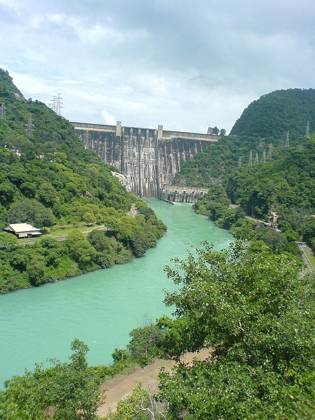
The Sutlej is the main river of Punjab. It divides Doaba from Malwa.
| Sutlej | What to remember |
|---|---|
| Rises | Near Rakas Tal, close to Lake Mansarovar in Tibet |
| Enters India | Near Shipki La in Himachal Pradesh |
| Enters Punjab (PYQ) | Near Nangal |
| Dams (PYQ) | Bhakra Dam (reservoir Gobind Sagar) and Nangal Dam |
| Canal (PYQ) | The Sirhind Canal leaves it at Rupnagar (Ropar) |
| Divides (PYQ) | Doaba from Malwa |
| Meets the Beas | At Harike |
| Type (PYQ) | An antecedent river, older than the Himalayan uplift |
| Headworks | Ropar, Harike and Hussainiwala |
Beas
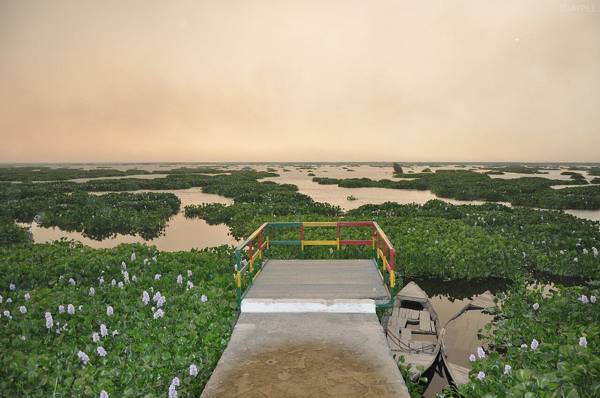
The Beas divides Majha from Doaba and ends at Harike, where it joins the Sutlej.
| Beas | What to remember |
|---|---|
| Rises | At Beas Kund near Rohtang Pass, Himachal Pradesh |
| Dam (PYQ) | Pong Dam (Maharana Pratap Sagar), 1974 |
| Divides (PYQ) | Majha from Doaba |
| Ends | Joins the Sutlej at Harike |
| Within India | The only one of the five rivers that flows wholly in India |
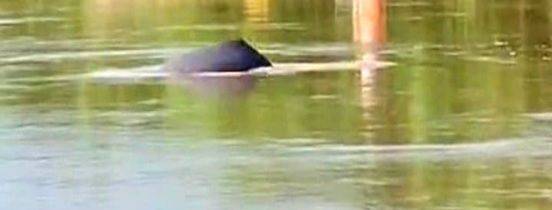
| Wildlife | Beas Conservation Reserve: Indus river dolphin and gharial |
| Link | Beas-Sutlej Link (1977) carries Beas water to Gobind Sagar |
Ravi
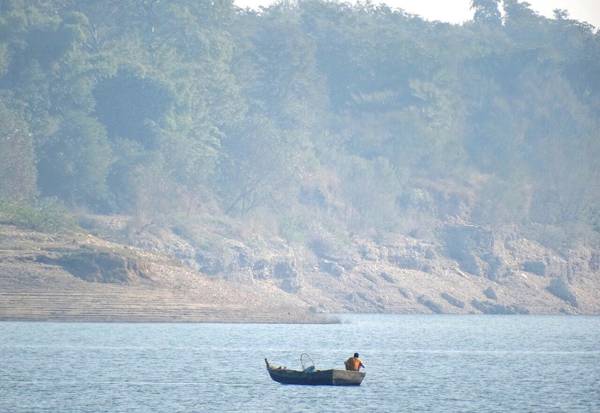
The Ravi flows along the north-west edge of Punjab and for a long stretch along the border with Pakistan.
| Ravi | What to remember |
|---|---|
| Rises | In the Kullu hills near Rohtang, Himachal Pradesh |
| Ancient names (PYQ) | Parushni and Iravati |
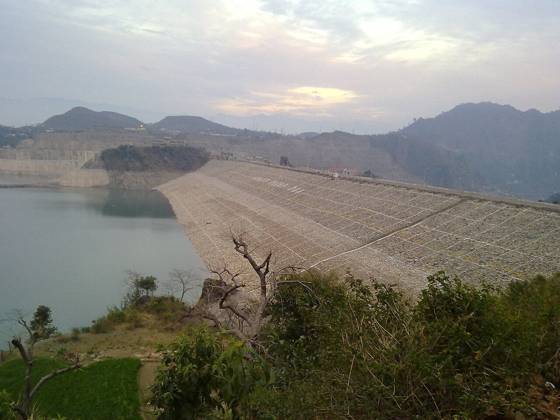
| Dam (PYQ) | Ranjit Sagar (Thein) Dam in Pathankot district, commissioned in 2000 |
| Headworks | Madhopur: the Upper Bari Doab Canal starts here |
| Fort (PYQ) | Shahpur Kandi Fort stands on its bank |
| Region (PYQ) | Western edge of Majha |
Ghaggar
The Ghaggar comes down from the Shivalik hills and flows only in the rains. It dries up in the sands of Rajasthan.
| Ghaggar | What to remember |
|---|---|
| Type | Seasonal (non-perennial) |
| Called (PYQ) | The dead river |
| Course | Himachal Pradesh, Punjab, Haryana and Rajasthan |
| Its plain (PYQ) | The alluvial plain it forms in south-east Punjab is called the Naili |
| Does not reach the sea | It is lost in the desert sands |
Quick questions
The questions exams ask most often, with short answers.
| Question | Answer |
|---|---|
| How many rivers flow through Punjab? | Three flow all year: the Sutlej, the Beas and the Ravi. The Ghaggar flows only in the rainy season. |
| Which are the five rivers of Punjab? | The Sutlej, Beas, Ravi, Chenab and Jhelum. The Chenab and the Jhelum now flow in Pakistan. |
| Which is the longest river of Punjab? | The Sutlej. |
| Where does the Beas join the Sutlej? | At Harike. |
| What is the ancient name of the Sutlej? | Shatadru. |
| What is the ancient name of the Beas? | Vipasha. |
| What is the ancient name of the Ravi? | Parushni. |
| Which river is called the dead river? | The Ghaggar. |
| Which river separates Malwa and Doaba? | The Sutlej. |
| On which river is Bhakra Dam? | The Sutlej. Its reservoir is Gobind Sagar. |
- How many rivers flow through Punjab?
- Three flow all year: the Sutlej, the Beas and the Ravi. The Ghaggar flows only in the rainy season.
- Which are the five rivers of Punjab?
- The Sutlej, Beas, Ravi, Chenab and Jhelum. The Chenab and the Jhelum now flow in Pakistan.
- Which is the longest river of Punjab?
- The Sutlej.
- Where does the Beas join the Sutlej?
- At Harike.
- What is the ancient name of the Sutlej?
- Shatadru.
- What is the ancient name of the Beas?
- Vipasha.
- What is the ancient name of the Ravi?
- Parushni.
- Which river is called the dead river?
- The Ghaggar.
- Which river separates Malwa and Doaba?
- The Sutlej.
- On which river is Bhakra Dam?
- The Sutlej. Its reservoir is Gobind Sagar.
- Geography of PunjabArea, borders, relief, soils and climate, with the full map.Open →
- Doabs of PunjabBist, Bari, Rachna, Chaj and Sind Sagar on one map.Open →
- Districts of PunjabAll 23 districts with facts and audio, and Chandigarh.Open →
- Canals and Dams of PunjabSirhind Canal, headworks, Bhakra, Pong and Ranjit Sagar.Open →
- Wetlands of PunjabThe six Ramsar sites, from Harike to Nangal.Open →
- Majha, Doaba and MalwaThe three regions and the districts in each.Open →