- Press Follow a drop of water
- Tap a label on the picture
- Choose a step from the list
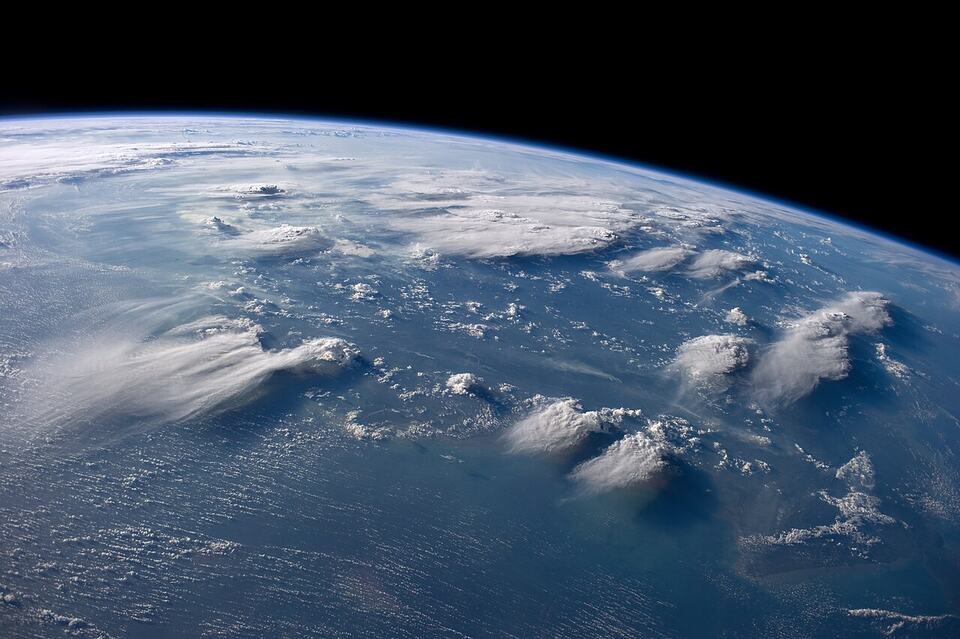
Satellite image of the Earth: NASA Blue Marble. Photos are from Wikimedia Commons; each photo carries its credit.
The water cycle (hydrological cycle) is the endless movement of water between the sea, the air and the land. The Sun drives it. Most of the Earth's fresh water is locked in ice; the next largest share is groundwater.
Evaporation → condensation → precipitation → run-off. Ice straight to vapour is sublimation. Plants lose water by transpiration through stomata.
The water cycle
The water cycle
Water never stops moving. It rises from the sea as vapour, forms clouds, falls as rain or snow, and flows back to the sea over the land and under it. This endless journey is the water cycle.
| The water cycle | What to remember |
|---|---|
| Also called | The hydrological cycle |
| Driven by | The heat of the Sun and the pull of gravity |
| Main steps | Evaporation, condensation, precipitation, run-off and infiltration |
| Total water on Earth | Stays the same. It only changes place and form |
| Three forms of water | Liquid water, solid ice and the gas water vapour |
Evaporation
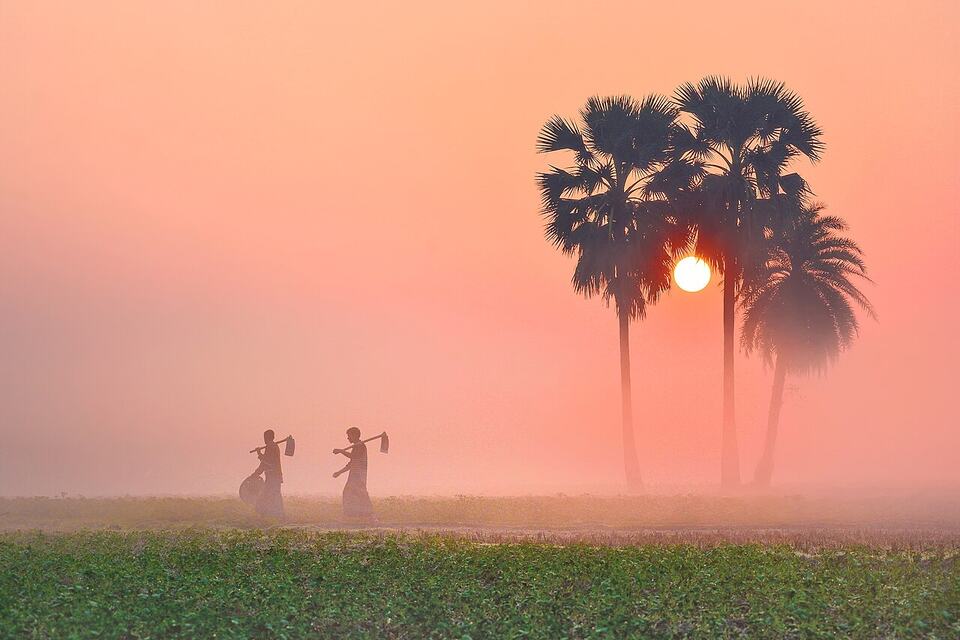
The Sun heats the surface of seas, lakes and rivers, and water turns into invisible water vapour that rises into the air.
| Evaporation | What to remember |
|---|---|
| Evaporation | The change of liquid water into water vapour |
| Biggest source | The oceans |
| Faster when | The air is hot, dry and windy |
| Humidity (PYQ) | The lower the humidity, the faster water evaporates |
| Salt | Stays behind. Only fresh water rises, which is why rain is not salty |
Transpiration
Plants draw water up from the soil through their roots and release most of it into the air as vapour through tiny openings in their leaves.
| Transpiration | What to remember |
|---|---|
| Transpiration | The loss of water vapour from plants |
| Through (PYQ) | Stomata, the tiny pores on leaves |
| Evapotranspiration | Evaporation and transpiration taken together |
| Why forests matter | Forests return a great deal of water to the air and help bring rain |
Condensation
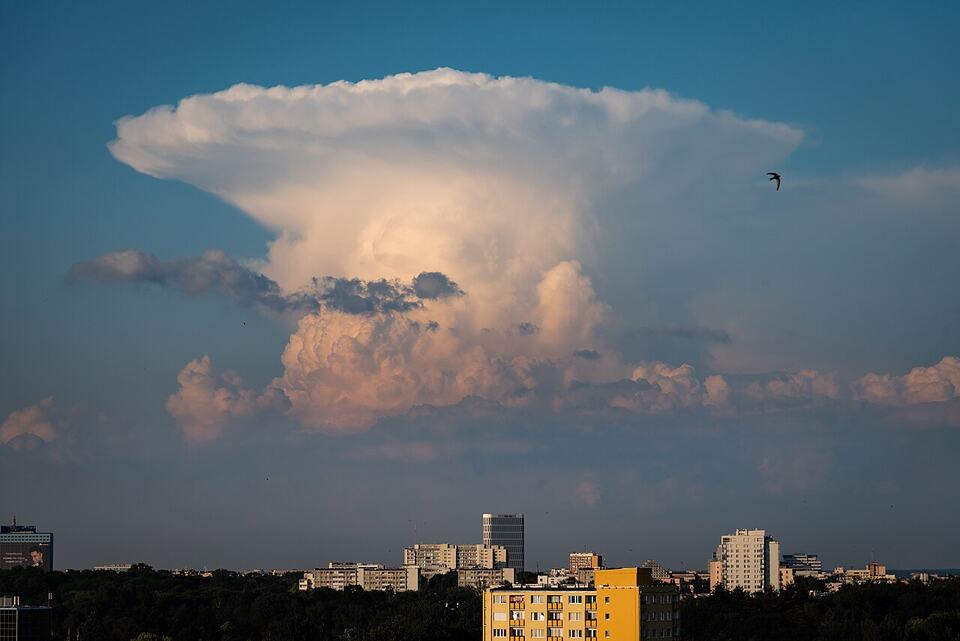
Rising air cools. Its water vapour turns into tiny droplets around specks of dust, and millions of droplets together make a cloud.
| Condensation | What to remember |
|---|---|
| Condensation | The change of water vapour into liquid water |
| Needs | Cooling of the air, and tiny dust or salt particles for the droplets to form on |
| Dew point | The temperature at which the air becomes saturated and condensation starts |
| In the sky | Clouds |
| Near the ground | Fog and mist. On cold surfaces: dew, and frost when it is freezing |
Precipitation
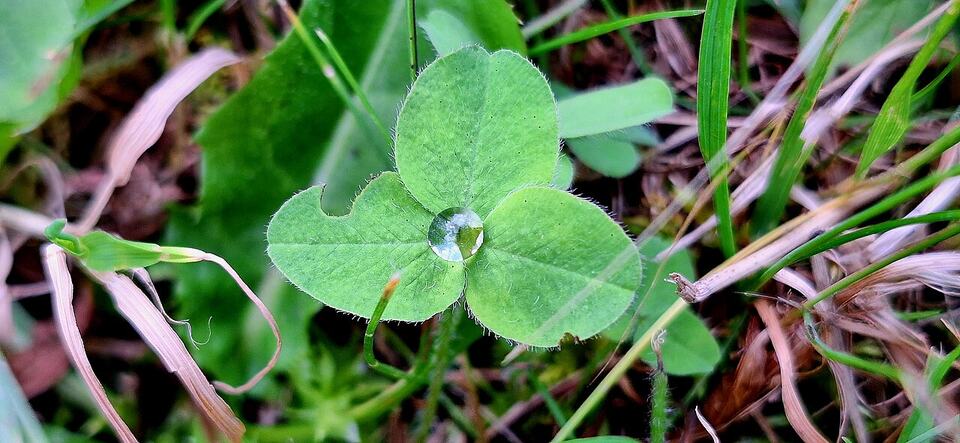
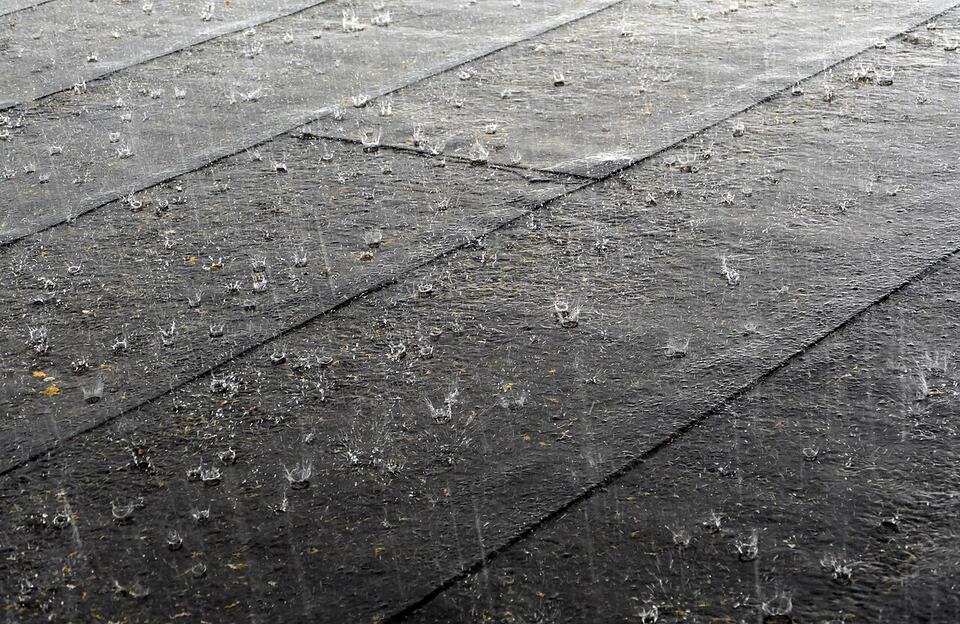
When the droplets in a cloud grow too heavy to float, they fall. Any water that falls from the sky, liquid or frozen, is precipitation.
| Precipitation | What to remember |
|---|---|
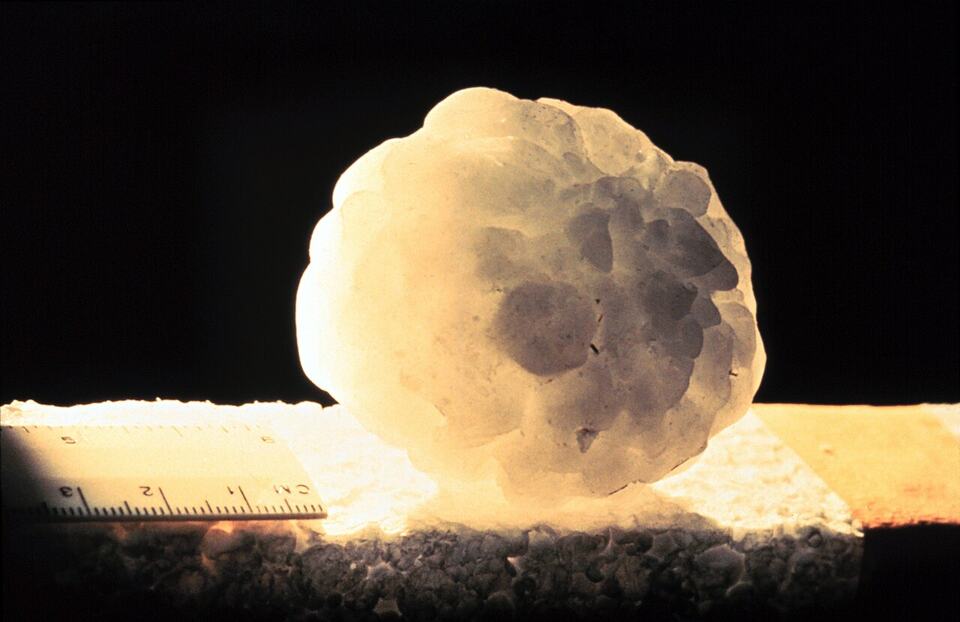
| Forms | Rain, drizzle, snow, sleet and hail |
| Measured with | The rain gauge |
| Hail | Balls of ice formed in tall thunderclouds |
| Three kinds of rainfall | Convectional, orographic (relief) and cyclonic (frontal) |
| Convectional rain (PYQ) | Caused by strong heating, and common in equatorial areas |
| Lines of equal rainfall on a map | Isohyets |
Run-off and rivers
Rain that does not soak in or evaporate runs downhill over the land. It gathers into streams and rivers and returns to the sea.
| Run-off and rivers | What to remember |
|---|---|
| Run-off | Water that flows over the surface of the land |
| Watershed (PYQ) | The area of land that drains into one river system through a common outlet |
| River basin | All the land drained by a river and its tributaries |
| More run-off when | Rain is heavy, slopes are steep and the ground is bare |
Groundwater
Part of the rain soaks into the ground and fills the pores and cracks of the rock. This hidden store is groundwater, the water of wells and springs.
| Groundwater | What to remember |
|---|---|
| Infiltration | The soaking of water into the ground |
| Water table | The upper surface of the zone where the rock is full of water |
| Aquifer | A layer of rock that holds water and lets it move |
| Reaches the surface as | Springs, and through wells and tube wells |
| Importance (PYQ) | After ice, groundwater is the largest store of fresh water |
Snow, ice and sublimation
On high mountains and near the poles, precipitation falls as snow. It piles up into glaciers and ice sheets and may stay frozen for thousands of years.
| Snow, ice and sublimation | What to remember |
|---|---|
| Snow line | The height above which snow lies all year |
| Melt water | Feeds rivers such as the Ganga, which is why Himalayan rivers flow all year |
| Sublimation (PYQ) | The direct change of snow and ice into water vapour, without melting first |
| Largest stores of ice | The ice sheets of Antarctica and Greenland |
Water on the Earth
Where the Earth's water is
The Earth has a huge amount of water, but very little of it is fresh water that people can use.
| Where the Earth's water is | What to remember |
|---|---|
| Oceans (salt water) | About 97% of all water |
| Fresh water | Only about 3% |
| Most of the fresh water (PYQ) | Is frozen in ice caps and glaciers |
| Second largest share (PYQ) | Groundwater |
| Rivers and lakes | Hold a very small part, far less than 1% of fresh water |
| So the Earth is called | The blue planet, or the watery planet |
Types of clouds
Clouds are named by their shape and their height. The four basic kinds are cirrus, cumulus, stratus and nimbus.
| Types of clouds | What to remember |
|---|---|
| Cirrus | High, thin, feathery clouds made of ice crystals |
| Cumulus | Heaped clouds like cotton wool with flat bases |
| Stratus | Low, grey sheets that cover the sky |
| Nimbus | Dark rain clouds |
| Cumulonimbus | The towering thunderstorm cloud. It brings heavy rain, lightning and hail |
Humidity
Humidity is the amount of water vapour in the air. Warm air can hold more water vapour than cold air.
| Humidity | What to remember |
|---|---|
| Absolute humidity | The actual amount of water vapour in a given volume of air |
| Relative humidity | The vapour in the air as a percentage of the most it could hold at that temperature |
| Saturated air | Air with 100% relative humidity |
| Instrument | The hygrometer |
Quick questions
The questions exams ask most often, with short answers.
| Question | Answer |
|---|---|
| What is the water cycle? | The continuous movement of water between the oceans, the air and the land. It is also called the hydrological cycle. |
| What is sublimation? | The direct change of snow or ice into water vapour without melting. |
| Where is most of the Earth's fresh water? | In ice caps and glaciers. Groundwater has the next largest share. |
| What is transpiration? | The loss of water vapour from plants through the stomata of their leaves. |
| What is a watershed? | The area of land that drains into one river system through a common outlet. |
| Which rainfall is common in equatorial areas? | Convectional rainfall. |
| Which instrument measures humidity? | The hygrometer. |
| Which instrument measures rainfall? | The rain gauge. |
- What is the water cycle?
- The continuous movement of water between the oceans, the air and the land. It is also called the hydrological cycle.
- What is sublimation?
- The direct change of snow or ice into water vapour without melting.
- Where is most of the Earth's fresh water?
- In ice caps and glaciers. Groundwater has the next largest share.
- What is transpiration?
- The loss of water vapour from plants through the stomata of their leaves.
- What is a watershed?
- The area of land that drains into one river system through a common outlet.
- Which rainfall is common in equatorial areas?
- Convectional rainfall.
- Which instrument measures humidity?
- The hygrometer.
- Which instrument measures rainfall?
- The rain gauge.