- Tap a wetland name on the map
- Read its date, area and district
- Use + and − to zoom, drag to move
District and state boundaries: © OpenStreetMap contributors (ODbL). Rivers: Natural Earth and OpenStreetMap. Photos are from Wikimedia Commons; each photo carries its credit.
Harike (23 March 1990) spreads over Tarn Taran, Kapurthala and Firozpur districts. Kanjli and Ropar were listed on 22 January 2002. The Beas Conservation Reserve, Keshopur-Miani and Nangal were listed on 26 September 2019. Rudrasagar, often given as an option, is in Tripura. Sukhna Wetland became a Ramsar site on 15 October 2026, but it is in Chandigarh, a union territory, so it is not one of Punjab's six.
Wetlands and Ramsar sites
Punjab has six wetlands of international importance. Tap a name on the map to read about it.
| Wetlands and Ramsar sites | What to remember |
|---|---|
| Harike (PYQ) | 23 March 1990. 4,100 ha. Tarn Taran, Kapurthala and Firozpur districts |
| Kanjli (PYQ) | 22 January 2002. 183 ha. Kapurthala district |
| Ropar | 22 January 2002. 1,365 ha. Rupnagar district |
| Beas Conservation Reserve | 26 September 2019. 6,429 ha. A 185 km stretch of the river |
| Keshopur-Miani | 26 September 2019. 344 ha. Gurdaspur district |
| Nangal | 26 September 2019. 116 ha. Rupnagar district |
| Largest | Harike |
| Not in Punjab (PYQ) | Rudrasagar (it is in Tripura) |
| State aquatic animal | Indus river dolphin, found in the Beas |
The six sites one by one
| Wetland | What to remember |
|---|---|
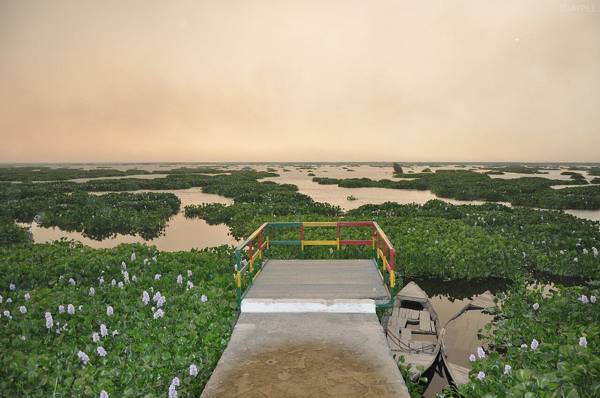
| Harike | The largest wetland of Punjab, where the Beas meets the Sutlej. Ramsar site since 23 March 1990 (4,100 hectares). It spreads over Tarn Taran, Kapurthala and Firozpur districts. Harike headworks (1954-55) sends water into the Rajasthan Feeder and the Ferozepur Feeder. |
| Kanjli | A small wetland on the Kali Bein stream in Kapurthala district. Ramsar site since 22 January 2002 (183 hectares). |
| Ropar | Ropar wetland on the Sutlej at Rupnagar. Ramsar site since 22 January 2002 (1,365 hectares). Ropar headworks stands here: the Sirhind Canal leaves the Sutlej at this point. |
| Beas Conservation Reserve | Beas Conservation Reserve: a 185 km stretch of the Beas, Ramsar site since 26 September 2019 (6,429 hectares). It is the only place in India where the Indus river dolphin lives. Gharials were brought back here from 2017. |
| Keshopur-Miani | Keshopur-Miani Community Reserve in Gurdaspur district. Ramsar site since 26 September 2019 (344 hectares). |
| Nangal | Nangal Wildlife Sanctuary, Ramsar site since 26 September 2019 (116 hectares). Nangal Dam on the Sutlej stands about 13 km below Bhakra Dam. The Nangal Hydel Channel and the Bhakra Main Line start here. |
Quick questions
The questions exams ask most often, with short answers.
| Question | Answer |
|---|---|
| How many Ramsar sites does Punjab have? | Six: Harike, Kanjli, Ropar, Beas Conservation Reserve, Keshopur-Miani and Nangal. |
| Which is the largest wetland of Punjab? | Harike, where the Beas meets the Sutlej. |
| Is Sukhna Lake a Ramsar site of Punjab? | No. Sukhna Wetland became a Ramsar site on 15 October 2026, but it is in Chandigarh, a union territory. Punjab has six Ramsar sites. |
| When was Harike made a Ramsar site? | On 23 March 1990. |
| In which district is Kanjli wetland? | Kapurthala. |
| Where is the Indus river dolphin found in India? | In the Beas, in the Beas Conservation Reserve. |
| Where does the Beas join the Sutlej? | At Harike. |
FLASHCARDS
Quick recall
- How many Ramsar sites does Punjab have?
- Six: Harike, Kanjli, Ropar, Beas Conservation Reserve, Keshopur-Miani and Nangal.
- Which is the largest wetland of Punjab?
- Harike, where the Beas meets the Sutlej.
- Is Sukhna Lake a Ramsar site of Punjab?
- No. Sukhna Wetland became a Ramsar site on 15 October 2026, but it is in Chandigarh, a union territory. Punjab has six Ramsar sites.
- When was Harike made a Ramsar site?
- On 23 March 1990.
- In which district is Kanjli wetland?
- Kapurthala.
- Where is the Indus river dolphin found in India?
- In the Beas, in the Beas Conservation Reserve.
- Where does the Beas join the Sutlej?
- At Harike.
More on the geography of Punjab
- Geography of PunjabArea, borders, relief, soils and climate, with the full map.Open →
- Rivers of PunjabSutlej, Beas, Ravi and Ghaggar, and the five rivers of the name.Open →
- Doabs of PunjabBist, Bari, Rachna, Chaj and Sind Sagar on one map.Open →
- Districts of PunjabAll 23 districts with facts and audio, and Chandigarh.Open →
- Canals and Dams of PunjabSirhind Canal, headworks, Bhakra, Pong and Ranjit Sagar.Open →
- Majha, Doaba and MalwaThe three regions and the districts in each.Open →