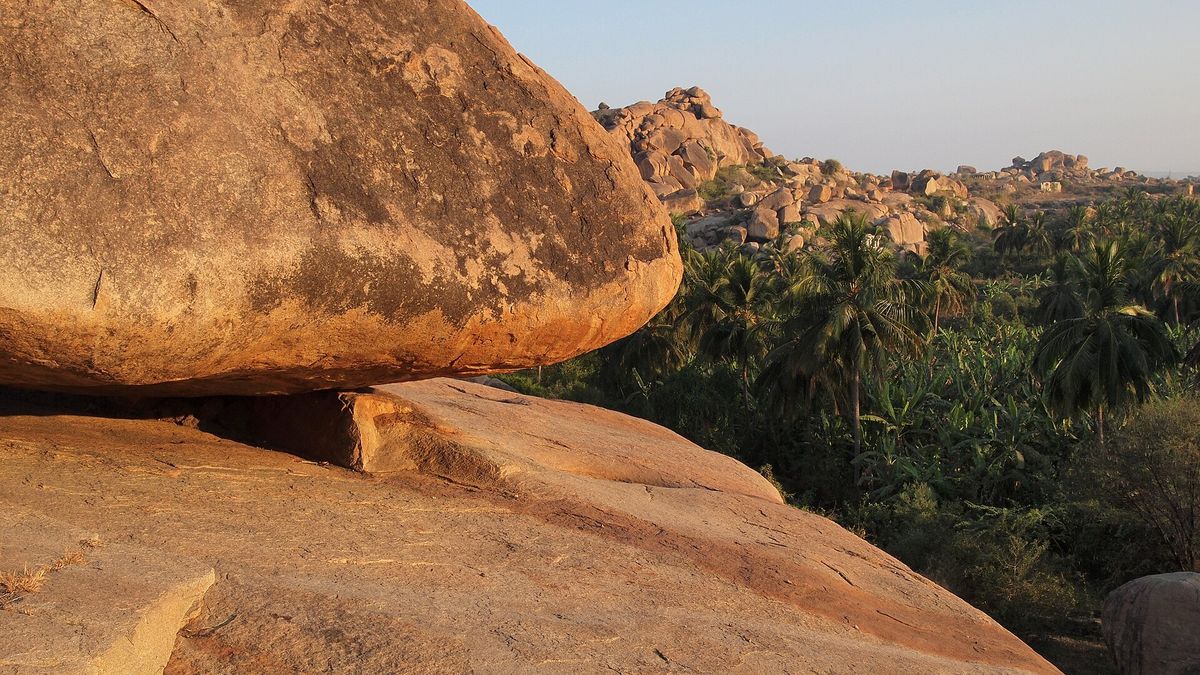
- Press Go round the rock cycle
- Tap a label on the picture
- Tap a photo to make it bigger
Satellite image of the Earth: NASA Blue Marble. Photos are from Wikimedia Commons; each photo carries its credit.
Igneous rocks form when magma or lava cools. Sedimentary rocks form from layers of sediment and hold fossils. Metamorphic rocks are older rocks changed by heat and pressure: limestone becomes marble, sandstone quartzite, shale slate.
Igneous = fire. Sedimentary = layers. Metamorphic = changed. Limestone → marble. Sandstone → quartzite. Shale → slate. Granite → gneiss.
The rock cycle
The rock cycle
No rock lasts for ever. Igneous rock is worn down into sediment, sediment hardens into sedimentary rock, heat and pressure change it into metamorphic rock, and deep down it melts into magma again. This is the rock cycle.
| The rock cycle | What to remember |
|---|---|
| Three families of rock | Igneous, sedimentary and metamorphic |
| Rock cycle | The continuous change of rocks from one kind into another |
| Any rock can become | Any other kind, by melting, by wearing down, or by heat and pressure |
| Study of rocks | Petrology |
| A rock is | A natural mass made of one or more minerals |
Igneous rocks
Igneous rocks form when molten rock cools and hardens. They are the first rocks, from which all others are made, so they are called primary rocks.
| Igneous rocks | What to remember |
|---|---|
| Formed by | The cooling of magma or lava |
| Also called | Primary rocks |
| Features | Hard, made of crystals, with no layers and no fossils |
| Granite (PYQ) | An igneous rock |
| Examples | Granite, basalt, gabbro, obsidian and pumice |
| Word | From the Latin ignis, meaning fire |
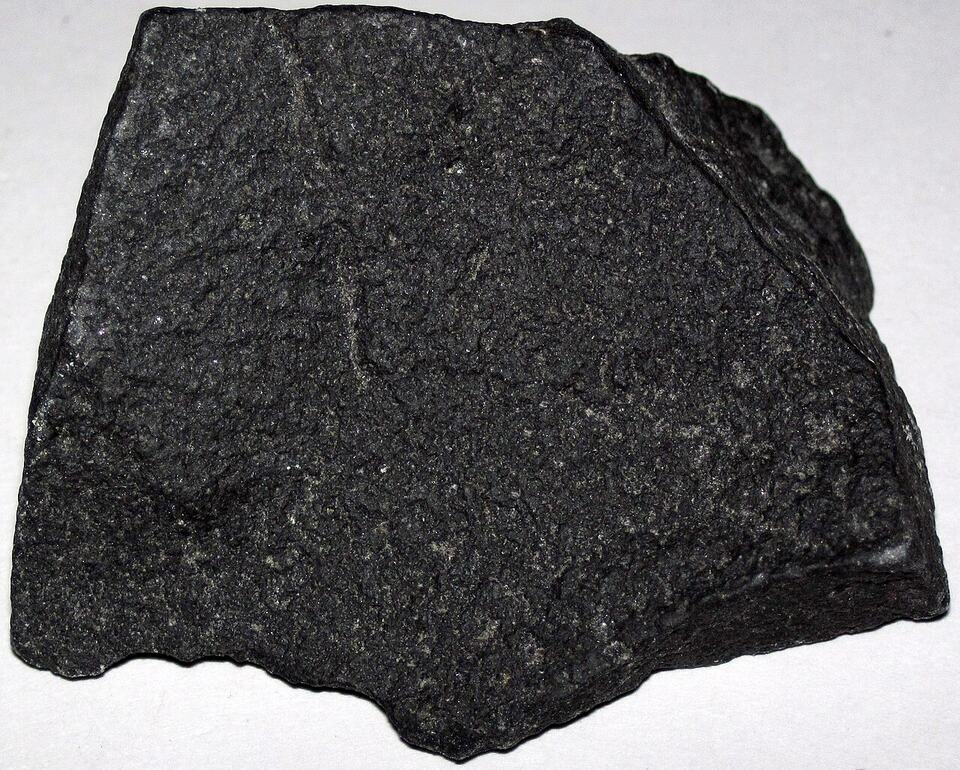
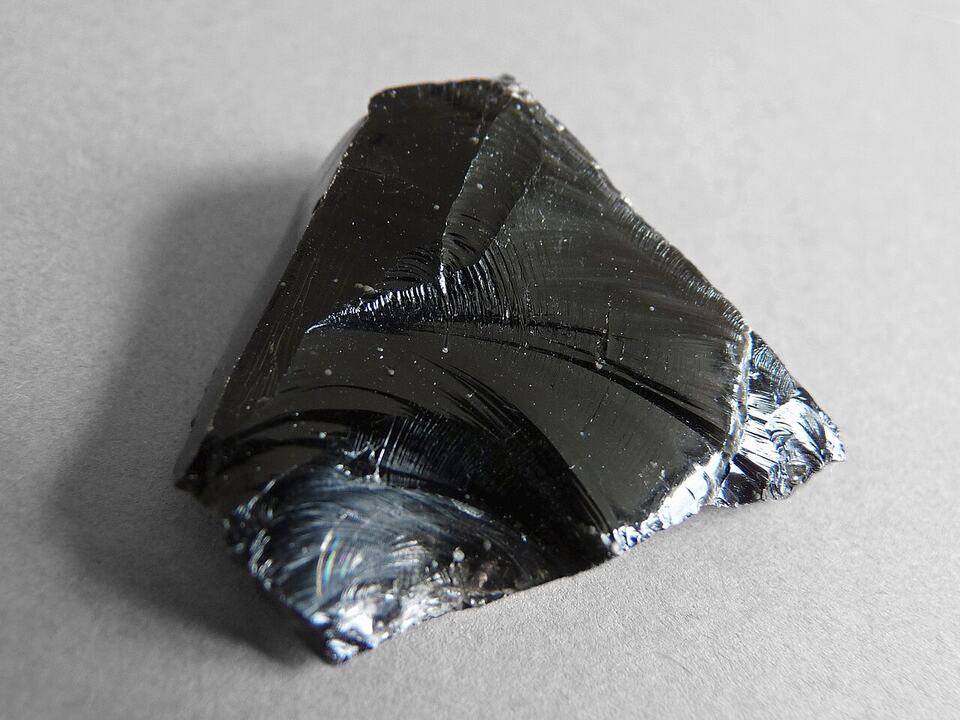
Intrusive and extrusive rocks
Where the molten rock cools decides what the rock looks like. Slow cooling inside the crust gives large crystals; quick cooling on the surface gives tiny ones.
| Intrusive and extrusive rocks | What to remember |
|---|---|
| Intrusive (plutonic) rock | Magma cooled slowly inside the crust. Large crystals. Example: granite |
| Extrusive (volcanic) rock | Lava cooled quickly on the surface. Fine grains. Example: basalt |
| Obsidian | Lava that cooled so fast it became natural glass |
| Pumice | A light volcanic rock full of gas holes. It can float on water |
| Deccan Plateau | Built of basalt |
Weathering, erosion and deposition
Sun, frost, rain and plant roots slowly break rock into pieces. Rivers, wind, ice and waves carry the pieces away and drop them elsewhere.
| Weathering, erosion and deposition | What to remember |
|---|---|
| Weathering | The breaking down of rock where it stands |
| Physical weathering | Rock is broken by heat and cold, frost and plant roots |
| Chemical weathering | Rock is dissolved or changed by water and air |
| Erosion | The wearing away and carrying off of rock by rivers, wind, glaciers and waves |
| Deposition | The dropping of the load as sediment, most of it in the sea |
Sedimentary rocks
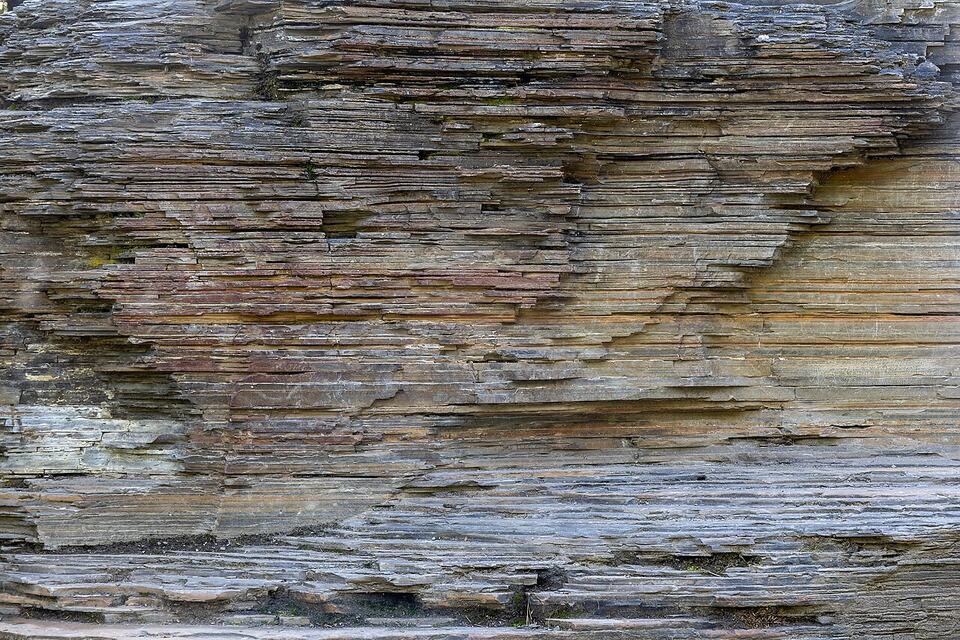
Sediment settles in layers, mostly on the sea bed. Over a very long time the weight above presses the layers and cements them into rock.
| Sedimentary rocks | What to remember |
|---|---|
| Formed from | Layers of sediment pressed and cemented together |
| Features | Layers (strata) and fossils |
| Fossils | Remains of plants and animals preserved in rock. Almost all fossils are found in sedimentary rocks |
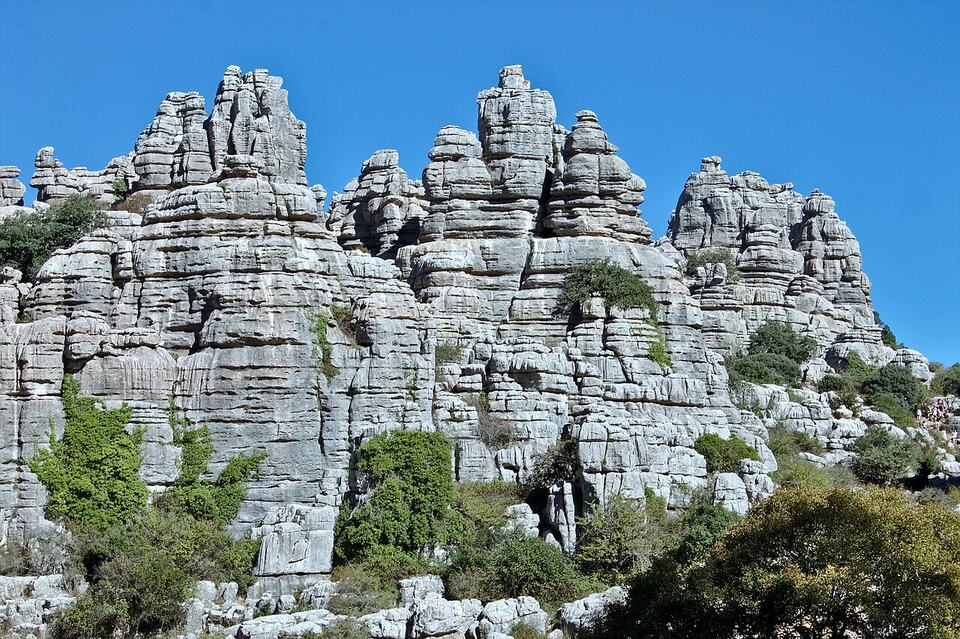
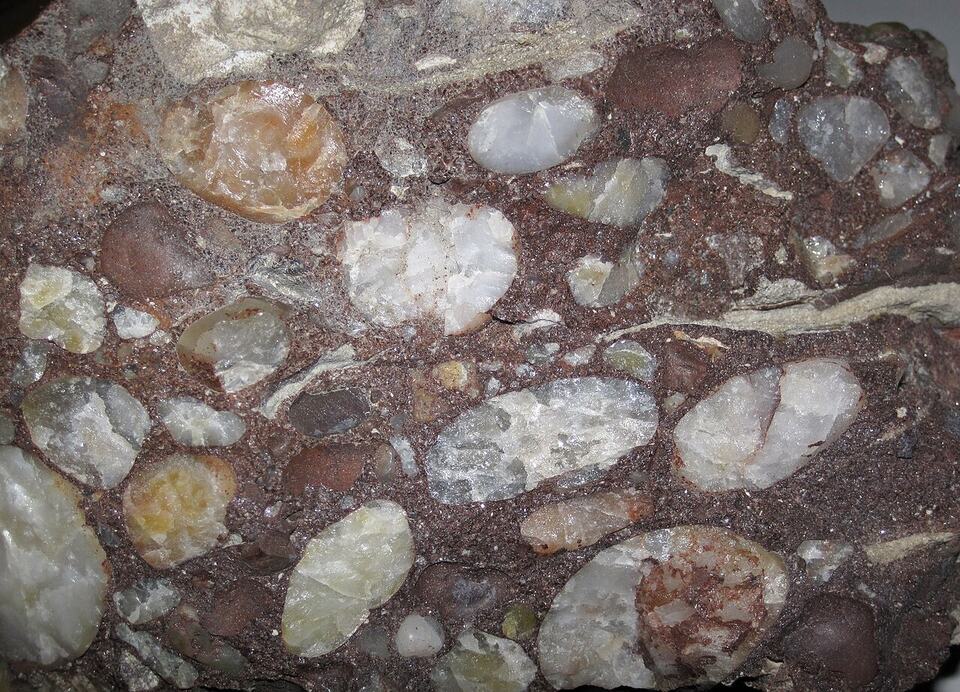
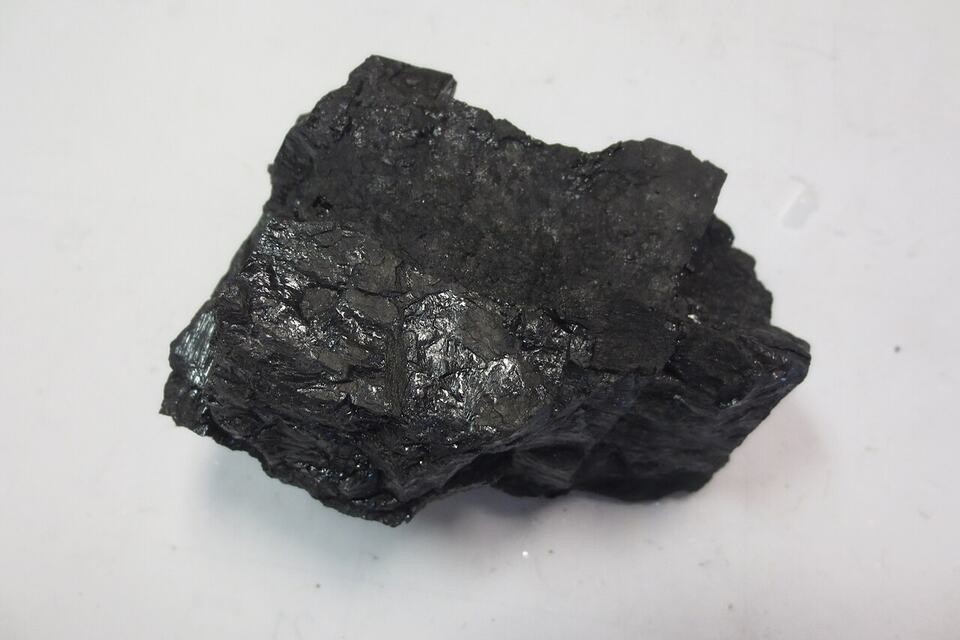
| Examples | Sandstone, shale, limestone, conglomerate and coal |
| Limestone (PYQ) | A sedimentary rock made mainly of calcium carbonate. It is the raw material of cement |
| Fuels | Coal, petroleum and natural gas are found in sedimentary rocks |
| Share | They cover about three quarters of the land surface |
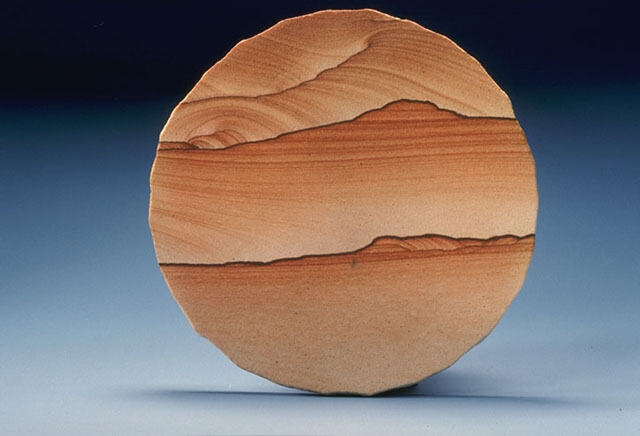
Metamorphic rocks
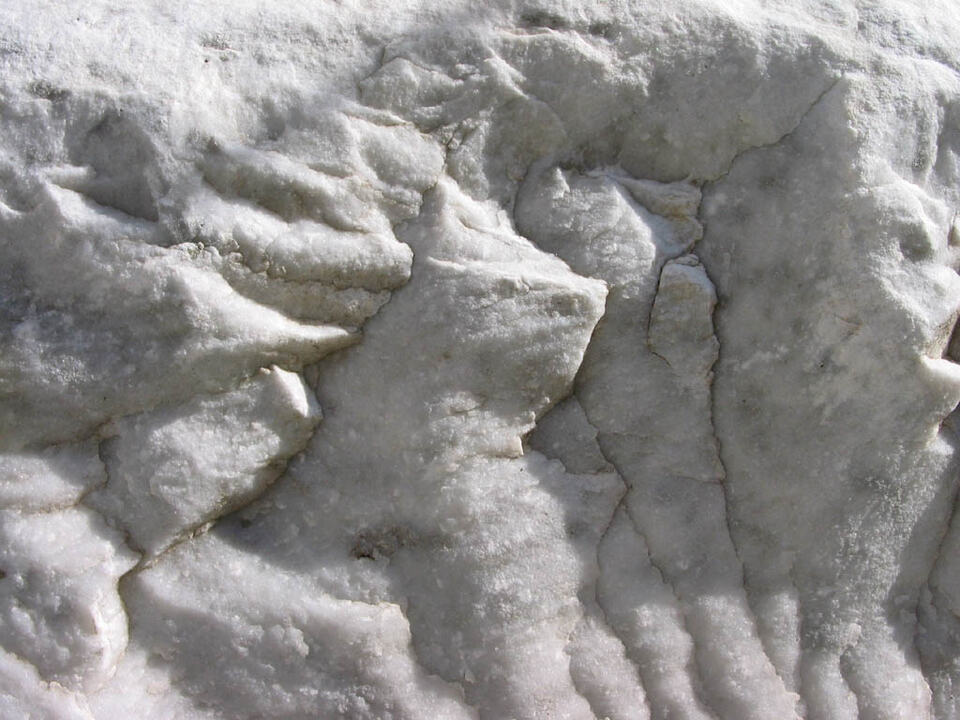
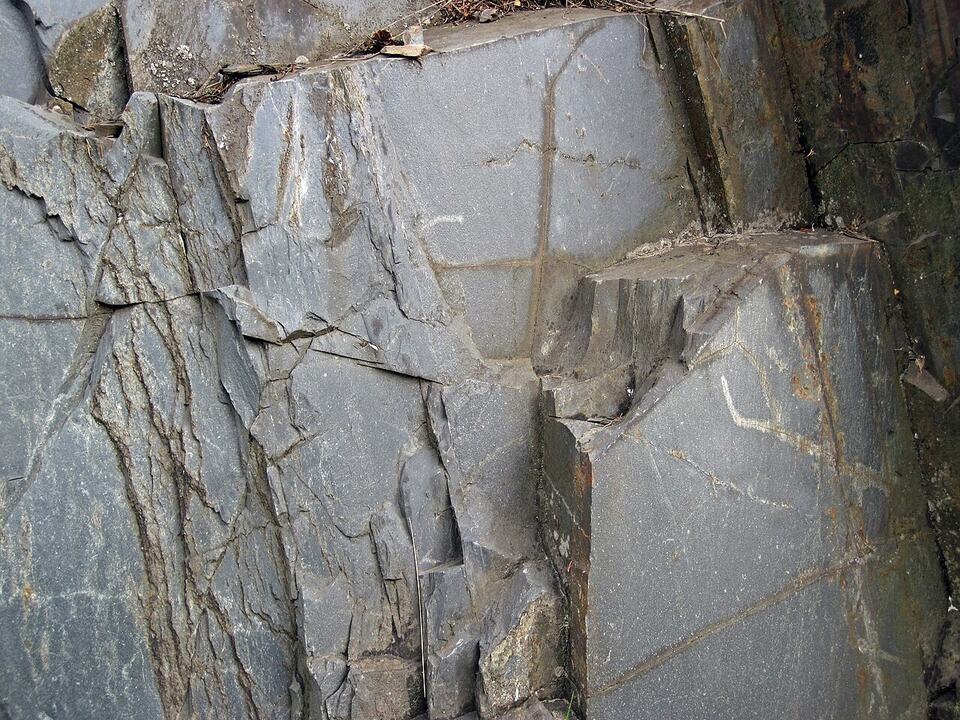
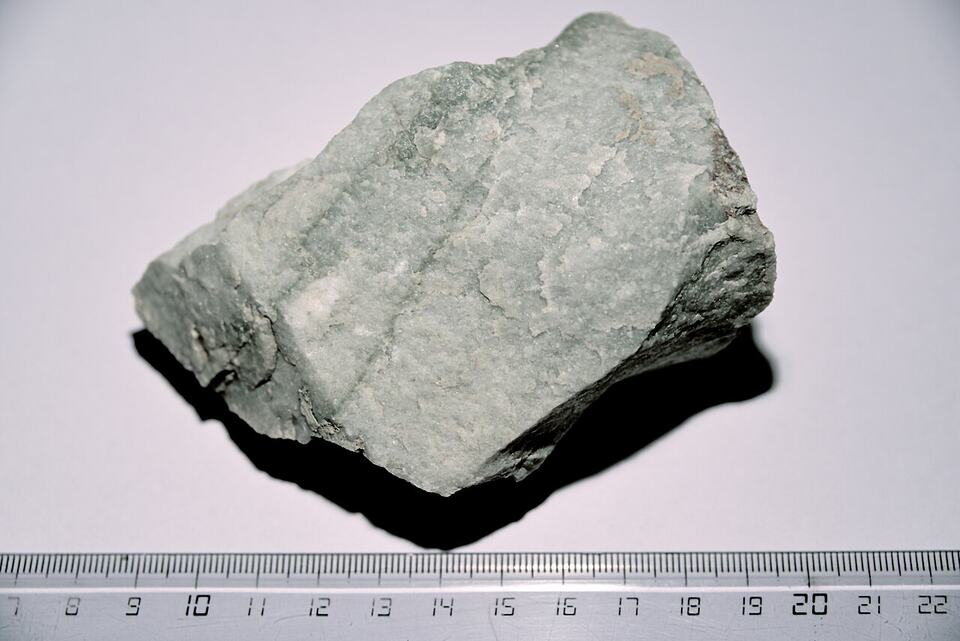
Deep in the crust, great heat and pressure change a rock into a new one without melting it. Metamorphic means changed in form.
| Metamorphic rocks | What to remember |
|---|---|
| Formed when | Igneous or sedimentary rock is changed by heat and pressure |
| Limestone becomes (PYQ) | Marble |
| Sandstone becomes | Quartzite |
| Shale or clay becomes | Slate |
| Granite becomes (PYQ) | Gneiss, a banded rock |
| Coal becomes | Anthracite, and then graphite |
| Marble (PYQ) | A metamorphic rock |
Back to magma
If rock is pushed deeper still, it melts into magma. The magma rises, cools and becomes igneous rock, and the cycle begins again.
| Back to magma | What to remember |
|---|---|
| Melting | Any rock pushed deep enough melts into magma |
| Magma | Molten rock below the surface. It is called lava when it comes out |
| Then | Magma cools into new igneous rock |
| Short cuts | A rock need not go all the way round. Any rock can be worn down, changed or melted |
Rocks and minerals
Famous rocks of India
India has all three families of rock, and many famous buildings show them off.
| Famous rocks of India | What to remember |
|---|---|
| Basalt | The Deccan Plateau of Maharashtra and its neighbours, the Deccan Traps |
| Granite and gneiss | The old hard rocks of the peninsula, in Karnataka, Tamil Nadu, Telangana and Rajasthan |
| Marble | Makrana in Rajasthan. Its white marble built the Taj Mahal |
| Red sandstone | The Vindhyan rocks. Used in the Red Fort and Fatehpur Sikri |
| Limestone | Madhya Pradesh, Rajasthan and Andhra Pradesh: the cement belt |
| Coal | The Gondwana rocks of the Damodar, Mahanadi and Godavari valleys |
Rocks and minerals
A mineral is a natural substance with a fixed chemical make-up. Rocks are mixtures of minerals.
| Rocks and minerals | What to remember |
|---|---|
| Commonest minerals of the crust | Feldspar and quartz |
| Most plentiful elements of the crust | Oxygen first, silicon second |
| Hardness is measured on | Mohs scale, from 1 to 10 |
| Softest mineral | Talc, 1 on Mohs scale |
| Hardest mineral | Diamond, 10 on Mohs scale |
| Ore | A rock from which a metal can be taken at a profit |
Quick questions
The questions exams ask most often, with short answers.
| Question | Answer |
|---|---|
| What are the three types of rocks? | Igneous, sedimentary and metamorphic. |
| Granite is which type of rock? | Igneous. It forms when magma cools slowly inside the crust. |
| Marble is formed from which rock? | Limestone. Marble is a metamorphic rock. |
| In which rocks are fossils found? | Sedimentary rocks. |
| What is limestone made of? | Mainly calcium carbonate. It is a sedimentary rock and the raw material of cement. |
| Which rocks are called primary rocks? | Igneous rocks. |
| Which metamorphic rock forms from sandstone? | Quartzite. |
| Which is the hardest mineral? | Diamond, 10 on Mohs scale. |
| What is the rock cycle? | The continuous change of rocks from one type into another. |
- What are the three types of rocks?
- Igneous, sedimentary and metamorphic.
- Granite is which type of rock?
- Igneous. It forms when magma cools slowly inside the crust.
- Marble is formed from which rock?
- Limestone. Marble is a metamorphic rock.
- In which rocks are fossils found?
- Sedimentary rocks.
- What is limestone made of?
- Mainly calcium carbonate. It is a sedimentary rock and the raw material of cement.
- Which rocks are called primary rocks?
- Igneous rocks.
- Which metamorphic rock forms from sandstone?
- Quartzite.
- Which is the hardest mineral?
- Diamond, 10 on Mohs scale.
- What is the rock cycle?
- The continuous change of rocks from one type into another.