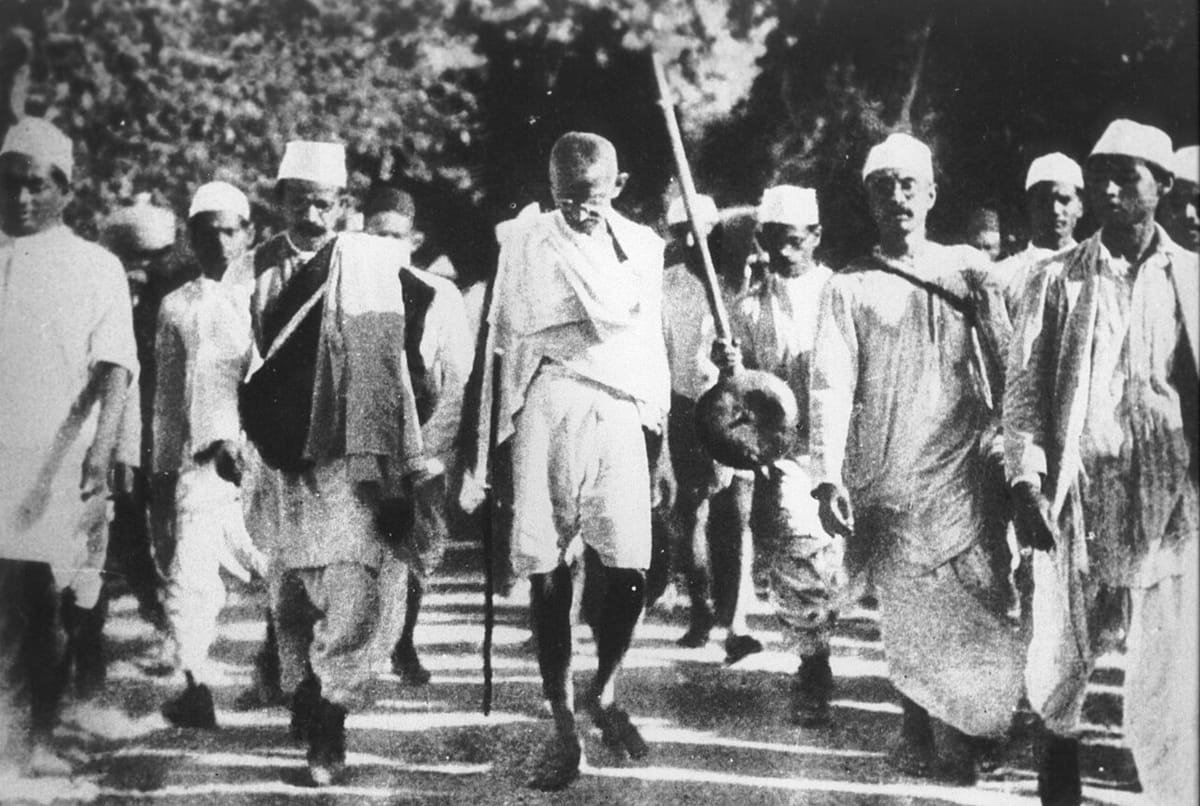
In 1930 Gandhi picked a strange target: the tax on salt. Even his colleagues were puzzled. But every Indian used salt, rich or poor. So when he walked to Dandi and broke the salt law, the whole country followed. This was the Civil Disobedience Movement (1930–34), India's second great mass struggle.
The road to Lahore
1928 to 1929: from Simon go back to complete independence.
- Feb 1928Simon Commission arrives
It had no Indian member. Everywhere it was met with black flags and "Simon, go back".
- Aug 1928Nehru Report
Indians drafted their own constitution. It asked for dominion status.
- Oct 1928Lathi charge at Lahore
Lala Lajpat Rai led the protest at Lahore and was beaten by police. He died on 17 November 1928.
- Dec 1928Calcutta session
Congress gave the British one year to accept dominion status.
- Dec 1929Lahore session
With Jawaharlal Nehru as president, Congress made Purna Swaraj (complete independence) its goal.
- 31 Dec 1929Flag on the Ravi
Nehru hoisted the tricolour on the bank of the Ravi at Lahore.
- 26 Jan 1930First Independence Day
People all over India took the independence pledge. This is why the Constitution came into force on 26 January.
The Lahore session also told the Congress to launch civil disobedience, and left it to Gandhi to decide how and when. Punjab's capital thus gave the movement its goal.
Why salt, and the Dandi March
Twenty-four days that shook an empire.
In January 1930 Gandhi sent eleven demands to the Viceroy, Lord Irwin. They included abolition of the salt tax, a cut in land revenue and military spending, prohibition of liquor, and release of political prisoners. Irwin did not accept them. So Gandhi chose to break the salt law.
Openly breaking an unjust law, without violence, and accepting the punishment. It goes a step beyond non-cooperation. Non-cooperation means refusing to help the government. Civil disobedience means actively breaking its laws.
Everyone needs salt: rich and poor, Hindu and Muslim, north and south. The British had a monopoly on making salt and taxed it, so even the poorest family paid. Anyone near the sea could break this law. And a tax on a basic need looked shameful before world opinion.
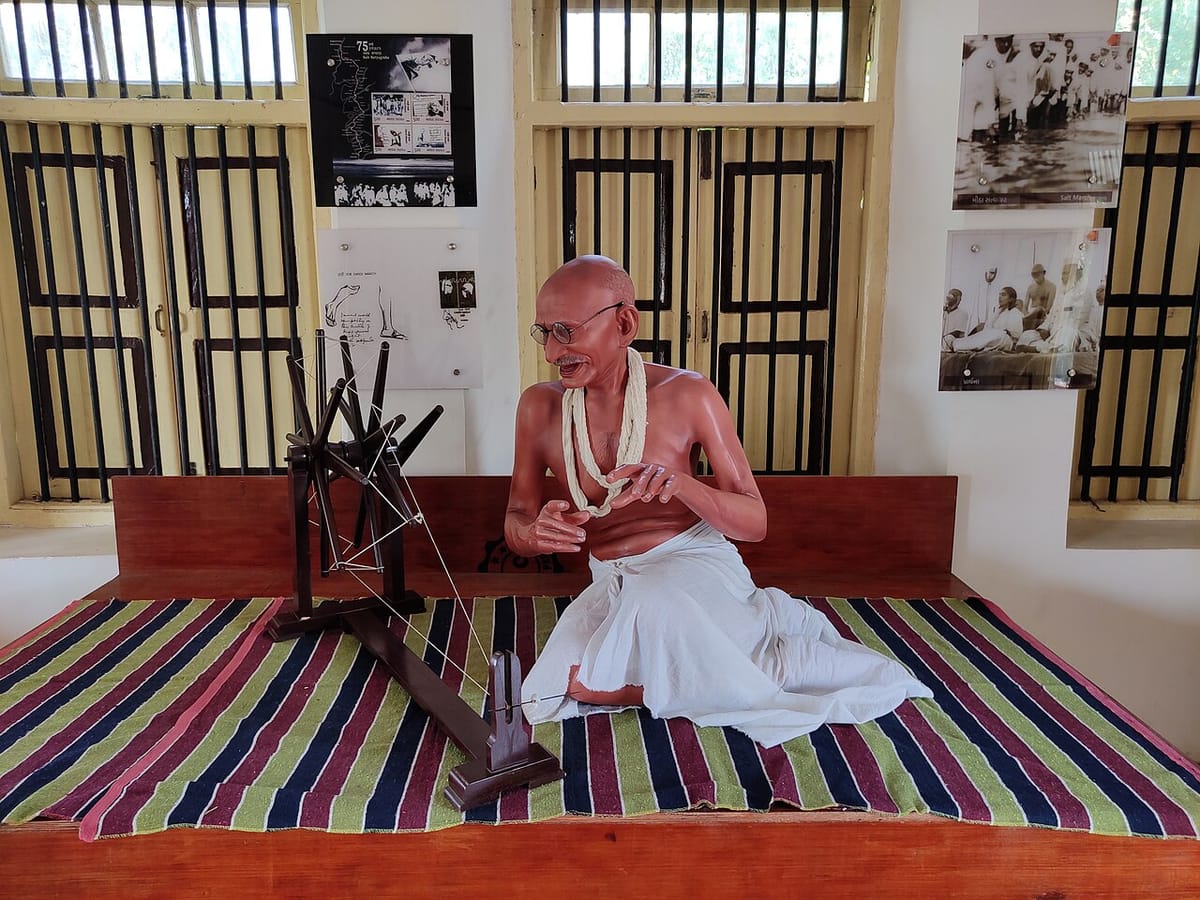
- 78 marchers12 March 1930: leaves SabarmatiGandhi sets out from Sabarmati Ashram with 78 chosen satyagrahis.
- 24 days on footAbout 240 miles (some 385 km) through Gujarat villages. Crowds and newspapers follow every day.
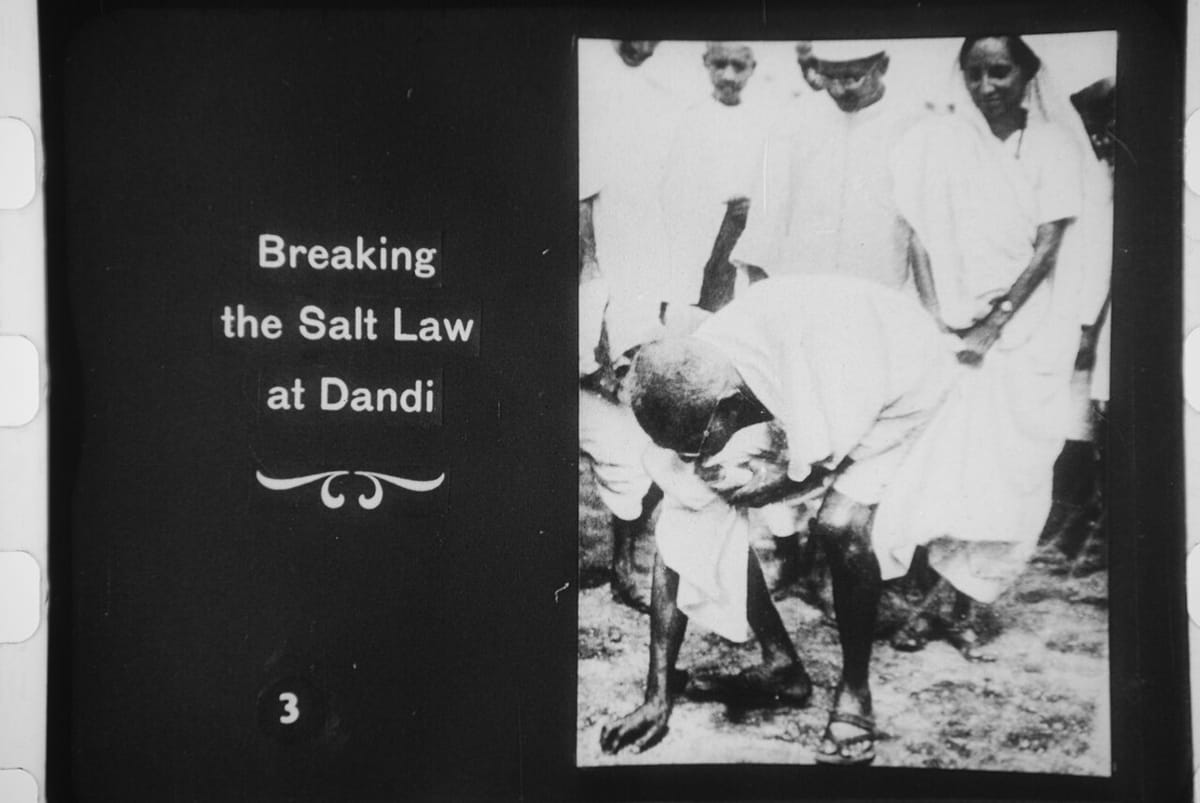
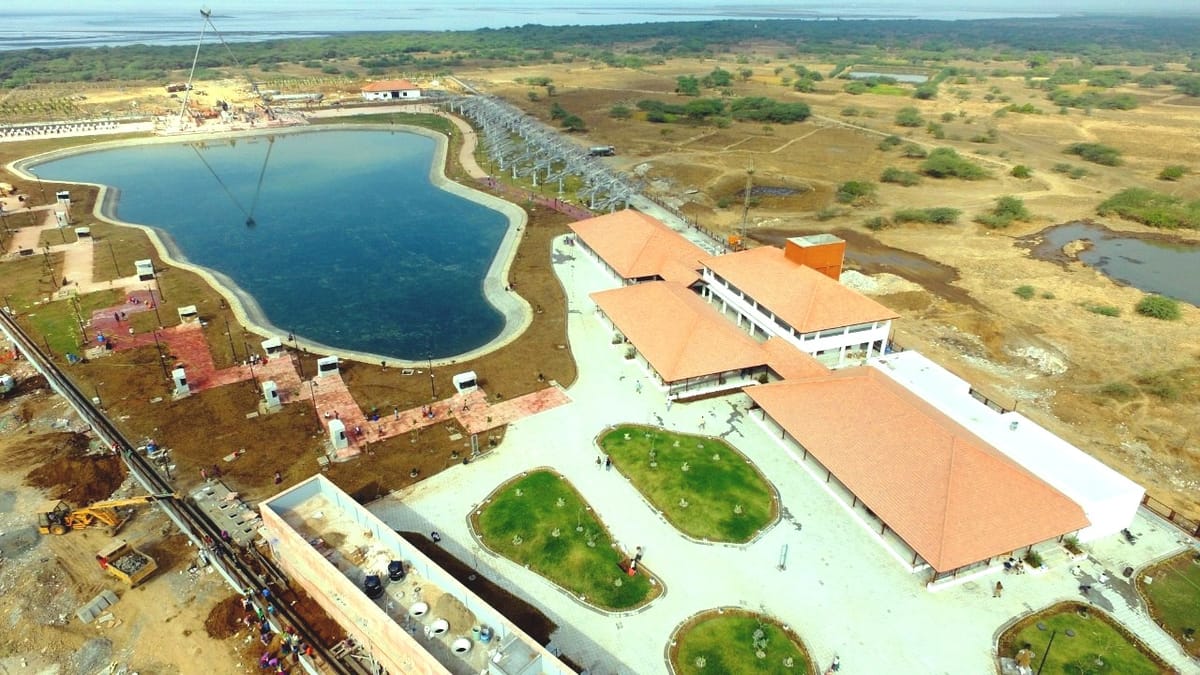
- 5 April 1930: reaches DandiA village on the sea coast in Navsari (then Surat district).
- Movement begins6 April 1930: salt law brokenIn the morning Gandhi picks up a lump of natural salt from the shore. People all over India begin making salt.
How the movement spread
Coasts, the Frontier, forests and women.
| Where | Leader | What happened |
|---|---|---|
| Tamil Nadu | C. Rajagopalachari | Salt march from Trichinopoly to Vedaranyam. |
| Malabar (Kerala) | K. Kelappan | Salt march from Calicut to Payyanur. |
| Orissa | Gopabandhu Choudhury | Salt satyagraha on the Orissa coast. |
| Bihar | Mahadev Lal Saraf, among others | Salt laws broken; later, refusal of the chowkidari tax. |
| Dharasana, Gujarat | Sarojini Naidu | Raid on the salt works, May 1930. |
| North-West Frontier | Khan Abdul Ghaffar Khan | The Khudai Khidmatgars (Red Shirts) at Peshawar. |
On 4–5 May 1930 Gandhi was arrested. Then Sarojini Naidu led the raid on the Dharasana salt works. Rows of satyagrahis walked up to the police and were beaten down. Not one raised a hand. The American journalist Webb Miller reported it to the world.
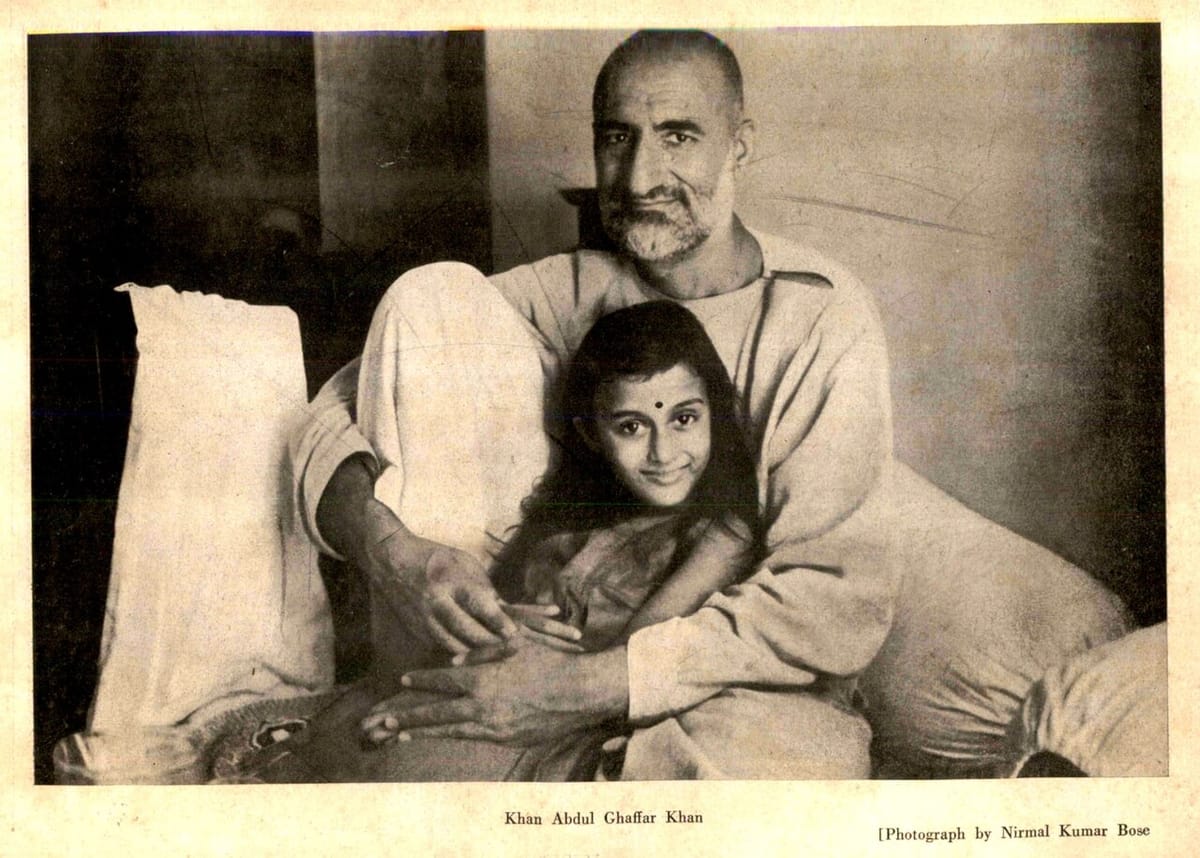
- Called the Frontier Gandhi and Badshah Khan
- Founded the Khudai Khidmatgars (Red Shirts); Bharat Ratna, 1987
- Led the Dharasana raid after Gandhi's arrest
- First Indian woman president of the Congress (Kanpur, 1925)
- Led the salt march in Tamil Nadu
- Later the only Indian Governor-General of India
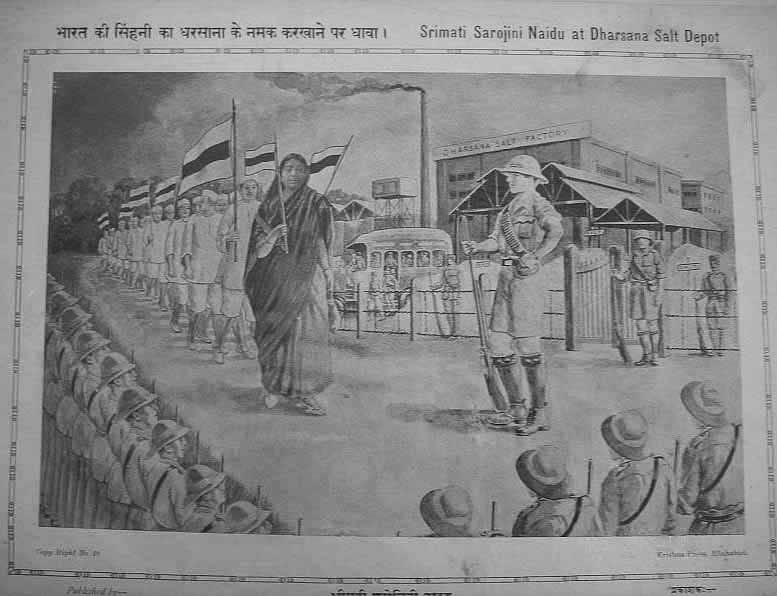
Two women of the movement, asked in Punjab papersTap to open
Rajkumari Amrit Kaur belonged to the royal family of Kapurthala in Punjab. She took part in the Salt Satyagraha of 1930 and in Quit India (1942), and later became free India's first Health Minister. Sarojini Naidu, the "Nightingale of India", presided over the Kanpur Congress of 1925. Annie Besant (1917) was the first woman president, but she was not Indian-born.
Gandhi-Irwin Pact and the Round Tables
1930 to 1931: talks in London, a pact in Delhi.
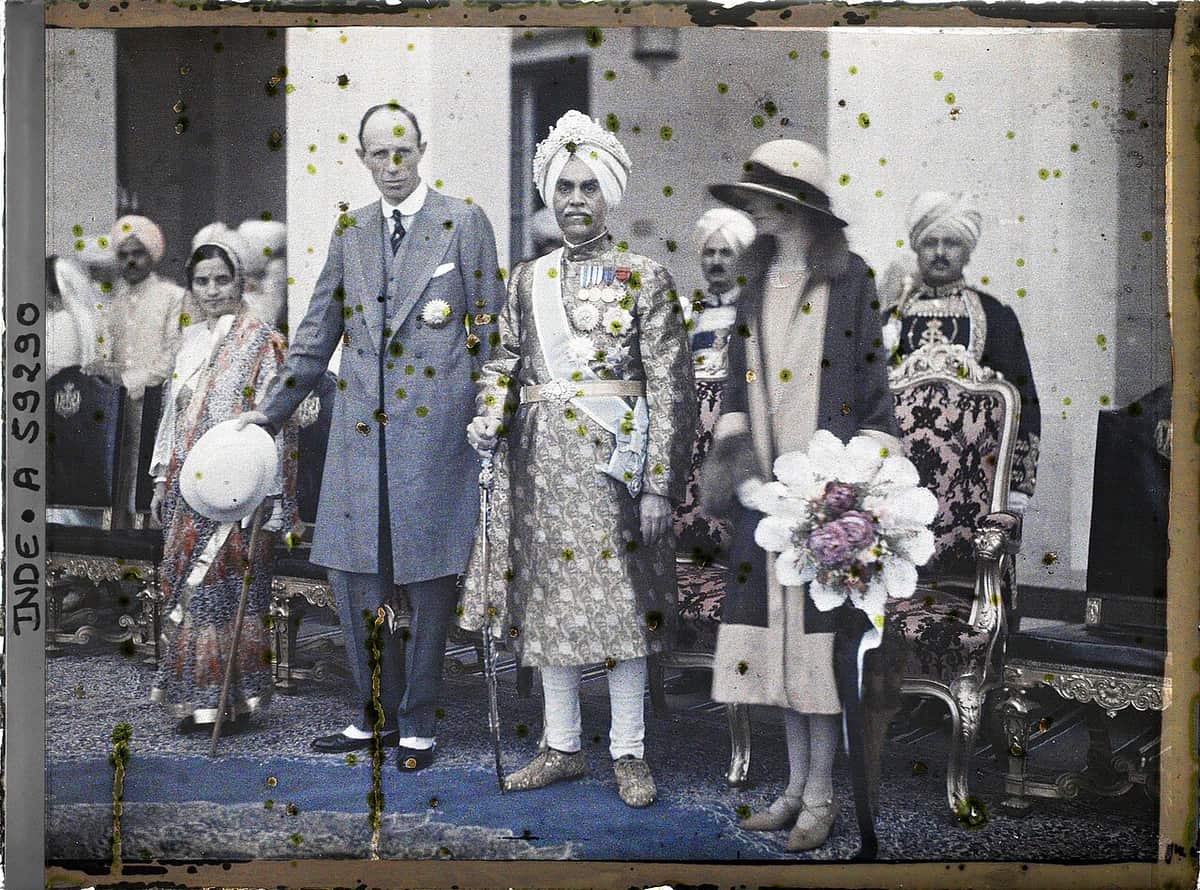
The British called a Round Table Conference in London to discuss India's future. The First (November 1930 to January 1931) was held without the Congress, because its leaders were in jail. Princes such as Maharaja Bhupinder Singh of Patiala attended. Britain then released Gandhi to talk with Irwin.
| Gandhi-Irwin Pact | 5 March 1931 |
|---|---|
| The government agreed | To release political prisoners not guilty of violence, return seized property, and allow people on the coast to make salt for their own use. |
| Gandhi agreed | To suspend civil disobedience and attend the Second Round Table Conference. |
| What it did not do | It did not save Bhagat Singh, Sukhdev and Rajguru. They were hanged at Lahore on 23 March 1931. |
| Approved at | The Karachi session (March 1931), presided over by Vallabhbhai Patel. It also passed the resolution on Fundamental Rights and the National Economic Programme. |
Second phase and the end
1932 to 1934: repression, the Communal Award and the Poona Pact.
- Gandhi came back from London empty-handed in December 1931. The new Viceroy, Lord Willingdon, met the Congress with force.
- Civil disobedience resumed in January 1932. Gandhi and other leaders were arrested at once, and the Congress was banned.
- In August 1932 British Prime Minister Ramsay MacDonald announced the Communal Award. It gave separate electorates to the Depressed Classes too.
- Gandhi, in Yerwada Jail (Pune), began a fast unto death on 20 September 1932 against this.
- On 24 September 1932 the Poona Pact was signed with Dr B. R. Ambedkar. Separate electorates were dropped; the Depressed Classes got reserved seats in a joint electorate.
- The movement slowly lost force. It was suspended in 1933 and formally withdrawn in 1934.
Everything on one look
The goal, the march, the spread, the pact and the end.
- Lahore, Dec 1929: Purna Swaraj, president Nehru
- 26 Jan 1930: first Independence Day
- Eleven demands to Lord Irwin
- Dandi March: 12 March to 6 April 1930
- From Sabarmati, 78 marchers, about 240 miles
- Salt law broken at Dandi, 6 April 1930
- Dharasana: Sarojini Naidu, May 1930
- Vedaranyam: Rajagopalachari; Payyanur: Kelappan
- Frontier Gandhi: Ghaffar Khan, Red Shirts
- Gandhi-Irwin Pact: 5 March 1931
- Karachi 1931: Patel; Fundamental Rights
- Poona Pact: 24 Sept 1932; withdrawn 1934
- Purna Swaraj was declared at Lahore (1929), not Karachi (1931).
- The march began 12 March, reached Dandi 5 April, broke the law 6 April.
- Cow slaughter was not among the eleven demands.
- Sarojini Naidu led Dharasana; Annie Besant had no role in the Salt Satyagraha.
- Frontier Gandhi = Ghaffar Khan, not Abul Kalam Azad.
- The Pact allowed salt-making for own use; it did not abolish the salt tax.
- Gandhi attended only the Second Round Table; Ambedkar attended all three.
- The Poona Pact was with Ambedkar, not Jinnah; it was about separate electorates.
- First RTC: Bhupinder Singh of Patiala, not Yadavinder Singh.
- Simon Commission: arrived 1928, no Indian member
- Lajpat Rai: led Lahore protest, died November 1928
- Lahore session: December 1929, Nehru
- Flag on the Ravi: 31 December 1929
- First Independence Day: 26 January 1930
- Eleven demands: to Lord Irwin
- Dandi March: 12 March – 6 April 1930
- Marchers: 78, from Sabarmati
- Gandhi arrested: 4–5 May 1930
- Dharasana raid: Sarojini Naidu, May 1930
- Vedaranyam: C. Rajagopalachari
- Calicut–Payyanur: K. Kelappan
- Khudai Khidmatgars: Ghaffar Khan
- Garhwal Rifles refused to fire: Peshawar, 1930
- First RTC: 1930–31, Congress absent
- Gandhi-Irwin Pact: 5 March 1931
- Bhagat Singh hanged: 23 March 1931
- Karachi session: 1931, Patel
- Second RTC: 1931, Gandhi only Congress delegate
- Communal Award: August 1932
- Poona Pact: 24 September 1932
- Movement withdrawn: 1934
Why did Gandhi choose the salt law in 1930?
Show answer
Because every Indian used salt, and the British monopoly and tax made even the poorest pay. Breaking it touched every home, could be done by ordinary people near the sea, and showed the world how unjust British rule was.