Centre-State Relations: Legislative, Administrative and Financial
How power is shared between the Union and the states: the Seventh Schedule and its three lists, when Parliament can make laws on state subjects, Union directions, the Inter-State Council, river water disputes, the Finance Commission and GST.
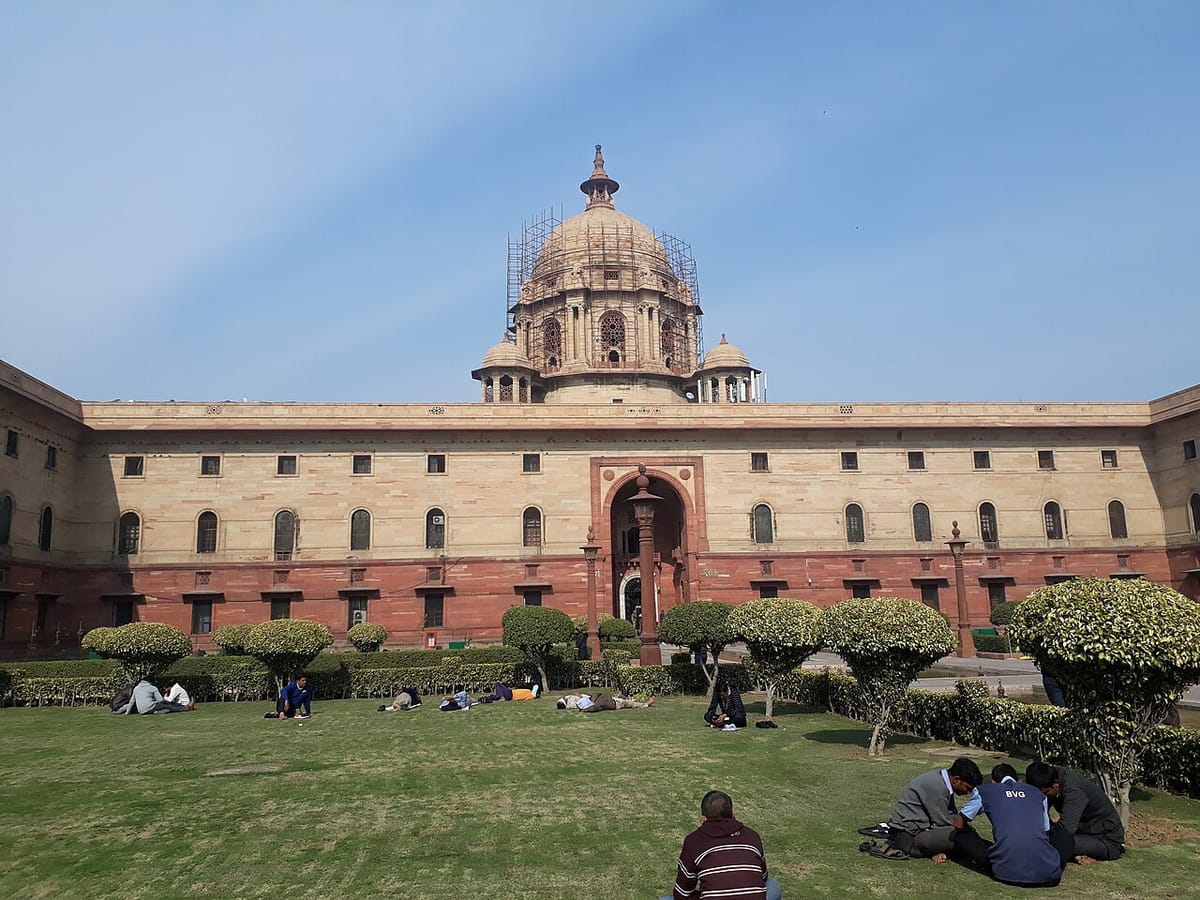
North Block, Raisina Hill. For decades it housed the Union Finance and Home ministries, the two that deal most with the states: money through the Finance Commission and GST, and coordination through the Zonal Councils. Image: Pinakpani, 2019 · Wikimedia Commons · CC BY-SA 4.0
India has two levels of government, the Union and the states. Both make laws, run offices and collect taxes. The Constitution divides this work in three ways: legislative (Articles 245–255), administrative (Articles 256–263) and financial (Articles 268–293). The Seventh Schedule lists who makes laws on what.
3
Lists
Seventh Schedule
97 · 66 · 47
Subjects in 1950
Union · State · Concurrent
Art. 248
Residuary power
With Parliament
Art. 280
Finance Commission
Every 5 years
A Union with a strong Centre
Federal in structure, but the Union has the upper hand.
Article 1 calls India a "Union of States", not a federation. B. R. Ambedkar explained the word: the Union is not the result of an agreement among states, and no state can leave it. The Constitution is federal in normal times, but it can work almost like a unitary system in an Emergency.
FEDERAL FEATURES VS UNITARY FEATURES
Federal features
Unitary (pro-Centre) features
Governments
Two levels: Union and states
Strong Centre; more and bigger subjects
Constitution
Written and supreme
One Constitution; Parliament can change state boundaries (Art. 3)
Courts
Supreme Court settles Union–state disputes
One integrated judiciary
Officials
Each state has its own government
Governor appointed by the Centre; All-India Services
Emergency
States run their own subjects
Centre can take over state subjects
Scholars call India quasi-federal. In S. R. Bommai (1994) the Supreme Court held that federalism is part of the basic structure.
Channel
Where in the Constitution
Legislative
Part XI, Articles 245–255, with the Seventh Schedule
Administrative
Part XI, Articles 256–263
Financial
Part XII, Articles 268–293
The three channels of Centre-state relations
QUICK CHECK
PYQ · PSSSB Jail Warder 2021 The Central Government controls the states through different agencies and techniques. Which among followings is not covered for this purpose?
Tap an option to answer
Answer: D — State Police
The Centre influences states through the Governor it appoints, the All-India Services and grants. Police is a State List subject, run by the state itself.
QUICK CHECK
PYQ · PSSSB Jail Warder 2021 Which among the following cannot be an issue between centre and state?
Tap an option to answer
Answer: A — Selection of State Assembly Speaker
The Assembly elects its own Speaker; the Centre has no role. The Governor's role, President's Rule (Article 356) and grants are classic friction points.
The Seventh Schedule: three lists
Who makes laws on what, and who gets the leftovers.
Article 246 divides law-making subjects into three lists in the Seventh Schedule. The idea of three lists came from the Government of India Act, 1935; the Concurrent List idea is usually traced to Australia.
State legislature. Police, public order, public health, agriculture, land, local government, liquor.
List III
Concurrent List
Both. Criminal law, marriage and divorce, education, forests, electricity, trade unions.
Subject counts change with amendments. In 1950 the lists had 97, 66 and 47 subjects. Books today give about 98–100, 59–61 and 52.
QUICK FACT
The 42nd Amendment (1976) moved five subjects from the State List to the Concurrent List: education, forests, weights and measures, protection of wild animals and birds, and administration of justice (courts other than the Supreme Court and High Courts).
KEY TERM
Residuary powers (Article 248)
A subject in no list, such as something the framers could not foresee, belongs to Parliament. This includes the power to levy residuary taxes. India follows Canada here; in the USA and Australia leftover powers stay with the states. If a dispute arises over whether a matter is residuary, the courts finally decide.
New subject appears→Not in any list→Parliament can make law→Courts settle disputes
FLASHCARDS
Which list? Tap to check
Police and public order
State List
Citizenship
Union List
Education
Concurrent List (moved from State List in 1976)
Agriculture
State List
Banking and currency
Union List
Local government (panchayats, municipalities)
State List
Marriage and divorce
Concurrent List
Forests
Concurrent List (moved in 1976)
QUICK CHECK
PYQ · Punjab Police Constable 2025 Who is responsible for making laws on items listed in the State List?
Tap an option to answer
Answer: A — A State Legislative Assembly
State List subjects belong to the state legislature. Courts interpret laws; they do not make them.
QUICK CHECK
PYQ · Punjab Police SI 2023 Under which Schedule of the Constitution of India is 'local government' shown as a subject in the State List?
Tap an option to answer
Answer: A — Seventh Schedule
All three lists, including the State List entry on local government, are in the Seventh Schedule. The Fifth and Sixth Schedules deal with scheduled and tribal areas; the Eighth lists languages.
When Parliament can enter the State List
Five doors, and the rule when two laws clash.
The State List belongs to the states. But in five situations Parliament can make laws on it. Only one of these doors, Article 252, is opened by the states themselves.
Article
When
Key condition
249
National interest
Rajya Sabha resolution by two-thirds present and voting; lasts 1 year, renewable
250
National Emergency
Law lapses 6 months after the Emergency ends
252
Two or more states ask
Applies to those states and any that adopt it later; only Parliament can amend it
253
To carry out a treaty
No state consent needed
356–357
President's Rule
Parliament (or the President) makes laws for that state
REMEMBER
N-E-R-T-P — National interest 249, Emergency 250, Request of states 252, Treaty 253, President's Rule 356.
WHEN A CENTRAL LAW AND A STATE LAW CLASH (ARTICLE 254)
On a Concurrent List subject, the central law prevails and the state law is void to the extent of the clash. This is the rule of repugnancy. Exception: if the state law was reserved for the President and got his assent, it prevails in that state. Even then, Parliament can override it later with a new law.
QUICK CHECK
PYQ · PPSC NE 2019 The Constitution has vested the 'residuary powers' with the Centre. But the final authority to decide whether a matter falls under residuary powers or not rests with
Tap an option to answer
Answer: D — The Supreme Court
Article 248 gives residuary power to Parliament, but whether a subject really falls outside all three lists is a question of interpreting the Constitution, which the courts, finally the Supreme Court, decide. The same question came in PPSC RO 2019 and TA 2019.
QUICK CHECK
PYQ · PSSSB Patwari 2021 Parliament can legislate on matters listed in the State List:
Tap an option to answer
Answer: D — At the request of two or more States
Article 252 lets Parliament legislate on a State List subject when two or more state legislatures pass resolutions asking for it. No amendment or Presidential permission is needed.
Administrative relations and inter-state bodies
Union directions, All-India Services, councils, water disputes and the commissions.
Article
What it says
256
States must use their power so that Union laws are obeyed; the Union may give directions.
257
States must not obstruct the Union; directions on communications and railways.
258 / 258A
Union and states can hand over functions to each other, with consent.
261
Full faith and credit to public acts, records and court orders across India.
262
Inter-state river water disputes; Parliament may bar courts from hearing them.
263
President may set up an Inter-State Council.
312
New All-India Service if the Rajya Sabha agrees by two-thirds.
355 / 365
Union must protect states; ignoring Union directions can lead to President's Rule.
Articles at a glance: administrative relations
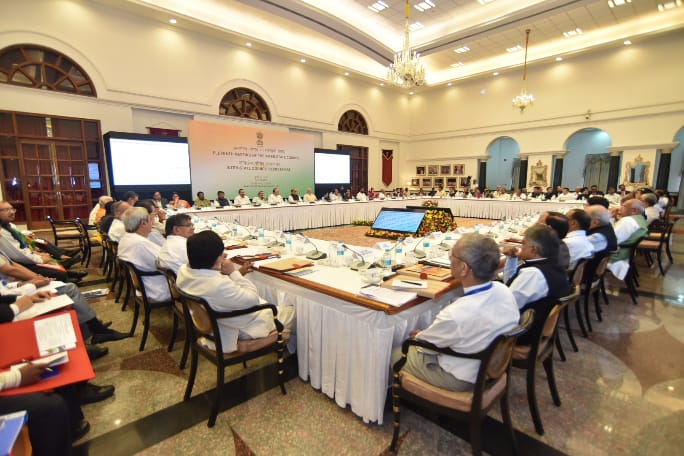
The 11th meeting of the Inter-State Council, New Delhi, July 2016. The Council (Article 263) was set up in 1990 on the Sarkaria Commission's advice. It is chaired by the Prime Minister; all Chief Ministers are members. Image: Narendra Modi (official Flickr), 2016 · Wikimedia Commons · CC BY-SA 2.0
INTER-STATE COUNCIL VS ZONAL COUNCILS
Inter-State Council
Zonal Councils
Basis
Constitution, Article 263
Law: States Reorganisation Act, 1956
Chair
Prime Minister
Union Home Minister
Set up
1990
1957; five zones
Punjab
Punjab CM is a member
Punjab is in the Northern Zonal Council
RIVER WATER DISPUTES (ARTICLE 262)
Parliament passed the Inter-State River Water Disputes Act, 1956. It lets the Centre set up a tribunal, and bars the Supreme Court and other courts from hearing the dispute itself. For Punjab, the Ravi and Beas Water Tribunal was set up in 1986, with Punjab, Haryana and Rajasthan as parties.
QUICK FACT
All-India Services: the IAS and IPS go back to before 1950. The Indian Forest Service became the third All-India Service in 1966. Officers are recruited by the Union, serve in the states, and only the Union can dismiss them.
COMMISSIONS AND DOCUMENTS ON CENTRE-STATE RELATIONS
1966
Administrative Reforms Commission
Union body; asked for an Inter-State Council.
1969
Rajamannar Committee
Set up by Tamil Nadu; asked for more state autonomy.
1973
Anandpur Sahib Resolution
Adopted in Punjab; it too sought more powers for the states.
1983
Sarkaria Commission
Set up by the Centre; report in 1988 with 247 recommendations.
2000
Venkatachaliah Commission (NCRWC)
Reviewed the working of the whole Constitution; report 2002.
2007
Punchhi Commission
Second Union commission on Centre-state ties; report 2010.
PYQ · Punjab Police SI 2023 In which of the following years was the Indian Forest Service established as the third All India Service?
Tap an option to answer
Answer: D — 1966
The Indian Forest Service was created in 1966 under Article 312, after the IAS and IPS.
QUICK CHECK
PYQ · PSSSB Excise Inspector 2021 Which of the following is NOT within the jurisdiction of the High Court?
Tap an option to answer
Answer: C — It can decide the river water dispute between the two states
Under Article 262 and the Inter-State River Water Disputes Act, 1956, such disputes go to a tribunal, and courts are barred from deciding them.
QUICK CHECK
PYQ · Punjab Police SI 2021 The Sarkaria Commission to examine Centre–State relations was set up in the year ______.
Tap an option to answer
Answer: C — 1983
The Sarkaria Commission was set up in June 1983 and reported in 1988. The Punchhi Commission followed in 2007.
Financial relations, the Finance Commission and GST
The Union collects more; the states spend more. Here is how the gap is filled.
The Union has the biggest taxes, like income tax and customs. The states run most services, like police, schools and hospitals. So the Union shares its taxes and gives grants. The Finance Commission decides the formula.
Article
What it says
268
Levied by the Union, collected and kept by states (certain stamp duties).
269 / 269A
Levied and collected by the Union, given to states; 269A: inter-state GST (IGST) shared.
270
Most central taxes go into a pool shared with the states.
271
Surcharges are kept by the Union alone.
275
Statutory grants to states in need, charged on the Consolidated Fund of India.
280
Finance Commission, every 5 years.
282
Discretionary grants for any public purpose.
293
States borrow within India; Centre's consent needed if a central loan is unpaid.
Articles at a glance: money between Union and states
KEY TERM
Finance Commission (Article 280)
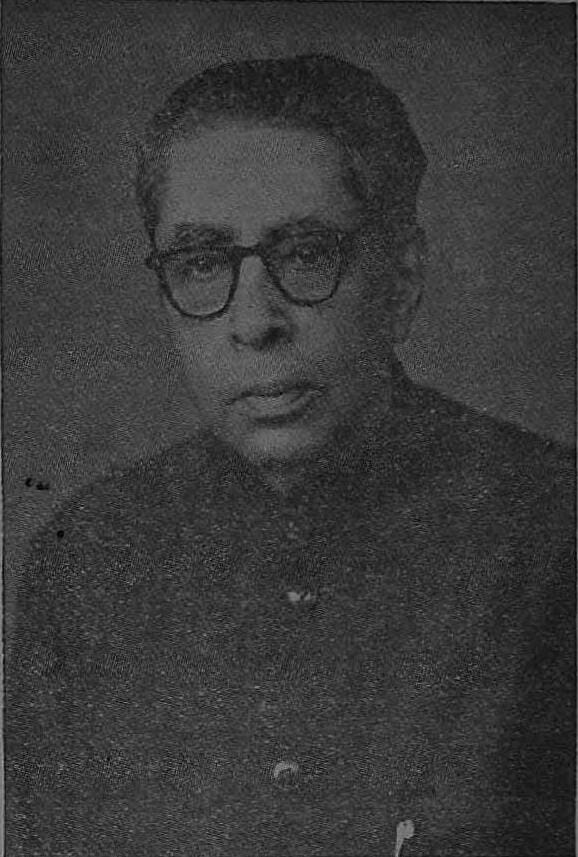
Set up by the President every five years (or earlier). It has a chairman and four members. It recommends how central taxes are split between the Union and the states, and among the states, the principles for grants-in-aid, and help for panchayats and municipalities. Its advice is not binding, but is usually accepted. The first Finance Commission (1951) was chaired by K. C. Neogy.
President appoints→Studies Union and state finances→Recommends shares and grants→Report laid in Parliament
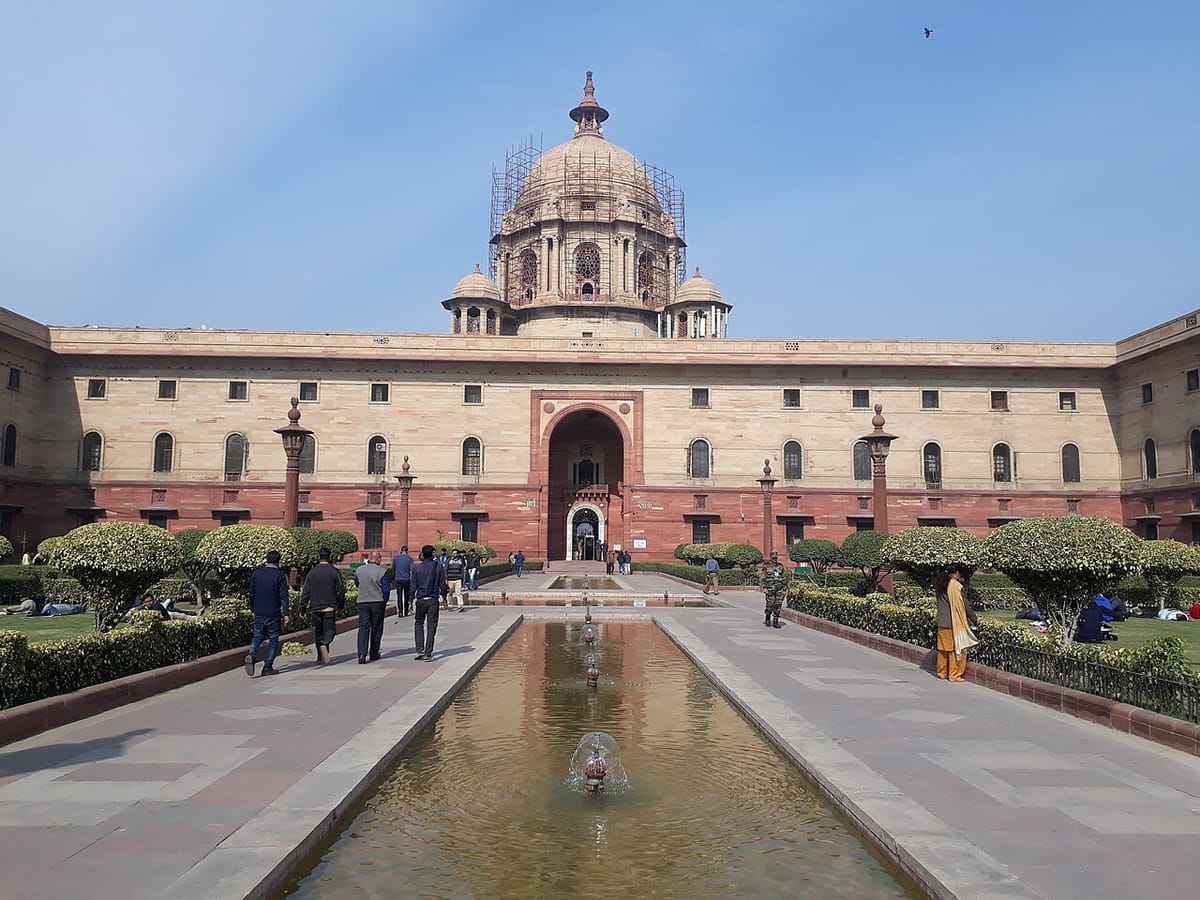
Another view of North Block. GST came with the 101st Amendment (2016) and began on 1 July 2017. Rates are recommended by the GST Council (Article 279A), chaired by the Union Finance Minister. Image: Pinakpani, 2019 · Wikimedia Commons · CC BY-SA 4.0
FINANCE COMMISSION VS GST COUNCIL
Finance Commission
GST Council
Article
280
279A (101st Amendment)
Nature
Set up every 5 years
Permanent
Chair
Expert chairman
Union Finance Minister
Job
Shares of central taxes; grants
GST rates, exemptions, rules
Votes
Not a voting body
Centre one-third, states two-thirds; decision by three-fourths
QUICK CHECK
PYQ · PPSC ICS 2016 The GST will be levied by
Tap an option to answer
Answer: B — The Centre and the States simultaneously across the value chain
GST is a dual tax. Under Article 246A both Parliament and the state legislatures make GST laws: CGST goes to the Centre and SGST to the state on the same sale. Inter-state sales carry IGST (Article 269A).
QUICK CHECK
PYQ · PSSSB Excise Inspector 2021 Which one of the following bodies will decide the tax rates for goods and services under the GST regime?
Tap an option to answer
Answer: D — GST Council
The GST Council under Article 279A recommends GST rates; Parliament and the state legislatures then make the GST laws (Article 246A).
QUICK CHECK
PYQ · PPSC PCSEB 2018 Finance Commission recommends which of the following matters to the President? 1. The distribution of the net proceeds of taxes to be shared between the Centre and the states and the allocation between the states the respective shares of such proceeds. 2. The principles which should govern the grants-in-aid to the states by the Centre. 3. The measures needed to augment the Consolidated Fund of a state to supplement the resources of Panchayats and the municipalities in the state on the basis of the recommendations made by the State Finance Commission. 4. Any other matter referred to it by the President in the interest of sound finance. Select the correct answer using the codes given below:
Tap an option to answer
Answer: D — All of the above
All four are listed in Article 280(3). Item 3 was added by the 73rd and 74th Amendments (1992). The same question came in the second PPSC PCSEB paper of 2018.
Everything on one look
Lists, doors into the State List, councils and money.
NUMBERS AND ARTICLES
Lists in 1950: 97 · 66 · 47
Concurrent List today: 52 subjects
42nd (1976): 5 subjects to Concurrent
Residuary: Art 248, Parliament
Repugnancy: Art 254, Union law wins
Finance Commission: Art 280, every 5 years
DOORS INTO THE STATE LIST
249: Rajya Sabha, national interest
250: National Emergency
252: two or more states ask
253: international treaty
356–357: President's Rule
263: Inter-State Council (1990)
COMMON TRAPS
Residuary powers are with Parliament (Canada model), not with the states as in the USA.
Concurrent List is from Australia; residuary with Centre is from Canada.
The 42nd Amendment moved five subjects, including education and forests, to the Concurrent List.
An Article 249 resolution is passed by the Rajya Sabha alone, by two-thirds present and voting.
Article 252 is the only door the states open; only Parliament can later change that law.
Article 253 needs no state consent.
Inter-State Council: PM chairs; Zonal Councils: Home Minister chairs.
GST Council is chaired by the Finance Minister, not the PM.
Finance Commission advice is not binding.
QUICK BYTES
Article 1: India is a Union of States
Seventh Schedule: three lists
Article 246: division of subjects
Article 248: residuary powers to Parliament
Article 249: Rajya Sabha resolution
Article 250: National Emergency
Article 252: states request
Article 253: treaties
Article 254: repugnancy
Article 262: river water disputes
Article 263: Inter-State Council
Article 279A: GST Council
Article 280: Finance Commission
Article 312: All-India Services
Sarkaria Commission: 1983
Punchhi Commission: 2007
CHECK YOURSELF
Parliament wants to pass a law on agriculture, a State List subject, for the whole country. There is no Emergency and no state has asked. What route does the Constitution allow, and how long does it last?
Show answer
Article 249. The Rajya Sabha must pass a resolution, supported by two-thirds of members present and voting, saying it is needed in the national interest. The resolution lasts one year and can be renewed. The law stops working six months after the resolution ends.
❧
Frequently Asked Questions
What are the three lists in the Seventh Schedule?
The Union List, on which only Parliament makes laws; the State List, on which state legislatures make laws; and the Concurrent List, on which both can make laws. In 1950 they had 97, 66 and 47 subjects.
Who has residuary powers in India?
Parliament, under Article 248. A subject not found in any list belongs to the Union. India follows Canada here, unlike the USA where leftover powers stay with the states.
Which subjects did the 42nd Amendment move to the Concurrent List?
Five subjects in 1976: education, forests, weights and measures, protection of wild animals and birds, and administration of justice. All were earlier in the State List.
When can Parliament make laws on State List subjects?
In five cases: a Rajya Sabha resolution in the national interest (Article 249), a National Emergency (250), a request by two or more states (252), to carry out a treaty (253), and President's Rule in a state (356).
What happens if a central law and a state law clash?
On a Concurrent List subject the central law prevails under Article 254. The state law is void to the extent of the clash, unless it got the President's assent. Even then Parliament can override it later.
What is the Inter-State Council?
A body under Article 263 to discuss issues between states and the Centre. It was set up in 1990 on the Sarkaria Commission's advice. The Prime Minister chairs it and all Chief Ministers are members.
How are inter-state river water disputes settled?
Under Article 262 and the Inter-State River Water Disputes Act, 1956, the Centre sets up a tribunal. Parliament has barred courts from deciding such disputes directly. The Ravi and Beas Water Tribunal (1986) dealt with Punjab, Haryana and Rajasthan.
What does the Finance Commission do?
Under Article 280 it recommends how central taxes are shared between the Union and the states and among the states, and the principles for grants-in-aid. It is set up by the President every five years. Its advice is not binding.
Who chairs the GST Council?
The Union Finance Minister. The Council was created under Article 279A by the 101st Amendment of 2016. The Centre has one-third of the vote weight and the states two-thirds.
When was the Sarkaria Commission set up?
In 1983, under Justice R. S. Sarkaria, to review Centre-state relations. It reported in 1988 with 247 recommendations, including setting up the Inter-State Council.
Now sit the questions they actually set
Previous-year PPSC questions on this topic, free to read with the worked answer.