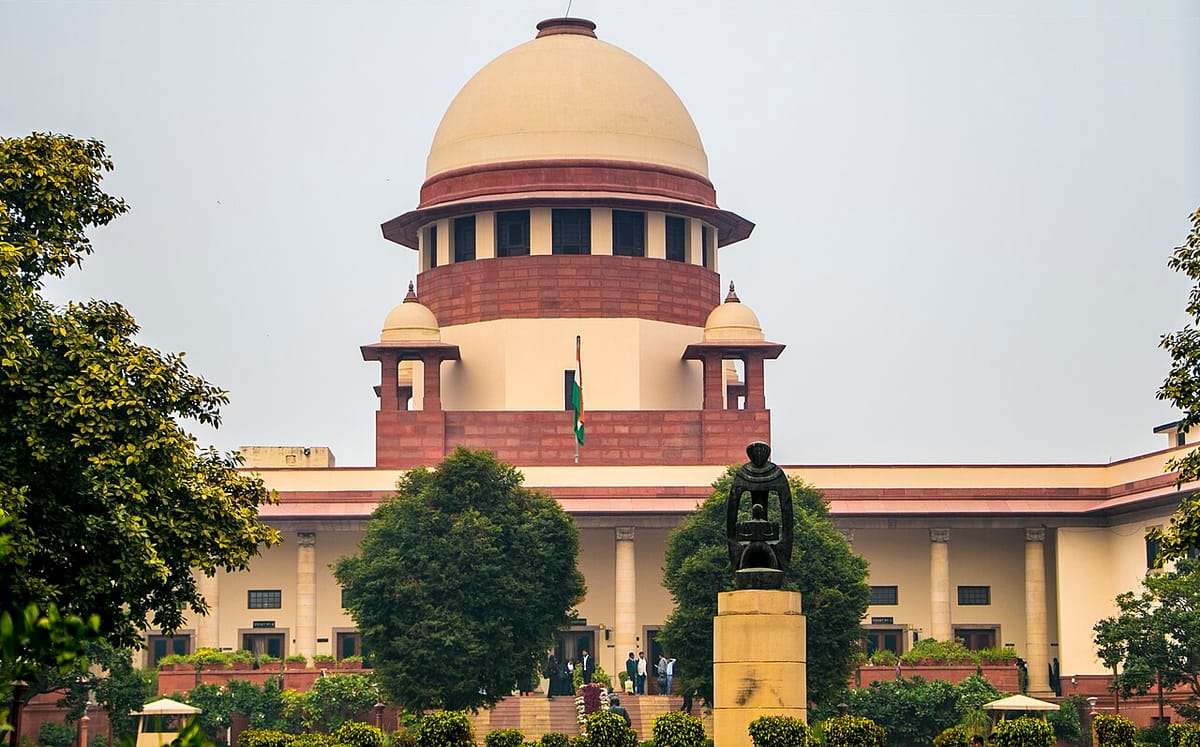
The Right to Freedom covers Articles 19 to 22. Article 19 gives citizens six freedoms. Article 20 shields a person accused of a crime. Article 21 protects life and personal liberty, and 21A gives children free education. Article 22 sets the rules for arrest and detention.
Article 19: six freedoms and their limits
For citizens only. Every freedom comes with reasonable restrictions.
| Article | What it says |
|---|---|
| 19 | Six freedoms for citizens: speech, assembly, association, movement, residence, profession. |
| 20 | Protection of an accused: no retrospective crime, no double punishment, no forced self-incrimination. |
| 21 | No one loses life or personal liberty except by procedure established by law. |
| 21A | Free and compulsory education for children aged 6 to 14. |
| 22 | Rights on arrest, and limits on preventive detention. |
| Freedom | Can be limited for |
|---|---|
| (a) Speech and expression | 19(2): sovereignty and integrity, security of the State, friendly relations with foreign States, public order, decency or morality, contempt of court, defamation, incitement to an offence. |
| (b) Assemble peacefully, without arms | 19(3): sovereignty and integrity, public order. |
| (c) Form associations, unions, co-operatives | 19(4): sovereignty and integrity, public order, morality. |
| (d) Move freely in India | 19(5): general public interest, protection of Scheduled Tribes. |
| (e) Reside and settle anywhere | 19(5): same as (d). |
| (g) Any profession, trade or business | 19(6): public interest; the State may fix qualifications or run a business itself. |
Clause (f) was the freedom to acquire, hold and sell property. The 44th Amendment (1978) deleted it with the Right to Property. So the list jumps from (e) to (g). Clause (c) gained co-operative societies through the 97th Amendment (2011).
No freedom is absolute. A limit is valid only if three things are true. It is made by a law, not just an order. It falls under one of the grounds written in clauses (2) to (6). And it is reasonable, not more than needed. The courts, not the government, decide what is reasonable.
- Freedom of the press
- Not written separately, but part of speech and expression.
- Right to know
- Citizens' right to information on public matters grows out of 19(1)(a).
- Flying the national flag
- Naveen Jindal case (2004): a citizen may fly the Tricolour with respect, as part of expression.
- Section 66A struck down
- Shreya Singhal (2015): the IT Act section allowing arrest for "offensive" online posts was too vague.
- Right to strike
- Not a Fundamental Right. Forming a union is protected; striking is not.
Amendments that changed the grounds, and the sedition debateTap to open
- 1st Amendment (1951) added public order, friendly relations with foreign States and incitement to an offence to 19(2).
- 16th Amendment (1963) added sovereignty and integrity of India to 19(2), (3) and (4).
- Kedar Nath Singh (1962) limited the old sedition law (IPC Section 124A) to speech that incites violence or public disorder.
- In 2022 the Supreme Court put Section 124A on hold. The Bharatiya Nyaya Sanhita, 2023 replaced the IPC from 1 July 2024 and does not use the word "sedition".
- During a National Emergency for war or external aggression, Article 19 is suspended automatically (Article 358).
Articles 20 and 21: the accused, and life and liberty
Shields no Emergency can remove, and the article that grew the most.
No punishment for an act that was not a crime when done, and no heavier penalty than the law then allowed. Civil and tax laws can still be made retrospective.
No one is prosecuted and punished twice for the same offence by a court. A government job inquiry is not counted as a second trial.
An accused cannot be forced to be a witness against himself. Fingerprints and blood samples can still be taken.
The three shields of Article 20. They protect every person, citizen or foreigner, and even companies. They cannot be suspended in an Emergency.
In Selvi v. State of Karnataka (2010) the Supreme Court held that narco-analysis, polygraph and brain-mapping tests cannot be done without consent. Forcing them breaks Article 20(3) and Article 21.
Article 21 is one line: no person shall be deprived of his life or personal liberty except according to procedure established by law. It protects every person. For many years the courts read it narrowly. Then two cases changed everything.
- Gopalan v. State of Madras (1950): any procedure made by a law was enough
- Court treated Articles 19 and 21 as separate boxes

- Maneka Gandhi v. Union of India (1978): the procedure must be fair, just and reasonable
- Linked Articles 14, 19 and 21 together
- 1950A. K. Gopalan
Narrow reading: a law's procedure is enough.
- 1978Maneka Gandhi
Procedure must be fair, just and reasonable.
- 1979Hussainara Khatoon
Speedy trial is part of Article 21.
- 1980Bachan Singh (State of Punjab)
Death penalty is valid, but only in the rarest of rare cases.
- 1985Olga Tellis
Right to livelihood, for pavement dwellers of Bombay.
- 1996–97D. K. Basu; Vishaka
Rules for arrest and custody; guidelines against sexual harassment at work.
- 2017K. S. Puttaswamy
Nine judges: privacy is a Fundamental Right.
- 2018Common Cause
Right to die with dignity: passive euthanasia and living wills allowed.
Courts have read these into the one line of Article 21: living with dignity, livelihood, health and medical aid, a clean environment, shelter, free legal aid, speedy trial, privacy, travel abroad, and protection from custodial torture and handcuffing without need. None of these words is in the text.
Article 21A: the right to education
Free and compulsory schooling for every child from 6 to 14.
The 86th Amendment (2002) added Article 21A. It says the State shall provide free and compulsory education to all children aged 6 to 14, in the way a law decides. That law is the Right of Children to Free and Compulsory Education Act, 2009, in force from 1 April 2010.
- 1950Article 45 (Directive Principle)The State should try to give free education up to age 14. Not enforceable in court.
- 1993Unni Krishnan caseSupreme Court: education up to 14 is part of the right to life (Article 21).
- 200286th AmendmentArticle 21A added; Article 45 changed to early childhood care below 6; duty 51A(k) for parents added.
- 2009RTE ActGives effect to 21A. In force from 1 April 2010.
More on the RTE ActTap to open
- Private unaided schools must keep 25% of entry-class seats for children from weaker and disadvantaged groups.
- No capitation fee and no screening test for admission.
- The 2019 amendment let states hold back students who fail a re-exam in Classes 5 and 8, ending the blanket no-detention rule.
Article 22: arrest and preventive detention
Two kinds of detention, two different sets of rules.
- Step 1Told the groundsThe person must be told why he is arrested, as soon as possible.
- Step 2Lawyer of choiceHe may consult and be defended by a lawyer he chooses.
- Step 3Magistrate within 24 hoursHe must be produced before the nearest magistrate within 24 hours, not counting travel time.
- Step 4Only a magistrate can extendNo custody beyond 24 hours without the magistrate's order.
Holding a person not for a crime already done, but to stop a likely future act that may harm security or public order. There is no trial first. India allows it even in peacetime, which few democracies do. Laws using it include the National Security Act, 1980 and COFEPOSA, 1974.
Detention beyond 3 months needs an Advisory Board of persons qualified to be High Court judges to say there is sufficient cause. The detenu must be told the grounds (facts against public interest may be withheld) and get a chance to make a representation. Parliament fixes the maximum period and the cases. The 44th Amendment (1978) cut the 3 months to 2 months, but that part has never been brought into force.
Everything on one look
Clauses, numbers and cases to remember.
- 6 freedoms in Article 19 (7 in 1950)
- 3 shields in Article 20
- Free education: ages 6 to 14 (21A)
- Magistrate within 24 hours (22(2))
- Advisory Board after 3 months (22(4))
- RTE quota in private schools: 25%
- 44th (1978): 19(1)(f) deleted; 20, 21 never suspended
- 86th (2002): Article 21A
- 97th (2011): co-operatives in 19(1)(c)
- Maneka Gandhi (1978): fair, just, reasonable
- Bachan Singh (1980): rarest of rare
- Puttaswamy (2017): privacy
- Article 19 is for citizens only; Articles 20, 21 and 22 protect every person.
- There is no 19(1)(f) today; it was property, deleted in 1978.
- Freedom of the press is not separate; it is inside 19(1)(a).
- Freedom of religion is Article 25, not Article 19.
- Article 20(1) bars only retrospective criminal laws, not tax or civil laws.
- "Procedure established by law" = Japan; "due process" = USA.
- Gopalan (1950) was the narrow view; Maneka Gandhi (1978) widened Article 21.
- Capital punishment is allowed under Article 21 (rarest of rare).
- The 24-hour rule does not apply to preventive detention.
- Articles 20 and 21 can never be suspended in an Emergency; Article 19 can be.
- Six freedoms: Article 19(1)
- Limits on speech: Article 19(2)
- Co-operatives added: 97th Amendment, 2011
- Section 66A struck down: Shreya Singhal, 2015
- No ex-post-facto crime: Article 20(1)
- No double jeopardy: Article 20(2)
- No self-incrimination: Article 20(3)
- Forced narco tests barred: Selvi, 2010
- Life and liberty: Article 21
- Fair, just, reasonable: Maneka Gandhi, 1978
- Livelihood: Olga Tellis, 1985
- Privacy: Puttaswamy, 2017
- Education 6–14: Article 21A, 86th Amendment
- RTE Act: 2009, in force 2010
- Arrest rights: Article 22(1)–(2)
- Preventive detention: Article 22(3)–(7)
Police in Amritsar arrest a man for theft at 6 pm on Monday. The magistrate's court is two hours away. By when must he be produced before the magistrate, and could the rule be different if he were held under the National Security Act?
Show answer
He must be produced within 24 hours of arrest, not counting the travel time to court, so by about 8 pm on Tuesday. Under the National Security Act (a preventive detention law) the 24-hour rule does not apply; instead an Advisory Board must approve any detention beyond 3 months.