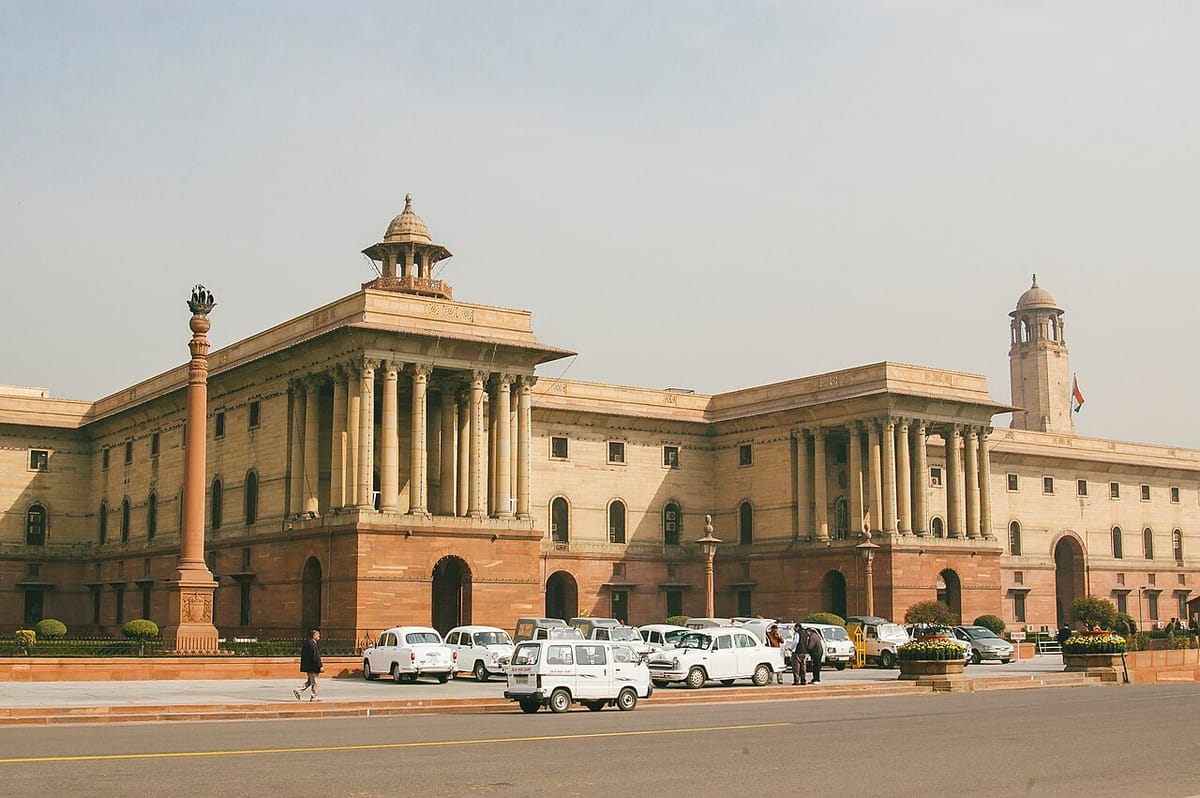
India has a parliamentary system. The President is the head of the State, but the real work of governing is done by the Prime Minister and the Council of Ministers. Article 74 creates this Council to aid and advise the President. The ministers are chosen from Parliament and stay in power only while the Lok Sabha trusts them.
The parliamentary system
Why the President signs but the Prime Minister decides.
In a parliamentary system, the government comes out of the legislature. People elect the Lok Sabha. The party or alliance with a majority forms the government. Its leader becomes Prime Minister. The government must keep the confidence of the Lok Sabha, or it falls.
India took this model from Britain, so it is also called the Westminster model, cabinet government or responsible government. Indians already knew it from the Government of India Acts of 1919 and 1935. The Constitution-makers chose responsibility over the fixed term of a presidential system.
The President is the nominal (de jure) executive: every order is issued in his name. The Prime Minister and Council of Ministers are the real (de facto) executive: they actually decide. So India has a dual executive.
There shall be a Council of Ministers with the Prime Minister at the head to aid and advise the President who shall, in the exercise of his functions, act in accordance with such advice.
Yes. The 42nd Amendment (1976) made the advice binding. The 44th Amendment (1978) let the President send it back once for reconsideration. If the Council sends it again, he must accept it. Under Article 74(2), no court can ask what advice the ministers gave.
How the Prime Minister and ministers are appointed
Article 75: appointment, oath, six months and salary.
Article 75(1) says only that the President appoints the Prime Minister. The Constitution gives no method. By convention, the President appoints the leader of the majority party or alliance in the Lok Sabha. The other ministers are appointed by the President on the Prime Minister's advice.
- Lok Sabha electionPeople elect MPs. One party or alliance wins a majority.
- Party chooses its leaderThe majority group elects its leader.
- President appointsThe President invites the leader and appoints him or her PM (Article 75(1)).
- OathThe President gives the oath of office and secrecy (Article 75(4), Third Schedule).
- Confidence of the HouseIf the majority is doubtful, the President can ask the new PM to prove it on the floor of the Lok Sabha.
If no party has a clear majority (a hung Lok Sabha), the President must judge who can win the confidence of the House. If a PM dies in office and the party has no clear new leader, the President also uses judgement. These are among his few discretionary moments.
- The PM must be qualified to be an MP: a citizen, at least 25 years old for the Lok Sabha or 30 for the Rajya Sabha.
- The PM can be from either House. Indira Gandhi (1966) and Manmohan Singh (2004) were Rajya Sabha members when they first became PM.
- A person who is not an MP can be appointed PM or minister, but must become one within six consecutive months (Article 75(5)). P. V. Narasimha Rao (1991) and H. D. Deve Gowda (1996) were appointed this way.
- Salaries of ministers are fixed by Parliament by law (Article 75(6)).
| Article | What it says |
|---|---|
| 74(1) | A Council of Ministers headed by the PM to aid and advise the President. |
| 74(2) | No court can ask what advice ministers gave the President. |
| 75(1) | President appoints the PM; other ministers on the PM's advice. |
| 75(1A) | Ministry size at most 15% of Lok Sabha strength (91st Amendment). |
| 75(1B) | A member disqualified for defection cannot be made a minister. |
| 75(2) | Ministers hold office during the pleasure of the President. |
| 75(3) | Council is collectively responsible to the Lok Sabha. |
| 75(4) | President gives the oaths of office and secrecy. |
| 75(5) | A non-MP minister must become an MP within six months. |
| 75(6) | Salaries fixed by Parliament. |
| 76 | Attorney General of India. |
| 77 | All executive action is taken in the President's name; Rules of Business. |
| 78 | Duties of the PM: keep the President informed. |
| 88 | Ministers and the Attorney General may speak in either House. |
74 creates, 75 controls, 78 communicates. Article 74 creates the Council; 75 covers everything about ministers; 78 is the PM's duty to tell the President.
The Council of Ministers and the Cabinet
Three ranks, one inner circle, and a cap on size.
The Constitution does not grade ministers. The three ranks below come from convention, borrowed from Britain. Together they make the Council of Ministers.
Heads a big ministry like Home, Finance or Defence. Attends Cabinet meetings and shapes policy.
Either holds independent charge of a ministry or assists a Cabinet Minister. Joins Cabinet meetings only when invited.
Assists a senior minister. No independent charge; not part of the Cabinet.
The three ranks of ministers. Only Cabinet Ministers sit in Cabinet meetings as of right.
Before 2003, ministries could be any size. The 91st Amendment fixed a cap: total ministers, including the PM, cannot be more than 15% of the total strength of the Lok Sabha (Article 75(1A)). In a House of 543 that is 81 at most. In the states the cap is also 15%, but the Council must have at least 12 (Article 164(1A)). The same amendment bars a member disqualified for defection from becoming a minister.
A kitchen cabinet is an informal inner circle around the PM. It has no legal status. Cabinet committees are also not in the Constitution; they are set up under the Rules of Business. The PM chairs most of them, such as Political Affairs, Economic Affairs and Appointments. The Committee on Parliamentary Affairs is a well-known exception: a senior minister chairs it.
Also asked: the Cabinet SecretaryTap to open
The Cabinet Secretary is the senior-most civil servant and heads the Cabinet Secretariat, which prepares the agenda for Cabinet meetings and serves the cabinet committees. It is not a constitutional post. The Cabinet Secretary is also the ex-officio chairman of the Civil Services Board.
Responsibility, powers and the famous firsts
Who the government answers to, what the PM does, and the names exams love.
If the Prime Minister resigns or dies, the whole Council of Ministers goes with him. If any other minister leaves, only that seat falls vacant. The first no-confidence motion in the Lok Sabha came in 1963, against Nehru's government, moved by J. B. Kripalani. It failed.
| Role | What the PM does |
|---|---|
| Head of the Council | Picks ministers, gives out portfolios, can ask any minister to resign, chairs the Cabinet. |
| Link to the President | Under Article 78, tells the President all Cabinet decisions and gives any information he asks for. |
| Leader of the House | Advises on summoning and proroguing Parliament; can advise dissolution of the Lok Sabha. |
| Appointments | Advises the President on the CAG, Attorney General, Election Commissioners, Finance Commission and more. |
| Chairman of bodies | NITI Aayog, the Inter-State Council and the National Water Resources Council. |
Order of precedence: President first, Vice-President second, Prime Minister third, then Governors within their own states. The Chief Justice of India comes after them.
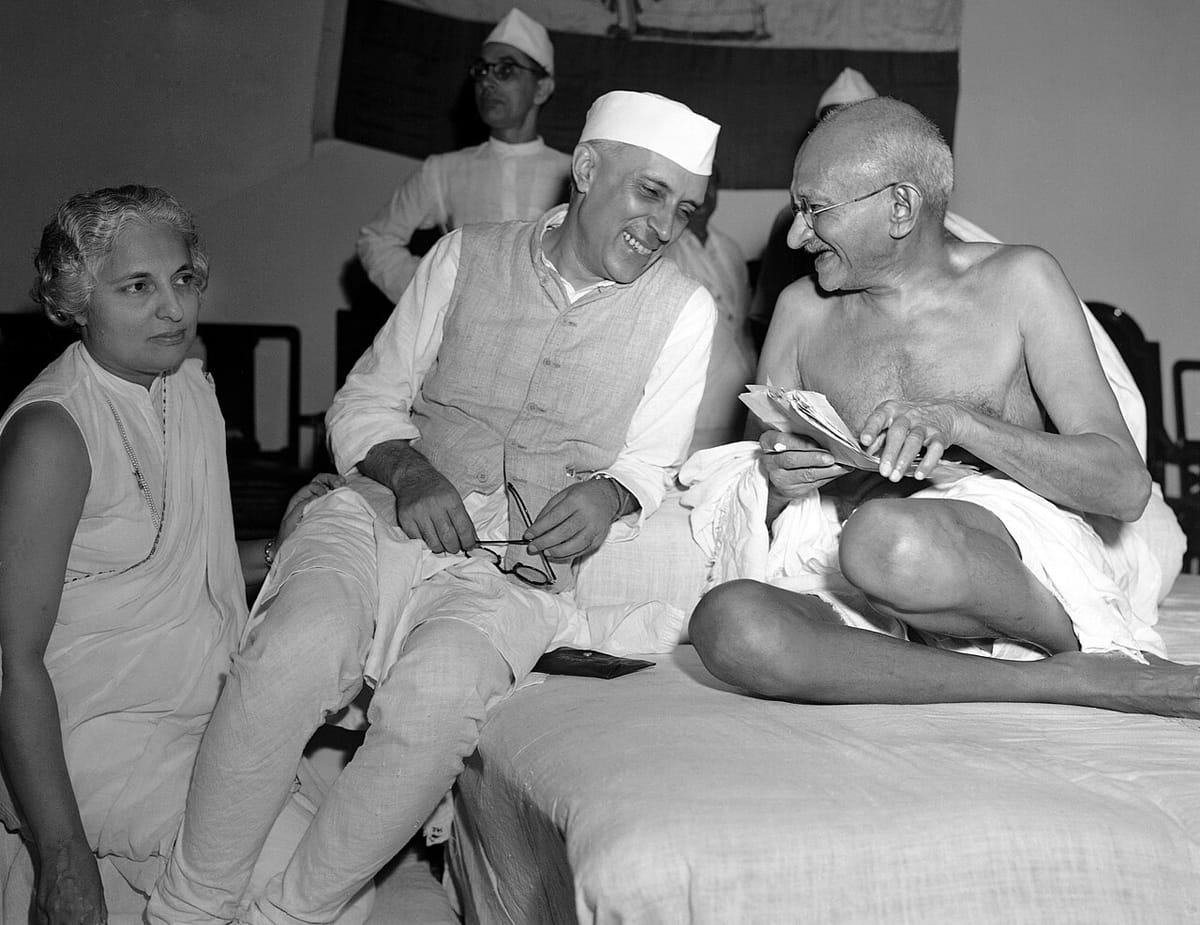
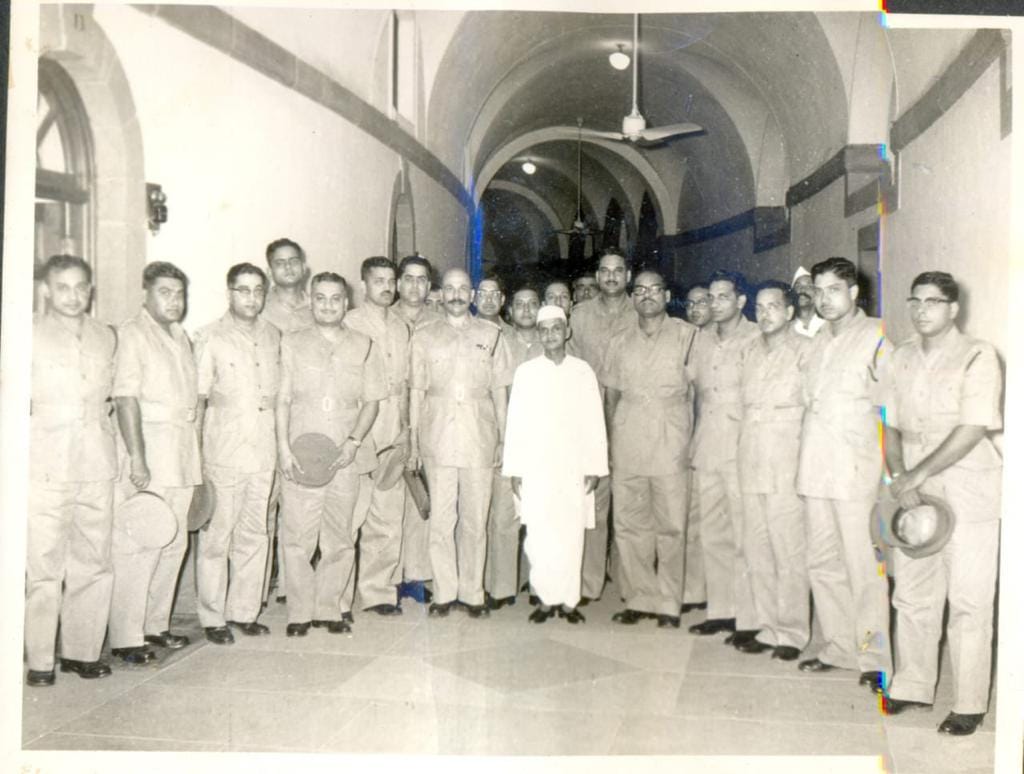
- 1Jawaharlal Nehru1947–1964 · First and longest-serving PM; died in officeNehru died
- 2Gulzarilal Nanda1964 · Acting PM for about two weeksparty chose Shastri
- 3Lal Bahadur Shastri1964–1966 · "Jai Jawan Jai Kisan"; died at TashkentShastri died
- 4Gulzarilal Nanda1966 · Acting PM a second timeparty chose Indira
- 5Indira Gandhi1966–1977 · First woman PM; returned 1980–19841977 election
- 6Morarji Desai1977–1979 · First non-Congress PM; first PM to resign
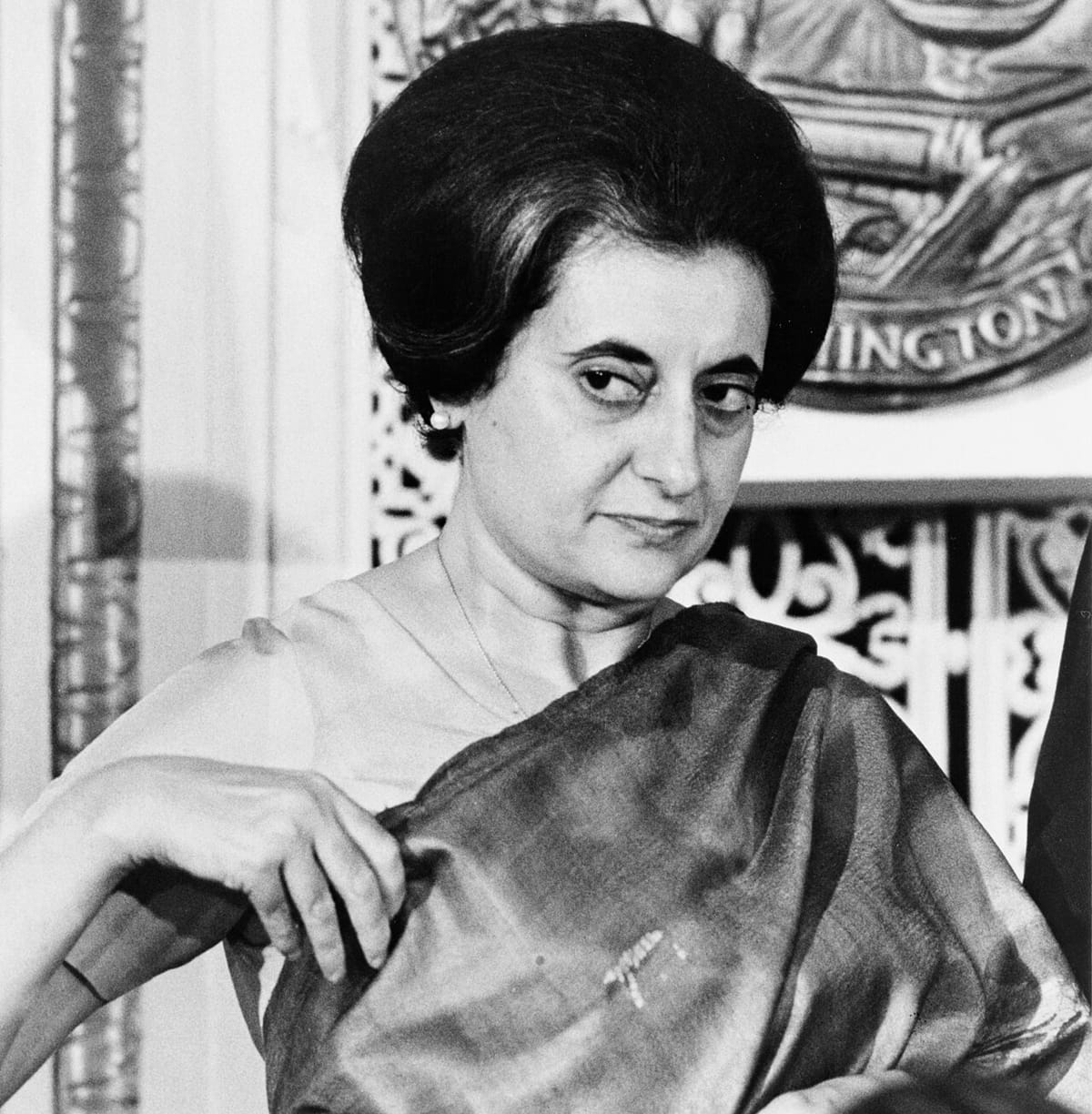
- India's first woman Prime Minister
- Was a Rajya Sabha member when first appointed
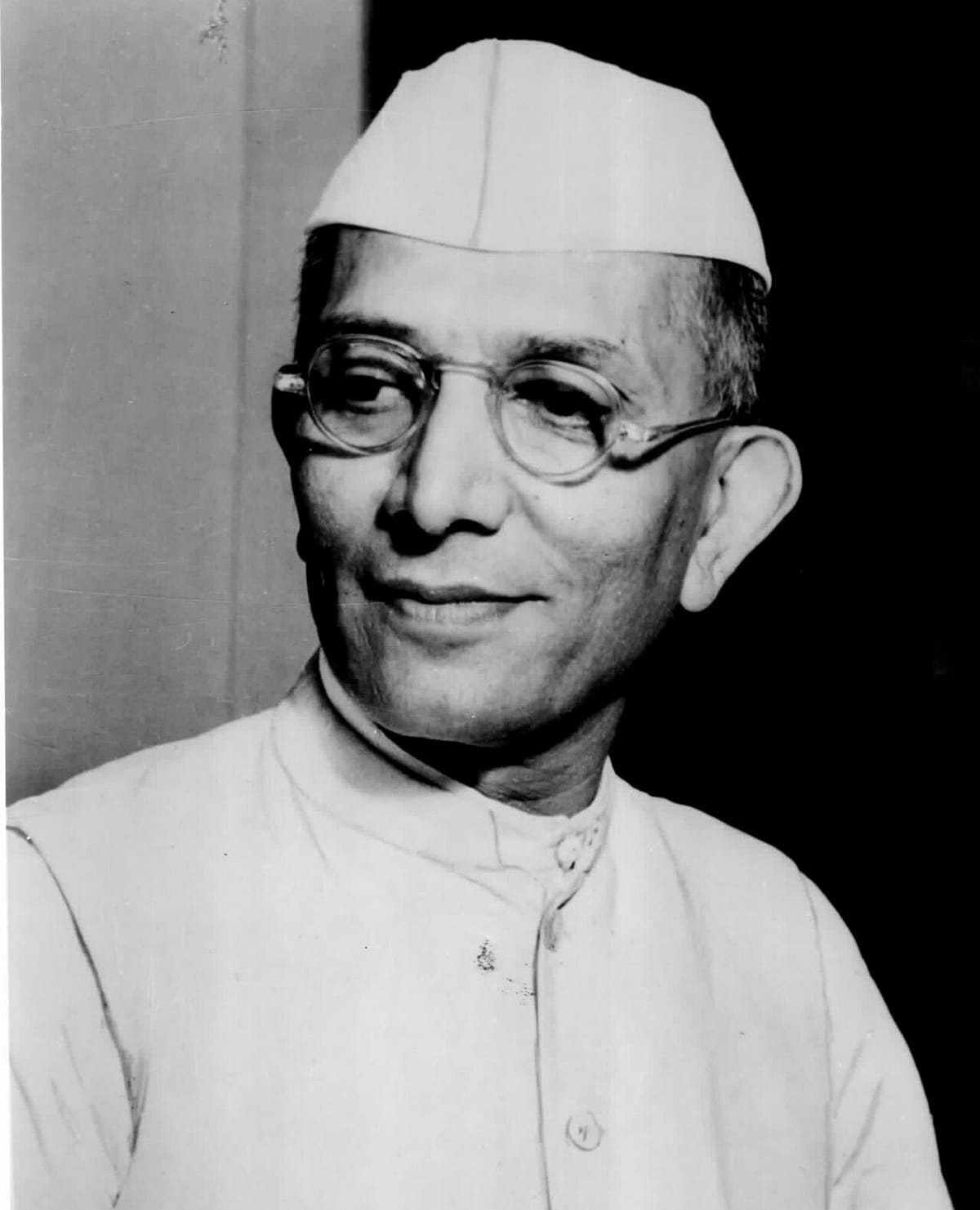
- First non-Congress Prime Minister
- First PM to resign from office (1979)
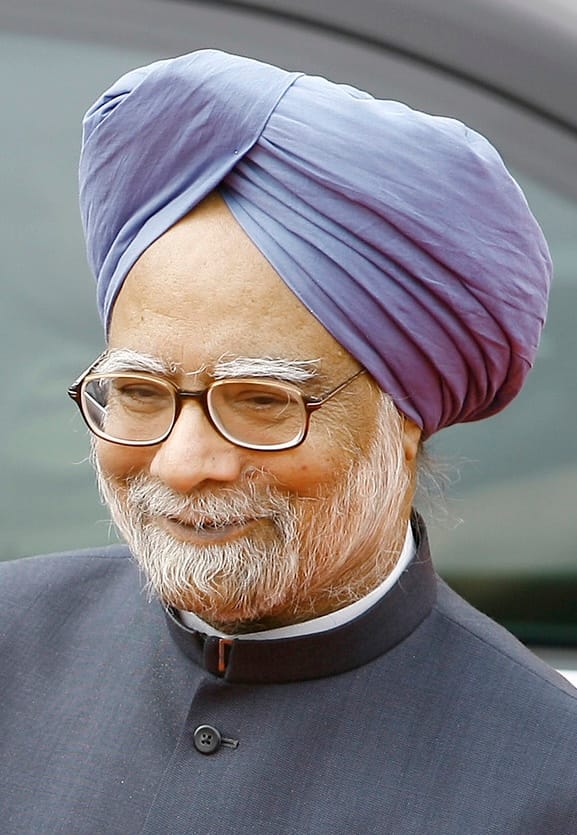
- First Sikh Prime Minister
- Sat in the Rajya Sabha for all ten years as PM
The Attorney General (Article 76)
The government's top lawyer, and the only outsider who can speak in Parliament.
Under Article 76 the President appoints the Attorney General. He must be qualified to be a Supreme Court judge. He is the first (highest) law officer of the Government of India. His term is not fixed; he holds office during the pleasure of the President, and the President fixes his pay.
- He has the right to be heard in every court in India.
- Under Article 88 he can speak in either House and join committees, but he cannot vote.
- He is not a member of the Cabinet and not a full-time government servant.
- The first Attorney General was M. C. Setalvad (1950).
Everything on one look
Articles, numbers, ranks and firsts to remember.
- Articles 74 to 78: PM and Council of Ministers
- Cap: 15% of Lok Sabha strength (91st, 2003)
- States: 15% cap, minimum 12
- Non-MP minister: 6 months to join a House
- 2 oaths: office and secrecy
- 3 ranks: Cabinet, State, Deputy
- President = nominal; PM = real executive
- Collective responsibility to the Lok Sabha
- Advice binding: 42nd (1976); return once: 44th (1978)
- Cabinet word added by the 44th (Art 352)
- Attorney General: Art 76, speaks but no vote
- PM's duty to inform President: Art 78
- The PM need not be an MP when appointed, but must become one of either House within six months.
- The PM can be from the Rajya Sabha; Manmohan Singh was, for ten years.
- The Council is responsible only to the Lok Sabha, not to the Rajya Sabha.
- If the PM resigns, the whole Council goes; if another minister resigns, only that seat is empty.
- Cabinet ≠ Council of Ministers. The Cabinet is the small inner group.
- The 15% cap came in 2003 (91st), not in 1950. It includes the PM.
- Deputy PM, kitchen cabinet and cabinet committees are not in the Constitution.
- The Attorney General cannot vote in Parliament. The Solicitor General is not a constitutional post.
- In precedence the PM is third, after the President and Vice-President.
- Article 74: Council of Ministers to aid and advise
- Article 75: appointment, pleasure, responsibility, oath
- Article 76: Attorney General
- Article 77: business in the President's name
- Article 78: PM's duties to the President
- Parliamentary system borrowed from: Britain
- First PM: Jawaharlal Nehru (1947)
- First woman PM: Indira Gandhi (1966)
- First non-Congress PM: Morarji Desai (1977)
- First Sikh PM: Manmohan Singh (2004)
- First Deputy PM: Sardar Patel
- First Attorney General: M. C. Setalvad
- First no-confidence motion: 1963
- Chief policy body: the Cabinet
- PM chairs: NITI Aayog, Inter-State Council
- Civil Services Board head: Cabinet Secretary
After an election no party has a majority. A leader is appointed Prime Minister. He is not a member of Parliament, and a no-confidence motion is moved in the Rajya Sabha. What does the Constitution say about each point?
Show answer
With a hung Lok Sabha the President uses discretion to pick the leader most likely to win the House's confidence. A non-member can be PM, but must become a member of either House within six months (Article 75(5)). A no-confidence motion has force only in the Lok Sabha, because the Council is collectively responsible to the Lok Sabha (Article 75(3)).