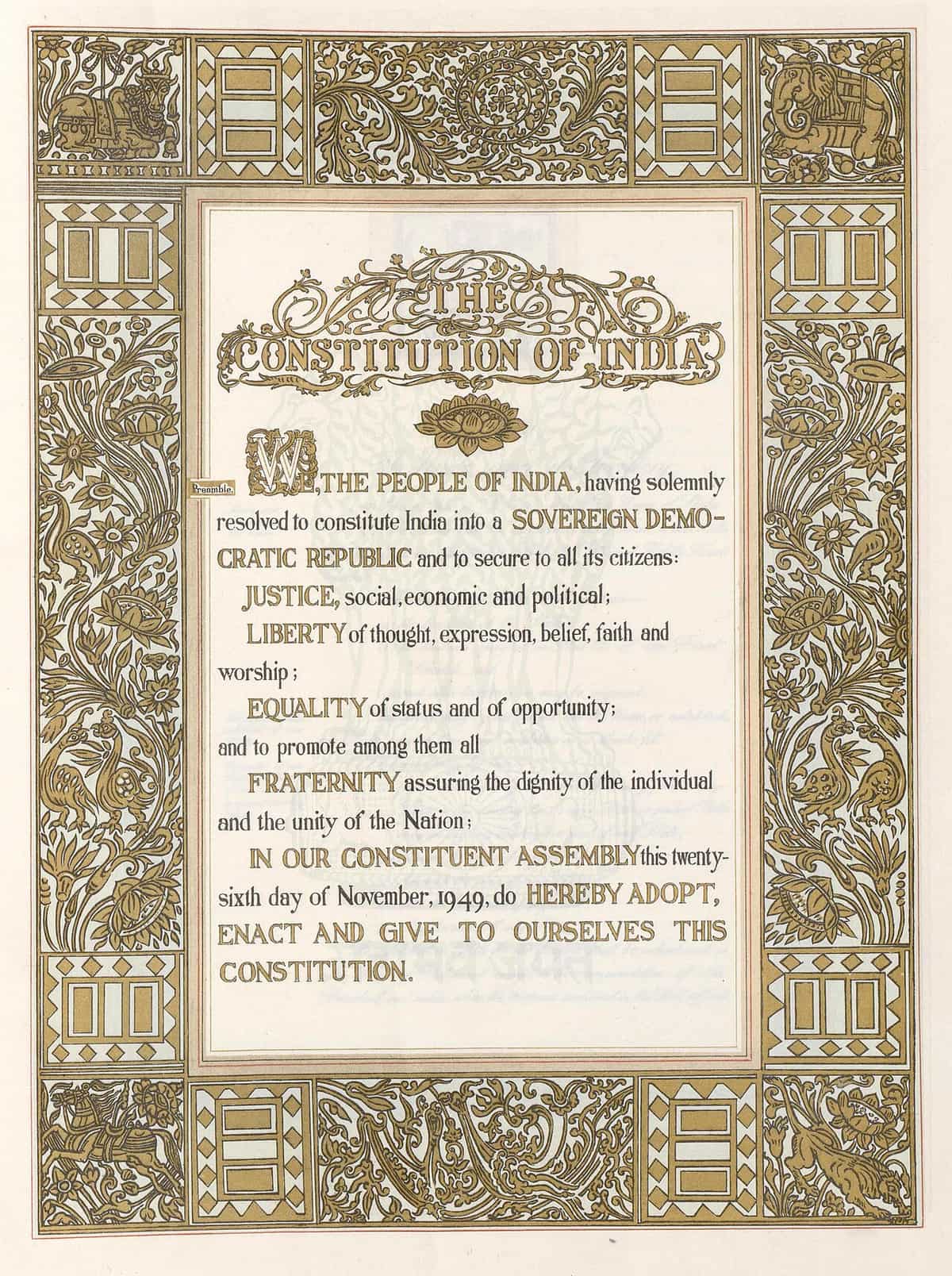
The Preamble is the short introduction at the start of the Constitution. In one paragraph it tells us who made the Constitution (the people of India), what kind of country India is, and what it wants to give its citizens: justice, liberty, equality and fraternity. It has been changed only once, in 1976.
What the Preamble is and where it came from
The Objectives Resolution, rewritten as the opening page.
Think of the Preamble as the summary on the first page of a long book. It does not give orders. It tells you what the whole book is for. Lawyer N. A. Palkhivala called it the "identity card of the Constitution".
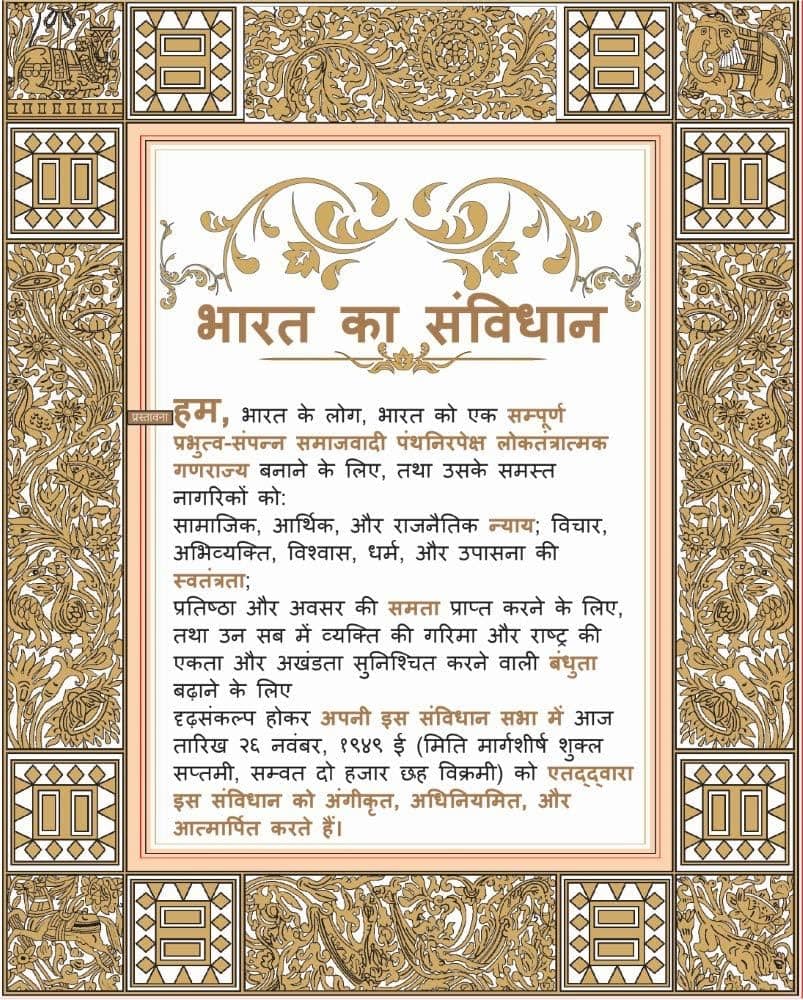
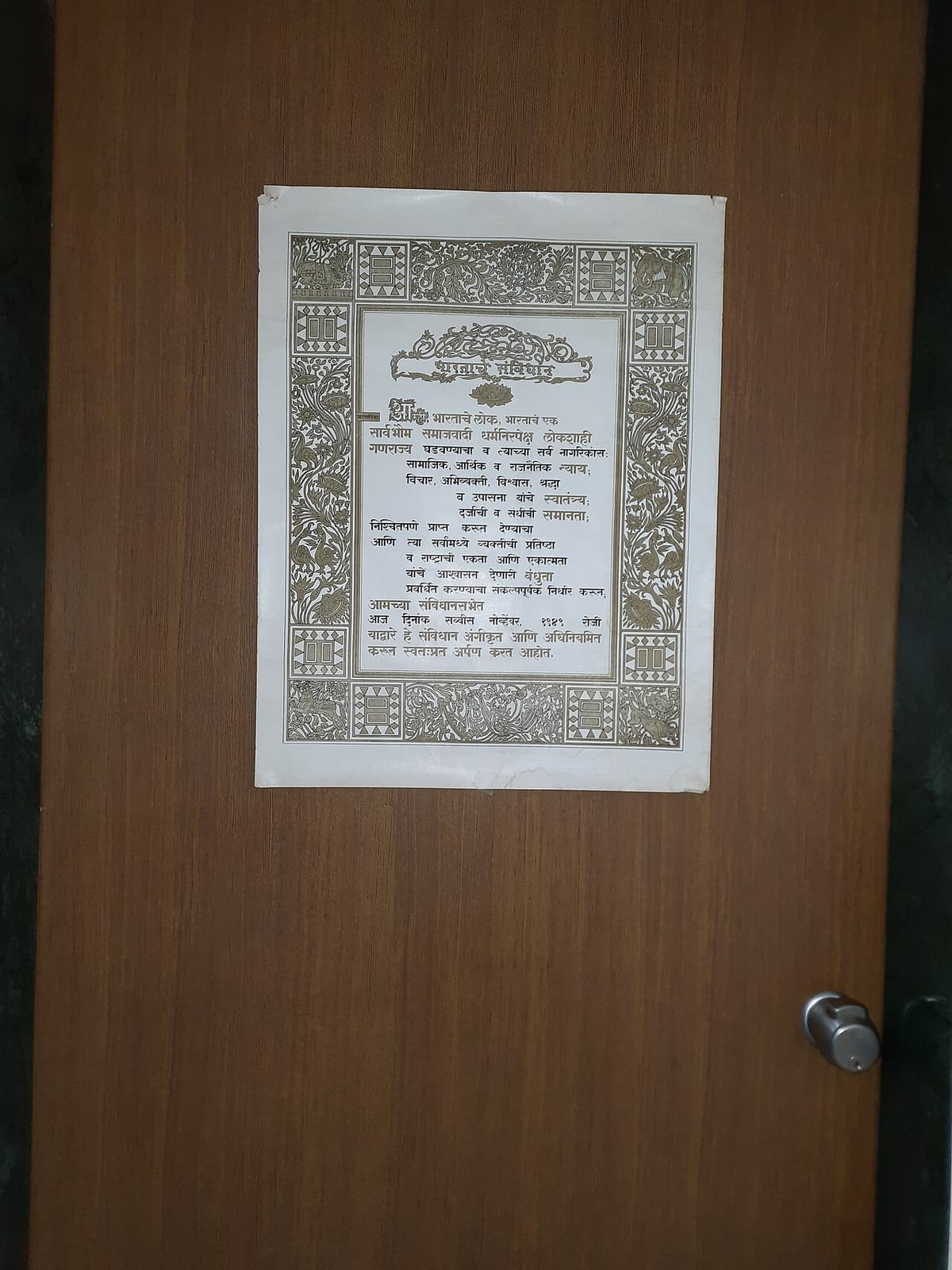
WE, THE PEOPLE OF INDIA, having solemnly resolved to constitute India into a SOVEREIGN SOCIALIST SECULAR DEMOCRATIC REPUBLIC and to secure to all its citizens:
JUSTICE, social, economic and political;
LIBERTY of thought, expression, belief, faith and worship;
EQUALITY of status and of opportunity;
and to promote among them all
FRATERNITY assuring the dignity of the individual and the unity and integrity of the Nation;
IN OUR CONSTITUENT ASSEMBLY this twenty-sixth day of November, 1949, do HEREBY ADOPT, ENACT AND GIVE TO OURSELVES THIS CONSTITUTION.
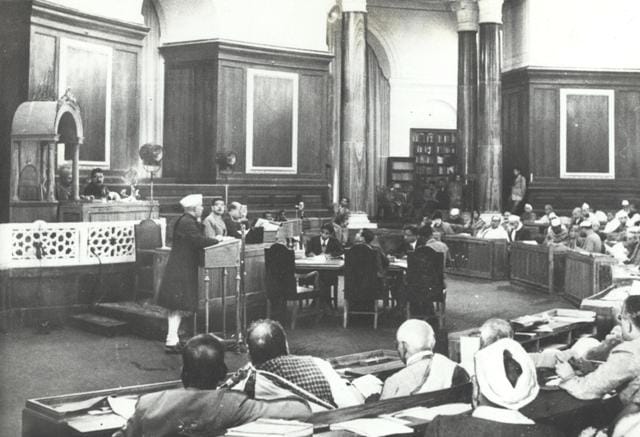
The Preamble grew out of the Objectives Resolution. Jawaharlal Nehru moved it in the Constituent Assembly on 13 December 1946, and the Assembly adopted it on 22 January 1947. Its ideas, written in final legal language, became the Preamble.
The four things the Preamble tells us
Source of power, nature of the State, aims, and date.
"We, the people of India ... give to ourselves this Constitution."
Sovereign, Socialist, Secular, Democratic, Republic.
Justice, Liberty, Equality, Fraternity.
The day the Assembly adopted the Constitution, not the day it came into force.
Every exam question on the Preamble's "components" comes from these four cards.
The final power in India belongs to the people. The Constitution was not given by a king or by the British Parliament. The people gave it to themselves, through their Constituent Assembly. Parliament, the President and the courts all get their powers from the Constitution, and so from the people.
The five key words
What kind of country India is, word by word.
| Word | What it means |
|---|---|
| Sovereign | India is fully independent. No outside power controls it. Membership of the Commonwealth or the UN does not reduce this. |
| Socialist | Democratic socialism: a mixed economy where the state works to reduce inequality, by democratic means. Added in 1976. |
| Secular | India has no official religion. The state treats all religions equally. Added in 1976. |
| Democratic | The people choose their government by voting. Covers political, social and economic democracy. |
| Republic | The head of state (the President) is elected for a fixed term, not born into the post like a king. |
Remember the order as "3 S, D, R": Sovereign, Socialist, Secular, Democratic, Republic. The two middle S-words are the ones added in 1976.
Socialist and secular were added only in 1976. But the ideas were in the Constitution from 1950: equality of income in the Directive Principles, and freedom of religion in Articles 25 to 28. In 1948 the Assembly had decided not to add these words; Ambedkar felt the people should be free to choose their kind of society.
The four ideals and their sources
Justice, liberty, equality and fraternity.
- Justice
- Social, economic and political justice. No unfair treatment because of caste, wealth or position. Idea from the Russian Revolution (1917).
- Liberty
- Of thought, expression, belief, faith and worship. Freedom within the limits of law. From the French Revolution.
- Equality
- Of status and of opportunity. No special privileges for any group. From the French Revolution.
- Fraternity
- A sense of brotherhood, assuring the dignity of the individual and the unity and integrity of the Nation. From the French Revolution.
Justice from Russia, the rest from France. "Liberty, Equality, Fraternity" was the slogan of the French Revolution.
| Preamble ideal | Where the Constitution makes it real |
|---|---|
| Justice | Directive Principles such as Articles 38 and 39; free legal aid in Article 39A |
| Liberty | Six freedoms in Article 19; life and liberty in Article 21; religion in Articles 25 to 28 |
| Equality | Articles 14 to 18; adult franchise in Article 326 |
| Fraternity | Ending untouchability (Article 17); single citizenship; duty of common brotherhood in Article 51A |
| Amending the Preamble | Article 368, without harming the basic structure |
Without fraternity, equality and liberty will be no deeper than coats of paint.
The Preamble in court, and the 42nd Amendment
Is it part of the Constitution? Can it be changed?
- 1960Berubari Union case
Supreme Court: the Preamble is not a part of the Constitution. It is a key to the minds of the makers.
- 1973Kesavananda Bharati case
Court reversed Berubari. The Preamble is a part of the Constitution and can be amended, but the basic structure cannot be destroyed.
- 1995LIC of India case
Court again held that the Preamble is an integral part of the Constitution.
B-K-L: No, Yes, Yes. Berubari said no, Kesavananda said yes, LIC said yes again.
Because the Preamble is part of the Constitution, Parliament can amend it under Article 368. It has done so only once. The 42nd Amendment Act, 1976, passed during the Emergency, added three words. It is often called the "mini-Constitution" because it changed so much.
- SOVEREIGN DEMOCRATIC REPUBLIC
- the unity of the Nation
- SOVEREIGN SOCIALIST SECULAR DEMOCRATIC REPUBLIC
- the unity and integrity of the Nation
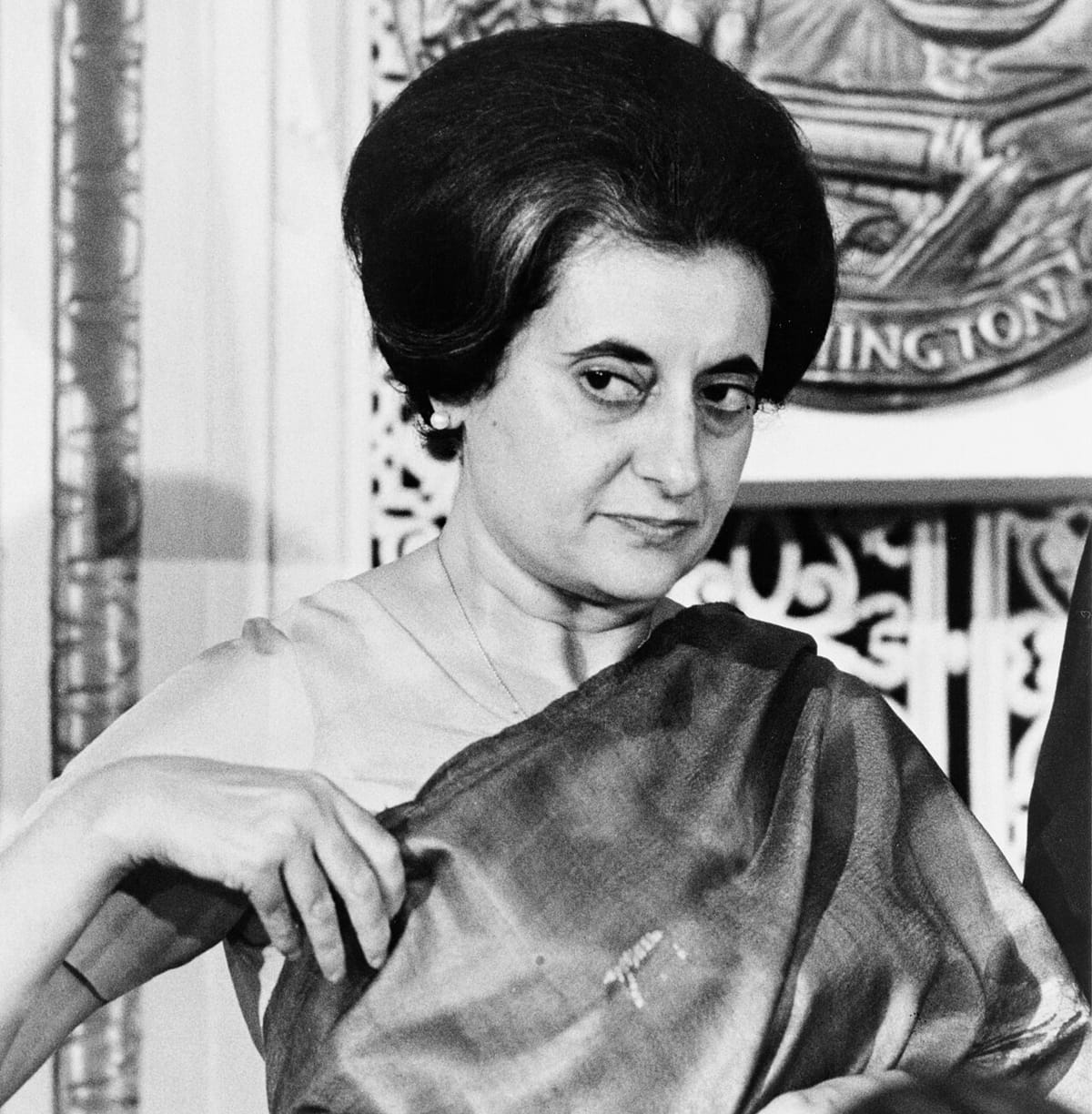
- Her government passed the 42nd Amendment (1976)
- It added socialist, secular, integrity
- Called the Preamble the "identity card" of the Constitution
- Argued the Kesavananda Bharati case
- Called the Preamble the "horoscope" of our sovereign democratic republic
Everything on one look
Words, ideals, cases and the traps.
| Word | In 1949? | How it came |
|---|---|---|
| Sovereign | Yes | Original |
| Socialist | No | 42nd Amendment, 1976 |
| Secular | No | 42nd Amendment, 1976 |
| Democratic | Yes | Original |
| Republic | Yes | Original |
- Objectives Resolution moved: 13 Dec 1946
- Objectives Resolution adopted: 22 Jan 1947
- Date written in the Preamble: 26 Nov 1949
- Amended once: 42nd Amendment, 1976
- 3 words added: socialist, secular, integrity
- 5 key words, 4 ideals
- Justice: Russian Revolution
- Liberty, Equality, Fraternity: French Revolution
- Preamble idea: USA constitution first had one
- Berubari (1960): not a part
- Kesavananda (1973): a part; basic structure
- LIC (1995): integral part
- Socialist and secular were not in the original Preamble; they came in 1976.
- Only integrity was added to the fraternity clause; unity was already there.
- The date in the Preamble is 26 November 1949 (adoption), not 26 January 1950.
- The Preamble was passed last, though it comes first.
- Justice came from Russia; liberty, equality and fraternity from France.
- The Preamble is not enforceable in court and gives no power.
- Berubari said not a part; Kesavananda reversed it. Don't swap them.
- The Preamble can be amended under Article 368, but not its basic structure.
- Order of words: Sovereign, Socialist, Secular, Democratic, Republic.
- Preamble comes from: Objectives Resolution (Nehru)
- First words: We, the people of India
- Source of authority: the people
- Date in Preamble: 26 November 1949
- Amended: once, 42nd Amendment, 1976
- Words added: socialist, secular, integrity
- Justice: social, economic, political
- Liberty: thought, expression, belief, faith, worship
- Equality: of status and of opportunity
- Fraternity: dignity of the individual, unity and integrity
- Justice ideal from: Russian Revolution
- Liberty, equality, fraternity from: French Revolution
- "Identity card of the Constitution": N. A. Palkhivala
- Not part (1960): Berubari Union case
- Part of the Constitution (1973): Kesavananda Bharati
- Secularism is basic structure: S. R. Bommai, 1994
A student writes: "The Preamble is not part of the Constitution, so Parliament can never change it." Find both mistakes.
Show answer
First, the Supreme Court held in Kesavananda Bharati (1973) that the Preamble is part of the Constitution (reversing Berubari, 1960); LIC (1995) said so again. Second, it can be amended under Article 368, and it was amended once, by the 42nd Amendment (1976), which added socialist, secular and integrity. Only its basic structure cannot be destroyed.