Fundamental Duties: Article 51A of the Indian Constitution
Part IVA in simple words: why duties were added in 1976, the Swaran Singh Committee, all 11 duties, the 86th Amendment, what is not a duty, and how duties work without courts.
The giant tricolour at Attari, near Amritsar, on the India–Pakistan border. Article 51A(a) makes it a Fundamental Duty of every citizen to respect the National Flag. Image: eclicks_by_bunny, 2018 · Wikimedia Commons · CC BY-SA 4.0
Rights come with duties. Fundamental Duties are the duties every citizen owes to the nation. They are in Part IVA, which has just one article: Article 51A. The Constitution of 1950 had no duties. Ten were added in 1976 by the 42nd Amendment. The 86th Amendment (2002) added the eleventh. No court can punish you only for not doing them.
Art 51A
Where
Part IVA (one article)
11
Duties today
10 in 1976
1976
Added by
42nd Amendment
USSR
Idea from
Soviet Constitution
Why duties were added, and by whom
A committee, an Emergency and a new Part of the Constitution.
The Constitution of 1950 gave citizens many rights. It did not list any duties. In 1976, during the Emergency (1975–77), the ruling Congress party set up a committee under Sardar Swaran Singh. Its task was to suggest changes to the Constitution.
The committee said citizens should know that rights come with duties. It suggested a separate chapter of duties. Parliament passed the 42nd Amendment Act, 1976. It added a new Part IVA with Article 51A and ten duties.
The Swaran Singh Committee suggested eight duties. Parliament added ten. Some ideas of the committee were not accepted: a duty to pay taxes, and letting Parliament set penalties for not doing duties without any court challenge.
QUICK FACT
The idea of listing duties in a constitution came from the USSR (Soviet Union). Most Western constitutions of that time listed only rights. Do not mix up: Directive Principles came from Ireland.
QUICK CHECK
PYQ · Punjab Police Constable 2024 When were Fundamental Duties first included in the Indian Constitution?
Tap an option to answer
Answer: B — 1976
The 42nd Amendment (1976) added ten duties. 2002 is the year of the 86th Amendment, which added the eleventh. The 1950 Constitution had no duties.
QUICK CHECK
PYQ · Punjab Police Constable 2024 The feature of Fundamental Duties in the Indian Constitution was incorporated into the Constitution on the recommendation of which of the following committees?
Tap an option to answer
Answer: C — Swaran Singh Committee
The Swaran Singh Committee (1976) recommended the duties. The Verma Committee (1999) came later; it listed laws that already help enforce some duties. PPSC DDSWO 2026 asked the same question.
QUICK CHECK
PYQ · PPSC EO 2018 Which part of the Constitution of India, the Fundamental Duties are mentioned?
Tap an option to answer
Answer: C — Part IVA
Fundamental Duties are in Part IVA (Article 51A). Part III is Fundamental Rights and Part IV is Directive Principles. PPSC SSO 2018 asked the same. Punjab Police Constable 2021 asked the article: 51A.
The eleven duties
Clauses (a) to (k) of Article 51A, in simple words.
Article 51A begins: "It shall be the duty of every citizen of India..." Then come eleven clauses, (a) to (k). The first ten date from 1976. Clause (k) came in 2002.
Clause
Every citizen should...
(a)
Obey the Constitution; respect its ideals and institutions, the National Flag and the National Anthem.
(b)
Cherish and follow the noble ideals of the freedom struggle.
(c)
Uphold and protect the sovereignty, unity and integrity of India.
(d)
Defend the country and do national service when called.
(e)
Promote harmony and brotherhood across religion, language and region; give up practices that hurt the dignity of women.
(f)
Value and preserve our composite culture (rich shared heritage).
(g)
Protect and improve the natural environment: forests, lakes, rivers, wildlife; have compassion for living creatures.
(h)
Develop scientific temper, humanism and the spirit of inquiry and reform.
(i)
Safeguard public property and give up violence.
(j)
Strive for excellence in every field, so the nation keeps rising.
(k)
If a parent or guardian, give the child chances to study between ages 6 and 14 (added 2002).
Article 51A at a glance.
FLASHCARDS
The 11 duties: tap to check
51A(a)
Respect the Constitution, Flag and Anthem.
51A(b)
Follow the ideals of the freedom struggle.
51A(c)
Protect sovereignty, unity and integrity.
51A(d)
Defend the country; national service.
51A(e)
Brotherhood; respect the dignity of women.
51A(f)
Preserve composite culture.
51A(g)
Protect the environment; kindness to living creatures.
51A(h)
Scientific temper and spirit of inquiry.
51A(i)
Safeguard public property; no violence.
51A(j)
Strive for excellence.
51A(k)
Parents educate children aged 6–14 (86th Amendment).
REMEMBER
Right and duty came as twins in 2002. The 86th Amendment made education a right in Article 21A and, in the same act, made it a parent's duty in 51A(k).
QUICK CHECK
PYQ · Punjab Police Constable 2024 How many fundamental duties are there in the Indian Constitution?
Tap an option to answer
Answer: B — Eleven
There are 11 today. Ten were added in 1976 and the eleventh in 2002. Eight is the number the Swaran Singh Committee suggested.
QUICK CHECK
PYQ · Punjab Police SI 2023 In which article of the Constitution of India is it mentioned that it shall be the duty of every citizen of India to cherish and follow the noble ideals which inspired our national struggle for freedom?
Tap an option to answer
Answer: A — 51 A (b)
Clause (b) is the freedom-struggle duty. (c) is sovereignty and unity, (d) is defending the country, and (e) is brotherhood and dignity of women.
QUICK CHECK
PYQ · Punjab Police Constable 2025 Which Fundamental Duty was added by the 86th Constitutional Amendment Act (2002)?
Tap an option to answer
Answer: B — To provide opportunities for education to children aged 6-14 years
The 86th Amendment added 51A(k): parents or guardians must give children aged 6 to 14 chances to study. The other three were in the original ten of 1976.
Duties in daily life
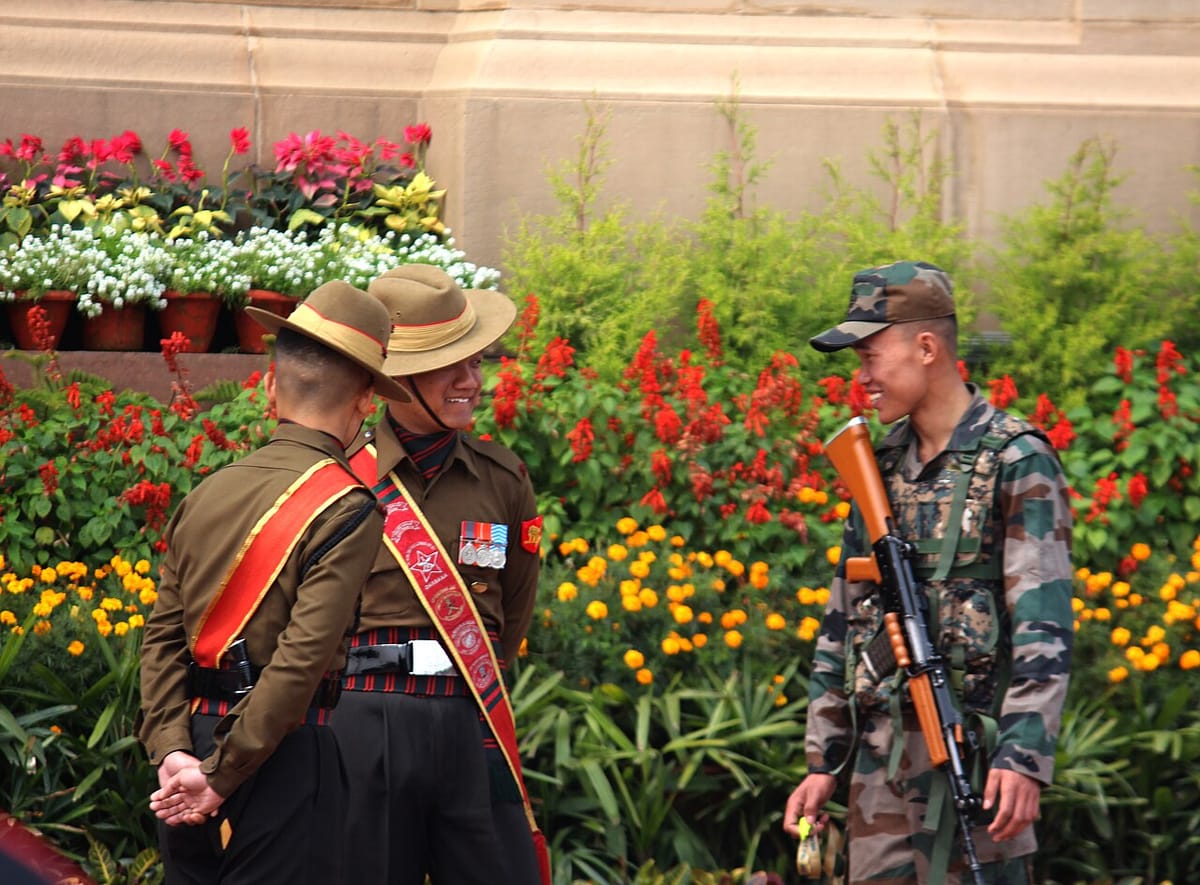
Flag and anthem, the army, the environment, women and monuments.
What the duties look like
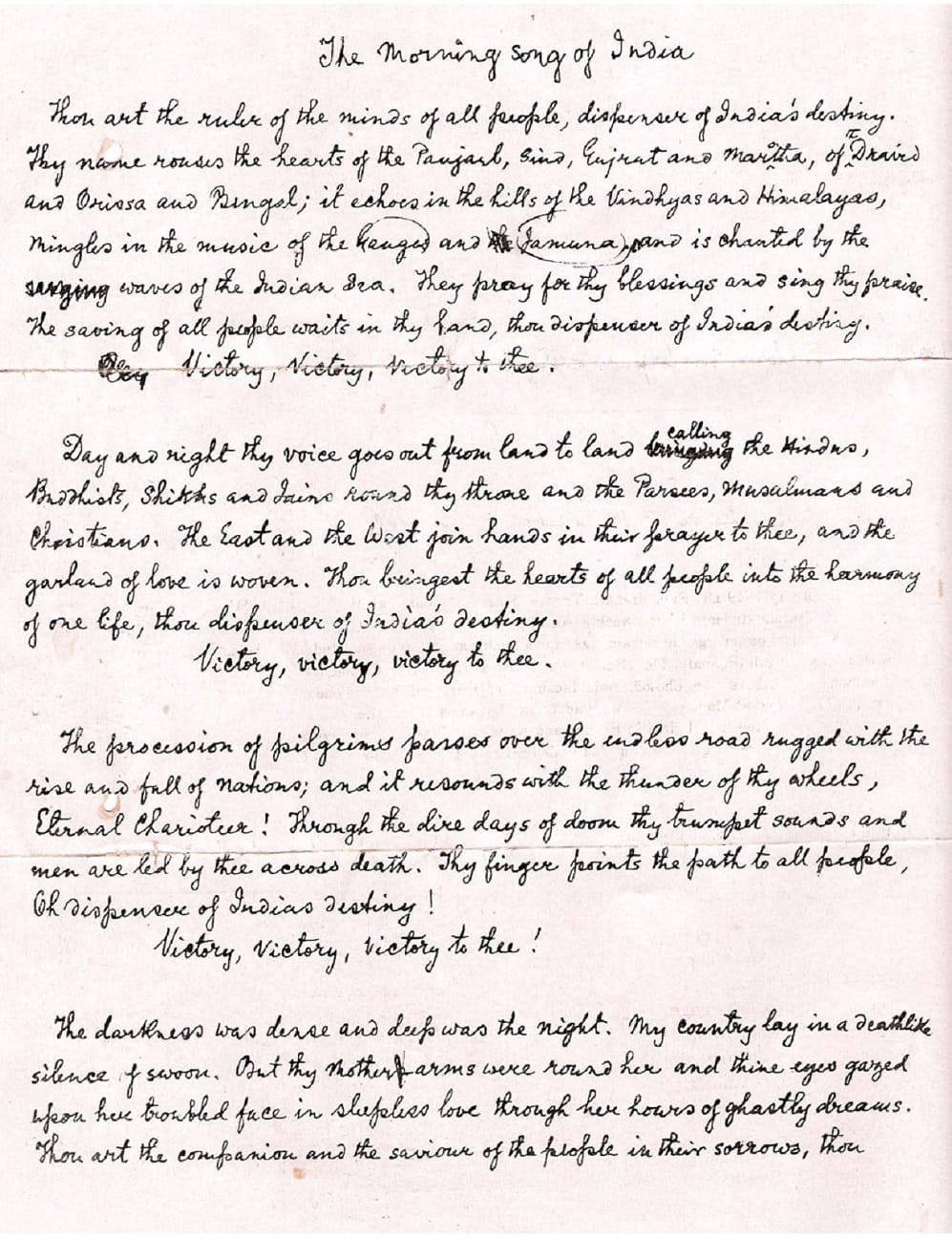
Tagore's own English translation of Jana Gana Mana (1919). Respecting the National Anthem is part of 51A(a).
Protect environment; compassion for living creatures
Added by
42nd Amendment, 1976
42nd Amendment, 1976
Both came in the same amendment. 48A = State, 51A(g) = citizen.
Moral duty
An ideal to live by
Follow the ideals of the freedom struggle (b), scientific temper (h), strive for excellence (j).
Civic duty
Backed by other laws
Respect the Flag and Anthem (a), protect public property (i), protect wildlife (g).
Some duties are moral ideals; some can be checked through ordinary laws.
QUICK CHECK
PYQ · PPSC AO76 2022 'To renounce practices derogatory to the dignity of Women' is quoted in which part of the Indian Constitution?
Tap an option to answer
Answer: C — Fundamental Duties
These words are in Article 51A(e), with the duty to promote harmony and brotherhood.
QUICK CHECK
PYQ · Punjab Police SI 2023 Which of the following Articles implicitly laid down that the public should not write their names on the walls of historical monuments?
Tap an option to answer
Answer: B — Article 51A
Writing on old monuments damages our heritage and public property. That goes against 51A(f) (composite culture) and 51A(i) (public property). Article 51 is the Directive Principle on world peace.
QUICK CHECK
PYQ · Punjab Police SI 2022 According to Constitution of India, to safeguard public property and abjure violence, is the ________ of every citizen of India.
Tap an option to answer
Answer: C — fundamental duty
These are the words of Article 51A(i), a Fundamental Duty. To abjure violence means to give it up.
QUICK CHECK
PYQ · PPSC JEE 2022 Which of the following provisions of the Constitution of India refer to protection and improvement of the environment?
Tap an option to answer
Answer: C — Both 'a' and 'b'
Article 48A (a Directive Principle) asks the State, and Article 51A(g) (a Fundamental Duty) asks every citizen, to protect the environment.
What is NOT a Fundamental Duty
The favourite exam trick: a good habit that is not in the list.
IN ARTICLE 51A
Respect the Constitution, Flag, Anthem
Defend the country
Scientific temper
Safeguard public property
Educate your child (6–14)
NOT IN ARTICLE 51A
Vote in elections
Pay taxes
Respect the government of the day
Family planning
Promote cottage industries (that is DPSP, Article 43)
QUICK CHECK
PYQ · PPSC DSSO 2018 Under the Constitution of India, which one of the following is not a fundamental duty ?
Tap an option to answer
Answer: A — To vote in public elections
Voting is not in Article 51A. The other three are duties (h), (i) and (a). The same question came in other PPSC 2018 papers. PPSC OHE 2016 asked a similar one: "respect for government" is not a duty.
QUICK CHECK
PYQ · PPSC OHE 2016 According to the provisions of the Constitution of India, which one of the following is not a fundamental duty?
Tap an option to answer
Answer: D — To promote village and cottage industries
Promoting cottage industries is a Directive Principle (Article 43), addressed to the State. The other three are duties (a), (d) and (k).
QUICK CHECK
PYQ · PPSC PCSEB 2018 Read the following statements carefully. 1) Fundamental Duties were included by 42nd Amendment Act to the Constitution on the recommendation of Swaran Singh Committee. 2) 42nd Amendment added Part IV A that includes only 2 articles namely Article 51 and Article 51 A. 3) Duty to pay taxes was added to Article 51 A by 44th Amendment Act. Choose the correct option:
Tap an option to answer
Answer: A — Only 1 is correct
Part IVA has only one article, 51A. Article 51 is a Directive Principle in Part IV. There is no duty to pay taxes, and the 44th Amendment added no duty.
How duties work without courts
Non-justiciable, for citizens only, but not empty.
KEY TERM
Non-justiciable
No court can order a citizen to perform a Fundamental Duty. No one is punished only because a duty in Article 51A is not done. But Parliament can make laws that punish particular acts, and courts can use the duties to judge whether a law is reasonable.
Duty in Article 51A→Parliament makes a law→Breaking that law is punished→Court can uphold the law as reasonable
RIGHTS, PRINCIPLES AND DUTIES
Fundamental Rights
Directive Principles
Fundamental Duties
Part
III
IV
IVA
Articles
12–35
36–51
51A
Addressed to
The State
The State
Citizens
Court-enforceable?
Yes
No
No
Borrowed from
USA
Ireland
USSR
Since
1950
1950
1976
Rights limit the State, Principles guide the State, Duties remind the citizen.Verma Committee (1999): laws that already back some dutiesTap to open
A committee headed by Justice J. S. Verma (1999) looked at how the duties could be put to work. It found that several existing laws already support them.
Law
Duty it supports
Prevention of Insults to National Honour Act, 1971
PYQ · Punjab Police Constable 2024 Which of the following options is not a feature of Fundamental Duties?
Tap an option to answer
Answer: A — Fundamental Duties apply to foreigners.
Article 51A speaks of every citizen of India. Duties do not bind foreigners, though many Fundamental Rights protect foreigners too.
QUICK CHECK
PYQ · PPSC AC26 2022 Which of the following statements about the Fundamental Duties as outlined in the Indian Constitution are accurate? 1. Fundamental duties can be enforced through writ jurisdiction. 2. Fundamental duties have been integral to the Indian Constitution since its inception. 3. Fundamental duties were incorporated into the Constitution based on the suggestions of the Swaran Singh Committee. 4. Fundamental duties are applicable exclusively to Indian citizens. Choose the correct response from the options provided:
Tap an option to answer
Answer: D — 3 and 4 Only
Duties are not enforced by writs (1 wrong) and were not in the 1950 Constitution (2 wrong). They came on the Swaran Singh Committee's advice (3) and bind citizens only (4).
QUICK CHECK
PYQ · Punjab Police Constable 2025 Which of the following statements represents the relationship between Fundamental Rights and Fundamental Duties in India?
Tap an option to answer
Answer: A — Citizens' exercise of rights should be balanced with citizens' responsibilities.
Rights and duties go together. Duties bind individual citizens, and any law based on them is still open to court review.
Everything on one look
Numbers, dates and the duties to remember.
KEY NUMBERS
Part IVA, only Article 51A
11 duties today; 10 in 1976
8 suggested by the Swaran Singh Committee
Clause (k): children aged 6 to 14
0 duties in the 1950 Constitution
DATES AND SOURCES
1976: Swaran Singh Committee
1976: 42nd Amendment adds Part IVA
2002: 86th Amendment adds 51A(k)
1999: Verma Committee on putting duties to work
Idea borrowed from the USSR
COMMON TRAPS
Duties were not in the original Constitution; they came in 1976.
Committee suggested 8; Parliament added 10; today there are 11.
Part IVA has only Article 51A. Article 51 is a Directive Principle (world peace).
Duties came from the USSR; Directive Principles from Ireland.
Voting and paying taxes are not Fundamental Duties.
Promoting cottage industries is DPSP (Article 43), not a duty.
Duties apply to citizens only, not foreigners.
Duties are non-justiciable: no writ can enforce them.
51A(k) (duty) and 21A (right) both came with the 86th Amendment, 2002.
QUICK BYTES
Fundamental Duties: Part IVA, Article 51A
Added by: 42nd Amendment, 1976
Recommended by: Swaran Singh Committee
Borrowed from: USSR Constitution
Number today: 11
11th duty: 86th Amendment, 2002
51A(a): Constitution, Flag, Anthem
51A(b): ideals of freedom struggle
51A(c): sovereignty, unity, integrity
51A(d): defend the country
51A(e): brotherhood, dignity of women
51A(f): composite culture
51A(g): environment, compassion
51A(h): scientific temper
51A(i): public property, no violence
51A(j): excellence
51A(k): education of child, 6–14
Verma Committee on duties: 1999
CHECK YOURSELF
During a protest, a group breaks the glass of a government bus and burns a tyre on the road. Which Fundamental Duty have they ignored, and can a court punish them just for breaking Article 51A?
Show answer
They ignored 51A(i): to safeguard public property and abjure violence. A court cannot punish them only for breaking a Fundamental Duty, because duties are non-justiciable. But they can be punished under ordinary laws made by Parliament, such as the law on damage to public property and the criminal law.
❧
Frequently Asked Questions
How many Fundamental Duties are there in the Indian Constitution?
There are 11. Ten were added by the 42nd Amendment in 1976. The eleventh, on educating children aged 6 to 14, was added by the 86th Amendment in 2002.
Which article of the Constitution has the Fundamental Duties?
Article 51A. It is the only article in Part IVA, which was added to the Constitution by the 42nd Amendment of 1976.
Were Fundamental Duties part of the original Constitution?
No. The Constitution of 1950 had Fundamental Rights but no duties. Duties were added 26 years later, in 1976.
Which committee recommended the Fundamental Duties?
The Sardar Swaran Singh Committee of 1976. It suggested eight duties, and Parliament added ten through the 42nd Amendment.
From which country did India borrow Fundamental Duties?
From the USSR (Soviet Union). Its constitution listed duties of citizens along with their rights.
Which Fundamental Duty was added by the 86th Amendment?
Article 51A(k). A parent or guardian must give the child chances to study between ages 6 and 14. The same amendment made education a Fundamental Right in Article 21A.
Are Fundamental Duties enforceable in court?
No, they are non-justiciable. No court can order a citizen to perform a duty. But Parliament can make laws that punish certain acts, and courts use the duties to judge whether a law is reasonable.
Do Fundamental Duties apply to foreigners?
No. Article 51A speaks of every citizen of India, so the duties apply to citizens only.
Is voting a Fundamental Duty in India?
No. Voting and paying taxes are not in Article 51A. Exams often use them as wrong options.
What is the Verma Committee on Fundamental Duties?
A committee headed by Justice J. S. Verma in 1999. It found that existing laws, such as the Prevention of Insults to National Honour Act, 1971, already support several duties.
Now sit the questions they actually set
Previous-year PPSC questions on this topic, free to read with the worked answer.