Directive Principles of State Policy: Articles 36 to 51
Part IV in simple words: what the Directive Principles are, why courts cannot enforce them, the three groups, every article from 38 to 51, later amendments and the clash with Fundamental Rights.
Fundamental Rights tell the State what it must not do. Directive Principles tell the State what it should try to do. They are goals for a welfare state: fair wages, free legal aid, village panchayats, health and education. They sit in Part IV, Articles 36 to 51. No court can force the government to follow them. But the Constitution calls them fundamental in the governance of the country.
Part IV
Where
Articles 36 to 51
Ireland
Borrowed from
Irish Constitution, 1937
Art 37
Not enforceable
but fundamental in governance
3
Groups
socialist, Gandhian, liberal
What the Directive Principles are
Goals for the State, not rights you can take to court.
In 1950 India was very poor. The makers of the Constitution wanted jobs, wages, schools and health care for everyone. But the new State did not have the money to promise all this at once.
So they wrote these aims as directions, not guarantees. The State must keep working towards them as its means grow. A citizen cannot sue the government for not meeting them. This is why they are called non-justiciable.
KEY TERM
Article 37: the status of Part IV
Article 37 says two things together. The Directive Principles shall not be enforceable by any court. But they are fundamental in the governance of the country, and it is the duty of the State to apply them in making laws. So they are not enforceable, but they are not optional either.
Part IV sets a goal→Government makes a law or scheme→Goal comes closer→Voters judge the government
Article 36 says "the State" in Part IV has the same meaning as in Part III (Article 12). It covers the Union and state governments, Parliament, state legislatures, and local and other authorities.
Where the idea came from
An Irish stamp for the Constitution of Ireland, 1937. Its Directive Principles of Social Policy gave India the idea for Part IV.
Rights stop the State. Principles guide the State.
QUICK CHECK
PYQ · Punjab Police Constable 2024 To secure a true welfare state, ________ were included in the Indian Constitution.
Tap an option to answer
Answer: B — Directive Principles of State Policy
The Directive Principles set welfare goals: livelihood, fair wages, health, education and help in old age. That is the idea of a welfare state. Punjab Police SI 2023 asked the same idea: the goal of social and economic transformation is expressed through the Directive Principles.
QUICK CHECK
PYQ · Punjab Police SI 2023 Which of the following is NOT true about the Directive Principles of State Policy mentioned in the Indian Constitution?
Tap an option to answer
Answer: B — They are justiciable guidelines.
Article 37 says they are not enforceable by any court, so they are non-justiciable. The other three statements are true.
QUICK CHECK
PYQ · Punjab Police Constable 2025 Meera, a young lawyer, argues that the Directive Principles are legally enforceable in court. Is she correct?
Tap an option to answer
Answer: C — No, they are only guidelines and cannot be enforced by law.
No Directive Principle, economic or otherwise, can be enforced in court (Article 37). There is no Emergency exception either.
The three groups
Socialist, Gandhian and liberal-intellectual. The Constitution does not use these labels, but exams do.
Economic justice
Socialist
Articles 38, 39, 39A, 41, 42, 43, 43A, 47: welfare, fair share of wealth, equal pay, legal aid, right to work, living wage, health.
Articles 44, 45, 48, 48A, 49, 50, 51: uniform civil code, child care, scientific farming, environment, monuments, separate judiciary, world peace.
Some articles fall in two groups. Article 47 is socialist (nutrition, health) and Gandhian (prohibition). Article 48 is Gandhian (cow slaughter) and liberal (scientific farming).
PYQ · Punjab Police SI 2023 In India, the Directive Principles of State Policy include ________.
Tap an option to answer
Answer: C — socialistic and Gandhian principles
The usual groups are socialist, Gandhian and liberal-intellectual. Punjab Police Constable 2025 also asked which part best reflects Gandhi's ideals: the Directive Principles.
QUICK CHECK
PYQ · PPSC OHE 2016 Which among the following can be termed as 'Gandhian' among the Directive Principles? i) Prevention of cow slaughter ii) Promotion of cottage industries iii) Establishment of village Panchayats iv) Uniform civil code. Correct code:
Tap an option to answer
Answer: C — i, ii and iii
Cow protection (48), cottage industries (43) and village panchayats (40) are Gandhian. The uniform civil code (44) is a liberal-intellectual principle.
QUICK CHECK
PYQ · Punjab Police SI 2023 Which of the following Directive Principles is based on Gandhian principles?
Tap an option to answer
Answer: B — The State shall take steps for prohibiting the slaughter of cows, calves and other milch cattle.
Cow protection (Article 48) is Gandhian. Separate judiciary (50) and monuments (49) are liberal; humane work conditions (42) is socialist.
Articles 36 to 46, one by one
Welfare, wages, panchayats and the weaker sections.
Article
What it asks the State to do
36
Defines State (same as Article 12).
37
Not enforceable by courts, but fundamental in governance.
38
Build a social order with social, economic and political justice; 38(2): reduce inequalities of income and status.
39
(a) livelihood for all; (b) fair sharing of material resources; (c) no concentration of wealth; (d) equal pay for equal work for men and women; (e) protect workers and children; (f) healthy growth of children.
39A
Equal justice and free legal aid to the poor.
40
Organise village panchayats as units of self-government.
41
Right to work, to education and to public help in unemployment, old age, sickness and disability.
42
Just and humane conditions of work and maternity relief.
43
Living wage for workers; promote cottage industries in villages.
43A
Workers' participation in the management of industries.
43B
Promote co-operative societies.
44
A uniform civil code for all citizens.
45
Early childhood care and education for children below six.
46
Promote education and economic interests of SCs, STs and weaker sections.
Articles at a glance (Part 1 of 2).
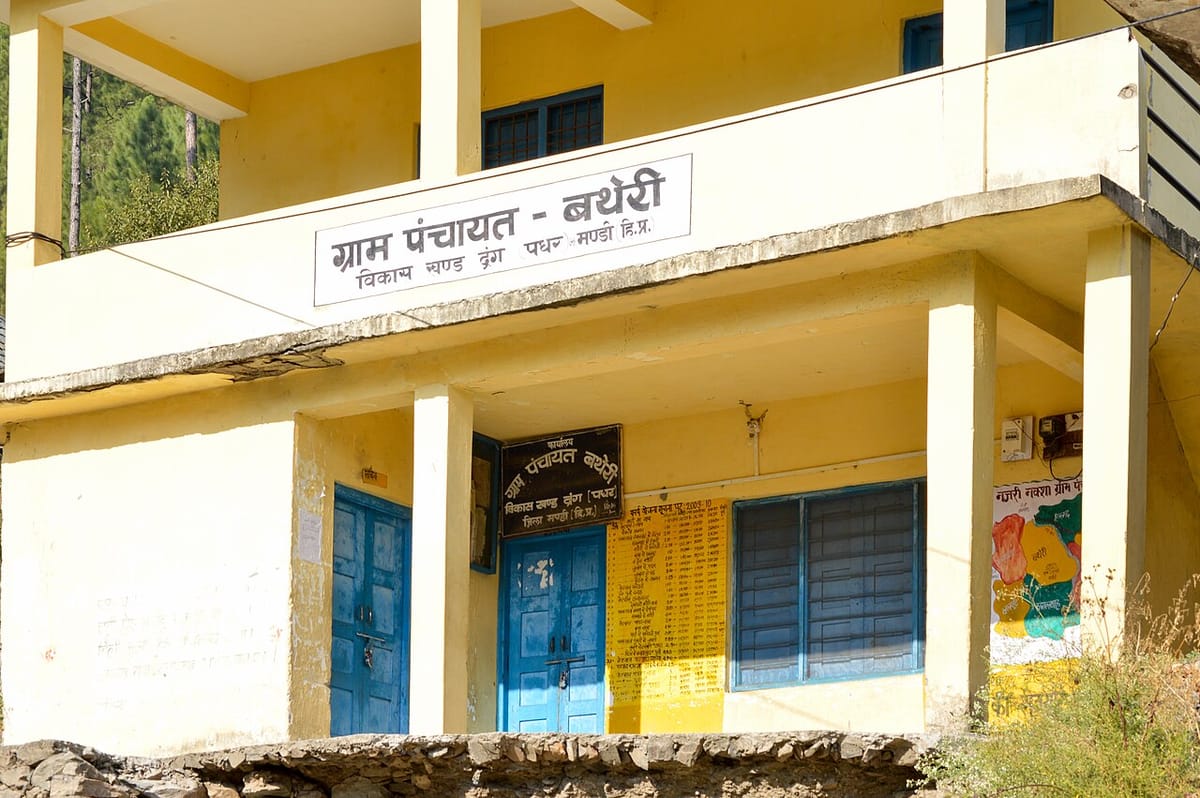
A Gram Panchayat office in Mandi district, Himachal Pradesh. Article 40 asked for panchayats in 1950. The 73rd Amendment (1992) made them constitutional. Image: Timothy A. Gonsalves, 2012 · Wikimedia Commons · CC BY-SA 4.0
QUICK FACT
Article 45 was rewritten in 2002. At first it asked for free and compulsory education for children up to 14. The 86th Amendment made that a Fundamental Right in Article 21A (ages 6 to 14). Article 45 now covers early childhood care below six.
QUICK CHECK
PYQ · Punjab Police Constable 2021 Which of the following articles of the Constitution of India directs states to 'organize village panchayats and endow them with power'?
Tap an option to answer
Answer: D — Article 40
Article 40 asks the State to organise village panchayats as units of self-government. Punjab Police SI 2023 asked the same in other words.
QUICK CHECK
PYQ · Punjab Police SI 2023 Which Article of the Indian Constitution deals with the right to work, to education and to public assistance in certain cases?
Tap an option to answer
Answer: C — Article 41
Article 41 covers the right to work, to education and to public assistance in unemployment, old age, sickness and disablement, within the State's economic capacity.
QUICK CHECK
PYQ · PPSC Principal 2024 Right of weaker sections to special educational care and protection from social injustice and all forms of exploitation covers in
Tap an option to answer
Answer: A — Article 46
Article 46 asks the State to promote the education and economic interests of SCs, STs and other weaker sections and protect them from injustice and exploitation.
Articles 47 to 51, and principles outside Part IV
Health, farming, environment, monuments, courts and world peace.
Article
What it asks the State to do
47
Raise nutrition, living standards and public health; prohibit intoxicating drinks and drugs (except as medicine).
48
Organise agriculture and animal husbandry on scientific lines; prohibit slaughter of cows, calves and other milch and draught cattle.
48A
Protect the environment, forests and wildlife.
49
Protect monuments and places of national importance.
50
Separate the judiciary from the executive.
51
Promote international peace and security; respect international law; settle disputes by arbitration.
Articles at a glance (Part 2 of 2).
FLASHCARDS
Article ↔ Directive Principle
Article 39(d)
Equal pay for equal work for men and women.
Article 39A
Free legal aid and equal justice (42nd Amendment).
Article 40
Village panchayats as units of self-government.
Article 43B
Co-operative societies (97th Amendment, 2011).
Article 44
Uniform civil code for all citizens.
Article 48A
Environment, forests and wildlife (42nd Amendment).
Article 50
Separation of judiciary from executive.
Article 51
International peace and security.
DIRECTIVES OUTSIDE PART IV
A few directions sit in other Parts. Article 335: claims of SCs and STs in government jobs. Article 350A: teaching in the mother tongue at primary stage for linguistic minorities. Article 351: spread of Hindi. Courts read them together with Part IV, but they are not counted among Articles 36–51.
QUICK CHECK
PYQ · PPSC DSSO 2018 Which of the following is/are included in the Directive Principles of State Policy? I. Prohibition of traffic in human beings and forced labour II. Prohibition of consumption except for medicinal purposes of intoxicating drinks and of other drugs which are injurious to health. Select the correct answer using the code given below:
Tap an option to answer
Answer: B — II only
Prohibition of intoxicating drinks is in Article 47, a Directive Principle. Ban on human trafficking and forced labour is Article 23, a Fundamental Right. The same question came in other PPSC papers of 2018 (MBP, SCIAT, SECO, SUPH).
QUICK CHECK
PYQ · PPSC WM 2022 Which of the following provisions on Directive Principles of state policy in the Indian Constitution concerns the protection and improvement of environment and safeguarding of forests and wild life?
Tap an option to answer
Answer: D — Article 48-A
Article 48A, added by the 42nd Amendment (1976), is about the environment, forests and wildlife. Article 48 is farming and cattle; 49 is monuments; 47 is health and prohibition.
QUICK CHECK
PYQ · PSSSB Excise Inspector 2018 Separation of the Judiciary from the Executive is enjoined by:
Tap an option to answer
Answer: B — Directive Principle
Article 50, a Directive Principle, asks the State to separate the judiciary from the executive. The same question came in PSSSB Election Kanungo 2021.
QUICK CHECK
PYQ · PPSC SEVE 2016 In the Constitution of India, promotion of international peace and security is included in the:
Tap an option to answer
Answer: C — Directive Principles of State Policy
Article 51, the last Directive Principle, asks the State to promote international peace and security.
Principles added later, and the clash with Fundamental Rights
Four amendments added principles. Four cases settled the conflict.
AMENDMENTS THAT CHANGED PART IV
1976
42nd Amendment
Added 39(f) (children), 39A (free legal aid), 43A (workers in management) and 48A (environment).
1978
44th Amendment
Added 38(2): reduce inequalities in income, status, facilities and opportunities.
2002
86th Amendment
Rewrote Article 45: early childhood care below six. Education for 6–14 moved to Article 21A.
2011
97th Amendment
Added 43B: promote co-operative societies.
Now the hard question. Rights can be enforced and Principles cannot. What if a law made for a Principle breaks a Right? Land reform raised this at once. Giving land to the landless served Article 39. But it took away property, which was then a Fundamental Right.
HOW THE CONFLICT WAS SETTLED
1951
Champakam Dorairajan
Fundamental Rights prevail over Directive Principles. Parliament replied with the 1st Amendment.
↓
1967
Golaknath
Parliament cannot amend Fundamental Rights, even to carry out a Directive Principle.
↓
1971
24th and 25th Amendments
Parliament said it can amend any part. Article 31C protected laws made for 39(b) and (c).
↓
1973
Kesavananda Bharati
Parliament can amend Rights, but not the basic structure. Part of 31C that blocked court review was struck down.
↓
1976
42nd Amendment
Widened 31C to protect laws for all Directive Principles.
↓
1980
Minerva Mills
That widening struck down. Balance between Part III and Part IV is itself part of the basic structure.
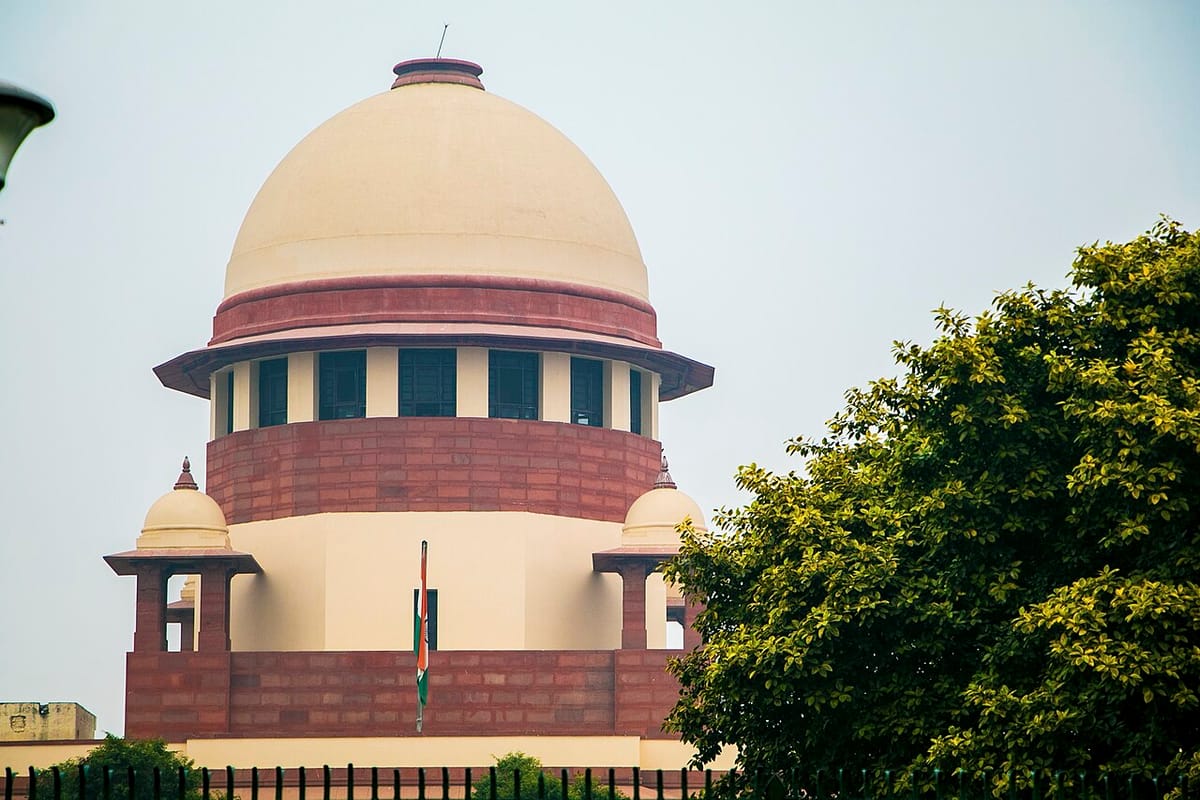
Today, only laws for Articles 39(b) and 39(c) get the special shield of Article 31C against Articles 14 and 19.The Supreme Court, New Delhi. In Minerva Mills (1980) it said Rights and Principles must be kept in balance; neither is fully above the other. Image: Subhashish Panigrahi, 2019 · Wikimedia Commons · CC BY-SA 4.0
UNIFORM CIVIL CODE: WHERE IT STANDS
Article 44 asks for one set of family laws (marriage, divorce, inheritance) for all citizens. India still has no national uniform civil code. Goa has long had a common civil code from Portuguese times. Uttarakhand passed its own Uniform Civil Code law in 2024, the first state to do so after independence.
Article 39(d) → Equal Remuneration Act, 1976 (later replaced by the Code on Wages, 2019)
Article 39A → Legal Services Authorities Act, 1987 (set up NALSA and Lok Adalats)
Article 41 and 39(a) → MGNREGA, 2005 (right to work in villages)
Article 45 → Article 21A and the Right to Education Act, 2009
Article 48A → Environment (Protection) Act, 1986
Article 50 → CrPC, 1973 (now BNSS, 2023): trials by judicial magistrates under the High Court
QUICK CHECK
PYQ · Punjab Police Constable 2024 Which Constitutional Amendment Act introduced the provision for the state to provide free legal aid to the poor?
Tap an option to answer
Answer: D — 42nd Constitutional Amendment Act
The 42nd Amendment (1976) added Article 39A: equal justice and free legal aid. The 44th (1978) added Article 38(2).
QUICK CHECK
PYQ · PPSC Principal 2024 Given below are two statements: Statement I: Article 48A: It is the duty of citizens of India to protect and improve the natural environment. Statement II: Article 51: Directive Principle of State Policy are to ensure protection and improvement of the natural Environment. Choose the correct answer from the option given below:
Tap an option to answer
Answer: B — Both statement I and statement II are incorrect.
Both mix up the articles. Article 48A (added in 1976) is a Directive Principle for the State, not a citizen's duty. The citizen's duty is Article 51A(g). Article 51 is about international peace.
Also useful: quotes and criticismTap to open
PRAISE
B. R. Ambedkar: a "novel feature" of the Constitution
Granville Austin: the "conscience of the Constitution" (with Part III)
Ideals echo the Preamble: justice, liberty, equality
CRITICISM
K. T. Shah: like a cheque payable only when the bank can afford it
T. T. Krishnamachari: a "dustbin of sentiments"
Ivor Jennings: "pious aspirations"
The usual defence: a government that ignores Part IV must face the voters. The Principles also guide the courts. When a law is made to carry out a Principle, courts are more likely to treat its limits on rights as reasonable.
Everything on one look
Articles, groups, amendments and cases to remember.
KEY FACTS
Part IV: Articles 36 to 51
Borrowed from Ireland (1937)
Article 37: not enforceable, but fundamental in governance
Ban on human trafficking is Article 23 (a Fundamental Right), not a Directive Principle.
Article 45 now covers children below six; education for 6–14 is in Article 21A.
Free legal aid 39A came in 1976 (42nd), not with the original Constitution.
Uniform civil code is liberal-intellectual, not Gandhian.
48A = the State's duty (DPSP); 51A(g) = the citizen's duty (Fundamental Duty).
QUICK BYTES
DPSP: Part IV, Articles 36–51
Borrowed from: Irish Constitution
Article 36: defines the State
Article 37: non-justiciable
Article 38: welfare social order
Article 39(d): equal pay for equal work
Article 39A: free legal aid
Article 40: village panchayats
Article 41: right to work
Article 43: living wage, cottage industries
Article 43A: workers in management
Article 43B: co-operative societies
Article 44: uniform civil code
Article 45: care below age six
Article 46: SCs, STs, weaker sections
Article 47: nutrition, prohibition
Article 48: cow slaughter ban
Article 48A: environment
Article 49: monuments
Article 50: separate judiciary
Article 51: international peace
CHECK YOURSELF
A state passes a law that limits how much farmland one family may own, and gives the extra land to landless farmers. Which Directive Principle does it serve, and why is it hard for a court to strike it down under Article 14 or 19?
Show answer
It serves Article 39(b) and (c): fair sharing of material resources and no concentration of wealth. Under Article 31C, a law made to carry out 39(b) or (c) cannot be declared void for breaking Article 14 or 19. Courts can still check whether the law really serves that aim.
❧
Frequently Asked Questions
What are the Directive Principles of State Policy?
They are goals the State should work towards, such as fair wages, health, education and village panchayats. They are in Part IV of the Constitution, Articles 36 to 51.
Are Directive Principles enforceable in court?
No. Article 37 says no court can enforce them. But the same article calls them fundamental in the governance of the country and makes it the State's duty to apply them in making laws.
From which country did India borrow the Directive Principles?
From Ireland. The Irish Constitution of 1937 had Directive Principles of Social Policy, and India took the idea from it.
How are the Directive Principles classified?
The Constitution does not group them. Experts divide them into socialist, Gandhian and liberal-intellectual principles. Exams use these three labels.
Which Directive Principles are Gandhian?
Village panchayats (40), cottage industries (43), co-operative societies (43B), welfare of weaker sections (46), prohibition of liquor (47) and ban on cow slaughter (48).
What is the difference between Fundamental Rights and Directive Principles?
Fundamental Rights limit the State and can be enforced in court. Directive Principles are goals for the State and cannot be enforced. Rights build political democracy; Principles aim at social and economic democracy.
Which Directive Principles were added by the 42nd Amendment?
The 42nd Amendment of 1976 added Article 39(f) on children, 39A on free legal aid, 43A on workers in management and 48A on the environment.
Which article of DPSP deals with the uniform civil code?
Article 44. It asks the State to secure one civil code for all citizens. There is no national code yet, but Goa has a common civil code and Uttarakhand passed its own law in 2024.
Which case settled the conflict between Fundamental Rights and Directive Principles?
Minerva Mills (1980). The Supreme Court held that the balance between Part III and Part IV is part of the basic structure, so neither can be given full priority over the other.
Which Directive Principle became a Fundamental Right?
Free and compulsory education for children. It was first in Article 45. The 86th Amendment of 2002 made it a Fundamental Right in Article 21A for children aged 6 to 14.
Now sit the questions they actually set
Previous-year PPSC questions on this topic, free to read with the worked answer.