Union and its Territory: Articles 1 to 4, New States and Union Territories
Part I of the Constitution in simple words: India as a Union of States, how Parliament makes new states, the reorganisation of 1956, Punjab and Haryana in 1966, and the union territories today.
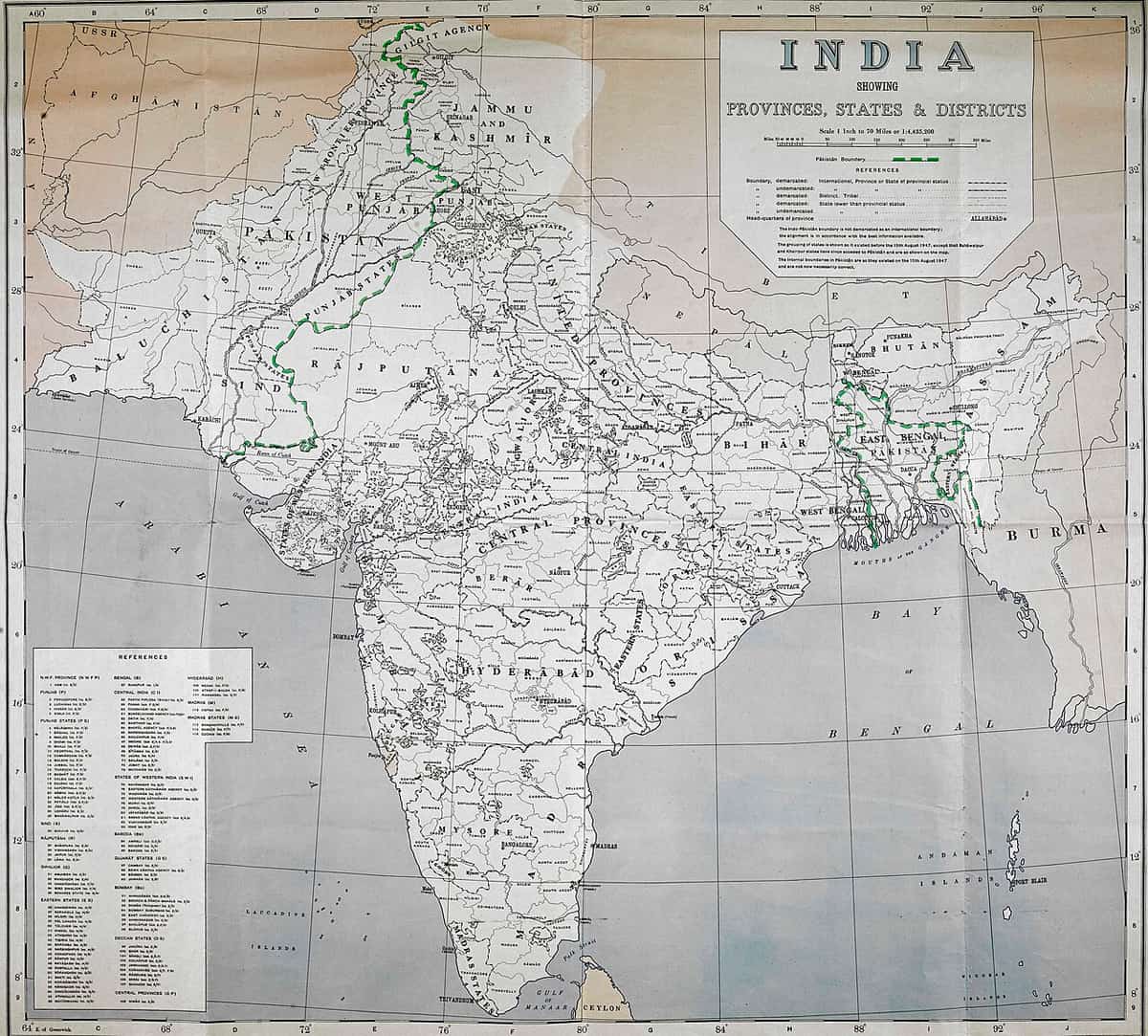
A Survey of India map printed in 1947, showing British provinces, hundreds of princely states and districts. Articles 1 to 4 of the Constitution give Parliament the power to redraw this map into today's states and union territories. Image: Survey of India, 1947 · Wikimedia Commons · Public domain
Every constitution must first say which land it covers. India's does this in Part I, Articles 1 to 4. Article 1 calls India a Union of States. Articles 2 and 3 let Parliament add new states or redraw old ones. Article 4 says such laws need only a simple majority.
Part I
Where
Articles 1 to 4
28
States
since 2019
8
Union territories
since 2020
1st
Schedule
lists states and UTs
Articles 1 to 4: what India is and who can change the map
A Union that cannot break, with states that can be redrawn.
India, that is Bharat, shall be a Union of States.
Article 1(1)
The Constitution uses both names, India and Bharat. It also chose the words "Union of States", not "Federation of States". B. R. Ambedkar gave two reasons. First, Indian states did not agree to form India, like states in the USA did. Second, no state has the right to leave (secede) from India.
KEY TERM
Indestructible Union of destructible States
The Union of India can never be broken up. But the states inside it can be split, joined, enlarged, shrunk or renamed by Parliament. So India is called an indestructible Union of destructible States.
Union cannot break→States can be redrawn→Parliament decides
UNION OF INDIA VS TERRITORY OF INDIA
Union of India
Territory of India
Includes
Only the States
States + Union territories + acquired land
Share federal powers?
Yes, the states do
UTs are run by the Centre
Which is wider?
Narrower
Wider
Article 1(3) lists the territory of India: (a) states, (b) union territories in the First Schedule, (c) any territory India acquires.
Article
What it says
1
India, that is Bharat, is a Union of States; what the territory of India includes.
2
Parliament may admit or establish new states (land not already in India).
3
Parliament may form new states and change the area, boundaries or name of existing states.
4
Laws under Articles 2 and 3 may change the First and Fourth Schedules, but are not amendments under Article 368.
Articles at a glance: Part I
ARTICLE 2 VS ARTICLE 3
Article 2
Article 3
Land
From outside India
Already inside India
Power
Admit or establish new states
Form new states; change area, boundary, name
Example
Sikkim became a state (1975)
Telangana carved out (2014); Orissa renamed Odisha (2011)
2 = outside land joining. 3 = inside land rearranged.
HOW A NEW STATE IS MADE UNDER ARTICLE 3
President's recommendation
The Bill can be brought in Parliament only on the President's recommendation.
↓
Views of the state
The President refers the Bill to the affected state legislature for its views within a fixed time. For a UT, no reference is needed.
↓
Parliament decides
Parliament is not bound by the state's views. The state's consent is not needed.
↓
Simple majority
The Bill passes by a simple majority, like an ordinary law (Article 4).
GIVING AWAY LAND IS DIFFERENT
Articles 2 to 4 cover adding and reorganising land. Giving Indian land to another country is not covered. In the Berubari Union case (1960) the Supreme Court said this needs a constitutional amendment under Article 368. The 9th Amendment (1960) did this for Berubari, and the 100th Amendment (2015) allowed the land swap of enclaves with Bangladesh.
QUICK CHECK
PYQ · Punjab Police Constable 2025 Which of the following is covered under the First Schedule of the Indian Constitution?
Tap an option to answer
Answer: D — Names and territorial extent of Indian States and Union Territories
The First Schedule lists the states and union territories and their areas. Tribal areas of the four North-East states are in the Sixth Schedule, languages in the Eighth and the division of powers in the Seventh.
QUICK CHECK
PYQ · Punjab Police SI 2021 Which Article of the Constitution of India confers power to the Parliament to admit a new state to the Union?
Tap an option to answer
Answer: D — Article 2
Article 2 lets Parliament admit a new state into the Union or establish a new one, as with Sikkim in 1975. Article 11 is about Parliament's power over citizenship.
QUICK CHECK
PYQ · Punjab Police SI 2022 The parliament has the power to form a new State by separation of territory from any State or by uniting two or more States or parts of States or by uniting any territory to a part of any State under which of the following Articles of the Constitution of India?
Tap an option to answer
Answer: C — Article 3
Article 3 deals with land already in India: forming new states by separating or joining territory, and changing a state's area, boundary or name. Article 2 is for land coming from outside.
How the states were reorganised
From four classes of states in 1950 to language-based states in 1956.
Part A
Former British provinces
Run by a Governor and an elected legislature. Punjab was a Part A state.
Part B
Former princely states
Headed by a Rajpramukh. PEPSU (Patiala and East Punjab States Union) was a Part B state.
Part C
Chief commissioners' areas
Run by the Centre through a Chief Commissioner, for example Delhi.
Part D
Andaman and Nicobar Islands
Run directly by the Centre.
The original First Schedule (1950) sorted the units into four classes. The 7th Amendment (1956) ended this system.
Soon people demanded states based on language. In 1948 the S. K. Dhar Commission and then the Congress JVP Committee (Jawaharlal Nehru, Vallabhbhai Patel, Pattabhi Sitaramayya) did not support language as the basis. But in 1952, Potti Sriramulu died after a long fast for a Telugu state. In October 1953, Andhra became the first state formed on the basis of language.
Key names in reorganisation
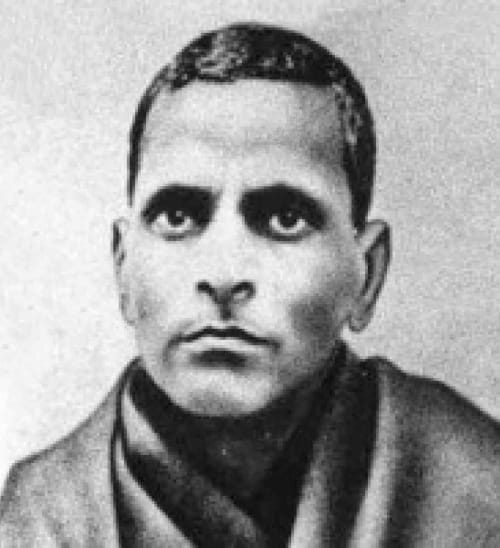
Potti Sriramulu
1901–1952 · Fasted for a Telugu-speaking state
Died after a long fast unto death in December 1952
1886–1959 · Chairman, States Reorganisation Commission
Commission set up in December 1953
Members: K. M. Panikkar and H. N. Kunzru
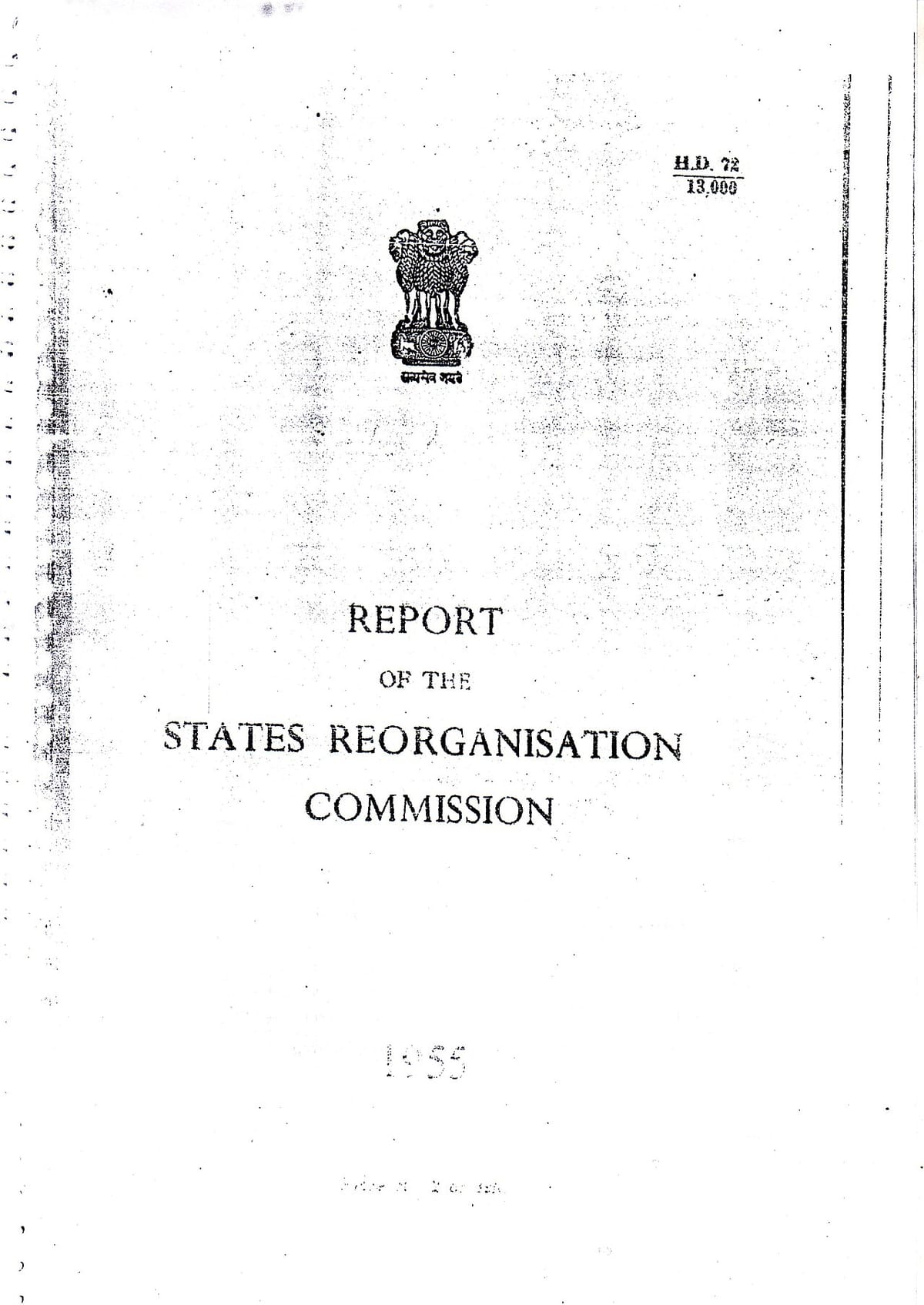
Title page of the States Reorganisation Commission report, 1955. It accepted language as an important factor but rejected "one language, one state". It led to the States Reorganisation Act, 1956. Image: Government of India, 1955 · Wikimedia Commons · Public domain
The States Reorganisation Act, 1956 and the 7th Amendment (1956) ended the Part A to D classes. From 1 November 1956 India had 14 states and 6 union territories. In this change PEPSU was merged into Punjab.
NEW STATES AFTER 1956
1960
Maharashtra and Gujarat
Bombay state split by language.
1963
Nagaland
Carved out of Assam.
1966
Haryana
Carved out of Punjab (see the next part).
1971
Himachal Pradesh
Union territory made a full state.
1972
Manipur, Tripura, Meghalaya
Became full states.
1975
Sikkim
Became a state (36th Amendment).
1987
Mizoram, Arunachal Pradesh, Goa
Became full states.
2000
Chhattisgarh, Uttarakhand, Jharkhand
Carved out of MP, UP and Bihar.
2014
Telangana
Carved out of Andhra Pradesh on 2 June 2014.
2019
Jammu and Kashmir
State turned into two union territories.
FLASHCARDS
Name changes: old name → new name
United Provinces
Uttar Pradesh (1950)
Madras State
Tamil Nadu (1969)
Mysore State
Karnataka (1973)
Laccadive, Minicoy and Amindivi Islands
Lakshadweep (1973)
Uttaranchal
Uttarakhand (from 1 January 2007)
Pondicherry
Puducherry (2006)
Orissa
Odisha (2011)
QUICK CHECK
PYQ · PSSSB Patwari 2021 Which of the following pairs (State – date of formation) is correctly matched?
Tap an option to answer
Answer: A — Haryana – 1 November 1966
Haryana was formed on 1 November 1966. Mizoram became a state in 1987, Telangana on 2 June 2014, and Chhattisgarh on 1 November 2000.
Punjab, Haryana and Chandigarh: 1966
The Punjabi Suba movement and the Punjab Reorganisation Act.
After 1956, Punjab had both Punjabi-speaking and Hindi-speaking areas. The Punjabi Suba movement, led by Akali leaders such as Master Tara Singh and Sant Fateh Singh, demanded a Punjabi-speaking state. In 1966 the government accepted the idea, and the Shah Commission (headed by Justice J. C. Shah) suggested the new boundaries.
KEY TERM
Punjab Reorganisation Act, 1966
Passed by Parliament under Article 3. From 1 November 1966: the Punjabi-speaking areas stayed as Punjab; the Hindi-speaking areas became Haryana; the hill areas went to Himachal Pradesh (then a union territory); and Chandigarh became a union territory and the shared capital of Punjab and Haryana.
Punjab of 1956→Shah Commission→Punjab + Haryana + Chandigarh UT
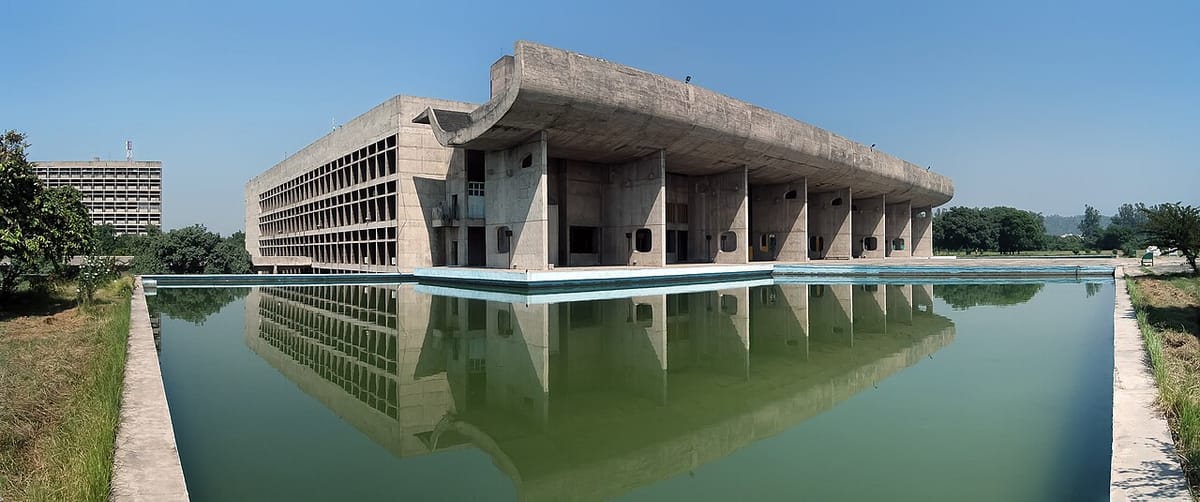
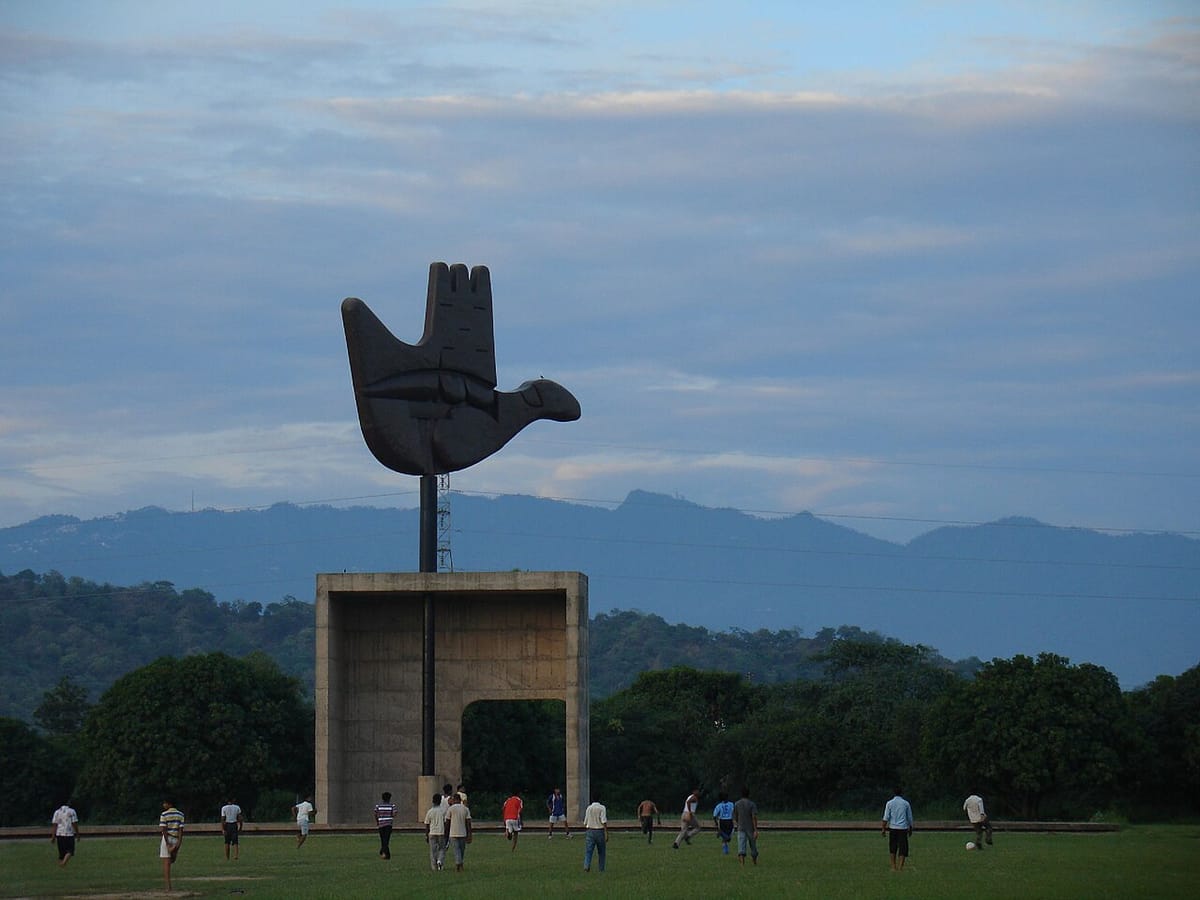
Chandigarh: a union territory and a shared capital
The Palace of Assembly, Chandigarh. The Vidhan Sabhas of both Punjab and Haryana meet in this building, because Chandigarh is the capital of both.
PYQ · PPSC NE 2019 The Punjab Reorganisation Act, which created the States of Punjab and Haryana in 1966, was enacted on the basis of the recommendation of the
Tap an option to answer
Answer: C — Shah Commission
The Shah Commission (1966) drew the boundary between Punjab and Haryana. The Dhar Commission (1948) had studied linguistic states in general. PPSC RO 2019 and PPSC TA 2019 asked the same question.
QUICK CHECK
PYQ · Punjab Police SI 2023 Haryana was separated from the state of Punjab in which of the following years?
Tap an option to answer
Answer: A — 1966
Haryana was carved out of Punjab by the Punjab Reorganisation Act, 1966, from 1 November 1966. 1956 was the general reorganisation, when PEPSU merged into Punjab. Punjab Police SI 2023 also asked the year of the Punjab Reorganisation Act (1966).
QUICK CHECK
PYQ · Punjab Police SI 2023 Which of the following was made a Union Territory in the year 1966?
Tap an option to answer
Answer: B — Chandigarh
Chandigarh became a union territory on 1 November 1966, when Punjab was reorganised. Lakshadweep became a UT in 1956 and Puducherry in 1962.
Union territories today, and Jammu and Kashmir
Areas run by the Centre: eight of them since 2020.
A union territory (UT) is run directly by the Centre. The President governs it through an Administrator, often called the Lieutenant Governor. UTs are covered in Part VIII, Articles 239 to 241. Three UTs have their own elected legislature: Delhi, Puducherry and Jammu and Kashmir.
Union territory
Since
High Court
Andaman and Nicobar Islands
1956
Calcutta
Lakshadweep
1956
Kerala
Delhi (National Capital Territory)
1956
Delhi
Puducherry
1962
Madras
Chandigarh
1966
Punjab and Haryana
Jammu and Kashmir
2019
J&K and Ladakh
Ladakh
2019
J&K and Ladakh
Dadra and Nagar Haveli and Daman and Diu
2020
Bombay
The 8 union territories
STATE VS UNION TERRITORY
State
Union territory
Head
Governor
Administrator (Lt Governor) for the President
Government
Own elected government
Run by the Centre; only 3 have legislatures
Federal powers
Shares powers with the Centre
Does not share in federal powers
JAMMU AND KASHMIR, 2019
On 5 August 2019 a Presidential order applied the whole Constitution to Jammu and Kashmir, so the special provisions under Article 370 stopped working. The Jammu and Kashmir Reorganisation Act, 2019 split the state into two UTs from 31 October 2019: Jammu and Kashmir (with a legislature) and Ladakh (without one). The Supreme Court upheld this in December 2023.
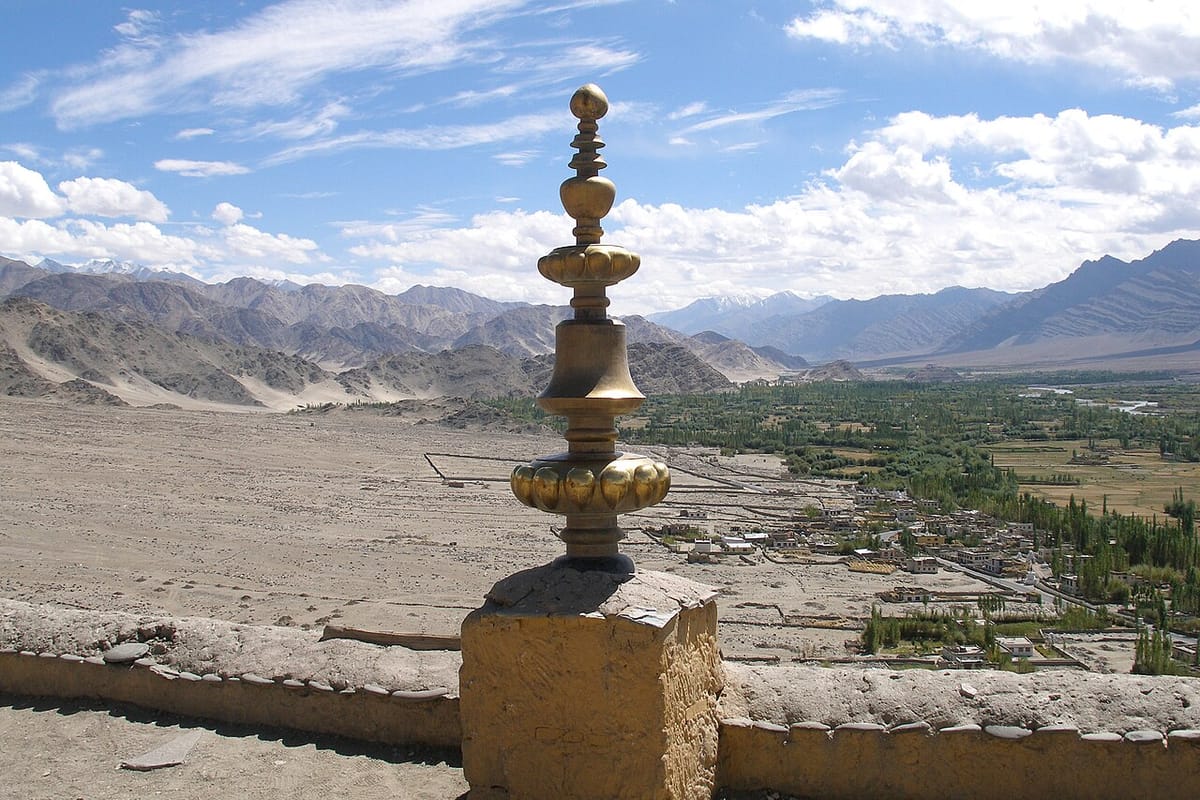
Thiksey, in the Indus valley, Ladakh. Ladakh became a union territory without a legislature on 31 October 2019. In January 2020 Dadra and Nagar Haveli and Daman and Diu were merged, leaving 8 UTs. Image: Vyacheslav Argenberg, 2007 · Wikimedia Commons · CC BY 4.0
QUICK CHECK
PYQ · Punjab Police SI 2023 Which Articles of the Constitution of India deal with the Union Territories?
Tap an option to answer
Answer: A — Articles 239 to 241
Union territories are in Part VIII, Articles 239 to 241. Articles 245 to 263 deal with Centre-state relations.
QUICK CHECK
PYQ · Punjab Police SI 2021 With respect to the Indian constitution which of the following statements is true regarding the Union Territories? I. Part VIII of Indian constitution is related with the Union Territories. II. Article 240 of the Indian constitution is related with the power of President to make regulations for certain Union territories. III. Article 241 is related with the high courts for Union territories.
Tap an option to answer
Answer: A — I, II and III
All three are true. Part VIII covers UTs; under Article 240 the President can make regulations for some UTs such as the island territories; Article 241 deals with High Courts for UTs.
QUICK CHECK
PYQ · PPSC Principal 2020 As per Article 241, who can constitute a High Court for a Union Territory or declare any court in any such territory to be a High Court for all or any of the purposes of the Constitution ?
Tap an option to answer
Answer: C — The Parliament
Under Article 241, Parliament may by law set up a High Court for a UT. That is why Chandigarh is served by the Punjab and Haryana High Court and Delhi has its own High Court.
Delhi and the special provisions (also asked)Tap to open
The 69th Amendment (1991) added Article 239AA. It made Delhi the National Capital Territory, with an elected Legislative Assembly and a Council of Ministers under a Chief Minister. But public order, police and land stay with the Centre. Article 239AB deals with failure of the constitutional machinery in Delhi.
Article
Special provisions for
371
Maharashtra and Gujarat (development boards)
371A
Nagaland
371B
Assam
371C
Manipur
371D, 371E
Andhra Pradesh and Telangana
371F
Sikkim
371G
Mizoram
371H
Arunachal Pradesh
371I
Goa
371J
Karnataka (Hyderabad-Karnataka region)
QUICK CHECK
PYQ · Punjab Police SI 2023 Which of the following Articles of the Indian Constitution provides for special provisions with respect to Delhi?
Tap an option to answer
Answer: A — Article 239AA
Article 239AA (69th Amendment) has the special provisions for Delhi. Article 239A is about legislatures for some UTs such as Puducherry.
QUICK CHECK
PYQ · Punjab Police SI 2021 Delhi is called the 'National Capital Territory of Delhi' under which Amendment Act?
Tap an option to answer
Answer: B — 69th
The 69th Amendment Act, 1991 renamed the UT of Delhi as the National Capital Territory of Delhi and gave it a legislature.
QUICK CHECK
PYQ · Punjab Police Constable 2021 Delhi has all the legislative powers of a state, EXCEPT:
Tap an option to answer
Answer: A — Police and land
Under Article 239AA, the Delhi Assembly cannot make laws on public order, police and land. These stay with the Centre.
Everything on one look
Articles, dates, Punjab facts and the traps.
KEY NUMBERS
Part I: Articles 1 to 4
28 states, 8 union territories
4 classes of states in 1950 (A, B, C, D)
14 states and 6 UTs after 1956
UTs: Part VIII, Articles 239 to 241
3 UTs with legislatures: Delhi, Puducherry, J&K
KEY DATES
1953: Andhra, first language-based state
1953: Fazl Ali Commission set up
1956: States Reorganisation Act; 7th Amendment; PEPSU into Punjab
1 Nov 1966: Haryana formed; Chandigarh a UT
1975: Sikkim a state (36th Amendment)
2014: Telangana
31 Oct 2019: J&K and Ladakh UTs
COMMON TRAPS
Article 2 is for land from outside India; Article 3 is for land inside India.
Under Article 3 a state's views are taken, but its consent is not needed.
Laws under Articles 2 and 3 are not constitutional amendments (Article 4); a simple majority is enough.
Territory of India (states + UTs + acquired land) is wider than the Union of India (states only).
Giving land to another country needs an Article 368 amendment (Berubari, 1960).
Andhra (1953) was the first language-based state, before the 1956 Act.
The 7th Amendment (1956) ended the Part A, B, C, D classes.
Haryana and the UT of Chandigarh date from 1966, not 1956.
Ladakh is a UT without a legislature; J&K is a UT with one.
QUICK BYTES
Article 1: India, that is Bharat, a Union of States
Article 2: admit or establish new states
Article 3: form new states, change boundaries and names
Article 4: such laws are not Article 368 amendments
First Schedule: names and areas of states and UTs
Fourth Schedule: Rajya Sabha seats of states
First language-based state: Andhra, 1953
States Reorganisation Commission: Fazl Ali, 1953
Members: K. M. Panikkar, H. N. Kunzru
Punjab–Haryana boundary: Shah Commission, 1966
Haryana formed: 1 November 1966
Chandigarh: UT since 1966; Punjab Governor is Administrator
Sikkim: 36th Amendment, 1975
Delhi as NCT: 69th Amendment, Article 239AA
J&K split into two UTs: 31 October 2019
UT High Courts: Parliament decides (Article 241)
CHECK YOURSELF
A new state is to be carved out of an existing state, but that state's assembly votes against it. Can Parliament still create the new state? What majority does it need?
Show answer
Yes. Under Article 3, the President must send the Bill to the state legislature for its views, but Parliament is not bound by them. Because of Article 4, the law is not a constitutional amendment, so a simple majority in Parliament is enough.
❧
Frequently Asked Questions
Which articles of the Constitution deal with the Union and its territory?
Articles 1 to 4, in Part I. Article 1 calls India a Union of States, Articles 2 and 3 let Parliament add or reorganise states, and Article 4 says such laws are not constitutional amendments.
Why is India called a Union of States and not a Federation?
B. R. Ambedkar explained that the Indian federation was not formed by an agreement among states. Also, no state has the right to leave the Union, so India is an indestructible Union of destructible States.
What is the difference between Article 2 and Article 3?
Article 2 is for land from outside India, such as Sikkim becoming a state in 1975. Article 3 is for land already inside India, such as forming Telangana in 2014 or renaming Orissa as Odisha.
Can Parliament create a new state without the state's consent?
Yes. The President must ask the state legislature for its views, but Parliament is not bound by them. The law passes by a simple majority.
What is the difference between the Union of India and the Territory of India?
The Union of India includes only the states. The Territory of India is wider: it includes the states, the union territories and any land India acquires.
Which was the first state formed on the basis of language?
Andhra, formed in October 1953 after the death of Potti Sriramulu following a long fast. The general reorganisation came later, in 1956.
Who headed the States Reorganisation Commission?
Justice Fazl Ali headed it, with K. M. Panikkar and H. N. Kunzru as members. It was set up in 1953 and its report led to the States Reorganisation Act, 1956.
When was Haryana separated from Punjab?
On 1 November 1966, under the Punjab Reorganisation Act, 1966. Chandigarh became a union territory and the shared capital of both states, and the hill areas went to Himachal Pradesh.
How many states and union territories are there in India?
There are 28 states and 8 union territories. The number of UTs became 8 in January 2020, when Dadra and Nagar Haveli and Daman and Diu were merged.
What happened to Jammu and Kashmir in 2019?
In August 2019 the special provisions under Article 370 stopped working, and the state was split into two union territories from 31 October 2019. Jammu and Kashmir has a legislature, while Ladakh does not.