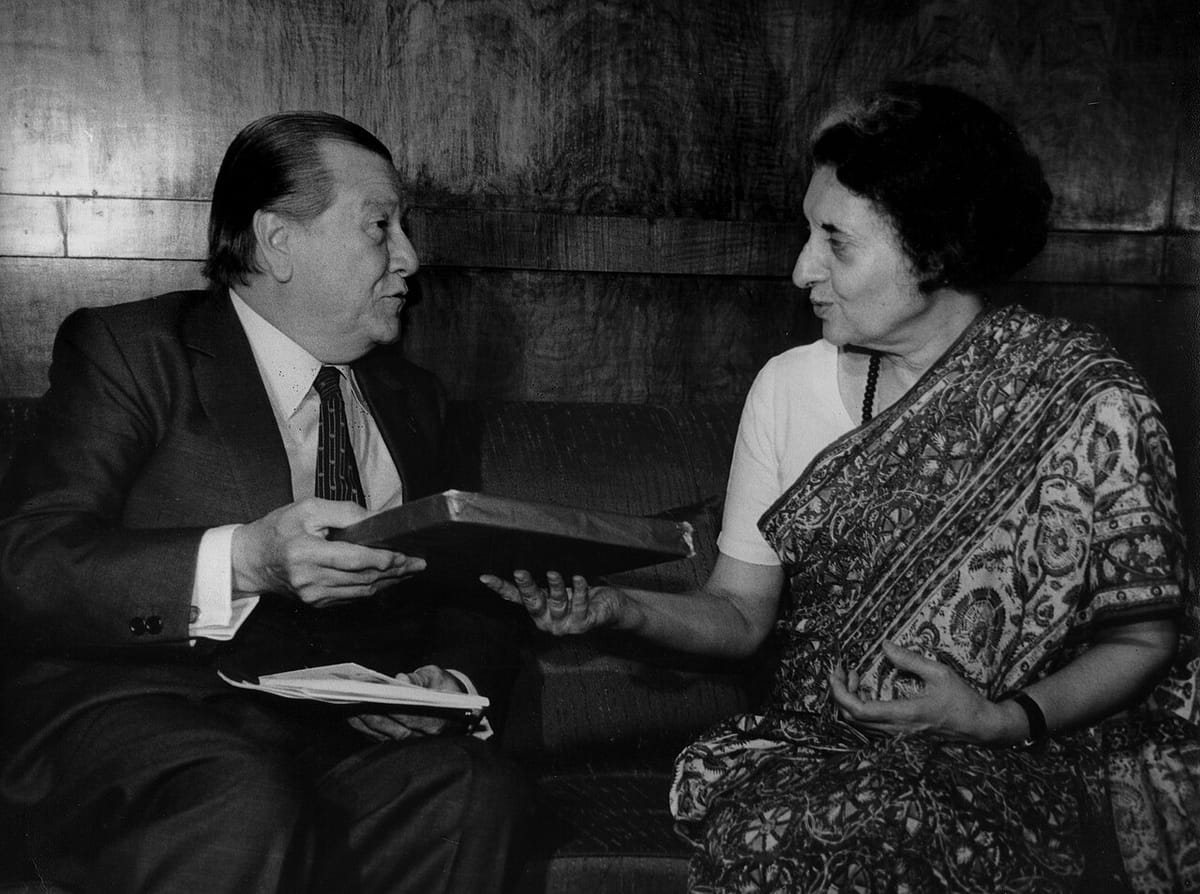
An emergency is a time when the normal rules are put aside so the country can face a grave danger. The Constitution allows three kinds, all in Part XVIII (Articles 352 to 360). In an emergency the Centre becomes very powerful and India works almost like a unitary state.
Three kinds of emergency
Who declares them, on what grounds, and where the idea came from.
In normal times power is divided between the Centre and the states. But war, rebellion, a broken state government or a money crisis can need one strong hand. So the Constitution lets the President declare an emergency. In practice he acts on the advice of the Union Cabinet.
War, external aggression or armed rebellion threatens the security of India or any part of it.
The government of a state cannot be carried on as the Constitution requires. Also called State Emergency.
The financial stability or credit of India, or of any part of it, is threatened.
The three emergencies and their grounds.
| Article | What it says |
|---|---|
| 352 | Proclamation of National Emergency. |
| 353 | Its effect: the Centre can direct any state on how to use its executive power. |
| 354 | The President can change the sharing of revenue between Centre and states. |
| 355 | Duty of the Union to protect every state from external aggression and internal disturbance. |
| 356 | President's Rule when the constitutional machinery fails in a state. |
| 357 | Who makes laws for a state under President's Rule (Parliament). |
| 358 | Article 19 suspended automatically in a war or external-aggression emergency. |
| 359 | President can suspend the right to go to court for other Fundamental Rights. |
| 360 | Financial Emergency. |
The emergency scheme is largely modelled on the Government of India Act, 1935. The idea of suspending Fundamental Rights during an emergency is traced to the Weimar Constitution of Germany.
National Emergency (Article 352)
The gravest of the three: how it is declared, approved and ended.
The President can proclaim a National Emergency if war, external aggression or armed rebellion threatens India. He need not wait for the attack. An imminent danger is enough. It can cover the whole of India or only a part of it.
An emergency on the ground of war or external aggression is often called an external emergency. One on the ground of armed rebellion is called an internal emergency.
- Step 1Cabinet decides, in writingThe Union Cabinet (not the Prime Minister alone) sends its decision in writing to the President.
- Step 2President proclaimsThe proclamation is laid before both Houses of Parliament.
- Step 3Parliament approves within 1 monthEach House by a special majority: majority of total members and two-thirds of members present and voting.
- Step 4In force for 6 monthsIt can go on without any upper limit, but needs fresh approval every 6 months.
- Step 5Ending itThe President can revoke it any time. The Lok Sabha can also end it by a simple majority resolution.
The Centre can give directions to any state on any matter.
Parliament can make laws on subjects in the State List. State legislatures are not suspended.
The President can change how revenue is shared between Centre and states.
Parliament can extend it by law, one year at a time, and not beyond six months after the emergency ends.
What changes while a National Emergency is on.
- Oct 1962First: war with China
Ground: external aggression. President S. Radhakrishnan. Lasted till January 1968.
- Dec 1971Second: war with Pakistan
Ground: external aggression. President V. V. Giri. Lasted till March 1977.
- 25 Jun 1975Third: "internal disturbance"
Proclaimed by President Fakhruddin Ali Ahmed on the advice of PM Indira Gandhi, while the 1971 one was still on. Ended March 1977.
- 1977Shah Commission
Set up by the new government to inquire into the excesses of the Emergency.
- 197844th Amendment
Passed under the Janata government. It made emergencies much harder to declare.
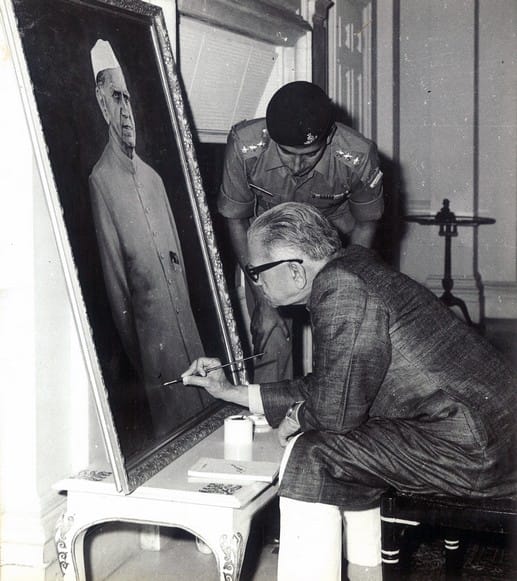
- Signed the proclamation of 25 June 1975
- Acted on the Prime Minister's advice; the Cabinet approved it the next morning
- Advised the Emergency soon after the Allahabad High Court set aside her election (June 1975)
- Lost the general election of March 1977
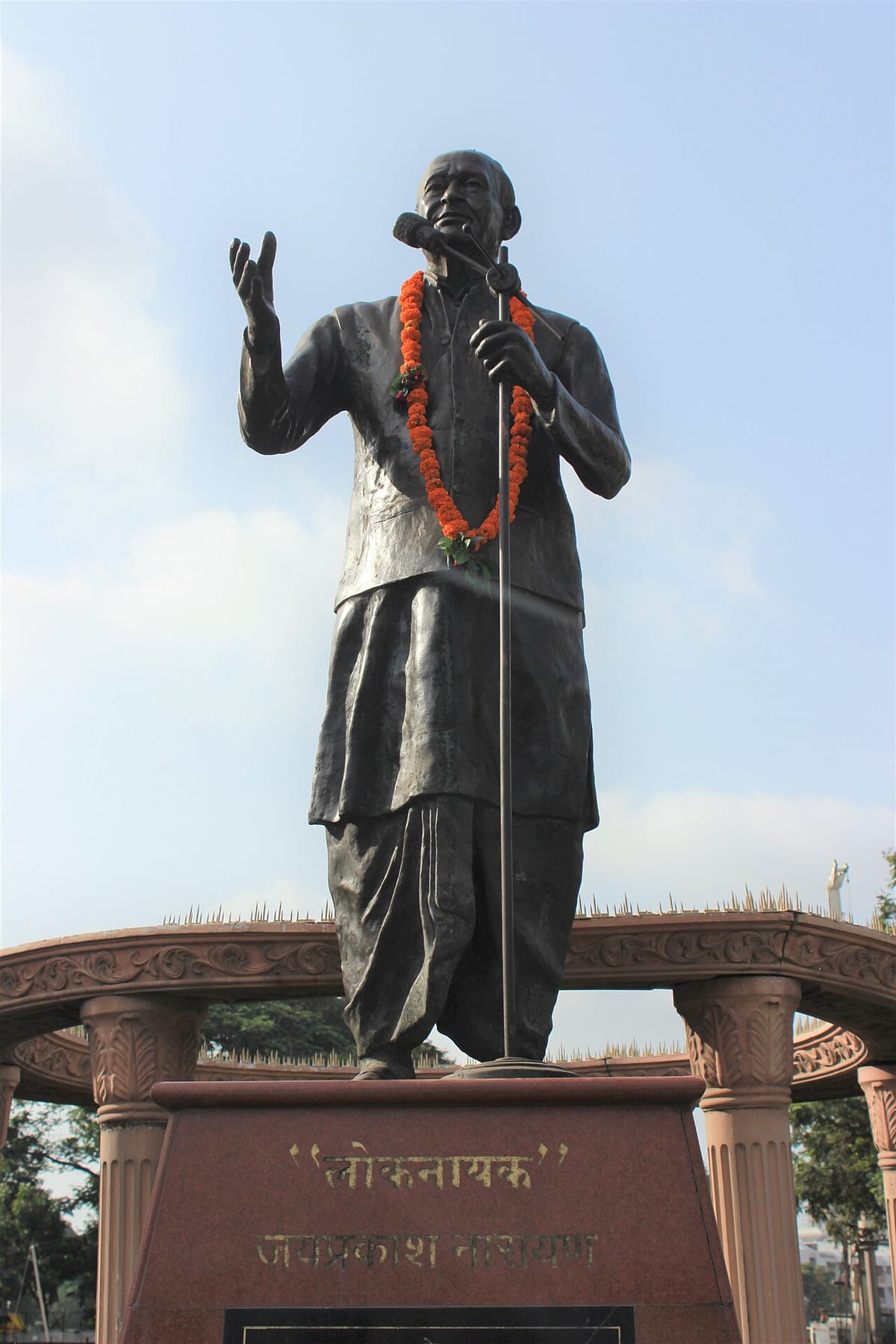
- Led the 1974–75 movement for "Total Revolution"
- Jailed during the Emergency
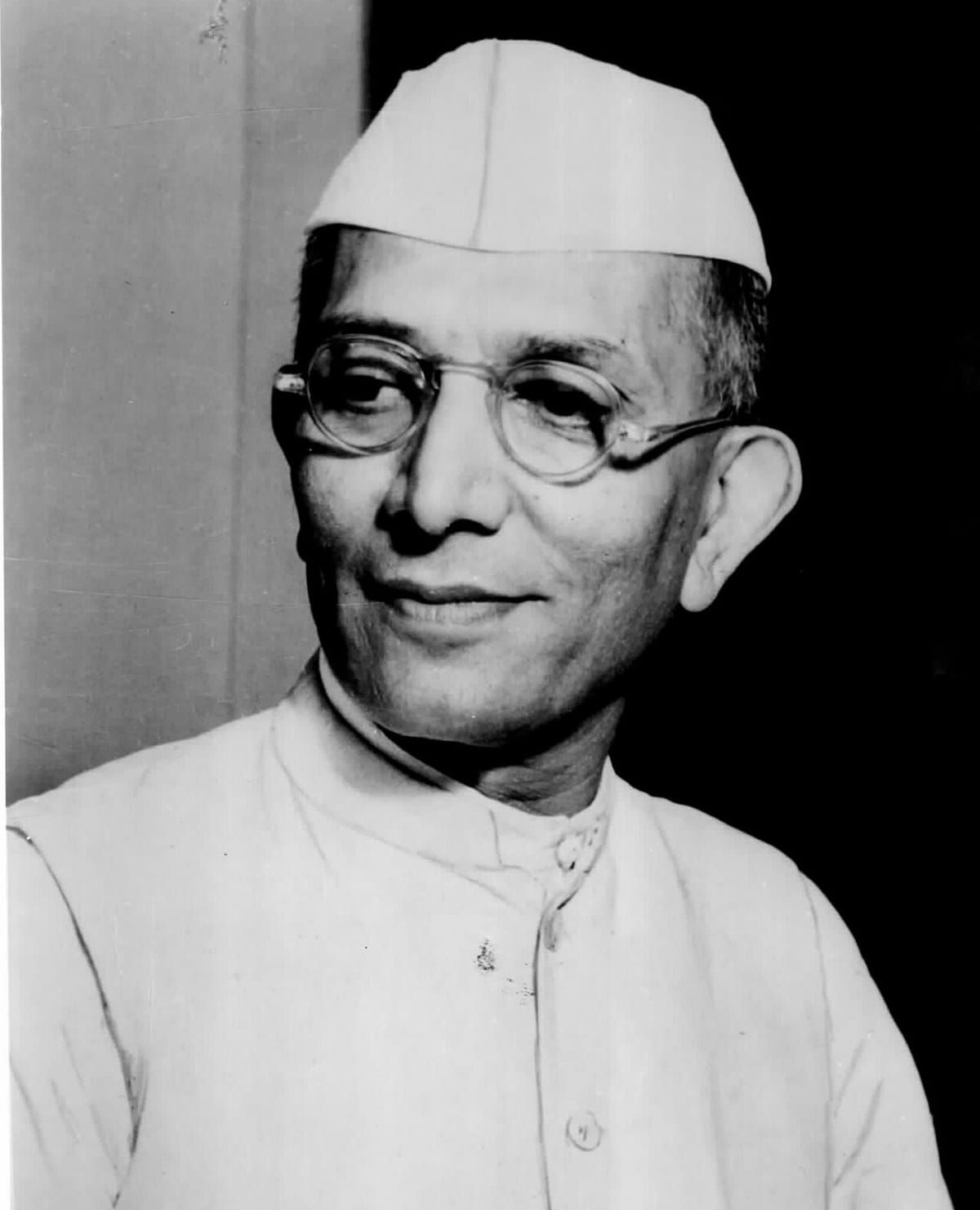
- Headed the Janata government that came after the Emergency
- The 44th Amendment was passed in his time
The 44th Amendment and Fundamental Rights
What changed after 1975–77, and which rights can never be touched.
The 1975 Emergency was declared on the vague ground of "internal disturbance", on the Prime Minister's advice. Thousands were jailed and the press was censored. After it ended, the 44th Amendment (1978) tightened every step.
President's Rule (Article 356)
When a state's government breaks down.
Article 355 makes it the duty of the Union to see that every state is run according to the Constitution. If that fails, Article 356 lets the President take over the state. He acts on the Governor's report or otherwise (even without a report). Under Article 365, a state that ignores the Centre's lawful directions can also be treated as having failed.
| Point | President's Rule |
|---|---|
| Approval | Both Houses within 2 months, by simple majority. |
| Duration | 6 months at a time; normally up to 1 year. |
| Maximum | 3 years. Beyond 1 year only if a National Emergency is on and the Election Commission certifies elections cannot be held. |
| State executive | Taken over by the President; the Governor runs the state on his behalf. |
| State legislature | Assembly suspended or dissolved. Parliament makes the state's laws and passes its budget (Article 357). |
| High Court | Not affected. Its powers cannot be taken away. |
| Fundamental Rights | Not affected. |
A nine-judge bench laid down limits on Article 356. A proclamation is open to judicial review. The Assembly should only be suspended, not dissolved, until Parliament approves. A government's majority must be tested on the floor of the House, not in the Governor's office. And secularism is part of the basic structure.
B. R. Ambedkar hoped Article 356 would remain a "dead letter". In fact it has been used more than 100 times since 1950.
Article 356 was used for the first time in India in Punjab, on 20 June 1951. Counting PEPSU (1953), Punjab has had President's Rule nine times. The longest spell ran from 1987 to February 1992, nearly five years. Parliament had to pass special amendments (the 59th, 64th, 67th and 68th) to keep extending it beyond the normal limit.
- 1951–52Punjab
First use of Article 356 anywhere in India.
- 1953–54PEPSU
Patiala and East Punjab States Union, merged into Punjab in 1956.
- 1966Punjab
Around the reorganisation that created Haryana.
- 1968–69Punjab
- 1971–72Punjab
- 1977Punjab
- 1980Punjab
- 1983–85Punjab
- 1987–92Punjab
The longest spell, nearly five years.
Financial Emergency (Article 360)
The emergency that has never been used.
If the President is satisfied that the financial stability or credit of India is threatened, he can declare a Financial Emergency. It has never been declared. But its rules are often asked.
| Point | Financial Emergency |
|---|---|
| Approval | Both Houses within 2 months, by simple majority. |
| Duration | Once approved, it continues until revoked. No renewal is needed. |
| Directions | The Centre can tell states to follow rules of financial propriety. |
| Salaries | Can be cut for all government servants, including Supreme Court and High Court judges. |
| Money Bills | States can be asked to reserve money bills for the President. |
352 = the nation. 356 = a state. 360 = the money. Only 352 touches Fundamental Rights. Only 356 has a 3-year ceiling. Only 360 has never been used.
Fine print examiners likeTap to open
If the Lok Sabha is dissolved when an emergency is proclaimed, the proclamation survives till 30 days after the new Lok Sabha first meets, provided the Rajya Sabha has approved it. The same rule applies to Articles 356 and 360.
- The 42nd Amendment (1976) allowed a National Emergency for only a part of India.
- The 38th Amendment (1975) tried to put the President's satisfaction beyond court review. The 44th Amendment removed that bar, and in Minerva Mills (1980) the Court held a proclamation can be reviewed.
- The 42nd Amendment had stretched each spell of President's Rule to one year; the 44th brought it back to six months.
- The Sarkaria Commission advised that Article 356 be used only as a last resort, after warning the state.
Everything on one look
The three emergencies side by side, and the traps.
| Point | National (352) | President's Rule (356) | Financial (360) |
|---|---|---|---|
| Ground | War, external aggression, armed rebellion | Breakdown of government in a state | Threat to financial stability |
| Approve within | 1 month | 2 months | 2 months |
| Majority | Special | Simple | Simple |
| Each approval lasts | 6 months | 6 months | Until revoked |
| Upper limit | None | 3 years | None |
| Used | 3 times | 100+ times | Never |
- Part XVIII: Articles 352–360
- National Emergency: approve in 1 month
- President's Rule and Financial: 2 months
- President's Rule maximum: 3 years
- Lok Sabha notice to end it: one-tenth of members
- Punjab: first President's Rule 1951; 9 times with PEPSU
- 1962, 1971, 1975: National Emergencies
- 25 June 1975: internal-disturbance Emergency
- 44th Amendment (1978): armed rebellion; written Cabinet advice
- ADM Jabalpur (1976): why Articles 20, 21 were protected
- S. R. Bommai (1994): floor test, judicial review
- The 44th Amendment replaced "internal disturbance" with "armed rebellion".
- Article 19 is suspended only in a war or external-aggression emergency.
- Articles 20 and 21 can never be suspended.
- National Emergency needs a special majority; the other two need a simple majority.
- National Emergency: 1 month to approve; the other two: 2 months.
- President's Rule has a 3-year ceiling; Financial Emergency has none and needs no renewal.
- A Financial Emergency has never been declared.
- Under President's Rule the High Court keeps all its powers.
- The Lok Sabha alone (not the Rajya Sabha) can pass a resolution to end a National Emergency.
- National Emergency: Article 352
- President's Rule: Article 356
- Financial Emergency: Article 360
- Duty of Union to protect states: Article 355
- Article 19 suspended: Article 358
- Court enforcement suspended: Article 359
- State List laws in emergency: Article 250
- FR suspension idea: Weimar Constitution
- 1975 Emergency: advised by Indira Gandhi
- 1975 proclamation signed by: Fakhruddin Ali Ahmed
- Inquiry into Emergency: Shah Commission
- Floor test rule: S. R. Bommai, 1994
- "Dead letter" hope for 356: Ambedkar
- First President's Rule in India: Punjab, 1951
- Judges' salaries can be cut: Financial Emergency
A state government loses its majority after defections. The Governor writes to the President that the government has failed, without calling a vote in the Assembly. What did the Bommai case say should happen first?
Show answer
The majority must be tested on the floor of the Assembly, not decided by the Governor's opinion. If President's Rule is still imposed under Article 356, the Assembly should only be suspended until both Houses of Parliament approve, and the proclamation can be challenged in court.