Harshavardhana
606–647 CE — the last great king of north India, and how we know about him.
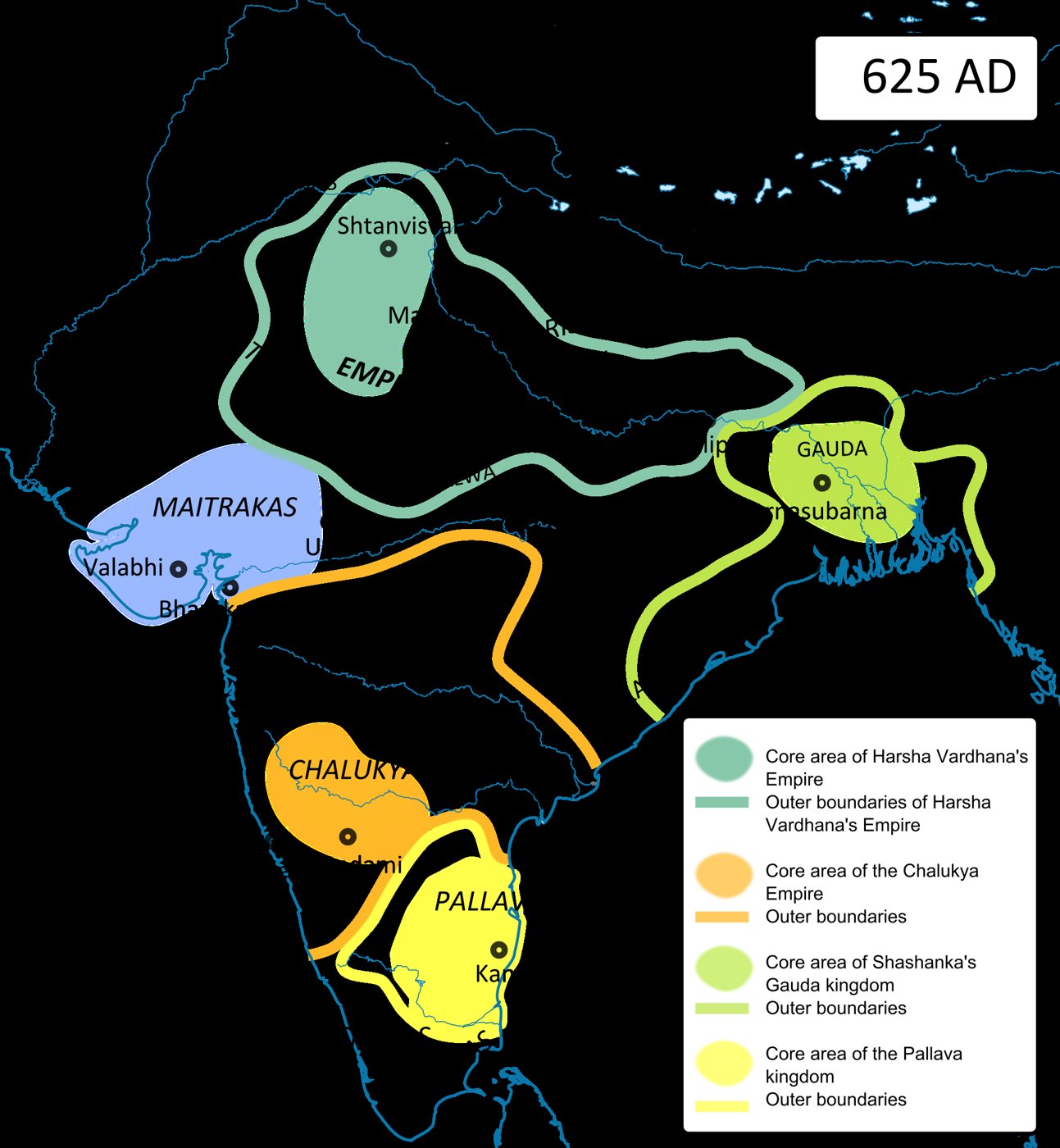
When the Guptas weakened, Harshavardhana (ruled 606–647 CE) of the Pushyabhuti (Vardhana) dynasty built the last big kingdom of north India. His family's seat was Thanesar (Sthanvishvara, in today's Haryana, next door to Punjab). His father was Prabhakaravardhana. Harsha became king after his elder brother Rajyavardhana was killed by Shashanka, king of Gauda (Bengal), in 606 CE. He rescued his sister Rajyashri and moved his capital to Kannauj. The Aihole inscription calls him lord of the whole north (Sakalottarapathanatha), and Hiuen Tsang calls him Shiladitya. When Harsha tried to march south, the Chalukya king Pulakeshin II stopped him on the Narmada river. Harsha died in 647 CE without an heir, and his kingdom broke up.
| Source | What it is | Remember |
|---|---|---|
| Harshacharita | life of Harsha in Sanskrit prose | by his court poet Banabhatta (who also wrote Kadambari) |
| Si-yu-ki | travel record of Hiuen Tsang (Xuanzang) | he stayed in India c. 630–645 and studied at Nalanda |
| Aihole inscription | praise-poem of Pulakeshin II, 634 CE | by Ravikirti; records Harsha's defeat on the Narmada |
| Banskhera & Madhuban plates | copper-plate land grants of Harsha | Banskhera plate carries Harsha's signature |
| Harsha's own plays | Ratnavali, Priyadarshika, Nagananda | Sanskrit plays credited to Harsha |
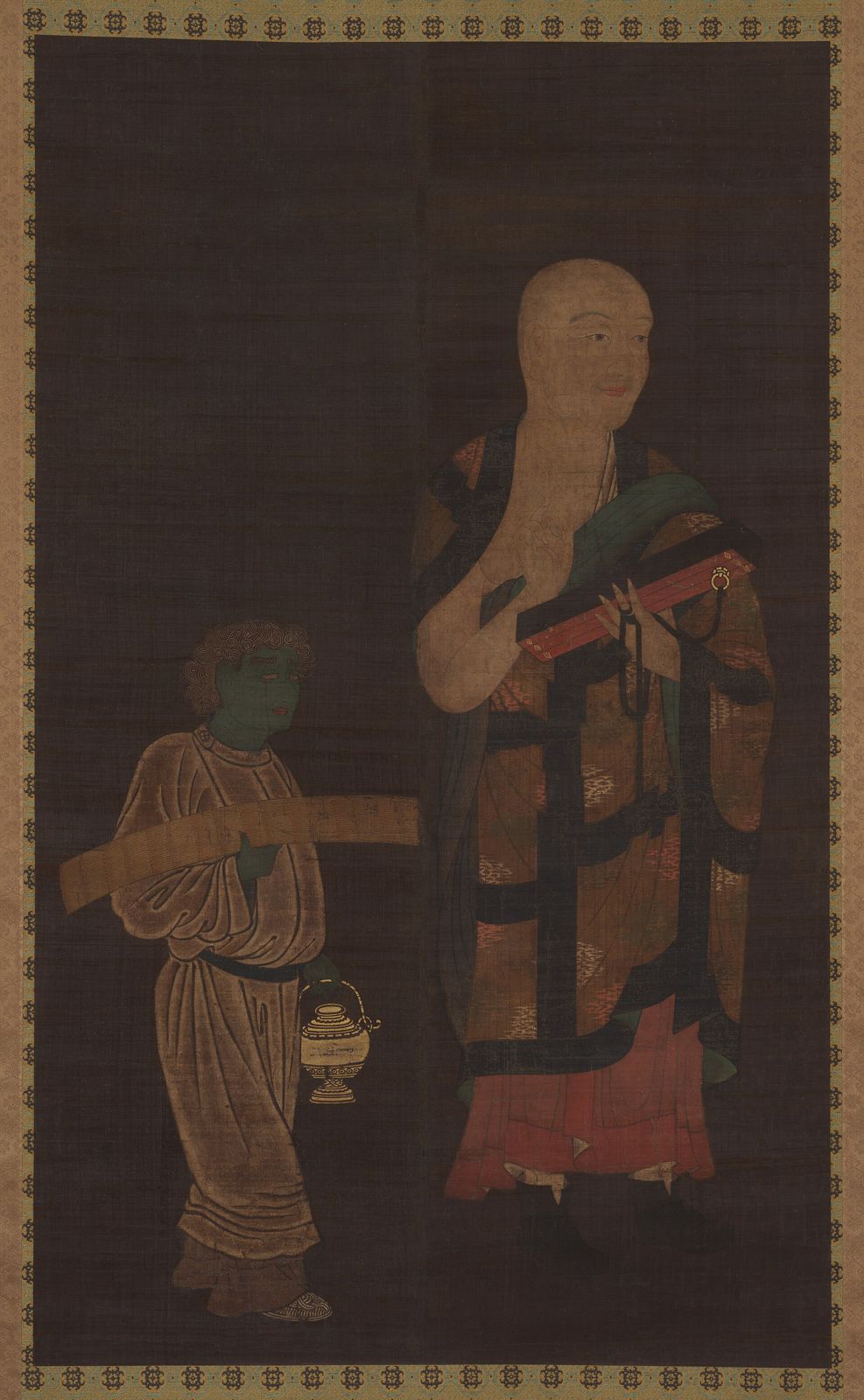
Religion and gifts. Harsha honoured Shiva and the Sun, and, according to Hiuen Tsang, became a great patron of Mahayana Buddhism. In 643 CE he held a great religious assembly at Kannauj, where Hiuen Tsang explained the Mahayana teaching. At Prayag he held a great gift-giving festival every five years, giving away his wealth to monks, Brahmanas and the poor. Harsha also supported Nalanda, though it had been founded much earlier by Kumaragupta I.
Chalukyas, Pallavas and the Sangam kingdoms
The Deccan and Tamil country, from the Sangam age to the 8th century.
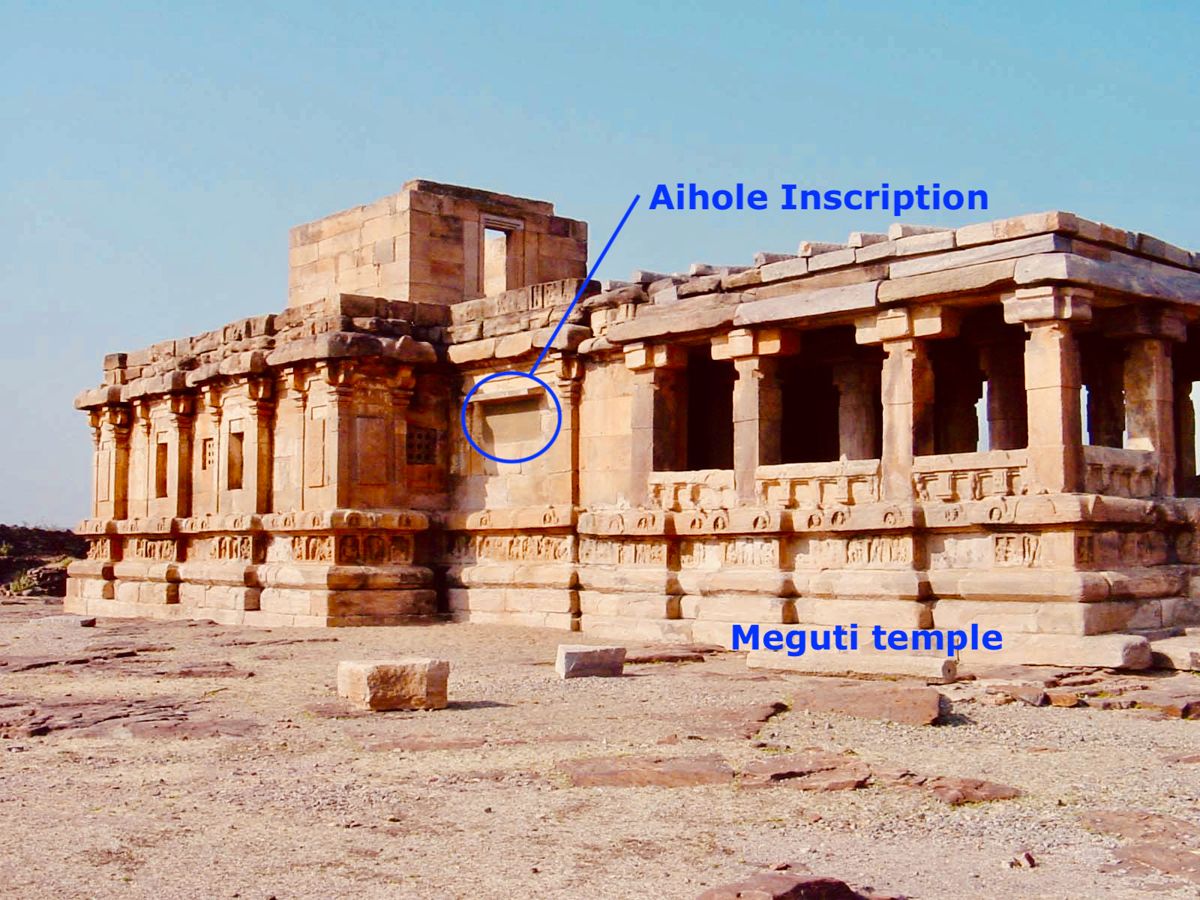
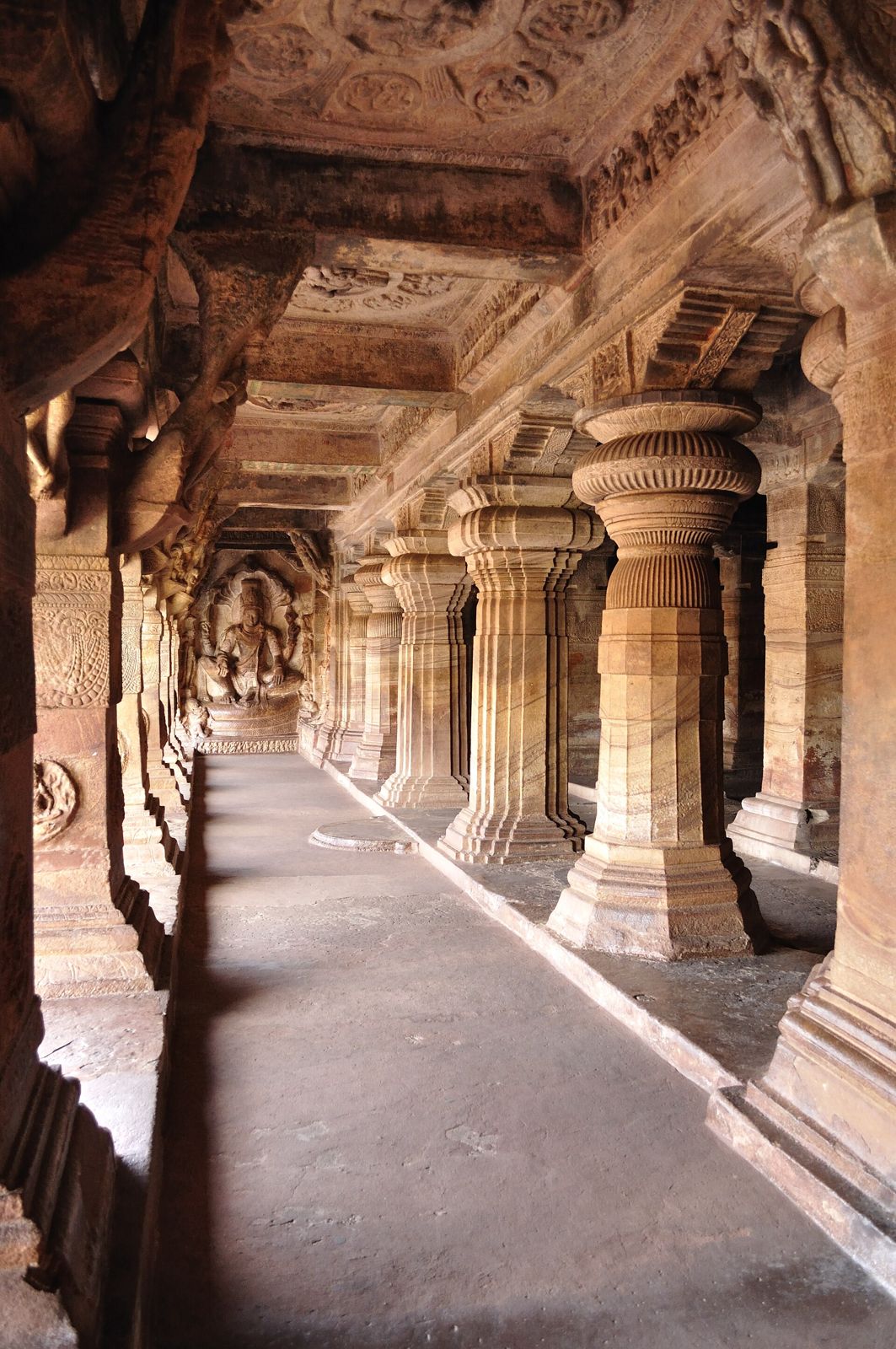
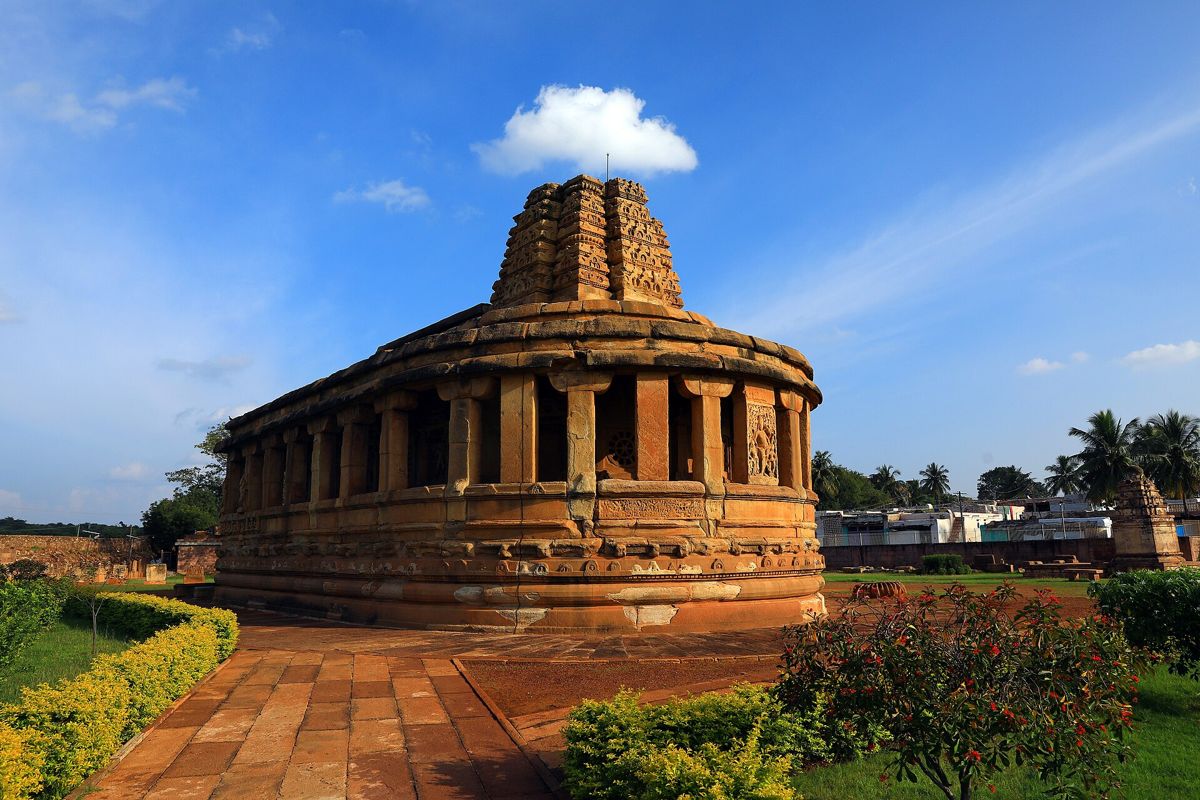
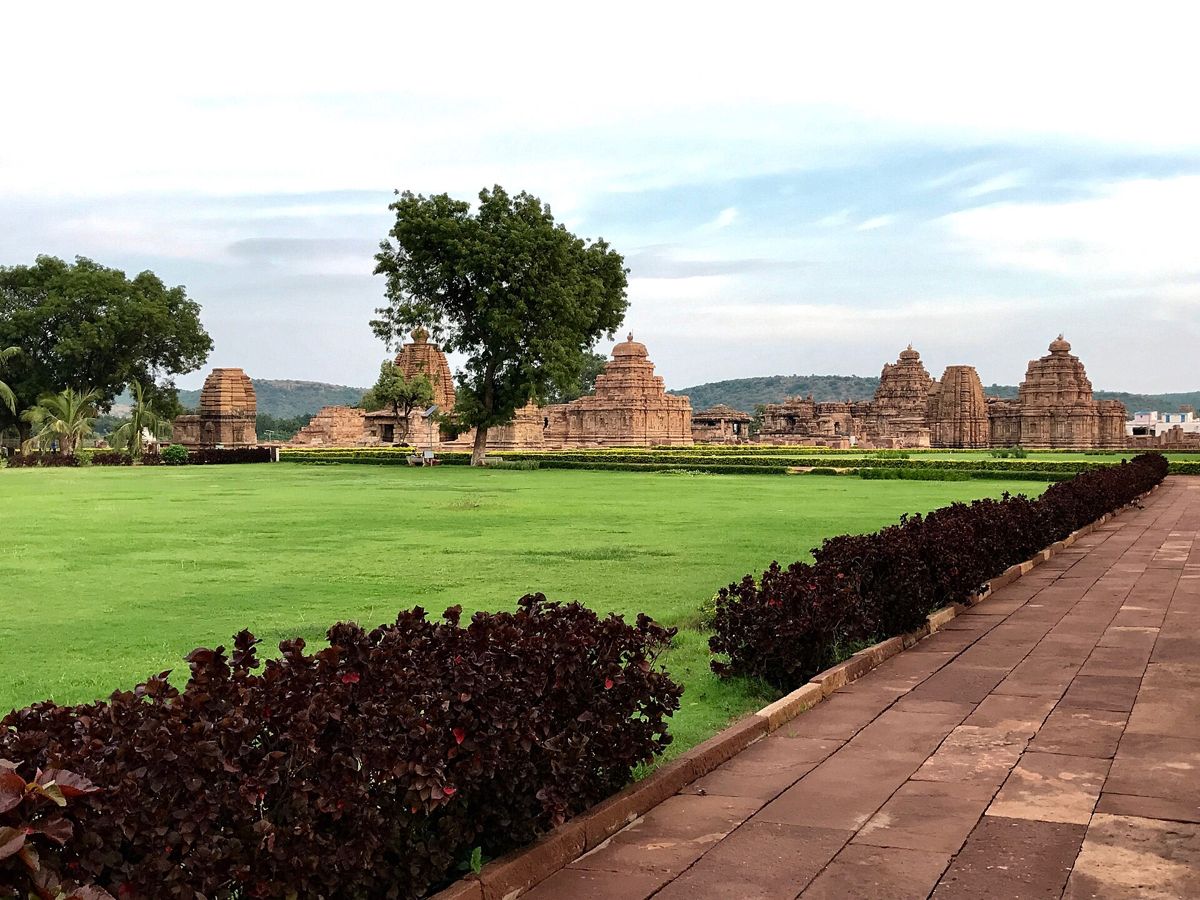
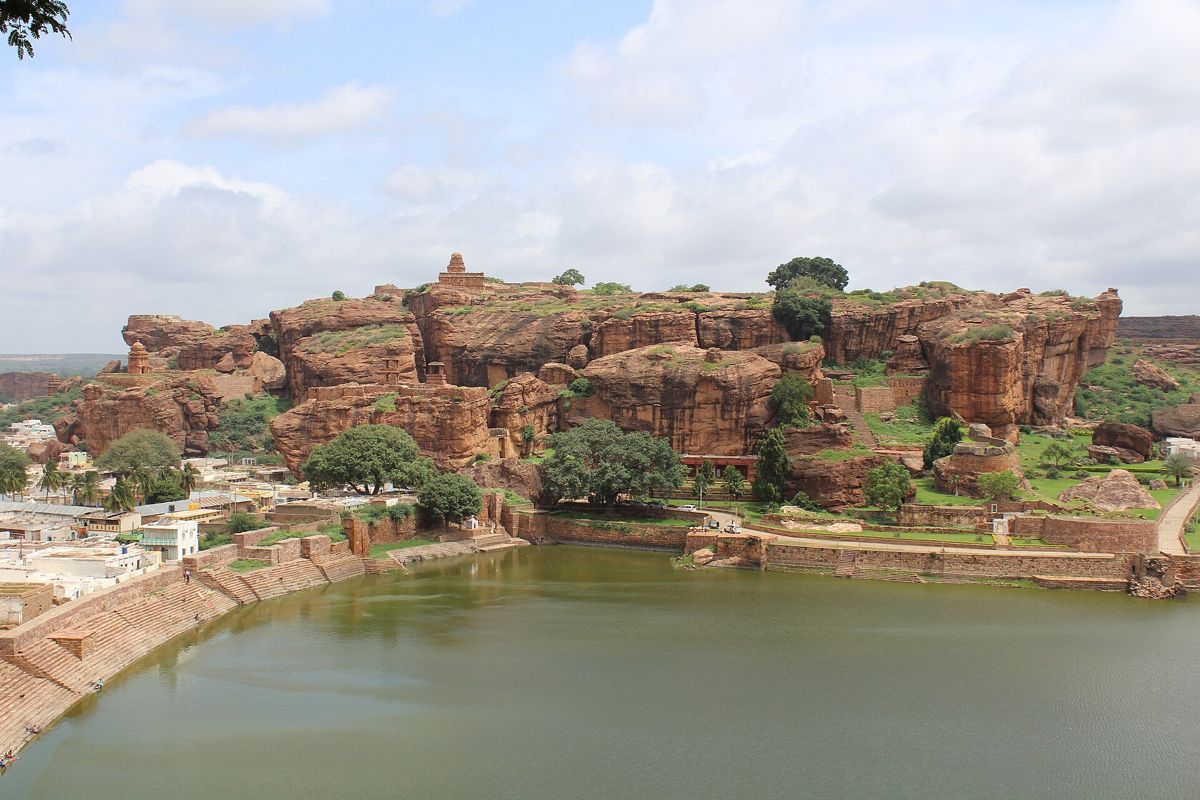
The Chalukyas of Badami (c. 543–753 CE) ruled the western Deccan from Vatapi (Badami) in Karnataka. The founder was Pulakeshin I; the greatest king was Pulakeshin II (c. 610–642), who defeated Harsha on the Narmada. His victories are told in the Aihole inscription (634 CE) by his court poet Ravikirti, carved on the Meguti Jain temple. In 642 the Pallava king Narasimhavarman I defeated him and captured Vatapi. The Chalukyas built rock-cut cave temples at Badami and early stone temples at Aihole (often called the 'cradle of Indian temple architecture') and Pattadakal, a UNESCO World Heritage Site where the Virupaksha temple was built by Queen Lokamahadevi.
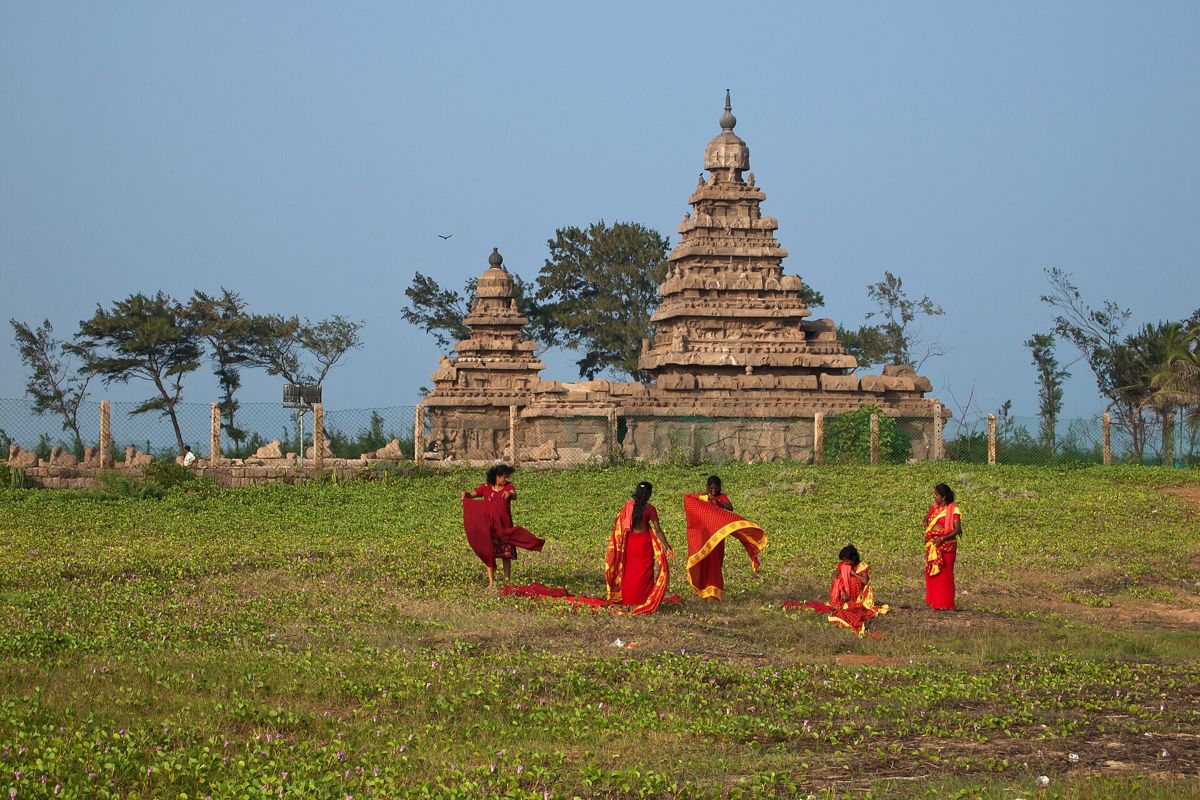
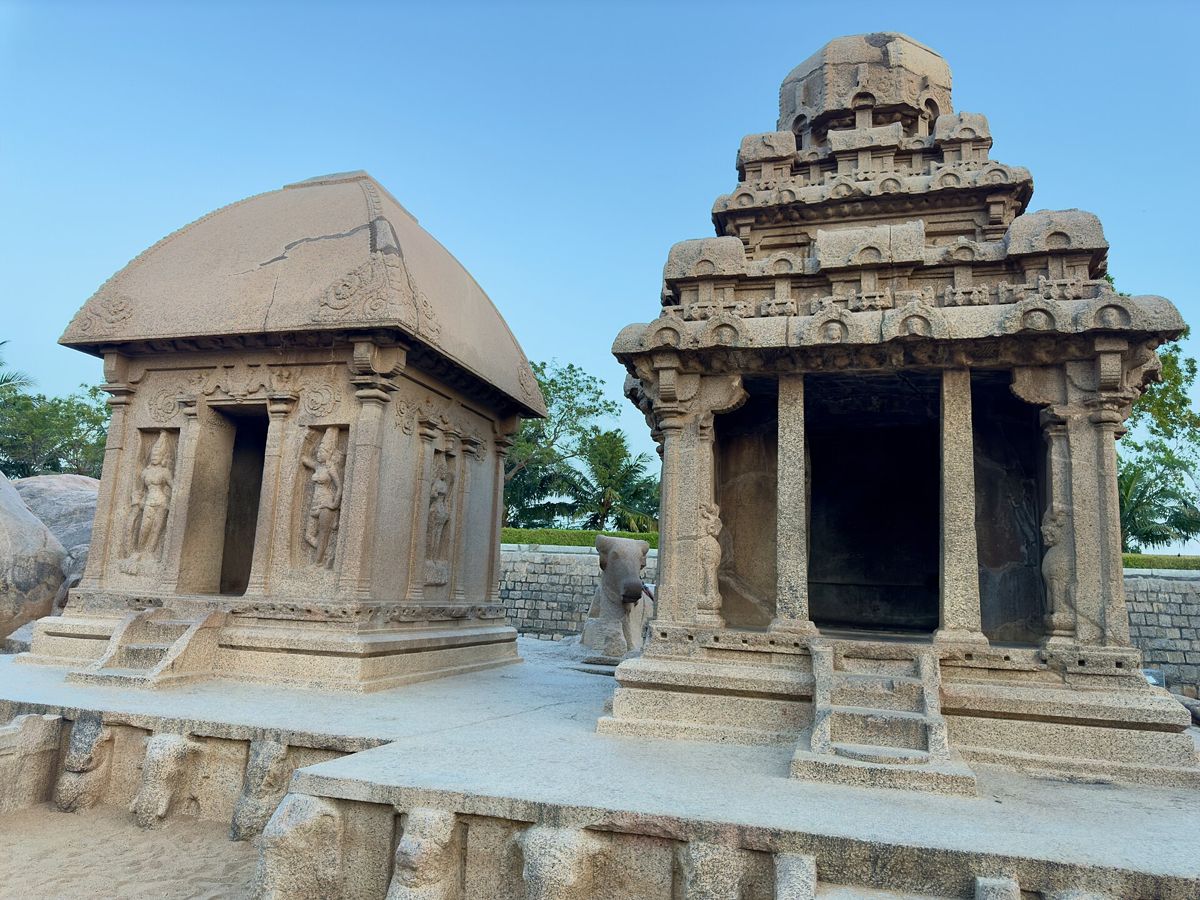
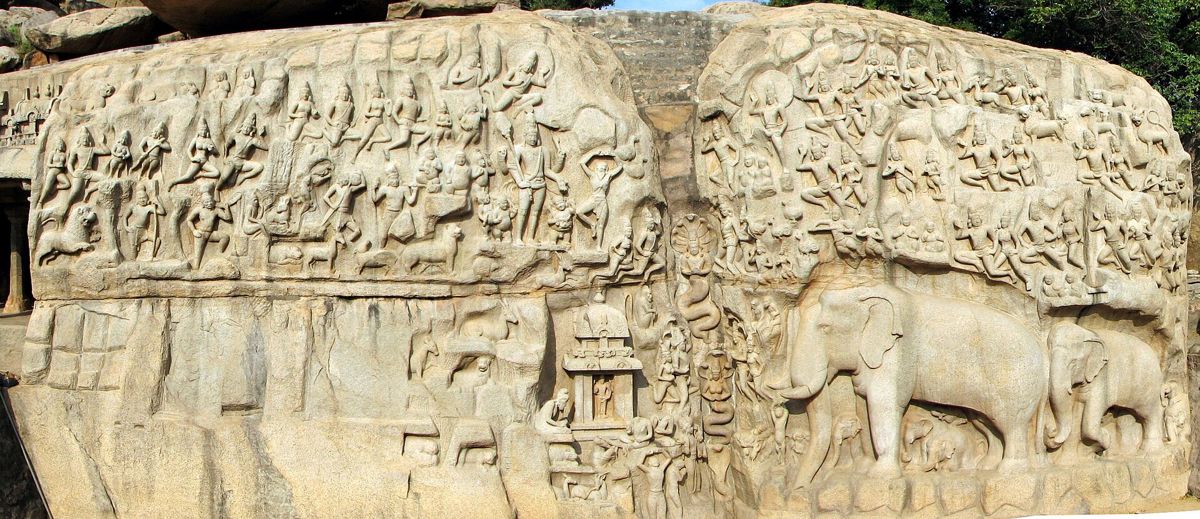
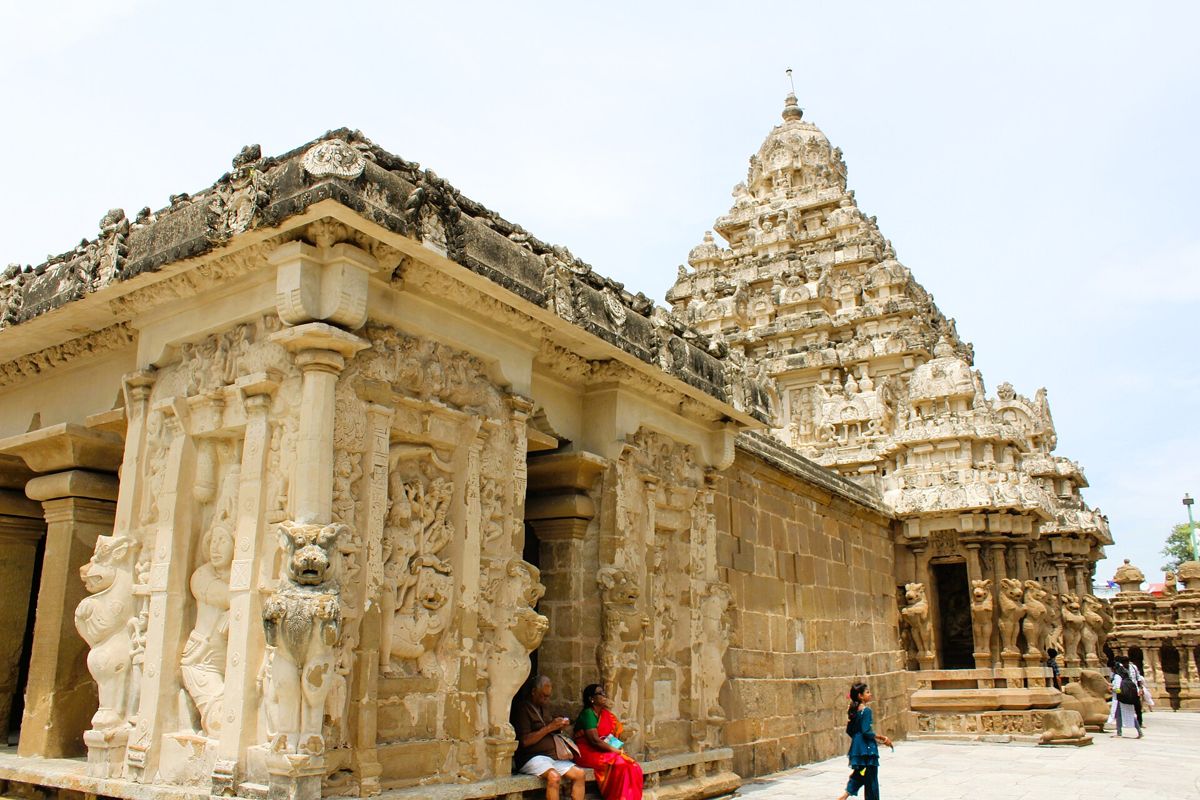
The Pallavas (c. 6th–9th century) ruled northern Tamil Nadu from Kanchipuram. Mahendravarman I wrote the Sanskrit farce Mattavilasa Prahasana and began cutting cave temples into rock. His son Narasimhavarman I, called Mamalla, defeated Pulakeshin II, captured Vatapi (642) and took the title Vatapikonda; the port Mamallapuram (Mahabalipuram) is named after him. Hiuen Tsang visited Kanchi in this period. Narasimhavarman II (Rajasimha) built the Shore temple at Mahabalipuram and the Kailasanatha temple at Kanchipuram. The monuments of Mahabalipuram — the Pancha Rathas, Arjuna's Penance and the Shore temple — are a UNESCO World Heritage Site. The Tamil Bhakti saints, the Alvars (Vishnu) and Nayanars (Shiva), were active in this age.
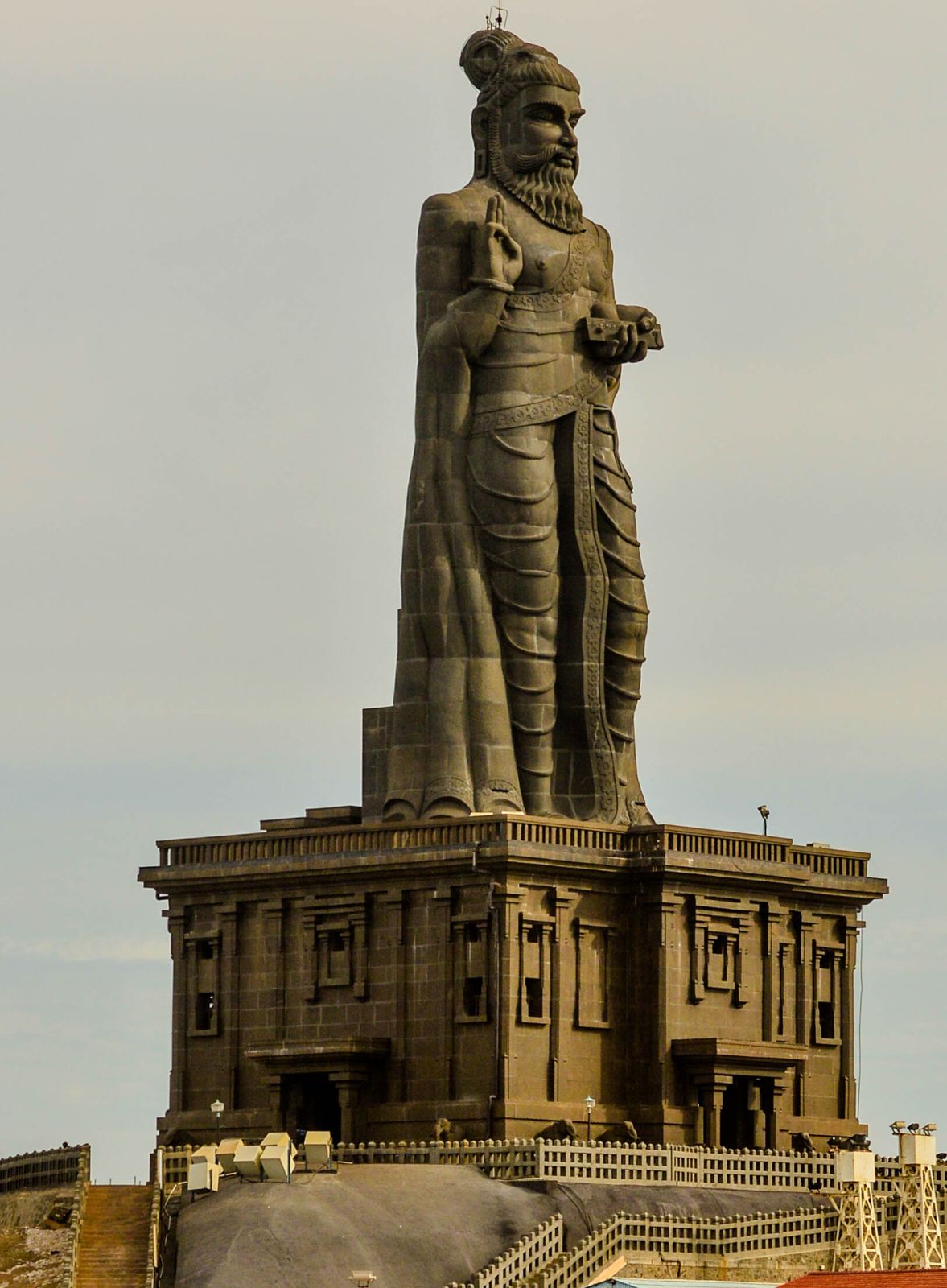
The Sangam age came much earlier (roughly the 3rd century BCE to the 3rd century CE). The far south was shared by three Tamil kingdoms — the Cheras, Cholas and Pandyas — known to Ashoka's edicts too. Sangam means an assembly: by tradition, three assemblies of Tamil poets met under the Pandyas at Madurai. Early Tamil works include the grammar Tolkappiyam and Thiruvalluvar's Tirukkural; the two famous Tamil epics, Silappadikaram and Manimekalai, were written somewhat later.
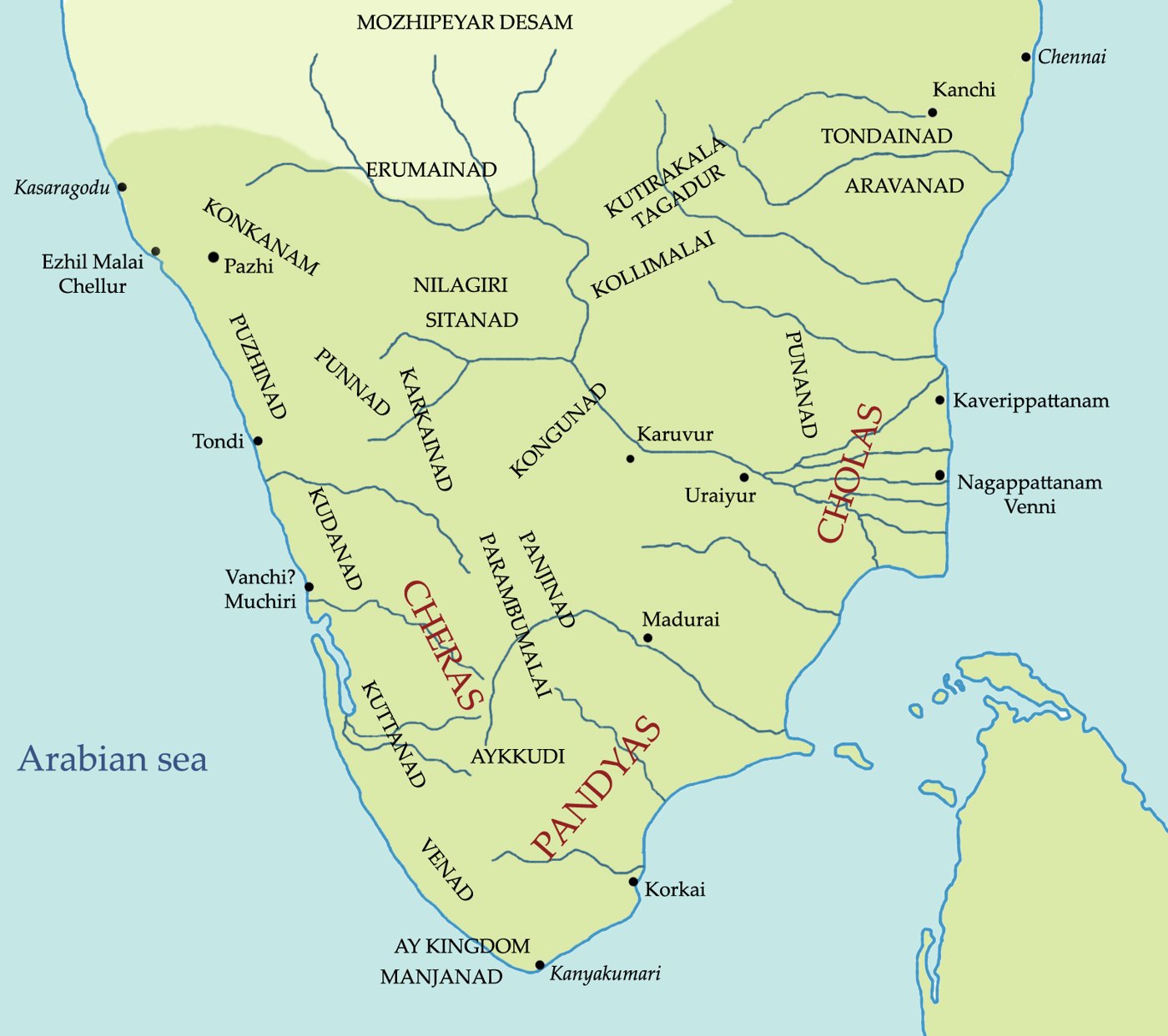
| Kingdom | Capital / port | Emblem | Remember |
|---|---|---|---|
| Cheras | Vanji; port Muziris | bow | Kerala coast; Senguttuvan |
| Cholas | Uraiyur; port Puhar (Kaveripattinam) | tiger | Karikala — Kallanai dam on the Kaveri (tradition) |
| Pandyas | Madurai; port Korkai | fish | Sangam assemblies at Madurai (tradition) |
| Work | Author | What it is |
|---|---|---|
| Tolkappiyam | Tolkappiyar | the oldest surviving Tamil grammar |
| Tirukkural | Thiruvalluvar | 1,330 couplets on virtue, wealth and love |
| Silappadikaram | Ilango Adigal | epic of Kannagi and Kovalan ('the tale of the anklet') |
| Manimekalai | Sattanar | epic of Manimekalai, daughter of Kovalan; Buddhist in spirit |
Palas, Rashtrakutas, Cholas and Kakatiyas
8th–13th century — the exam asks these with ancient history.
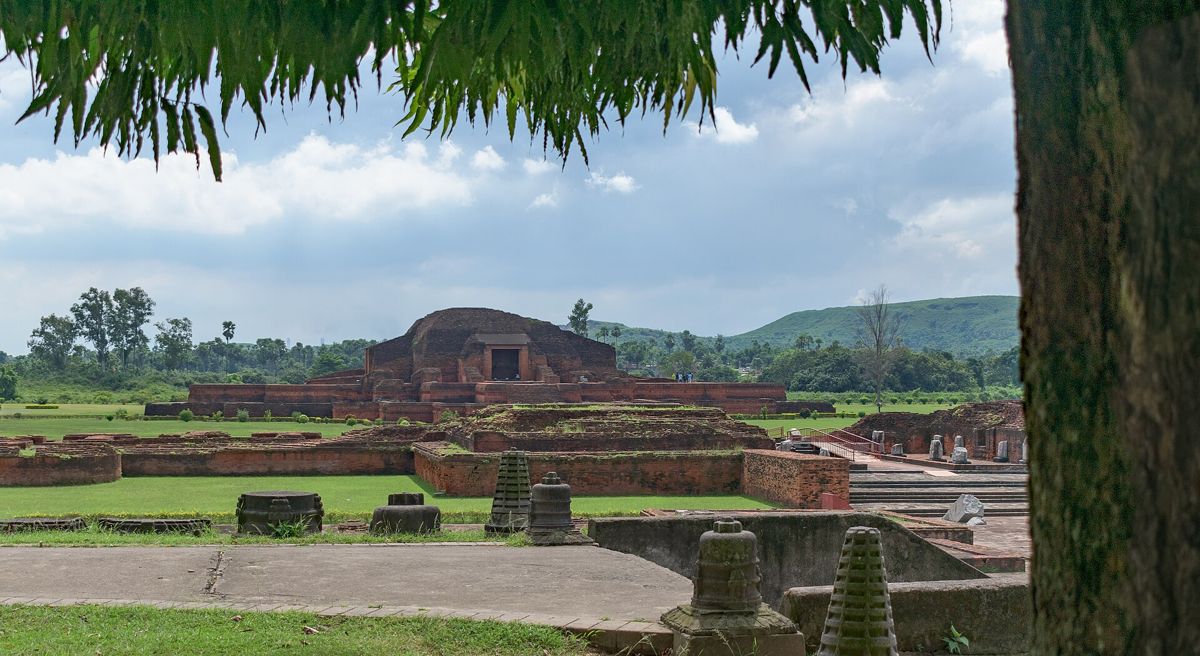
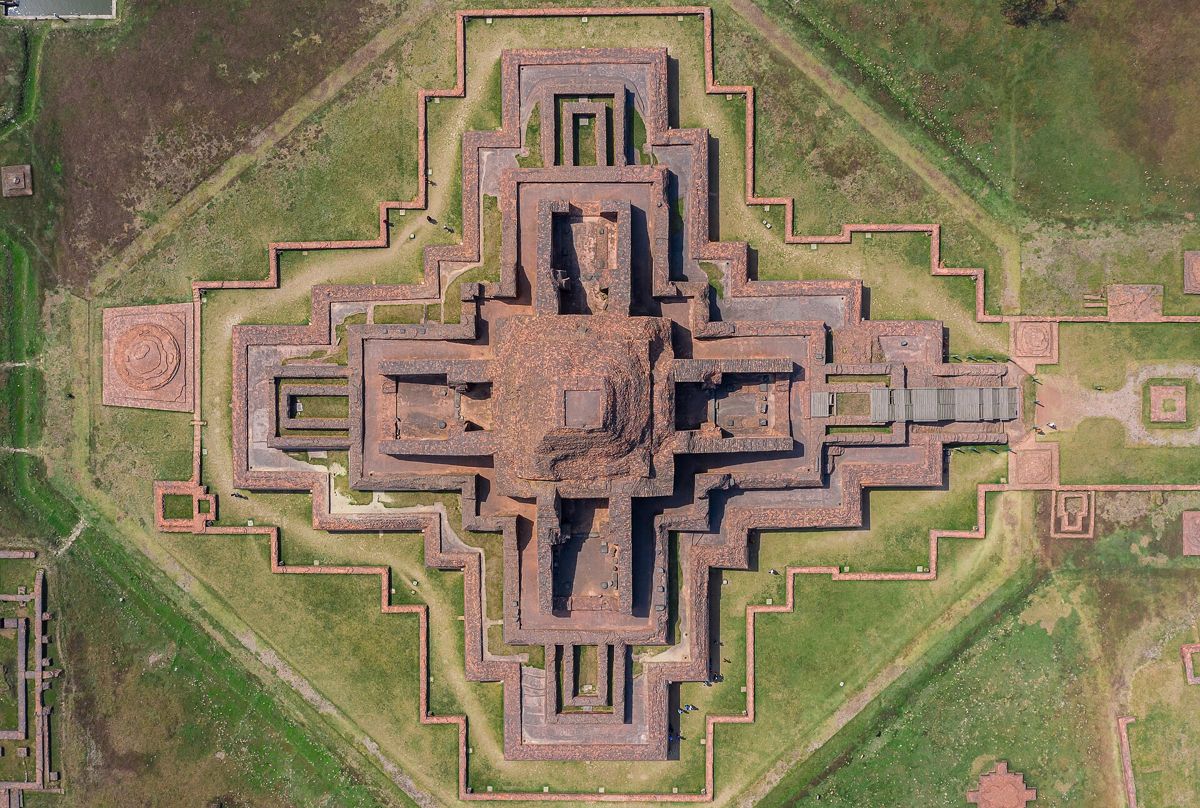
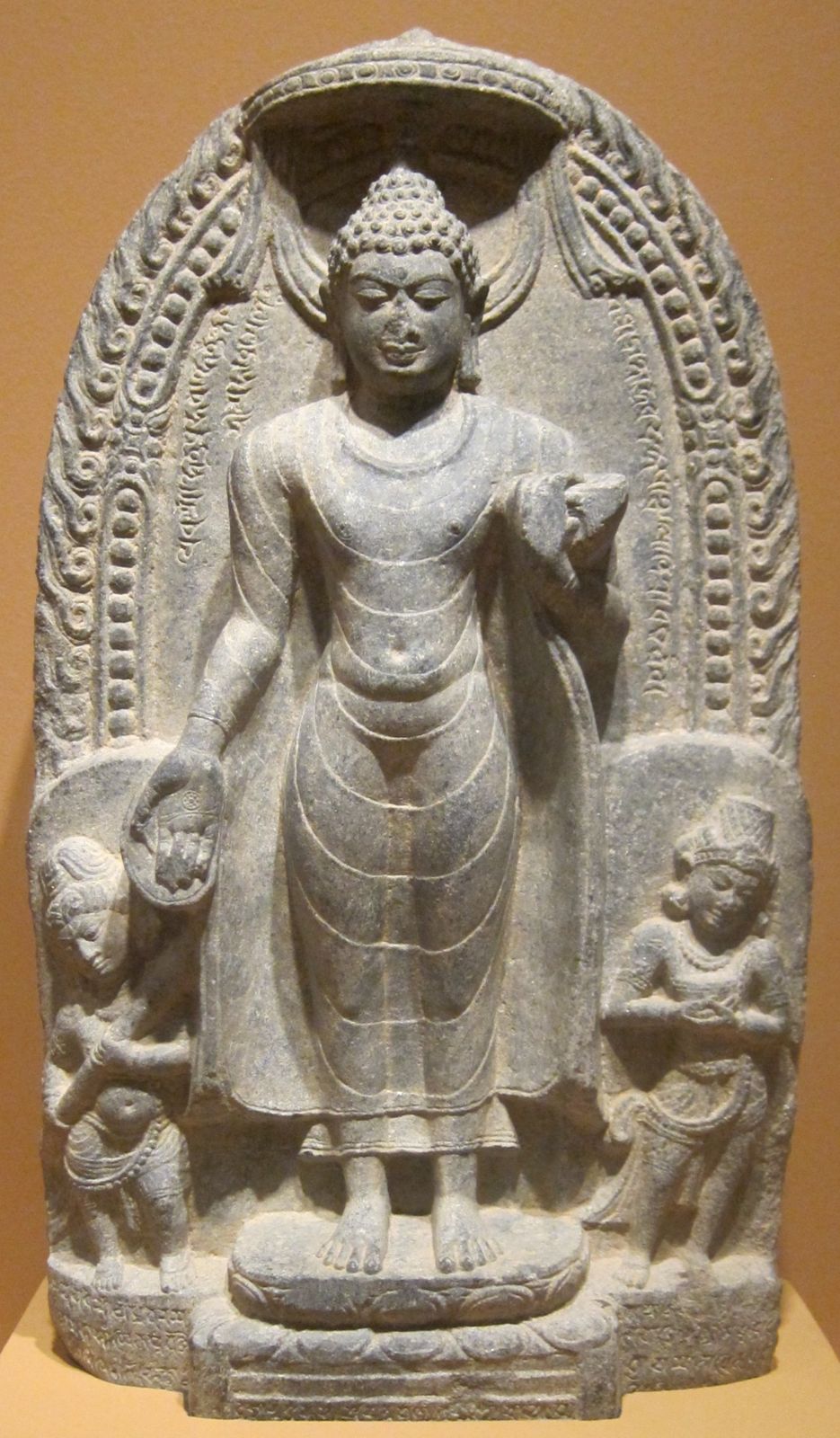
The Palas (c. 750–1161) ruled Bengal and Bihar. Their founder Gopala was chosen as king by the chiefs to end disorder. His son Dharmapala founded the Vikramashila Mahavihara in Bihar; the great Somapura Mahavihara at Paharpur (Bangladesh, a UNESCO site) is also linked with him. The Palas were Buddhist and supported Nalanda. From the late 8th century the Palas, the Gurjara-Pratiharas of western India and the Rashtrakutas of the Deccan fought for about two hundred years over Kannauj — the tripartite struggle.
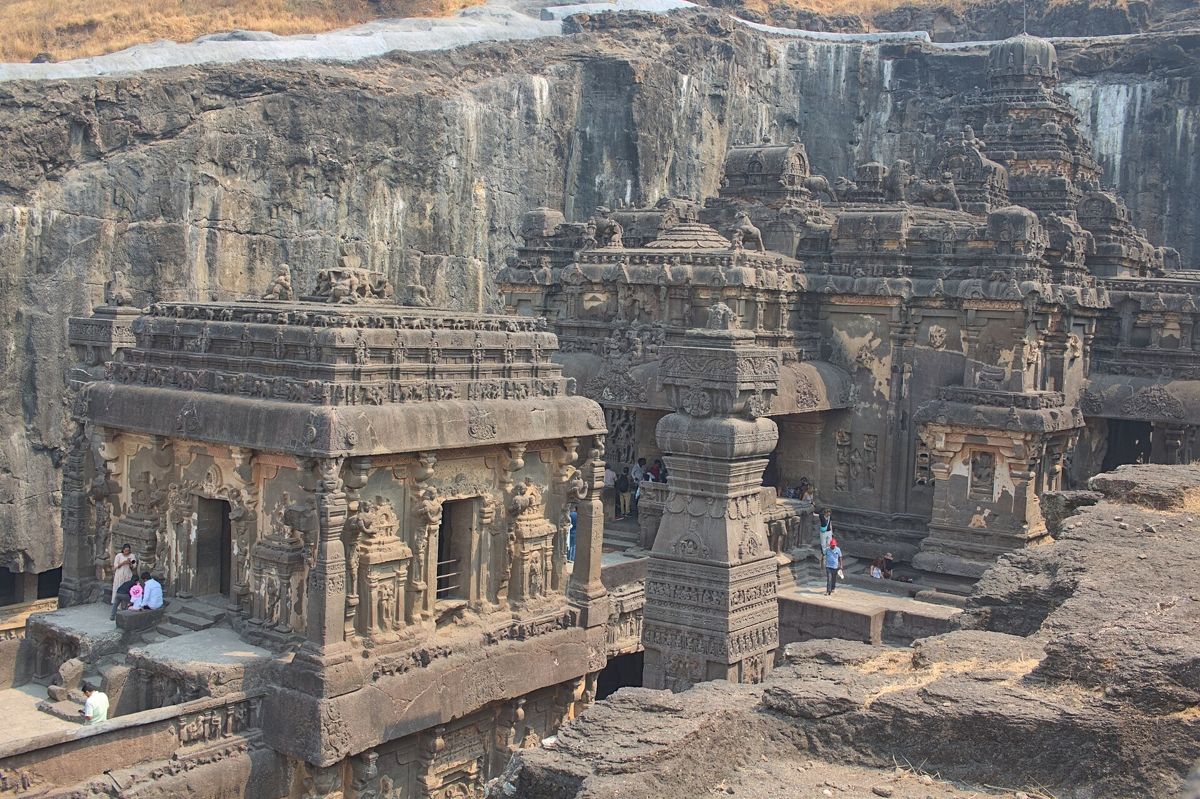
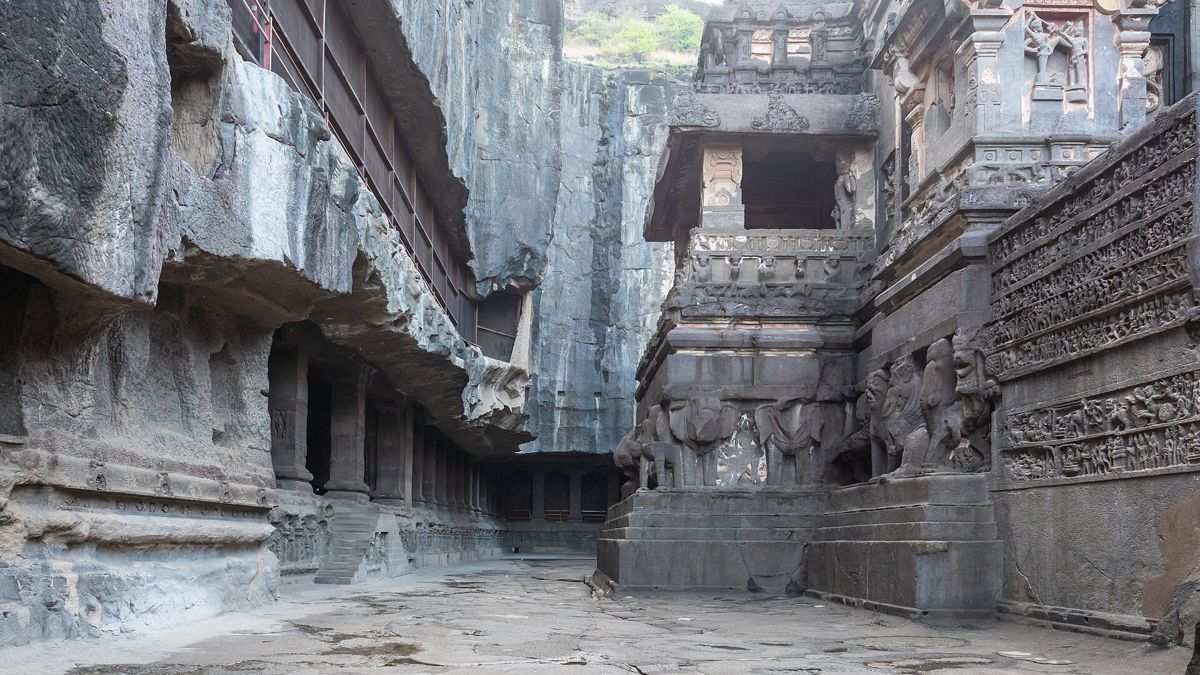
The Rashtrakutas (c. 753–982) were feudatories of the Chalukyas until Dantidurga overthrew them around 753. Krishna I had the Kailasa temple (cave 16) at Ellora cut out of a single rock, from the top downwards. Amoghavarsha I ruled from the new capital Manyakheta (Malkhed, Karnataka); the Kannada work on poetics Kavirajamarga is linked with his court.
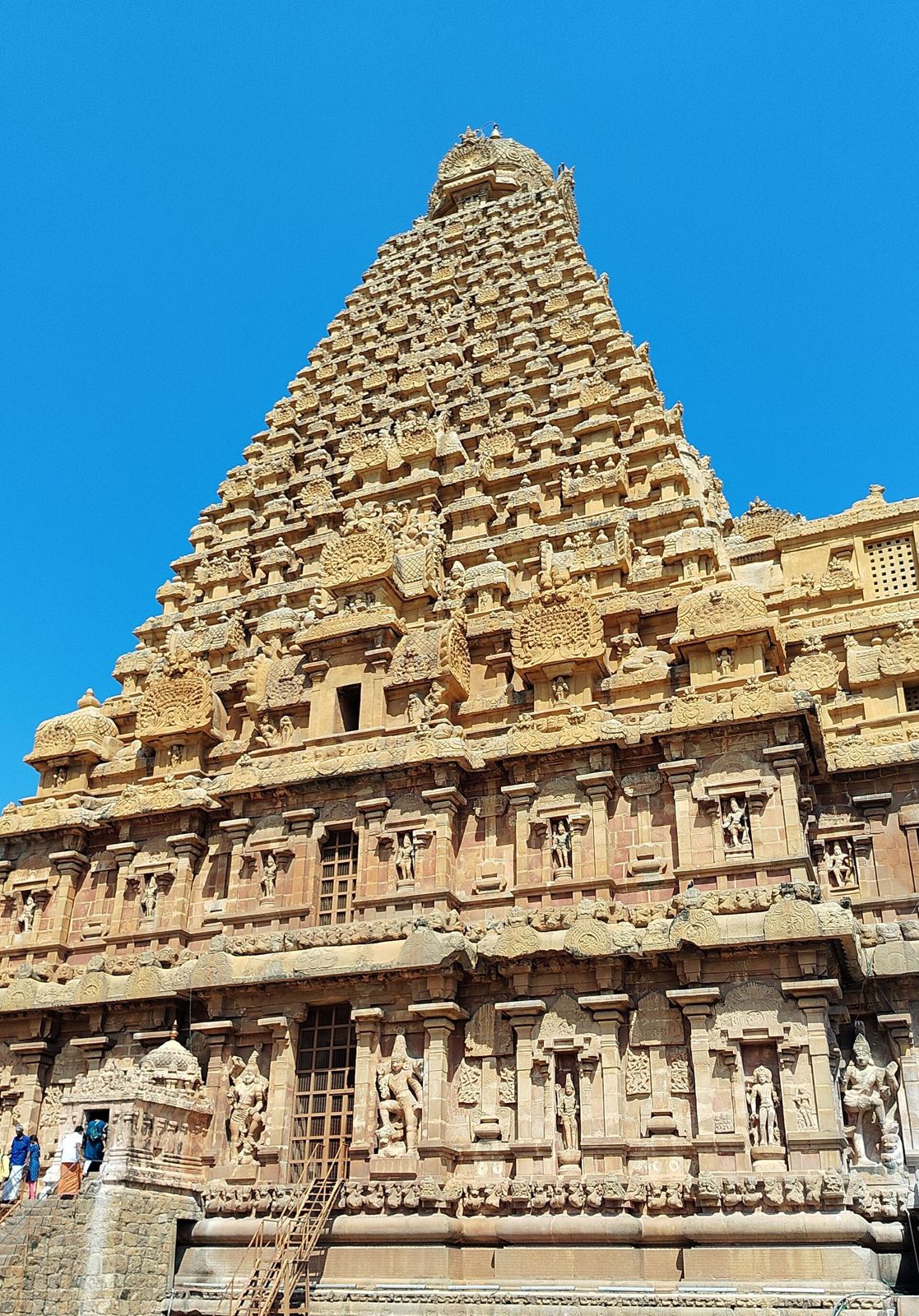
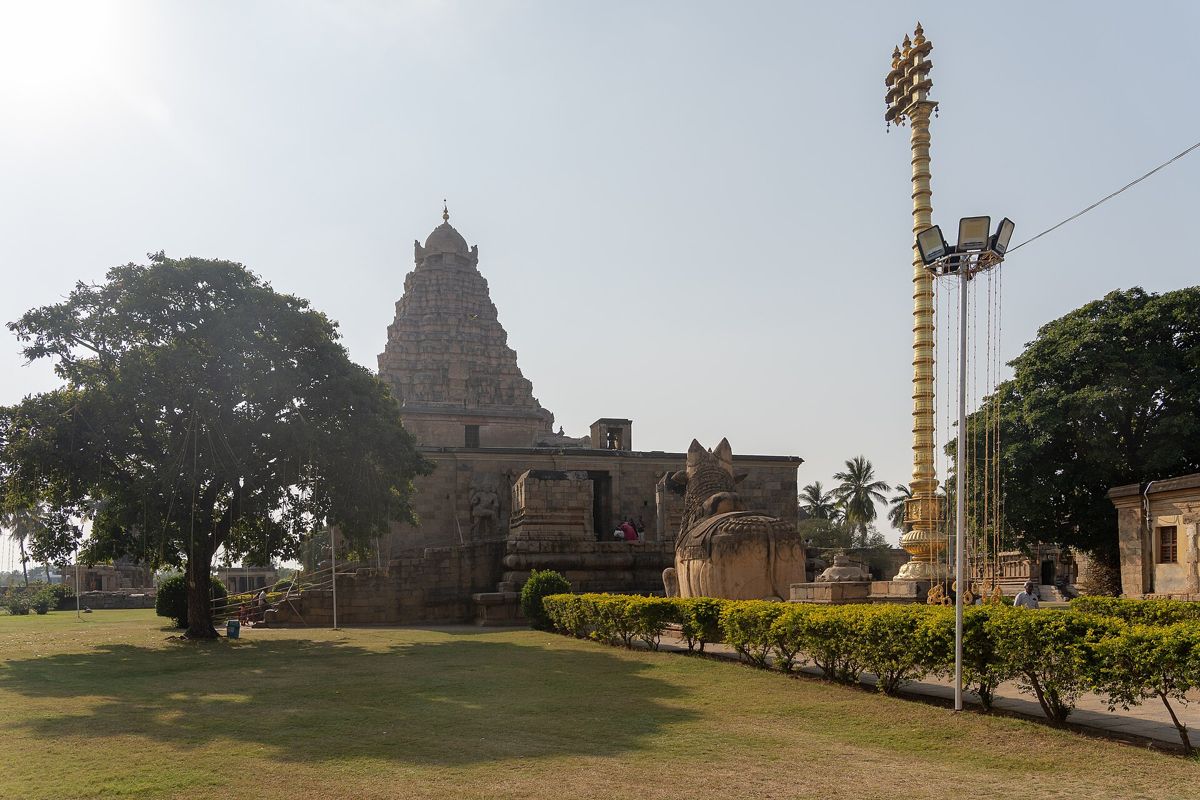
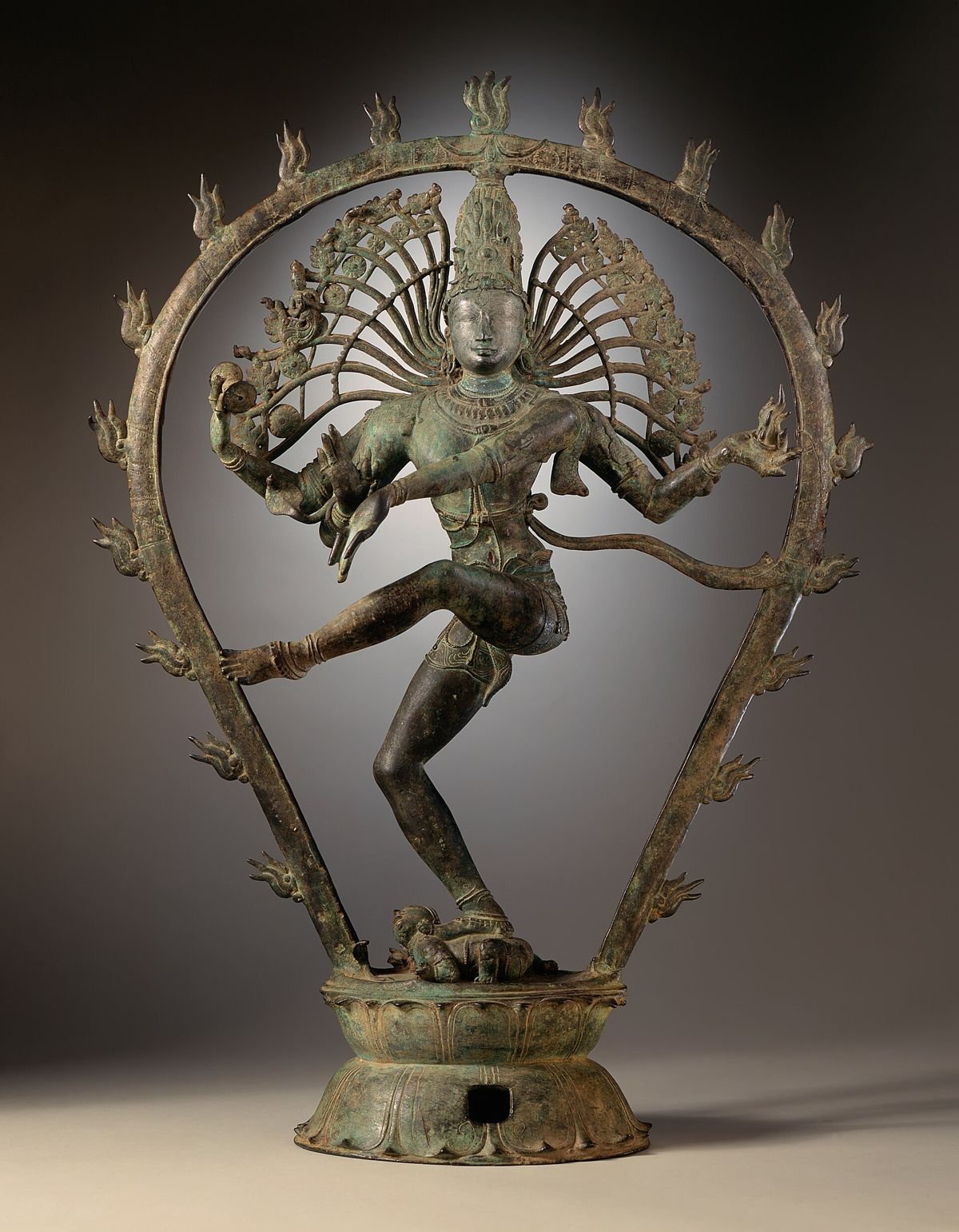
The imperial Cholas rose again in the 9th century when Vijayalaya took Thanjavur (c. 850). Rajaraja I (985–1014) conquered northern Sri Lanka and built the Brihadeshwara (Rajarajeshwaram) temple at Thanjavur. His son Rajendra I (1014–1044) sent an army to the Ganga, took the title Gangaikonda Chola and built a new capital, Gangaikondacholapuram; his navy raided Srivijaya in South-East Asia. Chola village assemblies (ur and sabha) are described in the Uttaramerur inscriptions, which explain how members were chosen. The Great Living Chola Temples are a UNESCO World Heritage Site, and Chola bronze images such as Nataraja are world-famous.
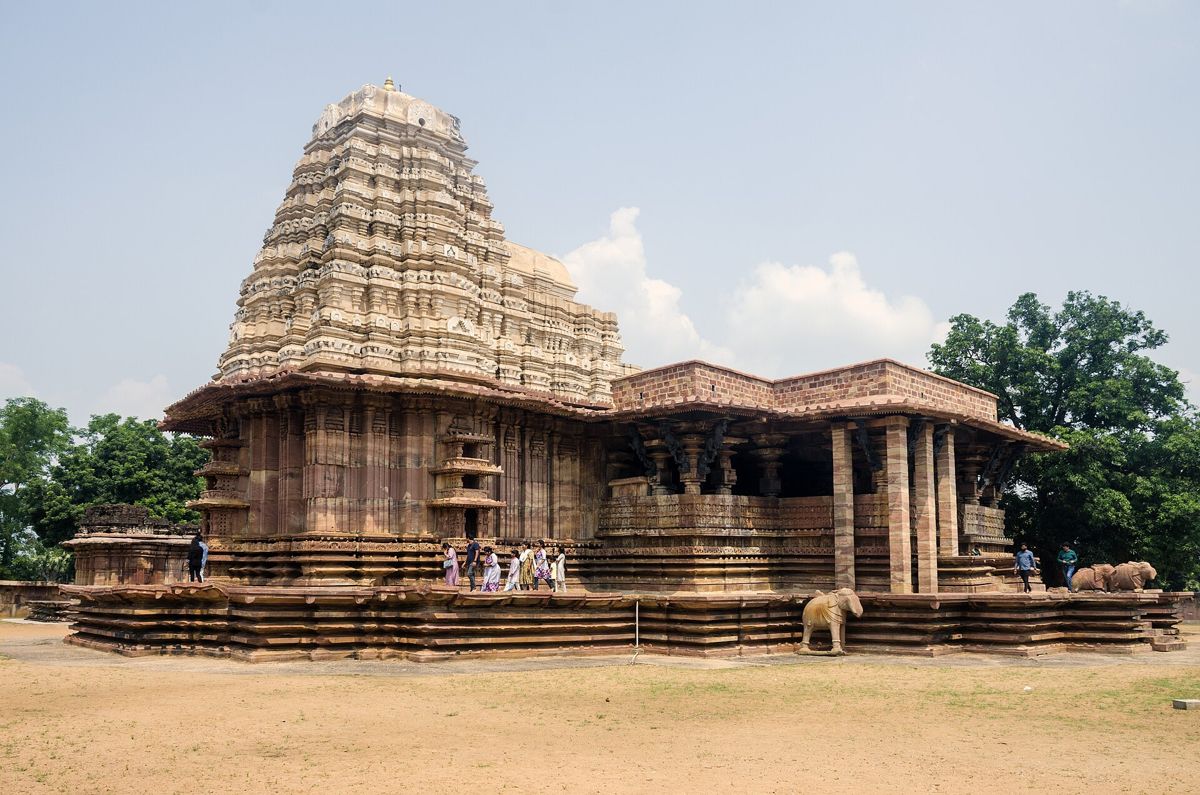
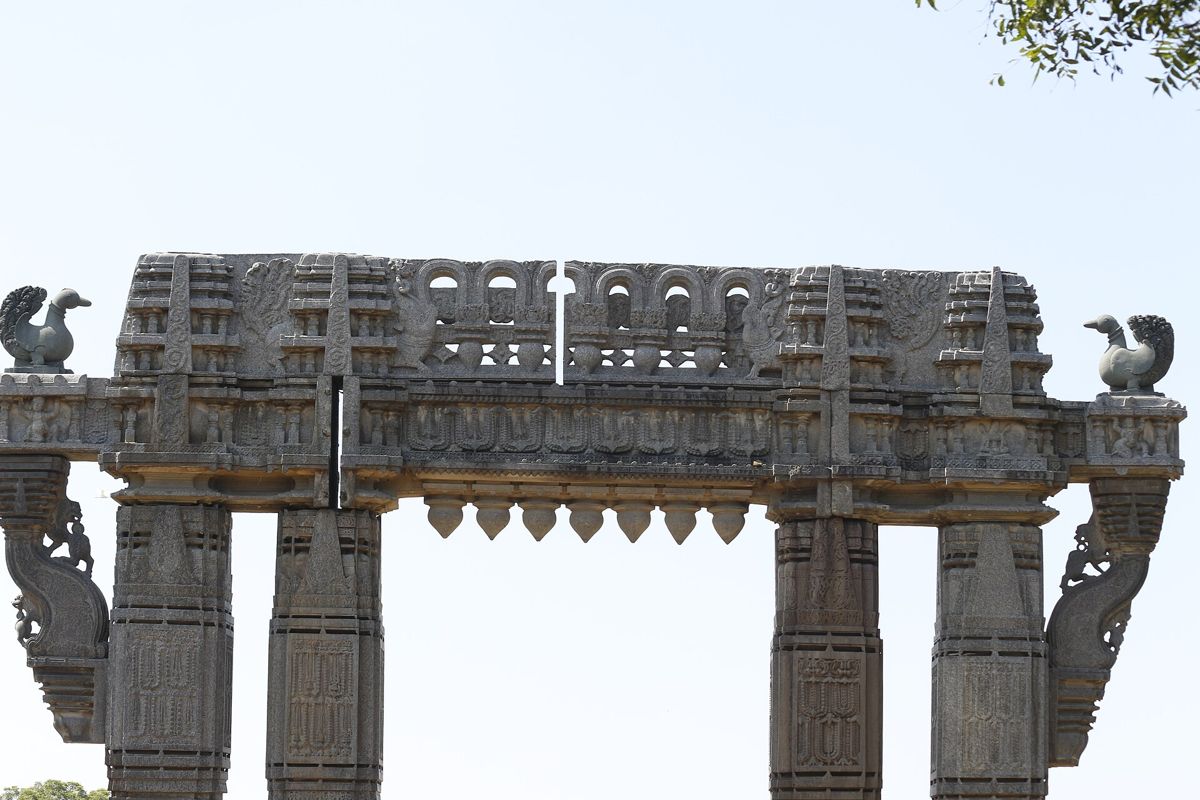
The Kakatiyas (12th–14th century) ruled from Warangal in Telangana. Rani Rudrama Devi (13th century) was one of the few women rulers of medieval India; the Venetian traveller Marco Polo, who visited the Kakatiya coast, wrote about her rule. The Ramappa (Rudreshwara) temple at Palampet, built in 1213, became a UNESCO World Heritage Site in 2021, and the Kakatiya Kala Thoranam gateway of Warangal fort appears in Telangana's state emblem. The Kakatiya kingdom fell to the Delhi Sultanate in 1323.
| Dynasty | Century | Region / capital | Remember |
|---|---|---|---|
| Satavahanas | c. 2nd century BCE – 3rd century CE | Deccan (Maharashtra, Andhra) | Added Sanchi's carved gateways; Gautamiputra Satakarni |
| Cheras, Cholas, Pandyas (Sangam age) | c. 3rd century BCE – 3rd century CE | Tamil country | Tamil poets' assemblies (Sangam), by tradition at Madurai |
| Chalukyas of Badami | 6th–8th century (543–753) | Vatapi (Badami), Karnataka | Founder Pulakeshin I; exam keys give Aihole as the first capital, then Vatapi (Badami); Pulakeshin II stopped Harsha |
| Pallavas | c. 6th–9th century | Kanchipuram, Tamil Nadu | Rock-cut rathas at Mahabalipuram |
| Palas | 8th–12th century (750–1161) | Bengal and Bihar | Buddhist kings; Dharmapala founded Vikramashila; supported Nalanda |
| Rashtrakutas | 8th–10th century (753–982) | Deccan; later capital Manyakheta (Karnataka) | Founder Dantidurga (c. 753); Kailasa temple at Ellora under Krishna I |
| Cholas (imperial) | 9th–13th century (from 848) | Thanjavur, Tamil Nadu | Rajaraja I (985–1014) built the Brihadeshwara temple; his son Rajendra I took the title Gangaikonda Chola ('conqueror of the Ganga') |
| Kakatiyas | 12th–14th century (early medieval) | Warangal, Telangana | Queen Rani Rudrama Devi (13th century) |
| Don't mix up | Remember |
|---|---|
| Fa-Hien vs Hiuen Tsang | Fa-Hien → Chandragupta II; Hiuen Tsang → Harsha |
| Pulakeshin II vs Narasimhavarman I | Pulakeshin II stopped Harsha; Narasimhavarman I took Vatapi (Vatapikonda) |
| Kailasa (Ellora) vs Kailasanatha (Kanchi) | Ellora = Rashtrakuta (Krishna I); Kanchi = Pallava (Rajasimha) |
| Nalanda vs Vikramashila | Nalanda = Kumaragupta I (Gupta); Vikramashila = Dharmapala (Pala) |
| Rajaraja I vs Rajendra I | Rajaraja = Brihadeshwara, Thanjavur; Rajendra = Gangaikonda, Srivijaya raid |
| Aihole inscription | poet Ravikirti, king Pulakeshin II, 634 CE |