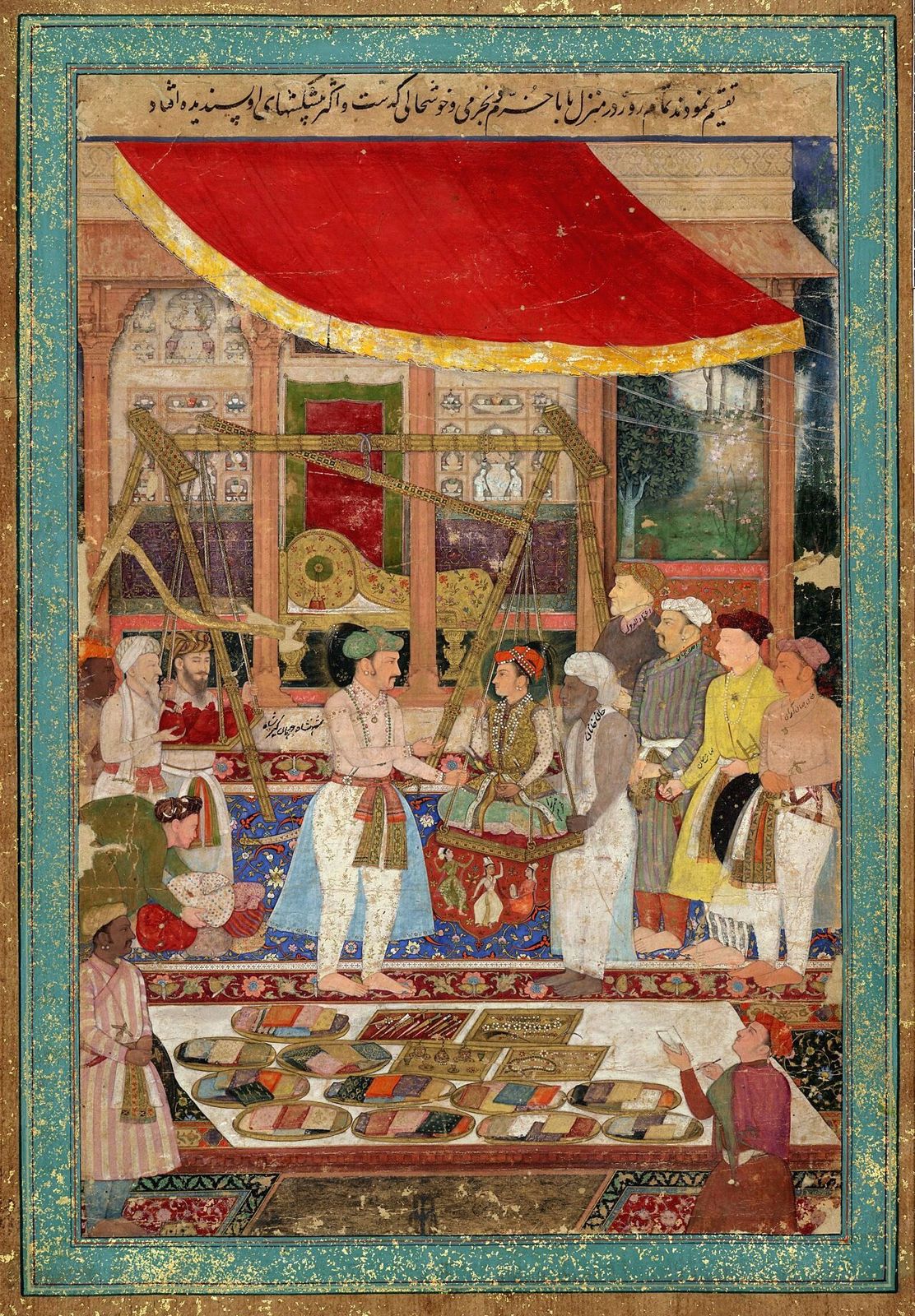
Jahangir (1605–1627). Prince Salim took the name Jahangir ('world-seizer'). He hung a golden Chain of Justice (zanjir-i-adl) at Agra Fort that anyone with a complaint could pull, and issued twelve orders on good government. In 1606 his eldest son Khusrau rebelled; in its aftermath the fifth Sikh Guru, Guru Arjan Dev, was executed at Lahore (1606).
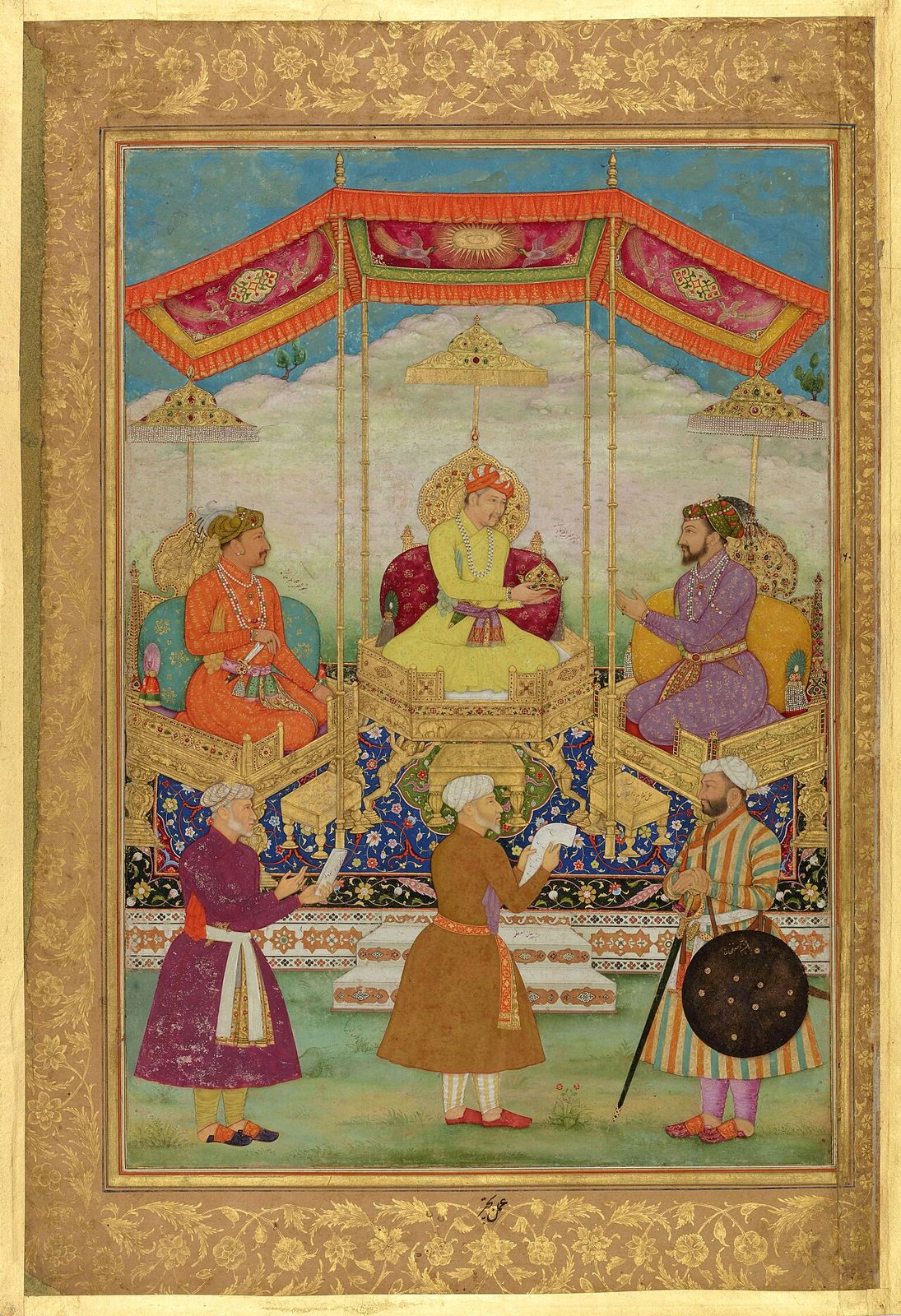
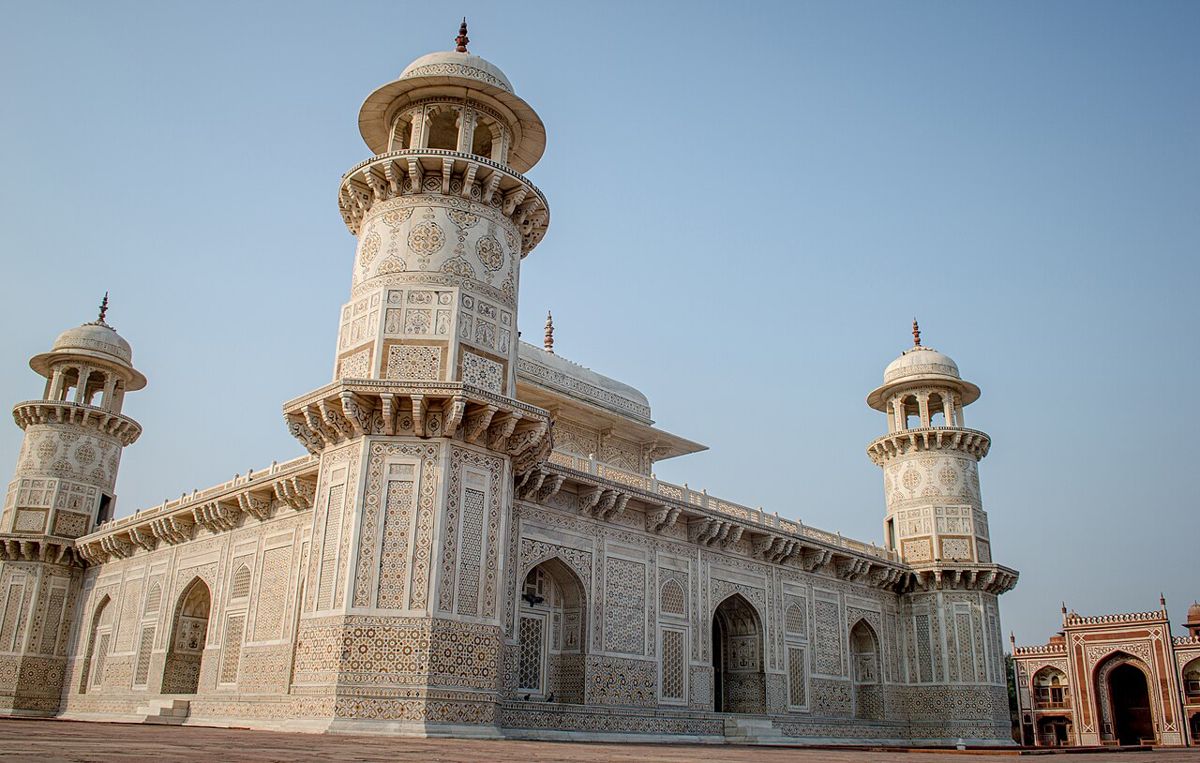
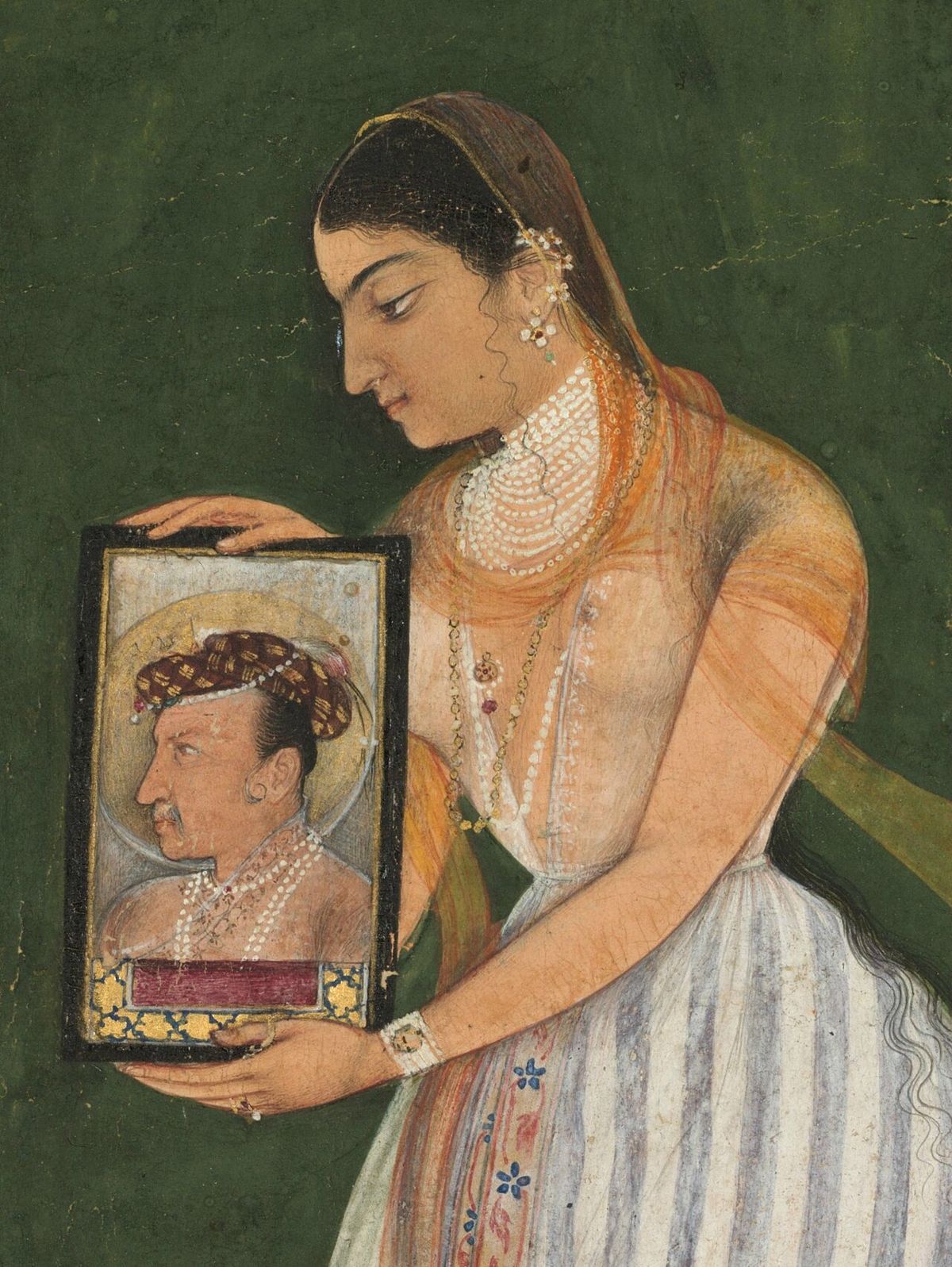
In 1611 Jahangir married Mehr-un-Nisa, whom he titled Nur Jahan ('light of the world'). Intelligent and strong-willed, she became the real power at court together with her father Itimad-ud-Daulah, her brother Asaf Khan and Prince Khurram (the future Shah Jahan, who married Asaf Khan's daughter Mumtaz Mahal). Coins were struck in Nur Jahan's name, and she built her father's marble tomb at Agra, the Itimad-ud-Daulah (the 'Baby Taj'), the first Mughal building covered in pietra dura inlay.
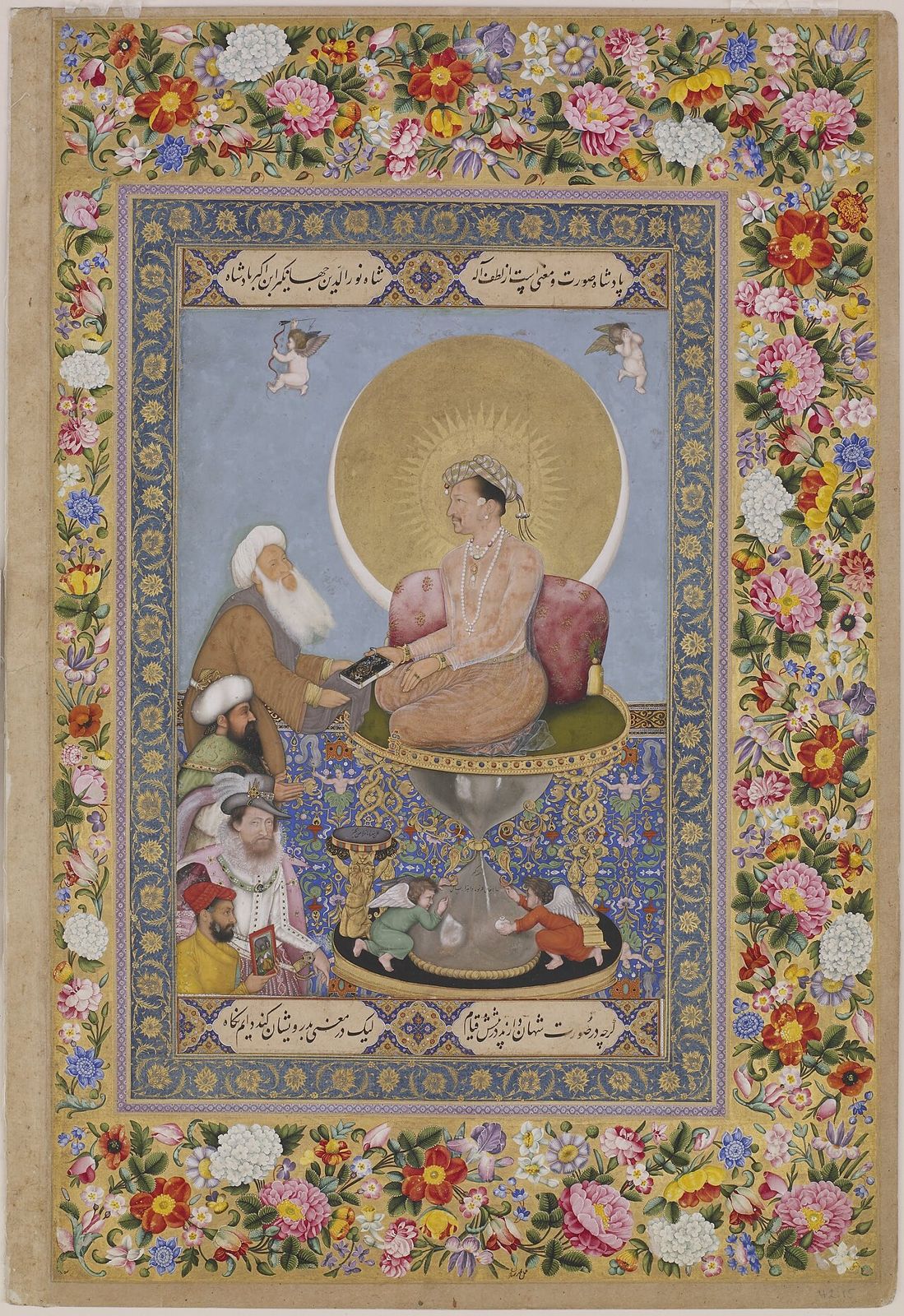
Under Jahangir the English arrived: Captain William Hawkins (1608–11) and the ambassador Sir Thomas Roe (1615–19), who won permission for the East India Company to trade and set up a factory at Surat. Mewar finally made peace in 1615, while Kandahar was lost to Persia (1622). Jahangir wrote his memoirs, the Tuzuk-i-Jahangiri. A great lover of nature and art, he made Mughal painting reach its peak — with masters such as Abul Hasan, Bichitr and Ustad Mansur, famous for paintings of birds and animals. He laid out the Shalimar Bagh in Kashmir, died in 1627 and is buried at Shahdara, Lahore.
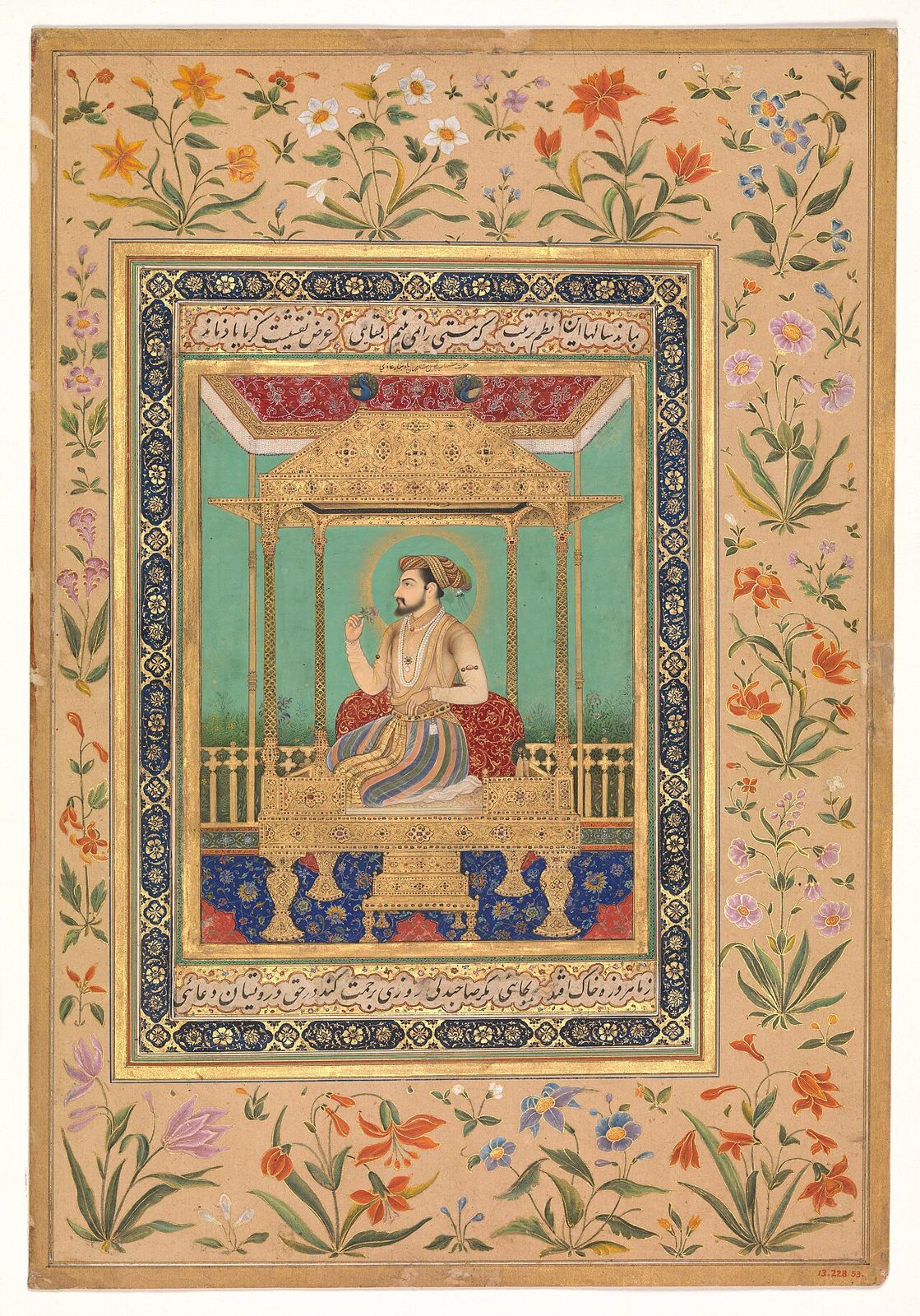
Shah Jahan (1628–1658). Prince Khurram became Shah Jahan ('king of the world') in 1628. His reign is called the golden age of Mughal architecture:
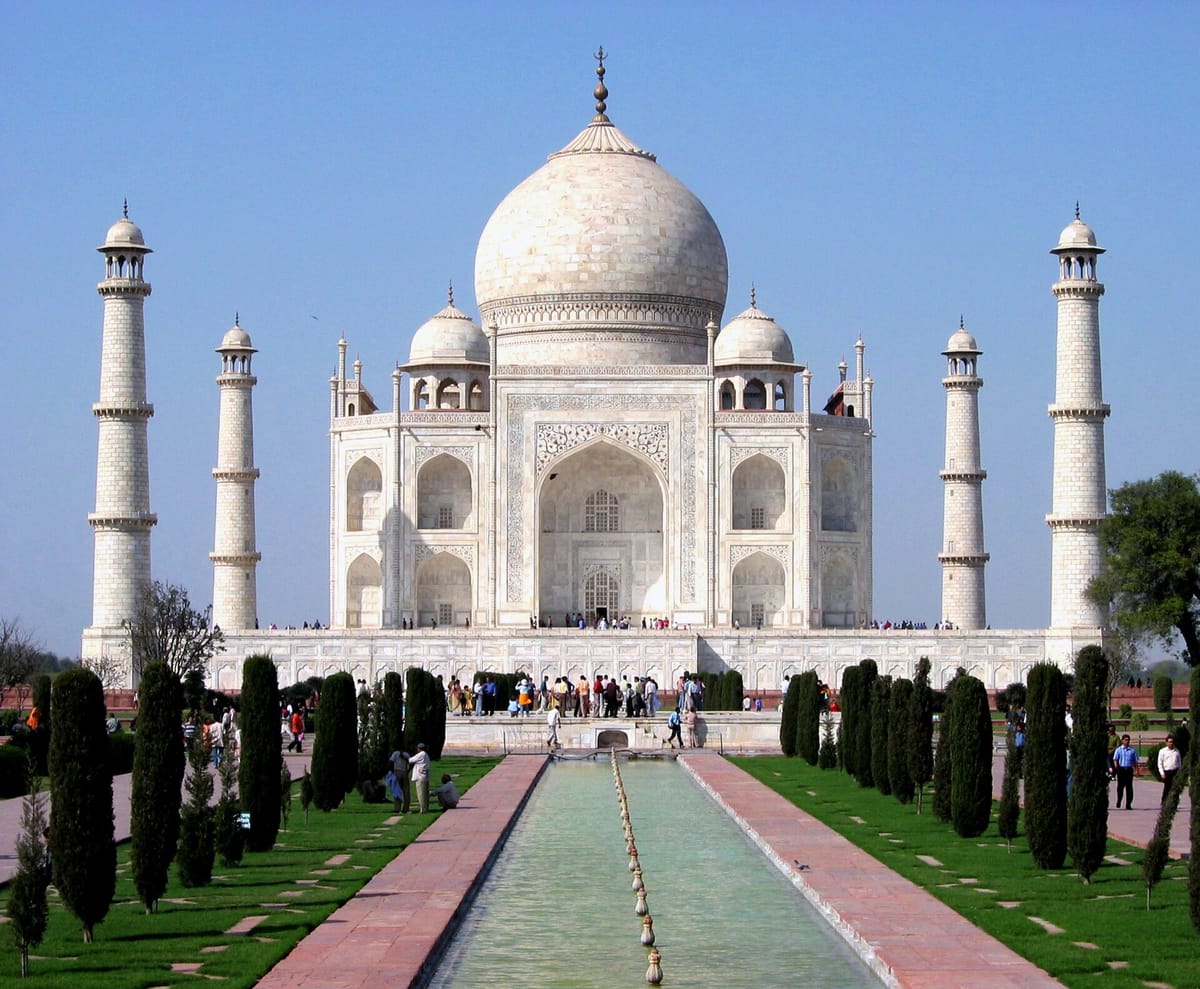
- the Taj Mahal at Agra (about 1632–1653), built in memory of Mumtaz Mahal, who died in 1631 at Burhanpur; its chief architect is usually named as Ustad Ahmad Lahori;
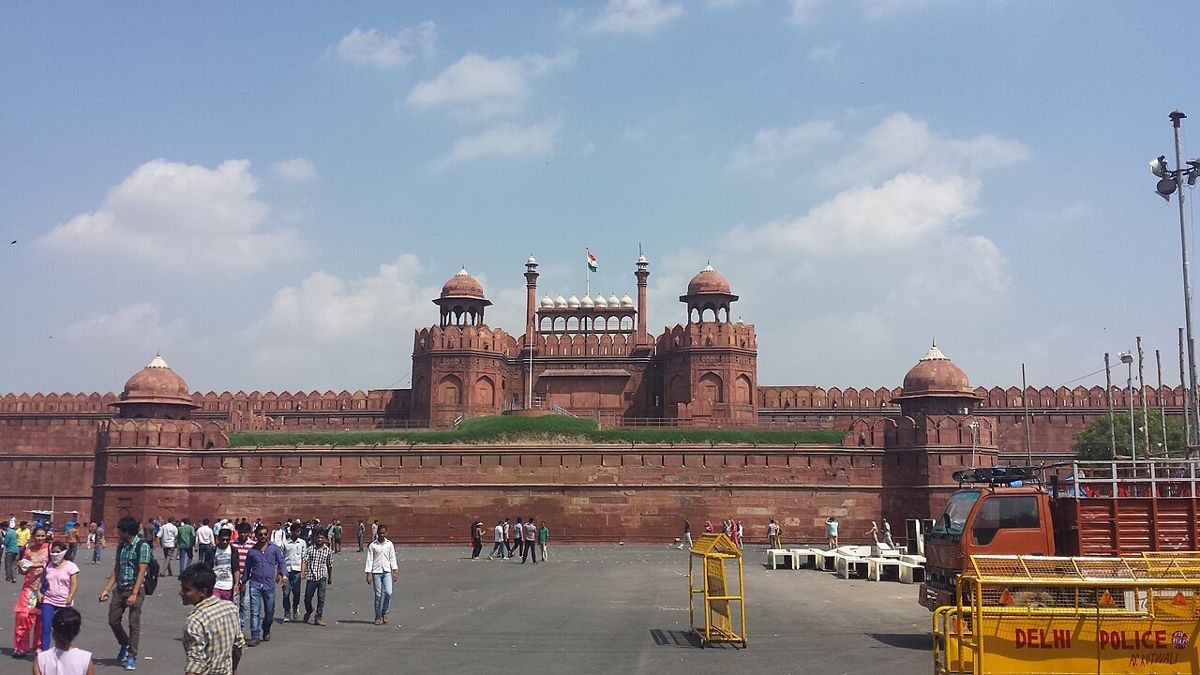
- a new capital, Shahjahanabad (Old Delhi, 1639–48), with the Red Fort (Lal Qila) and the Jama Masjid;
- the Moti Masjid in Agra Fort, the Shalimar Bagh at Lahore, and the jewelled Peacock Throne (Takht-i-Taus).
He annexed Ahmadnagar (1633) and made Bijapur and Golconda accept Mughal overlordship (1636), but a costly campaign in Balkh and Badakhshan (1646–47) failed, and Kandahar was lost to Persia for good (1649).
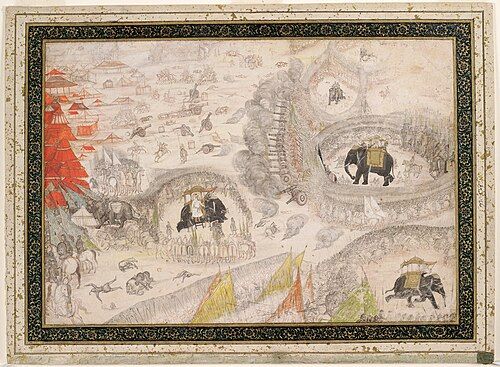
The war of succession (1657–1659). When Shah Jahan fell ill in 1657, his four sons fought for the throne. The eldest, Dara Shikoh, was a scholar who studied Hindu and Sufi thought, wrote Majma-ul-Bahrain ('the meeting of two oceans') and translated fifty Upanishads into Persian (Sirr-i-Akbar). Aurangzeb, with his brother Murad, defeated the imperial army at Dharmat (April 1658) and Dara at Samugarh (June 1658); he then beat Shuja at Khajwa and Dara again at Deorai (1659). Dara was executed in 1659. Shah Jahan spent his last eight years imprisoned in Agra Fort, looking out at the Taj, and died in 1666.
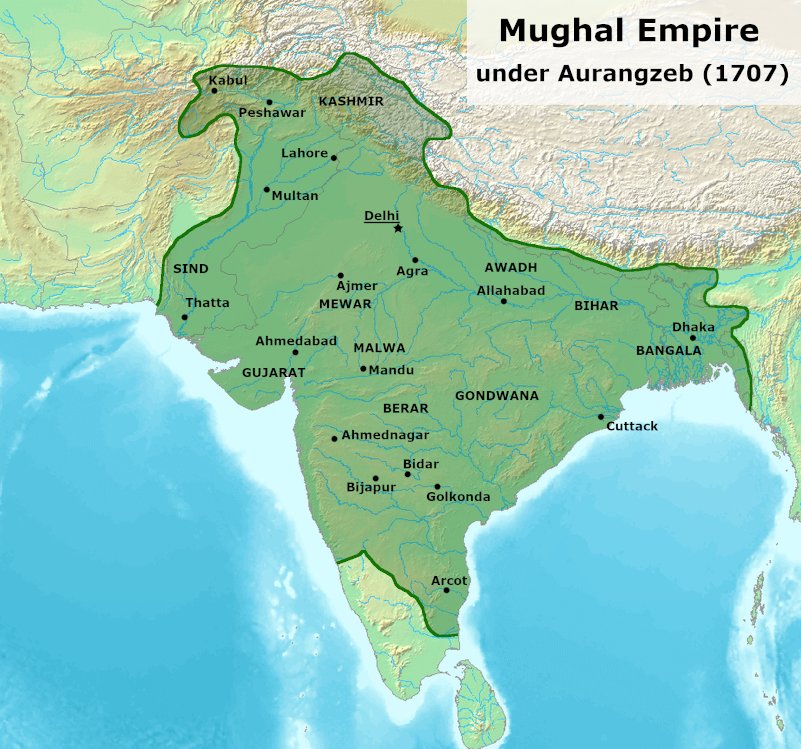
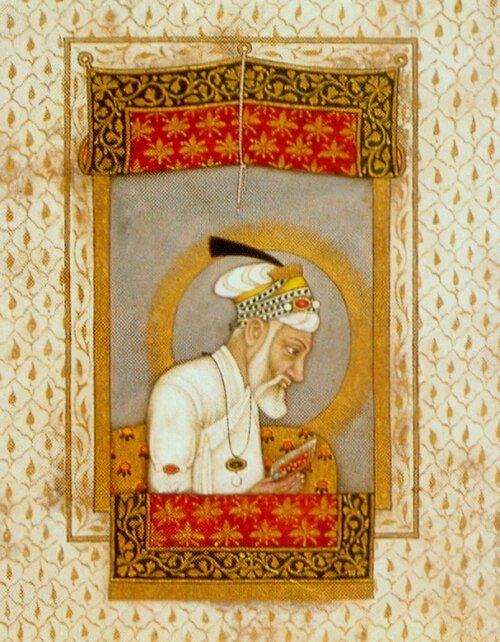
Aurangzeb (1658–1707). Aurangzeb took the title Alamgir ('world-conqueror') and ruled for 49 years. Personally austere, he lived simply, is said to have earned money for his own needs by sewing caps and copying the Quran, and ruled as a strict orthodox Sunni. He stopped music at court and the daily jharokha darshan, had Islamic law compiled in the Fatawa-i-Alamgiri, and in 1679 reimposed the jizya on non-Muslims.
His long reign was full of revolts:
- the Jats around Mathura (from 1669, led by Gokula), and the Satnamis of Narnaul (1672);
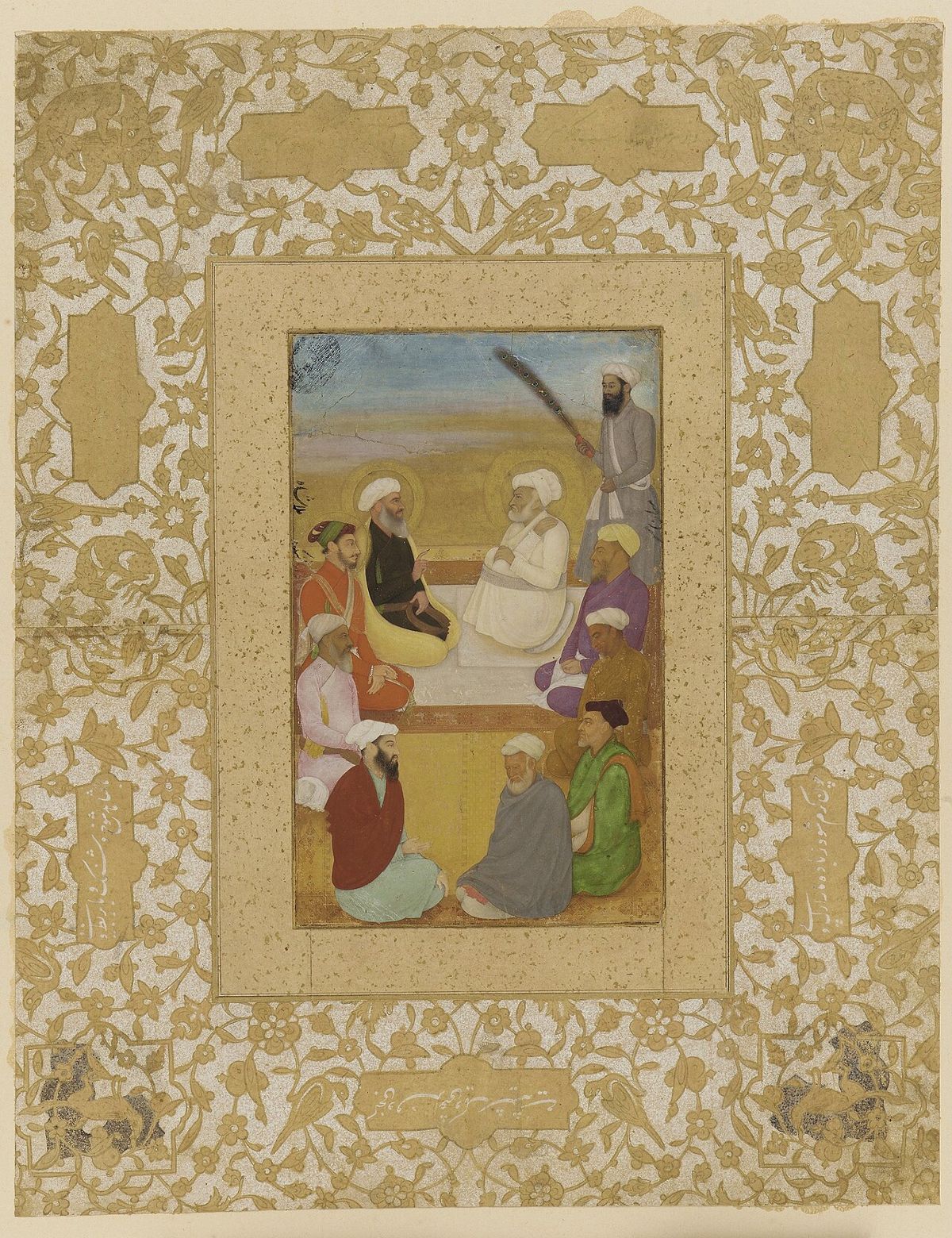
- the Sikhs — the ninth Guru, Guru Tegh Bahadur, was executed in Delhi in 1675; his son Guru Gobind Singh founded the Khalsa in 1699;
- the Rajputs of Marwar, after the death of Jaswant Singh (1678), led by Durgadas Rathore, joined by Mewar;
- and above all the Marathas under Shivaji and his successors.
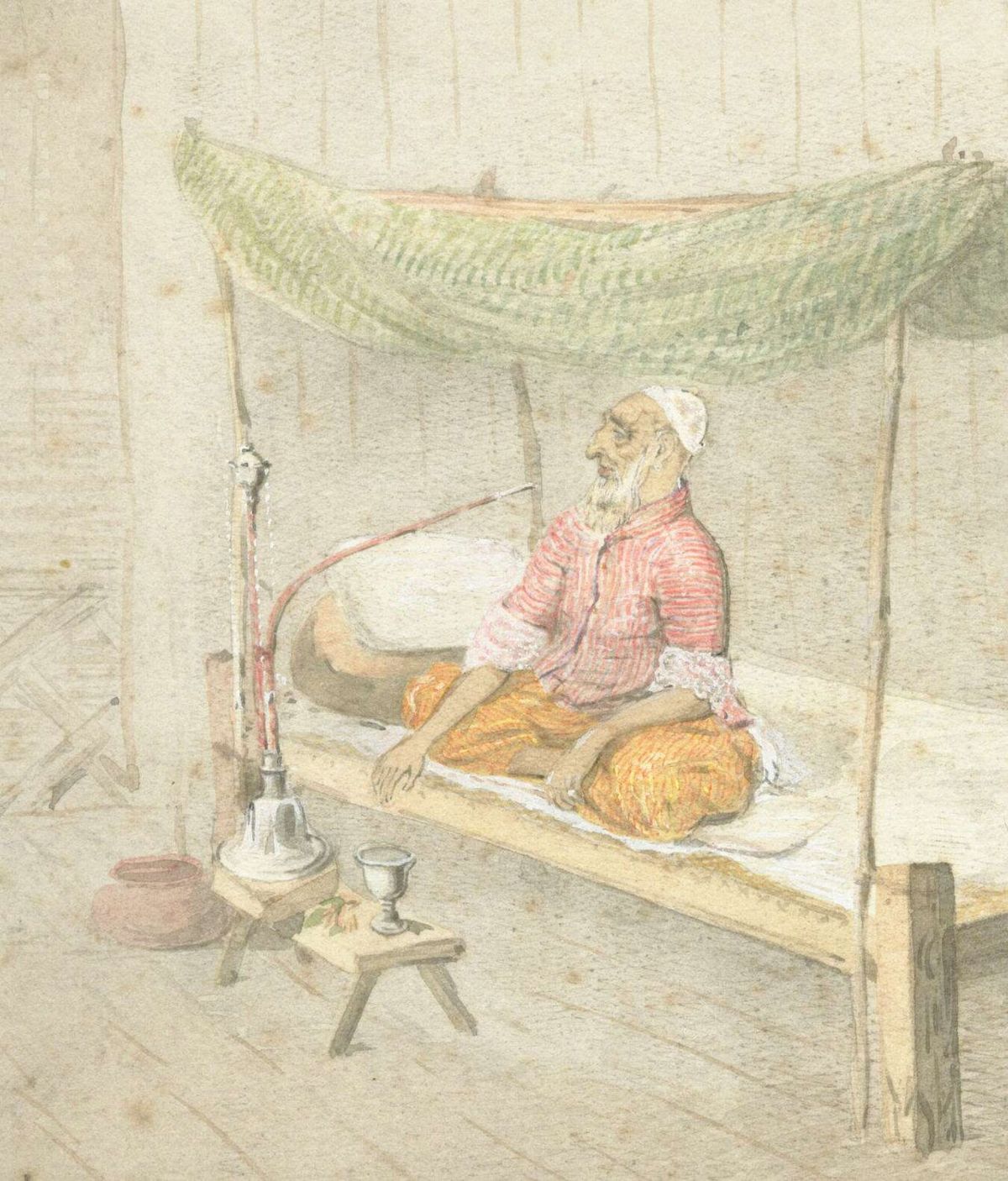
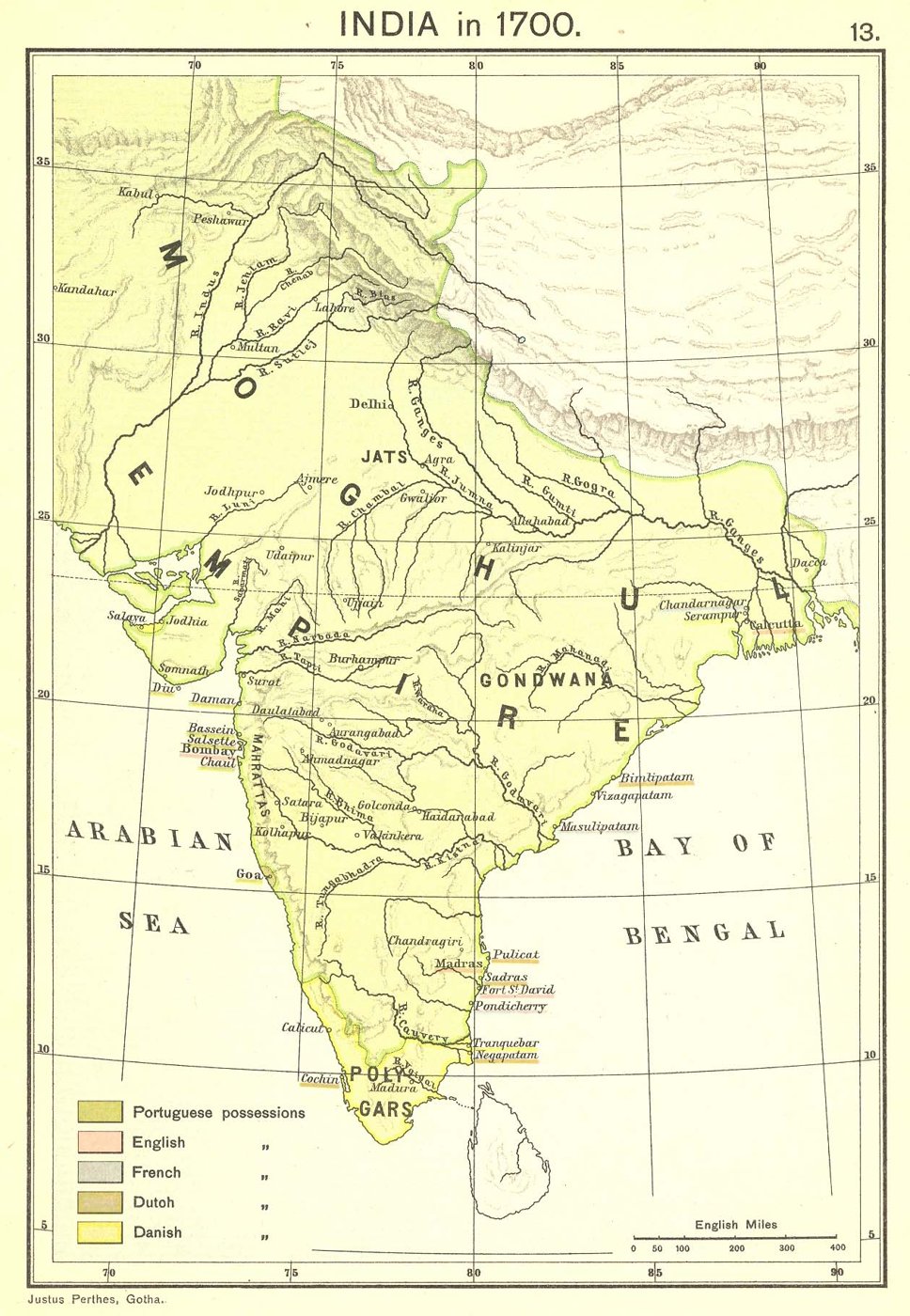
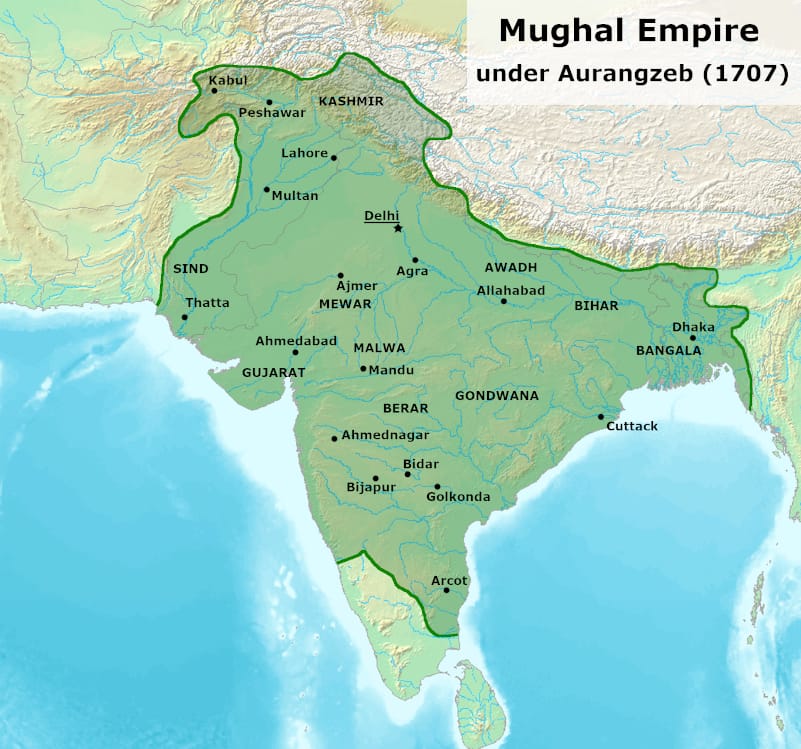
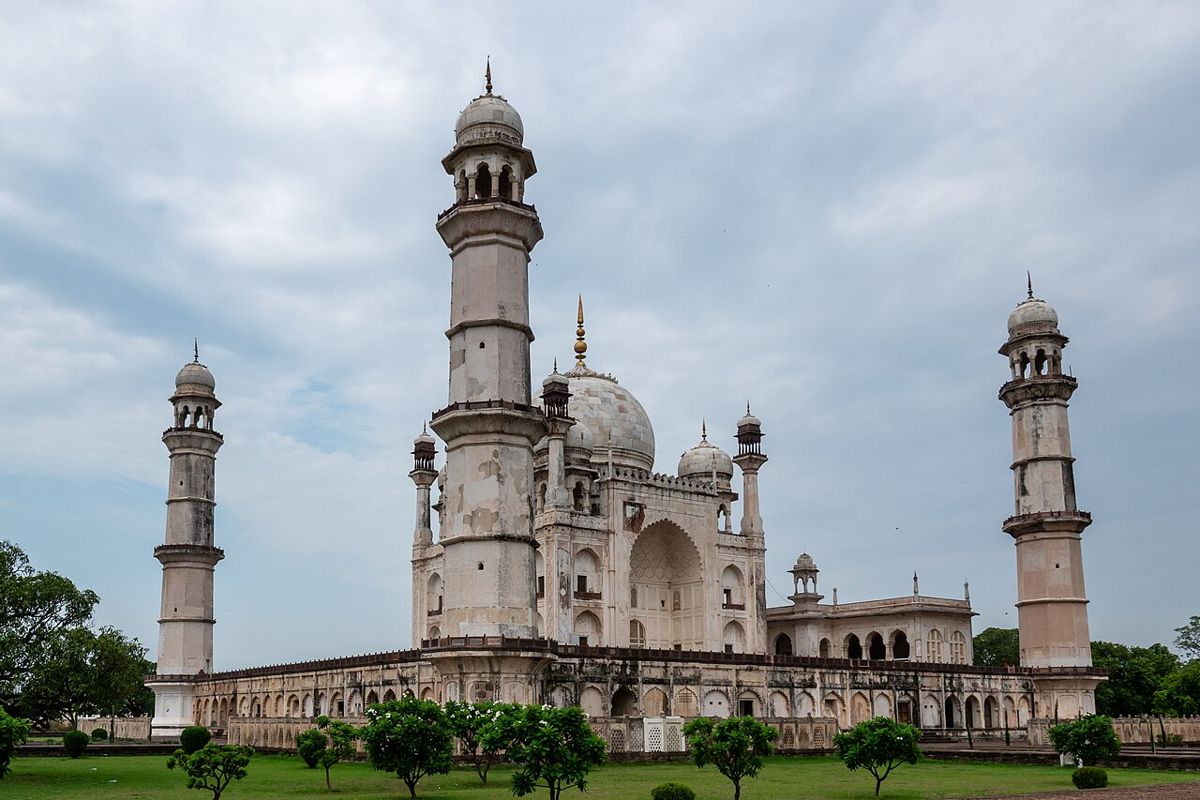
From 1681 Aurangzeb lived in the Deccan, conquering Bijapur (1686) and Golconda (1687) and capturing and executing Shivaji's son Sambhaji (1689). The empire reached its greatest size, from Kabul to Bengal and down to Tamil country — but the endless Deccan wars emptied the treasury, nobles waited years for jagirs, and the Marathas kept fighting. Aurangzeb died at Ahmednagar in 1707 and was buried in a plain grave at Khuldabad. His son Azam Shah built the Bibi ka Maqbara at Aurangabad for his mother, and Aurangzeb built the Badshahi Mosque in Lahore.
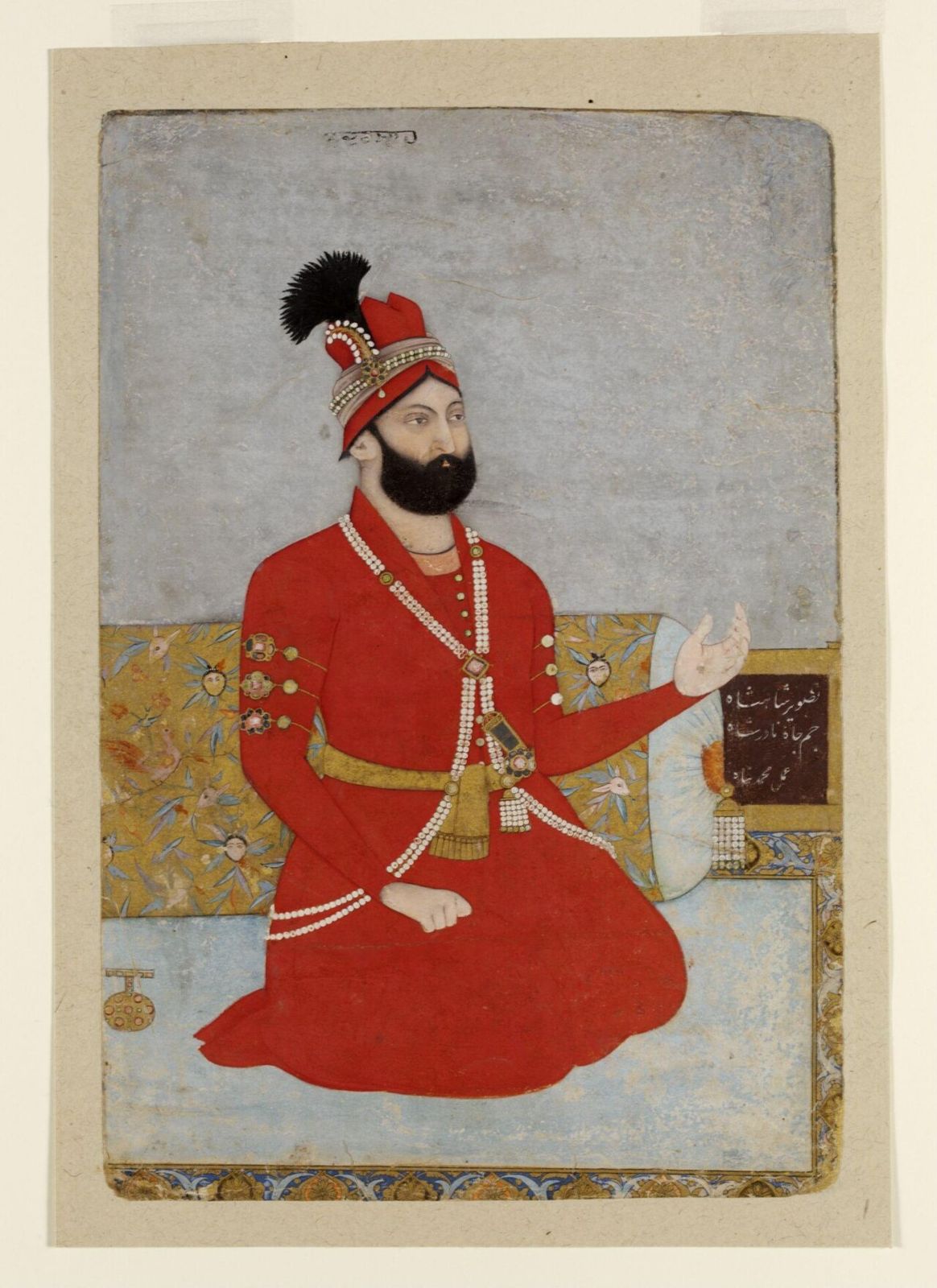
The later Mughals (1707–1857). After Aurangzeb, weak emperors followed one another quickly, and powerful nobles — like the Sayyid brothers, 'king-makers' from 1713 to 1720 — set them up and pulled them down. In 1717 Emperor Farrukhsiyar issued a farman giving the English East India Company duty-free trade in Bengal. Under Muhammad Shah ('Rangila', 1719–1748) the Persian ruler Nadir Shah invaded, defeated the Mughals at Karnal (1739) and sacked Delhi, carrying off the Peacock Throne and the Koh-i-Noor diamond. The Afghan Ahmad Shah Abdali raided India again and again and crushed the Marathas at the Third Battle of Panipat (1761). Emperor Shah Alam II was defeated by the English at Buxar (1764) and gave them the diwani (revenue rights) of Bengal, Bihar and Odisha (1765). The last emperor, Bahadur Shah Zafar, a poet, became the symbolic leader of the Revolt of 1857; the British exiled him to Rangoon, where he died in 1862.
- 1605Jahangir emperor
- 1606Khusrau's revolt; Guru Arjan Dev martyred at Lahore
- 1611Jahangir marries Nur Jahan
- 1615–19Sir Thomas Roe at Jahangir's court
- 1628Shah Jahan emperor
- 1631–53Mumtaz Mahal dies; Taj Mahal built
- 1639–48Shahjahanabad and the Red Fort
- 1658Dharmat and Samugarh — Aurangzeb wins the throne
- 1675Guru Tegh Bahadur martyred in Delhi
- 1679Jizya reimposed
- 1686–87Bijapur and Golconda annexed
- 1707Aurangzeb dies — the empire at its largest
- 1739Nadir Shah sacks Delhi (Karnal)
- 1761Third Battle of Panipat — Abdali defeats the Marathas
- 1764Buxar — Shah Alam II defeated by the English
- 1857–58Revolt; Bahadur Shah Zafar exiled to Rangoon
| Emperor | Years | Remember |
|---|---|---|
| Babur | 1526–1530 | Panipat I, Khanwa; Baburnama (Chagatai Turkish) |
| Humayun | 1530–40, 1555–56 | Lost to Sher Shah; regained at Sirhind; Humayun's Tomb |
| Akbar | 1556–1605 | Panipat II; Rajput alliance; mansabdari; zabti; sulh-i-kul; Fatehpur Sikri |
| Jahangir | 1605–1627 | Chain of justice; Nur Jahan; Thomas Roe; painting at its peak |
| Shah Jahan | 1628–1658 | Taj Mahal, Red Fort, Jama Masjid, Peacock Throne |
| Aurangzeb | 1658–1707 | Alamgir; jizya 1679; Deccan wars; empire largest |
| Don't mix up | Remember |
|---|---|
| Itimad-ud-Daulah vs Taj Mahal | Itimad-ud-Daulah = Nur Jahan for her father (first pietra dura tomb); Taj = Shah Jahan for Mumtaz Mahal |
| Thomas Roe's emperor | Jahangir (1615–19) — not Akbar or Shah Jahan |
| Tuzuk-i-Jahangiri vs Tuzuk-i-Baburi | Jahangir's memoirs vs Babur's memoirs (Baburnama) |
| Samugarh | 1658, Aurangzeb defeated Dara Shikoh |
| Sirr-i-Akbar / Majma-ul-Bahrain | Dara Shikoh — not Akbar |
| Jizya | abolished by Akbar (1564), reimposed by Aurangzeb (1679) |
| Bibi ka Maqbara | built by Azam Shah, Aurangzeb's son, at Aurangabad |
| Peacock Throne and Koh-i-Noor taken | Nadir Shah, 1739 — not Abdali |
| Last Mughal emperor | Bahadur Shah Zafar, exiled to Rangoon (1858) |