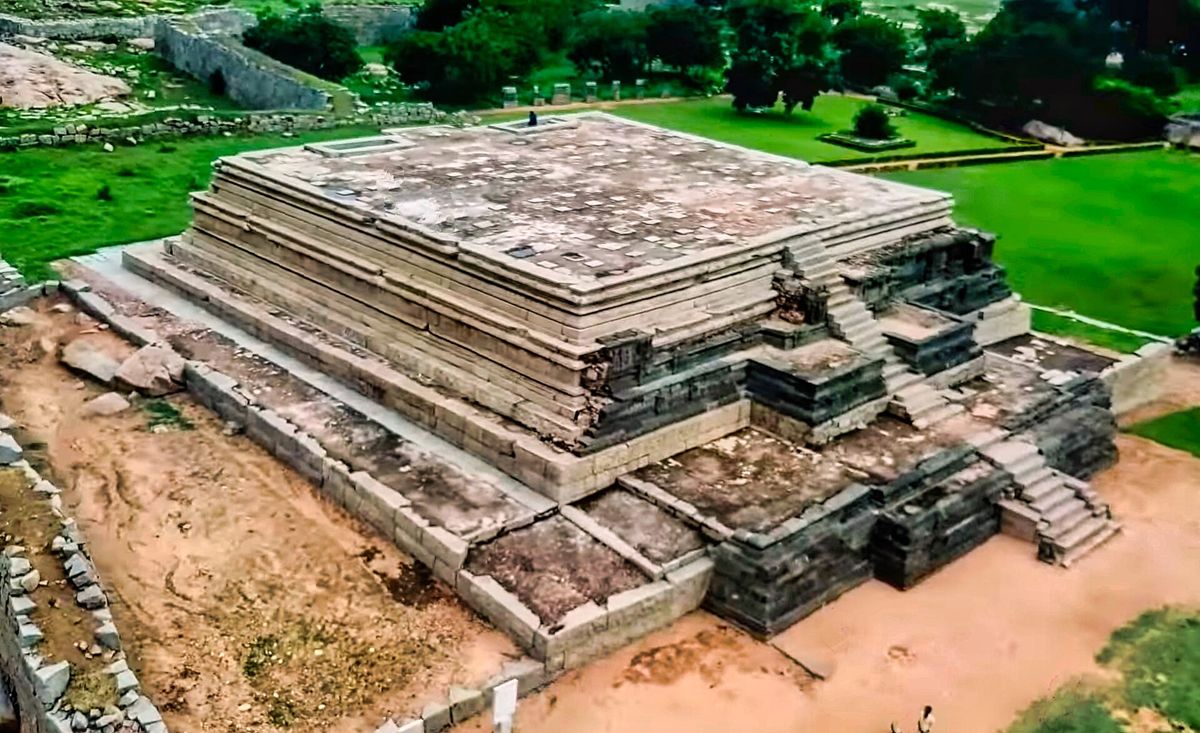
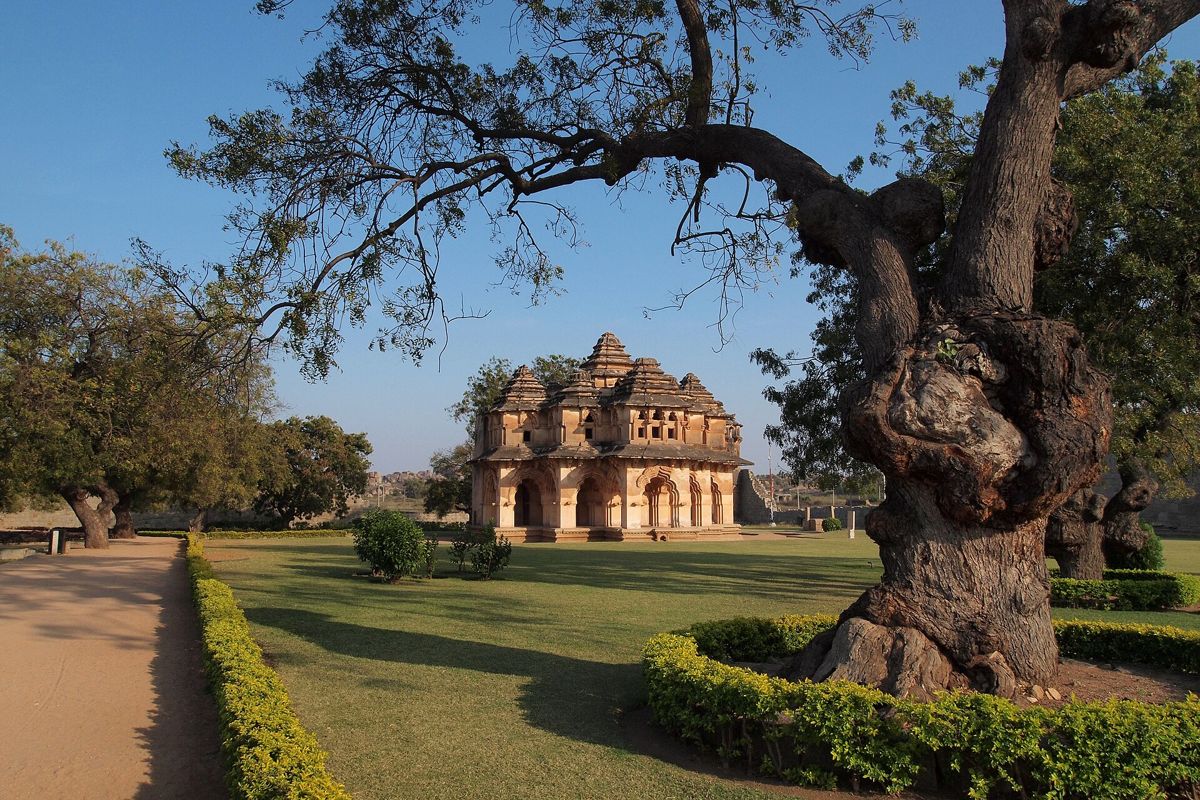
Founding (1336). As Muhammad bin Tughlaq's hold on the south collapsed, two brothers, Harihara I and Bukka I of the Sangama family, founded a new kingdom on the Tungabhadra river in 1336. Tradition says they had served in the region's armies, were taken to Delhi, and returned to found a state with the blessing of the sage Vidyaranya of the Sringeri math. Their capital, Vijayanagara ('City of Victory'), is the ruined city we now call Hampi in Karnataka — a UNESCO World Heritage Site since 1986.
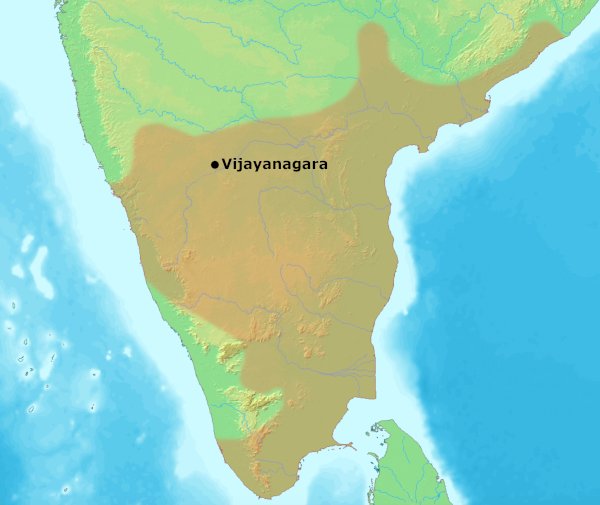
Four dynasties ruled Vijayanagar, one after the other:
- Sangama (1336–1485) — the founders. Bukka I sent an embassy to China; Devaraya I built a dam across the Tungabhadra; Devaraya II (1424–1446), the greatest Sangama, hired Muslim cavalry and archers to strengthen his army.
- Saluva (1485–1505) — the general Saluva Narasimha took the throne to save the kingdom.
- Tuluva (1505–1570) — the dynasty of Krishnadeva Raya, the empire's golden age.
- Aravidu (1570–c. 1650) — after Talikota, ruling from Penukonda and later Chandragiri and Vellore.
Krishnadeva Raya (1509–1529). The greatest Vijayanagar king was a soldier, statesman and poet:
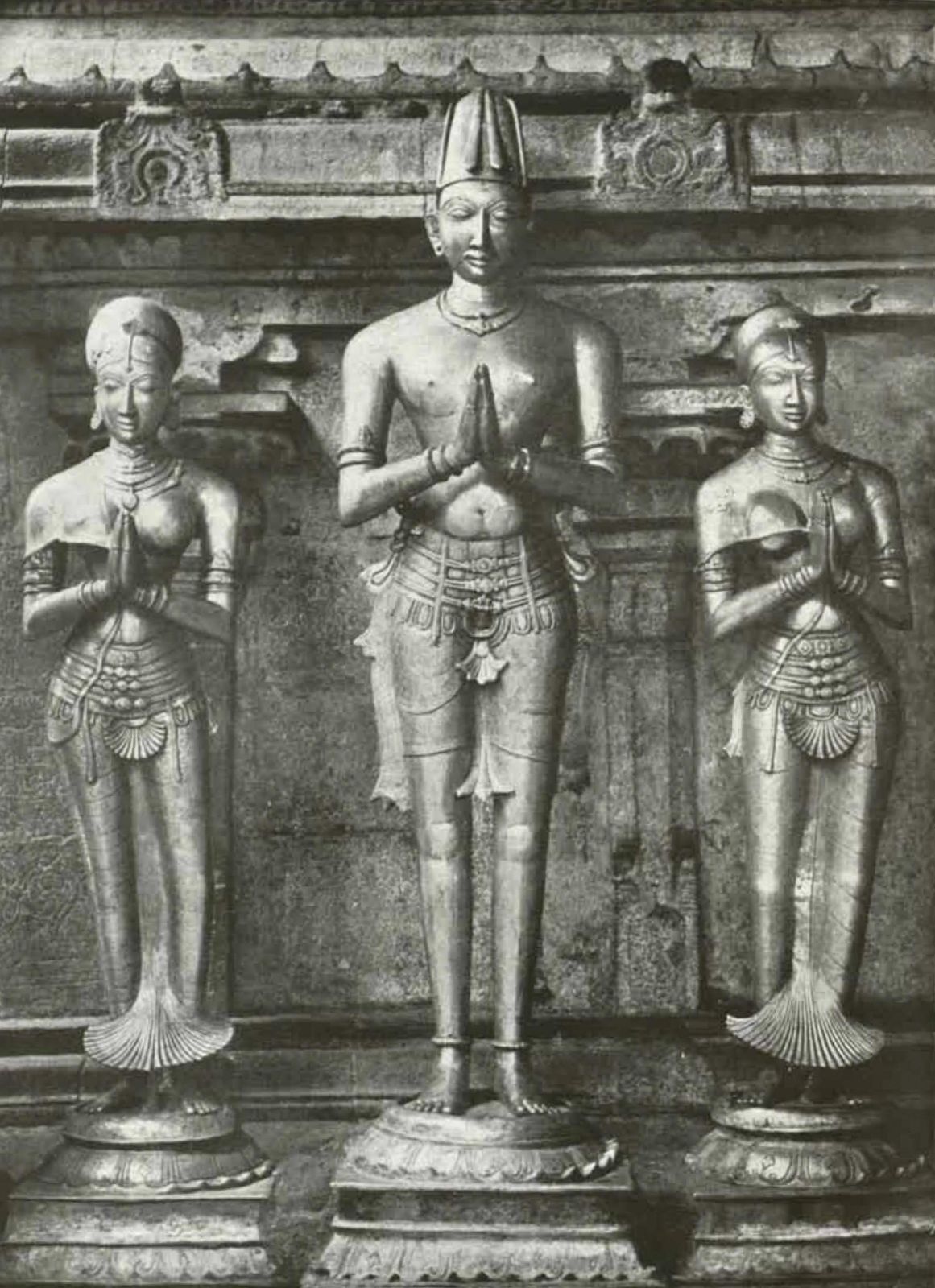
- Wars. He defeated the Bahmani successor states and took Raichur from Bijapur (1520); he beat the Gajapati king of Odisha and won back the eastern coast.
- The Portuguese. He kept friendly ties with the Portuguese at Goa, because they controlled the trade in war horses from Arabia and Persia that his cavalry needed.
- Literature. He wrote Amuktamalyada in Telugu (on statecraft and the story of the saint Andal) and Jambavati Kalyanam in Sanskrit. Eight great poets, the Ashtadiggajas, adorned his court, led by Allasani Peddana, called the 'grandfather of Telugu poetry'. Folk tradition adds the witty Tenali Ramakrishna. He was praised as Andhra Bhoja.
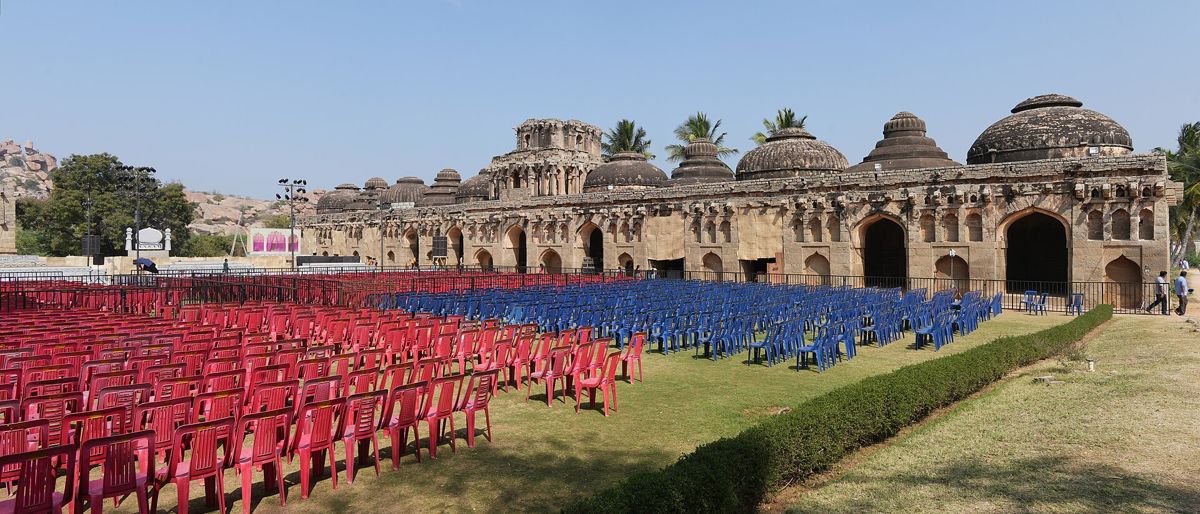
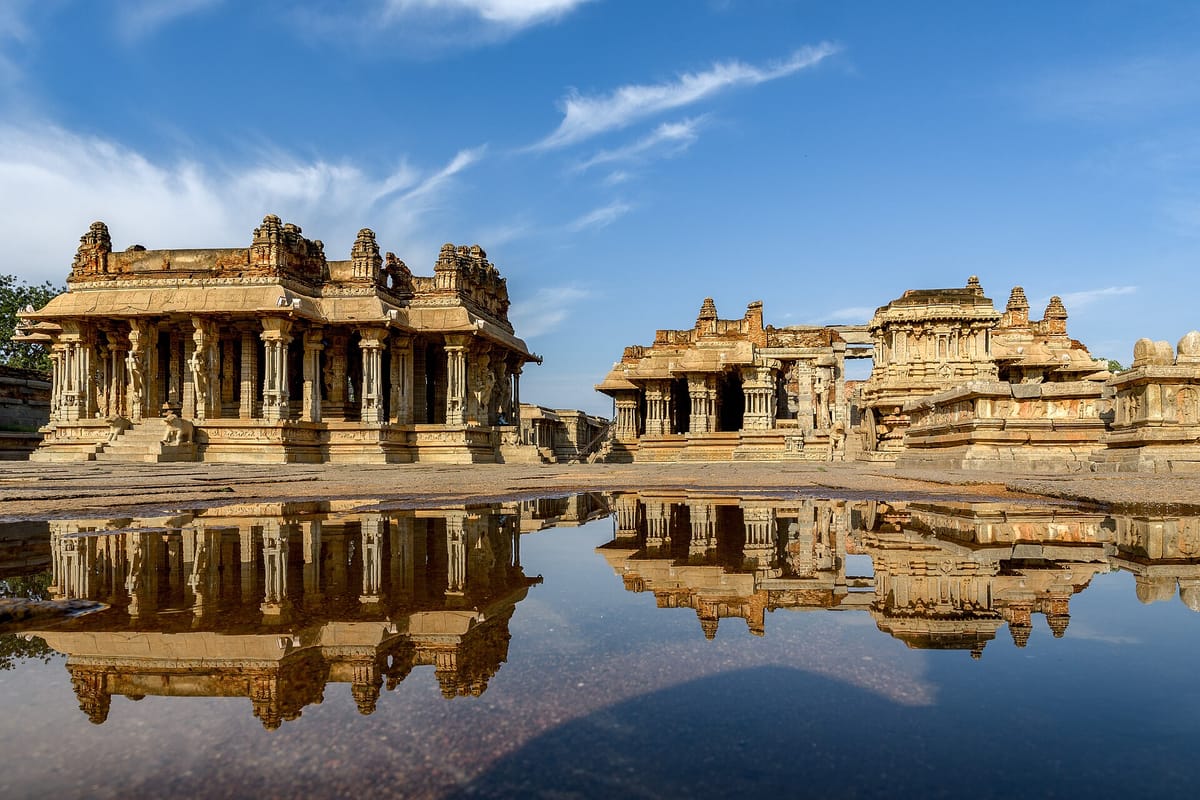
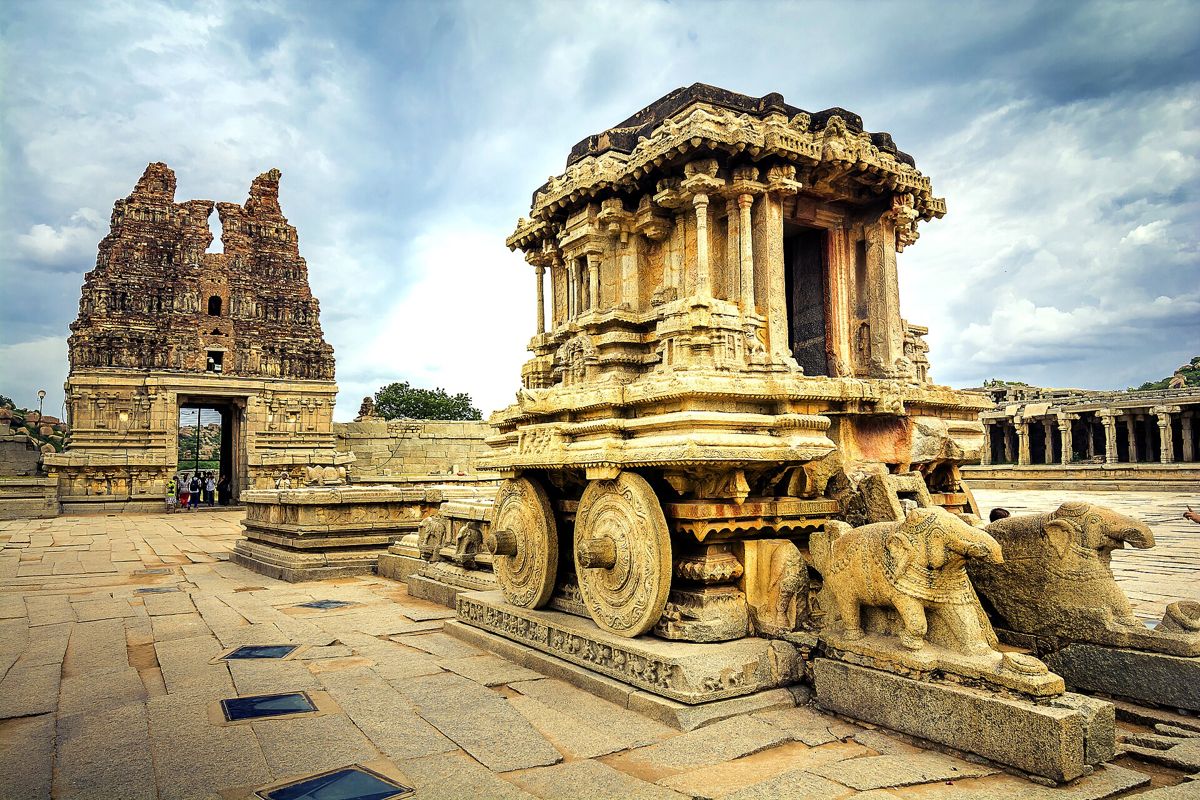
- Building. He added gateways and halls to the Virupaksha and Vitthala temples, built the Hazara Rama temple's surroundings and founded the town of Nagalapura (today's Hosapete) in his mother's name.
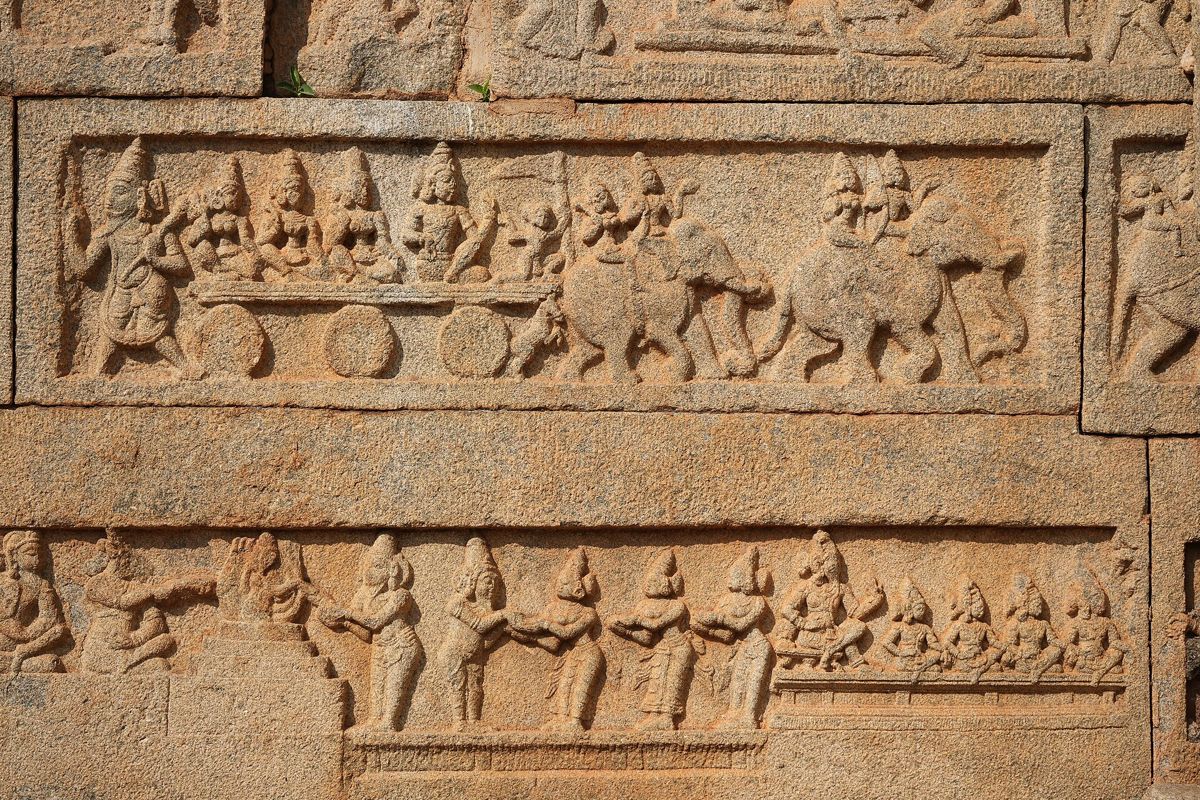
Visitors left vivid accounts of his city: the Portuguese Domingo Paes (around 1520–22) compared Vijayanagar to Rome and called it one of the best-provided cities in the world; Fernão Nuniz wrote its history a little later. Earlier, the Italian Niccolò de' Conti (about 1420) and the Persian envoy Abdur Razzaq (1443, under Devaraya II) had described its wealth.
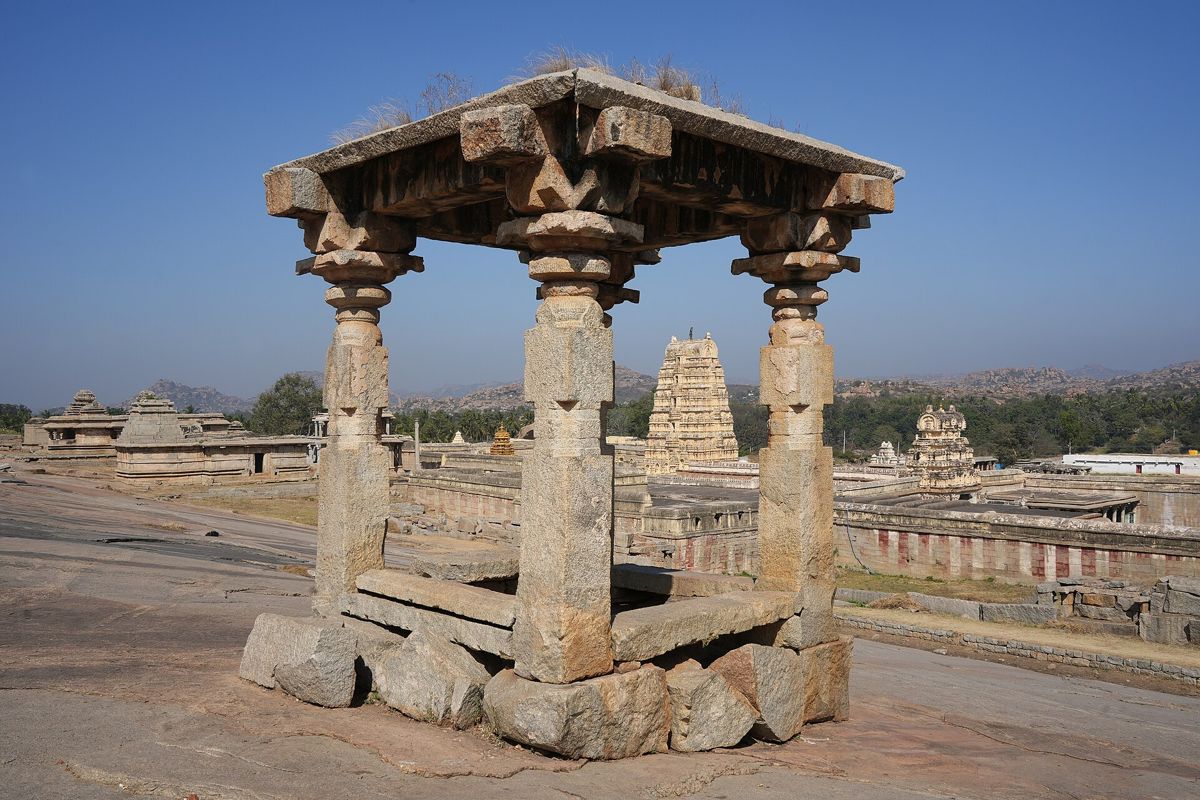
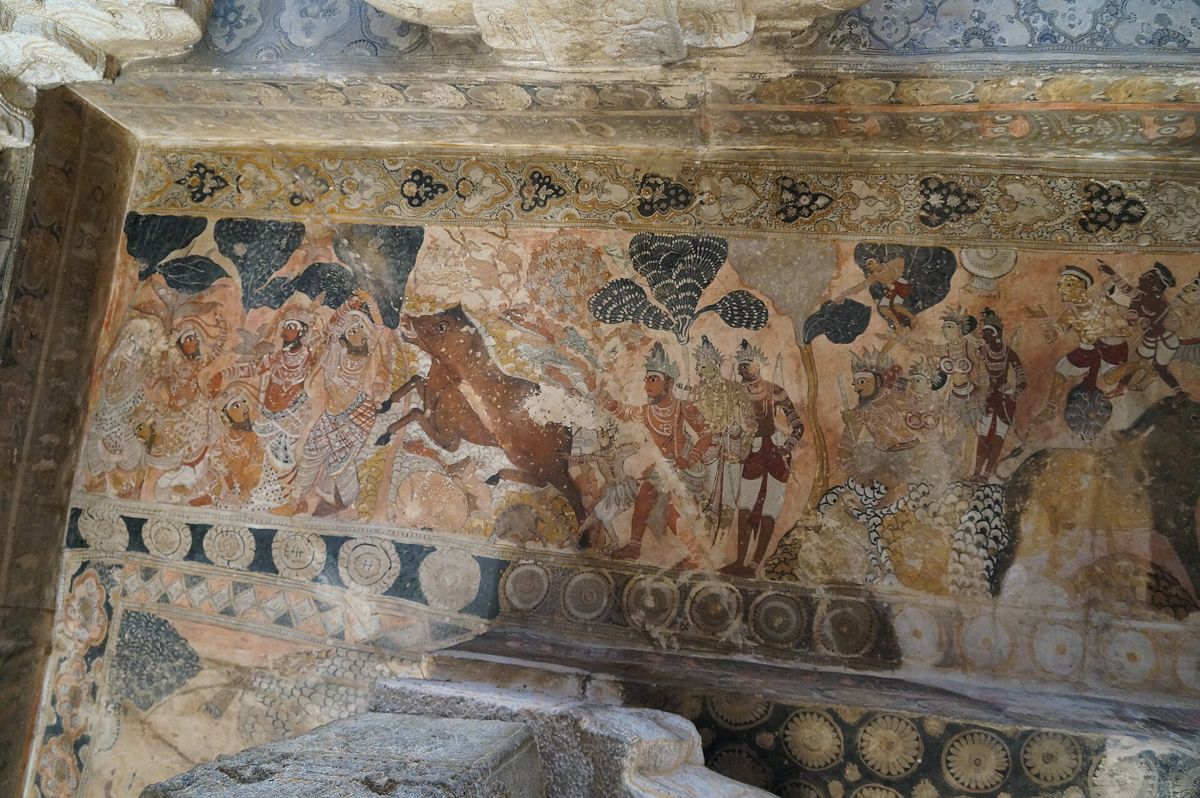
How Vijayanagar was governed. The king ruled with a council of ministers. Much of the land was given to military chiefs called nayakas or amara-nayakas, who received the revenue of a territory (an amaram) in return for keeping troops ready for the king and paying him a share. In time some nayakas — at Madurai, Thanjavur and Gingee — became almost independent kingdoms. The empire was divided into provinces (mandalam or rajya), districts (nadu) and villages, where hereditary village servants called ayagars kept accounts and order. Great temples were centres of worship, learning, landholding and trade.
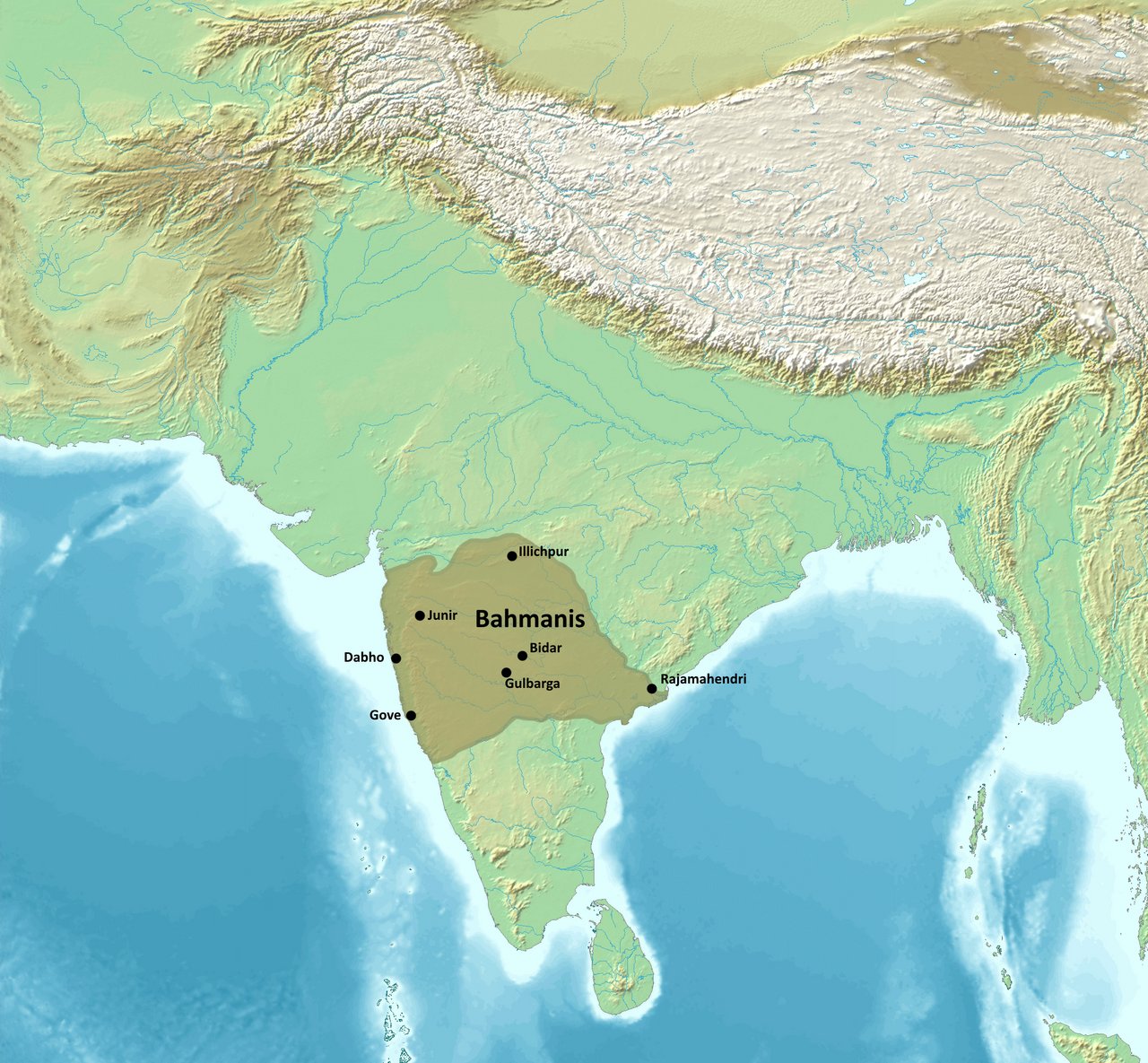
The Bahmani kingdom (1347–1527). North of the Tungabhadra lay Vijayanagar's great rival. In 1347 an officer of Muhammad bin Tughlaq, Alauddin Hasan Bahman Shah (also called Hasan Gangu), founded the Bahmani sultanate with its capital at Gulbarga; around 1425 the capital moved to Bidar. Its most famous minister was Mahmud Gawan, a Persian merchant-scholar who reorganised the provinces and the army and built a great madrasa at Bidar (1472) — but he was executed in 1481 on a forged charge, and the kingdom soon fell apart. The Russian merchant Afanasy Nikitin visited the Bahmani kingdom around 1469–72.
Vijayanagar and the Bahmanis fought again and again over the rich Raichur doab, the land between the Krishna and Tungabhadra rivers.
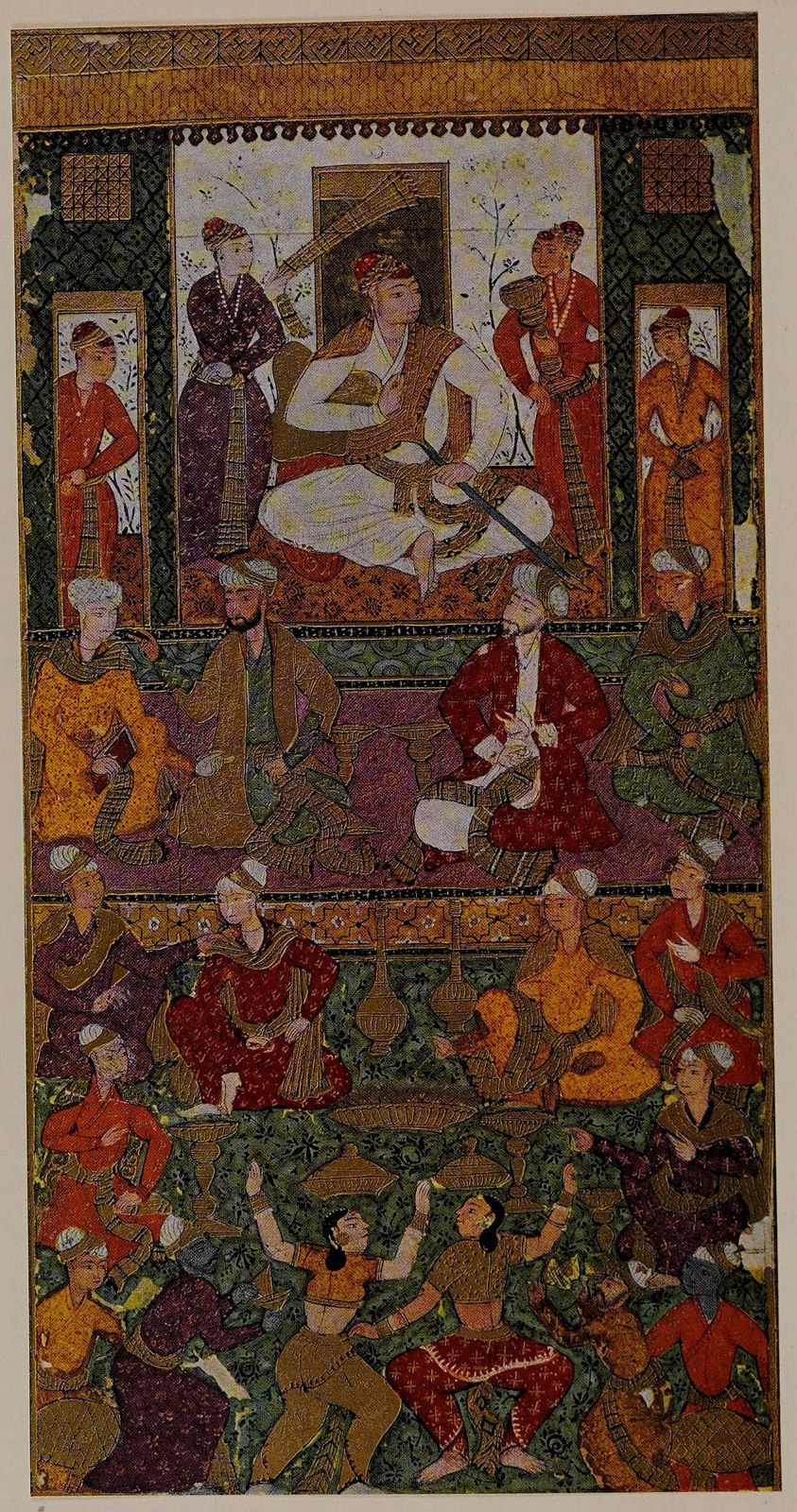
The five Deccan Sultanates. Between 1490 and 1528 the Bahmani kingdom broke into five states:
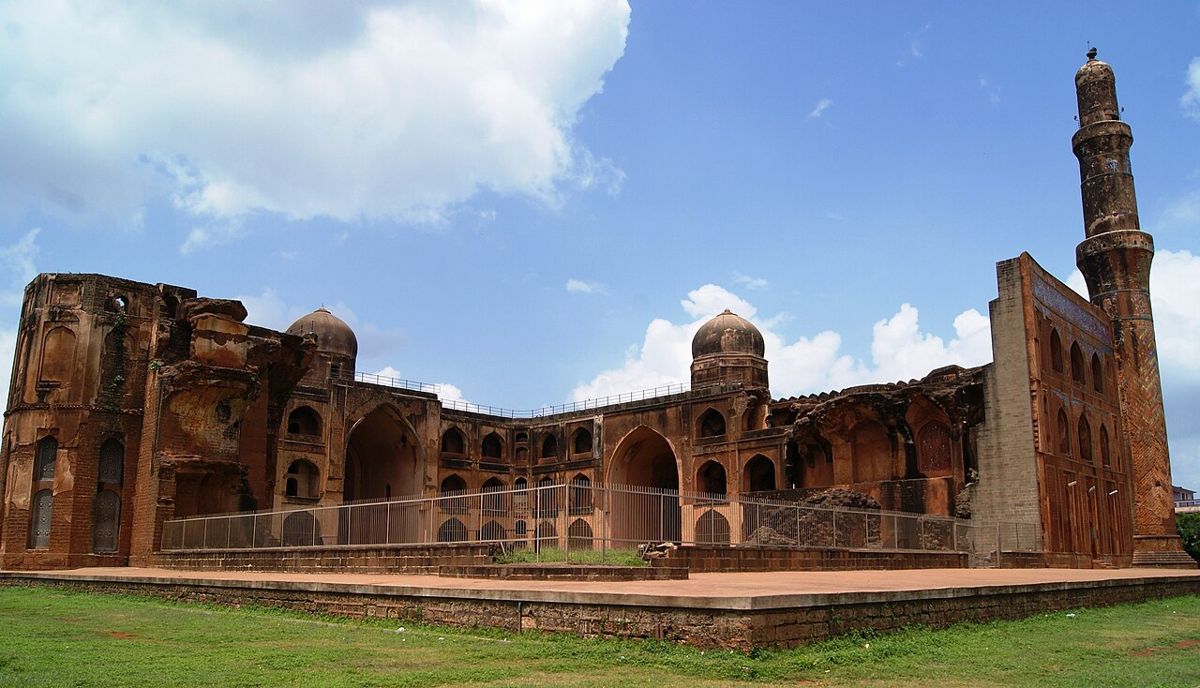
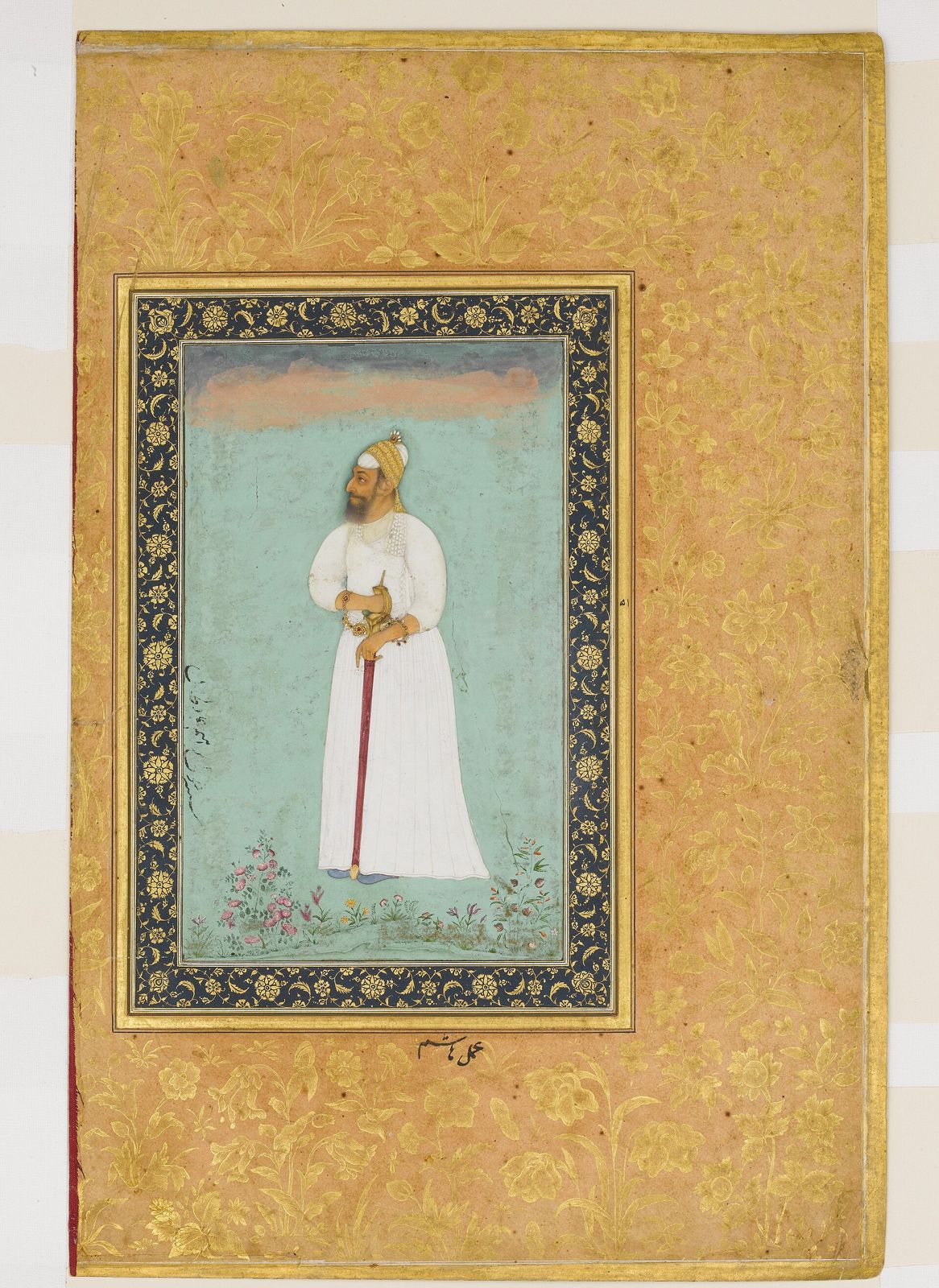
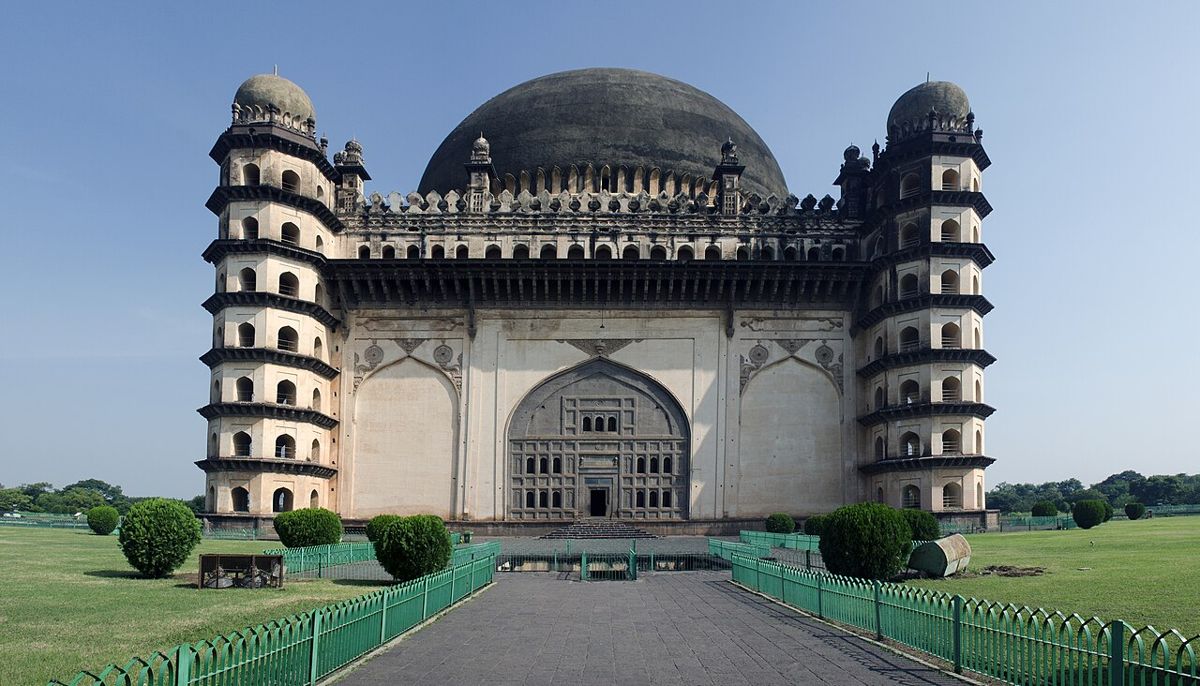
- Bijapur — Adil Shahi dynasty (1490); later built the Gol Gumbaz.
- Ahmadnagar — Nizam Shahi dynasty (1490).
- Berar — Imad Shahi dynasty (1490).
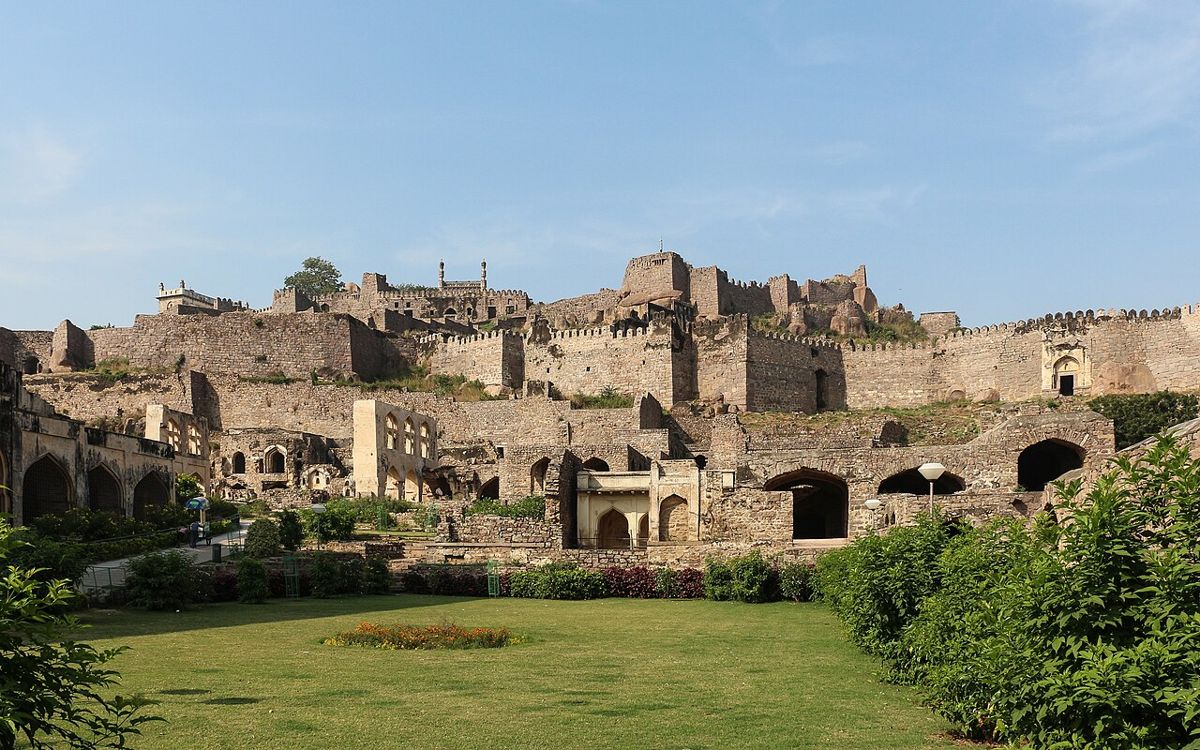
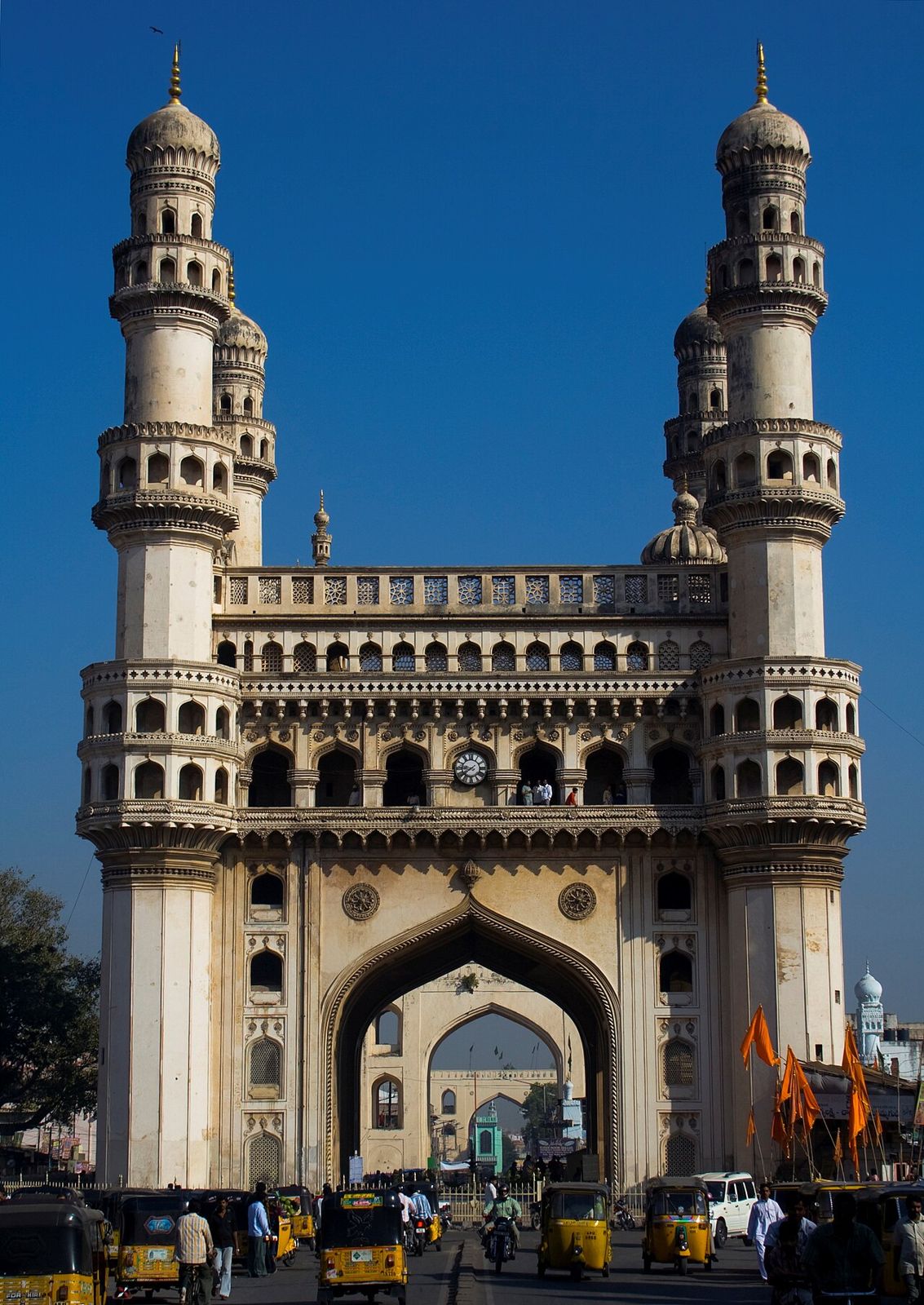
- Golconda — Qutb Shahi dynasty (1518); its ruler Muhammad Quli Qutb Shah founded Hyderabad and built the Charminar (1591).
- Bidar — Barid Shahi dynasty (1528).
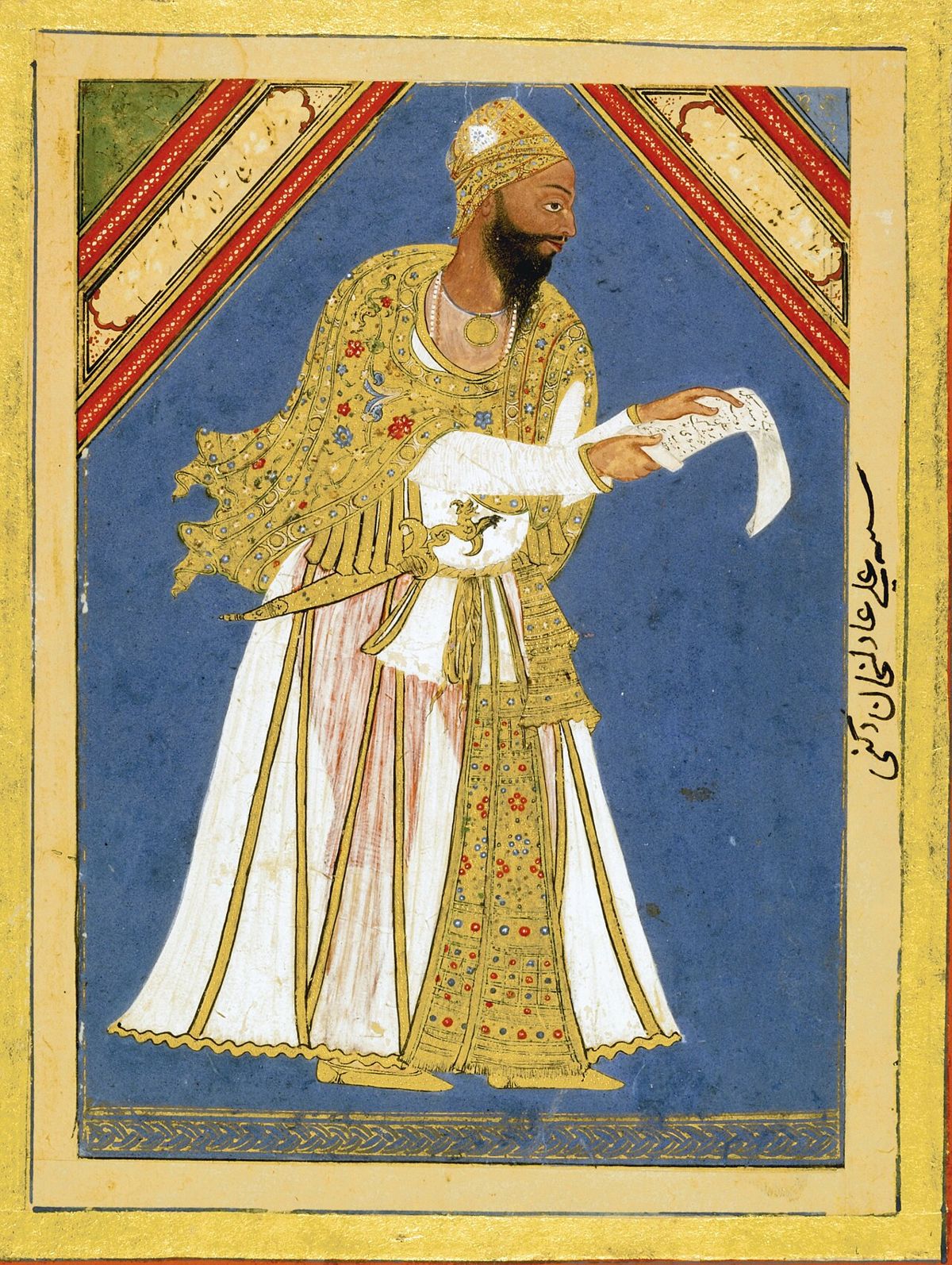
Talikota (1565) — the fall of Hampi. After Krishnadeva Raya, real power passed to his son-in-law Aliya Rama Raya, regent for the puppet king Sadashiva Raya. Rama Raya played the Deccan Sultans off against each other until four of them — Bijapur, Ahmadnagar, Golconda and Bidar — united against him. On 23 January 1565 they met the Vijayanagar army near Talikota (the battle is also called Rakkasa-Tangadi, after two villages near the battlefield). At first Vijayanagar seemed to be winning, but Rama Raya was captured and beheaded, his army broke, and the victors sacked Hampi for months. The city was never lived in again. The Aravidu kings carried on from Penukonda and further south, but the great days of Vijayanagar were over.
- 1336Harihara and Bukka found Vijayanagar
- 1347Bahmani sultanate founded at Gulbarga
- c. 1420Italian Niccolò de' Conti visits Vijayanagar
- c. 1425Bahmani capital moves to Bidar
- 1443Persian envoy Abdur Razzaq at Devaraya II's court
- 1481Mahmud Gawan executed
- 1485Saluva dynasty takes over
- 1505Tuluva dynasty begins
- 1509Krishnadeva Raya becomes king
- 1520Raichur taken from Bijapur; Domingo Paes in Hampi (c. 1520–22)
- 1565Battle of Talikota; Rama Raya killed; Hampi sacked
- 1570Aravidu dynasty at Penukonda
- 1591Charminar built in Hyderabad
| Dynasty | Years | Remember |
|---|---|---|
| Sangama | 1336–1485 | Harihara I and Bukka I; Devaraya II; visitors Conti and Abdur Razzaq |
| Saluva | 1485–1505 | Saluva Narasimha |
| Tuluva | 1505–1570 | Krishnadeva Raya; Amuktamalyada; Ashtadiggajas; Talikota 1565 |
| Aravidu | 1570–c. 1650 | Ruled from Penukonda, Chandragiri, Vellore |
| Sultanate | Dynasty | Founded | Remember |
|---|---|---|---|
| Bijapur | Adil Shahi | 1490 | Gol Gumbaz; Ibrahim Adil Shah II |
| Ahmadnagar | Nizam Shahi | 1490 | Husain Nizam Shah I at Talikota; later Chand Bibi resisted the Mughals |
| Berar | Imad Shahi | 1490 | Absorbed by Ahmadnagar (1574) |
| Golconda | Qutb Shahi | 1518 | Hyderabad and Charminar (Muhammad Quli Qutb Shah); diamonds |
| Bidar | Barid Shahi | 1528 | Old Bahmani capital |
| Fact | Answer |
|---|---|
| Founded | 1336, by the brothers Harihara and Bukka (Sangama dynasty) |
| Capital | Vijayanagar = Hampi, Karnataka |
| Four dynasties | Sangama → Saluva → Tuluva → Aravidu |
| Greatest king | Krishnadeva Raya (1509–1529, Tuluva); wrote Amuktamalyada in Telugu; 8 poets at his court (Ashtadiggajas) |
| Battle of Talikota | 1565; Deccan Sultanates defeated Rama Raya, regent of the Tuluva king Sadashiva Raya; Hampi was sacked |
| Don't mix up | Remember |
|---|---|
| Founders of Vijayanagar vs Bahmani | Harihara and Bukka (1336) vs Hasan Gangu / Bahman Shah (1347) |
| Amuktamalyada | Telugu, by Krishnadeva Raya — not Sanskrit, not Kannada |
| Visitors to Vijayanagar | Conti (Italian, c. 1420) · Abdur Razzaq (Persian, 1443) · Paes and Nuniz (Portuguese, 16th c.) — Nikitin (Russian) visited the Bahmanis |
| Talikota | 1565; four Sultanates vs Rama Raya (regent, not king) — Berar did not join |
| Raichur doab | between the Krishna and Tungabhadra |
| Gol Gumbaz vs Charminar | Gol Gumbaz = Bijapur (Adil Shahi); Charminar = Hyderabad (Qutb Shahi) |
| Hampi stone chariot | Vitthala temple — on the ₹50 note |