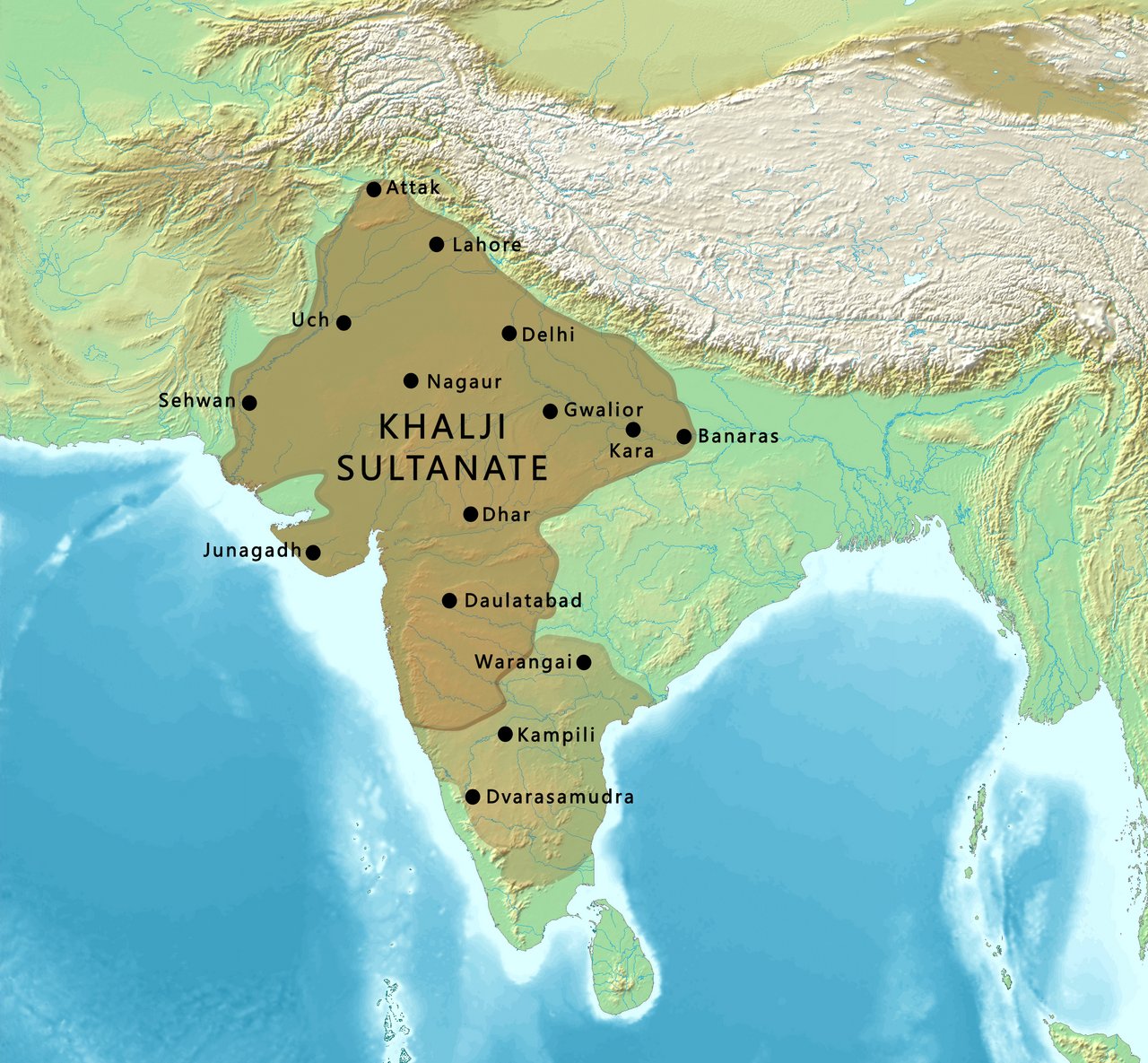
Who were the Khiljis? The Khiljis were a Turkish tribe that had long lived in Afghanistan, and the old Turkish nobles of Delhi looked down on them. When Jalal-ud-din Firoz Khilji, the army minister, took the throne in 1290, power passed from the small circle of Turkish slave-nobles to a wider group that included Khiljis, Afghans and Indian Muslims. That is why historians call it the 'Khilji revolution'.
Jalal-ud-din Firoz Khilji (1290–1296). He was about seventy when he became Sultan, and was crowned at Kilokhri near Delhi because the citizens of Delhi at first disliked him. He tried to rule by kindness rather than fear:
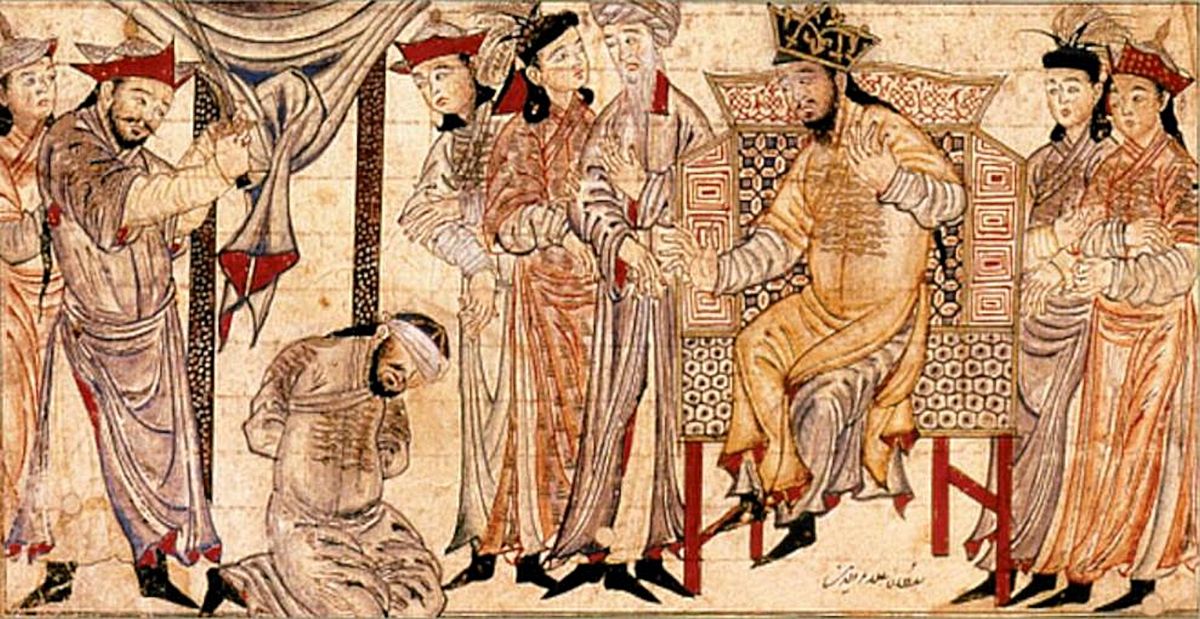
- He pardoned Balban's nephew Malik Chhajju, who rebelled at Kara in 1290.
- Instead of executing a gang of robbers (thugs), he sent them away to Bengal.
- In 1292 he defeated a Mongol army; about 4,000 Mongols under Ulghu, a descendant of Chengiz Khan, accepted Islam and settled near Delhi — they were called the 'New Muslims'.
His one harsh act was the execution of a dervish, Sidi Maula, accused of plotting against him. The nobles thought his mildness was weakness.
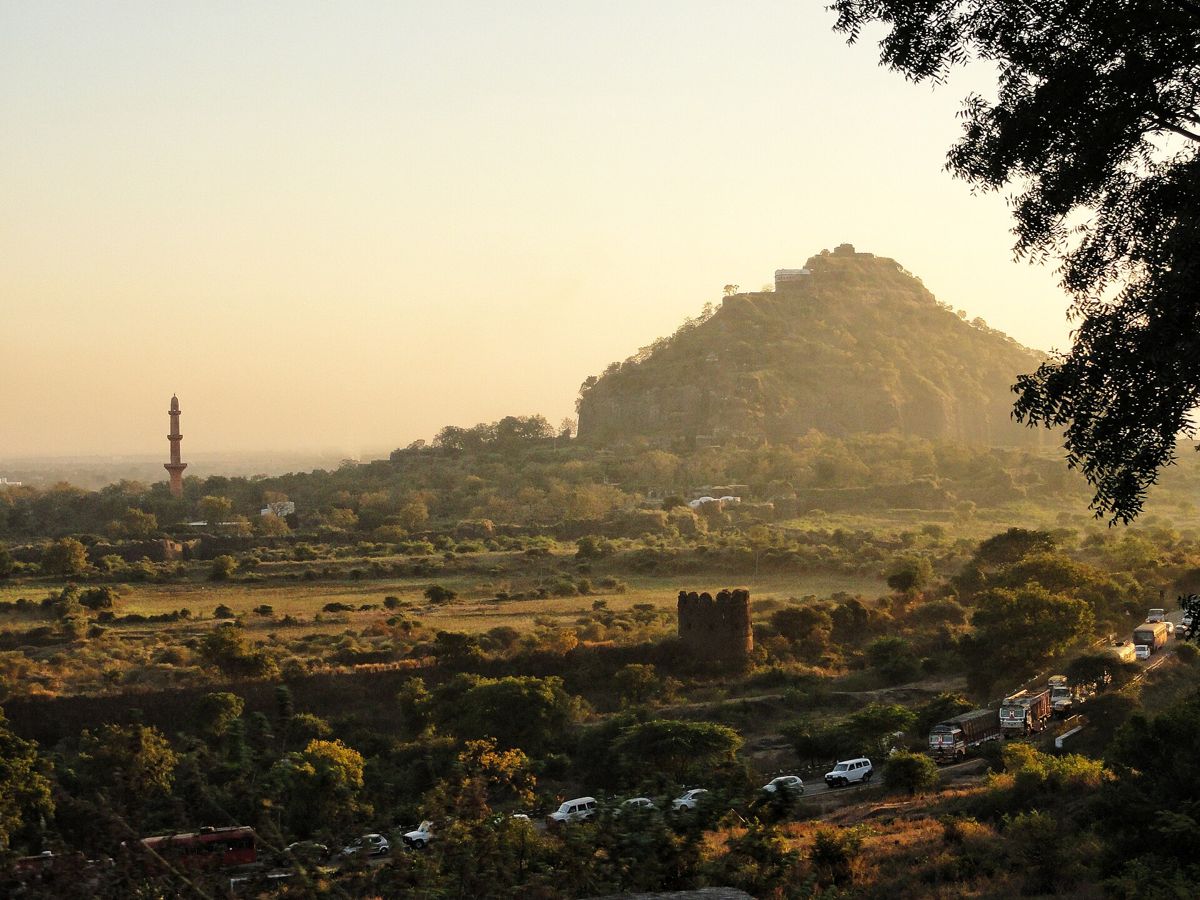
How Alauddin seized the throne. Jalal-ud-din's nephew and son-in-law Ali Gurshasp — later Alauddin Khilji — was governor of Kara. In 1296 he led a daring raid across the Vindhyas on Devagiri, capital of the Yadava kings, the first Turkish raid into the Deccan, and came back with enormous treasure. He then invited his uncle to Kara to receive it. As the old Sultan stepped forward to embrace him, Alauddin's men killed him (July 1296). Alauddin marched to Delhi, scattering gold among the crowds to win support, and was crowned there later that year.
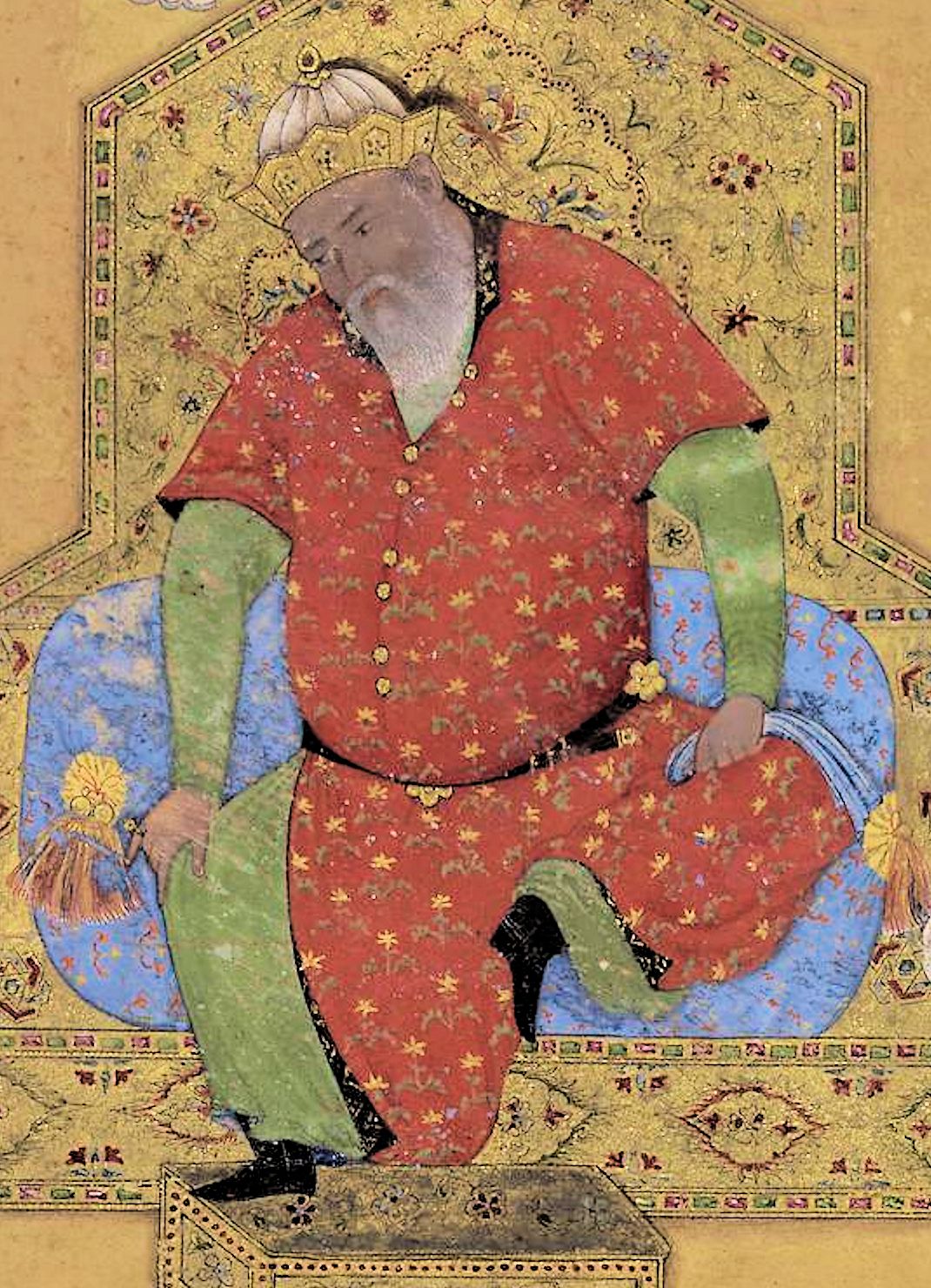
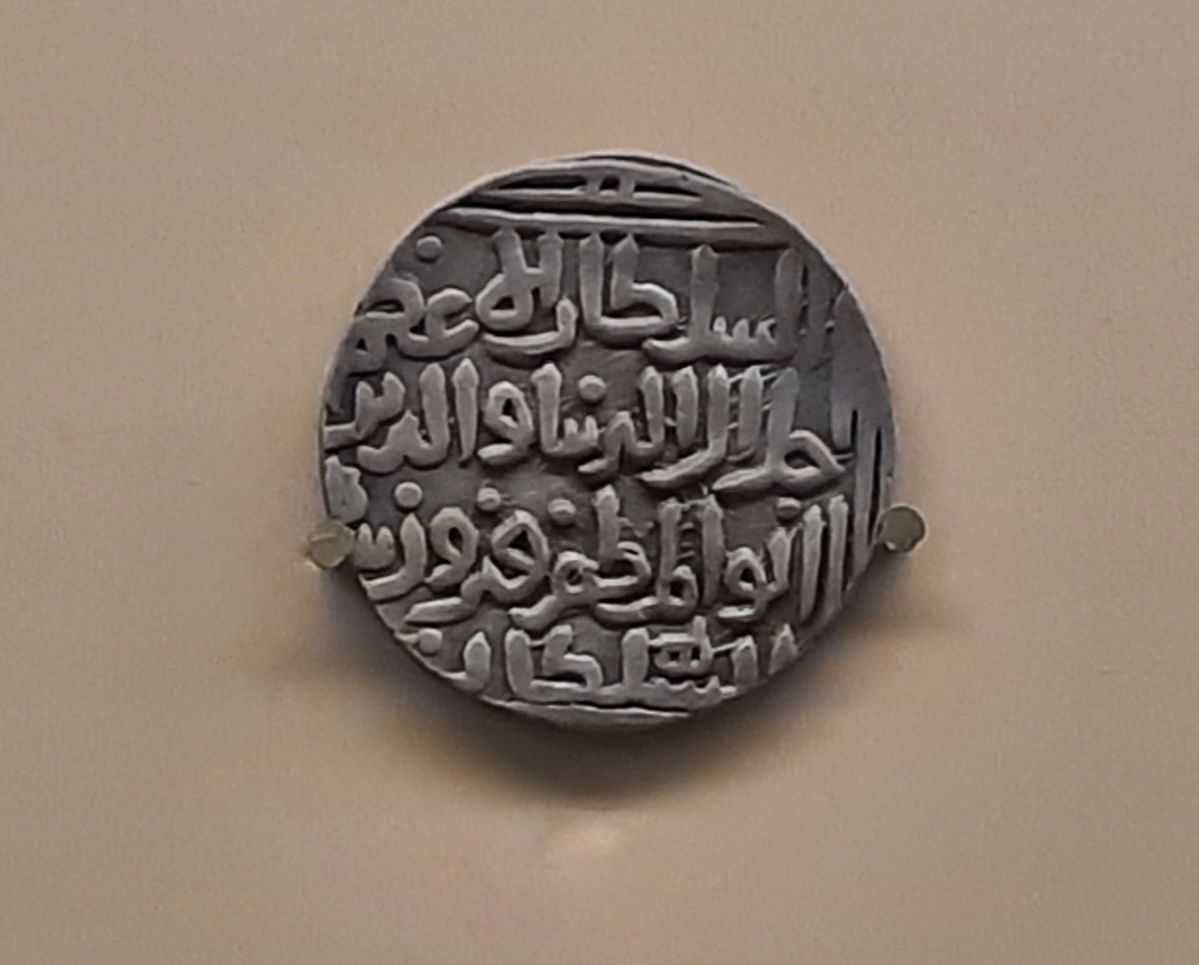
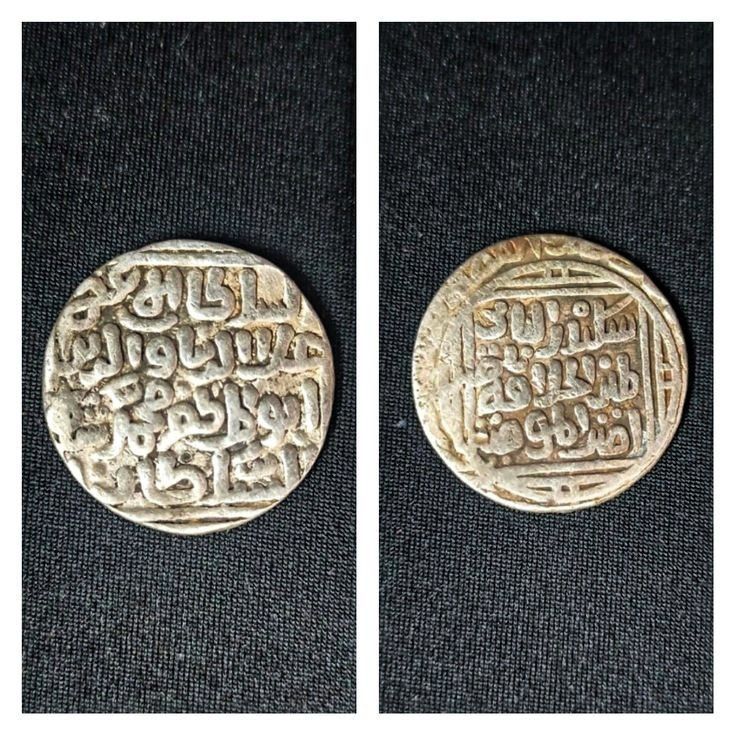
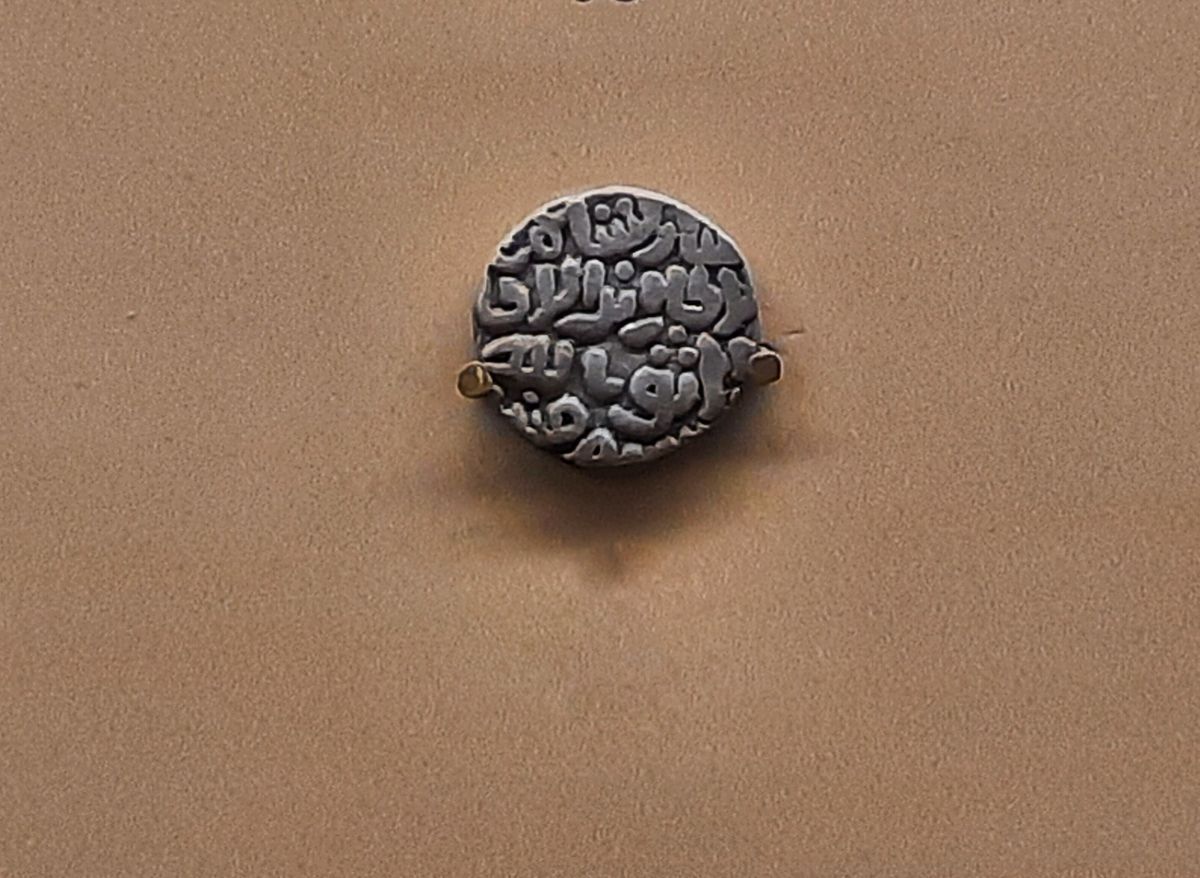
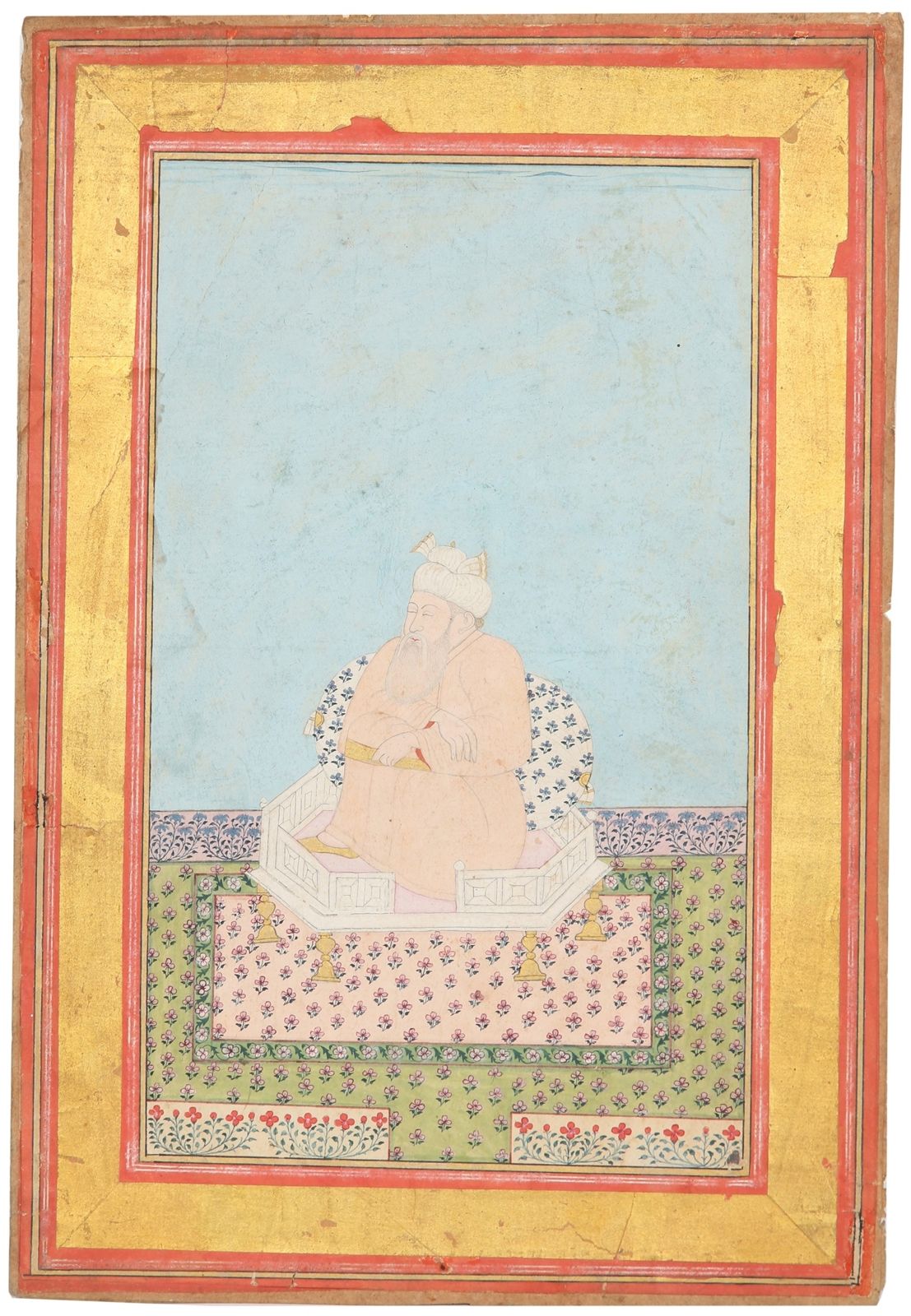
Alauddin Khilji (1296–1316) — the strongest Sultan of Delhi. Alauddin dreamed big: the historian Ziauddin Barani says he thought of founding a new religion and of conquering the world like Alexander. The kotwal (city chief) of Delhi, Ala-ul-Mulk, talked him out of both. He still called himself Sikandar-i-Sani ('the second Alexander') on his coins. He also made clear that state matters would be decided by the Sultan, not by the religious scholars (ulema).
Stopping revolts. Early in his reign several nobles and relatives rebelled. Alauddin decided there were four causes — careless spying, nobles' wealth, drinking parties, and nobles' family alliances — and issued four ordinances:
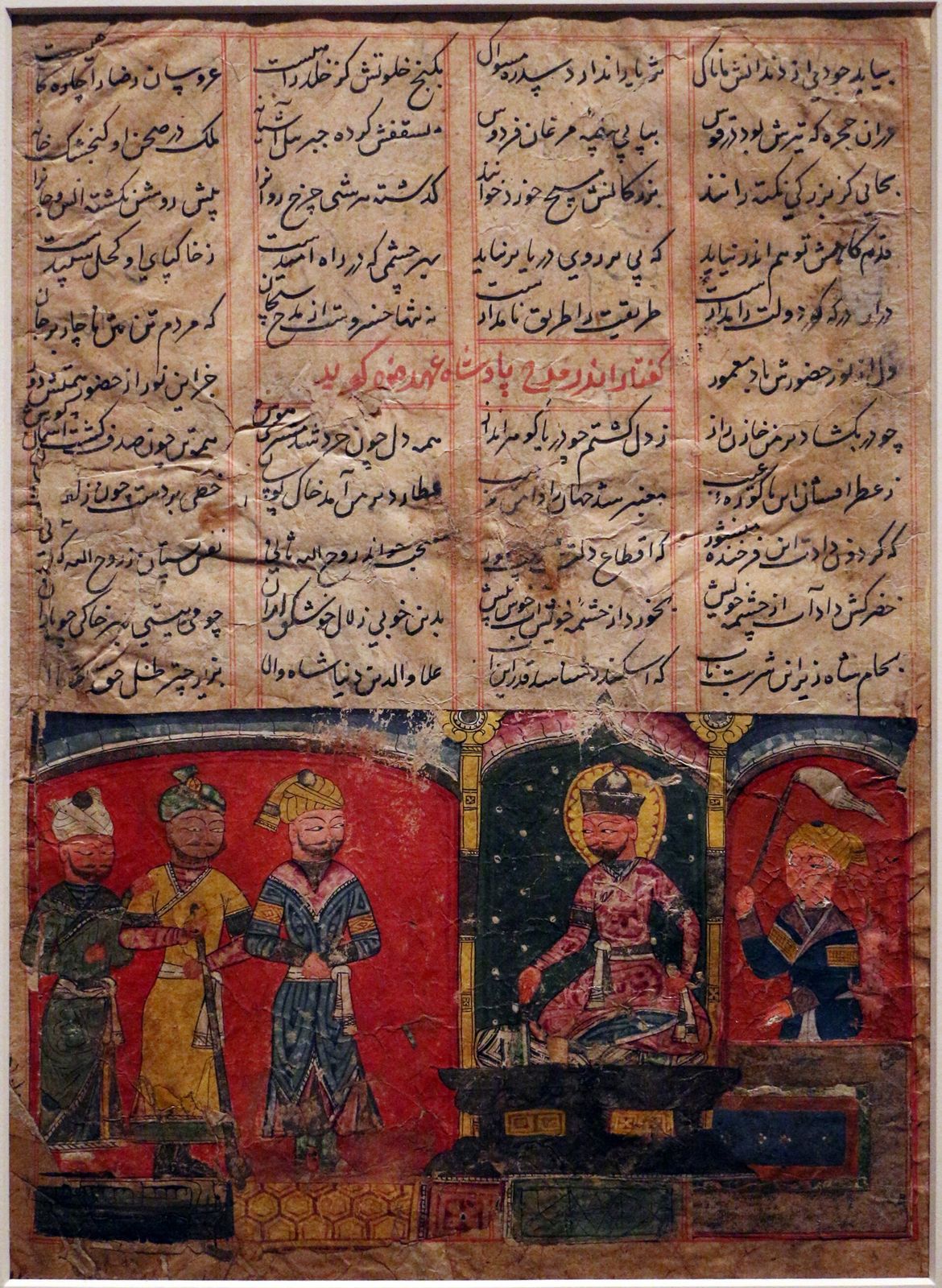
- Confiscate the land grants and endowments that made nobles rich.
- Spread spies everywhere so that nothing happened without the Sultan knowing.
- Ban wine and liquor in Delhi — he set an example by having his own wine poured out.
- Forbid nobles to hold feasts or arrange marriages between their families without his permission.
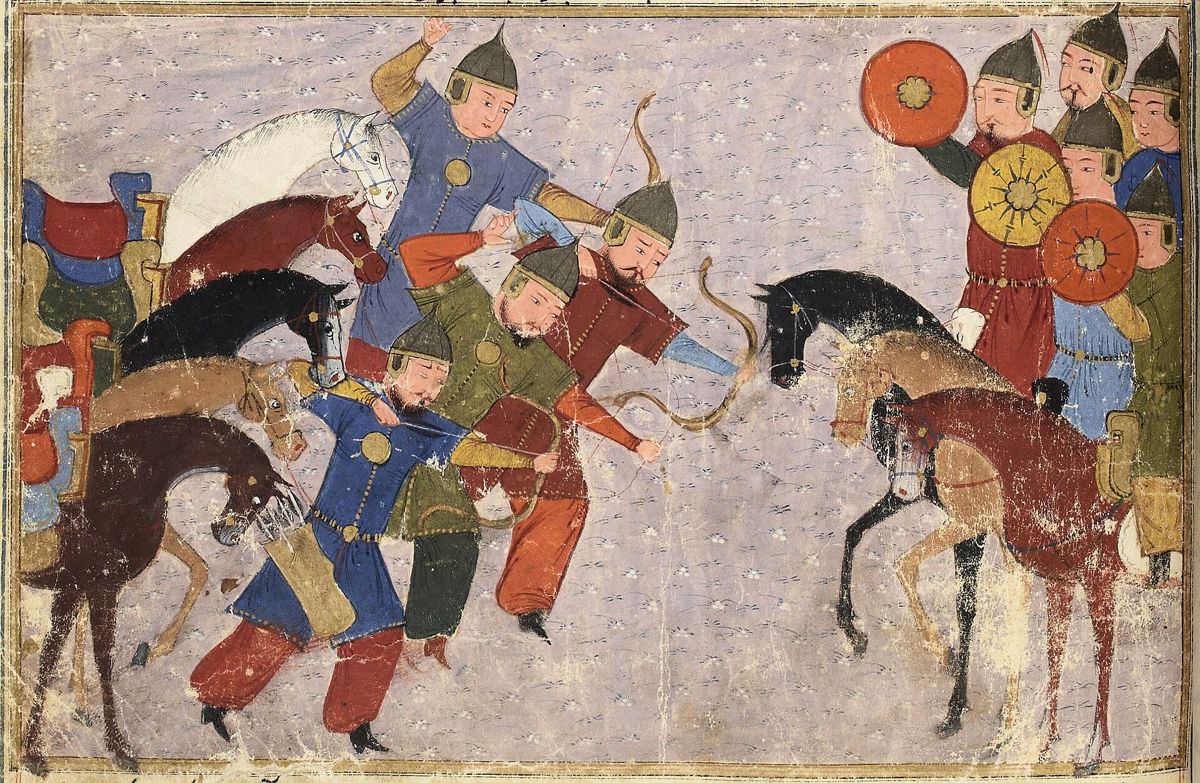
The Mongol storm. The Mongols of Central Asia invaded again and again between 1297 and 1306. In 1299 a huge army under Qutlugh Khwaja reached Kili, near Delhi; it was driven back, but Alauddin's bravest general, Zafar Khan, was killed. In 1303, while the main army was away at Chittor, the Mongol commander Targhi camped outside Delhi for two months; Alauddin dug in at Siri and held out. Later invasions (1305, 1306) were crushed and thousands of prisoners were executed. After this the Mongols stopped threatening Delhi for many years. This danger is the reason behind almost every reform Alauddin made: he needed a very large army, ready all the time.
The army reforms. Alauddin was the first Sultan to keep a large standing army recruited, paid and inspected directly by the state's army office (the Ariz-i-Mumalik), and paid in cash rather than by iqtas. According to the later historian Firishta, a cavalryman with one horse received 234 tankas a year. To stop cheating at inspections he brought in:
- Dagh — branding each horse with the state mark, so a soldier could not show a good horse at the muster and then swap it for a poor one;
- Huliya (also called chehra) — a written descriptive roll of each soldier, so another man could not pose as him.
The market reforms — fixed prices. A cash salary of 234 tankas was only enough if prices stayed low, so Alauddin fixed the prices of almost everything sold in Delhi. Barani describes three kinds of markets:
- Mandi — the grain market;
- Sarai-i-Adl — for cloth, sugar, ghee, oil and dry fruits;
- markets for horses, cattle and slaves.
A market department, the Diwan-i-Riyasat, controlled them, and every market had a superintendent, the Shahna-i-Mandi. Merchants had to register; grain was collected as tax in kind and stored in royal granaries so that it could be released in a shortage; and secret informers (munhiyans) and reporters (barids) watched the traders. A shopkeeper who under-weighed goods was punished savagely — Barani says an equal weight of flesh was cut from his body. Even during droughts, prices in Delhi stayed steady.
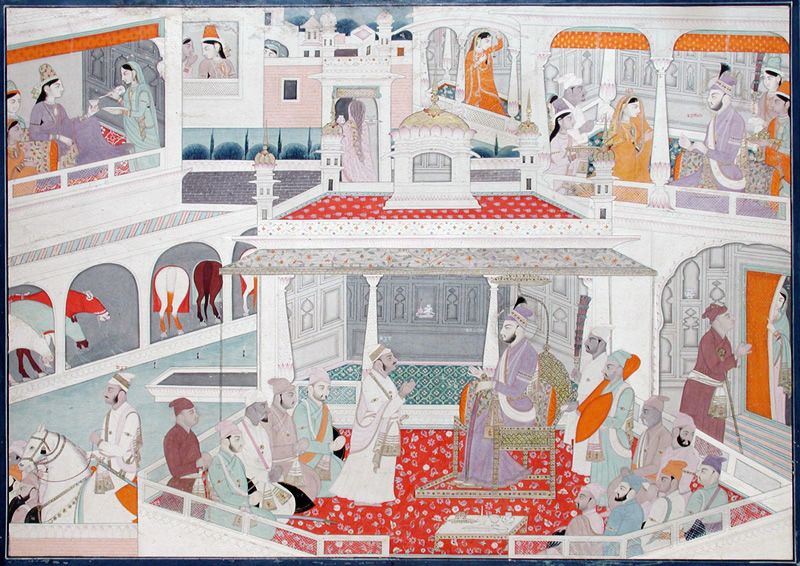
The land-revenue reforms. Alauddin was the first Sultan to measure the cultivated land (masahat, using a unit called the biswa) and fix the tax by the area and the yield. The land tax (kharaj) was raised to half the produce. He added a grazing tax (charai) on milk cattle and a house tax (ghari). Village headmen and middlemen — the khuts, muqaddams and chaudhris — lost their old privileges and had to pay like everyone else. A new department, the Diwan-i-Mustakhraj, recovered unpaid arrears from revenue officials.
Conquests in the north. Alauddin's generals took one great kingdom or fort after another:
- Gujarat (1299) — his generals Ulugh Khan and Nusrat Khan defeated the Vaghela king Karna and sacked the Somnath temple. At Khambhat (Cambay) they bought a slave, Malik Kafur, called 'Hazar-Dinari' because he cost a thousand dinars.
- Ranthambore (1301) — the Chauhan king Hammir Dev had sheltered Mongol rebels. The siege lasted months; Nusrat Khan was killed; the fort fell and its women performed jauhar.
- Chittor (1303) — taken from Rana Ratan Singh of Mewar after a siege; Alauddin renamed it Khizrabad after his son Khizr Khan.
- Malwa (1305) — Ain-ul-Mulk Multani defeated its ruler Mahlak Deva; then Siwana (1308) and Jalore (1311) in Rajasthan.
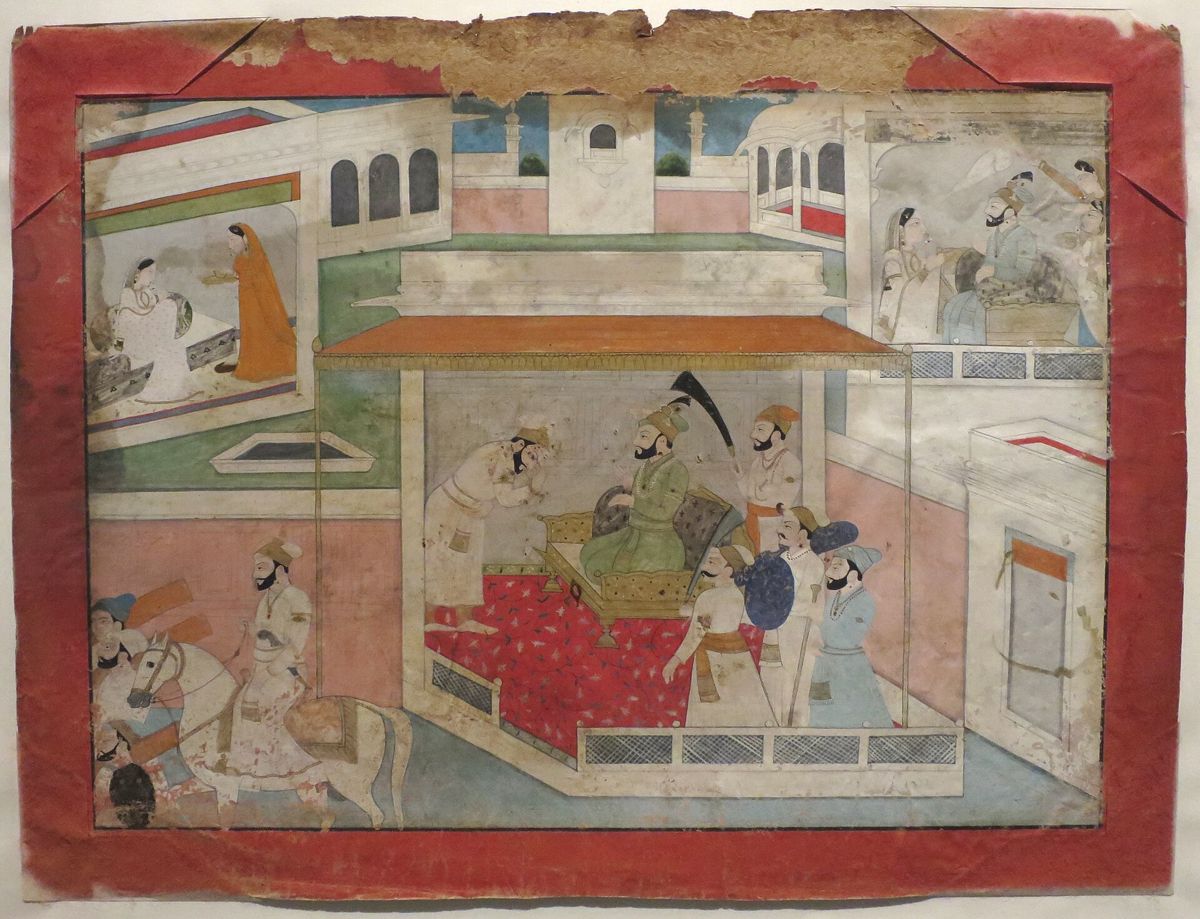
About Padmini. The famous story of Ratan Singh's queen Padmini (Padmavati) comes from Padmavat, a Hindi Sufi poem written by Malik Muhammad Jayasi in 1540 — more than two hundred years later. No writer of Alauddin's own time mentions her, so historians treat the story as legend, not record.
Malik Kafur in the south. Alauddin did not want to annex the distant south — he wanted its gold and tribute. His general Malik Kafur led the first Sultanate armies to the tip of the peninsula:
- Devagiri (1307–08) — the Yadava king Ramachandra had stopped paying tribute. He was defeated, brought to Delhi, treated with honour and given the title Rai-i-Rayan; afterwards he helped Kafur's later campaigns.
- Warangal (1309–10) — the Kakatiya king Prataparudra II surrendered and handed over a vast treasure.
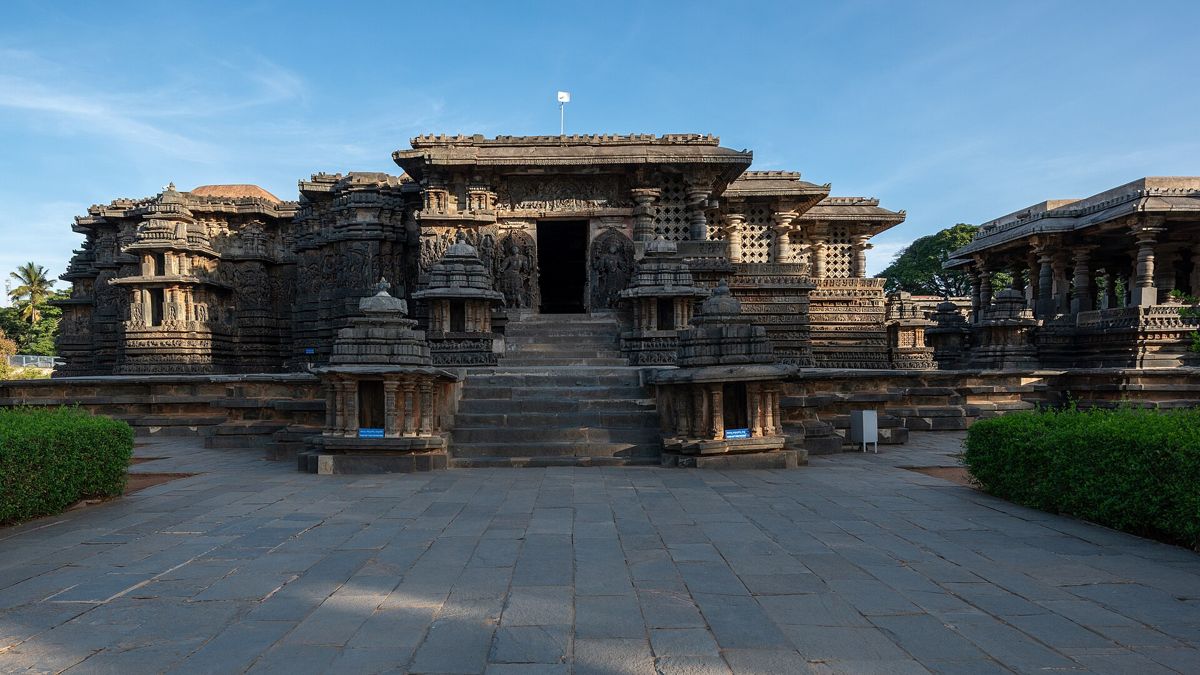
- Dwarasamudra (1311) — the Hoysala king Ballala III submitted.
- Madurai (1311) — Kafur took advantage of a quarrel between two Pandya princes, Sundara Pandya and Vira Pandya, and plundered the Pandya lands.
The southern kings mostly kept their thrones but paid tribute — a key difference from Muhammad bin Tughlaq, who later tried to rule the south directly.
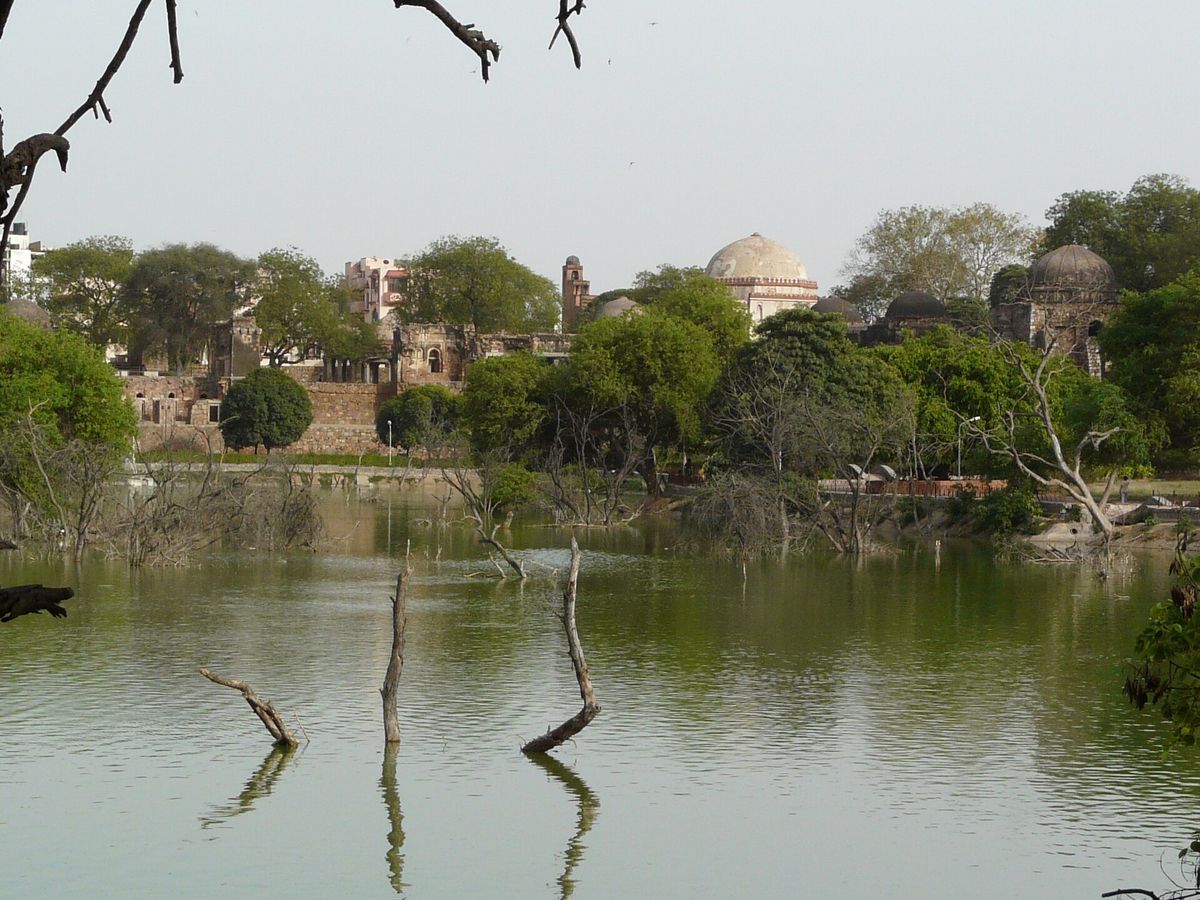
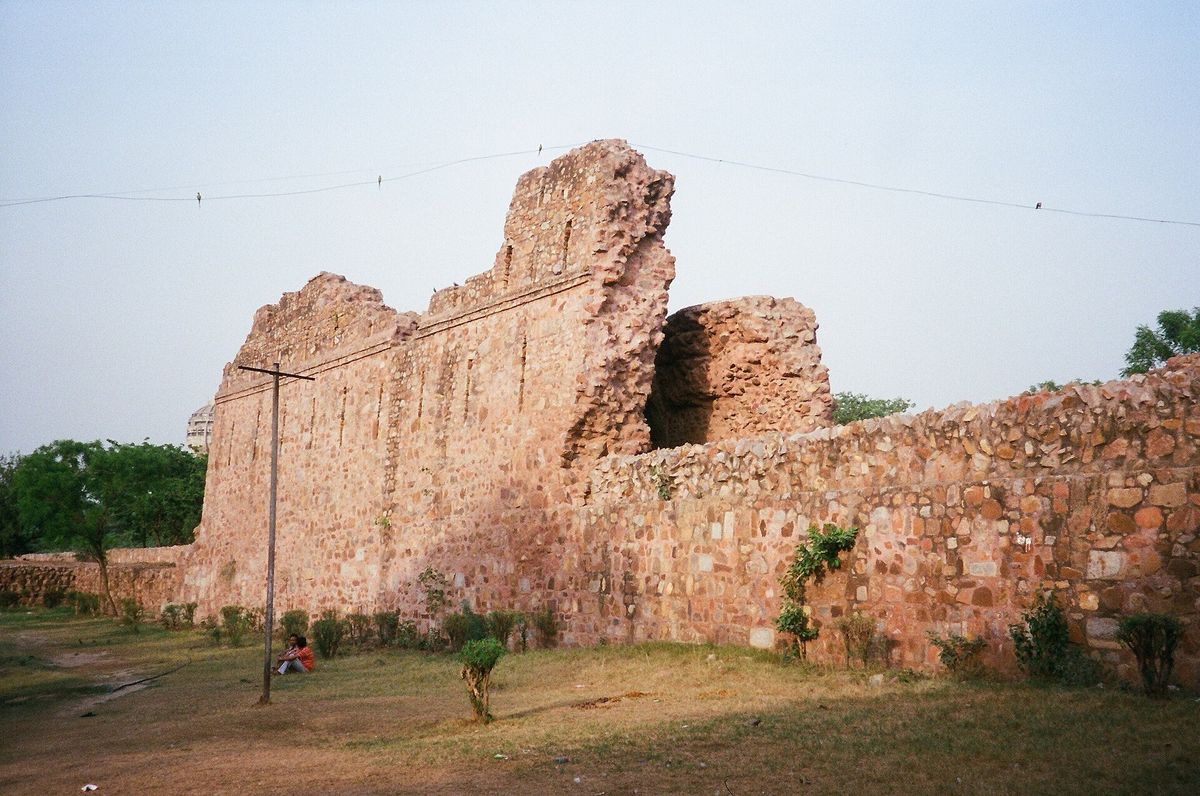
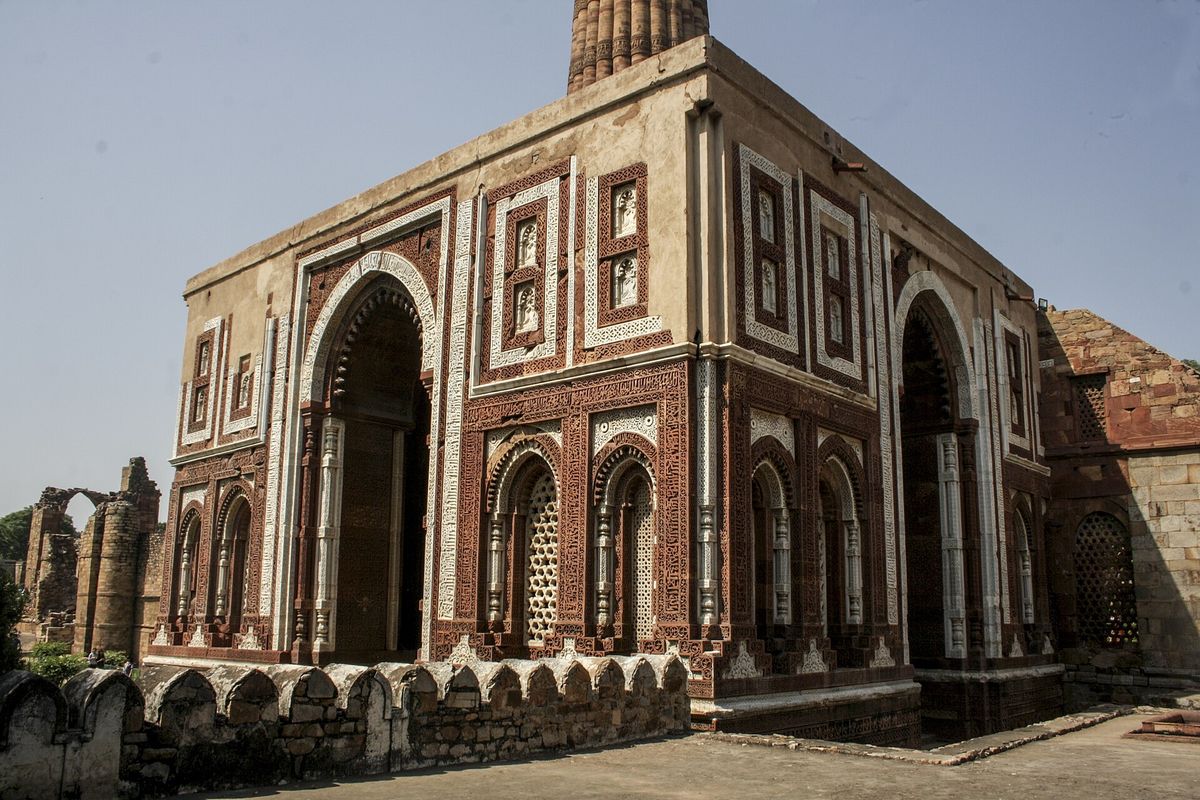
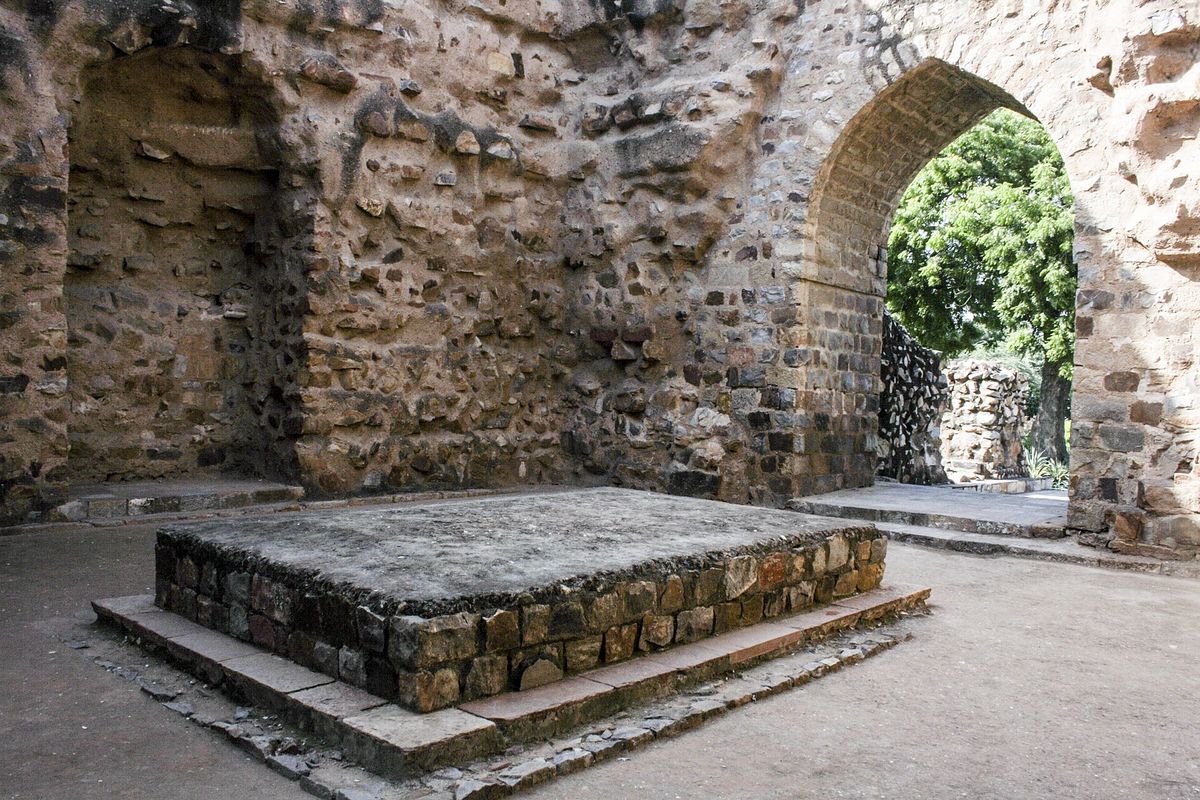
Buildings. Alauddin built Siri (about 1303), the second city of Delhi, as a walled camp against the Mongols, with a palace of a thousand pillars (Hazar Sutun). At the Qutub complex he built the Alai Darwaza (1311) — a red-sandstone and marble gateway with one of the earliest true domes in India and pointed horseshoe arches — and began the Alai Minar, meant to be twice the height of the Qutub Minar; only its stump was ever built. He dug the great tank Hauz-i-Alai (today's Hauz Khas).
Amir Khusrau (1253–1325). Born at Patiali (in today's Uttar Pradesh), Khusrau served several Sultans from Balban to Ghiyas-ud-din Tughlaq, but his best-known years were at Alauddin's court. He wrote in Persian and in Hindavi (an early form of Hindi-Urdu), and was so sweet-tongued that he was called Tuti-i-Hind ('the Parrot of India'). His works include:
- Khazain-ul-Futuh — a prose account of Alauddin's conquests;
- Ashiqa — the love story of prince Khizr Khan and Deval Rani;
- Nuh Sipihr — written for Mubarak Shah, full of praise for India;
- Qiran-us-Sadain — on the meeting of Bughra Khan and his son Kaiqubad;
- Tughlaq Nama — on the rise of the Tughlaqs.
Tradition also credits him with shaping qawwali. Khusrau was a devoted disciple of the Chishti Sufi saint Nizamuddin Auliya, who never attended Alauddin's court. When the saint died in 1325, Khusrau died within months and was buried near him in Delhi.
The fall of the Khiljis (1316–1320). In his last years Alauddin was ill and leaned on Malik Kafur. When he died in January 1316, Kafur placed a child prince, Shihab-ud-din Umar, on the throne and had the elder princes blinded or jailed — but within about five weeks Kafur himself was killed by palace guards.
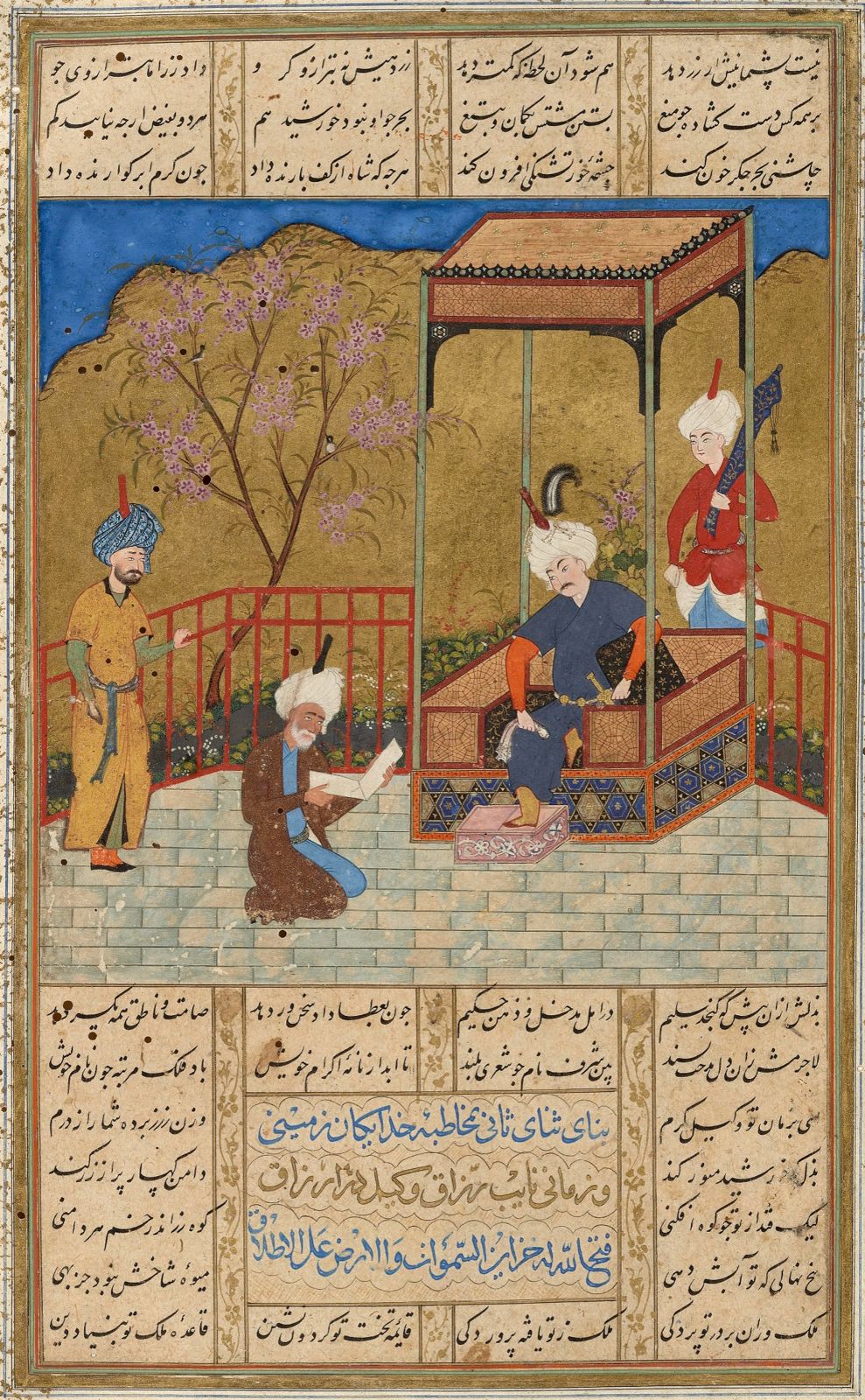
Another son, Qutb-ud-din Mubarak Shah (1316–1320), then became Sultan. He released prisoners, returned confiscated lands and abandoned the price controls. He is the only Delhi Sultan who openly called himself Caliph (Khalifa). In 1320 his favourite, Khusrau Khan, a convert from Gujarat, murdered him and ruled for a few months as Nasir-ud-din Khusrau Shah. The frontier governor of Dipalpur, Ghazi Malik, marched on Delhi, defeated him and took the throne in 1320 as Ghiyas-ud-din Tughlaq — and the Tughlaq dynasty began.
- 1290Jalal-ud-din Firoz Khilji takes the throne — the 'Khilji revolution'
- 1292Mongols defeated; Ulghu's 'New Muslims' settle near Delhi
- 1296Alauddin raids Devagiri; Jalal-ud-din killed at Kara; Alauddin crowned
- 1299Gujarat conquered; Mongols at Kili, Zafar Khan killed
- 1301Ranthambore taken from Hammir Dev
- 1303Chittor taken; Targhi's Mongols besiege Delhi; Siri built
- 1305Malwa conquered
- 1307–08Malik Kafur defeats Ramachandra of Devagiri
- 1309–10Warangal (Kakatiya) submits
- 1311Dwarasamudra (Hoysala) and Madurai (Pandya); Alai Darwaza built
- 1316Alauddin dies; Kafur killed; Mubarak Shah Sultan
- 1320Khusrau Khan's brief rule; Ghazi Malik becomes Ghiyas-ud-din Tughlaq
| Area | What Alauddin did | Key word |
|---|---|---|
| Army | Large standing army paid in cash; 234 tankas a year (Firishta) | Dagh, Huliya / Chehra |
| Markets | Fixed prices; grain stored in royal granaries; harsh punishment for cheating | Diwan-i-Riyasat, Shahna-i-Mandi, Sarai-i-Adl |
| Land revenue | Land measured; tax raised to half the produce; arrears recovered | Masahat, Biswa, Diwan-i-Mustakhraj |
| Other taxes | Grazing tax and house tax | Charai, Ghari |
| Nobles | Four ordinances: confiscation, spies, liquor ban, no feasts or marriages without leave | Barid, Munhiyan |
| Title | 'The second Alexander' on his coins | Sikandar-i-Sani |
| Campaign | Year | Kingdom / ruler | General |
|---|---|---|---|
| Gujarat | 1299 | Vaghela — Karna | Ulugh Khan, Nusrat Khan |
| Ranthambore | 1301 | Chauhan — Hammir Dev | Alauddin himself (Nusrat Khan killed) |
| Chittor | 1303 | Mewar — Ratan Singh | Alauddin himself |
| Malwa | 1305 | Paramara — Mahlak Deva | Ain-ul-Mulk Multani |
| Devagiri | 1307–08 | Yadava — Ramachandra | Malik Kafur |
| Warangal | 1309–10 | Kakatiya — Prataparudra II | Malik Kafur |
| Dwarasamudra | 1311 | Hoysala — Ballala III | Malik Kafur |
| Madurai | 1311 | Pandya — Sundara and Vira Pandya | Malik Kafur |
| Don't mix up | Remember |
|---|---|
| Siri vs Tughlaqabad | Siri = Alauddin Khilji (2nd city); Tughlaqabad = Ghiyas-ud-din Tughlaq (3rd city) |
| Market control | Alauddin Khilji — not Muhammad bin Tughlaq (he tried token coins) |
| Diwan-i-Riyasat vs Diwan-i-Arz | Riyasat (markets) = Alauddin; Arz (army department) = Balban |
| Who ended price control | Mubarak Shah (1316–1320), Alauddin's son |
| Padmavat | a poem by Malik Muhammad Jayasi, 1540 — not a record from Alauddin's time |
| Malik Kafur | Alauddin's general, 'Hazar-Dinari' — led the southern campaigns; never a crowned Sultan |
| First Delhi raid into the Deccan | Devagiri, 1296, by Alauddin as governor of Kara |
| Amir Khusrau | poet, Tuti-i-Hind, disciple of Nizamuddin Auliya — not a traveller |
| Alai Darwaza vs Buland Darwaza | Alai = Alauddin, Delhi, 1311; Buland = Akbar, Fatehpur Sikri |
| Sultan who called himself Caliph | Qutb-ud-din Mubarak Shah Khilji |