Modern Indian history is the story of how a trading company became the ruler of India, and how Indians won their freedom back. It runs from 1498, when Vasco da Gama reached Calicut, through the battles of Plassey (1757) and Buxar (1764), the Revolt of 1857 and Crown rule, to the national movement that began with the Congress in 1885, the Gandhian era, and independence on 15 August 1947. A lot of it happened in our own Punjab: the Anglo-Sikh Wars and the annexation of 1849, the Kuka movement, the Ghadar Party, Jallianwala Bagh and Bhagat Singh. Below, the topics are grouped into six phases in time order — each has its own page that first explains in simple words, then gives real exam questions.
Phase 1: Europeans arrive and the Company takes over
1498–1849 — 10 topic pages.
- Advent of the Europeans — Portuguese, Dutch, English, Danes and French, and the Carnatic Wars
- The English East India Company — the 1600 charter, the factories, and how traders became rulers
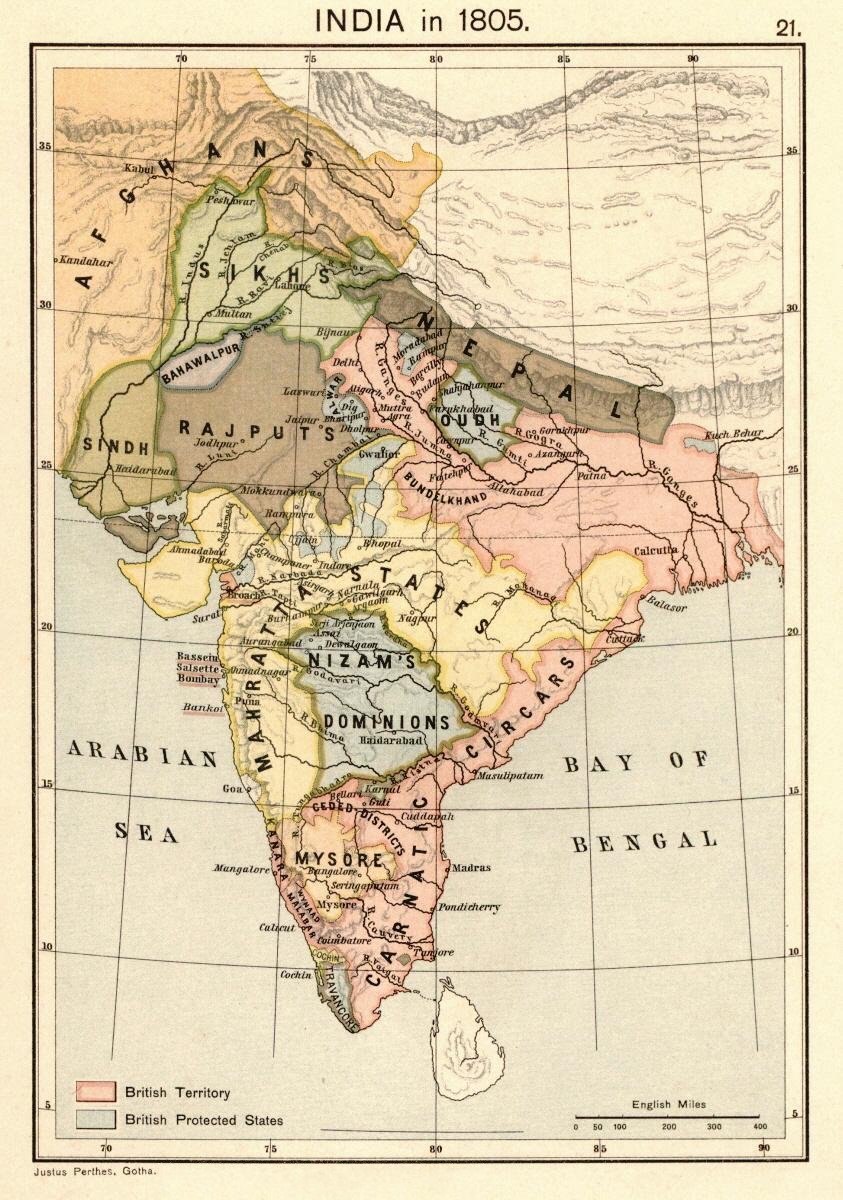
- British Expansion in India — how the Company came to rule India in about a hundred years
- Battle of Plassey — 1757 — Clive, Siraj-ud-Daulah and Mir Jafar
- Battle of Buxar — 1764 — Mir Qasim, the Diwani of 1765 and Dual Government
- Subsidiary Alliance — Lord Wellesley's system and the states that signed
- Doctrine of Lapse — Dalhousie, the states taken, and the road to 1857
- Anglo-Mysore Wars — four wars, 1767–1799 — Haider Ali and Tipu Sultan
- Anglo-Maratha Wars — three wars, 1775–1818, and the end of the Peshwas
- Anglo-Sikh Wars — two wars, the treaties of 1846 and the annexation of Punjab in 1849
Phase 2: How the British ruled and drained India
1765–1935 — 7 topic pages.
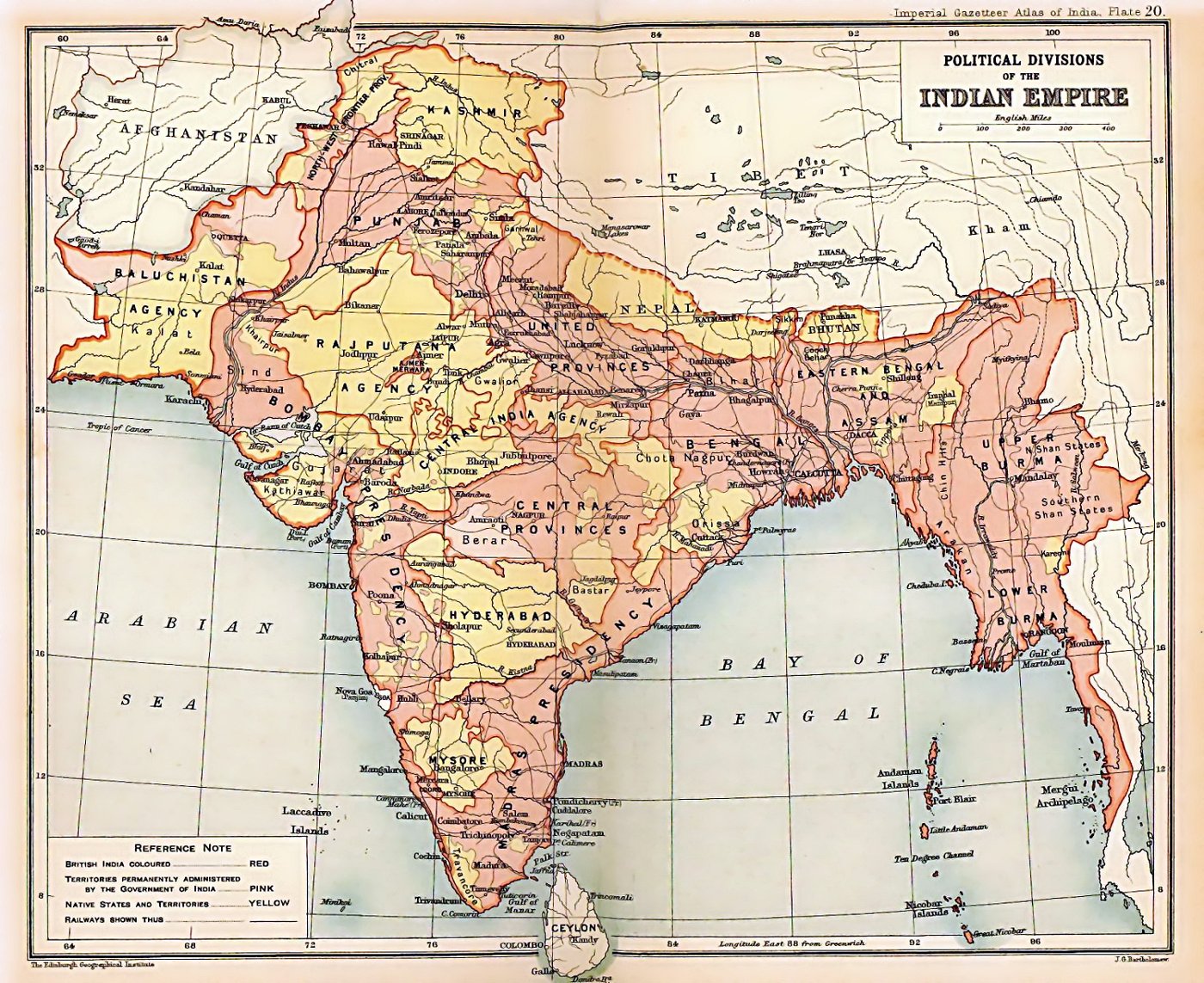
- British Economic Policies — plunder, the fall of Indian cloth, cash crops, famines and railways
- Land Revenue Systems — Permanent Settlement, Ryotwari and Mahalwari
- Drain of Wealth — Dadabhai Naoroji, Home Charges and R. C. Dutt
- Governors-General and Viceroys — from Warren Hastings to Rajagopalachari, one event each
- Constitutional Development — every big Act from 1773 to 1947
- Regulating and Charter Acts — 1773, Pitt's India Act and the Charter Acts to 1853
- Government of India Acts — 1858, 1909, 1919 and 1935
Phase 3: Resistance and reform in the 1800s
1800s — 4 topic pages.
- Peasant and Tribal Movements — Santhal, Munda, Kuka and Pagri Sambhal Jatta
- The Revolt of 1857 — Meerut, the leaders and centres, and the end of Company rule
- Socio-Religious Reform Movements — Brahmo Samaj, Arya Samaj and Punjab's reform bodies
- Newspapers and Journals — from Hicky to Young India, and The Tribune to Ghadar
Phase 4: The national movement begins
1885–1918 — 5 topic pages.
- Indian National Movement — the whole freedom struggle in five phases, 1885–1947
- Formation of the Indian National Congress — Bombay, December 1885, and A. O. Hume
- Moderates and Extremists — their leaders and methods, and the Surat split
- Partition of Bengal and Swadeshi — 1905, boycott, and the reversal of 1911
- Revolutionary Movements — Ghadar, Komagata Maru, the HSRA and Bhagat Singh
Phase 5: The Gandhian era
1917–1934 — 7 topic pages.
- Gandhian Era — satyagraha and every mass movement in order
- Champaran, Ahmedabad and Kheda — Gandhi's first three fights in India, 1917–18
- Rowlatt Act and Jallianwala Bagh — the black law and the Amritsar massacre of 1919
- Khilafat and Non-Cooperation — the first mass movement, 1920–22, and Chauri Chaura
- Simon Commission and Nehru Report — Simon Go Back, Lala Lajpat Rai and the 1928 report
- Civil Disobedience and the Dandi March — Purna Swaraj, salt and the Gandhi-Irwin Pact
- Round Table Conferences and Poona Pact — three rounds in London, 1930–32, and the Poona Pact
Phase 6: The road to freedom
1942–1950 — 4 topic pages.
- Quit India Movement — 1942 — Do or Die
- INA and Subhas Chandra Bose — Azad Hind Fauj, the Red Fort trials and the naval mutiny
- Cabinet Mission, Independence and Partition — the Mountbatten Plan and the Radcliffe Line through Punjab
- Integration of Princely States — Patel, the three hard cases and PEPSU
Modern India at a glance
From 1498 to 1947 in fifteen dates.
- 1498Vasco da Gama reaches Calicut
the sea route from Europe to India
- 1600English East India Company formed
royal charter of 31 December 1600
- 1757Battle of Plassey
Clive defeats Siraj-ud-Daulah
- 1764–65Battle of Buxar and the Diwani
Treaty of Allahabad, 1765
- 1773Regulating Act
Parliament begins to control the Company
- 1849Punjab annexed
after the second Anglo-Sikh War
- 1857The Revolt begins at Meerut
10 May 1857
- 1858Crown rule begins
Government of India Act 1858 ends Company rule
- 1885Indian National Congress founded
first session in Bombay, 28 December 1885
- 1905Partition of Bengal
Swadeshi and boycott begin
- 1919Jallianwala Bagh massacre
Amritsar, 13 April 1919
- 1920–22Non-Cooperation Movement
the first mass movement
- 1930Dandi March
Civil Disobedience begins; Gandhi leaves Sabarmati on 12 March
- 1942Quit India
'Do or Die', 8 August 1942
- 1947Independence and Partition
15 August 1947