Governors-General and Viceroys of India: Full List with Key Events
Every important Governor-General and Viceroy from Warren Hastings to Rajagopalachari, the one event to remember for each, and the firsts and lasts exams love.
Punjab PolicePSSSBPPSCSSCBankState PSCPatwari17 MIN READਪੰਜਾਬੀ ਵਿੱਚ ਪੜ੍ਹੋ
Take the test — coming soon
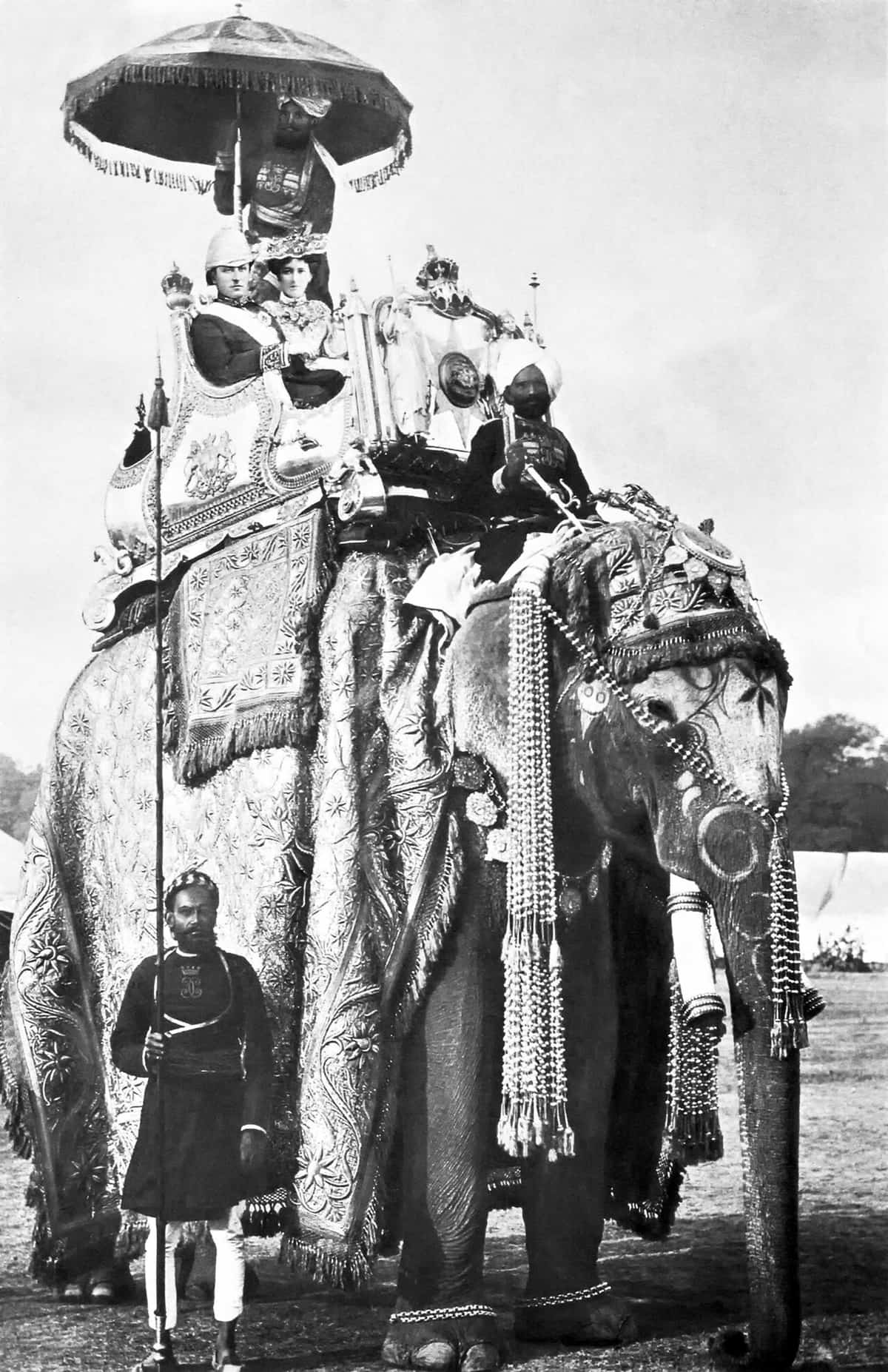
Lord Curzon and his wife ride into Delhi on an elephant, 29 December 1902, for the Delhi Durbar of 1903. A Viceroy ruled India in the name of the British king or queen.
For about 175 years one officer sat at the top of the government of India. He was first called Governor-General of Bengal, then Governor-General of India, and after 1858 also Viceroy. Exams ask who held the office first and last, and what happened under each one. This page gives you both, in order.
1773
Regulating Act
Warren Hastings, first GG of Bengal
1833
Charter Act
Bentinck, first GG of India
1858
Crown rule
Canning, first Viceroy
1950
Office ends
Rajagopalachari, the last
One office, three names
Learn when the name changed, and half the questions are done.
HOW THE TITLE CHANGED
Governor-General of Bengal
Regulating Act, 1773
Warren Hastings becomes the first. The Company really ruled only Bengal then.
↓
Governor-General of India
Charter Act, 1833
The title covers all British India. Lord William Bentinck is the first.
↓
Viceroy
Government of India Act, 1858
The Crown takes over from the Company. The Governor-General also becomes Viceroy. Lord Canning is the first.
↓
Independence
15 August 1947
Lord Mountbatten, the last Viceroy, stays on as Governor-General of free India.
↓
Office ends
26 January 1950
India becomes a republic. C. Rajagopalachari, the only Indian to hold the post, is the last Governor-General.
KEY TERM
Viceroy
Vice means "in place of" and roy comes from the French word for king. A Viceroy rules in place of the king or queen. The title made sense only after 1858, when the British Crown, not the Company, ruled India. In law the office was still Governor-General; Viceroy was the title used as the Crown's representative.
Warren Hastings: first Governor-General of Bengal (1773). William Bentinck: first Governor-General of India (1833). Lord Canning: last Company Governor-General and first Viceroy (1858). Lord Mountbatten: last Viceroy and first Governor-General of free India. C. Rajagopalachari: first and only Indian Governor-General, and the last (1948–50).
QUICK CHECK
PYQ · PPSC AA 2022 By which of the following Acts was the Governor General of Bengal designated as the Governor General of India?
Tap an option to answer
Answer: D — The Charter Act of 1833
The Charter Act of 1833 gave the Governor-General power over all British India. The Regulating Act of 1773 had only created the Governor-General of Bengal.
QUICK CHECK
PYQ · PSSSB Senior Assistant 2025 Who was the first Governor General of India after the passing of the Charter Act of 1833?
Tap an option to answer
Answer: C — Lord William Bentinck
Bentinck was already in office (from 1828) and became the first Governor-General of India under the 1833 Act. Warren Hastings was the first Governor-General of Bengal.
QUICK CHECK
PYQ · PPSC DSSO 2018 Consider the following statements: I. Robert Clive was the first Governor-General of Bengal. II. William Bentinck became the first Governor-General of India in 1833. Which of the statement(s) given above is/are correct?
Tap an option to answer
Answer: B — II only
Clive was only Governor of Bengal. The first Governor-General of Bengal was Warren Hastings. The same question came in other PPSC papers of 2018 (MBP, SCIAT, SECO, SUPH).
The Company era, 1774–1858
Governors-General who built and grew British India.
GOVERNORS-GENERAL IN ORDER (MAIN NAMES)
1
Warren Hastings
1774–1785 · First GG of Bengal; Regulating Act 1773
│
2
Lord Cornwallis
1786–1793 · Permanent Settlement (1793); civil service reforms
│
3
Lord Wellesley
1798–1805 · Subsidiary Alliance; Tipu Sultan killed 1799
│
4
Lord Minto I
1807–1813 · Treaty of Amritsar with Ranjit Singh, 1809
│
5
Lord Hastings
1813–1823 · Third Anglo-Maratha War; Nepal war
│
6
Lord Amherst
1823–1828 · First Anglo-Burmese War
│
7
Lord William Bentinck
1828–1835 · Sati banned 1829; first GG of India 1833
│
8
Lord Auckland
1836–1842 · Tripartite Treaty 1838; First Afghan War
│
9
Lord Ellenborough
1842–1844 · Sindh annexed, 1843
│
10
Lord Hardinge I
1844–1848 · First Anglo-Sikh War
│
11
Lord Dalhousie
1848–1856 · Punjab annexed 1849; Doctrine of Lapse; first railway 1853
│
12
Lord Canning
1856–1862 · Revolt of 1857; first Viceroy 1858
Short-term and acting holders (such as John Shore and George Barlow) are left out. Learn one event for each name.
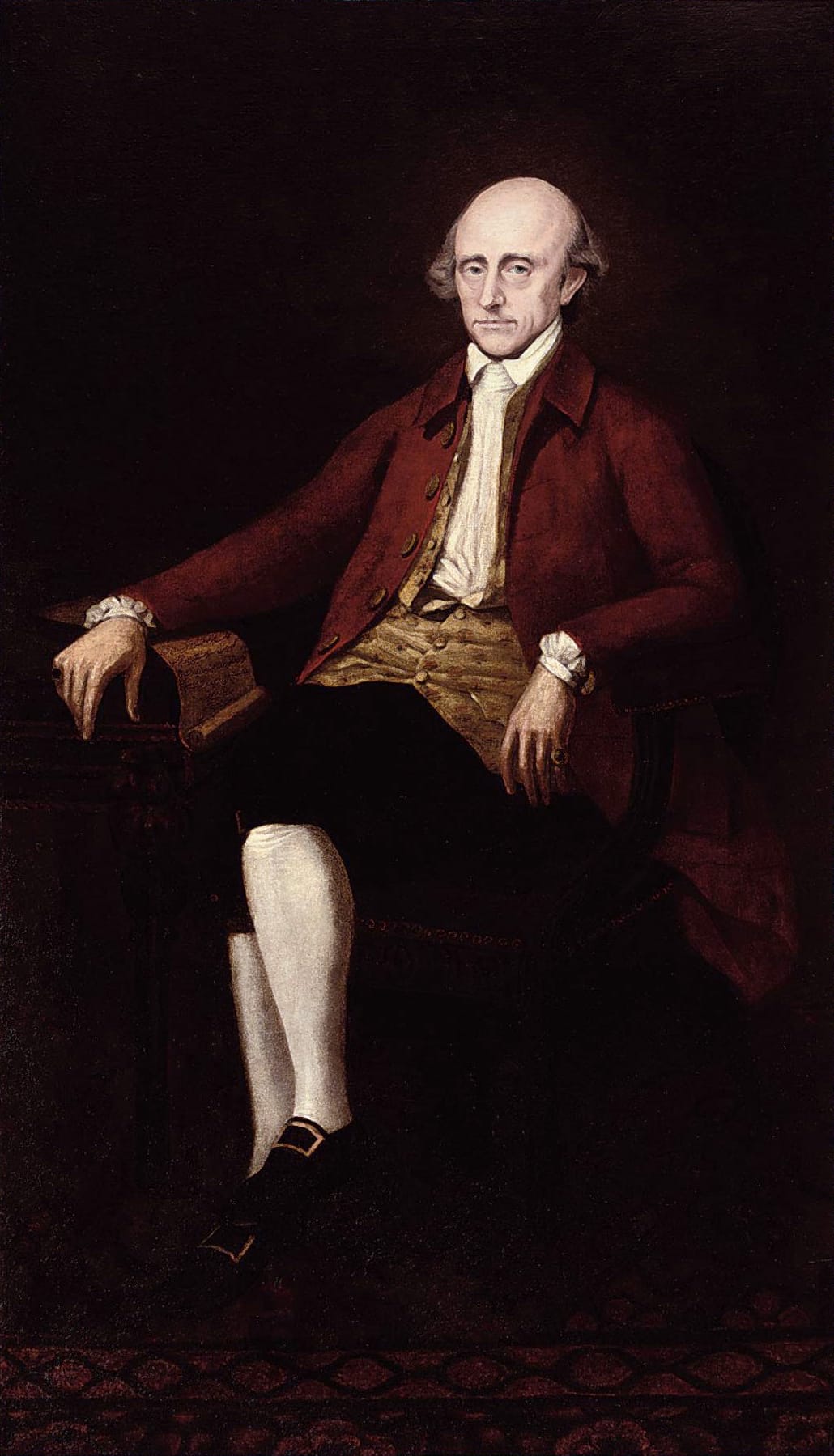
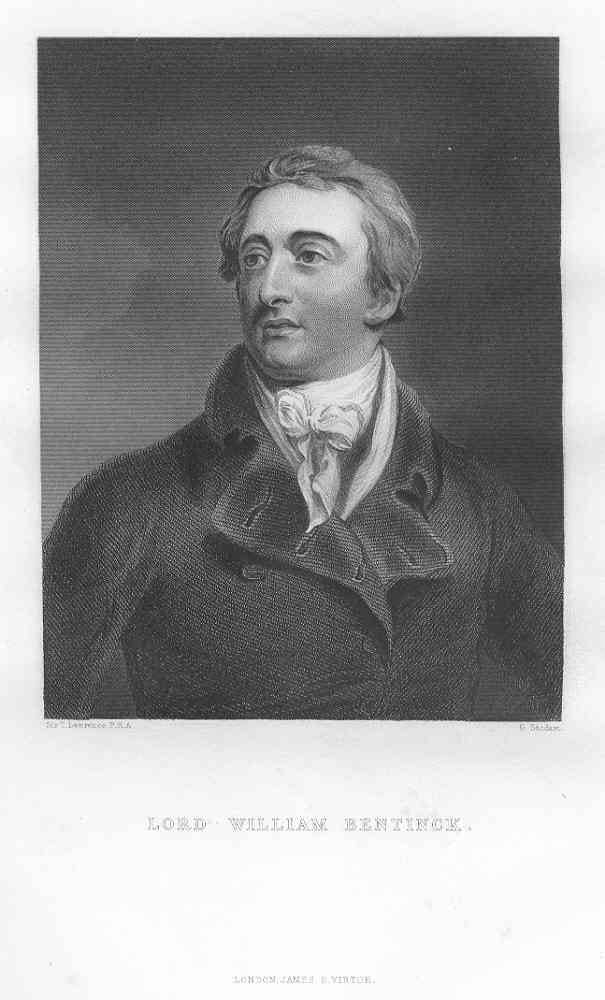
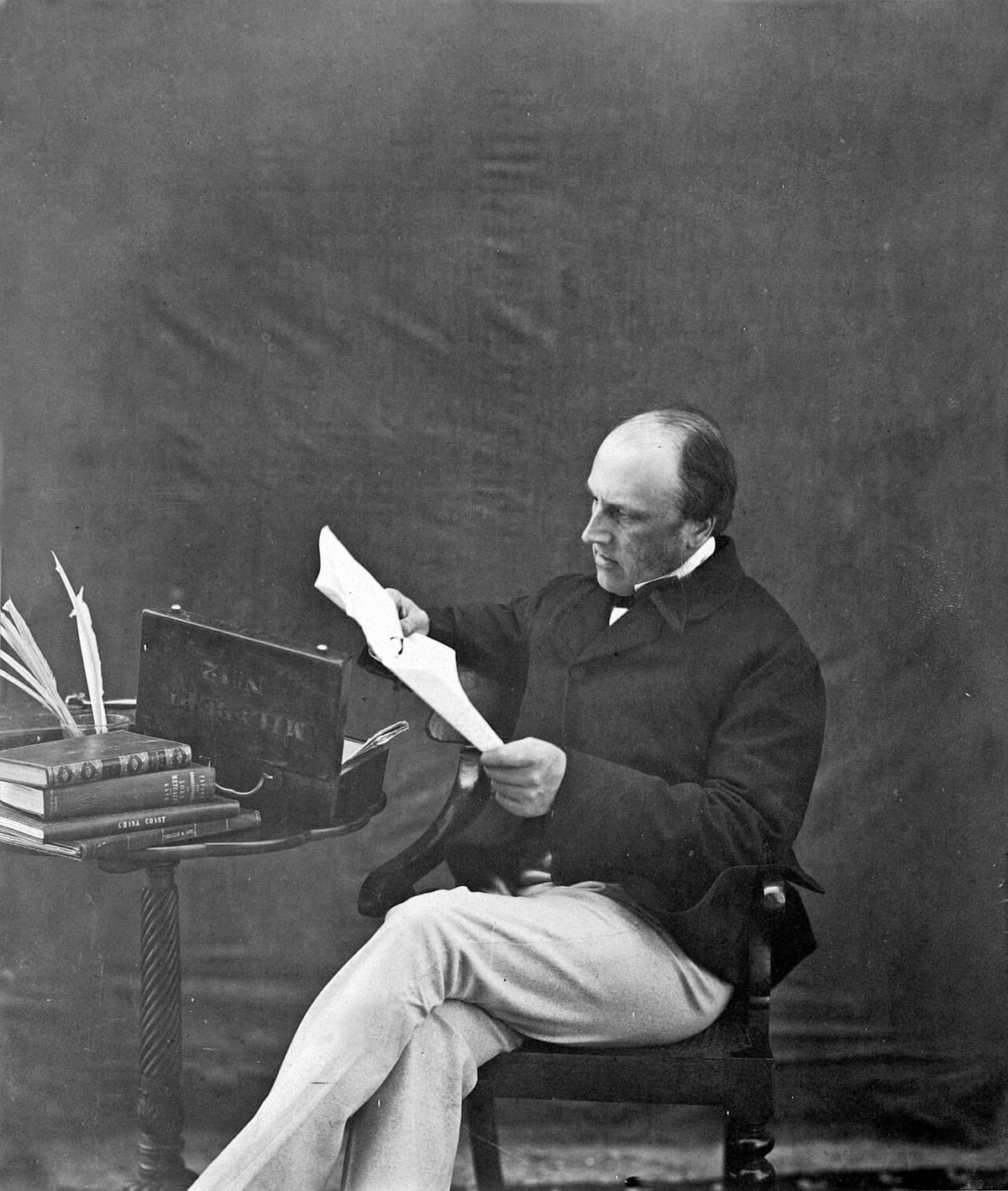
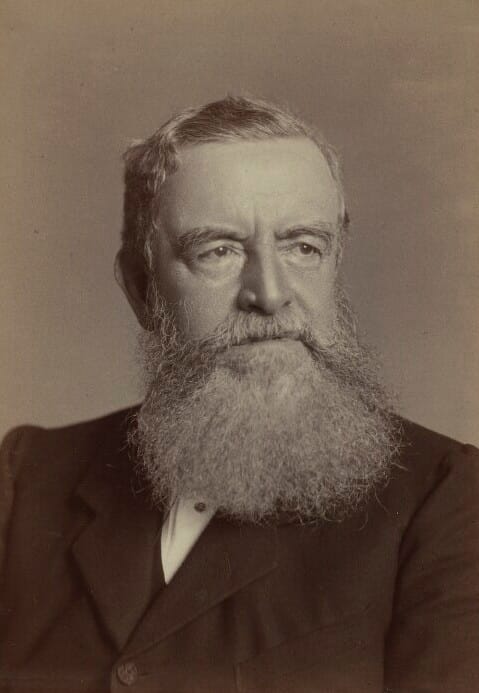
Two Governors-General to know by face
Warren Hastings
1732–1818 · First Governor-General of Bengal
Took office under the Regulating Act, 1773
Later impeached in Britain; found not guilty in 1795
Lord William Bentinck
1774–1839 · First Governor-General of India
Banned Sati in 1829, backed by Raja Ram Mohan Roy
Acted against thuggee; made English the language of higher education (1835)
GOVERNORS-GENERAL AND PUNJAB
Minto I: Treaty of Amritsar (1809) with Ranjit Singh; the Sutlej became the border. Bentinck: met Ranjit Singh at Ropar in 1831. Auckland: Tripartite Treaty (1838) with Ranjit Singh and Shah Shuja. Hardinge I: First Anglo-Sikh War (1845–46). Dalhousie: annexed Punjab on 29 March 1849.
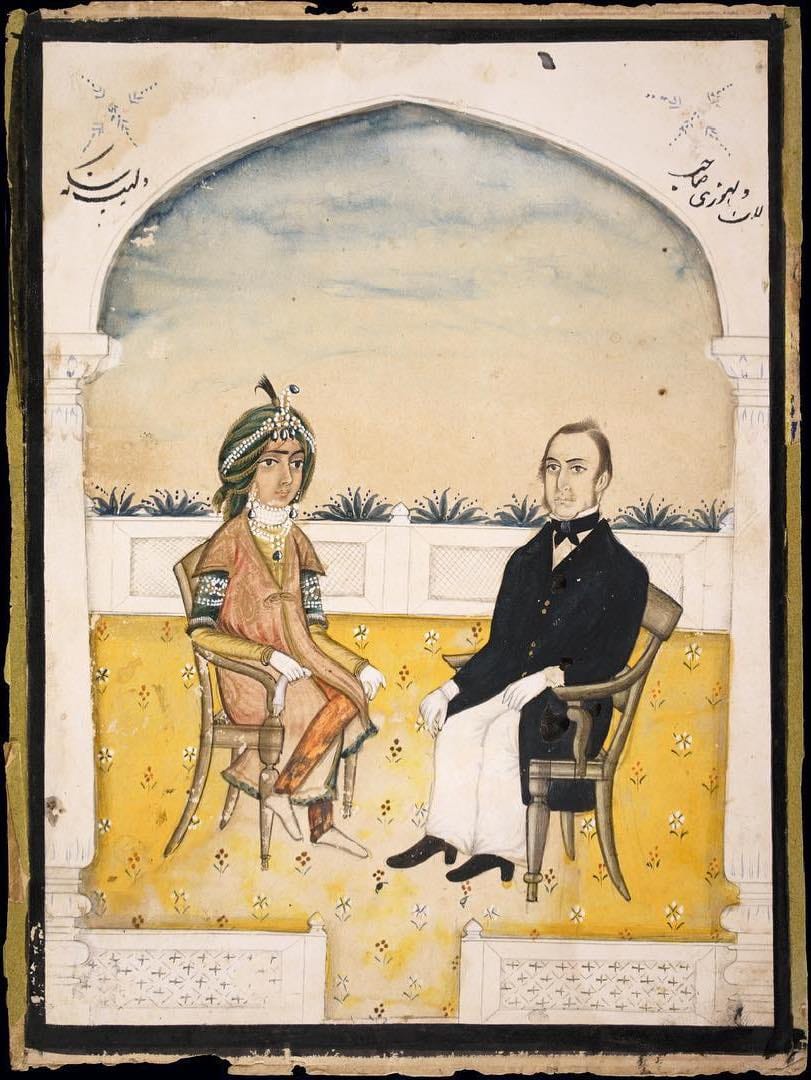
Lord Dalhousie with Maharaja Duleep Singh, Lahore, about 1849–50. Dalhousie annexed Punjab in 1849. He is also linked with the Doctrine of Lapse, the first railway (1853), the telegraph and the Post Office Act (1854).
QUICK CHECK
PYQ · PPSC Assistant Environmental Engineer 2024 Match List I (Governors-General) with List II (associated event): A. Warren Hastings, B. Lord Wellesley, C. Lord Minto, D. Lord William Bentinck; I. Prohibition of Sati, II. Treaty of Amritsar with Ranjit Singh, III. Subsidiary Alliance, IV. Regulating Act of 1773.
Tap an option to answer
Answer: C — A-IV, B-III, C-II, D-I
Hastings came in under the Regulating Act of 1773, Wellesley began the Subsidiary Alliance, Minto I made the Treaty of Amritsar (1809) and Bentinck banned Sati (1829).
QUICK CHECK
PYQ · PPSC ICS 2016 Who introduced the Permanent Settlement of 1793 ?
Tap an option to answer
Answer: B — Cornwallis
Lord Cornwallis fixed the land revenue of Bengal for ever with the zamindars in 1793. John Shore helped plan it and came after him. The same question came in PPSC OHE 2016.
QUICK CHECK
PYQ · PPSC JEE 2022 Which of the following were the signatories to the Tripartite Treaty of 1838? I. Zaman Shah II. Ranjit Singh III. William Bentinck IV. Shah Shuja V. Lord Auckland
Tap an option to answer
Answer: A — II, IV, and V
Ranjit Singh, the Afghan ex-king Shah Shuja and Governor-General Auckland signed it to put Shah Shuja back on the Kabul throne. It led to the First Anglo-Afghan War (1839–42).
Viceroys, 1858–1899
From the Revolt to the end of the century.
Viceroy
Years
Remember for
Lord Canning
1856–62
Revolt of 1857; first Viceroy; Indian Councils Act 1861
Lord Elgin I
1862–63
Died in office at Dharamsala
Sir John Lawrence
1864–69
Had ruled Punjab after 1849; Bhutan war
Lord Mayo
1869–72
Only Viceroy killed in office, Andamans, 1872
Lord Lytton
1876–80
Delhi Durbar 1877; Vernacular Press Act 1878; Second Afghan War
Lord Ripon
1880–84
Local self-government 1882; first Factory Act 1881; Ilbert Bill
Lord Dufferin
1884–88
Indian National Congress founded, 1885
Lord Lansdowne
1888–94
Indian Councils Act 1892; Durand Line 1893
Lord Elgin II
1894–99
Plague and famine years
Two Viceroys with nicknames
Lord Canning
1812–1862 · Last Company GG, first Viceroy
Called "Clemency Canning" for asking for mercy after 1857
Read Queen Victoria's Proclamation at Allahabad, 1858
Lord Ripon
1827–1909 · Viceroy, 1880–1884
Called the father of local self-government in India
Repealed Lytton's Vernacular Press Act (1882)
QUICK CHECK
PYQ · Punjab Police SI 2023 Which of the following British Viceroys of India launched the second Anglo–Afghan war in November 1878?
Tap an option to answer
Answer: D — Lord Lytton
Lytton (1876–80) sent troops into Afghanistan in November 1878 when Amir Sher Ali would not accept a British mission. His successor Ripon ended the war.
QUICK CHECK
PYQ · Punjab Police SI 2021 The Vernacular Press Act, for tighter control over publication, was passed in which of the following years?
Tap an option to answer
Answer: D — 1878
Lord Lytton passed it in 1878 to control Indian-language newspapers. Indians called it the "Gagging Act". Ripon repealed it in 1882.
QUICK CHECK
PYQ · PPSC LO 2015 The first Indian Factory Act was passed by:
Tap an option to answer
Answer: C — Lord Ripon
The Factory Act of 1881, under Ripon, banned factory work for children under 7. A second Act came in 1891 under Lansdowne.
Viceroys, 1899–1947, and the last Governors-General
From Curzon to Independence: the most-asked stretch.
VICEROYS OF THE FREEDOM STRUGGLE
1899–1905
Lord Curzon
Partition of Bengal (1905); army sent into Tibet (1903); Ancient Monuments Act (1904).
1905–1910
Lord Minto II
Muslim League founded (1906); Morley-Minto Reforms (1909) with separate electorates.
1910–1916
Lord Hardinge II
Delhi Durbar 1911: Bengal partition cancelled; capital to move from Calcutta to Delhi.
1916–1921
Lord Chelmsford
Rowlatt Act and Jallianwala Bagh, Amritsar (1919); Government of India Act 1919.
1921–1926
Lord Reading
Non-Cooperation called off after Chauri Chaura (1922).
1926–1931
Lord Irwin
Simon Commission; Dandi March (1930); Gandhi-Irwin Pact (1931); New Delhi opened (1931).
1931–1936
Lord Willingdon
Round Table talks; Poona Pact (1932); Government of India Act 1935.
1936–1943
Lord Linlithgow
Longest-serving Viceroy; Second World War; Cripps Mission and Quit India (1942).
1943–1947
Lord Wavell
Simla Conference (1945); Royal Indian Navy revolt (Feb 1946), from Bombay to Karachi; Cabinet Mission (1946).
Mar–Aug 1947
Lord Mountbatten
Last Viceroy; 3 June Plan; Partition and Independence.
REMEMBER
One Viceroy, one event: Curzon splits Bengal, Minto separates voters, Hardinge moves to Delhi, Chelmsford sees Jallianwala, Irwin sees Dandi, Linlithgow sees Quit India, Wavell calls Simla, Mountbatten divides.
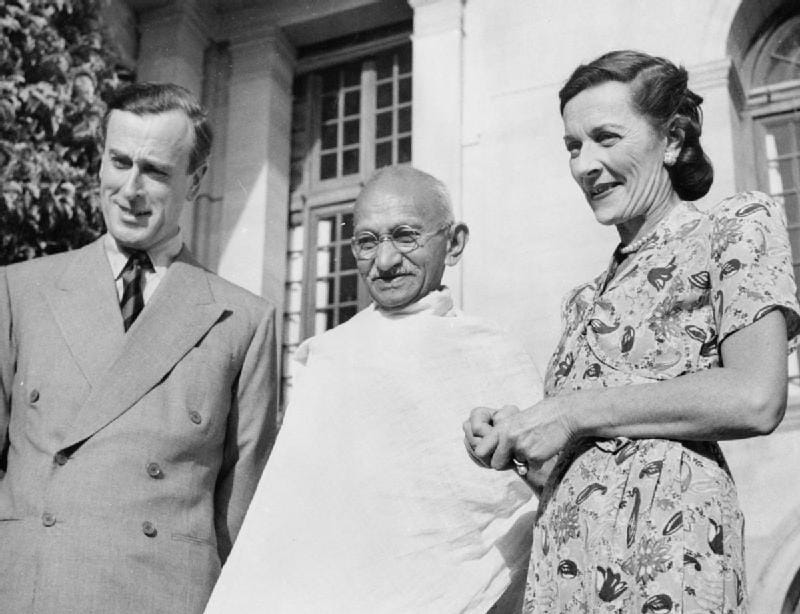
Lord and Lady Mountbatten with Mahatma Gandhi, 1947. Mountbatten's 3 June 1947 Plan for Partition became the basis of the Indian Independence Act. It divided Punjab and Bengal.
THE LAST TWO GOVERNORS-GENERAL
Lord Mountbatten
C. Rajagopalachari
Viceroy?
Last Viceroy, Mar–Aug 1947
Never Viceroy
As Governor-General
Aug 1947 – June 1948
June 1948 – Jan 1950
Remember
First GG of free India
Only Indian and last GG
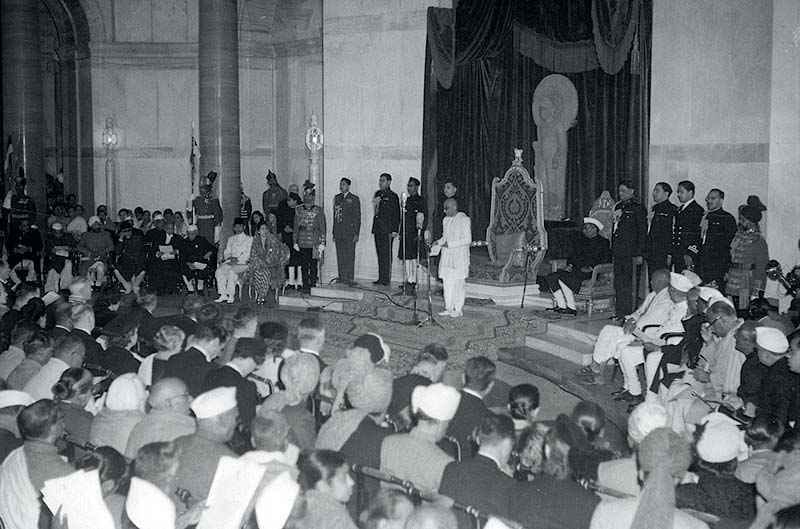
C. Rajagopalachari declares India a Republic at Durbar Hall, New Delhi, on 26 January 1950. The office of Governor-General ended that day; Dr Rajendra Prasad became the first President.
QUICK CHECK
PYQ · Punjab Police SI 2023 Which of the following British Viceroys in India carried out the division of Bengal in 1905?
Tap an option to answer
Answer: B — Lord Curzon
Curzon's partition took effect on 16 October 1905. It was cancelled at the Delhi Durbar of 1911, under Hardinge II. A similar question came in PSSSB Jail Warder 2026.
QUICK CHECK
PYQ · Punjab Police SI 2023 Under which of following Viceroys did the British army attack Tibet in 1903?
Tap an option to answer
Answer: D — Lord Curzon
Curzon sent Colonel Younghusband's force into Tibet in 1903; it reached Lhasa in 1904. He feared Russian influence there.
QUICK CHECK
PYQ · PPSC DSSO 2018 Consider the following statements. I. Lord Mountbatten was the Viceroy when Simla Conference took place. II. Indian Navy Revolt, 1946 took place when the Indian sailors in the Royal Indian Navy at Bombay and Karachi rose against the government. Which of the statement(s) given above is/are correct?
Tap an option to answer
Answer: B — II only
The Simla Conference (June 1945) was called by Wavell; Mountbatten came only in March 1947. The naval revolt of February 1946 did begin at Bombay and spread to Karachi.
QUICK CHECK
PYQ · PPSC SEVE 2016 The plan to transfer of power to the Indians and partition of the country was laid down in the:
Tap an option to answer
Answer: D — The Mountbatten Plan
The 3 June 1947 Plan of Lord Mountbatten laid down Partition and the transfer of power. The Cabinet Mission (1946) had tried to keep India united.
Everything on one look
The name changes, the firsts and lasts, and one event each.
FIRSTS AND LASTS
Warren Hastings: first GG of Bengal (1773 Act)
Bentinck: first GG of India (1833 Act)
Canning: last Company GG, first Viceroy (1858)
Mountbatten: last Viceroy; first GG of free India
Rajagopalachari: only Indian and last GG
Mayo: only Viceroy killed in office (1872)
Linlithgow: longest-serving Viceroy
ONE EVENT EACH
Cornwallis: Permanent Settlement, 1793
Wellesley: Subsidiary Alliance
Bentinck: Sati banned, 1829
Dalhousie: Punjab 1849; first railway 1853
Lytton: Vernacular Press Act, 1878
Ripon: local self-government, 1882
Curzon: Partition of Bengal, 1905
COMMON TRAPS
Warren Hastings was GG of Bengal; Bentinck was the first GG of India.
Clive was Governor of Bengal, never Governor-General.
Canning holds both: last Company GG and first Viceroy.
Mountbatten was the last Viceroy, but Rajagopalachari was the last Governor-General.
Congress was founded under Dufferin (1885), not Ripon.
Jallianwala Bagh (1919) was under Chelmsford, not Curzon.
Simla Conference (1945) was under Wavell, not Mountbatten.
Quit India (1942) was under Linlithgow, not Wavell.
Capital moved to Delhi under Hardinge II (1911), not Curzon.
Lytton passed the Vernacular Press Act; Ripon repealed it.
QUICK BYTES
First GG of Bengal: Warren Hastings (Regulating Act 1773)
First GG of India: William Bentinck (Charter Act 1833)
First Viceroy: Lord Canning (1858)
Permanent Settlement: Cornwallis, 1793
Subsidiary Alliance: Wellesley
Treaty of Amritsar 1809: Minto I
Tripartite Treaty 1838: Auckland
First Anglo-Sikh War: Hardinge I
Punjab annexed 1849: Dalhousie
Only Viceroy assassinated: Mayo, 1872
Vernacular Press Act 1878: Lytton
Factory Act 1881, local self-government 1882: Ripon
Congress founded 1885: Dufferin
Partition of Bengal 1905, Tibet 1903: Curzon
Capital to Delhi 1911: Hardinge II
Jallianwala Bagh 1919: Chelmsford
Gandhi-Irwin Pact 1931: Irwin
Quit India 1942: Linlithgow
Simla Conference 1945: Wavell
Last Viceroy: Mountbatten; last GG: Rajagopalachari
CHECK YOURSELF
Who was the last Governor-General of the Company and the first Viceroy of India?
Show answer
Lord Canning. He became Governor-General in 1856, faced the Revolt of 1857, and became the first Viceroy when the Crown took over under the Government of India Act, 1858. He served until 1862.
❧
Frequently Asked Questions
Who was the first Governor-General of India?
Lord William Bentinck, under the Charter Act of 1833. Warren Hastings, who took office under the Regulating Act of 1773, was the first Governor-General of Bengal.
Who was the first Viceroy of India?
Lord Canning. He was Governor-General when the Revolt of 1857 broke out, and became the first Viceroy when the Crown took over from the Company in 1858.
What is the difference between a Governor-General and a Viceroy?
It was the same office. Under the Company the head was the Governor-General. After 1858 he was also called Viceroy, meaning the representative of the British Crown.
Who was the last Viceroy of India?
Lord Mountbatten, from March to August 1947. He made the 3 June Plan for Partition and then stayed on as the first Governor-General of free India until June 1948.
Who was the first Indian Governor-General of India?
C. Rajagopalachari, from June 1948 to 26 January 1950. He was the only Indian to hold the post, and the last Governor-General, since the office ended when India became a republic.
Which Viceroy was killed in office?
Lord Mayo. He was stabbed during a visit to the Andaman Islands in 1872. He is the only Viceroy of India to be killed in office.
Under which Viceroy was the capital moved from Calcutta to Delhi?
Lord Hardinge II. The move was announced at the Delhi Durbar of 1911, which also cancelled the Partition of Bengal. New Delhi was formally opened in 1931, under Lord Irwin.
Which Viceroy partitioned Bengal?
Lord Curzon, Viceroy from 1899 to 1905. The partition took effect on 16 October 1905 and was cancelled in 1911.
Which Viceroy was in office during the Quit India Movement?
Lord Linlithgow, the longest-serving Viceroy (1936–1943). The Quit India Movement began in August 1942, during the Second World War.
Which Governor-General annexed Punjab?
Lord Dalhousie, on 29 March 1849, after the Second Anglo-Sikh War. The First Anglo-Sikh War had been fought under Lord Hardinge I.
Now sit the questions they actually set
Previous-year PPSC questions on this topic, free to read with the worked answer.
Preparing for the Punjab Patwari exam? This note is part of the Punjab Patwari 2026 course — with previous year papers, mock tests and chapter-wise practice.