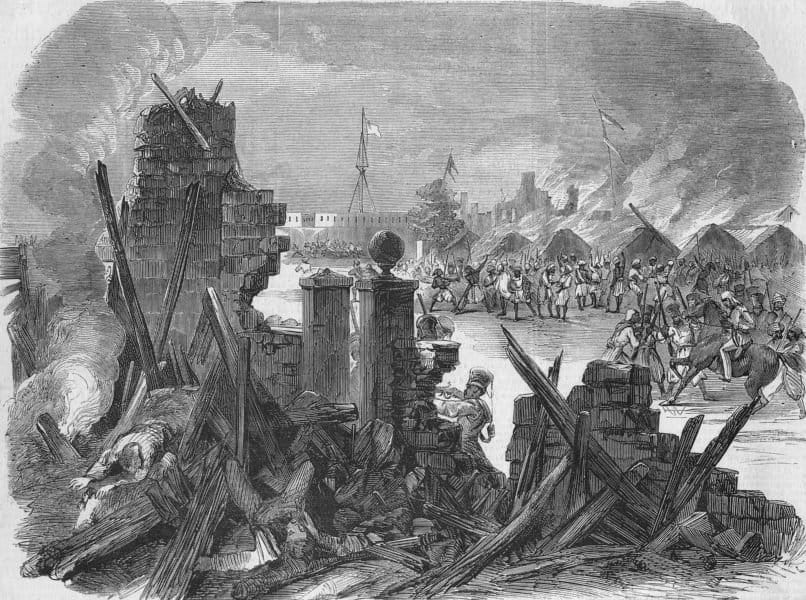
In 1857, Indian soldiers of the East India Company turned against their British officers. The rising began at Meerut on 10 May 1857. Soon Delhi, Kanpur, Lucknow, Jhansi and Bihar were fighting too. The British crushed it by 1858. But after it, the Company lost India to the British Crown.
How the revolt began
Barrackpore, then Meerut, then Delhi, in six weeks.
A sepoy was an Indian soldier in the Company's army. In 1857 there were many more sepoys than British soldiers. So when the sepoys rose, British rule was in real danger. Indians call the rising the First War of Independence. The British called it the Sepoy Mutiny.
- 29 Mar 1857Mangal Pandey at Barrackpore
A sepoy of the 34th Bengal Native Infantry attacks his British officers. He is hanged on 8 April.
- 9 May 185785 sepoys jailed at Meerut
They had refused the new cartridges. They are sent to jail in chains.
- 10 May 1857Meerut rises
Their comrades free them, kill officers and march through the night to Delhi.
- 11 May 1857Delhi taken
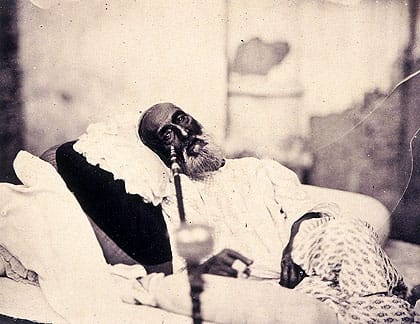
The sepoys declare the old Mughal king Bahadur Shah Zafar their emperor.
- June 1857Kanpur, Lucknow and Jhansi rise
The revolt spreads across north and central India.
Exam answer: the revolt began at Meerut on 10 May 1857. Mangal Pandey's act at Barrackpore came earlier, on 29 March. But it was one man's act, not the general rising.
Why people were angry
Many old causes, and one spark.
The anger had been growing for years. Kings lost their states. Farmers paid heavy land tax. Soldiers felt cheated. Many people feared for their religion. Then a new rifle gave all this anger a spark.
| Kind of cause | What made people angry |
|---|---|
| Political | The Doctrine of Lapse took states like Satara, Jhansi and Nagpur. Awadh was taken in 1856. |
| Economic | Heavy land revenue ruined farmers and old landlords. Indian handmade cloth lost its market. |
| Social and religious | People feared the British wanted to change their religion. Missionaries and new laws, like widow remarriage (1856), added to this fear. |
| Military | Sepoys got less pay than British soldiers and could not rise to high ranks. A law of 1856 said they could be sent overseas. Many Hindus believed crossing the sea broke caste. |
| The spark | The greased cartridges of the new Enfield rifle. |
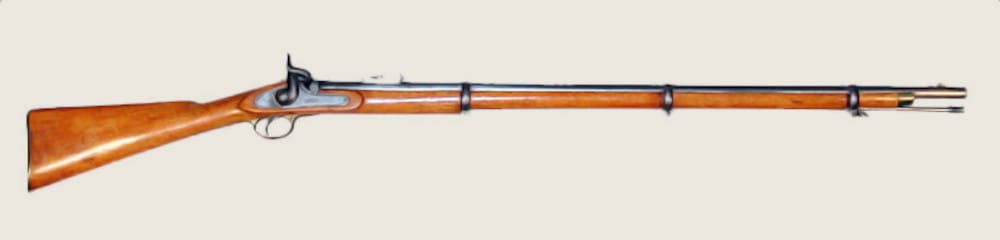
In early 1857 a story spread among the sepoys. It said the grease on the new cartridges was cow fat and pig fat. The cow is sacred to Hindus, and Muslims may not eat pork. So both Hindu and Muslim sepoys felt the British were attacking their religion. The cartridge was not the only cause. It was the spark.
Centres and their leaders
The most-asked part of this topic.
The revolt had no single commander. Each centre rose under its own leader. Exams love to ask which leader fought where.
| Centre | Indian leader | Remember |
|---|---|---|
| Delhi | Bahadur Shah Zafar; army led by General Bakht Khan | Zafar was the symbol. Bakht Khan brought troops from Bareilly. Zafar's wife Zeenat Mahal went into exile with him. |
| Kanpur | Nana Sahib, with Tantia Tope | Nana Sahib was the adopted son of the last Peshwa, Baji Rao II. The British stopped his pension. |
| Jhansi | Rani Lakshmibai | Her state was taken under the Doctrine of Lapse. She died fighting near Gwalior in June 1858. Jhalkari Bai was a woman soldier in her army. |
| Lucknow (Awadh) | Begum Hazrat Mahal | She fought in the name of her young son, Birjis Qadr. |
| Arrah (Bihar) | Kunwar Singh | A landlord of Jagdishpur, nearly 80 years old. |
| Bareilly | Khan Bahadur Khan | Ruled Bareilly for the rebels for about a year. |
| Faizabad | Maulvi Ahmadullah Shah | A religious leader who became a strong commander in Awadh. |
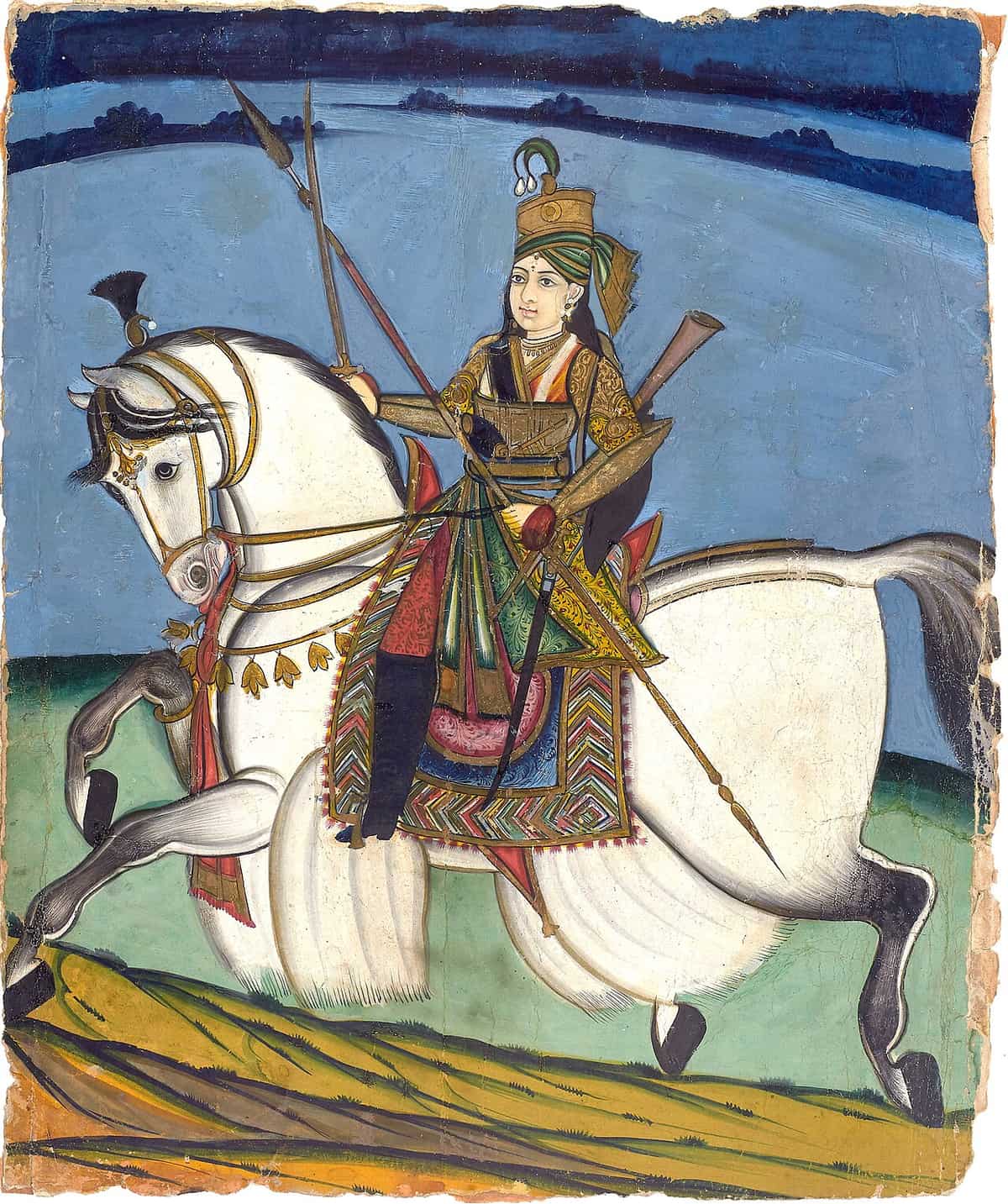
- Jhansi was taken under the Doctrine of Lapse (1853)
- Defeated by Sir Hugh Rose; died fighting near Gwalior
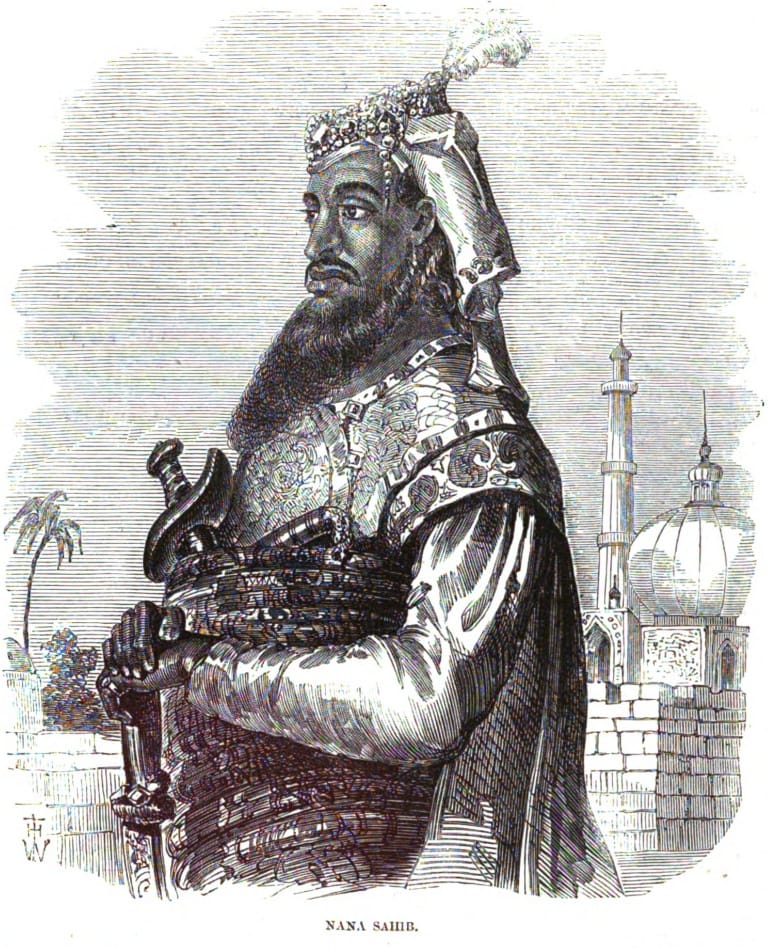
- Adopted son of Peshwa Baji Rao II
- Angry because the British stopped his pension; fled to Nepal
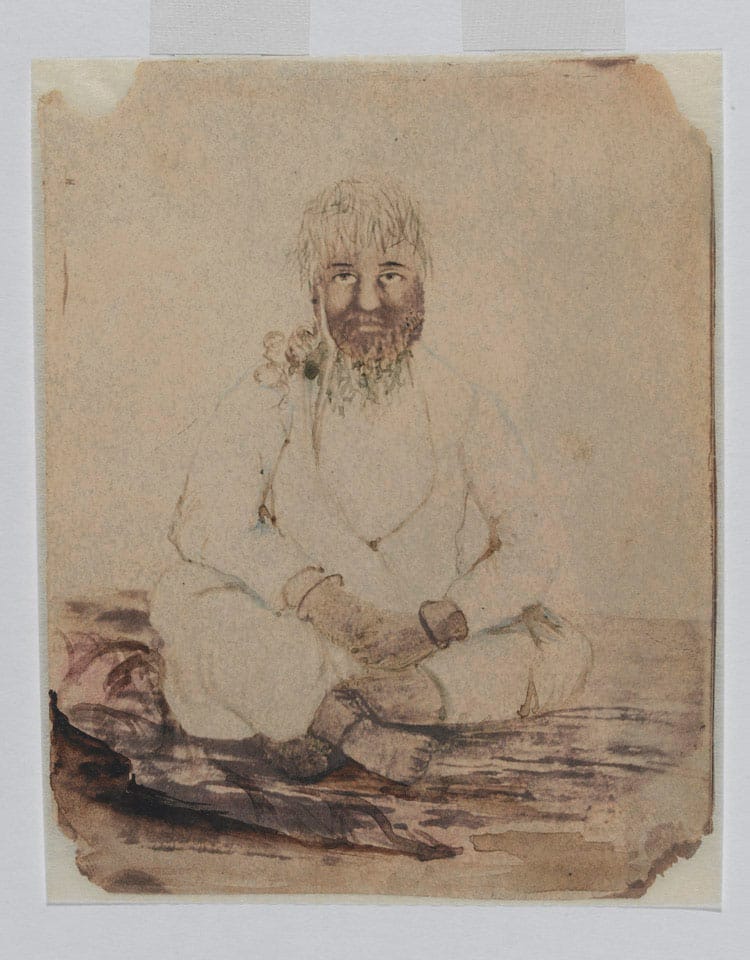
- Nana Sahib's general
- Fought on after the main revolt; hanged at Shivpuri
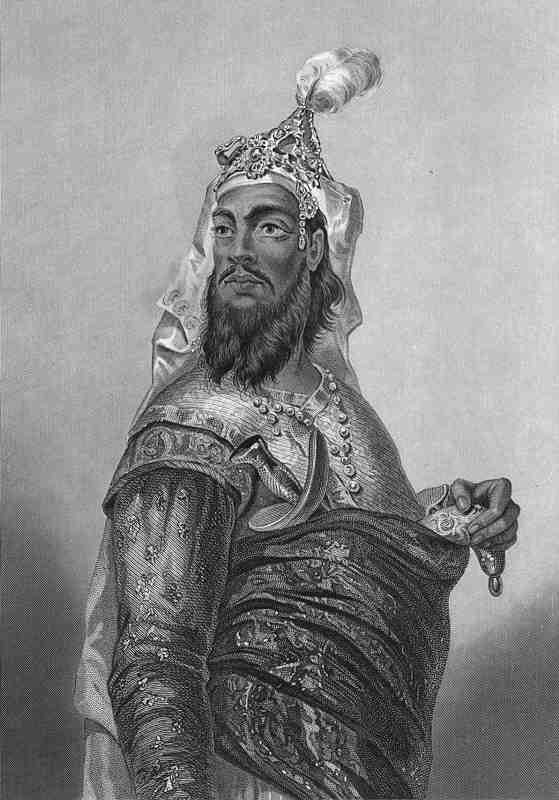
- Zamindar of Jagdishpur
- Led the revolt at nearly 80 years of age
- Wife of Nawab Wajid Ali Shah
- Later escaped to Nepal
Delhi–Zafar, Kanpur–Nana, Jhansi–Rani, Lucknow–Begum, Bihar–Kunwar. Five centres, five names. Then add the two generals: Bakht Khan at Delhi and Tantia Tope with Nana Sahib.
Led the storming of Delhi in September 1857. He was fatally wounded in the fight.
Took Kanpur back from Nana Sahib in July 1857.
Relieved the Lucknow Residency in November 1857. Retook Lucknow in March 1858, helped by Gorkha troops of Jung Bahadur Rana of Nepal.
Took Jhansi (April 1858) and defeated Rani Lakshmibai.
British commanders, also asked in exams.
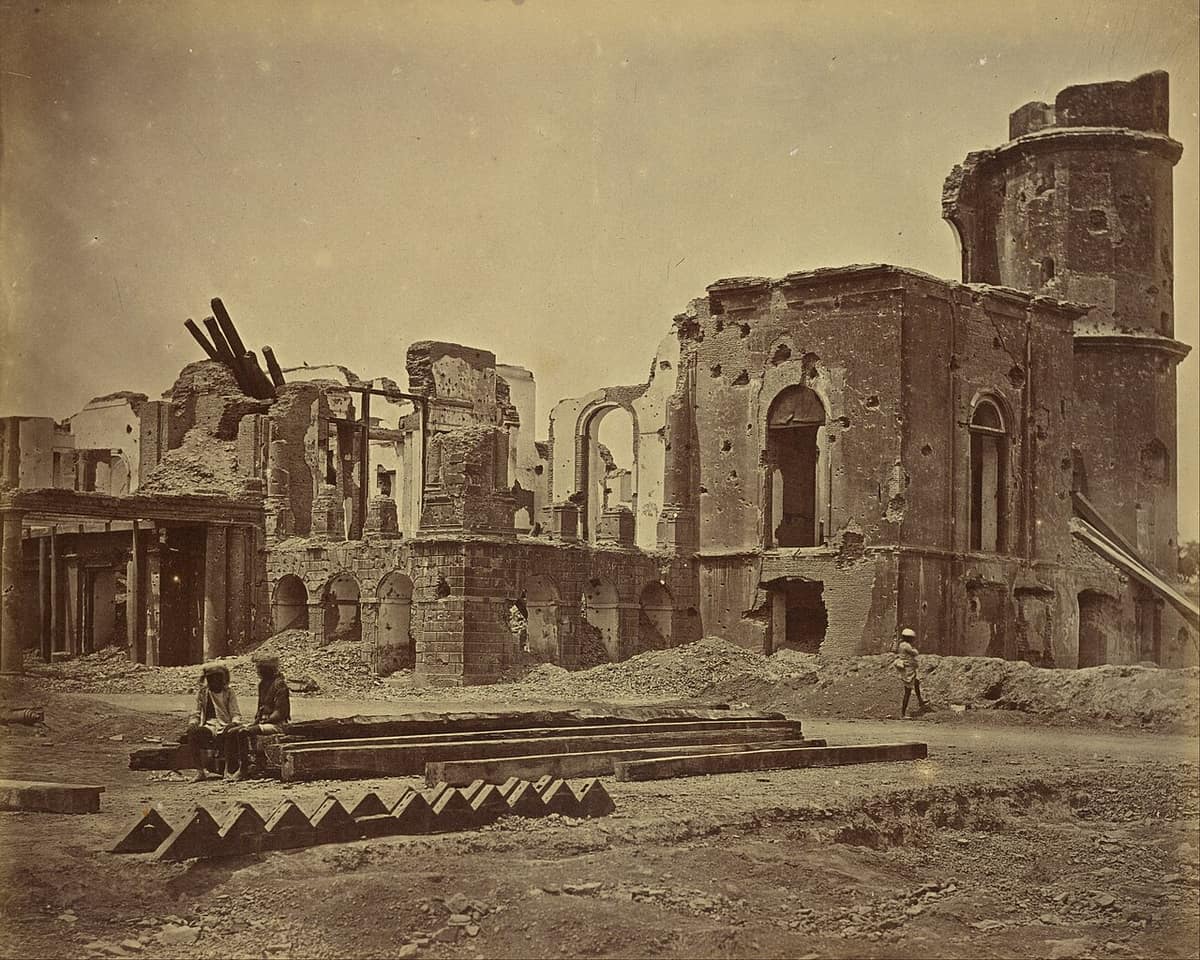
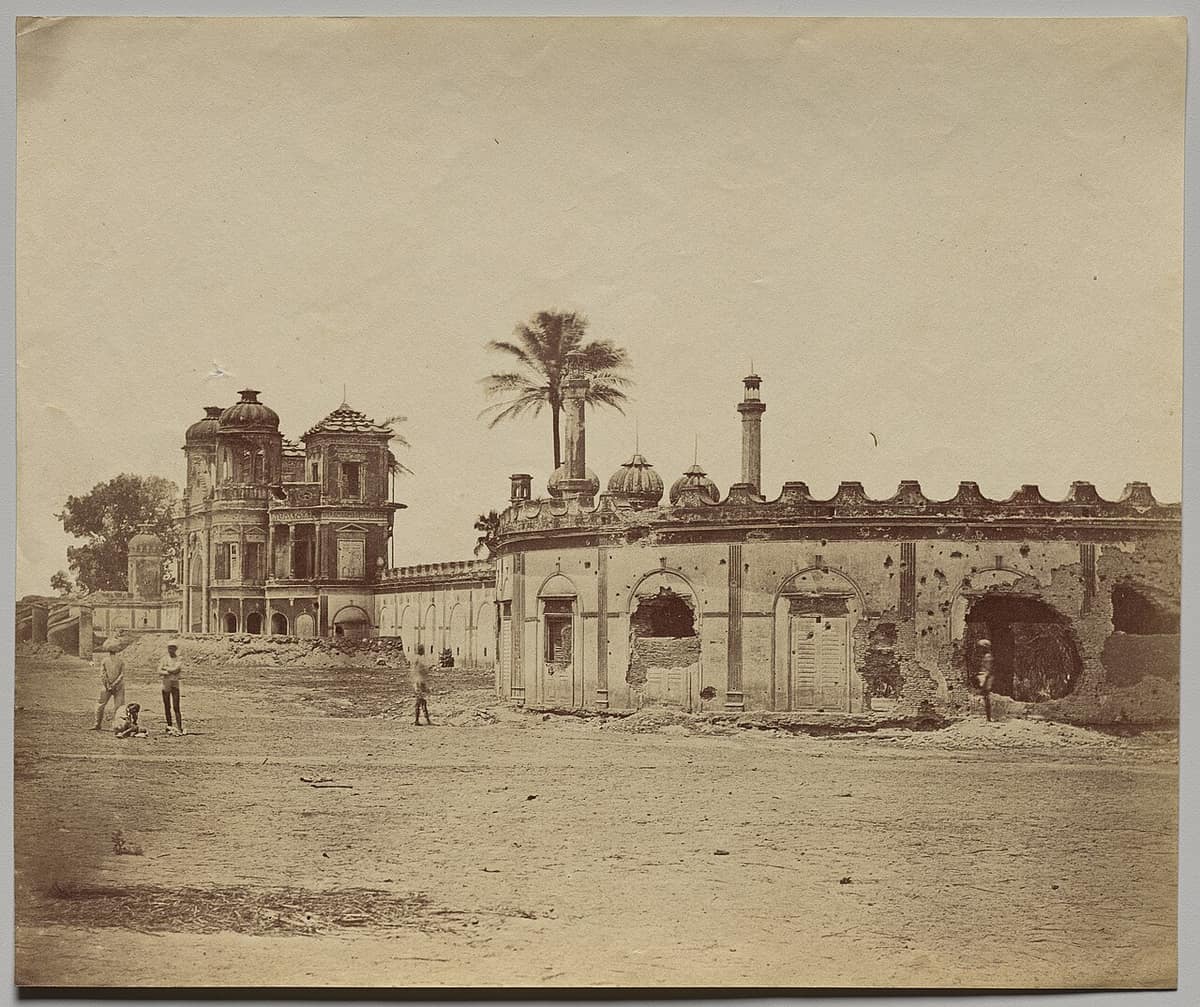
Why the revolt failed
Brave leaders, but no common plan.
- No single leader or plan. Each centre fought its own war. Rani Lakshmibai, Nana Sahib and Kunwar Singh never fought under one command.
- Large parts of India did not join. Bengal and the south stayed mostly quiet. Punjab was largely kept quiet by the British.
- Most princes helped the British. Rulers of Hyderabad, Gwalior, Patiala and others sided with them. Lord Canning is said to have called them "breakwaters to the storm".
- The British had better tools. The telegraph, railways and modern rifles moved news and troops fast.
- The rebels had little money or weapons, and no clear plan for a new government.
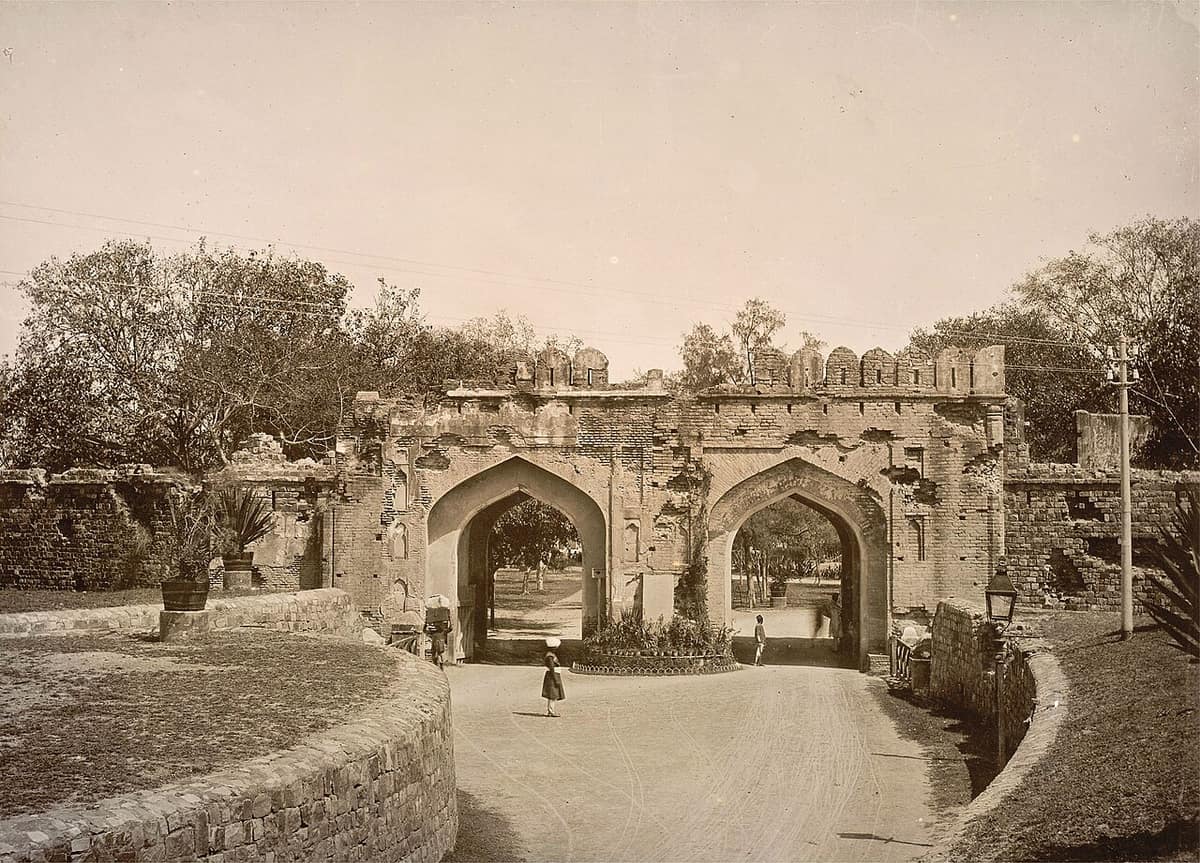
The British had taken Punjab only in 1849. Sepoys from Awadh and Bihar had helped them conquer it, so many Sikhs had little love for those sepoys. The Chief Commissioner, John Lawrence, quickly disarmed doubtful regiments. The Phulkian rulers (Patiala, Nabha, Jind) and Kapurthala sent help to the British. Punjabi troops helped retake Delhi and Lucknow.
1857 in Rajasthan (asked in RSMSSB papers)Tap to open
- The revolt in Rajasthan began at the Nasirabad cantonment (near Ajmer) on 28 May 1857.
- Kota saw the biggest rising, on 15 October 1857. Its leaders were Lala Jaidayal and Mehrab Khan. They killed the British agent, Major Burton.
- At Auwa (Pali), Thakur Kushal Singh defeated the joint army of the British and Jodhpur.
- Maharaja Sardar Singh of Bikaner personally led his army to help the British.
What changed after 1857
The Company goes; the Crown comes.
- 1857–58: the revoltThe British win, but the rising shocks them.
- Company rule ends2 Aug 1858: Government of India ActIndia passes from the East India Company to the British Crown.
- Secretary of State for IndiaA British minister in London now runs Indian affairs, with a Council of 15. The Board of Control and Court of Directors end.
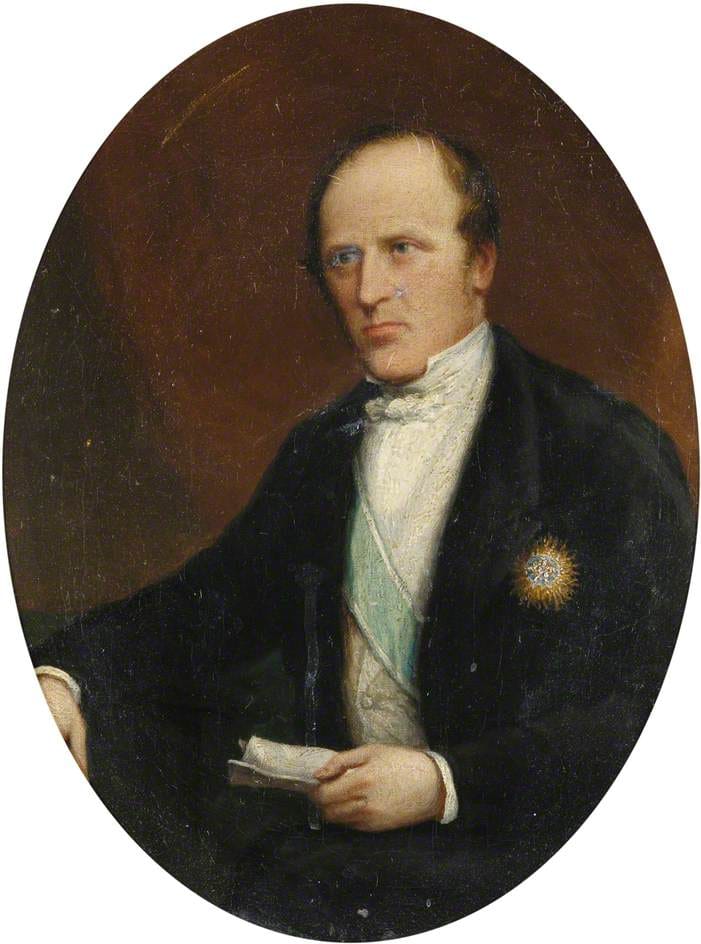
- ViceroyThe Governor-General now also has the title Viceroy. Lord Canning is the first.
- Read at Allahabad1 Nov 1858: Queen Victoria's ProclamationNo more annexations. Princes' rights will be respected. People's religions will not be touched.
| Other changes | What happened |
|---|---|
| Mughal rule ended | Bahadur Shah Zafar was exiled to Rangoon. The line that began with Babur in 1526 was over. |
| Army changed | Fewer Indian soldiers for each British soldier. Big guns (artillery) stayed with British troops. Units were mixed by caste and region. |
| Divide and rule | Hindus and Muslims had fought side by side in 1857. After it, the British worked to keep them apart. |
- Bahadur Shah Zafar
- Delhi (symbolic head); exiled to Rangoon
- Bakht Khan
- Commanded the rebel army at Delhi
- Nana Sahib
- Kanpur
- Tantia Tope
- Nana Sahib's general; hanged 1859
- Rani Lakshmibai
- Jhansi
- Begum Hazrat Mahal
- Lucknow (Awadh)
- Kunwar Singh
- Arrah / Jagdishpur, Bihar
- Khan Bahadur Khan
- Bareilly
- Mangal Pandey
- Barrackpore, 29 March 1857
Everything on one look
The spark, the centres, the failure and the result.
- Began at Meerut, 10 May 1857
- Mangal Pandey: Barrackpore, 29 March 1857
- Spark: greased cartridges of the Enfield rifle
- Awadh taken in 1856; Jhansi under Lapse in 1853
- Governor-General during the revolt: Lord Canning
- Act of 1858: Company rule ends
- Delhi: Bahadur Shah Zafar, Bakht Khan
- Kanpur: Nana Sahib, Tantia Tope
- Jhansi: Rani Lakshmibai
- Lucknow: Begum Hazrat Mahal
- Bihar: Kunwar Singh
- British: Nicholson (Delhi), Campbell (Lucknow), Hugh Rose (Jhansi)
- Began at Meerut on 10 May. Barrackpore (29 March) was Mangal Pandey's single act.
- Awadh (1856) was taken for "misrule", not under the Doctrine of Lapse.
- Bahadur Shah Zafar was the symbol; Bakht Khan commanded at Delhi.
- Tantia Tope was Nana Sahib's general, not a separate ruler.
- Hazrat Mahal led at Lucknow, not Kanpur. Lakshmibai was Rani of Jhansi, not Begum of Awadh.
- Jhalkari Bai fought for Rani Lakshmibai, not for Zafar.
- Sir Hugh Rose, not Campbell, defeated Rani Lakshmibai.
- Zafar was exiled to Rangoon, not the Andamans.
- Jung Bahadur Rana of Nepal helped the British, not the rebels.
- Revolt in Rajasthan began at Nasirabad (28 May), not Meerut.
- Revolt began: Meerut, 10 May 1857
- First martyr: Mangal Pandey (Barrackpore)
- Spark: greased cartridges, Enfield rifle
- Doctrine of Lapse: Lord Dalhousie
- Awadh annexed: 1856 (misrule)
- Delhi: Bahadur Shah Zafar + Bakht Khan
- Kanpur: Nana Sahib + Tantia Tope
- Jhansi: Rani Lakshmibai
- Lucknow: Begum Hazrat Mahal
- Bihar: Kunwar Singh (Jagdishpur)
- Bareilly: Khan Bahadur Khan
- Governor-General in 1857: Lord Canning
- Nepal helped British: Jung Bahadur Rana
- Zafar exiled: Rangoon, died 1862
- Act of 1858: Crown rule; Secretary of State
- First Viceroy: Lord Canning
- Queen's Proclamation: 1 Nov 1858, Allahabad
- Rajasthan: began at Nasirabad, 28 May 1857
- "First War of Independence": Savarkar, 1909
Who led the revolt at Kanpur, and who was his general?
Show answer
Nana Sahib, adopted son of the last Peshwa Baji Rao II, led at Kanpur. His general was Tantia Tope, who fought on until he was caught and hanged in April 1859.