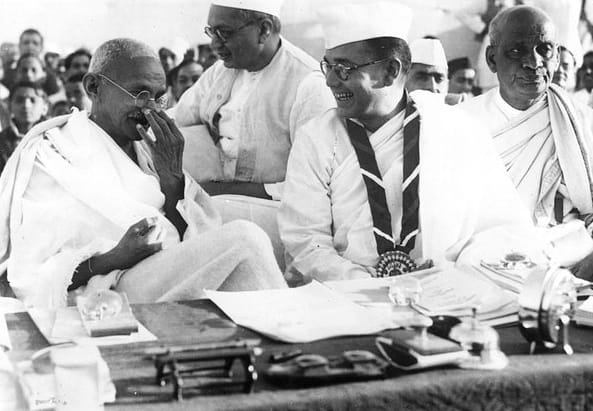
For a long time, people thought of themselves as Bengalis, Marathas, Tamils or Punjabis. In the late 1800s, a new feeling grew: we are all Indians. The Indian National Congress, born in 1885, became its main voice. Over 62 years the struggle passed through clear phases, and ended in freedom on 15 August 1947.
A nation wakes up, and the Congress is born
Up to 1885: new ideas, new bodies, one all-India party.
Several forces worked together. English education gave educated Indians a common language. Railways, the telegraph and the press linked the country. Dadabhai Naoroji's drain of wealth idea showed that all Indians were losing to the same ruler. And daily racial insult pushed Indians together.
- 1866East India Association
Founded in London by Dadabhai Naoroji, to put India's case before the British public.
- 1876Indian Association
Founded in Calcutta by Surendranath Banerjea and Ananda Mohan Bose.
- 1885Bombay Presidency Association
Founded in Bombay early in 1885.
- Dec 1885Indian National Congress
First session at Bombay: the first truly all-India party.
| The founding of the Congress | Answer |
|---|---|
| Founder and organiser | Allan Octavian Hume, a retired British civil servant |
| First session | 28 December 1885, Gokuldas Tejpal Sanskrit College, Bombay |
| First president | Womesh Chandra Bonnerjee (W. C. Bonnerjee) |
| Delegates | 72 |
| Viceroy at the time | Lord Dufferin |
Some say Hume wanted a safety valve, a safe outlet for Indian anger so that it would not burst out like 1857. Historians still argue about this. What matters is what Indians made of it: within 20 years the Congress had become the engine of the freedom struggle.
Moderates and Extremists (1885–1915)
Polite petitions, then a harder voice, then a split.
For its first 20 years the Congress was led by the Moderates. They believed British rule could be reformed from within. By 1905 a younger group, the Extremists, had lost patience. They wanted Swaraj, meaning self-rule.
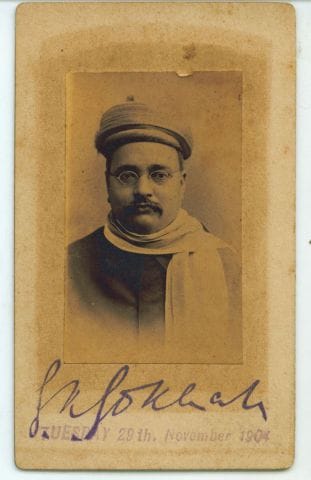
- Founded the Servants of India Society (1905)
- Gandhi's political guru
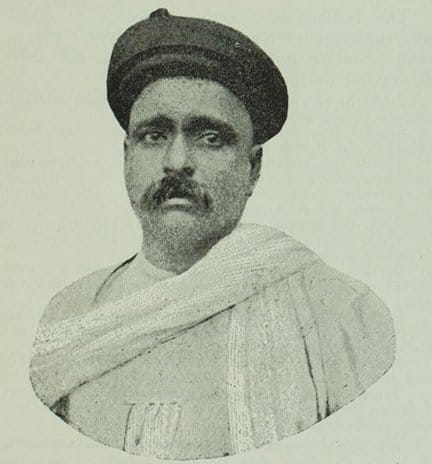
- Edited Kesari (Marathi) and Mahratta (English)
- Jailed at Mandalay, Burma, 1908–1914
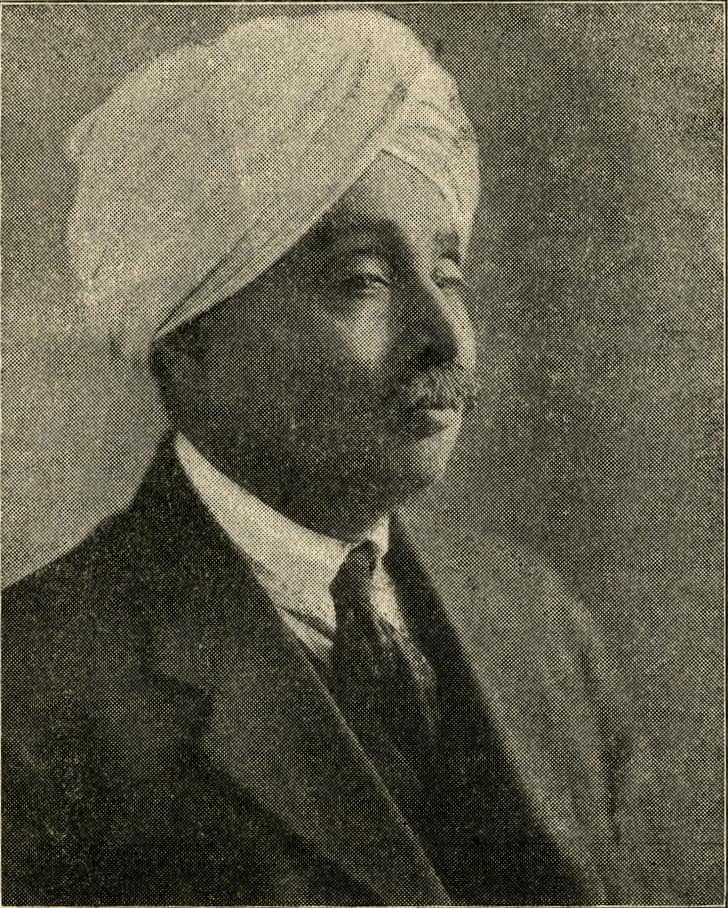
- Called Punjab Kesari
- Deported to Mandalay in 1907 with Ajit Singh
- Spread the Swadeshi message in Bengal and beyond
Swaraj is my birthright, and I shall have it.
- 1905Bengal partitioned
Viceroy Curzon splits Bengal. The Swadeshi and Boycott movement begins.
- 1906Calcutta session; Muslim League
Under Naoroji, the Congress names Swaraj as its goal. The Muslim League is founded at Dhaka.
- 1907Surat split
The Congress breaks into Moderates and Extremists. The Moderates keep it.
- 1908Tilak jailed
Sentenced to six years and sent to Mandalay.
- 1911Partition cancelled
Announced at the Delhi Durbar; the capital moves to Delhi.
- 1916Lucknow
The two wings reunite, and the Congress and the League sign the Lucknow Pact.
Swaraj means self-rule: the political goal. Swadeshi means of one's own country: using Indian-made goods and boycotting foreign ones. Swaraj was the destination; Swadeshi was one road to it.
Home Rule and the coming of Gandhi (1915–1922)
From leagues of the few to the first mass movement.
Gandhi came home from South Africa in January 1915. In 1916 two Home Rule Leagues began demanding self-government, like Ireland's. Gandhi then led small local struggles. After the Jallianwala Bagh massacre, he led all of India.
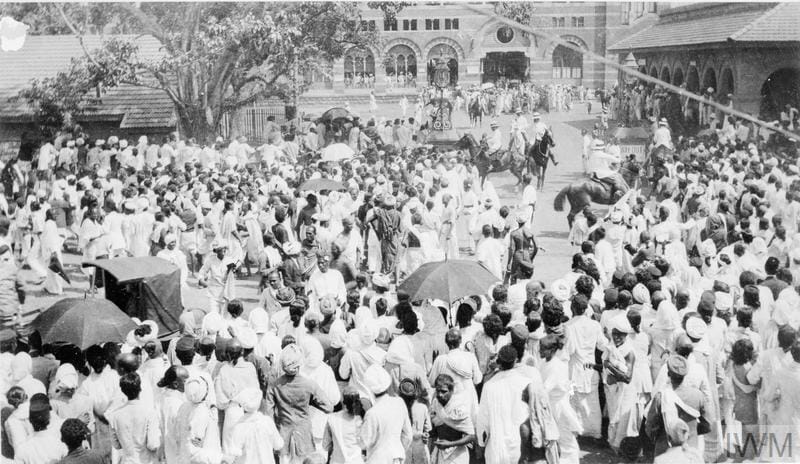
- Bihar1917: ChamparanIndigo farmers forced to grow indigo. Gandhi's first satyagraha in India.
- Gujarat1918: Ahmedabad and KhedaA mill workers' strike, where Gandhi first used a hunger strike, and a peasants' fight over land tax.
- 1919: Rowlatt SatyagrahaAgainst the Rowlatt Act, which allowed jail without trial. In Amritsar, the Jallianwala Bagh massacre follows on 13 April 1919.
- First mass movement1920–22: Non-CooperationGive up titles, boycott schools, courts, councils and foreign cloth. Joined with the Khilafat movement of the Ali brothers (Mohammad Ali and Shaukat Ali).
- Feb 1922: Chauri ChauraA crowd burns a police station in UP. Gandhi calls off the movement, because it had turned violent.
During Non-Cooperation Gandhi gave back the Kaiser-i-Hind gold medal, which the British had given him for his ambulance work in South Africa.
Purna Swaraj and Civil Disobedience (1927–1934)
Full freedom becomes the goal, and salt becomes the weapon.
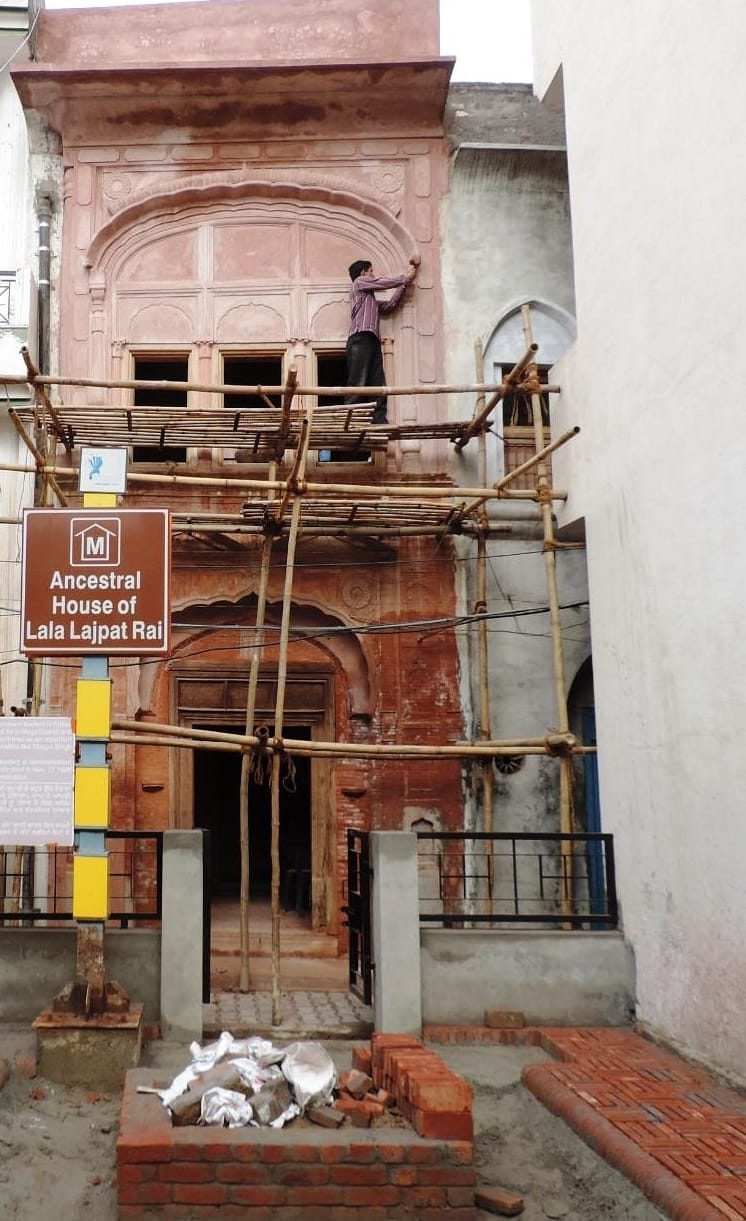
In 1927 Britain named the Simon Commission with no Indian member. Protests swept the country. In Lahore, Lala Lajpat Rai was struck in a police lathi-charge on 30 October 1928 and died on 17 November. The mood hardened.
- Dec 1929Lahore session
Jawaharlal Nehru, president for the first time, passes the Purna Swaraj (complete independence) resolution. The flag is raised on the bank of the Ravi.
- 26 Jan 1930Independence Day
Indians take a pledge for Purna Swaraj. This date later became Republic Day.
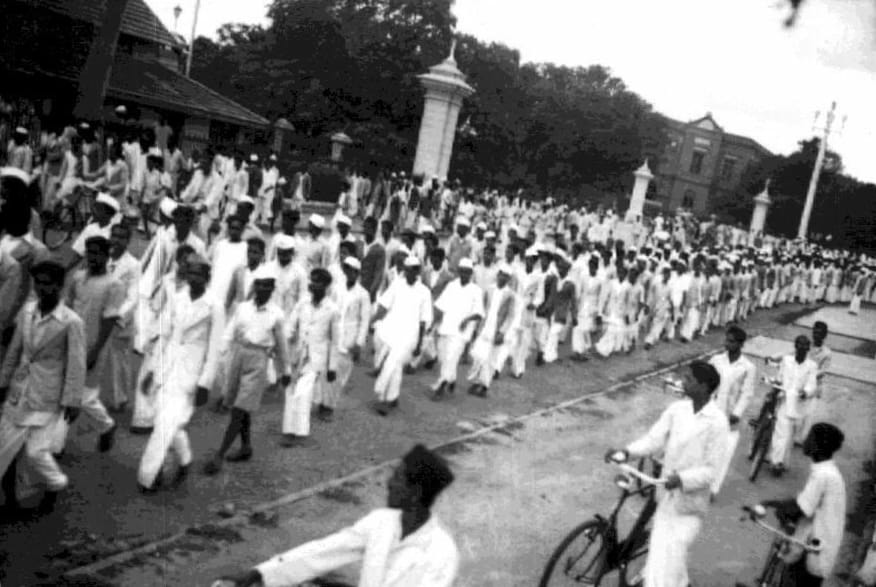
- 12 Mar 1930Dandi March begins
Gandhi walks from Sabarmati Ashram with 78 followers.
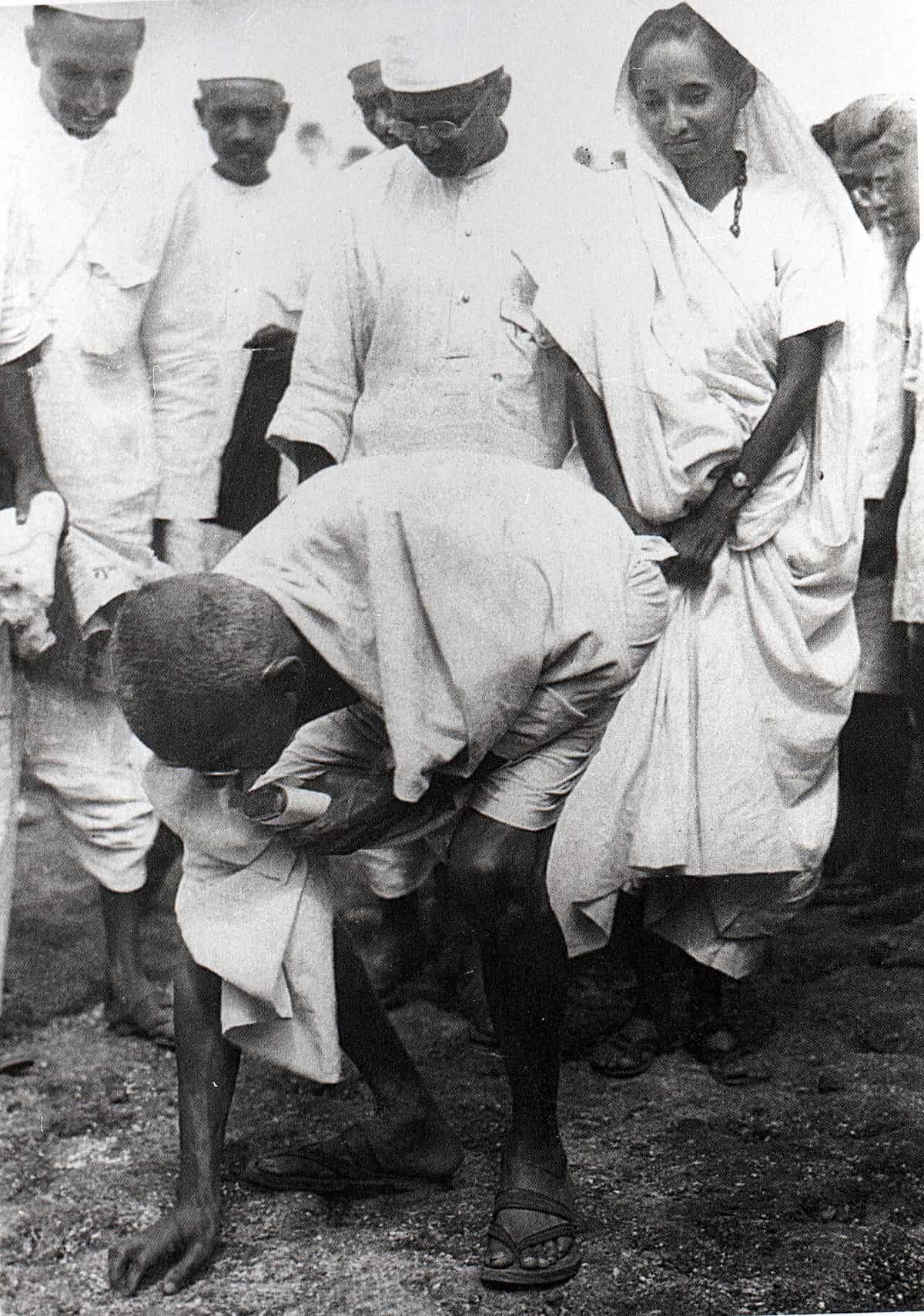
- 6 Apr 1930Salt law broken
At Dandi, Gandhi makes salt. Civil Disobedience spreads.
- Mar 1931Gandhi-Irwin Pact
The movement is paused; Gandhi goes to the Second Round Table Conference. Three Round Table Conferences met in London (1930–32); the Congress attended only the second.
- 1932–34Second phase
Civil Disobedience restarts, and is called off in 1934. In 1932 the Communal Award gave separate electorates to the Depressed Classes. Gandhi fasted, and the Poona Pact with Ambedkar gave them reserved seats instead.
Quit India and freedom (1939–1947)
War, "Do or Die", and the last steps to 1947.
In 1939 the Viceroy put India into the Second World War without asking Indians. The Congress ministries resigned. Britain's August Offer of 1940 and the Cripps Mission of 1942 promised freedom only later. Gandhi's answer was Quit India.
- 1939Bose and the Forward Bloc
Subhas Chandra Bose leaves the Congress presidency after Tripuri and forms the Forward Bloc.
- Oct 1940Individual Satyagraha
Chosen individuals protest the war; Vinoba Bhave is the first.
- Mar 1942Cripps Mission fails
Dominion status only after the war. Congress rejects it.
- 8 Aug 1942Quit India resolution
Passed at Bombay. Gandhi's call: "Do or Die". Leaders are arrested next morning.
- 1943–45Azad Hind Fauj
Bose leads the INA from South-East Asia. Its officers are tried at the Red Fort in 1945. In June 1945 Viceroy Wavell's Simla Conference also failed.
- 1946Navy revolt; Cabinet Mission
Sailors rise at Bombay and Karachi. The Cabinet Mission plans a Constituent Assembly.
- 3 June 1947Mountbatten Plan
Partition and transfer of power.
- 15 Aug 1947Freedom
India becomes free; Pakistan is created.
Congress sessions and presidents asked in examsTap to open
| Year and place | President | Remember |
|---|---|---|
| 1885, Bombay | W. C. Bonnerjee | First session |
| 1887, Madras | Badruddin Tyabji | First Muslim president |
| 1888, Allahabad | George Yule | First English president |
| 1906, Calcutta | Dadabhai Naoroji | Swaraj named as the goal |
| 1907, Surat | Rash Behari Ghosh | The split |
| 1916, Lucknow | A. C. Mazumdar | Reunion; Lucknow Pact |
| 1917, Calcutta | Annie Besant | First woman president |
| 1925, Kanpur | Sarojini Naidu | First Indian woman president |
| 1929, Lahore | Jawaharlal Nehru | Purna Swaraj |
| 1938, Haripura | Subhas Chandra Bose | Bose elected |
Everything on one look
Five phases, their leaders and their dates.
- 1885 Congress at Bombay; Hume founder, Bonnerjee president
- 1905 Bengal partition; Swadeshi and Boycott
- 1907 Surat split; 1916 Lucknow reunion
- 1916 Home Rule: Tilak (April), Besant (September)
- 1915 Gandhi returns; 1917 Champaran
- 1920–22 Non-Cooperation; ends after Chauri Chaura
- 1928 Simon protests; Lajpat Rai dies
- 1929 Lahore: Nehru, Purna Swaraj
- 1930 Dandi March; Civil Disobedience
- 1942 Cripps fails; Quit India, "Do or Die"
- 1943–45 Bose and the INA
- 1947 Mountbatten Plan; freedom on 15 August
- Hume founded the Congress; W. C. Bonnerjee was its first president.
- Lord Dufferin, not Ripon, was Viceroy in 1885.
- Gokhale was a Moderate; Lal-Bal-Pal were Extremists.
- Swadeshi and Boycott first came with the Bengal partition (1905), not Non-Cooperation.
- Order: Partition 1905 → Surat 1907 → Lucknow 1916.
- Annie Besant (1917) was the first woman president; Sarojini Naidu (1925) the first Indian woman.
- Besant's Home Rule League began in Madras, September 1916; Tilak's in April 1916.
- Nehru first became president at Lahore (1929), not Lucknow (1936).
- The Dandi March began Civil Disobedience, not Non-Cooperation.
- Quit India followed the failure of Cripps, not the Cabinet Mission.
- East India Association: Naoroji, London, 1866
- Indian Association: Surendranath Banerjea, 1876
- Congress founded: 28 Dec 1885, Bombay, 72 delegates
- Founder: A. O. Hume; first president: W. C. Bonnerjee
- Moderate leader and Gandhi's guru: Gokhale
- Lal-Bal-Pal: Lajpat Rai, Tilak, Bipin Chandra Pal
- Bengal partition: Curzon, 1905
- Muslim League: Dhaka, 1906
- Surat split: 1907
- Tilak to Mandalay: 1908
- Lucknow Pact and reunion: 1916
- Home Rule: Tilak and Besant, 1916
- Gandhi returns: 9 Jan 1915
- First satyagraha in India: Champaran, 1917
- Jallianwala Bagh: 13 April 1919
- Non-Cooperation: 1920–22
- Lajpat Rai dies: 17 Nov 1928
- Purna Swaraj: Lahore, 1929
- Dandi March: 12 March–6 April 1930
- Quit India: 8 Aug 1942, Bombay
- First woman president: Annie Besant, 1917
- First Indian woman president: Sarojini Naidu, 1925
Name the five phases of the national movement, with one key event for each.
Show answer
1885–1905 birth of the Congress and the Moderates. 1905–1918 Extremists, Swadeshi and Home Rule. 1919–1922 Gandhi's Non-Cooperation. 1927–1934 Purna Swaraj and the Dandi March. 1939–1947 Quit India and freedom on 15 August 1947.