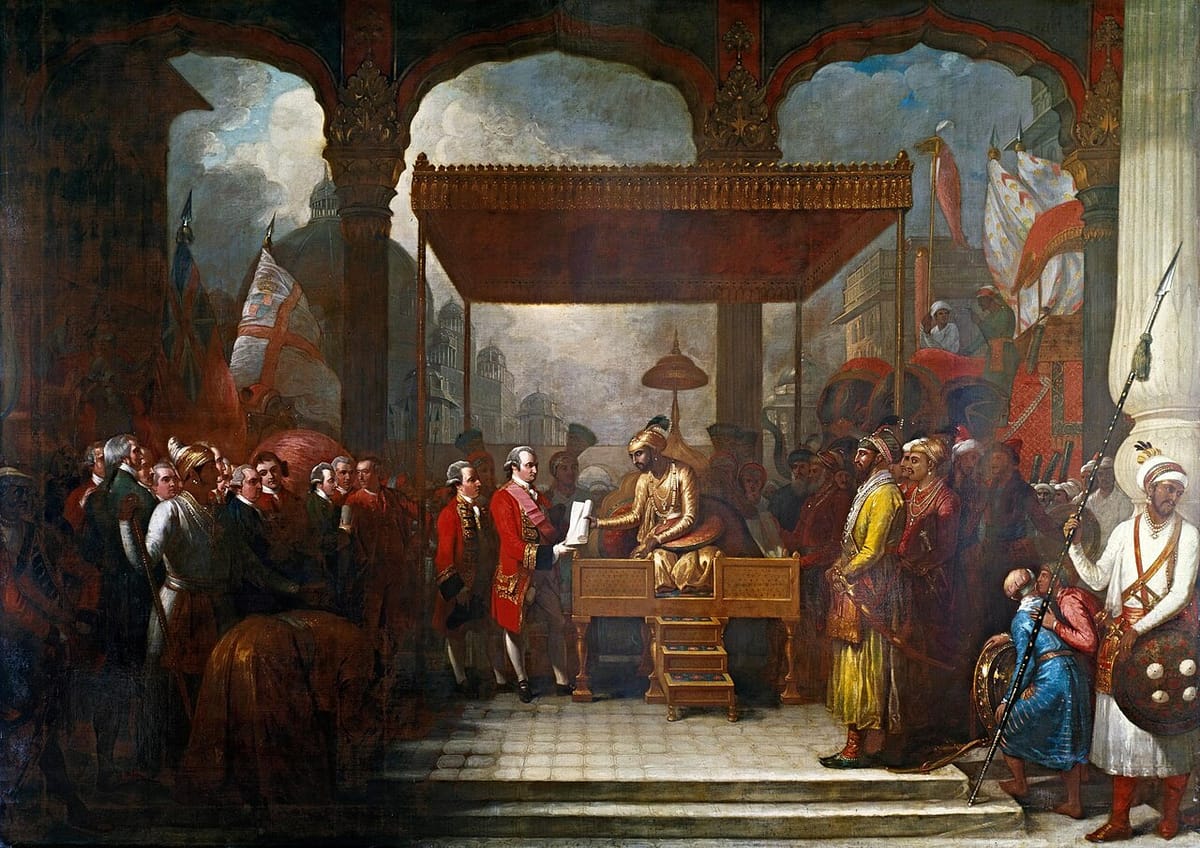
On 22 October 1764, a Company army under Major Hector Munro fought three Indian rulers at once at Buxar in Bihar. They were Mir Qasim, the Nawab of Awadh and the Mughal emperor. The Company won. A year later the emperor gave it the Diwani, the right to collect the revenue of Bengal, Bihar and Orissa. A trading company had become a lawful ruler.
From Mir Jafar to Mir Qasim
The Company wanted a puppet. It got a real ruler.
After Plassey, Mir Jafar was Nawab of Bengal. He could not pay all the money the Company demanded. So in 1760 the Company put his son-in-law Mir Qasim on the throne. In return, Mir Qasim gave the Company the districts of Burdwan, Midnapore and Chittagong. The Company expected an obedient puppet. Mir Qasim had other plans.
- 1760Mir Qasim made Nawab
The Company removes Mir Jafar and crowns his son-in-law.
- Jan 1761Third Battle of Panipat
Ahmad Shah Abdali crushes the Marathas. The north is left weak and divided.
- 1762Capital moved to Munger
Mir Qasim moves from Murshidabad to Munger in Bihar, away from Calcutta, and trains a modern army.
- 1763All inland duties abolished
He removes trade duties for everyone, so the English lose their special advantage.
- 1763War and defeat
The Company fights him and brings back Mir Jafar. Mir Qasim loses at Katwa, Giria and Udhua Nala, then flees to Awadh.
- 22 Oct 1764Battle of Buxar
Mir Qasim returns with the armies of Awadh and the Mughal emperor.
| Cause | What it meant |
|---|---|
| Misuse of dastaks | Company servants still traded duty-free on their own account. Indian merchants paid duty, so they could not compete. |
| Duties abolished for all | Mir Qasim made trade equal for all. The Company wanted its privilege back. This was the immediate cause. |
| An independent Nawab | He moved his capital to Munger, built his own arsenal and army, and ran his own government. |
| Company greed | The Company wanted a Nawab who would obey and pay. Mir Qasim would not. |
Mir Qasim's "crime" was treating all traders equally. He did not raise taxes on the English. He removed taxes for Indians too. The Company went to war to get back an unfair advantage.
The battle: 22 October 1764
Three rulers, one Company army.
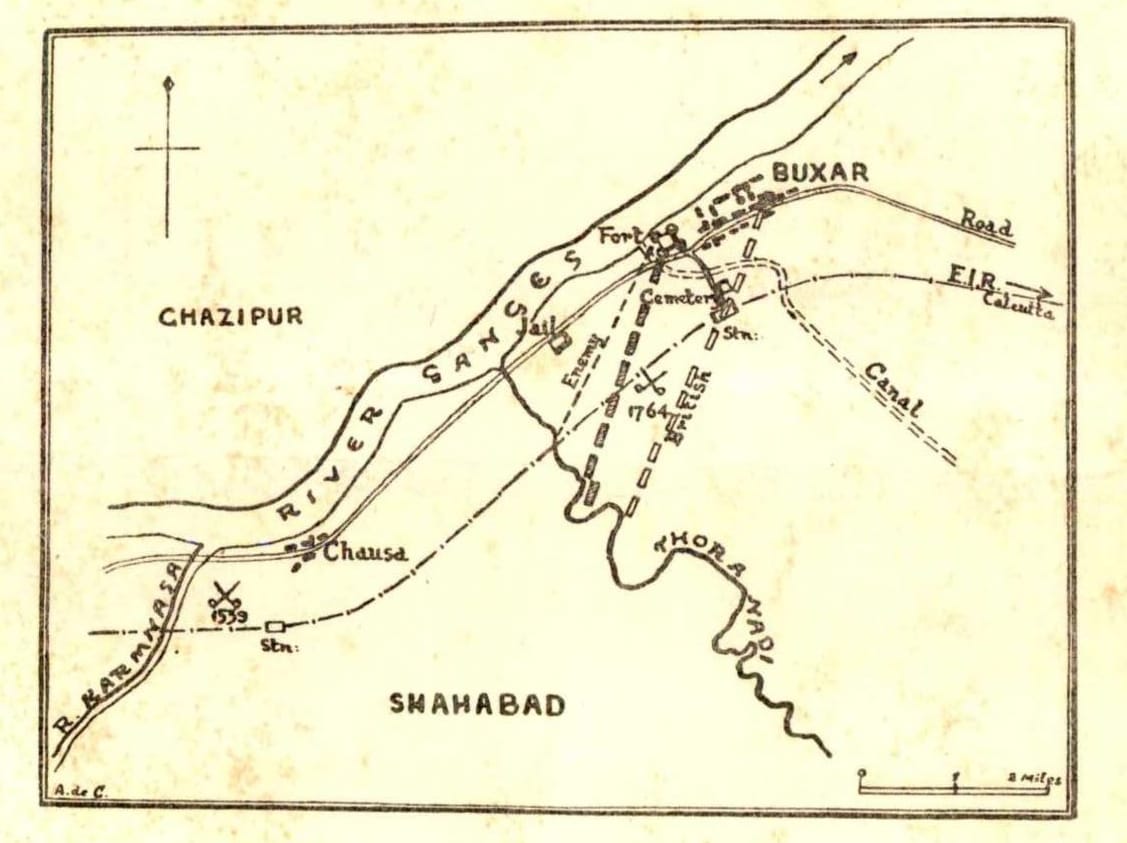
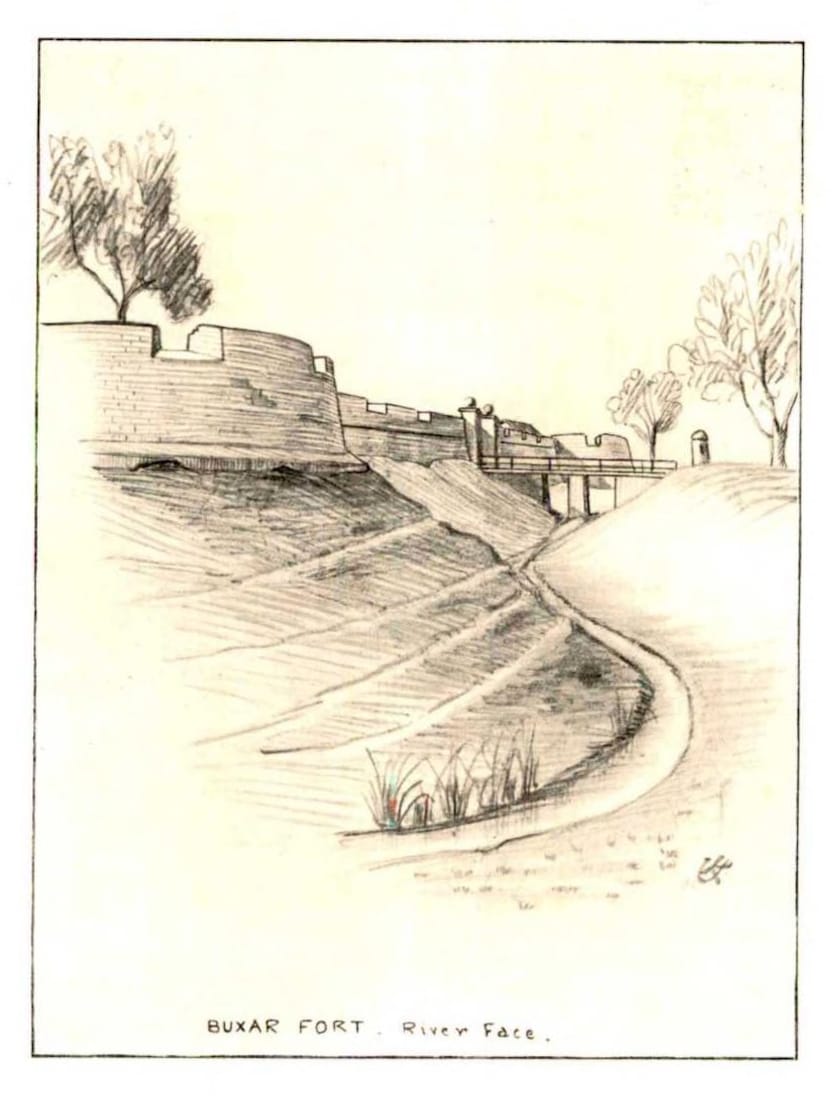
Buxar (Baksar) is a town on the Ganga in western Bihar, close to today's Uttar Pradesh border. The allies had a much larger army, perhaps 40,000 men. Munro had about 7,000, mostly sepoys. The fighting was hard, but the Company held its line and the allied army broke.
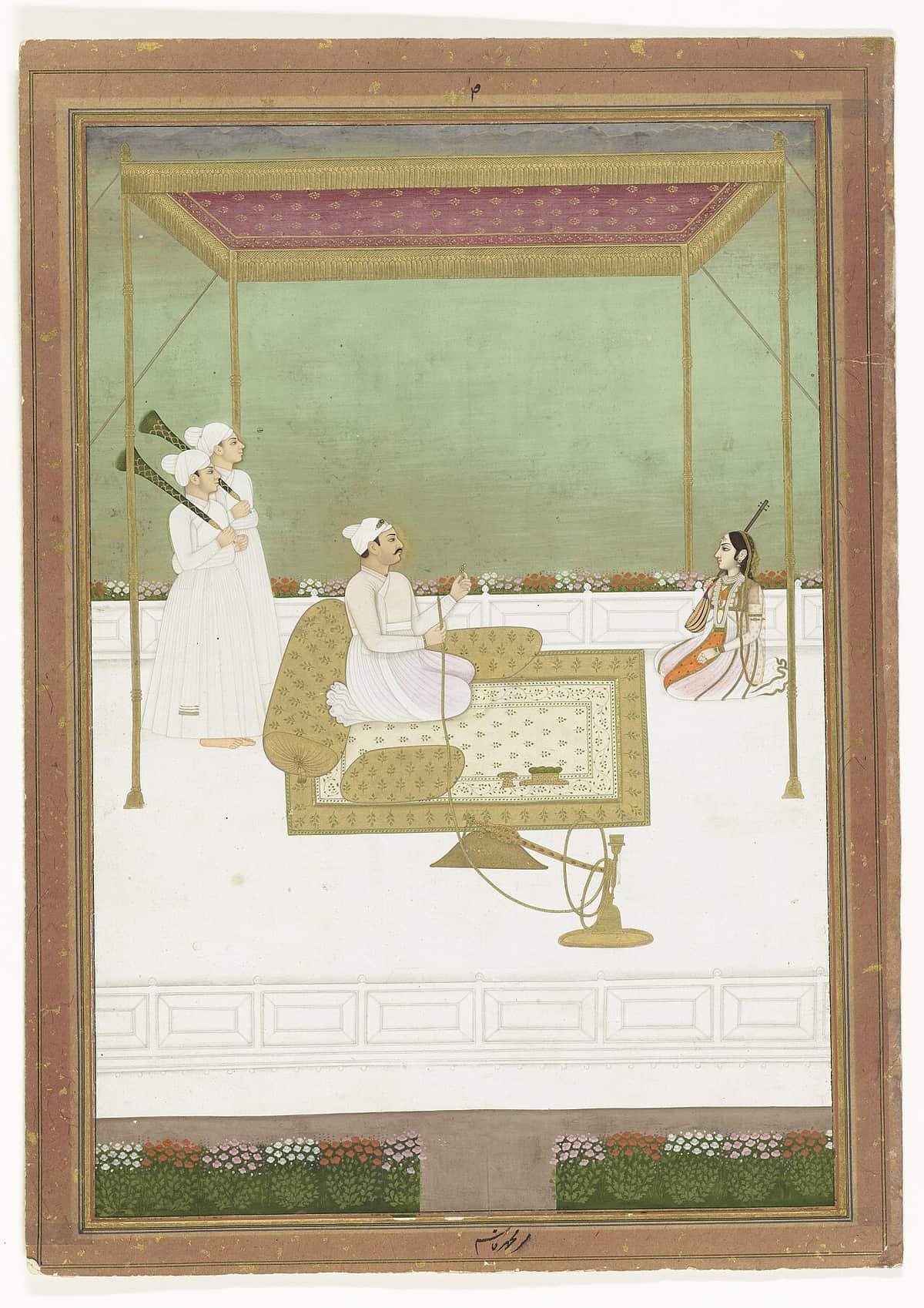
- Moved his capital to Munger
- Abolished inland duties for all traders
- Fled after Buxar; died poor in 1777
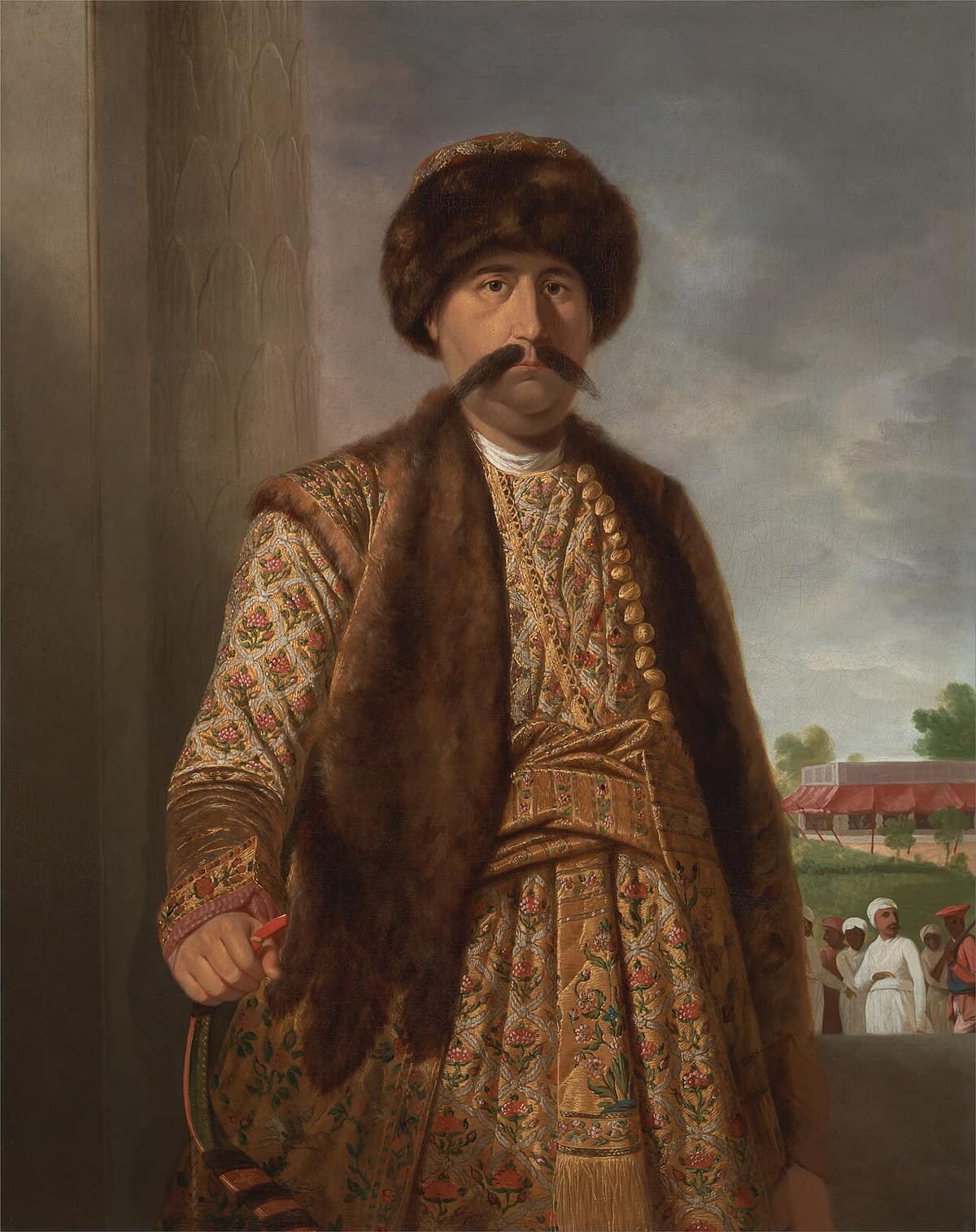
- Also the Wazir of the Mughal empire
- Kept his kingdom after the 1765 treaty, but paid ₹50 lakh
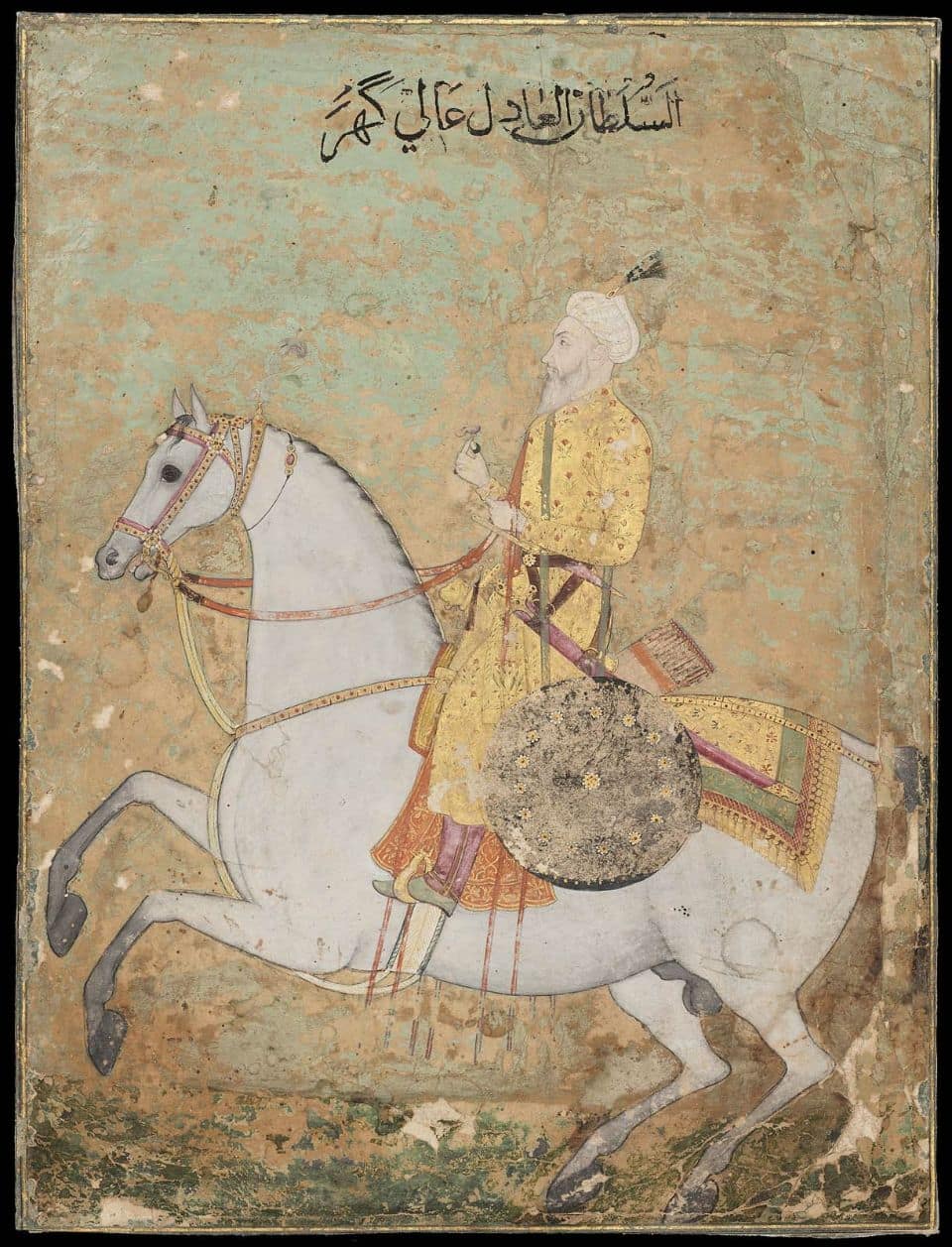
- Had no real kingdom; lived in exile
- Came over to the British after Buxar; granted the Diwani
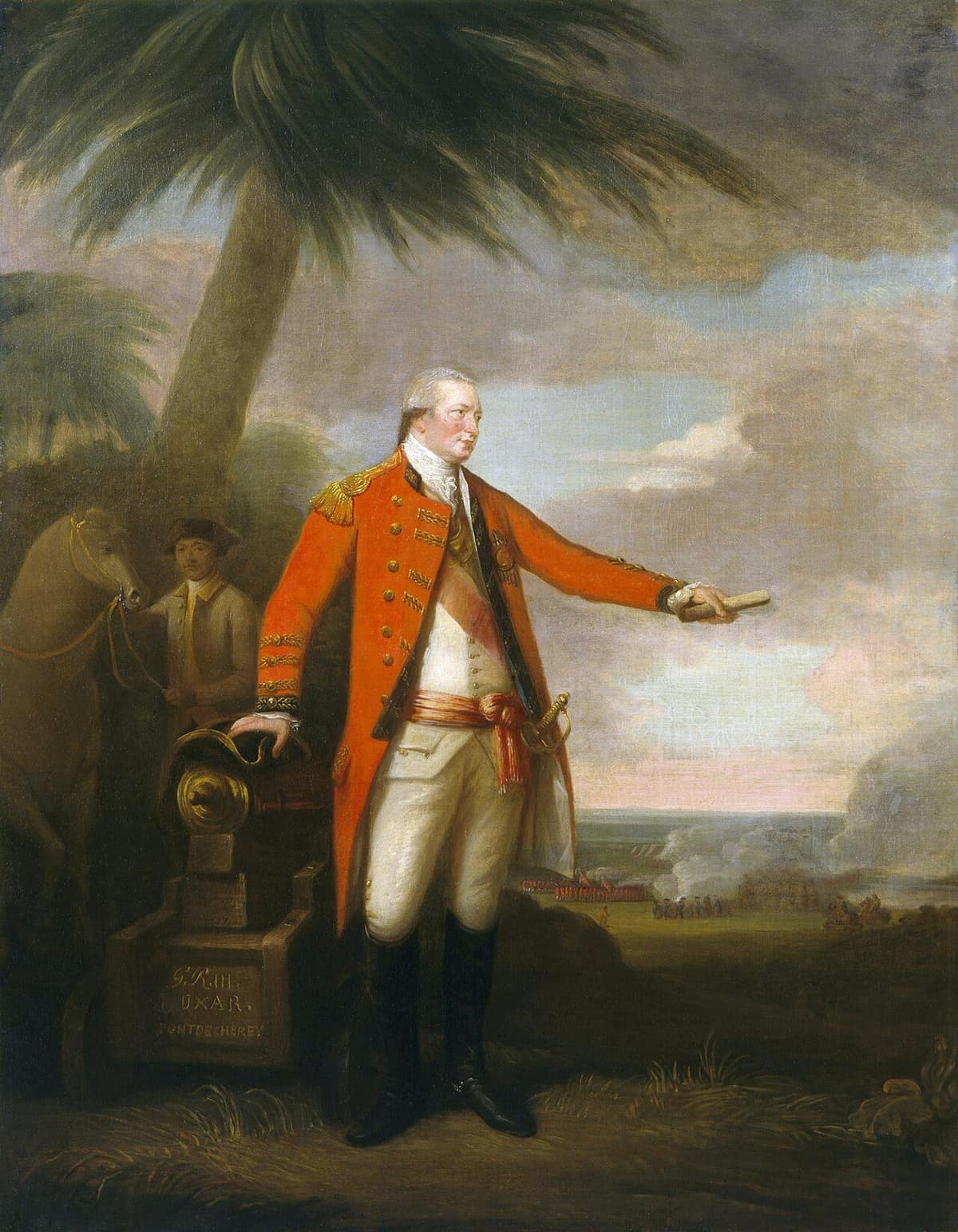
- Major in the Company's army
- Won Buxar; not to be confused with Thomas Munro of Madras
- No single commander. Each ruler led his own men. They did not trust one another.
- Shah Alam was half-hearted. He is said to have been in touch with the British, and he joined them soon after.
- Better drill and discipline. The Company's sepoys were trained to fight in close order with steady volleys.
- Mir Qasim had already lost his army in the battles of 1763. He brought little strength of his own.
The Treaty of Allahabad, 1765
Two treaties, signed by Clive, a year after the battle.
Robert Clive came back to India in 1765 as Governor of Bengal. In August 1765 he made two treaties at Allahabad. One was with the emperor Shah Alam II. The other was with Shuja-ud-Daula of Awadh. Together they are called the Treaty of Allahabad.
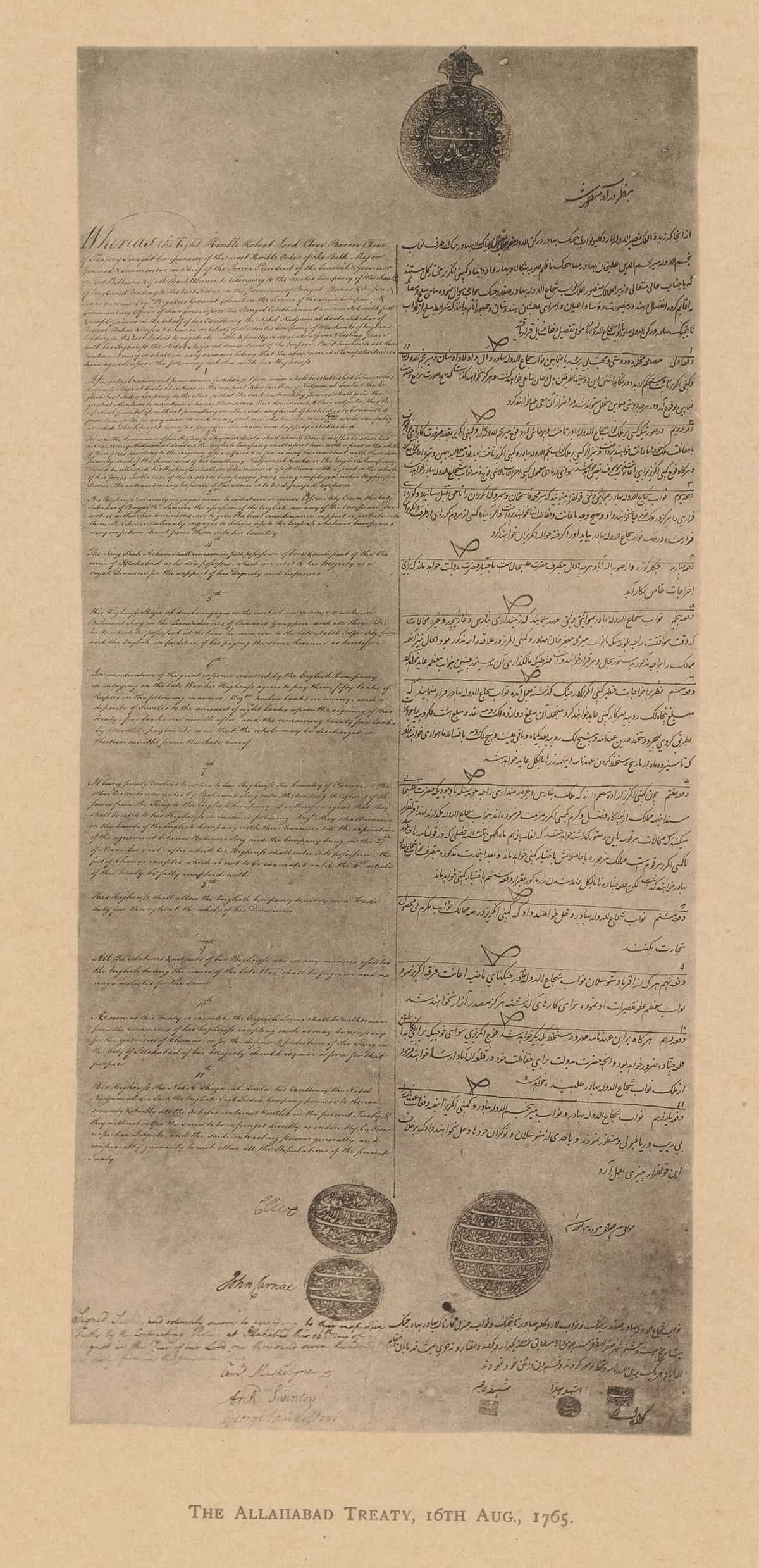
Under the Mughals a province had two kinds of power. Diwani was the right to collect land revenue and run civil justice. Nizamat was police, defence and criminal justice. In 1765 the Company took the Diwani. The Nawab kept the Nizamat, but only on paper. So the Company held the money, while the Nawab held the blame.
"Buxar = Bihar, 1764, Munro, three rulers." For the losers, think Q-S-S: Qasim (deposed Nawab of Bengal), Shuja (Nawab of Awadh), Shah Alam (Mughal emperor).
- Company commander at Buxar
- Major Hector Munro
- Mir Qasim's new capital
- Munger (Monghyr), Bihar
- Immediate cause of the war
- Mir Qasim abolished inland duties for all
- Who signed the Treaty of Allahabad
- Robert Clive, August 1765
- What the emperor gave
- Diwani of Bengal, Bihar and Orissa
- Yearly payment to Shah Alam II
- ₹26 lakh
- Shuja-ud-Daula paid
- ₹50 lakh war payment
- Awadh after 1765
- Returned to Shuja; a buffer state
Dual Government and what followed
Power without responsibility, then famine, then reform.
From 1765 to 1772, Bengal had two masters. The Company took the revenue. The Nawab was supposed to govern. Indian deputies, Muhammad Reza Khan in Bengal and Raja Shitab Rai in Bihar, collected the taxes for the Company. Nobody looked after the people. This system is called the Dual Government, set up by Clive.
- 1Alivardi Khan1740–1756 · Fought the Maratha raidsgrandson
- 2Siraj-ud-Daulah1756–1757 · Lost at Plasseyhis army chief
- 3Mir Jafar1757–1760 · Puppet after Plasseyson-in-law
- 4Mir Qasim1760–1763 · Lost at Buxar (1764)restored
- 5Mir Jafar again1763–1765 · Brought back by the Companyson
- 6Najm-ud-Daulafrom 1765 · Nawab under Dual Government
- Clive1765: Diwani and Dual GovernmentThe Company takes the revenue; the Nawab keeps only the name of power.
- 1770: Bengal famineCrops fail and taxes stay high. Millions die.
- Warren Hastings1772: Dual Government endsThe Company takes direct charge of revenue and government.
- 1773: Regulating ActThe Governor of Bengal becomes Governor-General of Bengal. A Supreme Court is set up at Calcutta (1774).
- Cornwallis1793: Permanent SettlementLand revenue of Bengal fixed for ever with the zamindars.
- 1833: Charter ActThe Governor-General of Bengal becomes Governor-General of India. William Bentinck is the first.
Everything on one look
The battle, the treaty and the result.
- 22 October 1764, Buxar, Bihar, on the Ganga
- Company leader: Major Hector Munro
- Allies: Mir Qasim, Shuja-ud-Daula, Shah Alam II
- Immediate cause: Mir Qasim abolished inland duties for all
- Mir Qasim's capital: Munger
- Called the battle that made British power supreme
- Treaty of Allahabad, August 1765, by Clive
- Diwani of Bengal, Bihar, Orissa to the Company
- Shah Alam II: ₹26 lakh a year
- Shuja: ₹50 lakh; Awadh kept as a buffer
- Dual Government 1765–1772
- Ended by Warren Hastings, 1772
- Buxar is 1764; the Treaty of Allahabad is 1765.
- Hector Munro won Buxar. Clive signed the treaty but did not fight the battle.
- Mir Qasim, not Mir Jafar, fought at Buxar.
- Mir Qasim removed duties for everyone. He did not raise taxes on the English.
- Diwani = revenue. Nizamat = police and criminal justice.
- Awadh was not annexed in 1765. It was given back to Shuja.
- Dual Government was started by Clive and ended by Warren Hastings (1772).
- Supreme Court at Calcutta: Regulating Act 1773, not Pitt's India Act.
- Governor-General of India: Charter Act 1833, Bentinck first.
- Battle of Buxar: 22 October 1764
- Place: Buxar, Bihar, on the Ganga
- Company leader: Major Hector Munro
- Allies: Mir Qasim, Shuja-ud-Daula, Shah Alam II
- Mir Qasim made Nawab: 1760
- Mir Qasim's capital: Munger
- Immediate cause: inland duties abolished for all
- Third Battle of Panipat: 1761, Abdali beat Marathas
- Treaty of Allahabad: August 1765, Robert Clive
- Diwani: Bengal, Bihar and Orissa
- Shah Alam II's yearly payment: ₹26 lakh
- Shuja's war payment: ₹50 lakh
- Awadh: kept as a buffer state
- Dual Government: 1765–1772
- Bengal famine: 1770
- Dual Government ended: Warren Hastings, 1772
- Supreme Court at Calcutta: Regulating Act 1773
- Permanent Settlement 1793: Cornwallis
- Governor-General of India: Charter Act 1833
Why is Buxar seen as more decisive than Plassey?
Show answer
Plassey was won mainly through Mir Jafar's betrayal and left a Nawab on the throne. At Buxar the Company beat three major powers in real battle. The result, the Diwani of 1765, gave it the legal right to collect the revenue of Bengal, Bihar and Orissa.