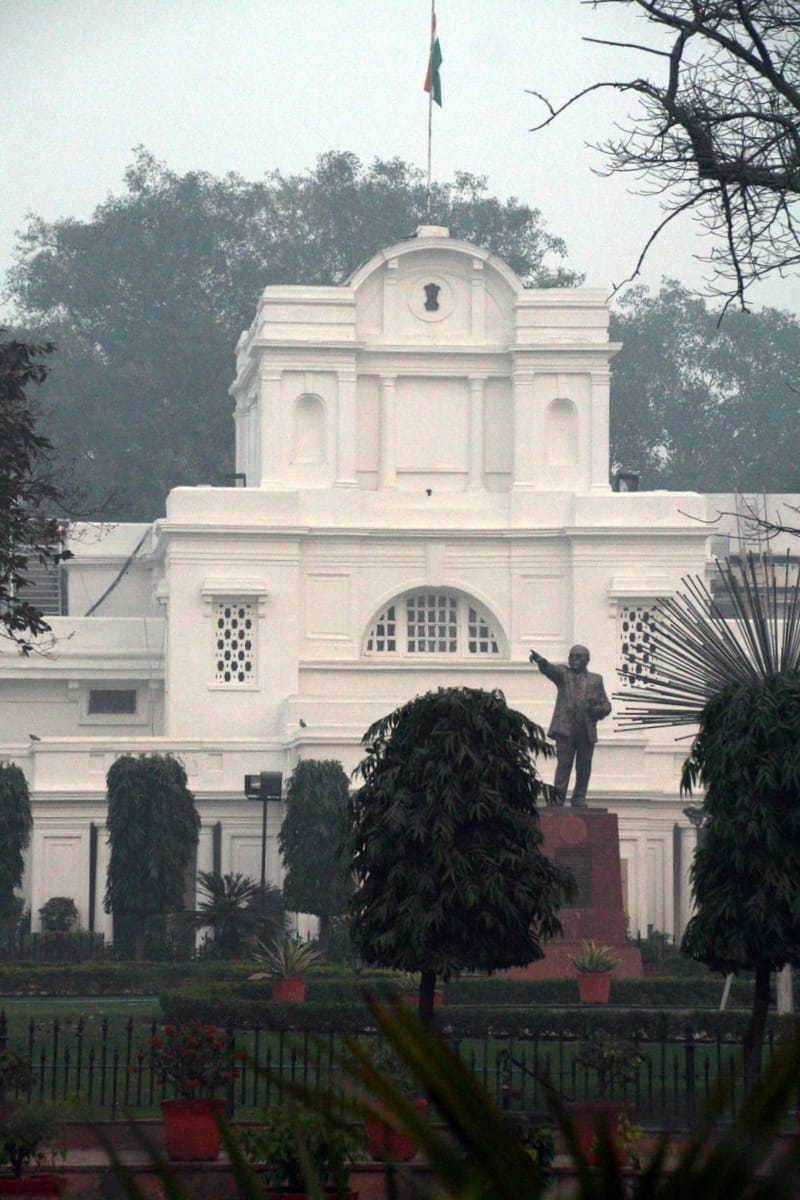
The British ruled India through a chain of laws passed in London. The chain began with the Regulating Act of 1773. It ended with the Indian Independence Act of 1947. Each law changed who held power. Together they built the system that free India took over. This step-by-step building is called constitutional development.
The Company era: 1773 to 1853
Parliament slowly takes power away from a trading company.
Hold the whole story in two halves. Before 1858, the laws tried to control the East India Company, a trader that had become a ruler. After 1858, the British Crown ruled directly. Then the laws slowly let Indians into government.
After Plassey (1757) and the grant of Diwani (1765), the Company ruled Bengal, and ruled it badly. Its officers grew rich while Bengal starved in the famine of 1770. So Parliament decided to step in.
- First control by Parliament1773: Regulating ActGovernor of Bengal becomes Governor-General of Bengal (Warren Hastings), with a council of 4. Madras and Bombay are placed under Bengal. A Supreme Court at Calcutta is set up. Company servants may not trade privately or take gifts.
- Dual control1784: Pitt's India ActA Board of Control in London handles political matters. The Company's Court of Directors keeps trade. Company lands are called British possessions in India for the first time.
- Trade opened1813: Charter ActThe Company's trade monopoly in India ends, except tea and trade with China. Christian missionaries may now come and preach. One lakh rupees a year is set aside for education.
- Governor-General of India1833: Charter ActThe Company's trade ends completely; it only governs now. The Governor-General of Bengal becomes the Governor-General of India. William Bentinck is the first. All law-making is centralised.
- Last Charter Act1853: Charter ActLaw-making is separated from day-to-day rule, with a small legislative council. The civil services are opened to open competition.
The Supreme Court at Calcutta began work in 1774, with Sir Elijah Impey as its first Chief Justice. It came from the Regulating Act of 1773, not from any Charter Act.
Pitt's India Act split power over India in two. The Board of Control, run by the British government, gave orders on politics, war and revenue. The Company's Court of Directors kept trade and jobs. This double system lasted until 1858.
Who headed British India
Three new titles, each made by an Act.
The title of the top British officer in India changed with the Acts. Exams ask who was first under each title. Learn the five names below in order.
- 1Warren Hastings1774–1785 · First Governor-General of Bengal (Regulating Act 1773)1833 Act
- 2William Bentinck1833–1835 · First Governor-General of India (Charter Act 1833)1858 Act
- 3Lord Canning1858–1862 · First Viceroy (Act of 1858)1947 Act
- 4Lord Mountbatten1947–1948 · Last Viceroy; first Governor-General of free IndiaJune 1948
- 5C. Rajagopalachari1948–1950 · First and last Indian Governor-General
Robert Clive was only Governor of Bengal. The first Governor-General of Bengal was Warren Hastings, under the Regulating Act. Bentinck had been Governor-General of Bengal since 1828; the 1833 Act made him Governor-General of India.
First Governor-General of Bengal.
Fixed land revenue in Bengal for ever.
Indian rulers kept British troops and paid for them.
Made with Maharaja Ranjit Singh; the Sutlej became the line.
Also the first Governor-General of India, 1833.
Also annexed Punjab in 1849.
Governors-General and the one thing each is asked for.
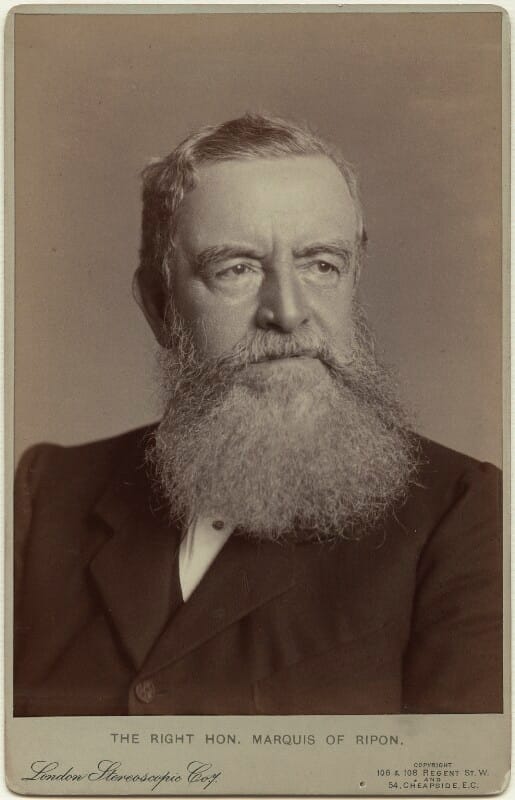
Crown rule: Indians let in, inch by inch
1858 to 1935: each Act gave a little more, always late.
After the Revolt of 1857, the Government of India Act 1858 passed India from the Company to the British Crown. From then on, each new law let Indians a little further into government. It was always less than Indians asked for, and later than promised.
- 1858Government of India Act
The Crown rules. A Secretary of State for India, with a Council of 15, runs Indian affairs from London. The Governor-General is also called Viceroy; Lord Canning is the first.
- 1861Indian Councils Act
Indians can be nominated to the Viceroy's law-making council. Canning's portfolio system gets legal backing.
- 1892Indian Councils Act
Members may discuss the budget and ask questions. A small, indirect form of election begins, without using the word.
- 1909Indian Councils Act (Morley-Minto)
Elections are brought in. Muslims get separate electorates.
- 1919Government of India Act (Montagu-Chelmsford)
Dyarchy in the provinces. Two houses at the centre, with direct elections.
- 1935Government of India Act
Provincial autonomy. A proposed All-India Federation. A Federal Court (1937).
Dyarchy means double government. Each province's subjects were split into two lists. Reserved subjects stayed with the British Governor. Transferred subjects went to Indian ministers answerable to the legislature. Indians got the hard jobs without the money. The 1935 Act ended dyarchy in the provinces.
The Government of India Act 1935 is the bridge to our Constitution. The federal structure, the three lists of subjects, the office of Governor, the Federal Court and the plan for sharing revenue between centre and provinces all came from it. It had 321 sections. Elections under it were held in 1937, and Congress formed ministries in most provinces.
The 1919 Act promised a review after ten years. The Simon Commission came to India in 1928 for this. All seven members were British, with no Indian. So Indians boycotted it with the cry "Simon, go back".
Smaller facts, asked now and thenTap to open
- The Charter Act of 1793 only renewed the Company's monopoly for 20 more years.
- The 1861 Act gave law-making powers back to Bombay and Madras. New councils followed for Bengal (1862), the North-Western Provinces (1886) and Punjab (1897).
- Canning nominated three Indians to his council: the Raja of Benaras, the Maharaja of Patiala and Sir Dinkar Rao.
- Satyendra Prasanna Sinha (S. P. Sinha) became the first Indian member of the Viceroy's Executive Council, under the 1909 reforms.
- The first Law Commission, under Lord Macaulay, followed the 1833 Act. Its work led to the Indian Penal Code (1860).
The road to 1947
War, offers, plans and the final Act.
The All-India Federation of the 1935 Act never started, because the princes would not join. The Second World War began in 1939. Britain then made a series of offers. Each one gave a little more, until the Indian Independence Act 1947 ended British rule.
- Sept 1939India put into the war
Viceroy Linlithgow declares India at war without asking Indian leaders. Congress ministries resign in protest.
- Aug 1940August Offer
Dominion status is named as the goal, but with no date.
- Mar 1942Cripps Mission
Dominion status and a constitution-making body, but only after the war. Congress rejects it.
- 1946Cabinet Mission
A union with a weak centre and groups of provinces; a plan for a Constituent Assembly.
- 9 Dec 1946Constituent Assembly meets
The Muslim League stays away.
- 20 Feb 1947Attlee's statement
Britain will leave India by June 1948 at the latest.
- 3 June 1947Mountbatten Plan
Partition and an early transfer of power.
- 18 July 1947Indian Independence Act
Gets royal assent in London.
- 15 Aug 1947Freedom
India and Pakistan become free dominions.
- 26 Jan 1950Republic
India's own Constitution comes into force.
- Created two dominions, India and Pakistan, from 15 August 1947.
- Ended the posts of Viceroy and Secretary of State for India. Each dominion got its own Governor-General.
- Gave each Constituent Assembly full power to make a constitution and laws.
- Ended British power over the princely states; they were free to join India or Pakistan.
- Regulating Act 1773
- Governor-General of Bengal; Supreme Court at Calcutta
- Pitt's India Act 1784
- Board of Control; dual control
- Charter Act 1813
- India trade monopoly ends; missionaries allowed
- Charter Act 1833
- Governor-General of India; all Company trade ends
- Charter Act 1853
- Open competition for civil services
- Government of India Act 1858
- Crown rule; Secretary of State; Viceroy
- Indian Councils Act 1861
- Indians nominated; portfolio system
- Indian Councils Act 1892
- Budget discussion and questions
- Morley-Minto 1909
- Elections; separate electorates
- Montagu-Chelmsford 1919
- Dyarchy; two houses at the centre
- Government of India Act 1935
- Provincial autonomy; Federal Court
- Indian Independence Act 1947
- Two dominions from 15 August
Everything on one look
The chain, the firsts and the traps.
- 1773 Regulating Act: Governor-General of Bengal
- 1774 Supreme Court at Calcutta (Impey)
- 1784 Pitt's India Act: Board of Control
- 1813 missionaries allowed; India trade opened
- 1833 Governor-General of India (Bentinck)
- 1853 open competition for civil services
- 1858 Crown rule; Viceroy (Canning)
- 1861 Indians nominated
- 1909 elections; separate electorates
- 1919 dyarchy; two houses at the centre
- 1935 provincial autonomy; Federal Court
- 1947 two dominions from 15 August
- The Regulating Act made Warren Hastings Governor-General of Bengal, not of India.
- Clive was Governor of Bengal, never Governor-General.
- The Supreme Court at Calcutta came from the Regulating Act 1773, not a Charter Act.
- Pitt's India Act created dual control; it did not end Company rule.
- The 1813 Act kept tea and China trade with the Company; 1833 ended them.
- The Governor-General of India came in 1833; the title Viceroy in 1858.
- Separate electorates began in 1909, not 1919.
- Dyarchy came in 1919 and was ended in the provinces by 1935.
- The federation of the 1935 Act never came into being.
- The Independence Act came from the Mountbatten Plan, not the Cabinet Mission.
- First control by Parliament: Regulating Act 1773
- First Governor-General of Bengal: Warren Hastings
- Supreme Court, Calcutta: 1774, Elijah Impey
- Board of Control: Pitt's India Act 1784
- Missionaries allowed: Charter Act 1813
- One lakh rupees for education: 1813
- All Company trade ends: Charter Act 1833
- First Governor-General of India: Bentinck, 1833
- Open civil service exam: Charter Act 1853
- Crown rule and Viceroy: Act of 1858
- First Viceroy: Lord Canning
- Father of local self-government: Lord Ripon
- Separate electorates: Morley-Minto 1909
- Dyarchy and two houses: Act of 1919
- Simon Commission: came 1928, no Indian member
- Capital to Delhi: announced 1911
- Provincial autonomy: Act of 1935
- Attlee's deadline: June 1948
- Basis of Independence Act: Mountbatten Plan
- Last Indian Governor-General: C. Rajagopalachari
Which three Acts created the three titles of the top British officer in India, and who was first under each?
Show answer
The Regulating Act 1773 created the Governor-General of Bengal (Warren Hastings). The Charter Act 1833 made it Governor-General of India (William Bentinck). The Act of 1858 added the title Viceroy (Lord Canning).