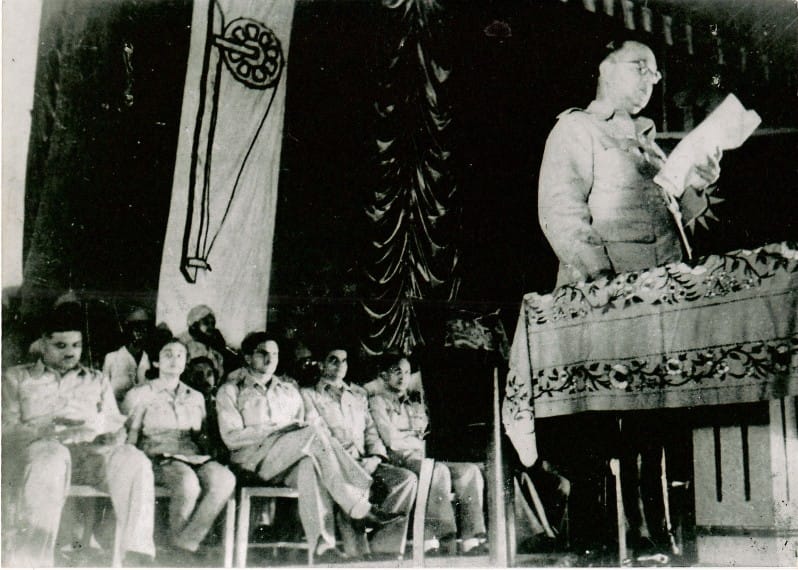
Gandhi believed India would be freed by non-violence. Subhas Chandra Bose believed it needed an army as well. During the Second World War he left India in secret, took charge of the Indian National Army (INA) and marched with Japan towards India. The army lost the war. But the trials of its officers in 1945–46 stirred the whole country and shook British confidence.
Bose before the INA
From the ICS to the Congress chair, then a break with Gandhi.
Subhas Chandra Bose was born on 23 January 1897 at Cuttack in Odisha. He passed the Indian Civil Service (ICS) exam in England in 1920. But in 1921 he resigned to join the freedom struggle. His political guru was Chittaranjan Das (Deshbandhu) of Bengal. Today India marks his birthday as Parakram Diwas.
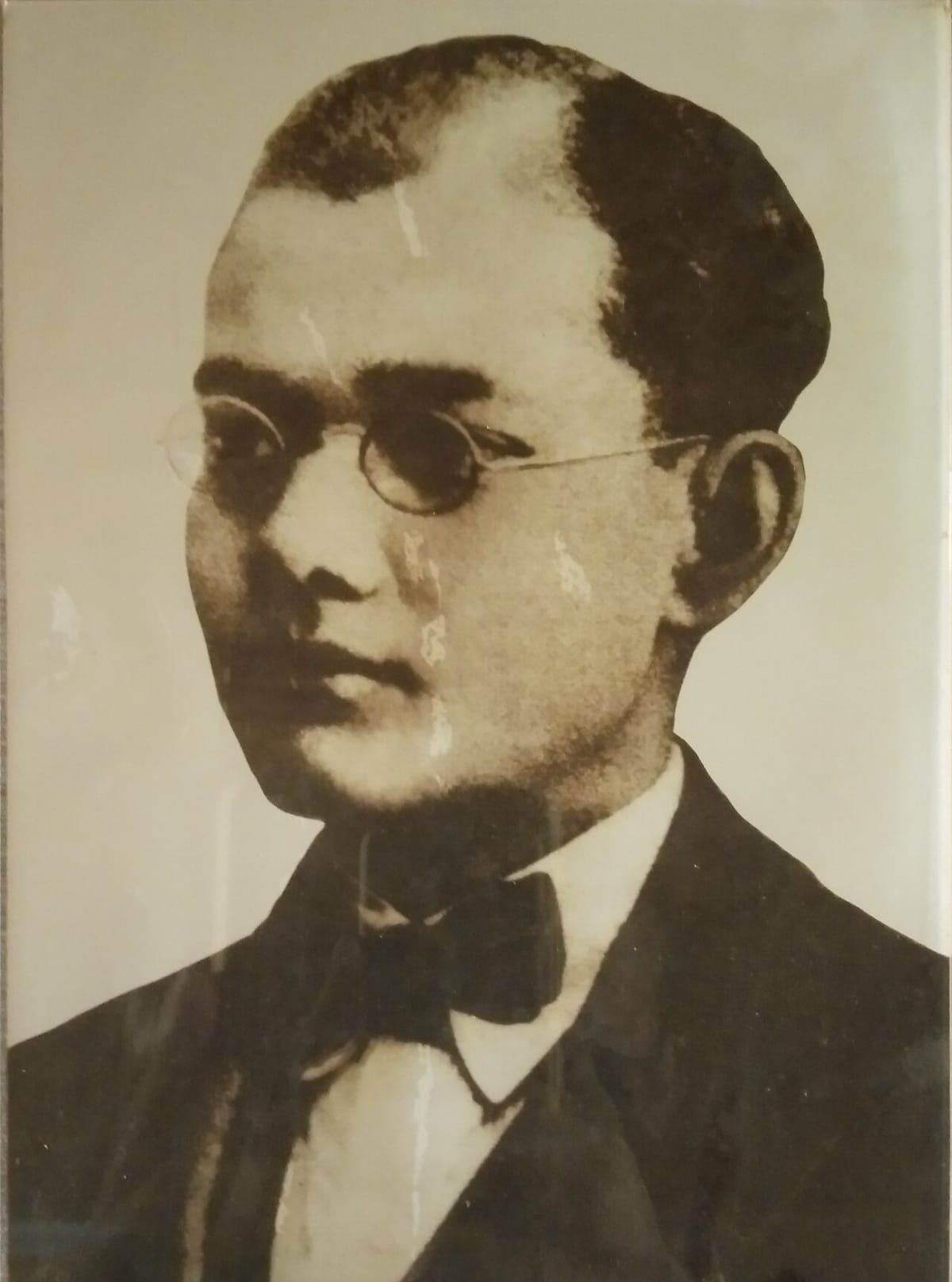
- 23 Jan 1897Born at Cuttack
Odisha, then part of Bengal Presidency.
- 1921Resigns from the ICS
Joins C. R. Das and the Congress in Bengal.
- 1938Congress President, Haripura
Elected unopposed at the Haripura session in Gujarat.
- 1939Wins again at Tripuri
Defeats Gandhi's candidate Pattabhi Sitaramayya. Then resigns and founds the Forward Bloc.
- Jan 1941Escape from Calcutta
Slips out of house arrest in disguise. Goes via Peshawar and Kabul to Moscow and then Berlin.
In 1939 Bose stood again for Congress President. Gandhi backed Pattabhi Sitaramayya. Bose won. Gandhi said Pattabhi's defeat was his own defeat. Most of the Working Committee then resigned. Bose could not work without them, so he resigned in April 1939. Rajendra Prasad took over.
The Forward Bloc was formed by Bose in May 1939, inside the Congress at first. It aimed to bring the left-wing and radical groups together for a stronger fight.
Bose and Gandhi disagreed on method, not on the goal. In a radio speech in July 1944, Bose called Gandhi the Father of the Nation. After news of Bose's death in 1945, Gandhi called him the Prince among Patriots.
Roots of the INA
Ghadar men, Rash Behari Bose and Captain Mohan Singh.
The idea of an Indian army abroad was older than Netaji. The Ghadar Party (1913) had tried to raise Indian soldiers against the British during the First World War. One of its helpers, Rash Behari Bose, fled to Japan in 1915. He later led the Indian Independence League there. Then, in February 1942, Japan captured Singapore with thousands of Indian soldiers.
- San Francisco1913: Ghadar PartyPunjabi migrants in America plan an armed rising in India. It fails in 1915.
- 1915: Rash Behari Bose to JapanHe escapes after the failed Lahore plan and settles in Japan.
- Feb 1942: Singapore fallsJapan takes many Indian prisoners of war.
- Mohan Singh1942: the first INACaptain Mohan Singh, a Punjabi officer, forms the INA from these prisoners, with Japanese support.
- Dec 1942: crisisMohan Singh quarrels with the Japanese and is arrested. The first INA breaks up.
- Second INAJuly 1943: Subhas Bose arrivesRash Behari hands over the League. Netaji revives the INA.
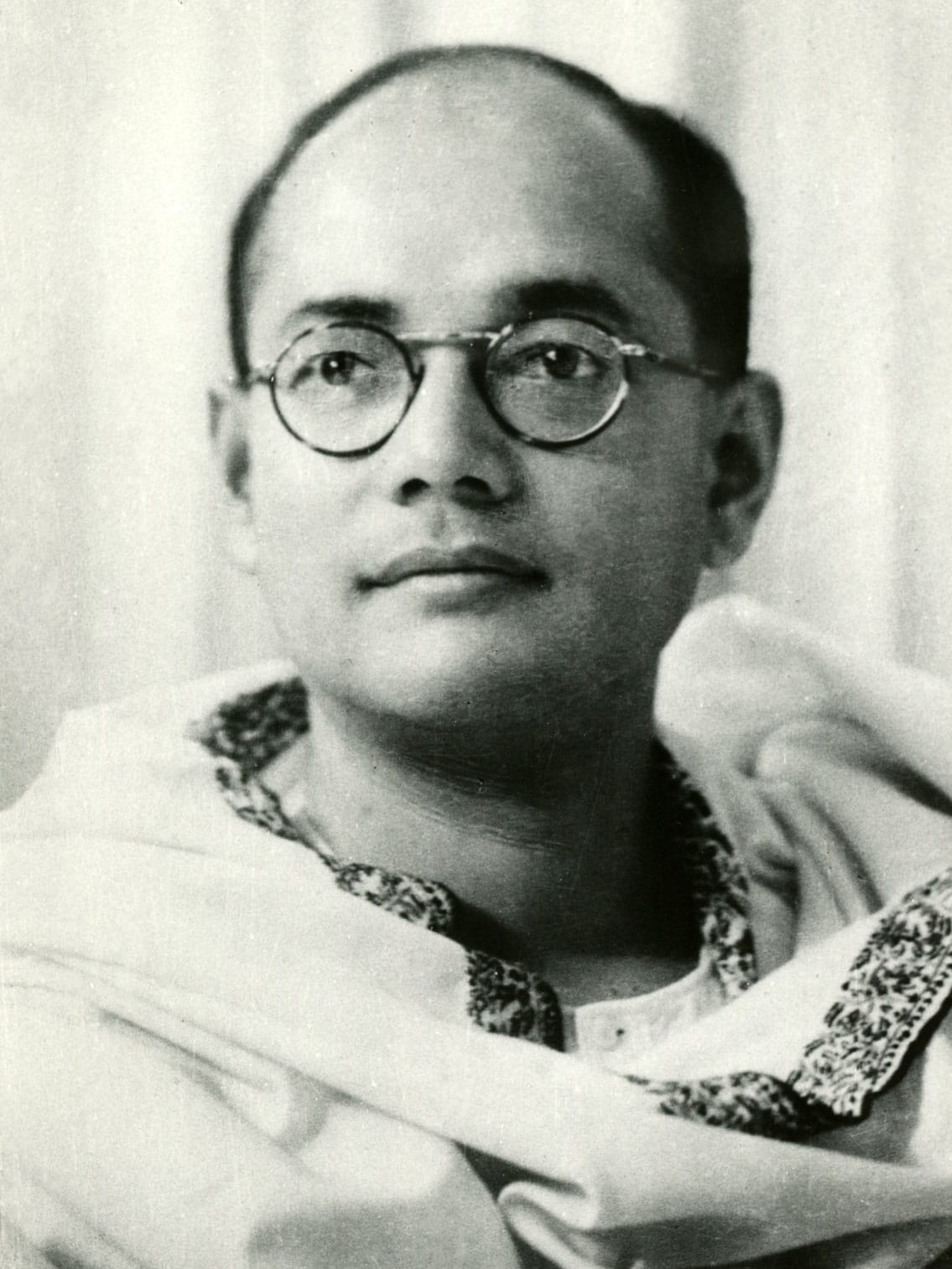
- Forward Bloc, 1939
- Proclaimed Azad Hind government, 1943
- Linked with the Ghadar plan of 1915
- Led the Indian Independence League; handed it to Subhas in 1943
- Officer of a Punjab Regiment battalion
- Formed the INA in 1942
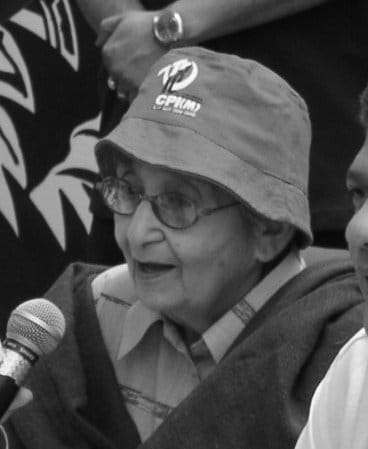
- A doctor; led the women's regiment of the INA
- Seen here in 2005
Netaji and the Azad Hind government
Singapore, 1943: a government, an army and a women's regiment.
In Germany, Bose ran Azad Hind Radio and raised an Indian Legion from prisoners of war. Indians there are said to have first called him Netaji. In 1943 he travelled by submarine to South-East Asia. On 4 July 1943 he took over the Indian Independence League in Singapore. Next day he gave the INA its battle cry, Delhi Chalo.
- Feb–May 1943Submarine journey
A German submarine, then a Japanese one, carry Bose from Europe to Asia.
- 4 July 1943Takes over the League
At Singapore, from Rash Behari Bose.
- 21 Oct 1943Azad Hind government
Provisional Government of Free India proclaimed at Singapore.
- Oct 1943War declared
It declares war on Britain and the USA.
- 30 Dec 1943Flag at Port Blair
Bose hoists the tricolour in the Andaman Islands.
- The Azad Hind government was recognised by Japan, Germany, Italy and their allies.
- Japan placed the Andaman and Nicobar Islands under it in name. Bose renamed them Shaheed and Swaraj.
- It had its own flag, stamps, currency and a bank (Azad Hind Bank).
- The INA motto was Ittehad, Itmad, Qurbani: unity, faith, sacrifice.
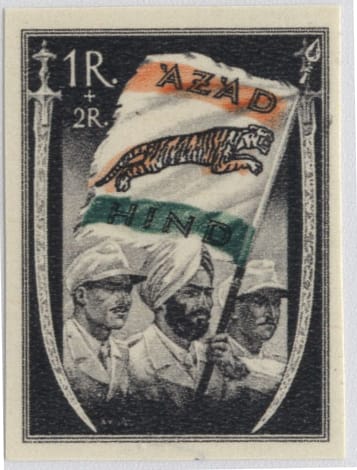
INA units were named after Congress leaders to show it was a national army.
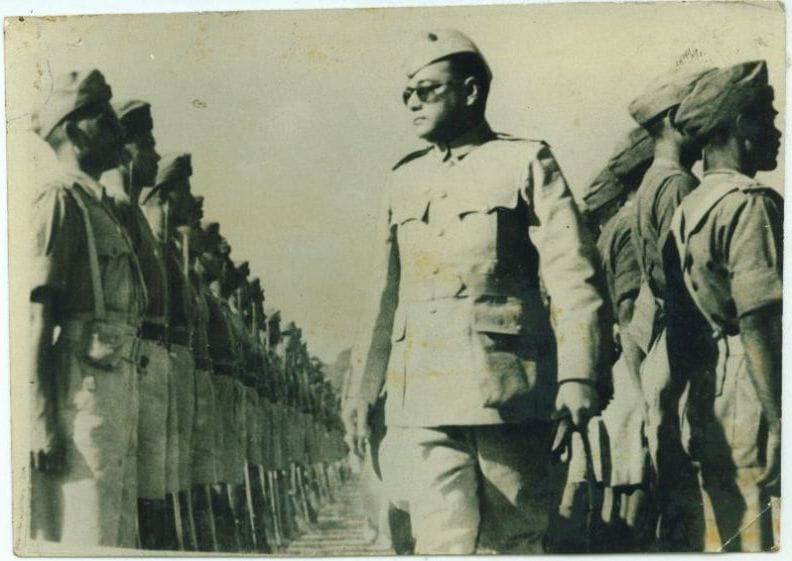
Commanded by Shah Nawaz Khan.
Led by Captain Lakshmi Swaminathan, later Lakshmi Sahgal.
Units of the INA, asked in exams.
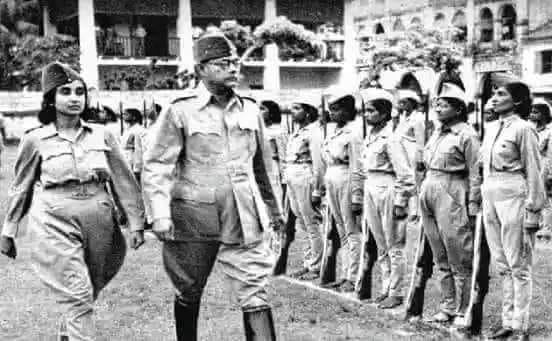
Jai Hind: the INA greeting, made popular by Bose. Delhi Chalo: 'On to Delhi', the INA's battle cry (July 1943). Tum mujhe khoon do, main tumhe azadi dunga: 'Give me blood and I will give you freedom', from a speech in Burma in July 1944.
Exams often mix the INA with earlier revolutionaries. Bhagat Singh: the Lahore Conspiracy Case. Ram Prasad Bismil: the Kakori case (1925). Surya Sen: the Chittagong Armoury Raid (1930).
The march to India and the end
Imphal and Kohima, 1944; Taipei, 1945.
In January 1944 the INA headquarters moved to Rangoon in Burma. In March 1944 INA units joined the Japanese attack on Imphal and Kohima in north-east India. On 14 April 1944 the INA flag was raised at Moirang in Manipur. But food and arms ran out, the monsoon came, and the British held on. By July 1944 the attack had failed.
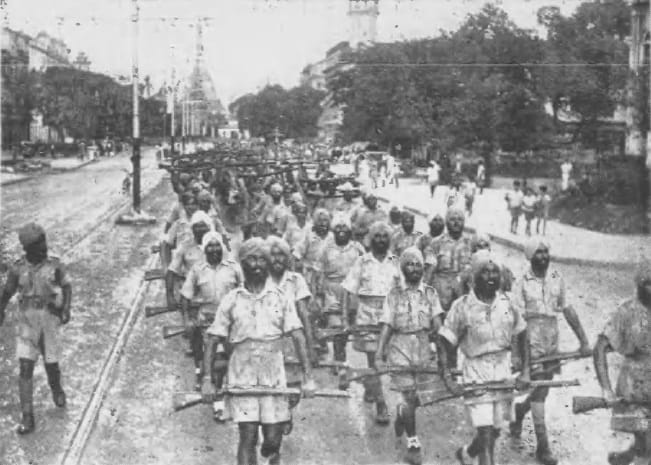
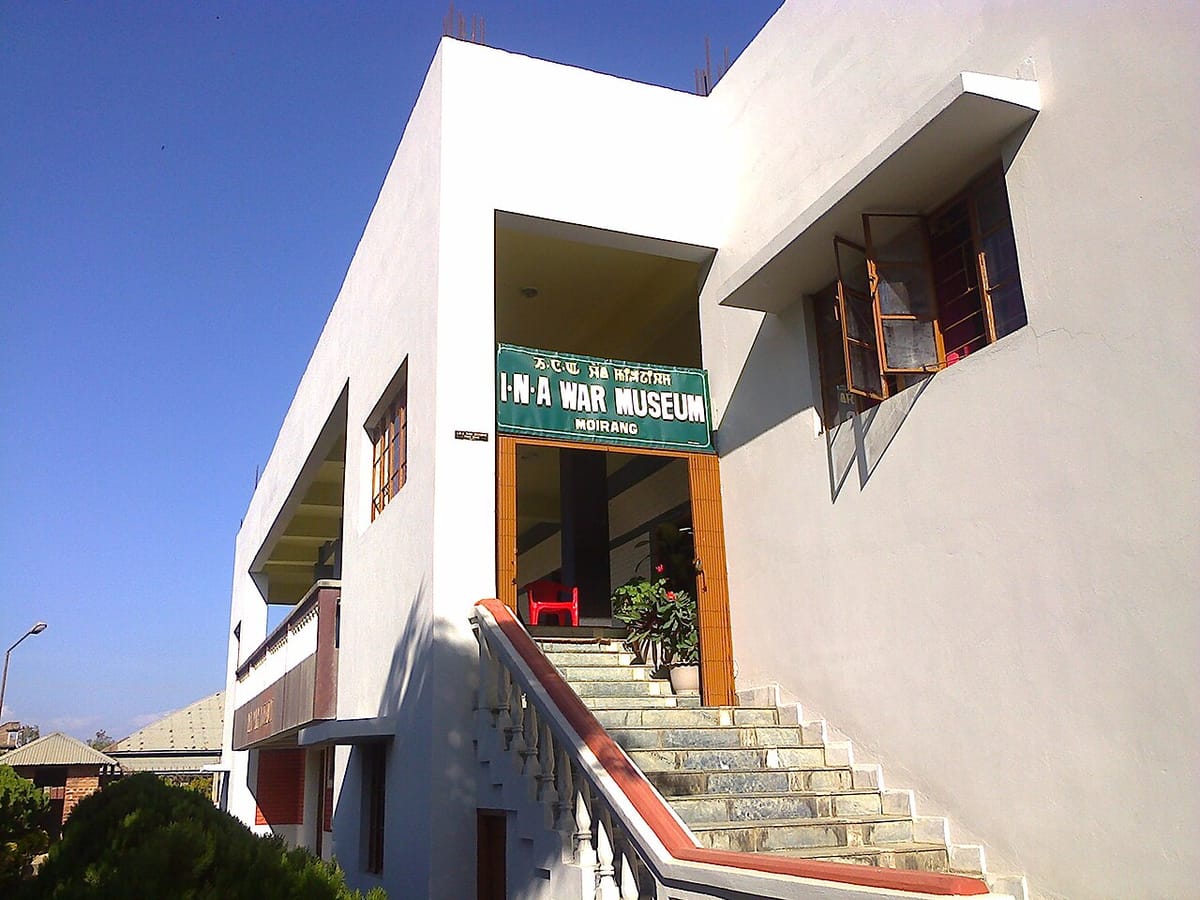
- In 1945 the British pushed back into Burma. Rangoon fell in May 1945, and many INA soldiers surrendered.
- Japan surrendered in August 1945.
- Bose is reported to have died after a plane crash at Taihoku (Taipei), Taiwan, on 18 August 1945.
- The INA had about 40,000 soldiers at its height. Estimates vary.
Red Fort trials and the naval mutiny
A defeated army that still shook the Raj, 1945–46.
After the war the British put INA officers on trial for waging war against the King. The first and most famous trial began in November 1945 at the Red Fort, Delhi. The British had tried Bahadur Shah Zafar in the same fort in 1858. Three officers stood trial together: Shah Nawaz Khan, Prem Kumar Sahgal and Gurbaksh Singh Dhillon.
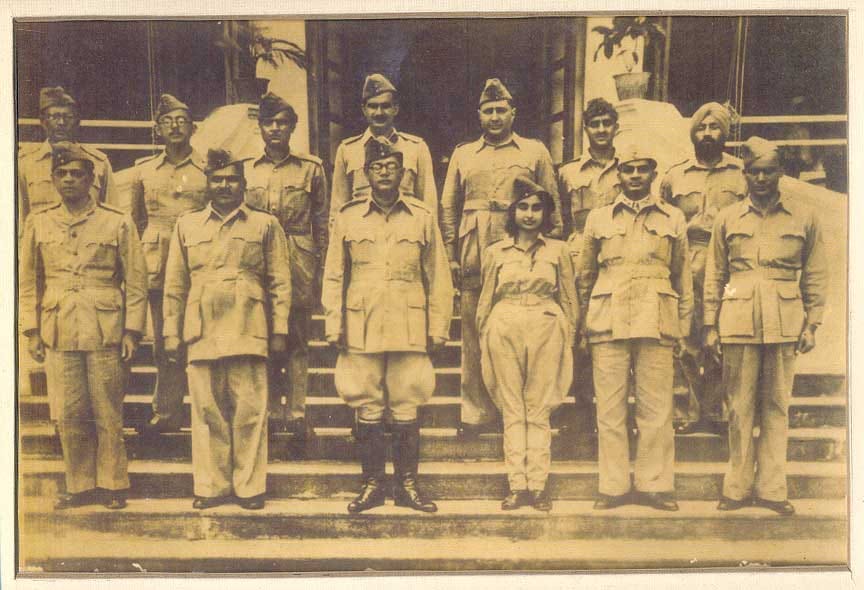
- Muslim, Hindu, SikhNov 1945: trial at the Red FortShah Nawaz Khan, Prem Sahgal and Gurbaksh Singh Dhillon are tried together.
- The defenceThe Congress forms an INA Defence Committee: Bhulabhai Desai (leading), Tej Bahadur Sapru, Kailash Nath Katju, Asaf Ali and Jawaharlal Nehru.
- The country risesProtests across India. The slogan: Lal Qile se aayi awaaz, Sahgal Dhillon Shahnawaz.
- Jan 1946: set freeFound guilty, but Commander-in-Chief Claude Auchinleck remits their sentences.
- Feb 1946: naval mutinyIndian sailors rise in Bombay. The British see that the armed forces may not stay loyal.
Many INA soldiers came from Punjab. Mohan Singh was a Punjabi officer. Of the three Red Fort accused, Gurbaksh Singh Dhillon was a Punjabi Sikh and Shah Nawaz Khan came from Rawalpindi district. Lakshmi Swaminathan married Prem Sahgal in 1947.
On 18 February 1946, Indian sailors (ratings) of HMIS Talwar in Bombay went on strike. They protested against bad food and racial insults, and shouted Jai Hind. The revolt spread to Karachi, Calcutta and Madras: about 78 ships and 20,000 sailors. The Communist Party of India backed them. Sardar Patel (and Jinnah) persuaded them to surrender on 23 February 1946.
Also in 1945: the Simla Conference (June–July) was called by Viceroy Lord Wavell, not Mountbatten. Mountbatten came only in March 1947.
- Founder of the first INA
- Captain Mohan Singh, 1942
- Indian Independence League
- Rash Behari Bose; handed to Subhas, July 1943
- Azad Hind government
- Singapore, 21 October 1943
- Rani Jhansi Regiment
- Captain Lakshmi Sahgal
- Shaheed and Swaraj
- Bose's names for the Andaman and Nicobar Islands
- Delhi Chalo
- INA battle cry, July 1943
- Prince among Patriots
- Gandhi's words for Bose
- Led INA defence at Red Fort
- Bhulabhai Desai
- RIN mutiny began on
- HMIS Talwar, Bombay, 18 Feb 1946
Everything on one look
Bose, the INA, the trials and the mutiny.
- Born Cuttack, 23 Jan 1897
- Congress President: Haripura 1938, Tripuri 1939
- Forward Bloc, 1939
- Escape from Calcutta: January 1941
- First INA: Mohan Singh, 1942
- Azad Hind government: Singapore, 21 Oct 1943
- INA flag at Moirang, April 1944
- Reported death: Taipei, 18 Aug 1945
- Red Fort trials from Nov 1945
- Accused: Shah Nawaz, Sahgal, Dhillon
- Defence led by Bhulabhai Desai
- RIN mutiny: Bombay, Feb 1946
- The INA was founded by Mohan Singh (1942); Bose revived it in 1943.
- Bose founded the Forward Bloc, not the INA.
- At Tripuri (1939) Bose defeated Pattabhi Sitaramayya, Gandhi's candidate.
- The Azad Hind government was proclaimed at Singapore, not Tokyo or Rangoon.
- Gandhi called Bose the Prince among Patriots; Bose called Gandhi the Father of the Nation.
- The Ghadar Party was based in San Francisco, not Singapore or Berlin.
- The Rani Jhansi Regiment was led by Lakshmi Sahgal, not Rani Lakshmibai.
- The Red Fort accused: Shah Nawaz Khan, Prem Sahgal, Gurbaksh Singh Dhillon.
- The CPI backed the naval mutiny; Congress and League asked for surrender.
- The Simla Conference (1945) was under Wavell, not Mountbatten.
- Bose born: Cuttack, 23 January 1897
- Birthday: Parakram Diwas
- Political guru: C. R. Das
- Congress President: Haripura 1938, Tripuri 1939
- Tripuri: defeated Pattabhi Sitaramayya
- Forward Bloc: 1939
- Escape from Calcutta: January 1941
- Azad Hind Radio, Indian Legion: Germany
- First INA: Captain Mohan Singh, 1942
- Indian Independence League: Rash Behari Bose
- Delhi Chalo: July 1943
- Azad Hind government: Singapore, 21 Oct 1943
- Andaman and Nicobar: Shaheed and Swaraj
- Women's unit: Rani Jhansi Regiment, Lakshmi Sahgal
- Give me blood…: Burma, July 1944
- INA flag at Moirang, Manipur: 14 April 1944
- Reported death: Taihoku (Taipei), 18 Aug 1945
- Red Fort trial: Shah Nawaz, Sahgal, Dhillon
- INA defence: Bhulabhai Desai
- RIN mutiny: HMIS Talwar, 18 Feb 1946
Why did the Red Fort trials of 1945–46 backfire on the British?
Show answer
The three accused were a Muslim, a Hindu and a Sikh, so the whole country stood behind them. Protests spread, and Auchinleck had to remit their sentences. The mood reached the armed forces, and the naval mutiny of February 1946 showed the British they could no longer fully trust Indian soldiers.