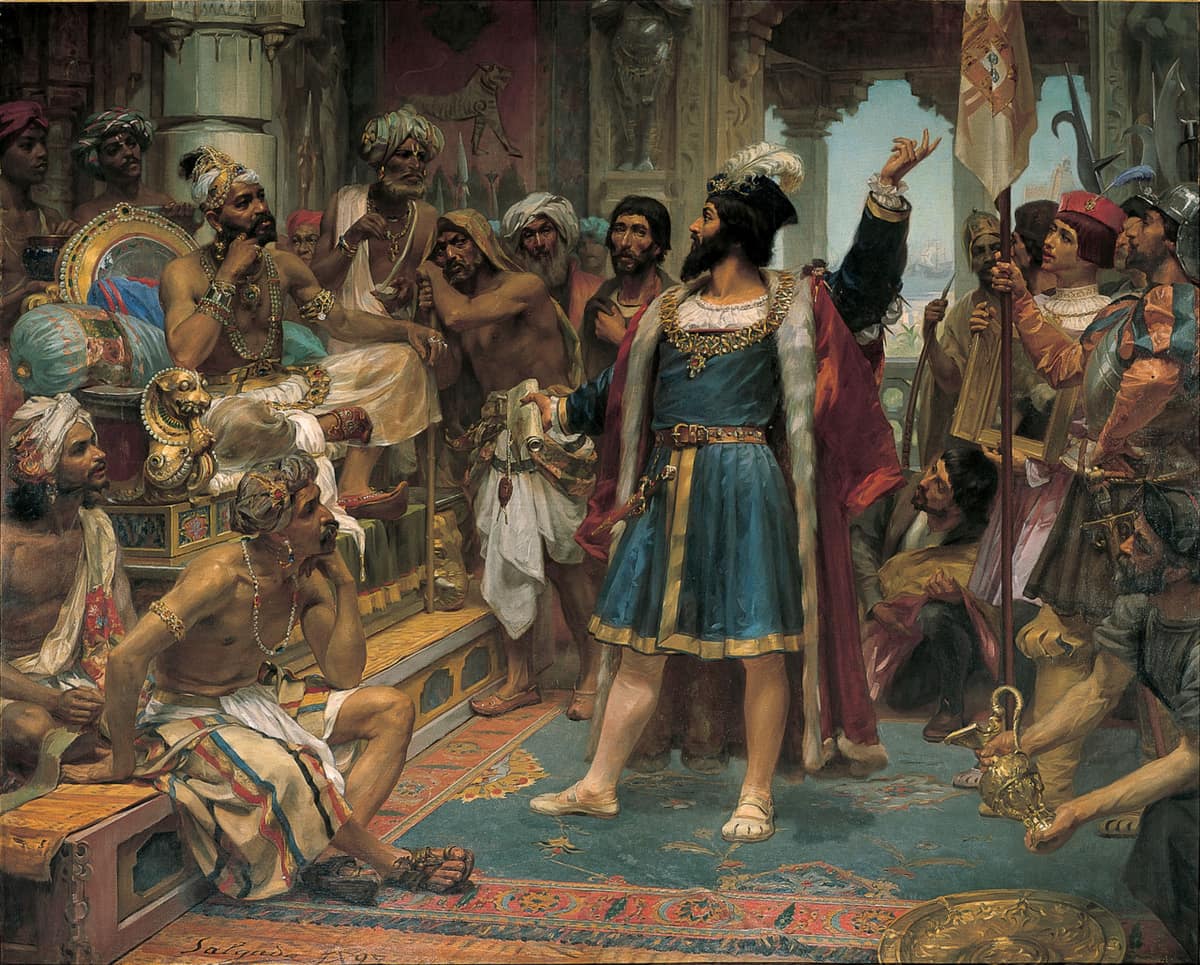
In 1498 a Portuguese sailor, Vasco da Gama, reached Calicut in Kerala by sea. After him came the Dutch, the English, the Danes and the French. They came to buy spices and cloth. They built forts, fought each other, and slowly entered Indian politics. In the end the English beat them all.
Why Europe came, and who came first
Spices, a sea route, and five trading powers.
India sold pepper, spices, cotton cloth, silk and indigo. Europe wanted these goods badly. But the old trade passed through Arab and Italian middlemen, who took a big share. So European rulers looked for a direct sea route to India. The Portuguese found it first, by sailing round Africa.
- 20 May 1498Vasco da Gama at Calicut
He sailed round the Cape of Good Hope and landed near Calicut. The local Hindu ruler, the Zamorin, received him.
- 1500Cabral's voyage
Pedro Álvares Cabral led the next Portuguese fleet to India.
- 1600English East India Company
Formed in London on 31 December 1600.
- 1602Dutch East India Company
Formed in the Netherlands. Its first Indian factory came at Masulipatnam in 1605.
- 1616Danish East India Company
Its main base, Tranquebar, came in 1620.
- 1664French East India Company
Formed under the minister Colbert. First factory at Surat in 1668.
Order of the companies being formed: English (1600), Dutch (1602), Danish (1616), French (1664). Order of arrival in India: Portuguese, Dutch, English, Danes, French. The Dutch reached India (1605) before the English set up their first permanent factory at Surat (1613).
Please Do Eat Dal First — Portuguese, Dutch, English, Danes, French. That is the usual order of arrival asked in exams.
The Portuguese: first in, last out
Calicut, then Cochin, then Goa.
The Portuguese wanted to control the sea trade, not just join it. Their first base was Cochin. Ships trading in Indian waters were told to buy a Portuguese pass, the cartaz. Two men built their power: Francisco de Almeida and Afonso de Albuquerque.
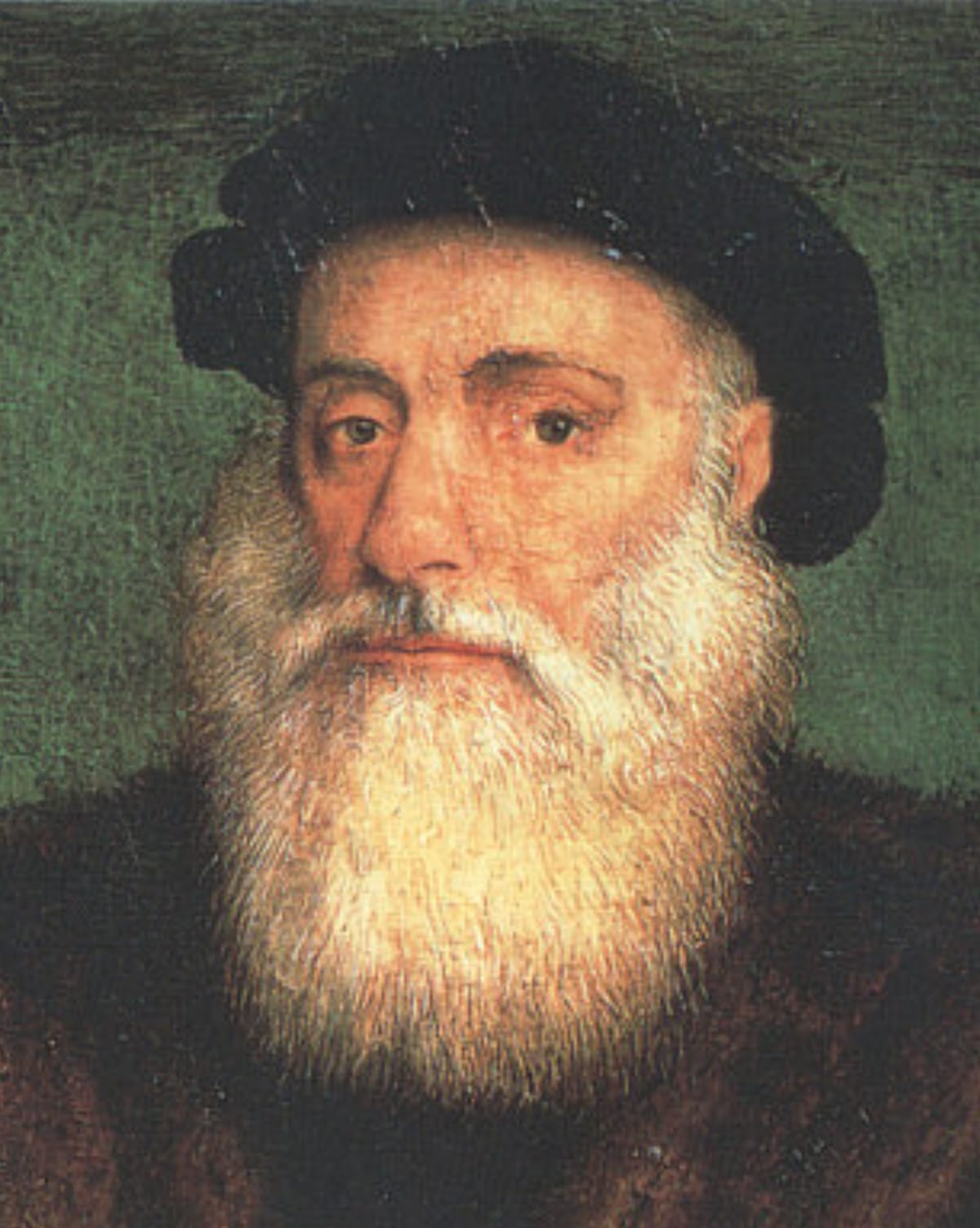
- Reached Calicut in 1498
- Came back to India twice; died at Cochin
- Followed the Blue Water Policy: rule the sea, not the land
- Defeated the Egyptian and Gujarat fleets at Diu in 1509
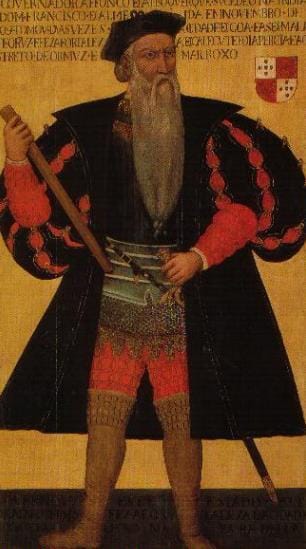
- Took Goa from the Sultan of Bijapur in 1510
- Built forts at key ports
| Portuguese fact | Remember |
|---|---|
| Capital moved to Goa | Nino da Cunha made Goa the headquarters in 1530, in place of Cochin. |
| Other bases | Daman, Diu, Salsette, Bassein, Chaul and Hooghly in Bengal. |
| New things in India | They brought tobacco from the Americas. A printing press began at Goa in 1556. |
| Decline | Mughals took Hooghly (1632). Bombay went to England as a royal dowry (1661). Marathas took Bassein (1739). |
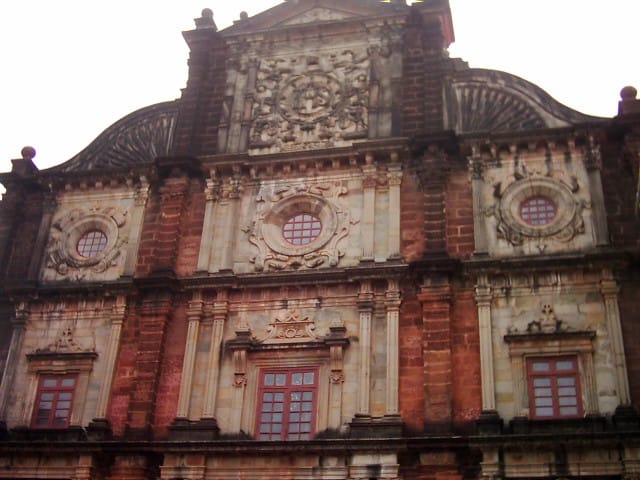
Portugal refused to leave even after India became free. In December 1961 the Indian army moved in under Operation Vijay. Goa, Daman and Diu joined India on 19 December 1961. So the Portuguese were the first to come and the last to leave. Other code names asked with it: Operation Polo (1948) brought Hyderabad into India, and Operation Cactus Lily was a code name used in the 1971 war that freed East Pakistan (Bangladesh).
Dutch, Danes and French
Three more companies and their bases.
The Dutch cared most about the spice islands of today's Indonesia. In India they bought cloth, indigo and saltpetre. The Danes stayed small. The French came last, but they became the most serious rival of the English.
| Power | Main bases in India | Remember |
|---|---|---|
| Dutch | Masulipatnam (1605), Pulicat, Surat, Chinsura, Nagapattinam | Pulicat was their headquarters until 1690; then Nagapattinam. |
| Danes | Tranquebar (Tamil Nadu), Serampore (Bengal) | Sold their bases to the English in 1845. |
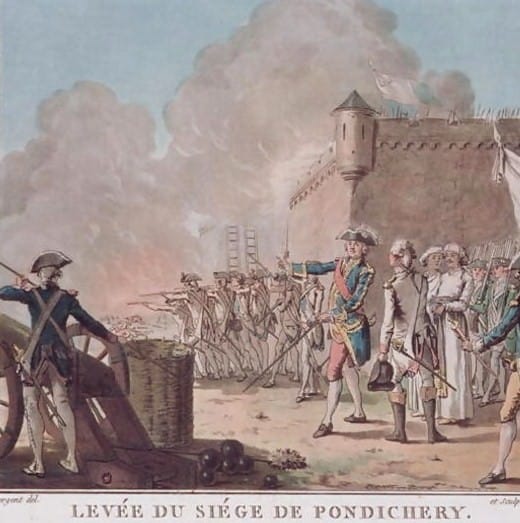
| French | Pondicherry (1674), Chandernagore, Mahe, Karaikal, Yanam | Pondicherry was founded by François Martin. |
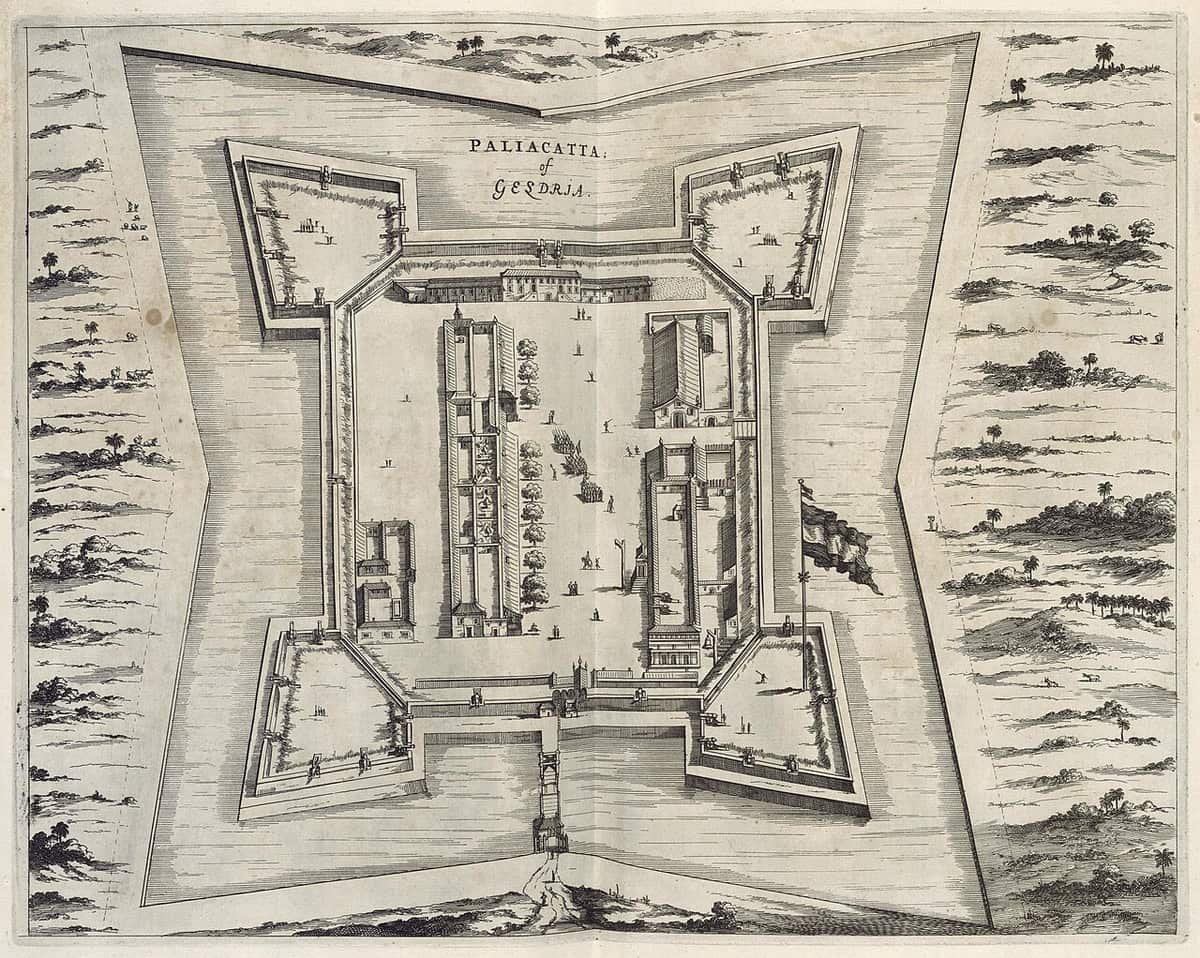
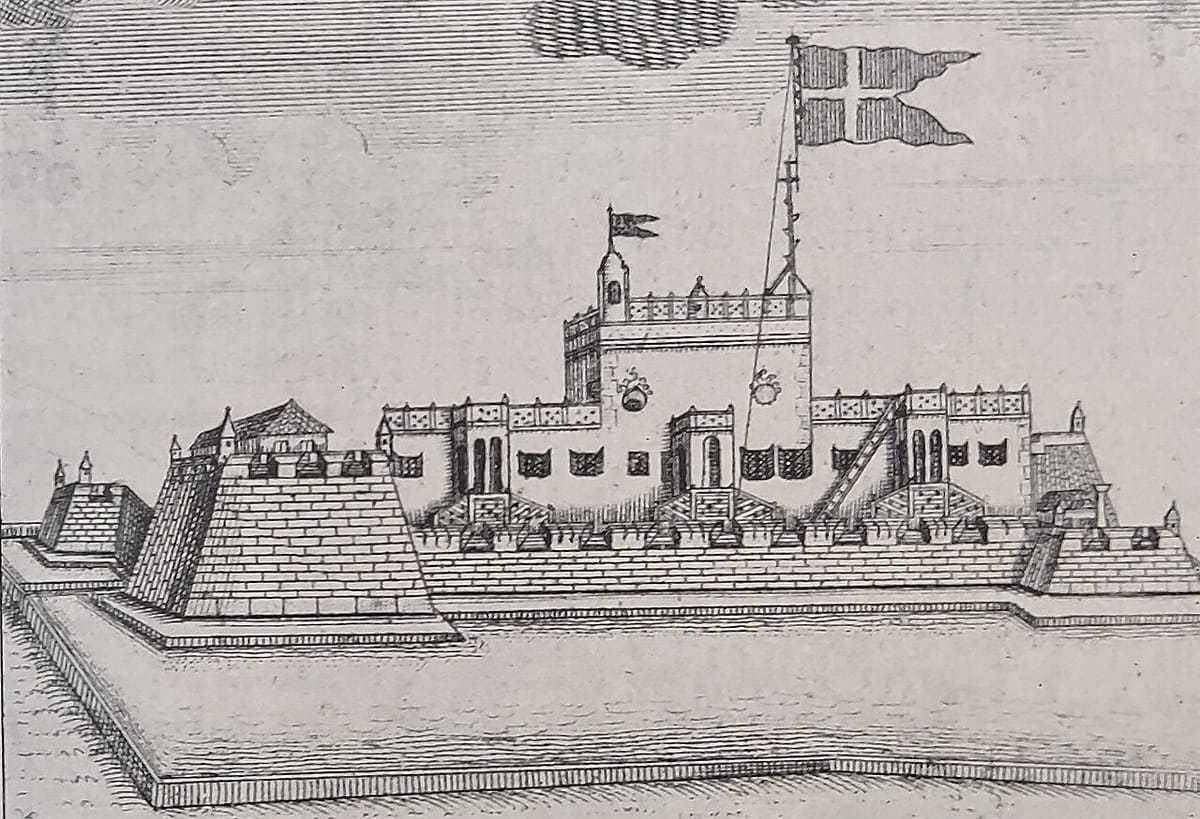
In those days a factory was not a place where goods were made. It was a trading post: a warehouse with offices and houses for the company's agents, called factors. Many factories later became forts.
The English: from Surat to Calcutta
Factories that grew into Madras, Bombay and Calcutta.
| Year | English base / event | Remember |
|---|---|---|
| 1613 | Surat | First permanent English factory, with Mughal permission (Jahangir) |
| 1615 | Sir Thomas Roe at Jahangir's court | Got trading rights for the Company |
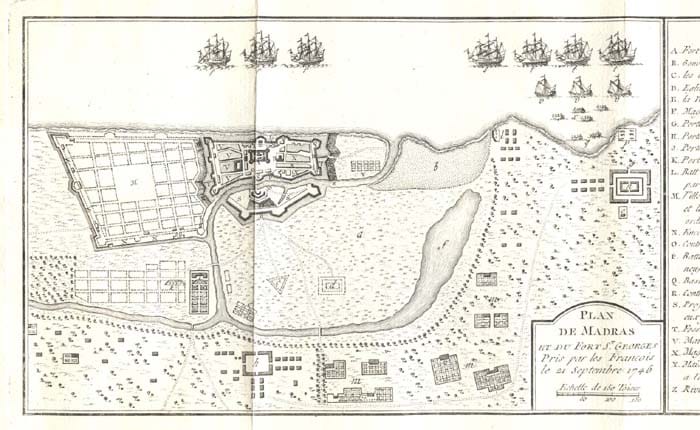
| 1639 | Madras | Land got from a local ruler; Fort St George built there |
| 1668 | Bombay | King Charles II (who got it as dowry, 1661) gave it to the Company |
| 1690 | Calcutta | Base set up by Job Charnock; Fort William built later |
| 1717 | Farrukhsiyar's farman | Mughal order: duty-free trade in Bengal for a small yearly payment |
The Carnatic Wars: English vs French
Three wars in South India, 1746 to 1763.
The Carnatic was the coastal land of south-east India, around Madras and Pondicherry. Here the English and French fought three wars. Each side backed rival Indian princes. The winner would lead European trade in India.
- French take MadrasFirst War, 1746–48Linked to a war in Europe. The French under Dupleix captured Madras in 1746. A peace treaty in 1748 gave it back.
- Clive at ArcotSecond War, 1749–54A fight over who should rule Hyderabad and the Carnatic. Robert Clive seized and held Arcot (1751). France recalled Dupleix in 1754.
- Wandiwash, 1760Third War, 1756–63Sir Eyre Coote defeated the French general Lally at Wandiwash on 22 January 1760. Pondicherry fell in 1761.
- Treaty of Paris, 1763France got Pondicherry back only as a trading post, with no army. French hopes in India were over.
Almeida's Portuguese fleet beat Egypt and Gujarat.
Travancore's Marthanda Varma beat the Dutch.
The English beat the Dutch near Chinsurah.
Eyre Coote beat Lally; French power ended.
Four battles that decided the European contest.
- Portuguese
- Goa (from 1530); first base Cochin
- Dutch
- Pulicat, later Nagapattinam
- Danes
- Tranquebar and Serampore
- French
- Pondicherry
- English (south)
- Madras (Fort St George)
- Zamorin
- Ruler of Calicut who met Vasco da Gama
- Cartaz
- Portuguese sea pass for ships
- Operation Vijay
- Goa freed, December 1961
Everything on one look
Who came, where they settled, and who won.
- 1498: Vasco da Gama at Calicut
- 1509: Almeida wins at Diu
- 1510: Albuquerque takes Goa
- 1600 / 1602 / 1616 / 1664: English / Dutch / Danish / French companies
- 1760: Wandiwash; 1763: Treaty of Paris
- 1961: Goa freed (Operation Vijay)
- Zamorin: ruler of Calicut
- Almeida: first viceroy, Blue Water Policy
- Albuquerque: real founder of Portuguese power
- Marthanda Varma: beat the Dutch at Colachel
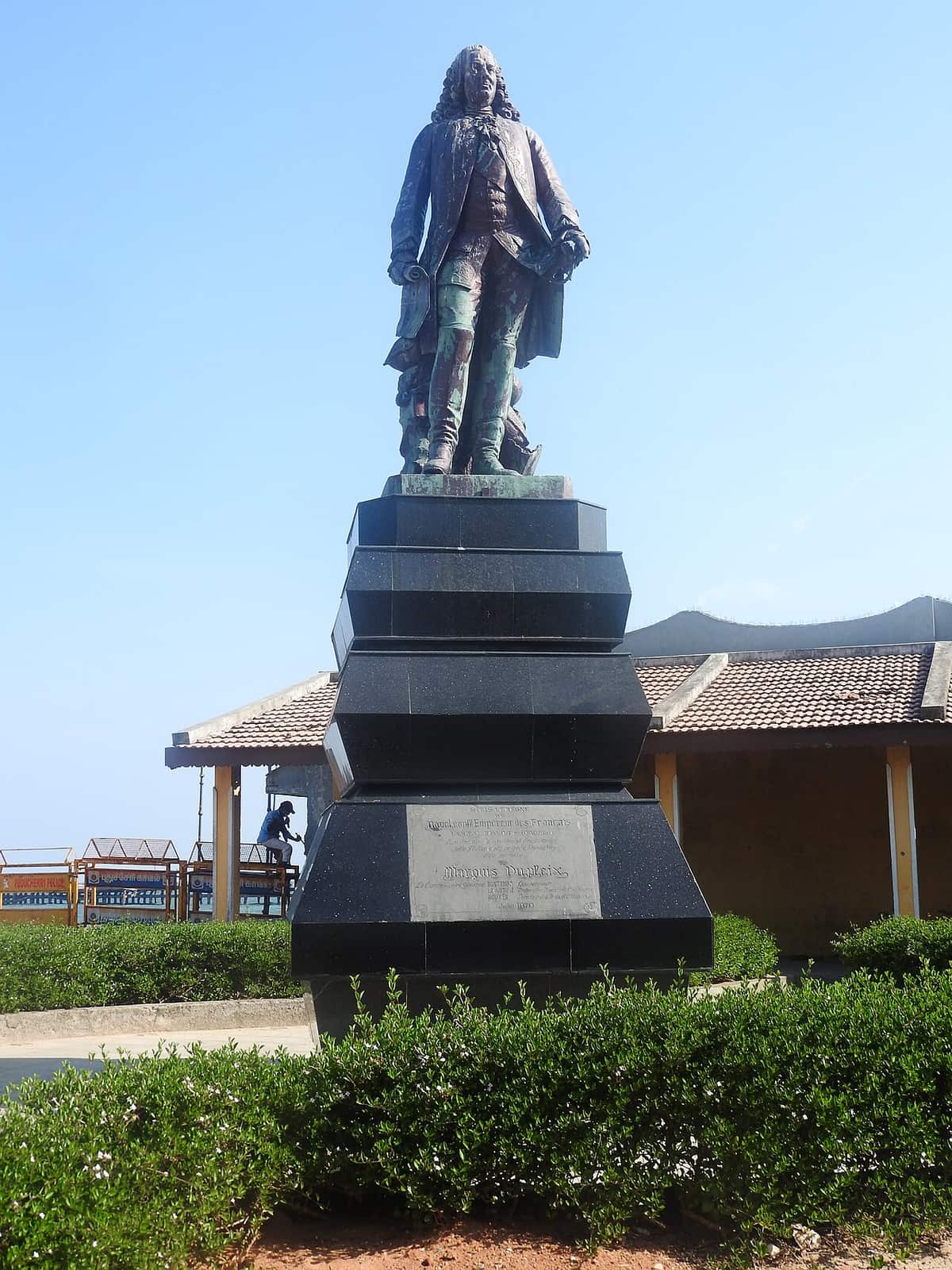
- Dupleix: French governor, 1742–54
- Eyre Coote beat Lally at Wandiwash
- Vasco da Gama reached Calicut (Kerala), not Calcutta.
- Almeida won at Diu (1509); Albuquerque took Goa (1510).
- The English company was formed in 1600, before the Dutch (1602). But the Dutch reached India first (1605).
- Marthanda Varma of Travancore, not the English, beat the Dutch at Colachel (1741).
- The Carnatic Wars were mainly English vs French, with Indian princes on both sides.
- Wandiwash (1760) ended French power; Plassey (1757) was against the Nawab of Bengal.
- Tranquebar and Serampore were Danish, not Dutch.
- The Portuguese came first and left last (1961).
- First European by sea: Vasco da Gama, 1498
- Landed at: Calicut; ruler: the Zamorin
- First Portuguese viceroy: Francisco de Almeida
- Battle of Diu: 1509, Almeida
- Goa captured: 1510, Albuquerque, from Bijapur
- Goa made capital: 1530, Nino da Cunha
- Printing press at Goa: 1556
- Dutch company: 1602; first factory Masulipatnam 1605
- Danish bases: Tranquebar, Serampore; sold 1845
- French company: 1664, Colbert
- Pondicherry founded: 1674, François Martin
- Dupleix: French governor, 1742–54
- Wandiwash: 1760, Eyre Coote vs Lally
- Treaty of Paris: 1763
- Goa freed: 19 Dec 1961, Operation Vijay
Which battle ended French hopes of power in India, and who led the two sides?
Show answer
The Battle of Wandiwash on 22 January 1760. Sir Eyre Coote led the English and Count de Lally led the French. Pondicherry fell in 1761, and the Treaty of Paris (1763) left France only trading posts.