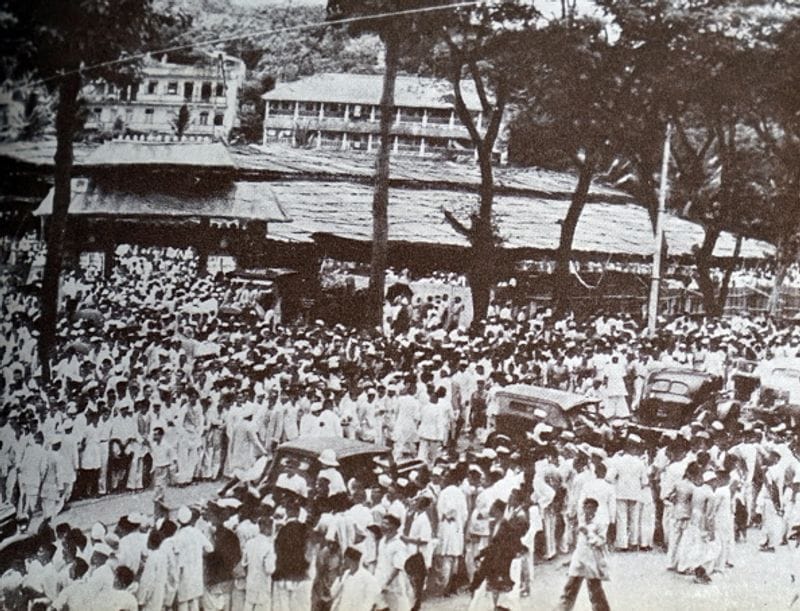
On 8 August 1942 the Congress told the British to quit India at once. Gandhi gave the call "Do or Die". Within hours, every top leader was in jail. So ordinary people carried the movement on their own. The British crushed it by force. But after 1942, Britain knew it could not rule India for long.
Why 1942?
A world war, a Japanese army near India, and a failed offer.
The Second World War began in 1939. The Viceroy, Lord Linlithgow, declared India at war without asking Indian leaders. The Congress ministries in the provinces resigned in protest. By early 1942, Japan had taken Singapore and Rangoon and was close to India's eastern border.
- Aug 1940: August OfferLinlithgow offers dominion status some day, after the war. The Congress says no.
- First satyagrahi: Vinoba BhaveOct 1940: Individual SatyagrahaChosen people make anti-war speeches, one by one. Vinoba Bhave starts from Pavnar, near Wardha. Nehru is the second.
- Mar–Apr 1942: Cripps MissionSir Stafford Cripps offers dominion status after the war. Provinces could even stay out of the new union.
- Cripps failsThe Congress wants real power now, during the war. The talks break down.
- 14 Jul 1942: Wardha resolutionThe Congress Working Committee backs Gandhi's call for the British to withdraw.
- Bombay8 Aug 1942: Quit IndiaThe All India Congress Committee passes the Quit India resolution.
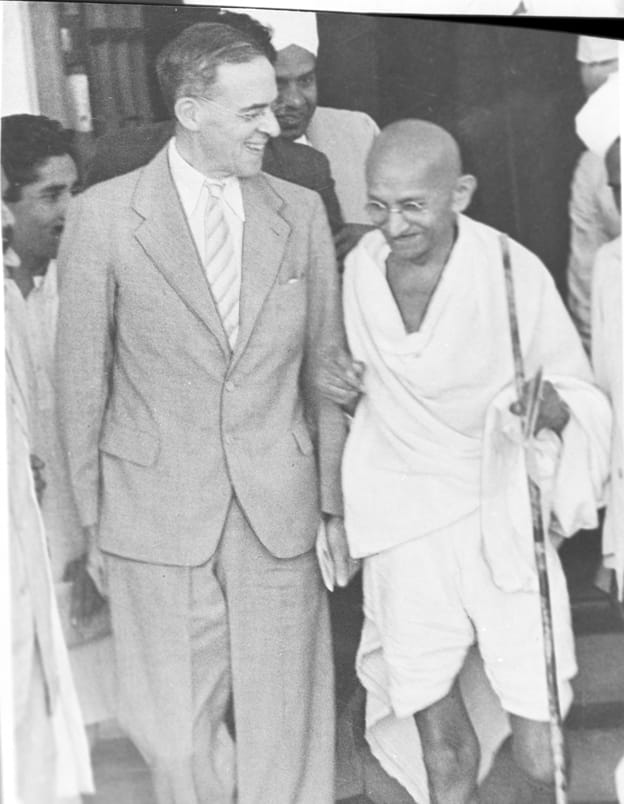
8 August 1942: "Do or Die"
One night in Bombay, and a nation without leaders by morning.
The All India Congress Committee met at Gowalia Tank Maidan in Bombay. On 8 August 1942 it passed the Quit India resolution. It asked the British to leave India at once. Gandhi then spoke to the meeting.
Here is a mantra, a short one, that I give you. …
The mantra is: "Do or Die".
We shall either free India or die in the attempt.
- 8 Aug 1942Resolution passed
Gandhi's call: "Do or Die".
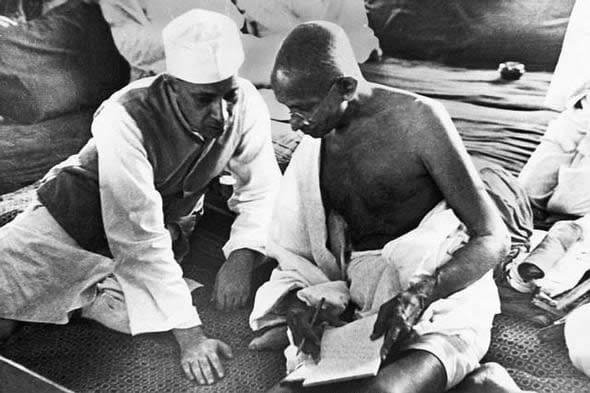
- 9 Aug 1942Leaders arrested at dawn
Gandhi, Nehru, Patel, Azad and others are jailed. Gandhi is held at the Aga Khan Palace, Poona.
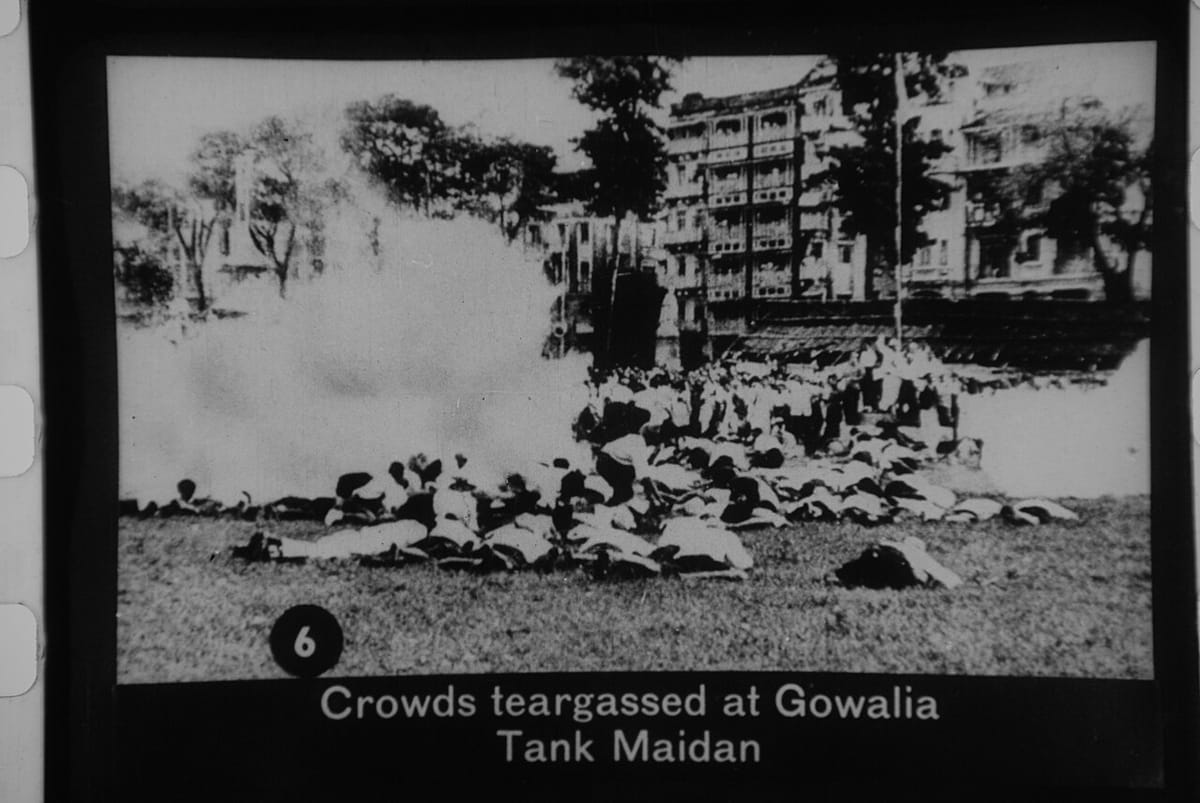
- 9 Aug 1942A flag at Gowalia Tank
Aruna Asaf Ali hoists the Congress flag at the maidan. Police use tear gas on the crowd.
- Aug–Sep 1942The people rise
Strikes, protests, and attacks on railway lines, telegraph wires and police stations.
"Kranti" means revolution. People called Quit India the August Kranti, the August Revolution, because it began in August 1942. Every year, 9 August is remembered as August Kranti Din.
Quit India was the last of Gandhi's big mass movements. Learn the order: Partition of Bengal 1905 (Swadeshi) → Non-Cooperation 1920 → Salt Satyagraha 1930 → Quit India 1942.
A movement without leaders
Students, workers, farmers and an underground network.
With the top leaders in jail, there was no one to control the movement. Students left colleges. Workers went on strike. In villages, people cut telegraph wires, pulled up railway lines and attacked police stations. A group of mostly younger, socialist leaders went underground to guide it.
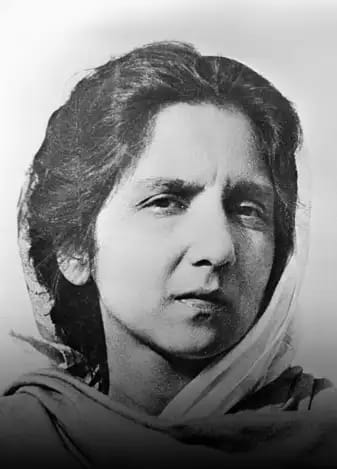
- Hoisted the flag at Gowalia Tank, 9 Aug 1942
- Edited the Congress paper *Inquilab* with Lohia
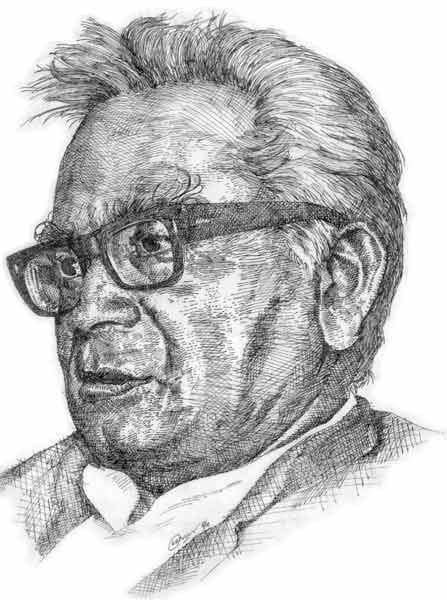
- Helped run the secret Congress Radio
- Worked underground until his arrest in 1944
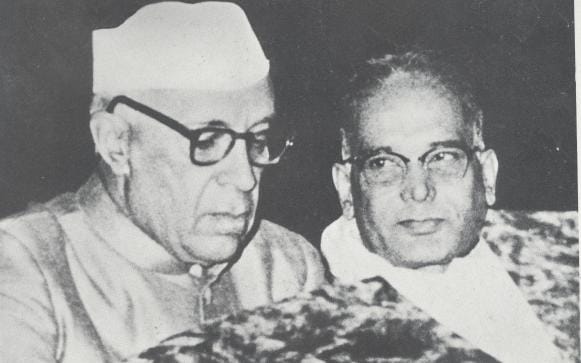
- Founding member of the Congress Socialist Party (1934)
- Escaped from Hazaribagh jail in November 1942
- A 22-year-old student in Bombay
- Ran the underground Congress Radio for about three months
In August 1942, Chittu Pandey set up a people's government. It lasted only a few days.
The Jatiya Sarkar ran from December 1942 to 1944.
The Prati Sarkar, led by Nana Patil, lasted the longest, into 1945.
Parallel governments: places where people ran their own rule for a while.
Who stayed away, and Punjab
Not every group joined in 1942.
- Muslim League: kept away. It wanted the British to divide India before they left.
- Communist Party of India: opposed it. After Germany attacked the Soviet Union (1941), it called the war a "People's War".
- Hindu Mahasabha: did not support it.
- Princely states and many government servants stayed loyal to the British.
Punjab saw less Quit India activity than Bihar, UP, Bengal or Bombay. The Unionist Party ruled Punjab and backed the war effort. Punjab was the army's biggest recruiting ground. Congress, the Muslim League and the Akalis pulled in different directions. There were protests and arrests in Punjab, but no mass rising. Later, the underground leaders JP and Lohia were held in the Lahore Fort.
Punjab link: the first Indian National Army (1942) was raised by Captain Mohan Singh, a Punjabi officer, from Indian prisoners of war in South-East Asia. Subhas Chandra Bose took over the INA in 1943.
From Quit India to freedom
Five years from the Do or Die call to 15 August 1947.
By the end of 1942 the British had crushed the open movement. Tens of thousands were jailed. But the British knew they could no longer rule India against the people's will. The war also left Britain weak and in debt.
- Feb 1943Gandhi's 21-day fast
In the Aga Khan Palace, against government blame for the violence.
- Feb 1944Kasturba Gandhi dies
She dies in detention at the Aga Khan Palace. Gandhi is released in May 1944.
- Jun 1945Simla Conference
Called by Viceroy Lord Wavell after the Congress leaders are freed. It fails.
- Nov 1945INA trials, Red Fort
Shah Nawaz Khan, Prem Sahgal and Gurbaksh Singh Dhillon are tried. The nation backs them.
- Feb 1946Naval revolt
Indian sailors of the Royal Indian Navy rise at Bombay and Karachi.
- Mar 1946Cabinet Mission
Comes to plan the transfer of power and a Constituent Assembly.
- 15 Aug 1947Independence
India is free, and divided into India and Pakistan.
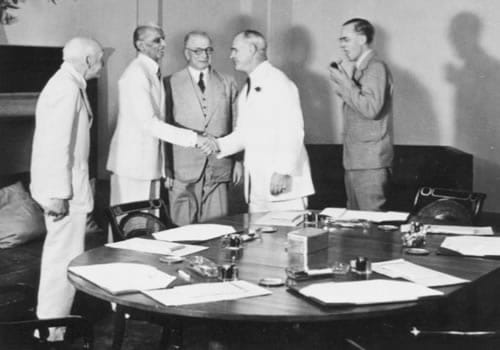
- Stafford Cripps
- Cripps Mission, March–April 1942; offer rejected
- Lord Linlithgow
- Viceroy during Quit India (1936–1943)
- Vinoba Bhave
- First individual satyagrahi, Pavnar, 1940
- Aruna Asaf Ali
- Flag at Gowalia Tank, 9 Aug 1942; underground leader
- Usha Mehta
- Secret Congress Radio, Bombay, 1942
- Jayaprakash Narayan
- Congress Socialist Party; escaped Hazaribagh jail, 1942
- Chittu Pandey
- Parallel government at Ballia, 1942
- Nana Patil
- Prati Sarkar at Satara
- Matangini Hazra
- Shot at Tamluk holding the flag, 1942
- Lord Wavell
- Viceroy; Simla Conference, June 1945
Everything on one look
The cause, the call, the people and the result.
- Individual Satyagraha 1940: Vinoba Bhave, Pavnar
- Cripps Mission Mar–Apr 1942: dominion status after the war
- Quit India: response to the failure of Cripps
- Resolution: 8 Aug 1942, Gowalia Tank, Bombay
- Gandhi's call: "Do or Die"
- Viceroy: Lord Linlithgow
- Leaders arrested 9 Aug 1942; Gandhi at Aga Khan Palace
- Aruna Asaf Ali hoisted the flag at Gowalia Tank
- Usha Mehta: secret Congress Radio
- Parallel govts: Ballia, Tamluk, Satara
- Stayed away: Muslim League, CPI, Hindu Mahasabha
- Punjab: limited participation
- Quit India answered the Cripps failure, not the Cabinet Mission or Wavell Plan.
- Resolution passed on 8 August; leaders arrested on 9 August.
- It was passed at Bombay (Gowalia Tank), not Wardha. Wardha (14 July) was the Working Committee's earlier resolution.
- First individual satyagrahi (1940): Vinoba Bhave, not Nehru.
- Aruna Asaf Ali was an underground leader of Quit India, not Civil Disobedience.
- All three, Ballia, Tamluk and Satara, had parallel governments.
- The CPI opposed Quit India in 1942; it called the war a People's War.
- Simla Conference (1945): Viceroy Wavell, not Mountbatten.
- Viceroy in 1942: Linlithgow, not Wavell.
- August Offer: 1940, Linlithgow
- Individual Satyagraha: 1940, Vinoba Bhave first
- Cripps Mission: March–April 1942
- Wardha resolution: 14 July 1942
- Quit India resolution: 8 August 1942, Bombay
- Place: Gowalia Tank (August Kranti Maidan)
- Slogan: Do or Die (Karo ya Maro)
- Arrests: 9 August 1942
- Gandhi held: Aga Khan Palace, Poona
- Flag hoisted: Aruna Asaf Ali
- Secret radio: Usha Mehta
- Parallel governments: Ballia, Tamluk, Satara
- Opposed: Muslim League, CPI, Hindu Mahasabha
- Viceroy in 1942: Lord Linlithgow
- Kasturba died: February 1944, Aga Khan Palace
- Simla Conference: June 1945, Wavell
- Naval revolt: February 1946, Bombay and Karachi
Why did the Congress launch Quit India in 1942, and why did it become a "leaderless" movement?
Show answer
The Cripps Mission (March–April 1942) offered only dominion status after the war, so the Congress demanded that the British leave at once. The resolution passed on 8 August 1942 at Gowalia Tank. Early on 9 August all top leaders were arrested, so students, workers, farmers and underground leaders like Aruna Asaf Ali, Lohia and JP carried it on.