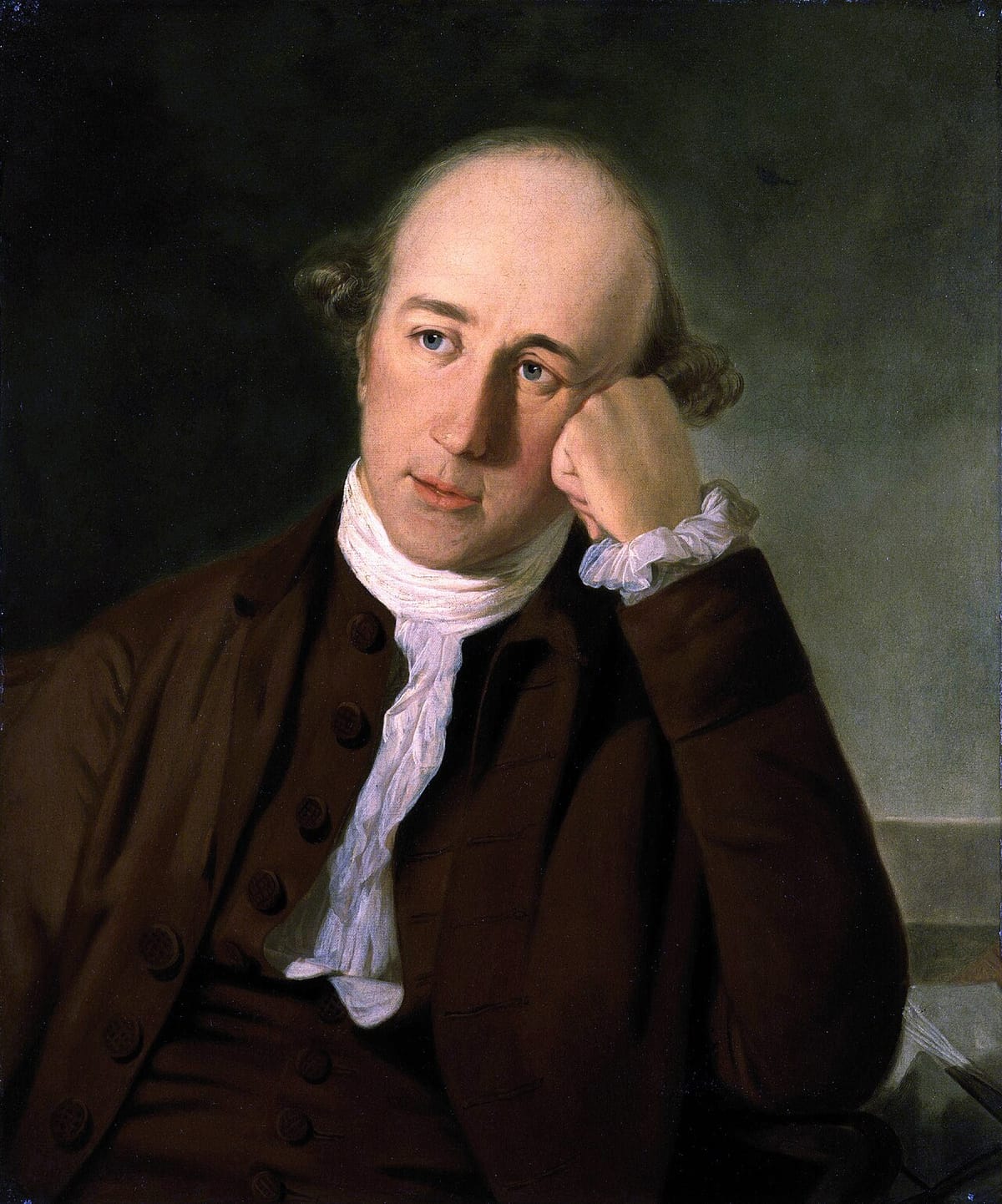
By the 1770s a private company was ruling Bengal, and ruling it badly. So the British Parliament began to control it by law. The Regulating Act (1773) was the first step. Pitt's India Act (1784) and four Charter Acts (1793, 1813, 1833, 1853) followed. Each one took more power away from the Company.
Regulating Act, 1773: the first step
Parliament's first law on how the Company ruled India.
After 1765 the Company collected the revenue of Bengal. Its servants grew rich, but the people suffered. The Bengal famine of 1770 killed millions. By 1772 the Company was short of money and asked the government for a loan. Parliament agreed to help, but only with control. The Prime Minister, Lord North, brought in the Regulating Act.
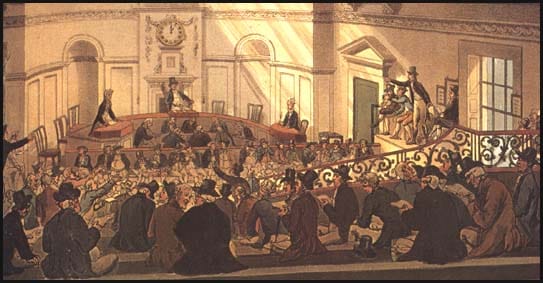
- The Governor of Bengal became the Governor-General of Bengal. The first was Warren Hastings.
- He had an Executive Council of four members. Decisions were by majority.
- The Governors of Bombay and Madras were placed under Bengal in matters of war and peace.
- A Supreme Court was set up at Fort William, Calcutta, in 1774: one Chief Justice and three other judges.
- Company servants were banned from private trade and from taking gifts or bribes.
- The Company had to send its revenue, civil and military reports to the British government.
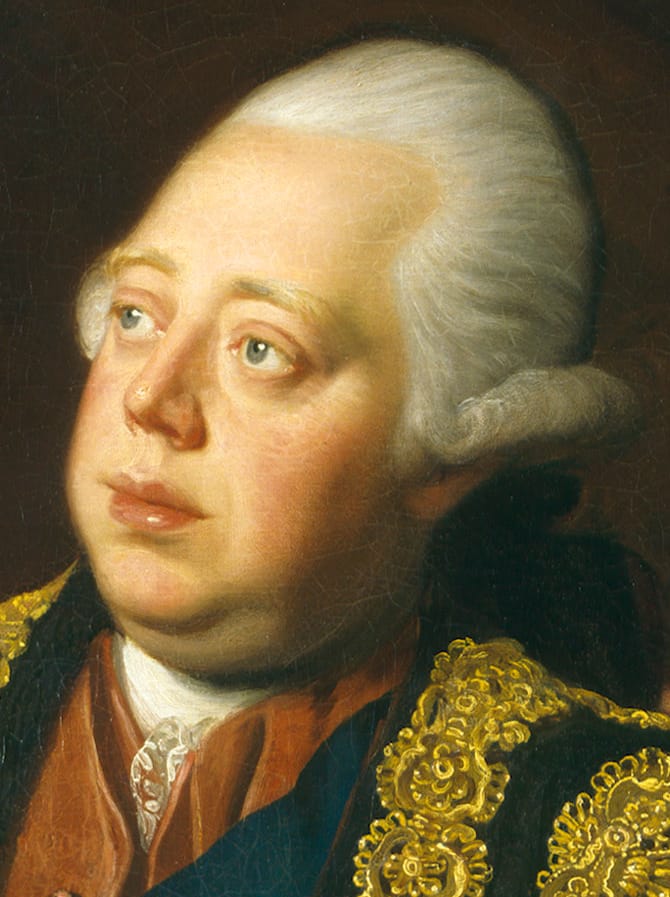
- The Act is linked with his government
- First time Parliament regulated the Company
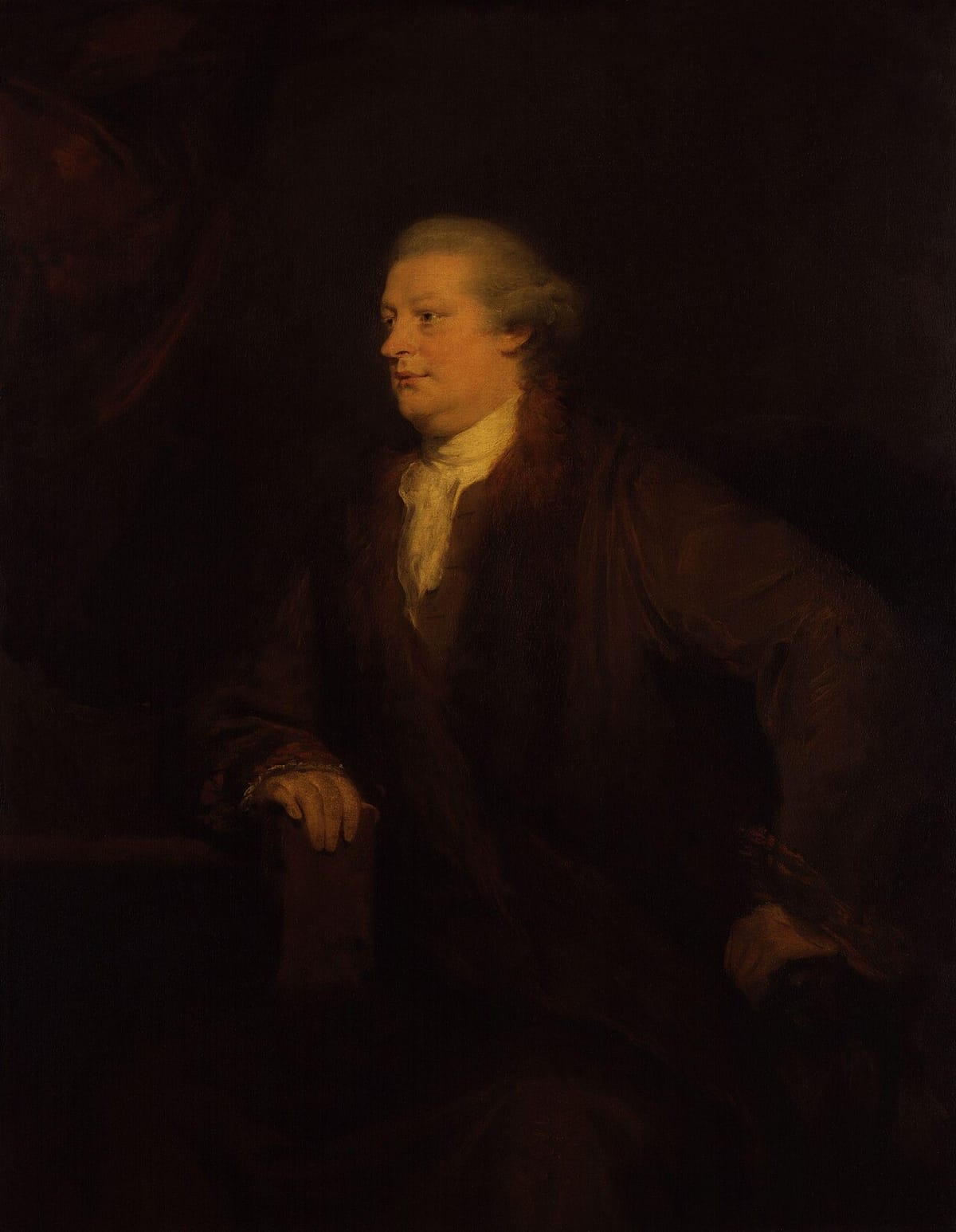
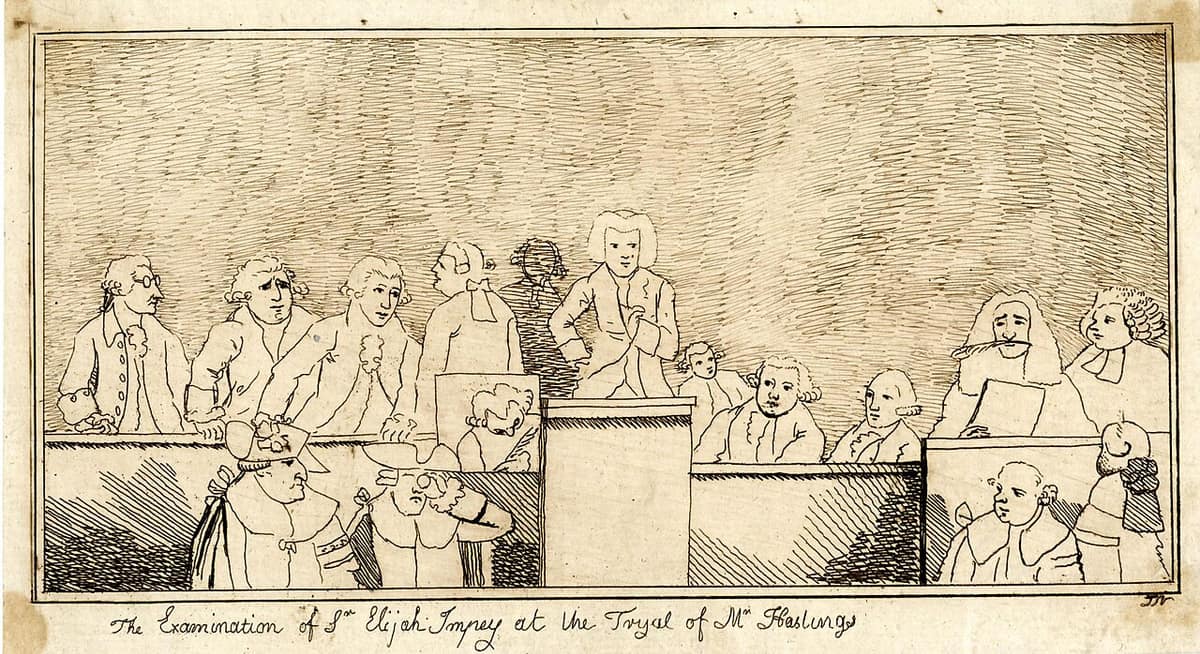
- First Chief Justice of the Supreme Court at Calcutta
- A friend of Warren Hastings
Pitt's India Act, 1784: the Board of Control
Two masters in London, from 1784 to 1858.
The 1773 Act had problems. Hastings and his council often quarrelled. The Supreme Court also clashed with the government. The Act of Settlement (1781) cut down the court's powers. Then, in 1784, Prime Minister William Pitt the Younger passed a stronger law.
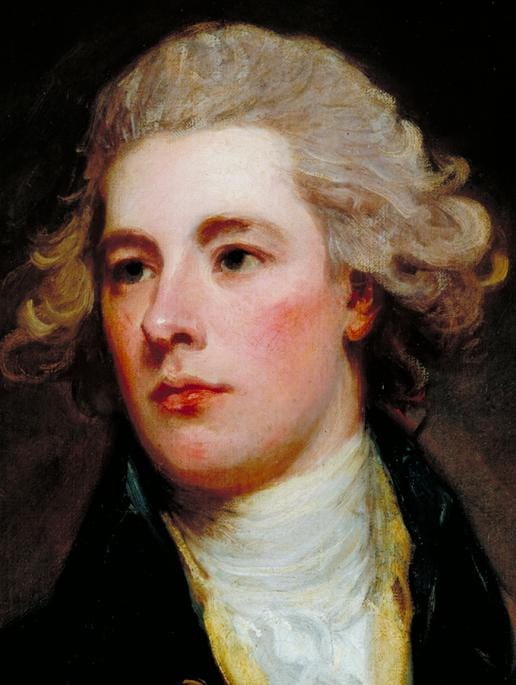
- LondonBoard of Control set upA board of six members, linked to the government, controlled the Company's civil, military and revenue work in India.
- Court of Directors kept tradeThe Company's own Court of Directors kept charge of commerce and jobs.
- 1784–1858Dual Control beginsSo the Company now had two masters: the Board for politics and the Directors for trade.
- Smaller council in IndiaThe Governor-General's council was cut to three members. The Company's lands were called "British possessions in India" for the first time.
Charter Acts of 1793 and 1813
Every 20 years the charter came up for renewal.
The Company could trade only under a charter from Britain. Parliament renewed it every 20 years: in 1793, 1813, 1833 and 1853. Each renewal was a chance to add new conditions. These laws are called the Charter Acts.
| Charter Act | Main points |
|---|---|
| 1793 | Renewed the trade monopoly for 20 years. Gave the Governor-General more power over Bombay and Madras. Board of Control members to be paid from Indian revenue. |
| 1813 | Ended the Company's monopoly of trade with India, except tea and the China trade. Christian missionaries allowed in. ₹1 lakh a year set aside for education. |
The 1813 Act was the first time the Company was told to spend money on Indian education: ₹1 lakh a year. It also made clear that the British Crown was sovereign over the Company's Indian lands.
Charter Act, 1833: Governor-General of India
The Company stops trading and only rules.
- The Governor-General of Bengal became the Governor-General of India. The first was Lord William Bentinck.
- Only he and his council could now make laws for all British India. Bombay and Madras lost their law-making powers.
- Laws made under this Act were called Acts, not Regulations.
- The Company's tea and China trade monopoly ended. It became a purely administrative body.
- A fourth member for law joined the council. The first Law Member was Macaulay.
- It said no Indian should be kept out of a Company job because of religion, birth or colour.
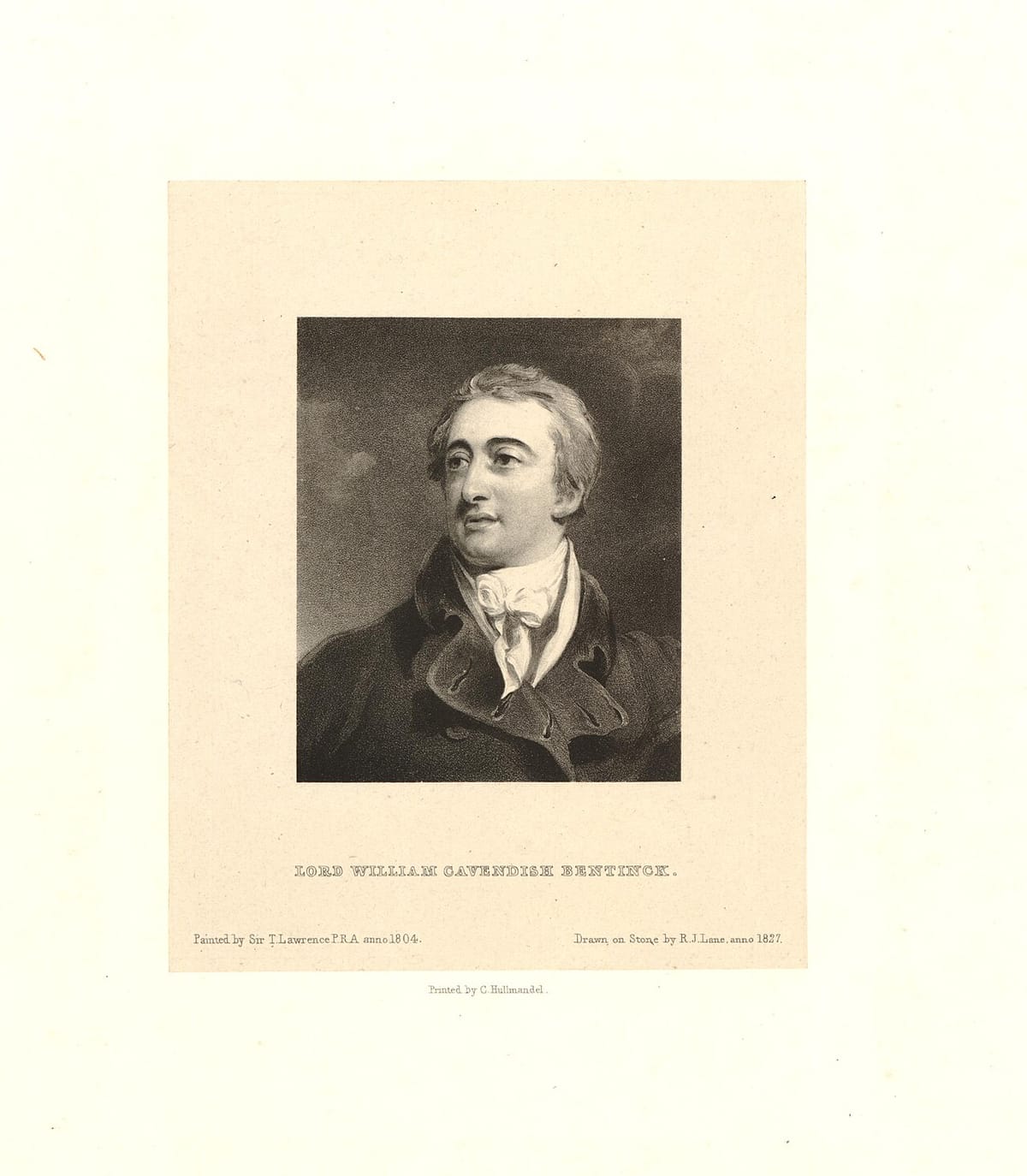
- Banned sati in 1829
- Acted against the thugs (highway gangs)
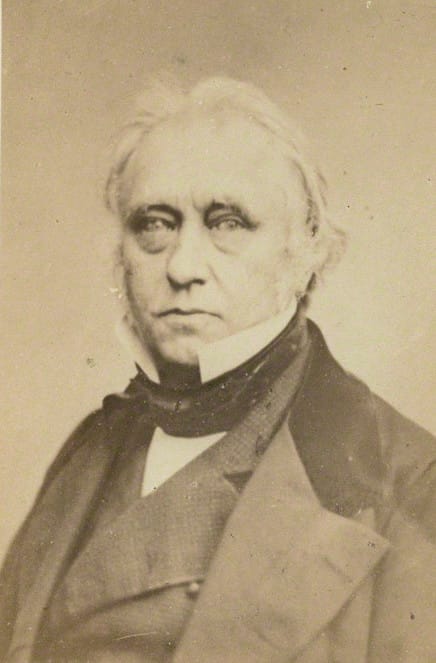
- Wrote the Minute on Education (1835) for English education
- Led the first Law Commission; drafted the Indian Penal Code
Bentinck and the ban on sati (asked in PPSC papers)Tap to open
- Bentinck banned sati by Regulation XVII of 4 December 1829. Raja Ram Mohan Roy had campaigned against it.
- Raja Radhakanta Deb and his Dharma Sabha (1830) opposed the ban and appealed to London. The appeal failed.
Charter Act, 1853, and the end of the Company
The last Charter Act, five years before the Crown took over.
- Law-making was separated from the executive. Six new members joined the council for making laws. This body worked like a small parliament.
- Four of these six came from the provinces of Madras, Bombay, Bengal and Agra.
- Civil service jobs were opened to open competition. Indians too could sit the exam.
- The charter was renewed without a fixed period of 20 years. Parliament could end Company rule any time.
- 1Warren Hastings1774–1785 · First Governor-General of Bengal (1773 Act)
- 2Lord Cornwallis1786–1793 · Permanent Settlement, 1793
- 3Lord Wellesley1798–1805 · Subsidiary Alliance
- 4Lord Minto I1807–1813 · Treaty of Amritsar with Ranjit Singh, 1809
- 5Lord William Bentinck1828–1835 · First Governor-General of India (1833 Act)
- 6Lord Dalhousie1848–1856 · Doctrine of Lapse
- 7Lord Canning1856–1862 · First Viceroy (1858 Act)
After the Revolt of 1857, the Government of India Act, 1858 ended Company rule. The Board of Control and Court of Directors were abolished. A Secretary of State for India took their place, and the Governor-General also became Viceroy.
1773 makes the post, 1784 makes the Board, 1813 opens trade, 1833 ends trade, 1853 opens the exam. One line for each Act, in order.
- Regulating Act, 1773
- Governor-General of Bengal; Supreme Court at Calcutta
- Act of Settlement, 1781
- Cut the Supreme Court's powers
- Pitt's India Act, 1784
- Board of Control; Dual Control
- Charter Act, 1793
- Monopoly renewed for 20 years
- Charter Act, 1813
- India trade opened; missionaries; ₹1 lakh for education
- Charter Act, 1833
- Governor-General of India; all trade ended
- Charter Act, 1853
- Separate law-making; open civil service exam
Everything on one look
Five Acts, each with one big idea.
- 1773: Parliament's first control over the Company
- Warren Hastings: first Governor-General of Bengal
- Supreme Court, Calcutta: 1774, Elijah Impey
- 1781: Act of Settlement
- 1784: Board of Control; Dual Control
- Prime Ministers: North (1773), Pitt (1784)
- 1793: monopoly renewed for 20 years
- 1813: India trade opened; missionaries; ₹1 lakh education
- 1833: Governor-General of India (Bentinck)
- 1833: tea and China trade ended
- 1833: first Law Member Macaulay
- 1853: open competition; separate law-making
- 1773 made the Governor-General of Bengal; 1833 made the Governor-General of India.
- First Governor-General of Bengal = Warren Hastings, not Clive. Clive was only Governor.
- First Governor-General of India = William Bentinck.
- The Supreme Court at Calcutta came from the 1773 Act, not 1853.
- Board of Control = 1784 (Pitt), not 1773.
- 1813 kept tea and China; 1833 ended them.
- Missionaries came in under 1813, not 1833.
- Open competition for civil service = 1853.
- Dual Government (Clive, Bengal) ≠ Dual Control (Pitt, London).
- Regulating Act: 1773, under Lord North
- First Governor-General of Bengal: Warren Hastings
- Council under 1773 Act: 4 members
- Supreme Court at Calcutta: 1774
- First Chief Justice: Sir Elijah Impey
- Act of Settlement: 1781
- Pitt's India Act: 1784, Board of Control
- Dual Control: 1784–1858
- Charter Act 1793: monopoly for 20 more years
- Charter Act 1813: missionaries, ₹1 lakh for education
- Charter Act 1833: Governor-General of India
- First Governor-General of India: Bentinck
- First Law Member: Macaulay
- Charter Act 1853: open competition, no fixed term
- First Indian to pass the exam: Satyendranath Tagore, 1863
Which Act made the Governor-General of Bengal the Governor-General of India, and who first held the new post?
Show answer
The Charter Act of 1833. Lord William Bentinck, already Governor-General of Bengal, became the first Governor-General of India.