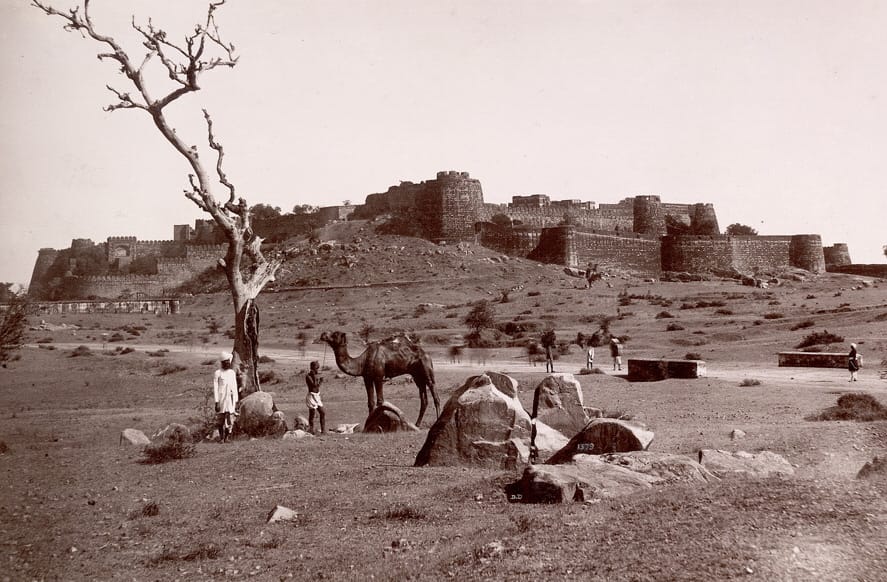
The Doctrine of Lapse was a British rule for taking over Indian states. If a ruler died without a natural son, his state "lapsed", or passed, to the East India Company. An adopted son was not accepted as the heir. Lord Dalhousie (Governor-General 1848–1856) used this rule more than anyone else.
What the rule said
A rule about sons, and a clash with Hindu custom.
Many Indian states were dependent on the Company. They had a ruler of their own, but the British had the final say. Under the Doctrine of Lapse, the Company decided who could inherit such a state. A natural son could. An adopted son could not, unless the Company agreed. Under Dalhousie it usually did not agree.
- Ruler has no natural sonHe adopts a son, as Hindu custom allowed.
- Ruler diesThe adopted son claims the throne.
- Doctrine of LapseCompany refusesThe British say an adopted son cannot inherit the state.
- State lapsesThe state becomes Company territory. The family may get a pension.
Under Hindu law and long custom, a ruler without a son could adopt one. The adopted son had the same rights as a born son, including the throne. The Doctrine of Lapse refused to accept this. So something Indians saw as fully lawful left a state with "no heir" in British eyes. That clash is the heart of this topic.
Exams say the doctrine was introduced by Dalhousie, and that is the answer to mark. But the British had refused adopted heirs before him too. Kittur (1824) is often given as an early case. Dalhousie's part was to use it often and on a large scale.
The states taken, with years
Satara first, Nagpur the largest.
- 1848Satara
The first state Dalhousie took under the rule. Its raja had adopted a son, who was refused.
- 1849Jaitpur and Sambalpur
Two smaller states, in Bundelkhand and Odisha.
- 1850Baghat
A small hill state near Shimla.
- 1852Udaipur
The Udaipur in today's Chhattisgarh, not the famous one in Rajasthan.
- 1853Jhansi
Raja Gangadhar Rao died; his adopted son Damodar Rao was refused.
- 1854Nagpur
The largest state taken. Raja Raghuji III had died in 1853 without a son.
- 1855Tanjore and Arcot
Royal titles and pensions ended; there was little land left to take.
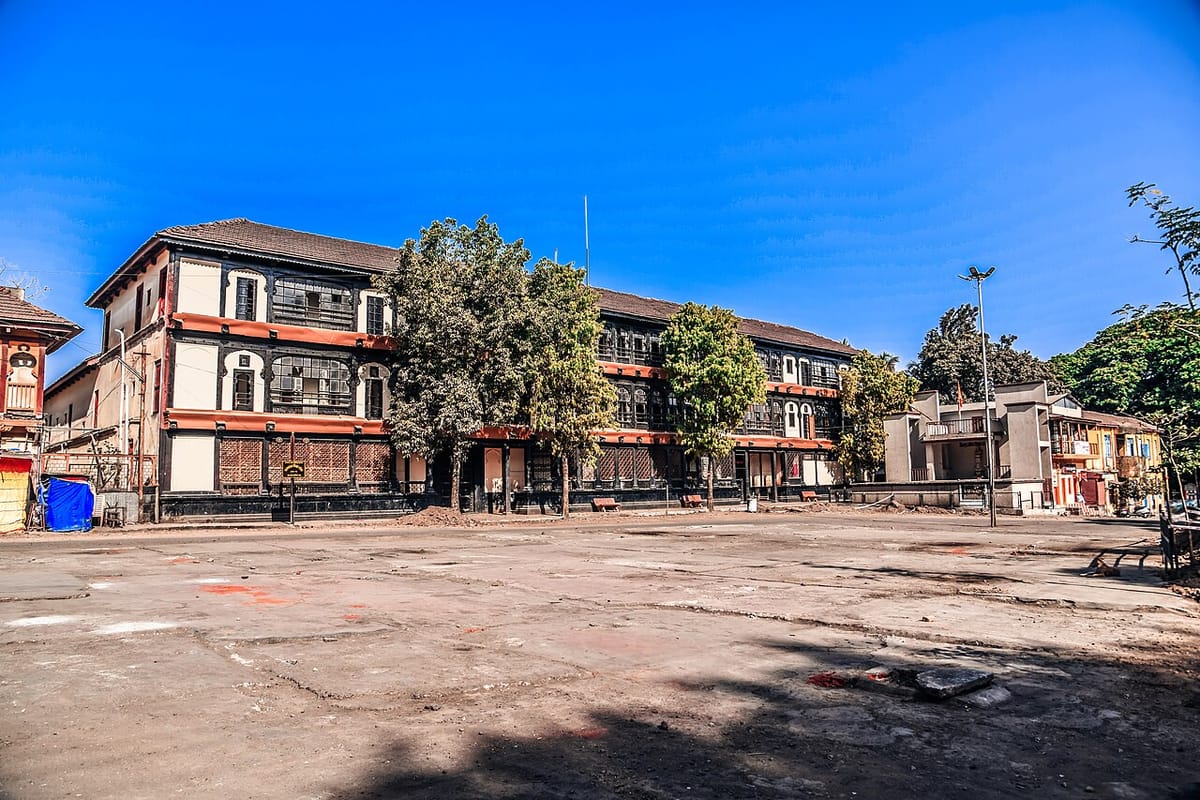
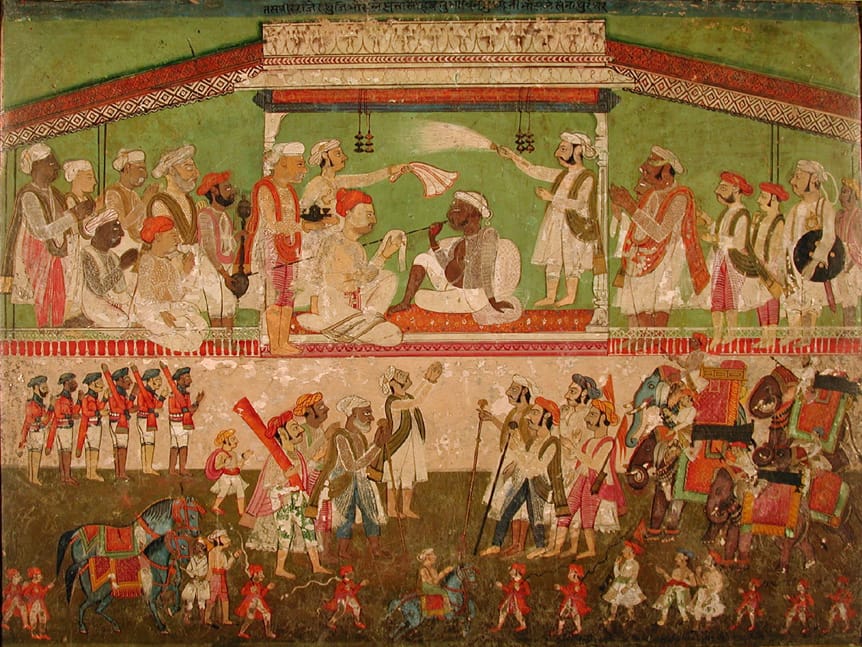
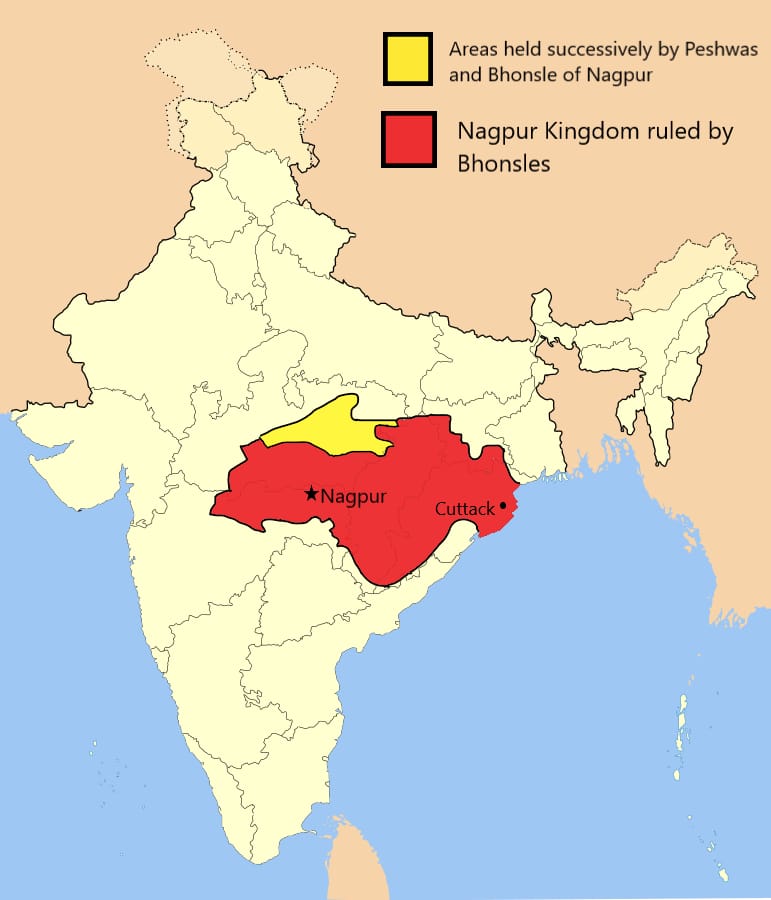
"Sa-Ja-Sam-Ba-U-Jha-Na": Satara 1848, Jaitpur and Sambalpur 1849, Baghat 1850, Udaipur 1852, Jhansi 1853, Nagpur 1854. One state almost every year, from 1848 to 1854.
- Satara
- 1848 (first)
- Jaitpur, Sambalpur
- 1849
- Udaipur (Chhattisgarh)
- 1852
- Jhansi
- 1853
- Nagpur
- 1854 (largest)
- Awadh
- 1856, for misrule (not lapse)
Small print: disputed and reversed casesTap to open
- Baghat (1850): most Indian books use this name. Some sources list it as Baghal, another small hill state near Shimla.
- Udaipur (1852): local rule was given back in 1860.
- Jhansi: the raja died in November 1853; the British order to take over came in early 1854. Exams use 1853.
Not lapse: Awadh, Punjab and others
Dalhousie had three ways to take land. Exams mix them up.
Awadh (capital Lucknow) was taken on 7 February 1856. Its Nawab, Wajid Ali Shah, had sons, so lapse could not apply. Dalhousie removed him for misrule (bad government). Awadh is the right answer for "annexed for misrule" and the wrong answer for "annexed under lapse".
The road to 1857, and the end of the rule
People who lost everything had nothing left to lose.
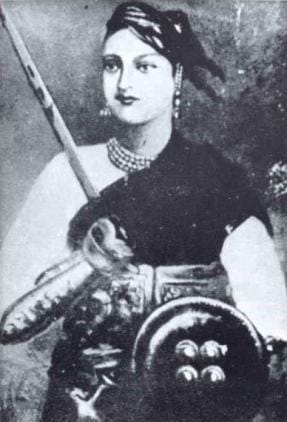
- Widow of Raja Gangadhar Rao; adopted son Damodar Rao refused
- Led the revolt at Jhansi in 1857–58
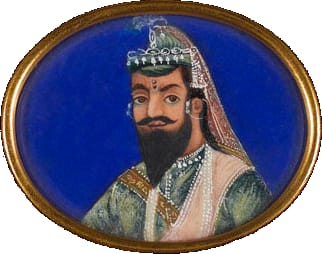
- Adopted son of the last Peshwa, Baji Rao II
- British stopped the Peshwa's pension after 1851; he led the revolt at Kanpur
Nana Sahib lost a pension and title, not a kingdom. He was not ruling any state. But the same idea was used against him: an adopted son was refused what a born son would have got.
- 1857: the revoltRani Lakshmibai and Nana Sahib become leaders. The British see that taking states made enemies of the princes.
- No more annexations1 Nov 1858: Queen Victoria's ProclamationThe Crown promises to respect the rights of Indian princes.
- After 1858: adoption allowedLord Canning gives the princes written promises (sanads) that adopted sons will be accepted.
Once annexations stopped, Punjab's princely states (Patiala, Nabha, Jind, Kapurthala, Faridkot, Malerkotla) stayed under their own rulers. They joined India in 1947 and formed PEPSU in 1948.
Also linked with Dalhousie (often asked together)Tap to open
Passenger train from Bombay to Thane, 16 April 1853.
Lines linked Calcutta with Agra and beyond.
Postage stamps and one low rate across India.
Plan for schools and universities.
Everything on one look
The rule, the states, the traps and the end.
- Linked with Lord Dalhousie, 1848–1856
- No natural son → state lapses to the Company
- Adopted son not accepted as heir
- Older cases: Kittur 1824; in Punjab, Ferozepur 1835, Kaithal 1843
- Ended after 1857; Queen's Proclamation, 1858
- Satara 1848: first
- Jaitpur, Sambalpur 1849; Baghat 1850; Udaipur 1852
- Jhansi 1853: Damodar Rao refused
- Nagpur 1854: largest
- Not lapse: Awadh 1856 (misrule), Punjab 1849 (war)
- Awadh was taken for misrule, not under lapse. Its Nawab had sons.
- Punjab was taken by war in 1849, not by lapse.
- Exams say Dalhousie introduced it; strictly, he used it most.
- Satara (1848) was the first; Nagpur (1854) the largest.
- The Udaipur of 1852 is in Chhattisgarh, not Rajasthan.
- Wellesley = Subsidiary Alliance. Dalhousie = Doctrine of Lapse.
- Nana Sahib lost a pension, not a kingdom.
- Rani Lakshmibai's adopted son was Damodar Rao.
- Doctrine of Lapse: Lord Dalhousie (1848–56)
- Rule: no natural son = state lapses
- Adopted son: not accepted
- First state: Satara, 1848
- Jaitpur and Sambalpur: 1849
- Udaipur (Chhattisgarh): 1852
- Jhansi: 1853 (Damodar Rao refused)
- Largest state: Nagpur, 1854
- Tanjore and Arcot: 1855
- Awadh: 1856, misrule (not lapse)
- Punjab: 1849, war (not lapse)
- Ferozepur lapsed: 1835; Kaithal: 1843
- Nana Sahib: adopted son of Baji Rao II
- Queen's Proclamation: 1 Nov 1858
Why is Awadh usually a wrong answer in questions on the Doctrine of Lapse?
Show answer
Because the Nawab of Awadh, Wajid Ali Shah, had sons, so the rule about "no natural son" could not apply. Dalhousie took Awadh in 1856 on a different excuse: misrule.