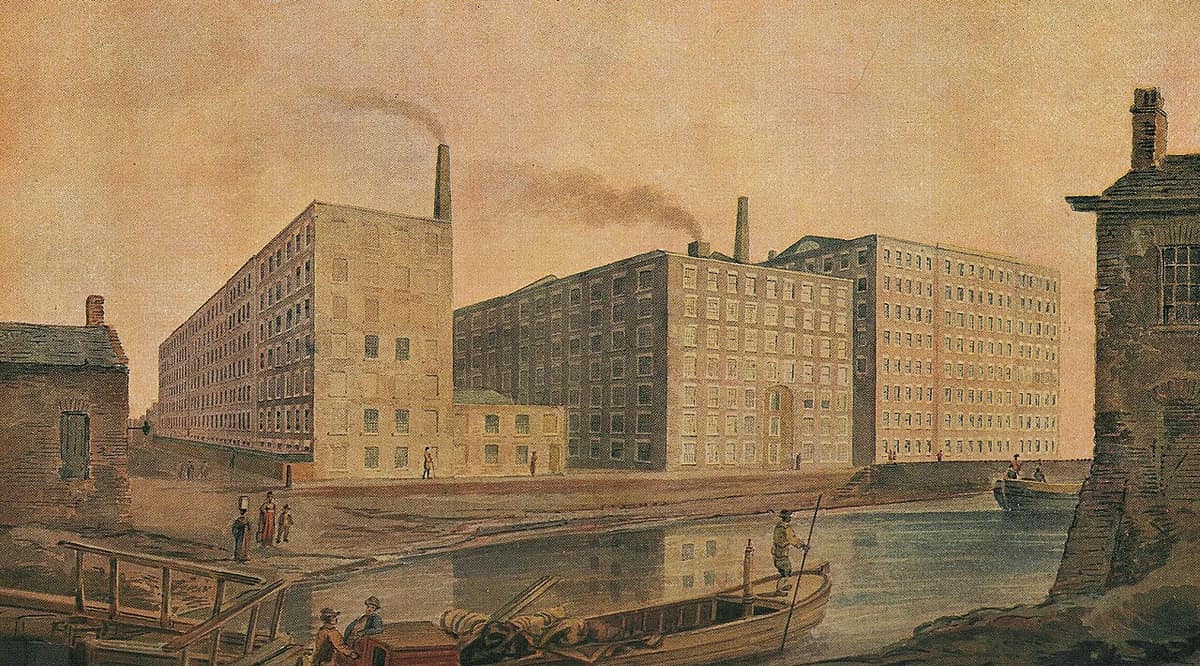
The British came to India as traders. After Plassey (1757) they became rulers. They then used their power to run India's economy for Britain's benefit. Indian cloth lost its markets. Farmers grew crops for export. A part of India's wealth flowed to Britain every year. This page explains each step in simple words.
From traders to rulers
Plassey, Buxar and the Diwani of Bengal.
At first the Company bought Indian goods with silver brought from Europe. Cloth, spices and indigo went to Europe. Then the Company won wars in Bengal. Now it could collect Bengal's land revenue itself. It used this Indian money to buy Indian goods. So Britain got the goods without sending silver.
- 23 Jun 1757Battle of Plassey
Robert Clive defeats Siraj-ud-Daulah, the Nawab of Bengal.
- 22 Oct 1764Battle of Buxar
The English defeat Mir Qasim, the Nawab of Awadh and Mughal emperor Shah Alam II.
- Aug 1765Diwani of Bengal
By the Treaty of Allahabad, the Company gets the right to collect revenue of Bengal, Bihar and Orissa.
- 1770Great Bengal famine
Revenue was collected hard even in drought. A very large number of people died.
- 1793Permanent Settlement
Cornwallis fixes Bengal's land revenue forever with the zamindars.
Free trade and the fall of Indian industry
Why India's weavers lost their work.
Before British rule, India was one of the world's great makers of cotton and silk cloth. Then Britain had its Industrial Revolution. Its machines made cloth fast and cheap. British factory owners wanted India as a market for this cloth. They also wanted India's raw cotton.
- Trade openedCharter Act of 1813The Company loses its monopoly of trade with India. Only tea and the China trade stay with it.
- British cloth enters IndiaIt pays very low duty in India. Indian cloth paid heavy duties in Britain.
- Indian weavers lose customersHandmade cloth cannot match cheap machine cloth, at home or abroad.
- Weavers go back to the landMore people now depend on farming. This is called deindustrialisation.
- Company stops tradingCharter Act of 1833The tea and China monopolies also end. The Company only rules, it no longer trades.
A country that had industry loses it. In India, old crafts like handloom weaving declined under British rule. New modern factories did not grow fast enough to give work to the ruined artisans. So more people fell back on agriculture.
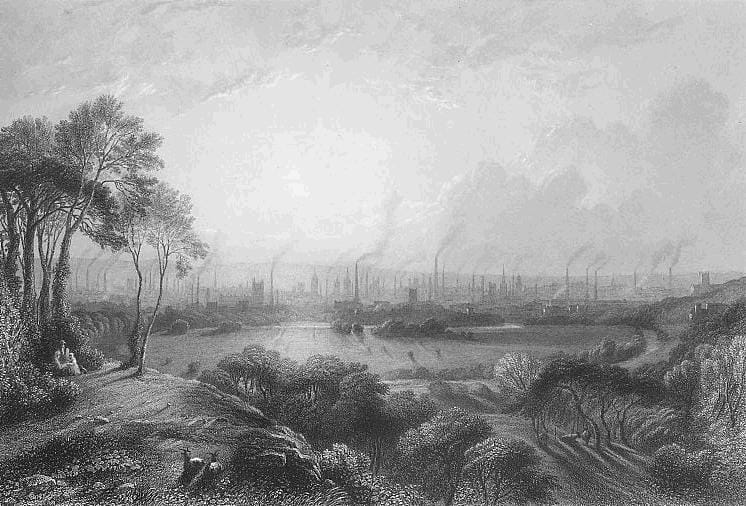
Laissez-faire means "let it be": the state should not control trade. This free-trade idea is linked with Adam Smith. Britain used it to open India to its goods, but it did not protect Indian industry.
Cash crops, railways and famines
Farming for export, carried to the ports by rail.
Farmers were pushed to grow crops for sale and export, not for their own food. This is called the commercialisation of agriculture. Land revenue had to be paid in cash, so farmers needed crops that sold. Often the profit went to traders, moneylenders and planters, not to the farmer.
A blue dye. European planters forced peasants to grow it.
Raw cotton went to British mills.
Used for sacks and ropes.
Grown on British-owned plantations.
Sold mostly to China.
Grown in the new canal colonies for sale and export.
Main cash crops and where they grew.
In 1859–60 indigo peasants of Bengal refused to grow the crop. This is the Indigo Revolt. Dinabandhu Mitra's play Nil Darpan (1860) showed the planters' cruelty. In Champaran (Bihar), planters made peasants grow indigo on 3 parts in every 20 of their land (the tinkathia system). Gandhi's Champaran Satyagraha (1917) was his first satyagraha in India.
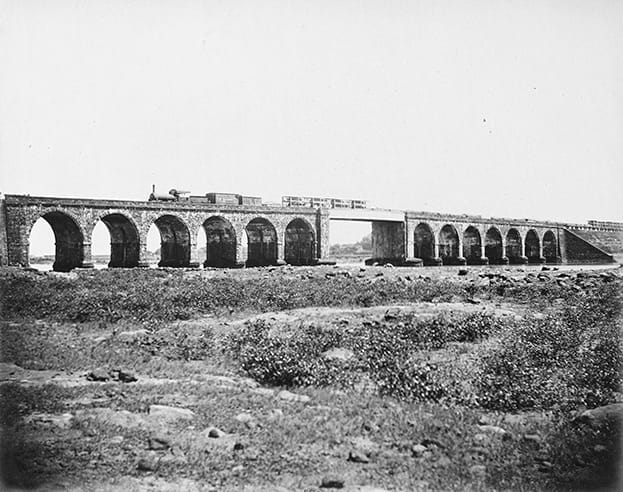
- Railways began under Lord Dalhousie. British companies built them with a guaranteed interest paid from Indian revenue.
- Lines mostly joined the ports to the inland farm areas. Raw material went out; British goods came in.
- Dalhousie also built up the telegraph and passed the Post Office Act of 1854, with a uniform postal rate.
- Railways later helped Indians travel, meet and organise, which helped the national movement.
- Less food grownGood land goes to cash crops.
- Revenue due in cashThe tax does not wait for a good harvest.
- Monsoon failsPoor families have no grain or savings.
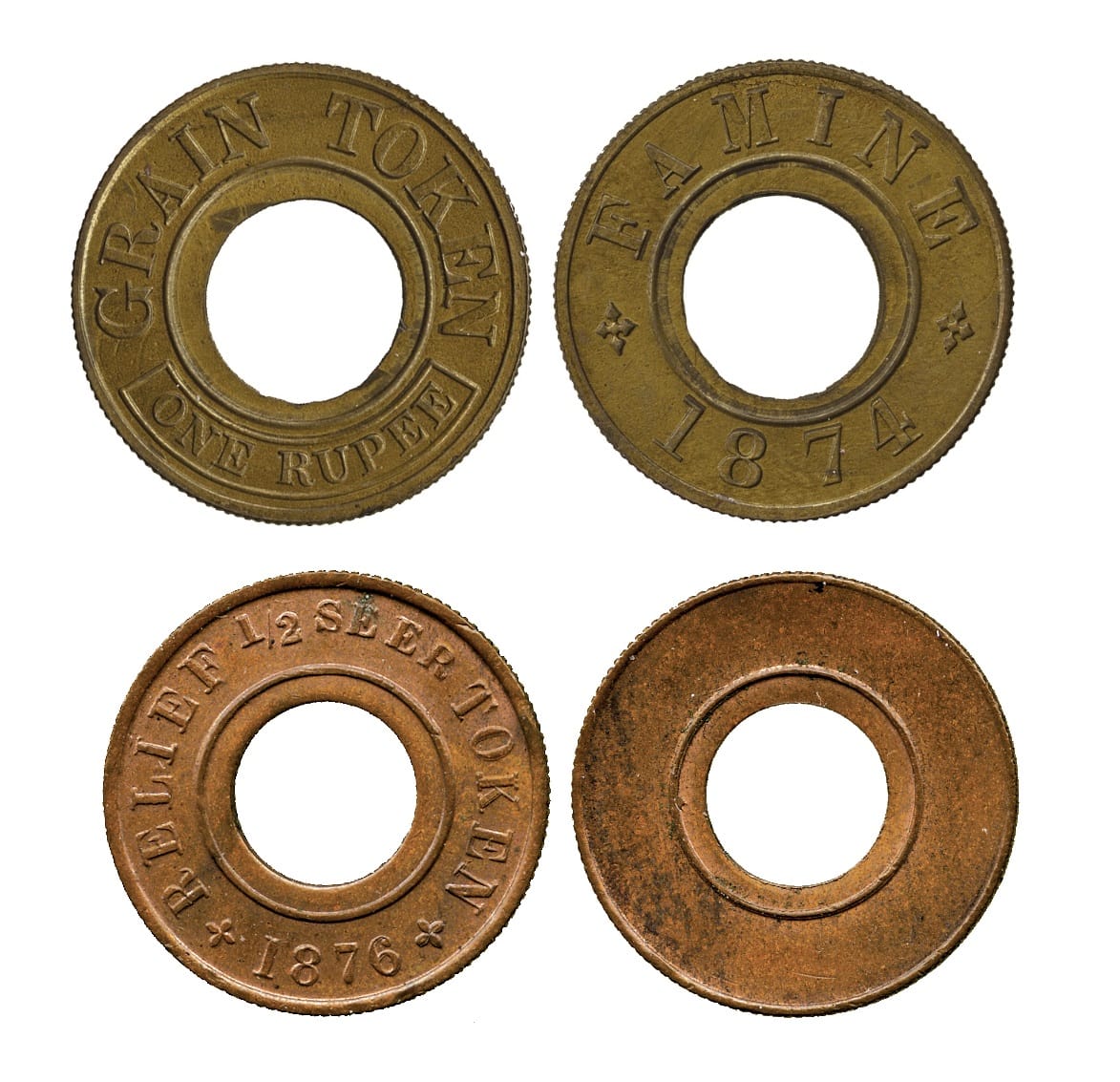
- 1876–78, 1896–97, 1899–1900FamineMillions die in the great famines.
- Famine CommissionsStrachey (1880), Lyall (1898), MacDonnell (1901). A Famine Code followed in 1883.
The drain and the first factories
Where the money went, and who started modern industry.
Indian leaders said British rule took wealth out of India with nothing coming back. Dadabhai Naoroji called this the drain of wealth. Money left through Home Charges (costs paid in Britain from Indian revenue), salaries and pensions of British officers, and profits sent home.
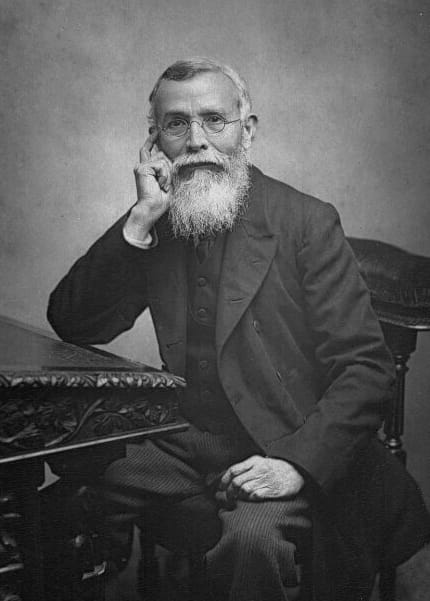
- 1854First cotton mill
Started at Bombay by Cowasji Nanabhai Davar.
- 1855First jute mill
At Rishra, Bengal.
- 1881First Factory Act
Under Lord Ripon: limits on child labour in factories.
- 1907Tata Iron and Steel Company
Set up at Sakchi, later Jamshedpur.
- 1927FICCI founded
G. D. Birla and Purshottamdas Thakurdas start the Indian businessmen's federation.
How nationalists answered
Swadeshi, boycott and khadi.
The nationalists' answer to cheap British goods was Swadeshi: buy and use Indian-made goods. Its partner was boycott of foreign goods. Later Gandhi made the charkha (spinning wheel) and khadi symbols of this answer.
A meeting at Calcutta Town Hall against the partition of Bengal resolves to boycott British goods. The Swadeshi Movement begins.
Before the Civil Disobedience Movement, Gandhi sends Lord Irwin 11 demands, many of them economic.
| Some of Gandhi's 11 demands (1930) | Economic or political |
|---|---|
| Cut land revenue by 50% | Economic |
| Abolish the salt tax and the government salt monopoly | Economic |
| Protective tariff on foreign cloth | Economic |
| Cut military spending and civil salaries by half | Economic |
| Total prohibition of liquor | Social |
| Release political prisoners | Political |
Everything on one look
Trade, industry, farming, railways and the Indian answer.
- Plassey 1757: Clive vs Siraj-ud-Daulah
- Buxar 1764 → Diwani 1765 (Bengal, Bihar, Orissa)
- Charter Act 1813: India trade monopoly ends
- Charter Act 1833: tea and China trade end; Bentinck first GG of India
- Laissez-faire: Adam Smith
- India's world share: 24.4% (1700) → 4.2% (1950)
- Cash crops: indigo, cotton, jute, tea, opium
- Nil Darpan (1860); Champaran (1917)
- First train: Bombay–Thane, 16 April 1853
- Famine Commission: Strachey 1880
- First Factory Act: Ripon, 1881
- Swadeshi began: Bengal, 1905
- 1813 ended the India trade monopoly; 1833 ended the tea and China monopolies.
- Plassey (1757) made the Company powerful; Buxar (1764) brought the Diwani (1765).
- Deindustrialisation means losing old industry, not failing to start new industry.
- Champaran (1917) was about indigo; Kheda (1918) was about land revenue.
- The first train ran Bombay–Thane, not Calcutta, under Dalhousie.
- First Factory Act: Ripon (1881), not Curzon.
- Swadeshi and boycott began against the partition of Bengal (1905), not in Non-Cooperation.
- Gandhi's 11 points did not include cow slaughter or khadi.
- Plassey: 23 June 1757, Clive vs Siraj-ud-Daulah
- Buxar: 1764, English vs Mir Qasim's alliance
- Diwani of Bengal: 1765, Treaty of Allahabad
- Charter Act 1813: India trade opened
- Charter Act 1833: Company stops trading
- Laissez-faire: Adam Smith
- Deindustrialisation: ruin of handloom weaving
- Indigo Revolt: Bengal, 1859–60
- Nil Darpan: Dinabandhu Mitra
- Champaran: 1917, tinkathia system
- First train: 16 April 1853, Bombay–Thane, 34 km
- Post Office Act: 1854, Dalhousie
- First Famine Commission: Strachey, 1880
- First cotton mill: Bombay, 1854
- First Factory Act: 1881, Ripon
- TISCO: 1907, Jamshedpur
- FICCI: 1927, Birla and Thakurdas
- Drain theory: Dadabhai Naoroji
- Swadeshi: 1905, Bengal
What is deindustrialisation, and why did it happen in India?
Show answer
It is the loss of a country's existing industry. After the Charter Act of 1813, cheap British machine cloth entered India at very low duty while Indian cloth faced heavy duties in Britain. Handloom weavers lost their markets and fell back on farming.