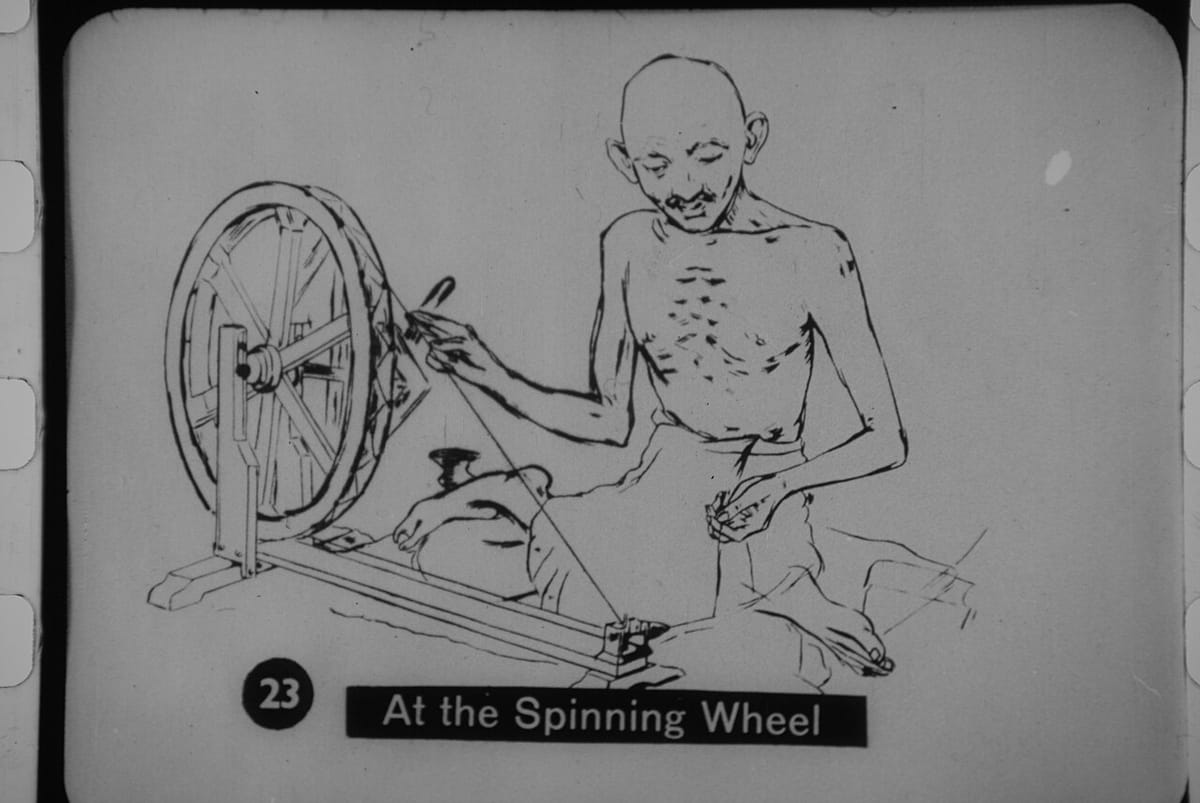
In 1915 a lawyer came home to India from South Africa. Within five years he was leading the whole freedom struggle. His weapon was new: satyagraha, or open and non-violent resistance. From 1917 to 1947 India's struggle moved to his rhythm. That is why these years are called the Gandhian era.
The South Africa years
1893 to 1914: where the method was born.
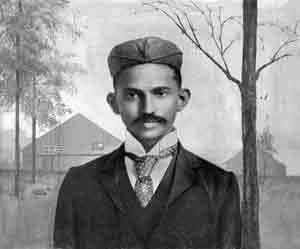
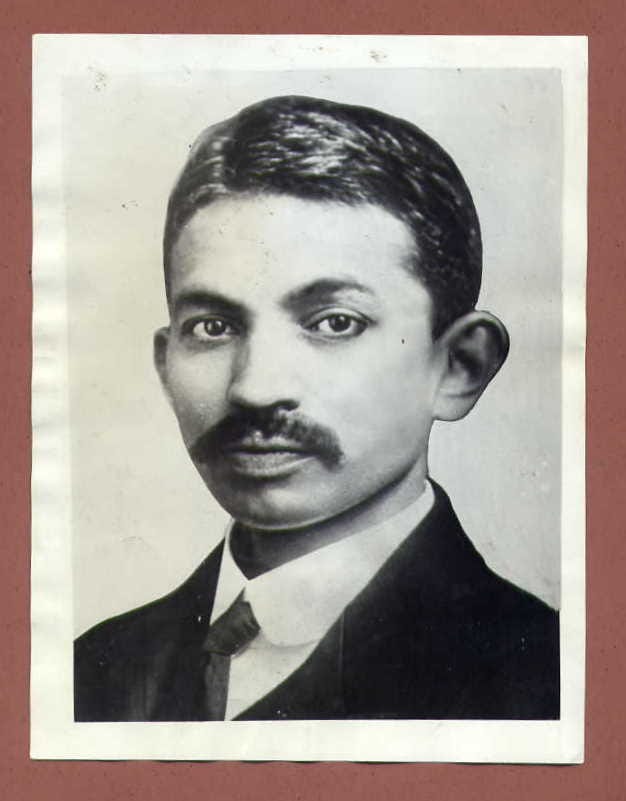
Mohandas Karamchand Gandhi was born on 2 October 1869 at Porbandar in Gujarat. He studied law in London. In 1893 he went to South Africa for a legal case. There, Indians were treated as an inferior race. In 1893 he was thrown off a first-class train compartment at Pietermaritzburg because he was not white. He stayed on for about 21 years and fought for the rights of Indians.
- 1893Arrives in South Africa
Comes for a legal case and faces racial insults.
- 1894Natal Indian Congress
Gandhi helps found it to fight for Indian rights.
- 1903Indian Opinion
He starts this newspaper for Indians in South Africa.
- 1904Phoenix Settlement
A farm near Durban where his co-workers lived simply and printed the paper.
- Sept 1906Satyagraha is born
At Johannesburg, Indians vow to resist a new registration law for Asians. Indians called it the Black Act.
- 1909Hind Swaraj
He writes this small book on board a ship, in Gujarati.
- 1910Tolstoy Farm
A second farm, near Johannesburg, named after the Russian writer Leo Tolstoy.
- 1914Leaves South Africa
Some Indian demands are met. He sails for England and then India.
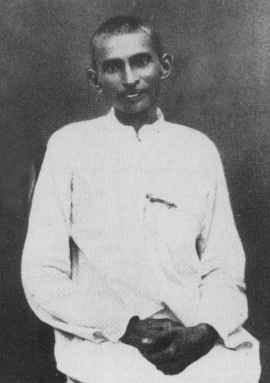
The word joins satya (truth) and agraha (holding firmly). So it means holding firmly to truth. A satyagrahi opposes an unjust law openly and without violence. He breaks it, accepts the punishment, and does not hate the opponent. Gandhi believed this would change the opponent's heart. Its two main forms in India were non-cooperation and civil disobedience.
Two dates for one idea: satyagraha was born in South Africa in 1906. Its first use in India was at Champaran in 1917. Exams ask both.
Coming home
1915 to 1916: a year of listening, then an ashram.
Gandhi landed at Bombay on 9 January 1915. India now marks this date as Pravasi Bharatiya Divas (Overseas Indians' Day). His political guru, Gopal Krishna Gokhale, gave him advice. Travel India for one year, he said. Watch and listen before you speak. Gandhi did exactly that. Gokhale died in February 1915.
- 1915: the British gave Gandhi the Kaiser-i-Hind gold medal for his ambulance work in South Africa. He gave it back in 1920, in protest.
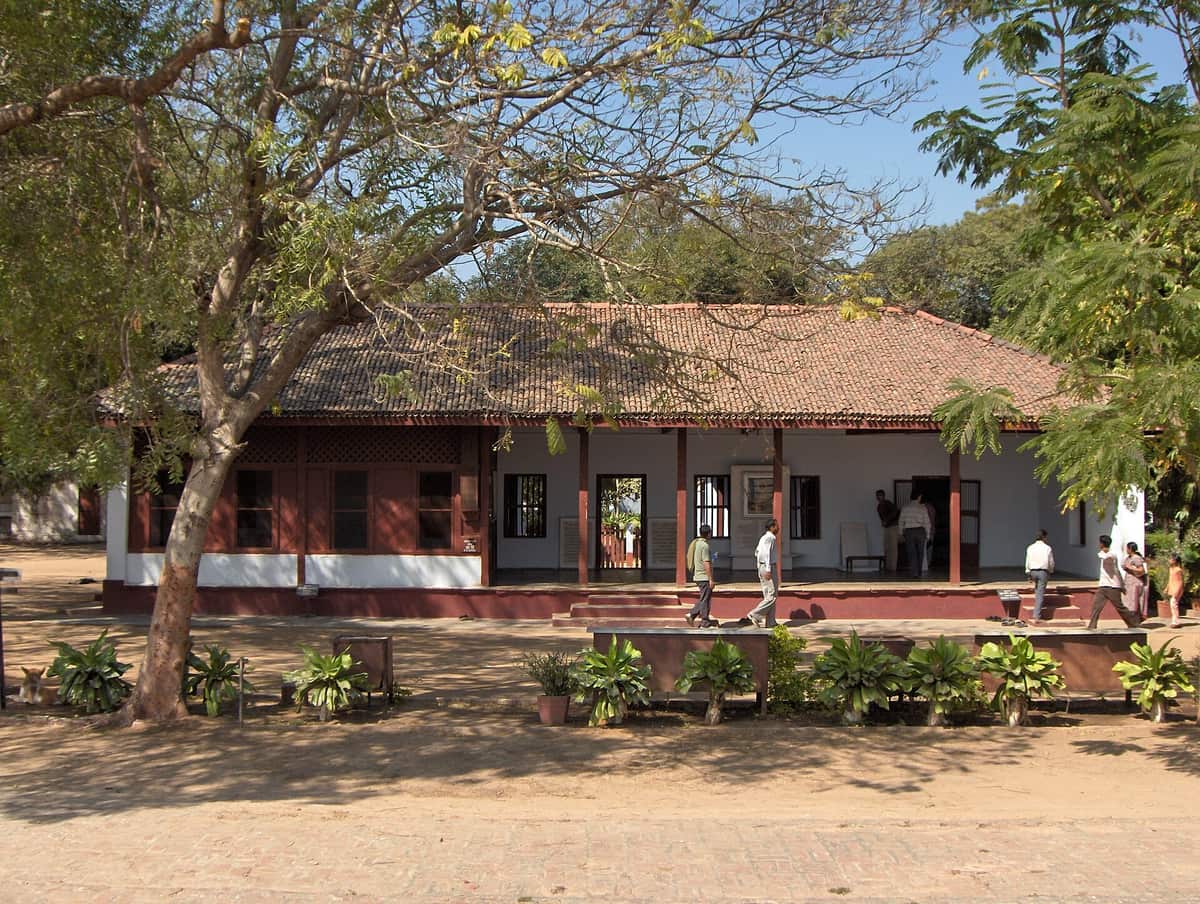
- May 1915: he set up an ashram at Kochrab, Ahmedabad. In 1917 it moved to the bank of the Sabarmati river.
- February 1916: he spoke at the foundation-laying of Banaras Hindu University. He spoke against using English at such meetings, and against rich princes showing off jewels while India was poor.
His first paper, for Indians in South Africa.
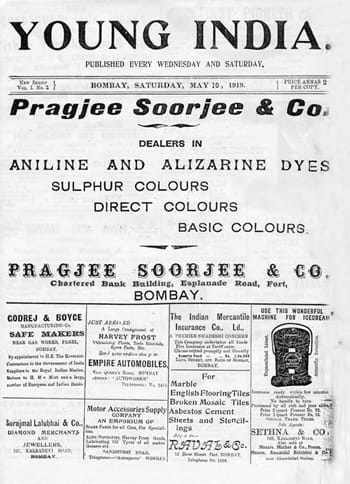
His main English weekly during the Non-Cooperation years.
The Gujarati weekly he ran alongside Young India.
Named after his word for the so-called untouchables.
Gandhi's newspapers: he spoke to India through them.
Three local fights
1917 and 1918: Champaran, Ahmedabad and Kheda.
Gandhi did not start with a national movement. He began with three local fights. Each one was for ordinary people with a clear problem. Each one tested satyagraha on Indian soil. And Gandhi won all three.
| Satyagraha | For whom | The problem | Remember |
|---|---|---|---|
| Champaran, Bihar (1917) | Indigo farmers | European planters forced them to grow indigo on 3/20 of their land: the tinkathia system. | Farmer Rajkumar Shukla brought Gandhi. His first satyagraha in India. |
| Ahmedabad, Gujarat (1918) | Mill workers | A wage dispute with the cotton mill owners. | Gandhi's first hunger strike. Workers got a 35% rise. |
| Kheda, Gujarat (1918) | Peasants | Crops failed, but the government would not stop collecting land tax. | Vallabhbhai Patel joined Gandhi here. |
- A Bihar lawyer who helped Gandhi at Champaran
- Later the first President of India
- Joined Gandhi at Kheda
- Led Bardoli (1928), where the women called him Sardar
- Led the mill workers with Gandhi
- Her own brother Ambalal Sarabhai was a leading mill owner
They proved that satyagraha worked in India: against planters, mill owners and the tax collector. Gandhi won the trust of peasants and workers, not just the educated. He also found lifelong co-workers like Rajendra Prasad and Vallabhbhai Patel. Now he could call for something bigger: an all-India protest.
Rowlatt and the three great waves
1919 to 1934: from local fights to mass movements.
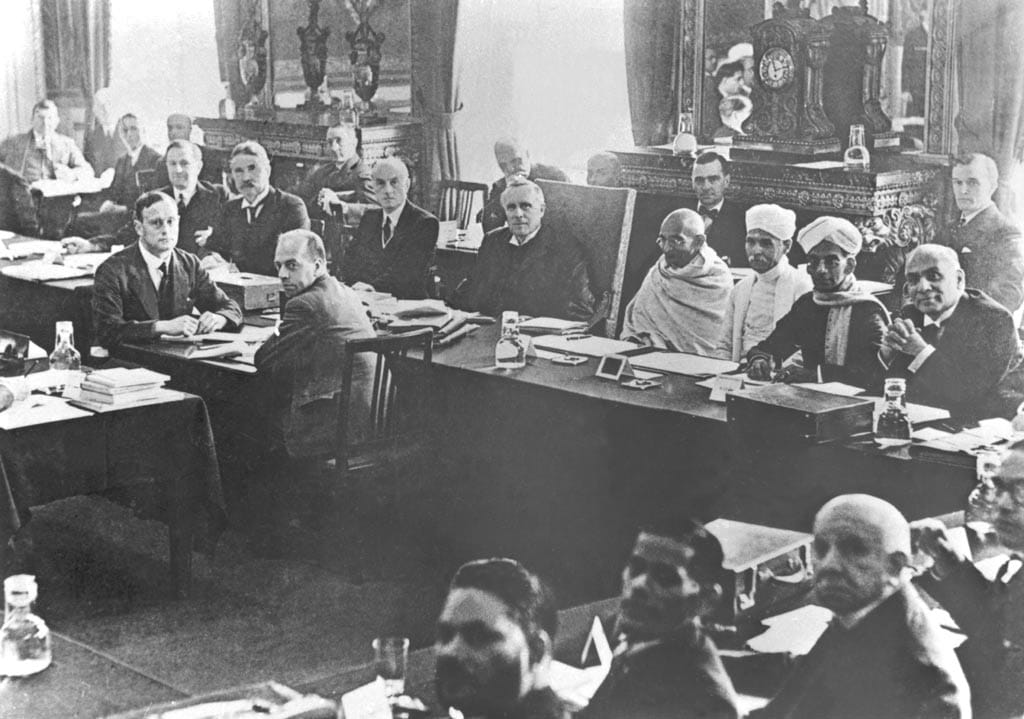
In March 1919 the British passed the Rowlatt Act. It let the police jail people without trial. Indians called it the Black Act. Gandhi called a nationwide hartal (strike, with shops shut) on 6 April 1919. This Rowlatt Satyagraha was his first all-India protest. In Punjab it ended in the Jallianwala Bagh massacre at Amritsar on 13 April 1919.
- 1917–18Champaran, Ahmedabad, Kheda
Three local fights.
- April 1919Rowlatt Satyagraha
First all-India hartal; then Jallianwala Bagh.
- 1920–22Non-Cooperation Movement
Joined with the Khilafat Movement. Stopped after Chauri Chaura (February 1922).
- 1924Belgaum session
The only time Gandhi was Congress president.
- 1928Bardoli Satyagraha
Led by Vallabhbhai Patel against a rise in land tax.
- Dec 1929Purna Swaraj at Lahore
Congress makes complete independence its goal.
- 1930–34Civil Disobedience Movement
Begins with the Dandi March (12 March to 6 April 1930).
- Oct 1940Individual Satyagraha
Vinoba Bhave is the first satyagrahi; Nehru the second.
- Aug 1942Quit India Movement
"Do or Die". Also called the August Kranti.
C-A-K, then R, then N-C-Q. Champaran, Ahmedabad, Kheda (1917–18) → Rowlatt (1919) → Non-Cooperation (1920), Civil Disobedience (1930), Quit India (1942).
Quit India and the last years
1942 to 1948: Do or Die, freedom, and a bullet.
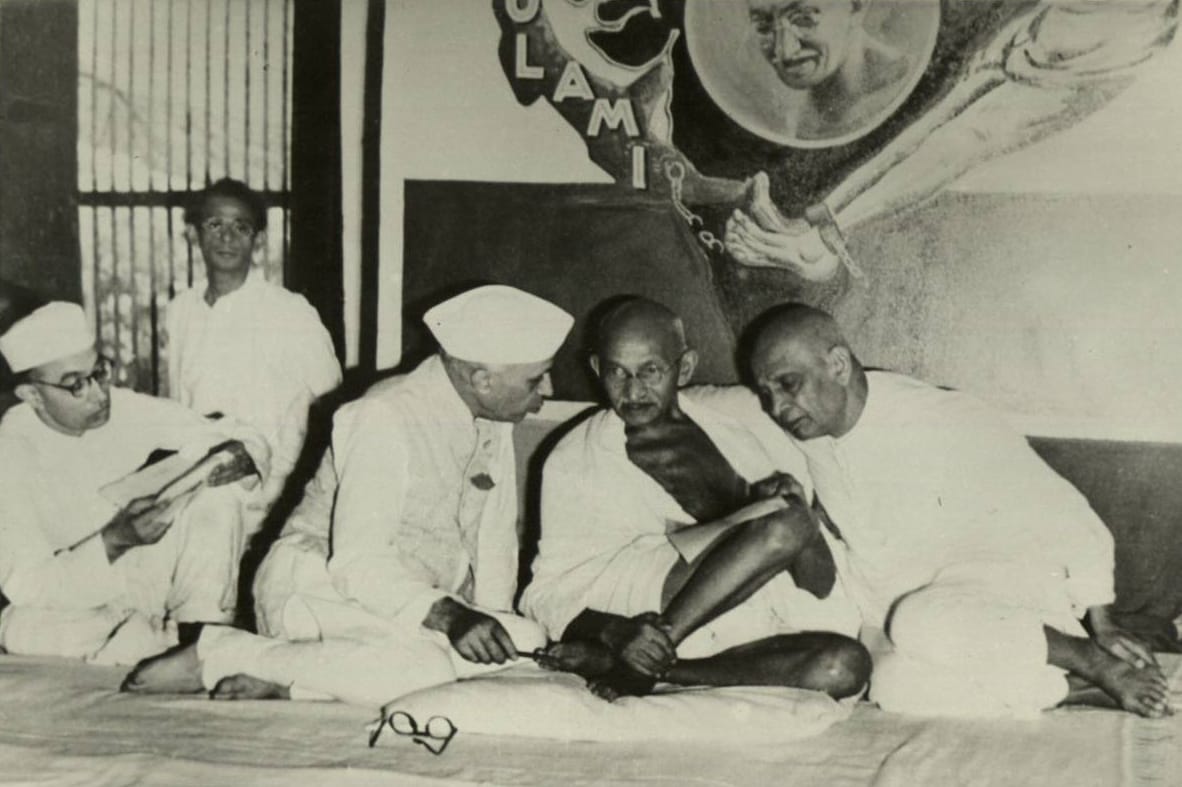
In March 1942 the Cripps Mission offered India dominion status, but only after the war. The Congress said no. On 8 August 1942 the Congress met at Gowalia Tank, Bombay. It passed the Quit India resolution. Gandhi gave the call: "Do or Die". Before dawn on 9 August, the British arrested him and all top leaders. Gandhi was held in the Aga Khan Palace, Pune. His wife Kasturba died there in February 1944.
- With the leaders in jail, the people led themselves. Railway lines and telegraph wires were cut. Police stations were attacked.
- Aruna Asaf Ali hoisted the flag at Gowalia Tank on 9 August and went underground.
- Parallel governments came up at Ballia (UP), Tamluk (Bengal) and Satara (Maharashtra).
- The British crushed the movement within months. But it showed that they could not rule India for long.
Punjab saw much less of Quit India than UP, Bihar or Bengal. The Unionist government of Punjab backed the British war effort, and Punjab was a major army recruiting ground. The Congress, the Muslim League and the Akalis also pulled in different directions. So there was limited mass participation, though nationalist activity did not stop.
- Who called Gandhi "Father of the Nation"?
- Subhas Chandra Bose, in a radio speech in July 1944
- Who gave Gandhi the title "Mahatma"?
- Popularly credited to Rabindranath Tagore
- Gandhi's political guru
- Gopal Krishna Gokhale
- British medal Gandhi returned in 1920
- Kaiser-i-Hind
- Gandhi's ashram near Wardha (from 1936)
- Sevagram
- Only Congress session Gandhi presided
- Belgaum, 1924
- Gandhi's death
- 30 January 1948, Birla House, Delhi; shot by Nathuram Godse
Quit India: two more facts that are askedTap to open
Everything on one look
The chronology, the firsts and the names.
- 1906: satyagraha born, Johannesburg
- 9 Jan 1915: back in India
- 1917: Champaran; 1918: Ahmedabad, Kheda
- 1919: Rowlatt Satyagraha; Jallianwala Bagh
- 1920–22: Non-Cooperation
- 1930–34: Civil Disobedience (Dandi March)
- 1940: Individual Satyagraha (Vinoba)
- 1942: Quit India, Do or Die
- Political guru: Gokhale
- Hind Swaraj: 1909, in Gujarati
- Rajkumar Shukla brought him to Champaran
- First hunger strike: Ahmedabad, 1918
- Patel joined at Kheda; led Bardoli (1928)
- Papers: Indian Opinion, Young India, Navajivan, Harijan
- Congress president once: Belgaum, 1924
- "Father of the Nation": Subhas Bose, 1944
- Satyagraha was born in South Africa (1906); its first Indian use was Champaran (1917).
- Gandhi left South Africa in 1914 but reached India in 1915.
- Champaran = indigo; Ahmedabad = mill wages; Kheda = land tax. Three different fights.
- First hunger strike: Ahmedabad (1918), not the Salt Satyagraha.
- Bardoli (1928) was led by Patel, not Gandhi.
- Rowlatt Satyagraha (1919) came before Non-Cooperation (1920).
- Quit India answered the Cripps Mission (1942), not the Cabinet Mission (1946).
- The Poona Pact was with Ambedkar, not Jinnah.
- Gandhi's political guru was Gokhale, not Tilak.
- Born: 2 October 1869, Porbandar
- In South Africa: 1893 to 1914
- Satyagraha born: Johannesburg, 1906
- Phoenix Settlement: 1904, near Durban
- Tolstoy Farm: 1910, near Johannesburg
- Hind Swaraj: 1909
- Returned to India: 9 January 1915
- 9 January: Pravasi Bharatiya Divas
- Political guru: Gopal Krishna Gokhale
- Champaran 1917: indigo, tinkathia
- Ahmedabad 1918: first hunger strike
- Kheda 1918: land tax, Patel
- Rowlatt hartal: 6 April 1919
- Kaiser-i-Hind medal returned: 1920
- Congress president: Belgaum 1924
- Individual Satyagraha: Vinoba Bhave, Pavnar, 1940
- Quit India: 8 August 1942, Gowalia Tank
- Quit India answered: Cripps Mission
- Parallel governments: Ballia, Tamluk, Satara
- Hindustani Prachar Sabha: Wardha, 1942
- Assassinated: 30 January 1948
Name Gandhi's three local satyagrahas of 1917–18 and what each was about.
Show answer
Champaran (Bihar, 1917): indigo farmers under the tinkathia system. Ahmedabad (1918): mill workers' wages, with Gandhi's first hunger strike. Kheda (Gujarat, 1918): peasants refusing land tax after crop failure, with Vallabhbhai Patel.