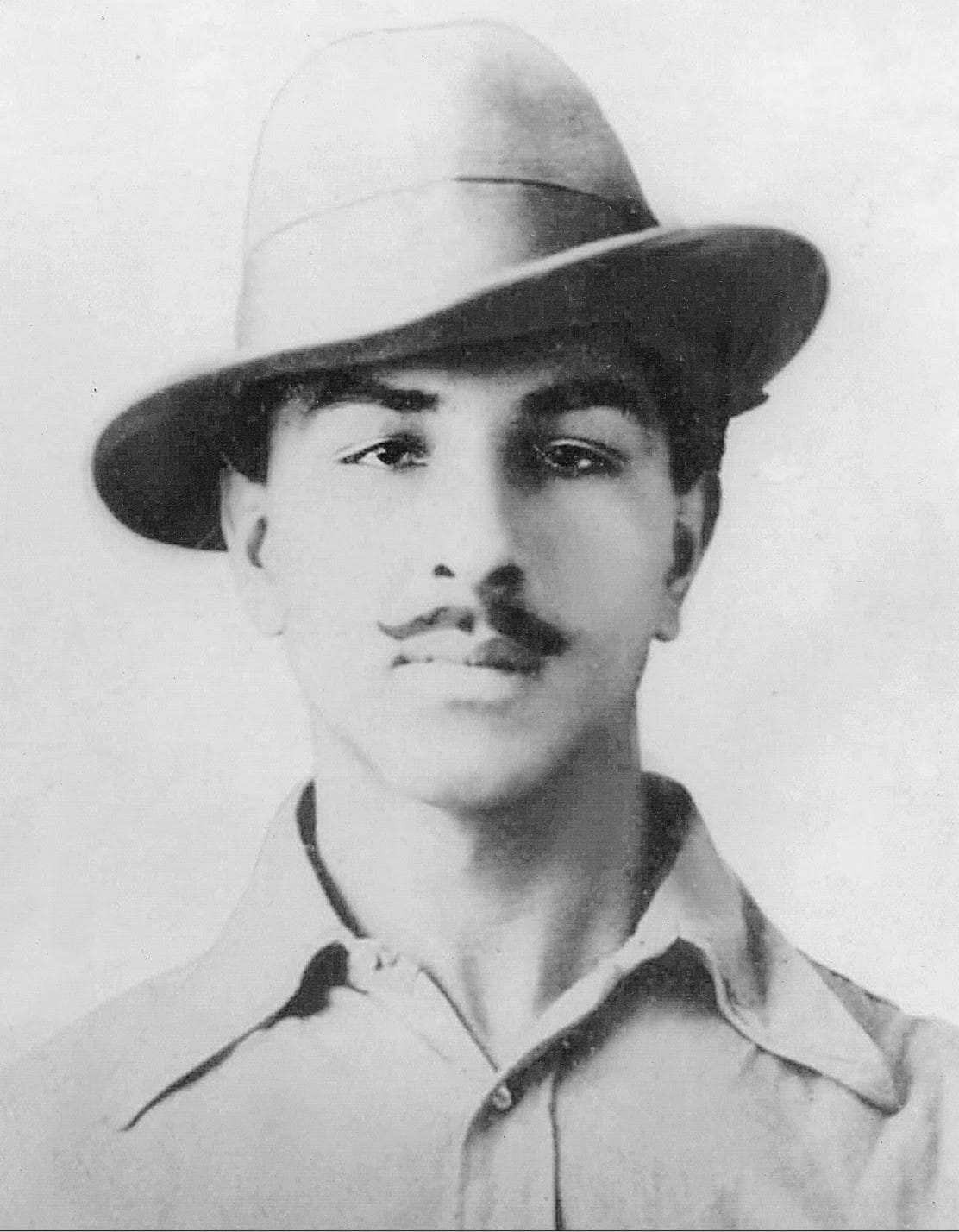
Not every freedom fighter believed in petitions and peaceful protest. Some young Indians chose secret societies, bombs and pistols. This is the revolutionary movement. It began in Bengal and Maharashtra, spread to Punjabis living in America, and ended with Bhagat Singh, Sukhdev and Rajguru going to the gallows at Lahore in 1931.
The first wave: Bengal, Maharashtra and Punjab
Secret societies, the first bombs, and Punjab's unrest of 1907.
The revolutionary movement came in two waves. The first wave followed the Partition of Bengal (1905). Young men felt that speeches and boycotts were too slow. They formed secret societies, trained with weapons and attacked hated British officials. The second wave came in the 1920s, after Gandhi called off Non-Cooperation in 1922.
| Society | Where and when | Key names |
|---|---|---|
| Anushilan Samiti | Bengal, 1902 | Founded by Satish Chandra Basu, with Pramathanath Mitra. Linked with Barindra Kumar Ghosh and Aurobindo. |
| Abhinav Bharat | Nasik, Maharashtra, 1904 | Vinayak Damodar Savarkar. It grew out of his earlier Mitra Mela. |
| Jugantar | Bengal, 1906 | Action group around the paper Yugantar. Jatindranath Mukherjee (Bagha Jatin) was a leader. |
- 1897Chapekar brothers, Poona
Damodar and Balkrishna Chapekar shot W. C. Rand, the officer in charge of harsh plague measures.
- 1907Punjab unrest
Sardar Ajit Singh led farmers against the Punjab Colonisation Bill. He and Lala Lajpat Rai were deported to Mandalay.
- 30 Apr 1908Muzaffarpur bomb
Khudiram Bose and Prafulla Chaki attacked a carriage meant for judge Kingsford. Two Englishwomen died instead.
- 1908–09Alipore Bomb Case
Aurobindo Ghosh was tried and acquitted. Chittaranjan Das defended him.
- 1 Jul 1909Madan Lal Dhingra, London
Dhingra, a student from Amritsar, shot the official Curzon Wyllie in London.
- 23 Dec 1912Bomb on Viceroy Hardinge
A bomb hit Lord Hardinge in Delhi. Rash Behari Bose planned it and escaped.
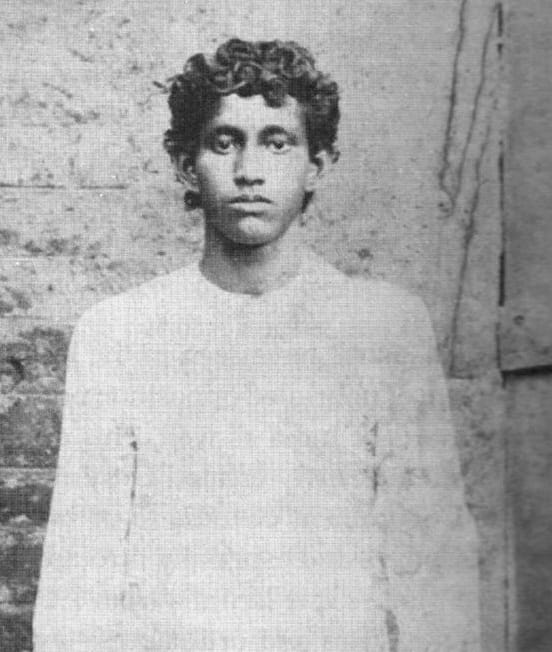
The Ghadar Party
Punjabis in America plan a revolt in India.
In the early 1900s, thousands of Punjabis went to Canada and the USA to work on farms, railways and timber mills. They faced racial insult and unfair laws. They felt that a slave nation gets no respect abroad. In 1913 they formed a party to free India by armed revolt.
Ghadar means revolt or mutiny. The party began in 1913 as the Hindustani Association of the Pacific Coast. Its headquarters, the Yugantar Ashram, was in San Francisco. Its weekly paper was called *Ghadar, and the party took its name from the paper. The first issue came out on 1 November 1913 in Urdu. A Gurmukhi* (Punjabi) edition followed.
Led the party from 1913. Later jailed for many years in the Lahore Conspiracy Case.
General secretary and main writer. Usually named as the founder.
Looked after the party's money.
Village Sarabha, Ludhiana. Hanged in 1915, aged 19.
Pingle was hanged at Lahore in 1915.
Ghadar leaders asked in Punjab papers.
Komagata Maru and the rising of 1915
A ship turned back, and a plan betrayed.
- Canada's ruleCanada let in only people who came by a continuous journey from their home country. No ship ran direct from India, so Indians were kept out.
- Baba Gurdit SinghShip hiredBaba Gurdit Singh hired the Japanese ship Komagata Maru through his Guru Nanak Navigation Company.
- 4 Apr 1914: leaves Hong KongAbout 376 passengers, mostly Punjabi Sikhs.
- 23 May 1914: reaches VancouverCanada refuses entry to almost all. The ship waits for two months.
- Police firingSept 1914: Budge Budge, near CalcuttaThe ship is sent back. Police fire on the returning passengers; about 19 die. Anger in Punjab grows.
When World War I began in 1914, Ghadar leaders saw their chance. Britain was busy in Europe. Thousands of Ghadarites sailed home to Punjab. They tried to win over Indian soldiers for a rising on 21 February 1915. A police spy learned of the plan, and it was crushed. In the Lahore Conspiracy Case (1915), many were hanged or sent to the Andamans. Kartar Singh Sarabha, only 19, was hanged on 16 November 1915. Bhagat Singh later called him his hero.
Exam order of Punjab events: Saragarhi (1897) → Ghadar Party (1913) → Komagata Maru (1914) → Jallianwala Bagh (1919).
The second wave: Kakori, HSRA and Chittagong
After 1922, new groups in north India and Bengal.
Gandhi stopped Non-Cooperation in February 1922 after Chauri Chaura. Many young workers were let down. Some of them turned to revolution. In 1924, at Kanpur, they formed the Hindustan Republican Association (HRA). Its leaders included Sachindranath Sanyal and Ram Prasad Bismil. Its aim was a federal republic of India, won by armed struggle.
HRA men led by Ram Prasad Bismil stopped a train near Kakori (near Lucknow). They took government treasury money to buy arms.
Bismil, Ashfaqulla Khan, Roshan Singh and Rajendra Lahiri were hanged. Chandrashekhar Azad escaped arrest.
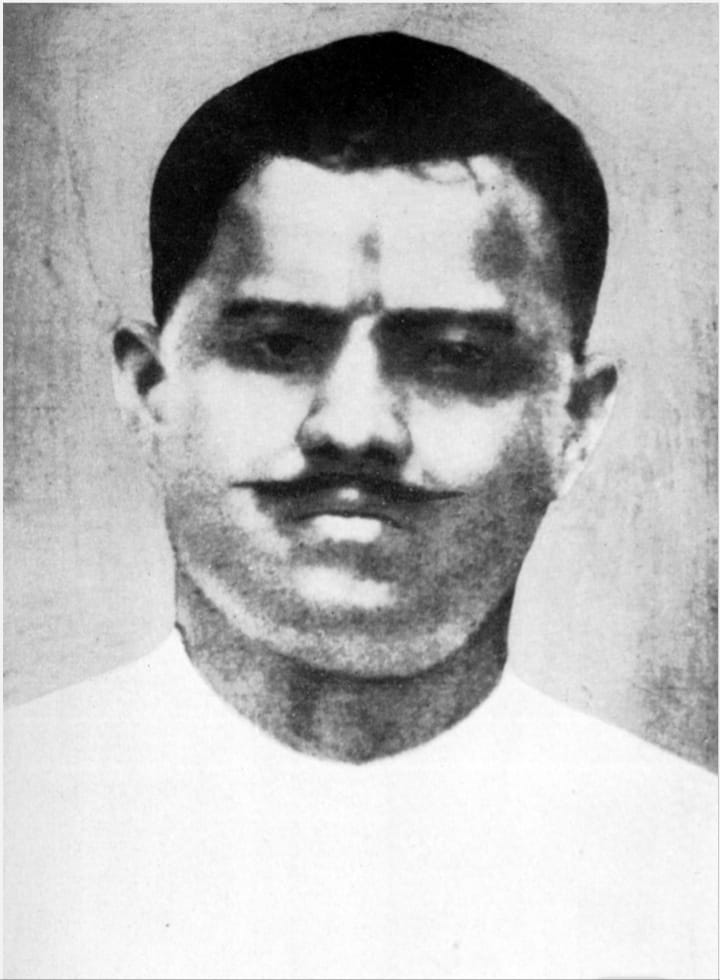
- Called the hero of Kakori
- Hanged at Gorakhpur jail; also a poet
- Close friend of Bismil
- Hanged at Faizabad jail
- Escaped after Kakori; led the HSRA
- Died fighting police at Alfred Park, Allahabad
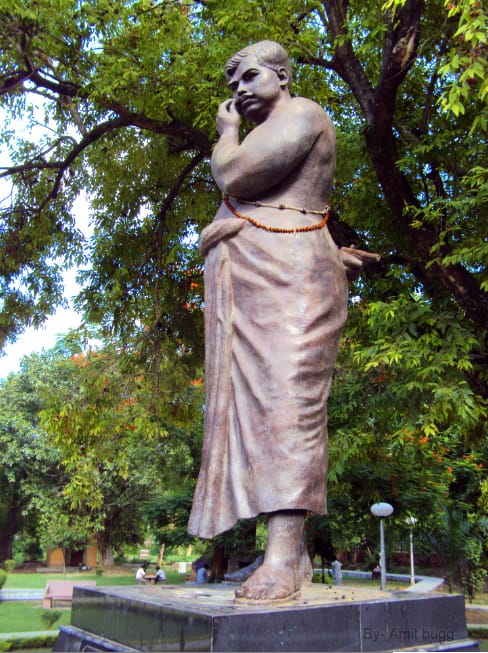
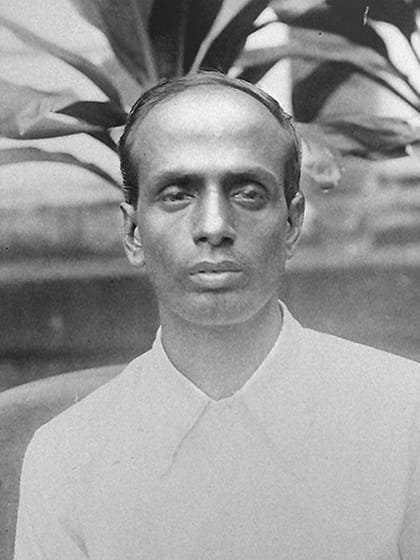
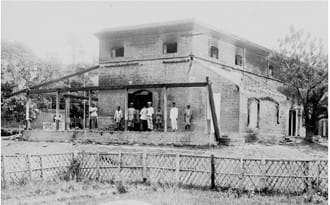
On 18 April 1930, Surya Sen, a teacher called Masterda, led about 65 young men in raids on the government armouries at Chittagong (now in Bangladesh). They called themselves the Indian Republican Army. Women like Pritilata Waddedar and Kalpana Datta later joined the fight. Surya Sen was caught in 1933 and hanged in January 1934.
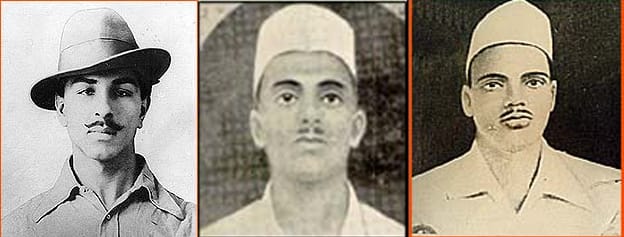
Bhagat Singh, Sukhdev and Rajguru
Lahore 1928 to Lahore 1931.
Bhagat Singh was born in 1907 at Banga, in Lyallpur district (now in Pakistan). His family's ancestral village is Khatkar Kalan, in today's Shaheed Bhagat Singh Nagar district. He studied at the DAV School and the National College, Lahore. In 1926 he helped found the Naujawan Bharat Sabha at Lahore and became its secretary. In 1928 he helped form the HSRA.
- 30 Oct 1928Lathi charge at Lahore
Lala Lajpat Rai led a protest against the Simon Commission. Police beat him; he died on 17 November.
- 17 Dec 1928Saunders shot
To avenge Lajpat Rai, Bhagat Singh and Rajguru shot police officer J. P. Saunders at Lahore. They had meant to target Scott, who ordered the lathi charge. Azad covered their escape.
- 8 Apr 1929Bombs in the Assembly
Bhagat Singh and Batukeshwar Dutt threw two harmless bombs in the Central Legislative Assembly, Delhi. They shouted Inquilab Zindabad and let themselves be arrested.
- 13 Sep 1929Jatin Das dies
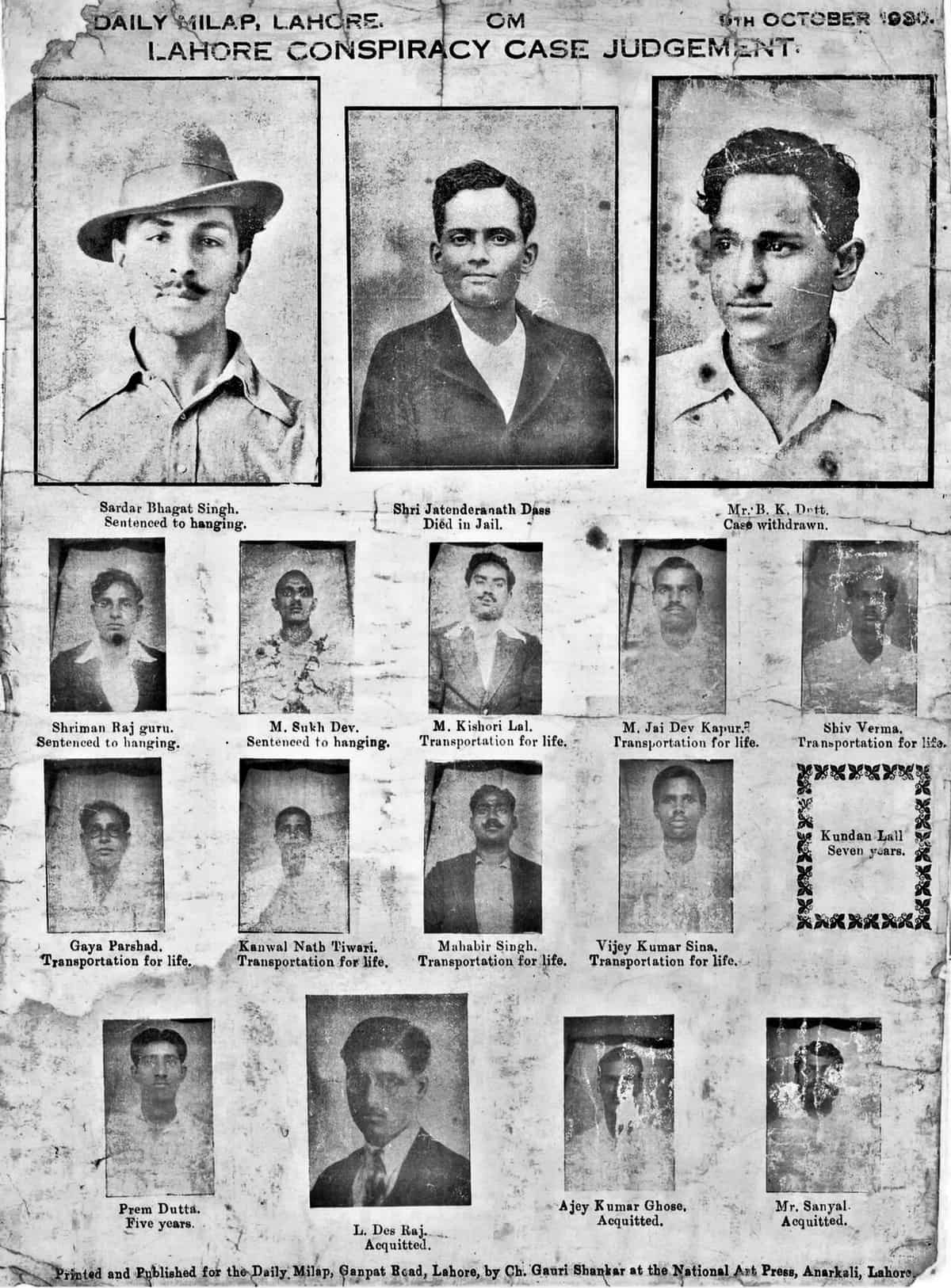
Jatin Das died on the 63rd day of a hunger strike in Lahore jail. He was demanding fair treatment for political prisoners.
- 7 Oct 1930Death sentence
A special tribunal sentenced Bhagat Singh, Sukhdev and Rajguru to death in the Lahore Conspiracy Case.
- 23 Mar 1931Hanged at Lahore
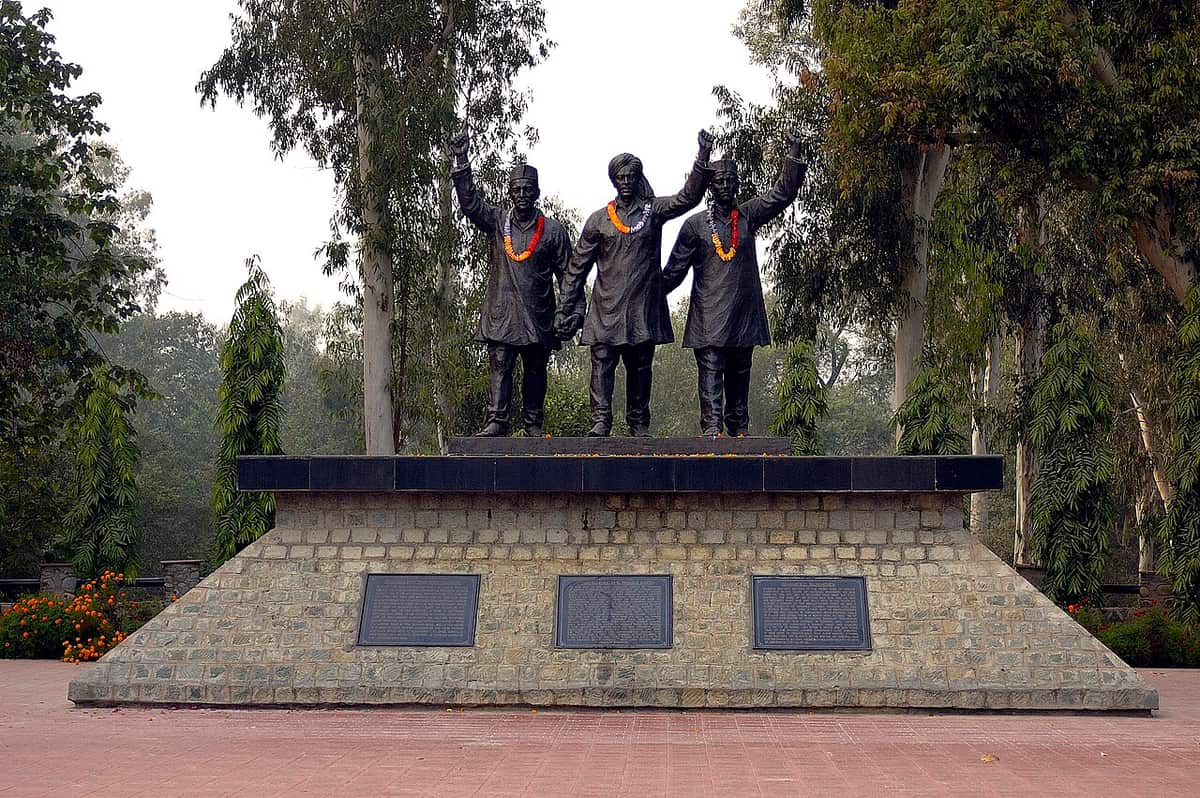
The three were hanged in Lahore jail and cremated at Hussainiwala, on the Sutlej near Firozpur.
The bombs of 8 April 1929 were made to hurt no one. They protested against two harsh bills: the Public Safety Bill and the Trade Disputes Bill. Their leaflet said it takes a loud voice to make the deaf hear. They stayed to be arrested so that the trial would spread their ideas.
Bhagat Singh read widely and believed in socialism: freedom for workers and farmers too, not just a change of rulers. He made the slogan Inquilab Zindabad (Long live revolution) famous; it was first used by the poet Hasrat Mohani. In jail he wrote the essay Why I Am an Atheist (1930).
- Anushilan Samiti (1902)
- Satish Chandra Basu, Pramathanath Mitra
- Abhinav Bharat (1904)
- V. D. Savarkar
- Bagha Jatin
- Jatindranath Mukherjee, Jugantar
- Muzaffarpur bomb (1908)
- Khudiram Bose, Prafulla Chaki
- Ghadar Party (1913)
- Sohan Singh Bhakna (president), Lala Har Dayal
- Komagata Maru (1914)
- Baba Gurdit Singh
- Kakori (1925)
- Ram Prasad Bismil and the HRA
- Assembly bombs (1929)
- Bhagat Singh and Batukeshwar Dutt
- Chittagong raid (1930)
- Surya Sen (Masterda)
Bhagat Singh's comrades: places asked in Punjab papersTap to open
- Sukhdev Thapar was born in Ludhiana in 1907. His family home there is a memorial.
- Shivaram Rajguru came from Khed near Pune, in Maharashtra. The town is now called Rajgurunagar.
- The Shaheed-e-Azam Sardar Bhagat Singh Museum is at Khatkar Kalan, his ancestral village.
- Batukeshwar Dutt was sent to the Andamans for the Assembly bombing. He was not hanged.
Everything on one look
Societies, actions and martyrs.
- Anushilan Samiti: Bengal, 1902
- Abhinav Bharat: Savarkar, Nasik, 1904
- Jugantar: Bengal, 1906; Bagha Jatin
- Ghadar Party: San Francisco, 1913; Bhakna, Har Dayal
- HRA: Kanpur, 1924; Sanyal, Bismil
- HSRA: Delhi, 1928; Azad, Bhagat Singh
- Muzaffarpur 1908: Khudiram Bose, Prafulla Chaki
- Komagata Maru 1914: Gurdit Singh, Vancouver
- Kakori 1925: Bismil, Ashfaqulla
- Saunders 17 Dec 1928: Bhagat Singh, Rajguru
- Assembly 8 Apr 1929: Bhagat Singh, B. K. Dutt
- Chittagong 1930: Surya Sen
- HRA (Kanpur, 1924) and HSRA (Delhi, 1928) are two stages. S = Socialist.
- Ghadar founder: Lala Har Dayal. Ghadar first president: Sohan Singh Bhakna.
- Ghadar headquarters: San Francisco, not Berlin or Los Angeles.
- The first Ghadar paper was in Urdu, not Punjabi.
- Saunders was shot to avenge Lala Lajpat Rai; the target had been Scott.
- The Assembly was the Central Legislative Assembly in Delhi, not the Punjab Assembly.
- The bombs protested the Public Safety and Trade Disputes bills, not the Rowlatt Act.
- Bhagat Singh was hanged in the Lahore case, not Kakori or Meerut.
- Rajguru was from Maharashtra; Sukhdev from Ludhiana.
- Udham Singh shot O'Dwyer, not General Dyer.
- Two waves: after 1905, and after 1922
- Chapekar brothers: shot Rand, Poona, 1897
- Pagri Sambhal Jatta: Banke Dayal, 1907
- 1907 Punjab unrest: Ajit Singh
- Abhinav Bharat: Savarkar, 1904
- Bagha Jatin: Jatindranath Mukherjee
- Alipore case: Aurobindo, defended by C. R. Das
- Dhingra shot Curzon Wyllie: London, 1909
- Ghadar: 1913, San Francisco
- Ghadar first paper: 1 Nov 1913, Urdu
- Komagata Maru at Vancouver: 23 May 1914
- Kartar Singh Sarabha hanged: 16 Nov 1915
- Kakori: 9 Aug 1925
- Naujawan Bharat Sabha: Lahore, 1926
- HSRA: Feroz Shah Kotla, Delhi, 1928
- Jatin Das: died after 63-day fast, 1929
- Azad died: Alfred Park, 27 Feb 1931
- Martyrs' Day: 23 March 1931
- Memorial: Hussainiwala, Firozpur
- Udham Singh shot O'Dwyer: 13 March 1940
Why did Bhagat Singh and Batukeshwar Dutt not run away after throwing bombs in the Assembly?
Show answer
The bombs were made to harm no one. Their aim was to protest against the Public Safety and Trade Disputes bills and to "make the deaf hear". By staying to be arrested, they turned their trial into a platform to explain their ideas to the whole country.